How to Do Chengdu Right: A Local’s No-Nonsense Guide
Honestly, I’ve lost count of how many friends have asked me before visiting. This Chengdu travel guide covers everything you need: spots I actually recommend to friends — from city classics to easy day trips, hidden photo corners, and the food I can’t stop thinking about. Chengdu is one of those cities that lives in two halves: half adorable giant pandas, half unapologetically fiery, fragrant human warmth. Think lazy tea houses, bubbling hotpot, and over 2,000 years of ancient Shu culture layered into everyday life. Just follow this guide; no need to overthink your planning.
Chengdu Travel Guide: Must-Do City Highlights (All Metro Accessible)
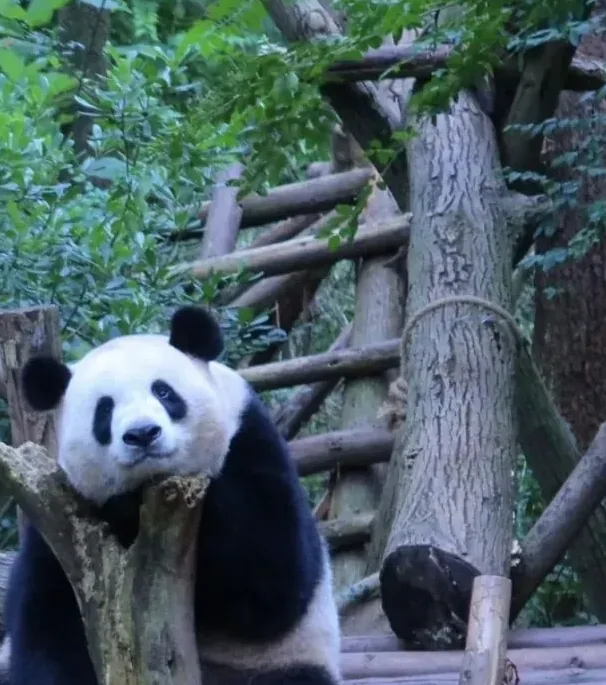
Chengdu Research Base of Giant Panda Breeding
- Address: 1375 Panda Avenue (成华区熊猫大道1375号)
- Tickets: ¥55 adults / ¥27 students; free for kids under 6, those under 1.3m (4’3″), and seniors 60+
- Hours: 7:30 AM – 6:00 PM (last entry at 5:00 PM)
This is the largest captive-breeding panda base in the world — and home to Chengdu’s reigning celebrity, the panda Hua Hua (花花). Fair warning: don’t show up at noon. The pandas are most active between 8:30-11:30 AM; by 10 AM, most are already sprawled out in their favorite napping positions.
Pro tip: Head straight to the Moon Nursery (月亮产房) and Sun Nursery (太阳产房) for your dose of wobbly panda cubs. Entering from the South Gate puts you closest to the juvenile panda villa. The park is bigger than it looks, so hop on the sightseeing bus (¥10) to save your legs.
You’ll need to book in advance through the official WeChat account (14 days ahead online), and please — no camera flashes. They’re cute, not paparazzi targets.
Local insight: Too lazy to navigate the metro? There’s a direct tourist bus from beside the IFS climbing panda at Chunxi Road that departs at 7:30 AM for just ¥10 — it drops you right at the West Gate. Grab your ticket through the Chengdu Bus mini-program (成都公交乘车码).
Kuanzhai Alley (宽窄巷子)
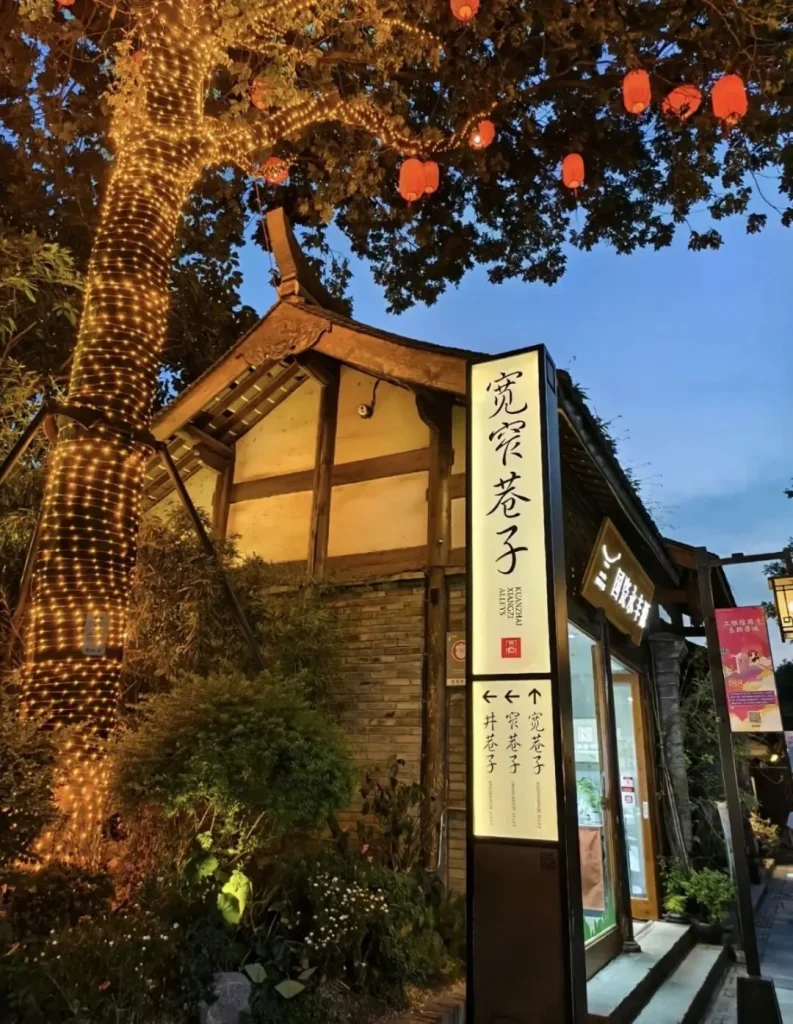
- Location: Changshun Upper Street, Qingyang District
- Cost: Free
Kuanzhai Alley is actually three parallel lanes — Wide (宽), Narrow (窄), and Well (井) — preserved Qing Dynasty-era streets that feel like a time capsule. Wide Lane is full of lively street energy, Narrow Lane skews more artsy and boutique, and Well Lane is the quietest, perfect for photos without the crowds.
Here’s the thing: the main streets are heavily commercialized. That bamboo-tube milk tea and the decorative “Three Cannon Balls” (三大炮) snacks? Cute for photos, but seriously overpriced. If you want a great meal, skip the alley food stalls entirely — head to the nearby Kuixinglou Street (奎星楼街) where locals actually eat, including favorites like Maojia Huola (冒椒火辣) and Wang Pangzi’s egg waffles (王胖子蛋烘糕).
Wuhou Shrine + Jinli (They’re Neighbors — Do Both)
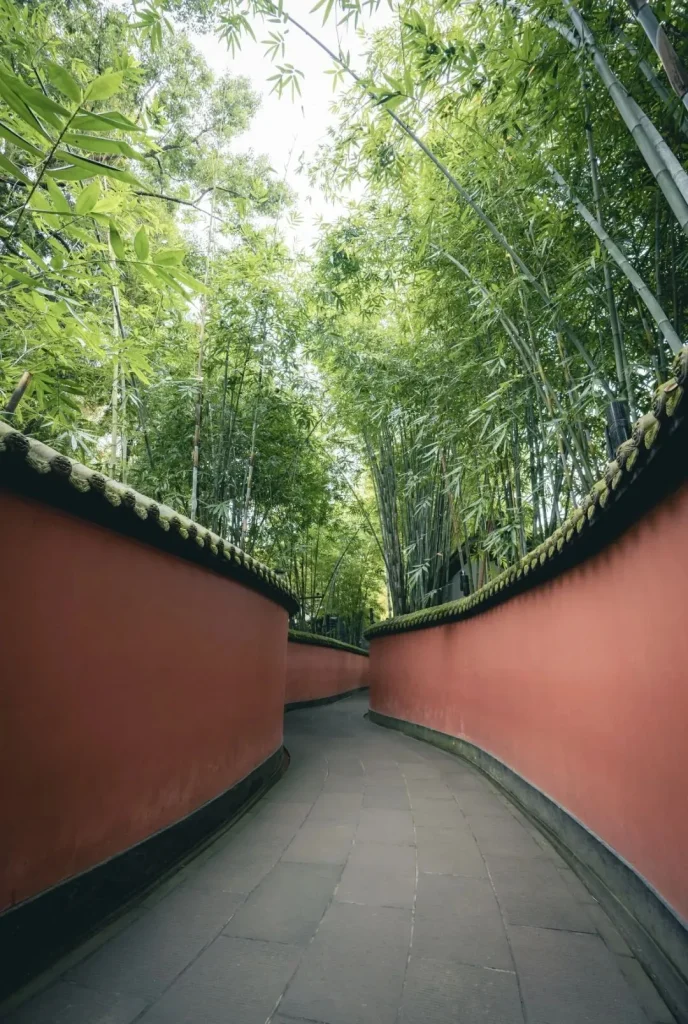
- Location: 231 Wuhou Shrine Street
- Wuhou Shrine tickets: ¥50 adults / ¥25 students; free for seniors 60+; 8:30 AM – 6:30 PM
- Jinli: Free
Wuhou Shrine is one of the few temples in China that honors both a ruler and his minister under one roof — dedicated to the legendary strategist Zhuge Liang. The classic photo spot is the red wall with bamboo shadows (红墙竹影).
Step out the back gate and you’re directly in Jinli, a pedestrian old street that comes alive when the lanterns glow at dusk. Stroll through with some 三大炮 and egg waffles in hand. But resist those roadside snack stalls — pricey and not always authentic. A better bet? Catch a Sichuan opera face-changing performance at one of Jinli’s tea houses. Tickets are only a few dozen yuan and it’s a proper experience.
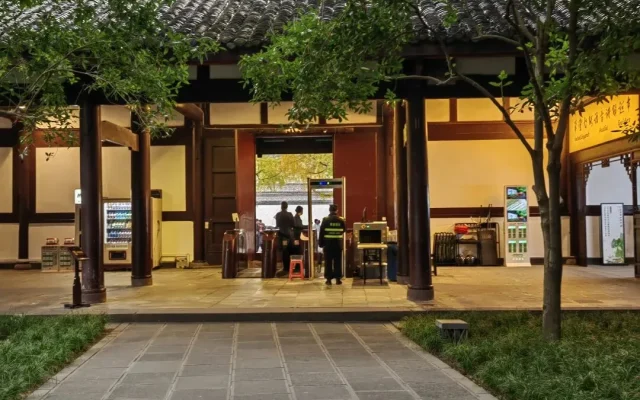
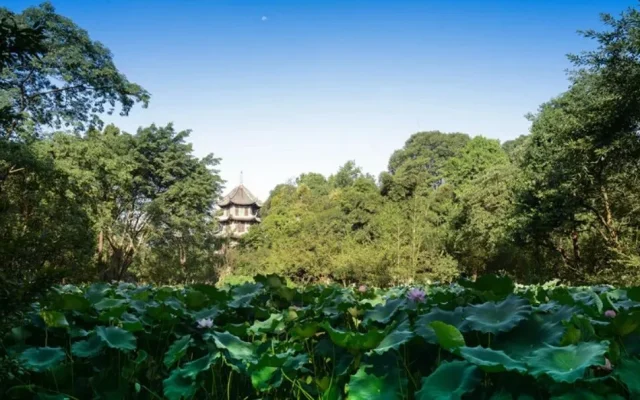
Du Fu’s Thatched Cottage (杜甫草堂)
- Location: 37 Qinghua Road, Qingyang District
- Tickets: ¥50 adults / ¥25 students
- Hours: 9:00 AM – 6:00 PM
This is where the great Tang Dynasty poet Du Fu lived for nearly four years, writing over 240 poems during his stay. The entire garden is wrapped in streams and bamboo groves — peaceful, uncrowded, and perfect for a slow wander with your camera. If you want to escape the tourist rush and just breathe, this is your spot.
Wenshu Monastery (文殊院)
- Location: 66 Wenshu Yuan Street, Qingyang District
- Cost: Free (including free incense — three sticks per person)
This is a 1,400-year-old zen temple right in the city center. The red walls paired with golden ginkgo leaves in autumn make for gorgeous photos. You can also copy sutras for free, try the vegetarian canteen, or sip tea in the traditional “open-air teahouse” (坝坝茶) style. The adjacent Wenshu Fang (文殊坊) area is a snack paradise — those imperial pastry shops (宫廷糕点铺) churning out pepper-salt walnut cookies, Napoleons, and iced mung bean cakes are perpetually queued for good reason. This is also a solid spot for souvenirs.
Chunxi Road + Taikoo Li + Jiuyan Bridge
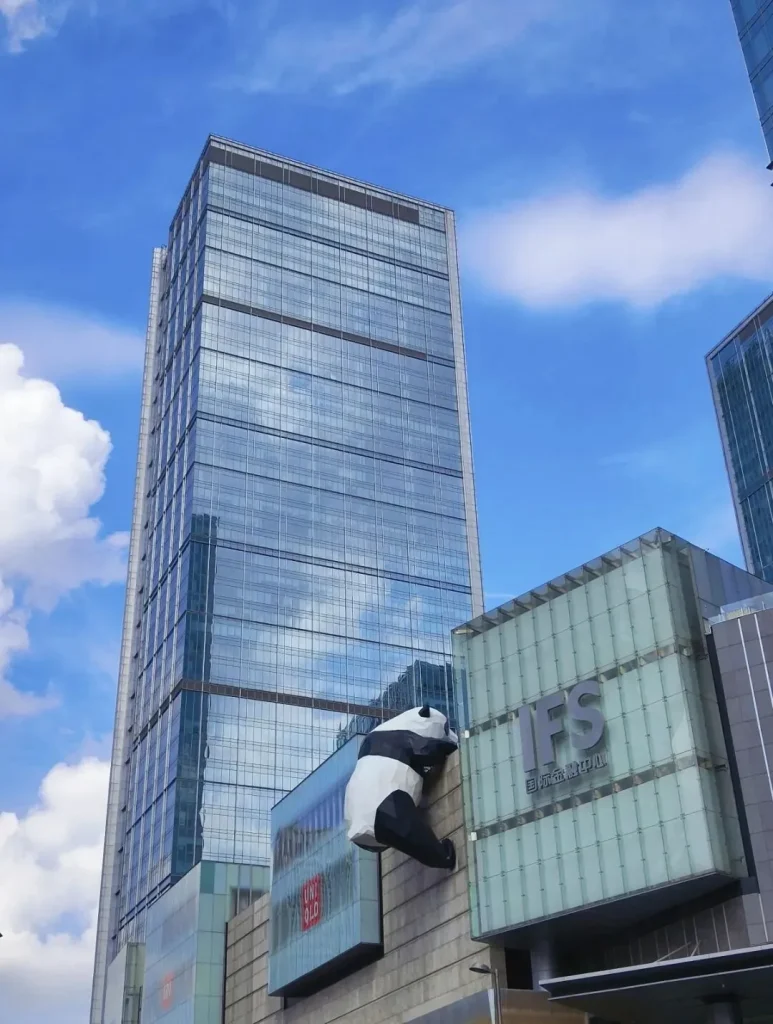
- Location: 8 Zhongshamao Street, Jinjiang District
- Cost: Free
This is Chengdu’s fashion heartbeat. Sino-Ocean Taikoo Li is an open-air complex that blends traditional Sichuan courtyard architecture with glass facades. Don’t miss the photo op with the famous giant panda climbing the IFS mall building (right at ground level, you can shoot from below). Tucked inside one of the buildings is the ancient Daci Temple (大慈寺) — a thousand-year-old temple hiding in a mall.
As night falls, head to Jiuyan Bridge (九眼桥) — by day, an unassuming stone bridge; by night, its golden lights shimmer over the Jin River for beautiful photo opportunities. If you want to see the modern skyline lit up, check out the Tianfu Twin Towers (天府双子塔) or the “Tower of Life” (生机之塔) at SKP — those six water columns ranging 26-39 meters tall are a futuristic light show.
People’s Park + Eastern Suburb Memory
- Cost: Both free (Eastern Suburb at 1 Jianshe South Branch Road, Chenghua District)
People’s Park is where Chengdu’s famous leisure culture goes into full effect. Grab a ¥15 cup of gaigai tea (a covered teacup of jasmine tea) at the historic Heming Teahouse (鹤鸣茶馆), get an ear-cleaning session, and sink into a slow afternoon. The park’s “marriage corner” — where parents post profiles for their adult children — is endlessly entertaining.
Eastern Suburb Memory (东郊记忆) is an industrial-chic creative district converted from the old Red Light Electron Tube Factory. Think red-brick smokestacks, vintage railway tracks, and massive graffiti walls — an excellent place to dress up a little and take fashion-forward shots.
Chengdu Museum (Worth a Stop If Nearby)
- Location: 1 Xiaohe Street, right by Tianfu Square
- Cost: Free (reserve up to 14 days in advance)
- Heads-up: Closed every Monday
The star exhibits here are the stone rhino (石犀牛) and the lacquered acupuncture figure (经穴漆人). Every floor has stamp-collecting stations — a hit with kids and, let’s be honest, adults too. Make sure you don’t plan this on a Monday, or you’ll make the one-way trip for nothing.
Easy Day Trips (By High-Speed Rail or Tourist Bus)
Dujiangyan Irrigation System + Nanqiao’s “Blue Tears”
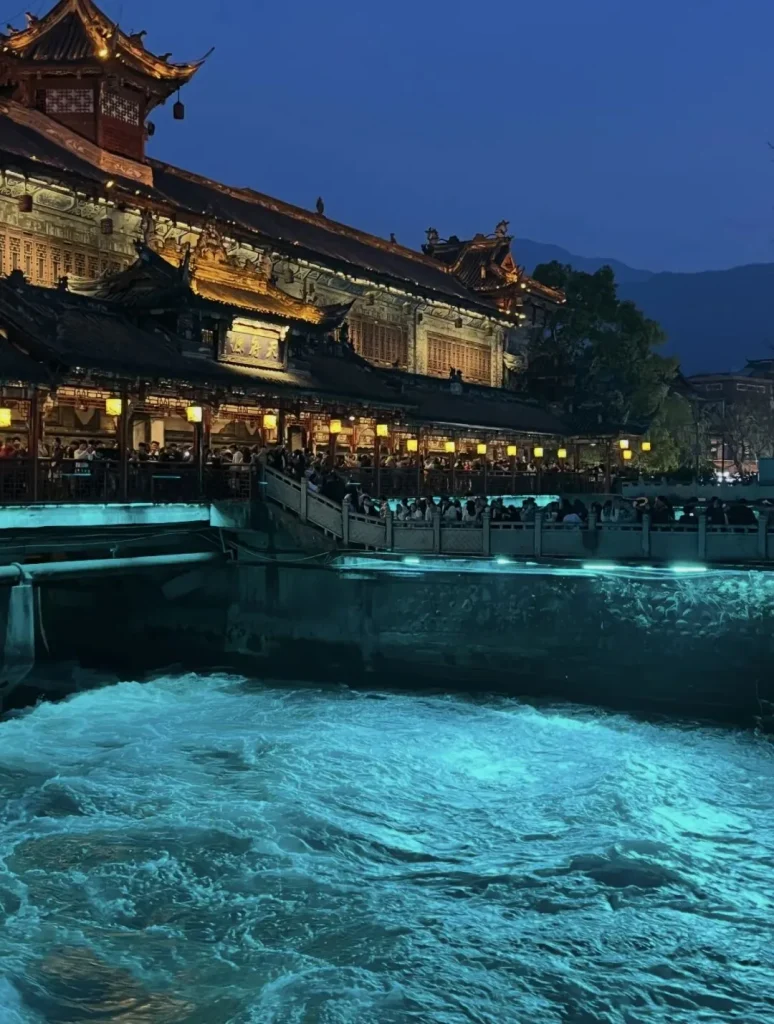
- Location: Park Road, Dujiangyan City
- Tickets: ¥80 adults (students half price); 8:00 AM – 5:30 PM
This isn’t just an ancient site — the Dujiangyan irrigation system is still actively functioning after over 2,200 years of service. Walk the Fish Mouth (鱼嘴), Flying Sand Weir (飞沙堰), and Bottleneck Channel (宝瓶口) to marvel at old-school engineering genius.
But don’t leave before dark. When the lights come on at Nanqiao (South Bridge), the Min River gets bathed in deep blue light — the now-famous “Blue Tears” effect. With the evening breeze on your face, it’s genuinely something else.
If you have time, swing by Panda Valley (熊猫谷) nearby on Yutang Street. Tickets are ¥55, and the pandas here live in semi-wild, spacious enclosures with far fewer crowds than the main base — a wonderfully different experience.
Getting there: Don’t trust the touts offering cheap day trips on the street — they’ll most likely funnel you into shopping stops. Take the intercity high-speed rail from Xipu (犀浦) station. It’s safer, faster, and ends up cheaper.
Mount Qingcheng
- Location: Qingchengshan Township, Dujiangyan
- Tickets: ¥80 front mountain / ¥20 back mountain
- Hours: 8:00 AM – 5:30 PM
There’s a saying: “Mount Qingcheng is the most serene in the world.” This is one of China’s most important Taoist mountains. The front mountain is dotted with Taoist temples — more cultural, more crowd-filled. The back mountain is where the streams and trail paths unfold through lush forest, making it the coolest, most refreshing escape in summer. If you’re here to hike and breathe fresh air, go straight to the back.
Sanxingdui Museum (For History Buffs — Dedicate a Full Day)
- Location: 133 Xi’an Road, Guanghan City (Deyang)
- Tickets: ¥72 adults / ¥36 students
- Hours: 8:30 AM – 6:00 PM
This is a different kind of time travel. The Bronze Standing Figure (2.62 meters tall), the golden mask, the bronze sacred tree (a staggering 3.96 meters) — these are relics from the Shu civilization, 3,000 to 5,000 years old, and eerily mysterious in the best way.
It’s about 1.5 hours from downtown Chengdu, so don’t cram this into the same day as Dujiangyan — you’ll be exhausted. The Chengdu public bus tourist line has direct routes (¥25 per person) departing near IFS. You can also book through the “Chengdu Bus Ride Code” (成都公交乘车码) mini-program under its tourist bus section.
Under-the-Radar Photo Spots (Skip the Crowds)
Guanxian Ancient City (灌县古城): At 3 Xingfu Road in Dujiangyan, right next to the scenic area. This is where you’ll find Xuanhua Gate, the Ming Dynasty city wall, and the famous Nanqiao “Blue Tears” at night.
Xicun Courtyard (西村大院): No. 1 Beisen North Road, Qingyang District. Designed by star architect Liu Jiakun, this C-shaped enclosed compound has been compared to both a basin and a hotpot — a “living room” for locals, and a strange, beautiful spot for architectural photography.
Pengzhen Old Teahouse (彭镇老茶馆): In Shuangliu District, this village is home to the century-old Guanyin Pavilion Teahouse (观音阁老茶馆) — where a ¥10 cup of tea buys you an entire afternoon lost in time. Locals call it Chengdu’s “A Place Where the Wind Blows” — a place where old trades, brittle sunlight, dust motes, and ancient teahouse rituals remain untouched.
More photo spots if you’re keen: Tianfu Art Park (金牛区, 418 hectares) offers free-entry access to the minimalist white-box Tianfu Art Museum; the “Tower of Life” at SKP delivers futuristic seven-colored water columns at night; and the pure-white geometric staircase in the basement of Wenjiang Chengyuan Calligraphy & Painting Art Museum is unfairly photogenic.
A Local’s Food Map (Where We Actually Eat)
The Must-Eat List
- Hotpot (火锅): Go for the niuyou lao huoguo — the beef tallow old-style hotpot. You must order tripe (毛肚), duck intestines (鸭肠), and pork aorta (黄喉). And if you can’t handle heat, tell the staff “mild” (微辣) beforehand — even our “mild” packs a punch.
- Chuanchuan / Late-night bites: Bobo chicken (钵钵鸡), baba shao (把把烧) — bite-sized skewers — and mala rabbit head (麻辣兔头), available in five-spice or mala.
- Classic Sichuan dishes: Mapo tofu (麻婆豆腐), twice-cooked pork (回锅肉), yu-xiang shredded pork (鱼香肉丝), and laoma pig trotters (老妈蹄花).
- Street snacks: Dan dan noodles (担担面), Zhong’s dumplings (钟水饺), Long wontons (龙抄手), bingfen (冰粉), egg waffles (蛋烘糕), sweet water noodles (甜水面), feichang fen (肥肠粉), guokui (锅盔) flatbreads, and candied tangyou guozi (糖油果子).
Where to Eat
- Kuixinglou Street (奎星楼街): Local staple institutions — Maojia Huola (冒椒火辣) for spicy chuanchuan, Chengdu Chike (成都吃客), and Erniang’s chicken feet (二嬢鸡爪爪).
- Fuqin Night Market (抚琴夜市): Look for Laobing Lan Tijiao (老兵烂蹄花), baojiang tofu, the egg waffle grandma, and Zhu Biqiong’s fa-xiang noodles (朱碧琼发祥粉). Go after 6 PM for the full scene.
- Jianshe Lane (建设巷), Yulin (玉林), Xiaojiahe (肖家河): Less touristy, more of what locals eat day-to-day.
Souvenirs
For edible gifts, hit Wenshu Monastery’s imperial pastry shop (文殊院宫廷糕点铺), Wensuyuan (闻酥园), or Dongzikou Zhang Laohan’s Liangfen (洞子口张老二凉粉). For collectibles, the Shu Brocade Workshop (蜀锦工坊) makes beautiful panda-themed tea sets and silk scarves — ideal for parents and older relatives. And if you want hotpot base or dried beef, don’t buy it at tourist spots — grab it from a regular local supermarket for about half the price.
Where to Sleep
| Area | Who It’s For | Notes |
|---|---|---|
| Chunxi Road / Taikoo Li | First-timers, shopaholics | Metro Lines 2 & 3 intersection, super convenient; pricier and livelier at night during holidays |
| City No. 2 Hospital / Yushuang Road | Budget-conscious | Just 1-2 stops from Chunxi Road; more local food, lower prices |
| Kuanzhai Alley / People’s Park area | Those who love the old Chengdu vibe | Lots of boutique guesthouses, close to Wuhou Shrine and Du Fu’s; skip staying inside the scenic spots — prices are inflated |
| Near Chengdu East Station | Train travelers | Perfect for early departures or late arrivals; a bit further from main sights |
Pro tip: Don’t stay inside the Jinli or Wuhou Shrine tourist zones — you’ll pay a premium and dealing with evening exits is a pain. During holidays or school breaks, book hotels at least 7-15 days in advance. And for anything popular in the city center, always choose the metro — holiday traffic is pure chaos.
Avoiding Tourist Traps (Learned the Hard Way)
- The panda base: never go at noon — the pandas are asleep by 10 AM. And don’t buy the panda merch on-site; it’s cheaper online.
- If Kuanzhai’s main strip feels like a scripted theme park, that’s because it is. Escape to Well Lane for quiet photos.
- Be cautious of itinerant ear-cleaners on the street — they’re masters of the “surprise upcharge.” Stick to the legit teahouses in People’s Park.
- “Cheap” day tours to Dujiangyan or Qingcheng that involve being scooped on a street corner? No. Take the intercity rail from Xipu, book directly, and don’t let a bus deposit you at a “jade shop.”
- For Sichuan opera face-changing, skip the overpriced street tickets in Jinli and go to established theaters like Shufeng Yayun (蜀风雅韵).
- All museums are closed on Mondays — mentally block that day out of your sightseeing schedule.
- Ignore the “exclusive deals” from sidewalk vendors and the “hidden gem” restaurants recommended by taxi drivers. More often than not, they’re getting a commission.
- Summertime in Chengdu is humid, hot, and surprisingly rainy. Pack an umbrella for sun and shower, slather on sunscreen, and bring very comfortable walking shoes — you’ll be covering serious ground.
One last thought: the real magic of Chengdu isn’t in ticking off every attraction. Wake up a little early for the pandas, spend your afternoon over a slow cup of gaigai tea, then meet your friends for a loud, sizzling hotpot dinner. There’s no rush here — the best way to do this city is to let it set the pace.