Chengdu has no shortage of famous temples — Wenshu Monastery, Zhaojue Temple, you name them. But they’re always packed. Every visit turns into a crowd shuffle: snap a photo, move on, and forget about actually relaxing. If you’re the kind of traveler who craves a bit of quiet, that gets old fast.
Here’s the thing — there’s an old temple on Chengdu’s outskirts that most visitors have never heard of. It’s called Pingle Temple (平乐寺), tucked away in Pidu District, and it’s about as peaceful as it gets. For travelers searching for Pingle Temple Chengdu, this quiet spot is worth the trip.
A Temple Hidden in the Hills
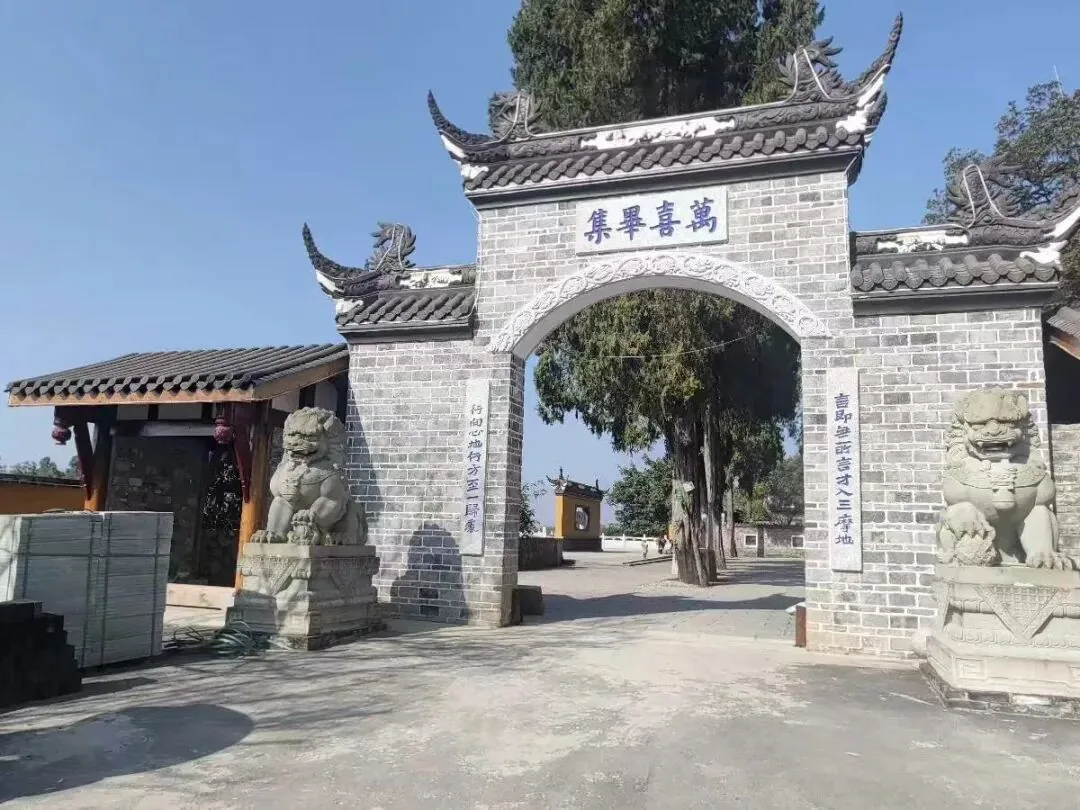
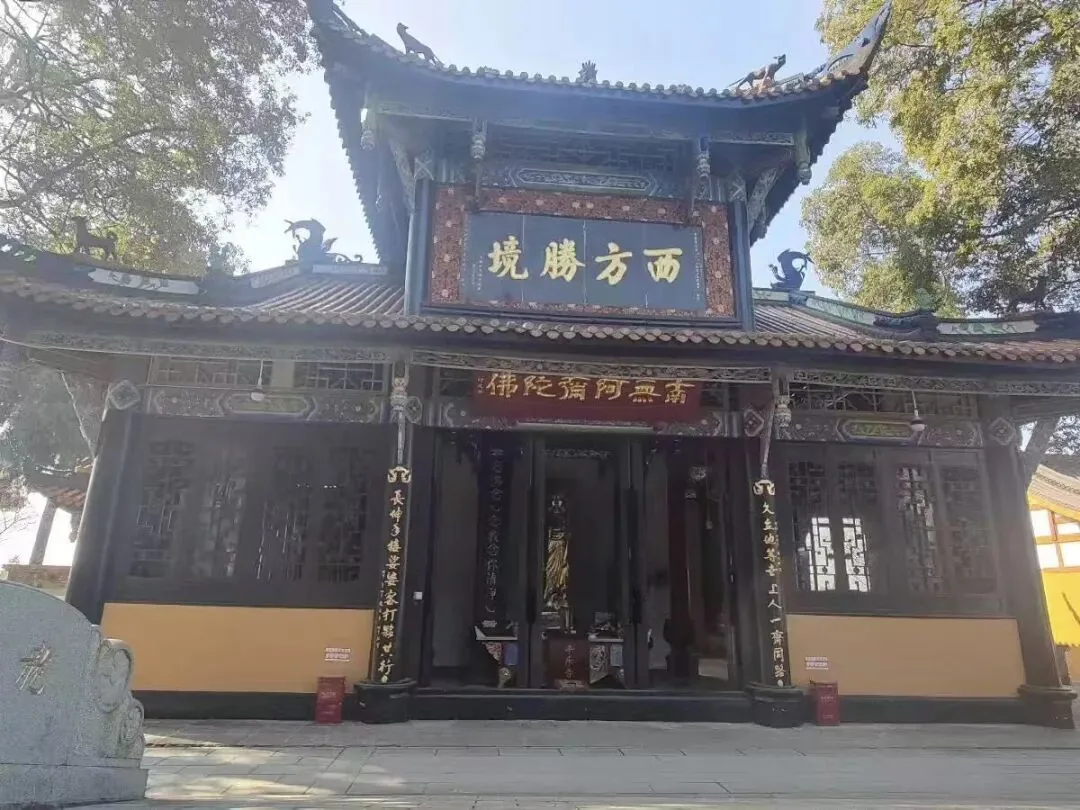
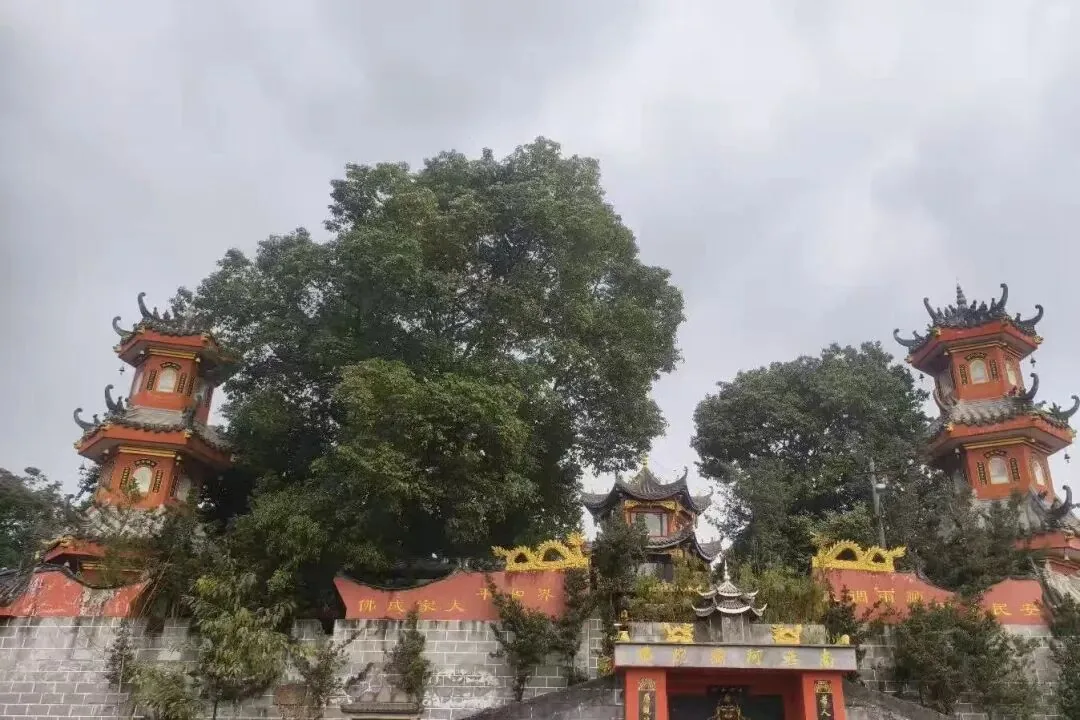
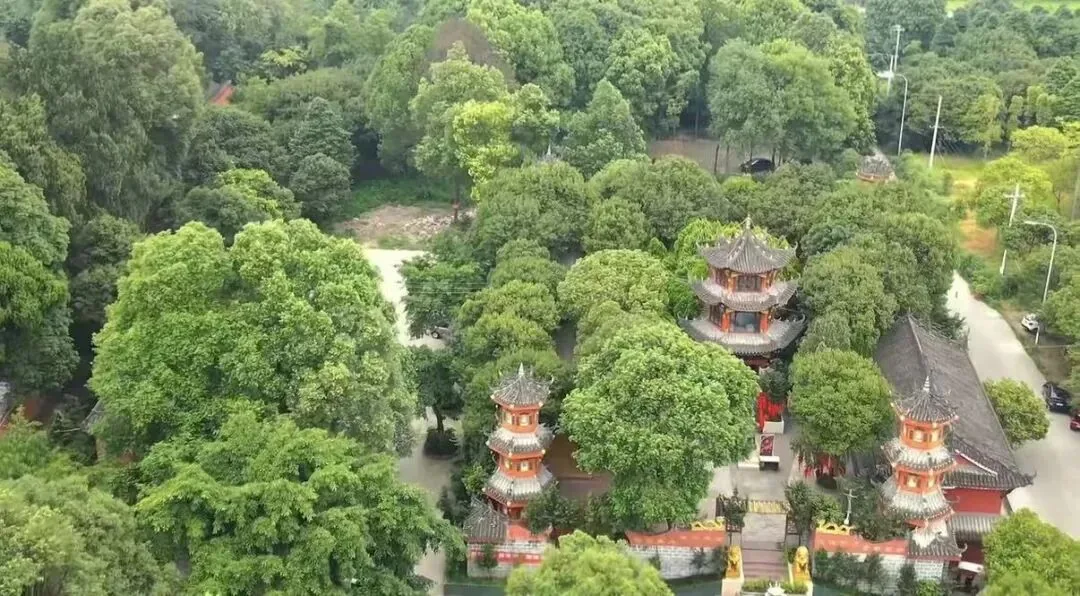
Pidu District sits in the west-northwest of the Chengdu Plain, right in the heart of the Tianfu Granary irrigation area. It’s almost entirely flat — except for one little bump. In Tangchang Town, near Dujiangyan, there’s a low hill locals call Hengshanzi (横山子) — note that it’s pronounced “huan,” not “heng.” At 650 meters above sea level, calling it a mountain is honestly a stretch. But this shallow hill stretches for ten li across the western Sichuan plain, with the Xuyan River and Baitiao River winding around it from front and back, flowing east. And nestled in these hills is Pingle Temple.
From Shrine to Temple: The Story of Yan Junping
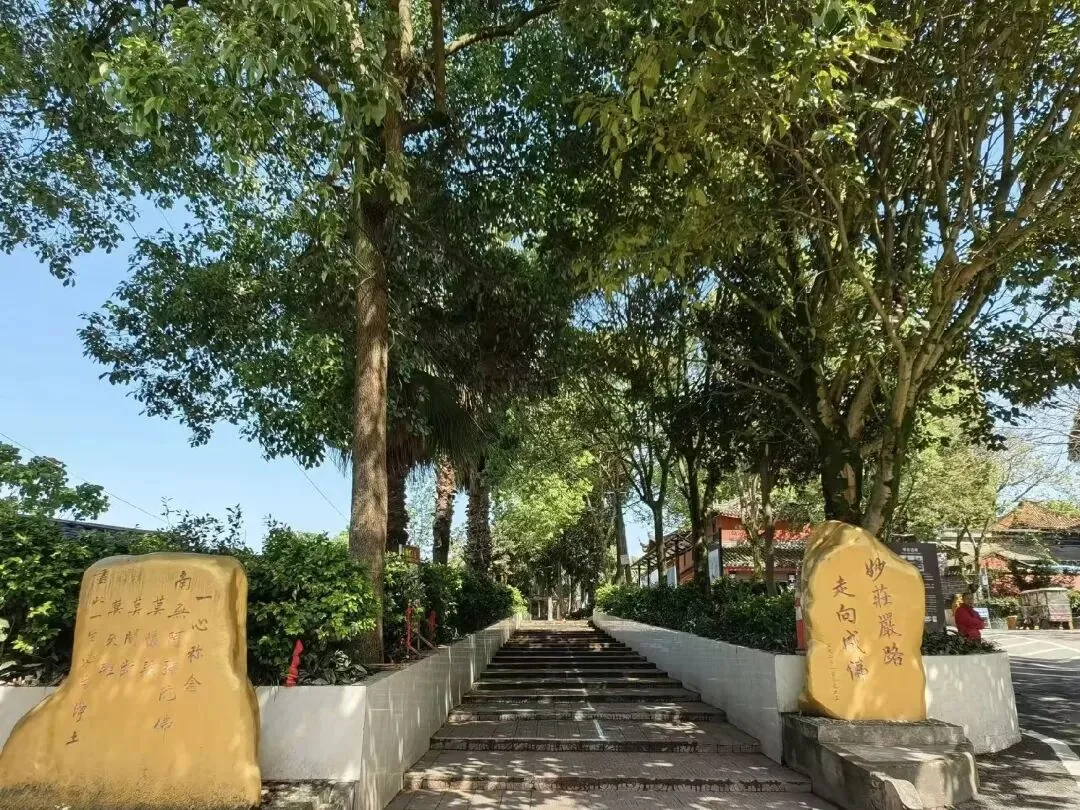
Pingle Temple wasn’t originally a Buddhist temple at all — it was a shrine. The man it honored was Yan Junping (严君平), a Western Han dynasty figure who sold divinations, taught, and wrote commentaries on Laozi right here. His original surname was Zhuang, but it was changed to Yan to avoid a naming taboo during Emperor Ming of Han’s reign. Chengdu locals called him “Shu Zhuang.”
He was known as someone who “understood astronomy, knew the stars, was skilled at divination, and versed in metaphysics” — yet he never entered officialdom.
In his later years, he left behind a famous line: “When the world is at peace and the people are happy, I am happy in life and happy in death.” Because of this, Hengshan also became known as Pingle Mountain — meaning “where Junping was happy.”
Later, people built this shrine to commemorate him. It was destroyed and rebuilt several times through history. Then, during the Republic of China period, Zen Master Changyuan raised funds to rebuild it, changing it from a shrine to a temple — and that’s how today’s Pingle Temple came to be.
What You’ll See Inside
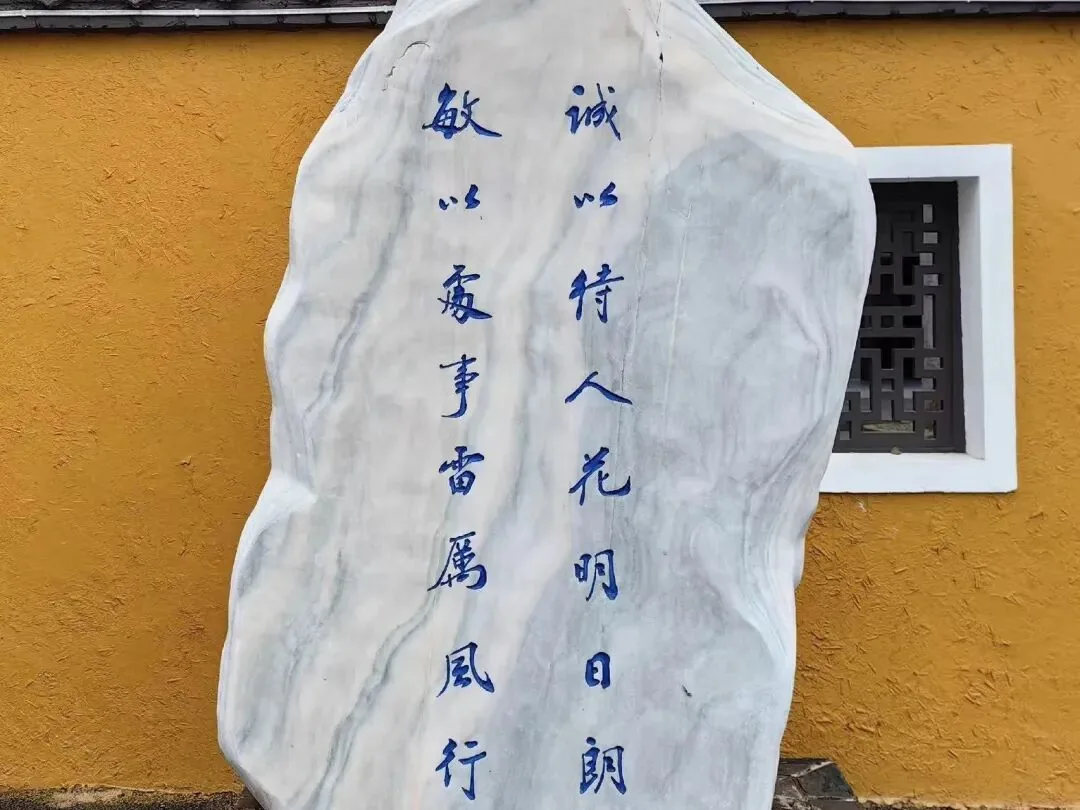
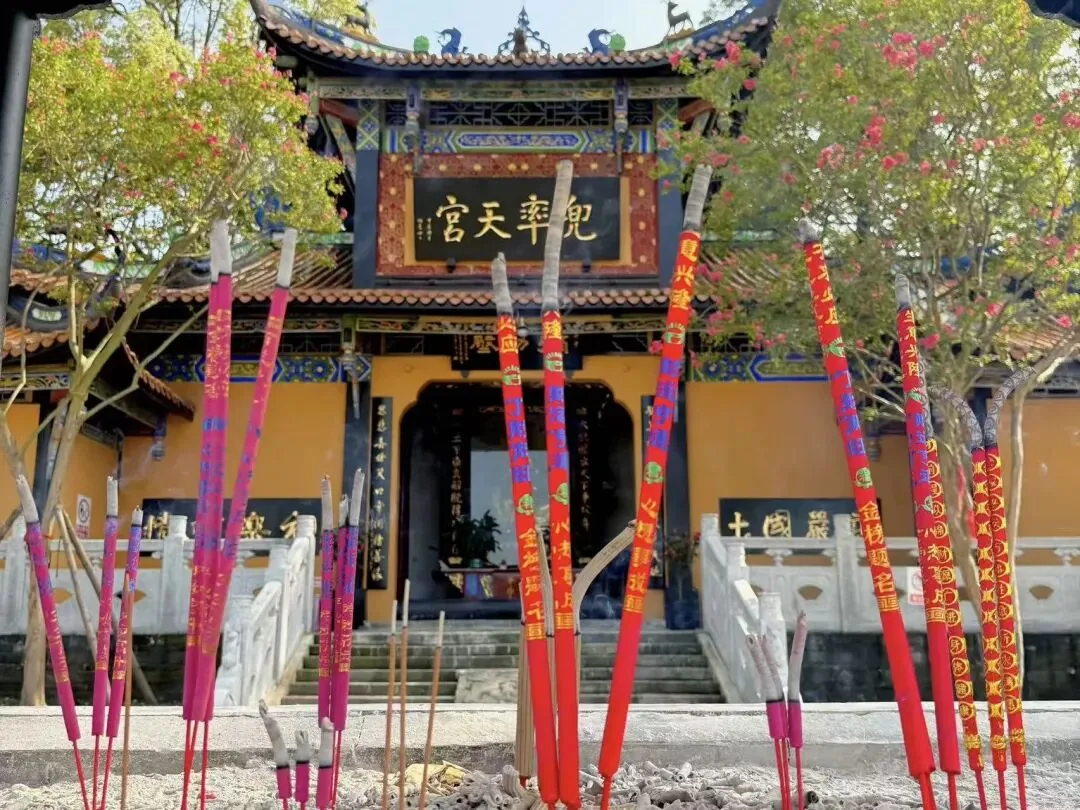
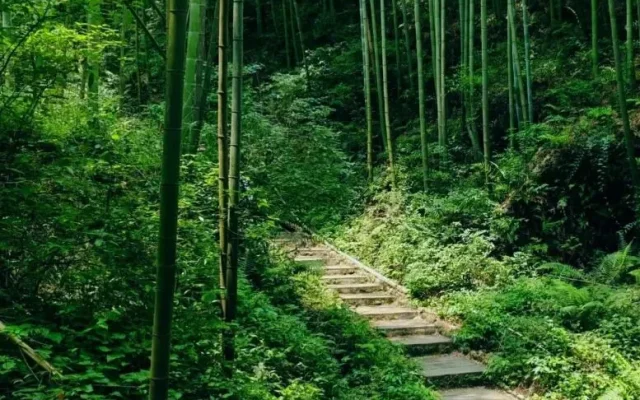
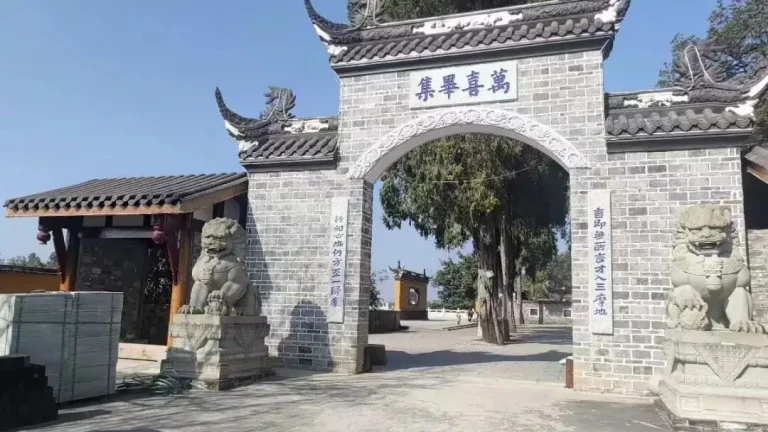
Walking up the mountain path, you’ll spot the bright yellow temple walls peeking through the greenery from afar. Above the temple gate, four large characters read “Ancient Pingle Temple” (古平乐寺) in bold, weathered script. Beside the door hangs a couplet that’s worth pausing for:
“Why bother consulting divinations for peace and happiness? Glory and splendor come from reading and learning.”
In just fourteen characters, it captures Yan Junping’s spirit perfectly — encouraging people to study and not chase empty fame.
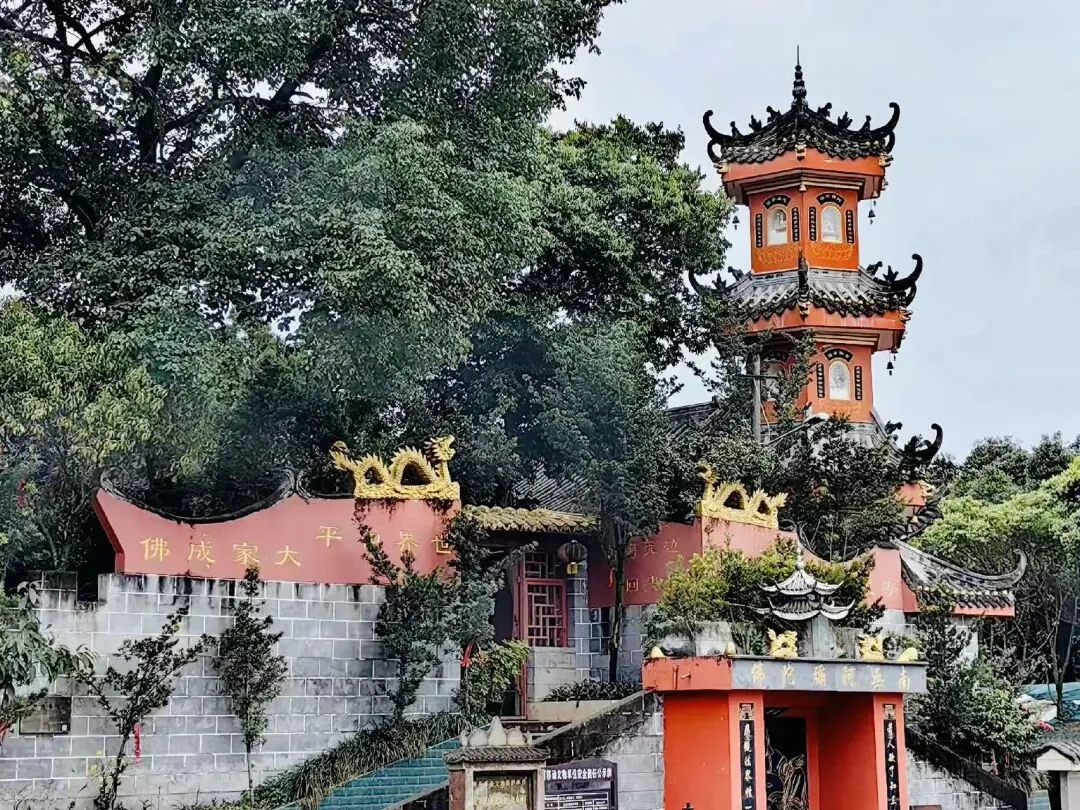
Follow the central axis inward and you’ll pass through the Heavenly King Hall, Ksitigarbha Hall, Mahavira Hall, Guanyin Hall, and Ronghua Hall, with bell and drum towers on either side. The pillars stand straight and tall; the carvings under the eaves have blurred with time but still carry a deep sense of antiquity. Statues of deities sit inside each hall, solemn and dignified. Most of the main halls have been rebuilt over the generations, but the architectural layout and the sweeping upturned eaves still feel distinctly ancient.
The temple also holds quite a few historical relics — not just Ming and Qing dynasty buildings, but also Qing dynasty bell and drum towers and Tang dynasty stone carvings. Not far from the temple are the legendary tomb and retreat site of Yan Junping. The Junping Well, they say, has stayed clear for thousands of years. The things this old man used back then, we can still use today. Two thousand years sounds like a long time — but standing here, it feels like just a moment.
Quiet Days and Festival Days
During the annual temple fair, on the first day of the Lunar New Year, and on the sixth day of the sixth lunar month — a day locals in the Tangchang area still mark with the saying “On the sixth of the sixth, pay respects at Pingle” — this place buzzes with worshippers. But those are just a few days a year. Most of the time, it’s blissfully quiet.
Ancient Trees and Autumn Colors
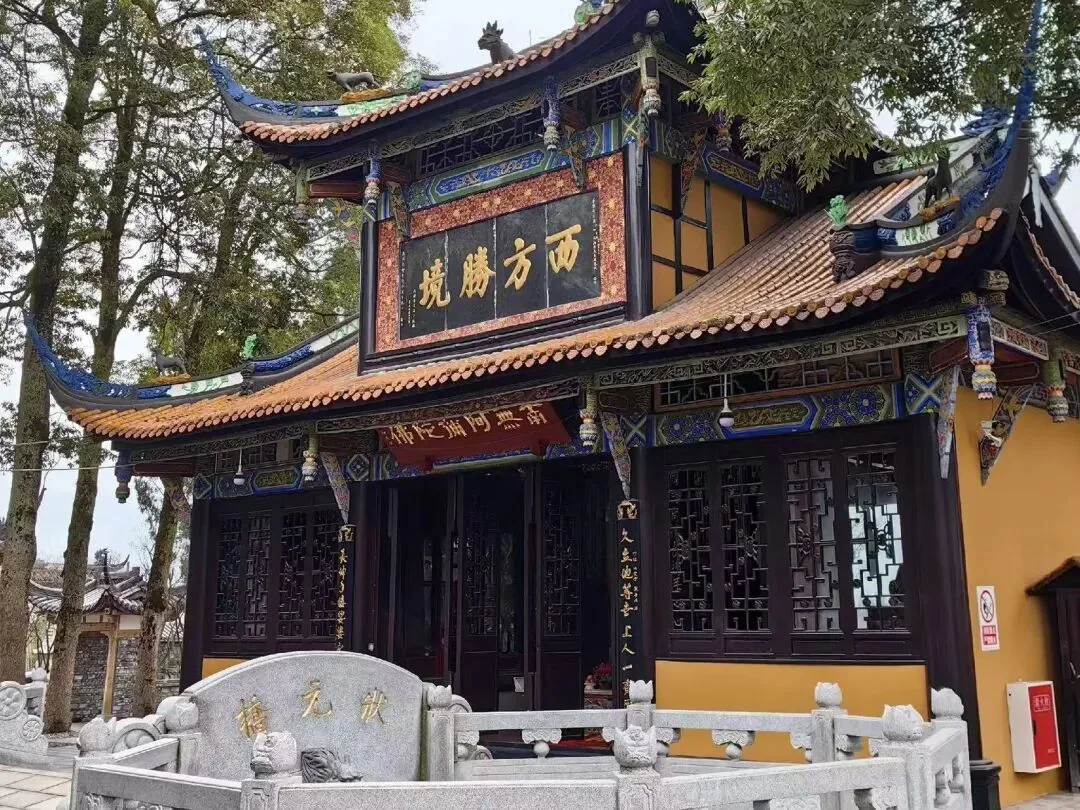
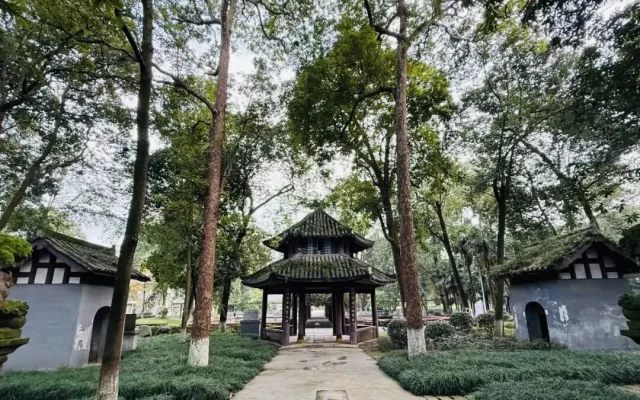
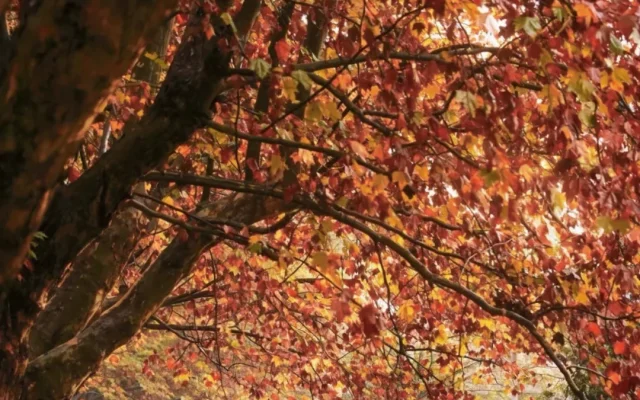
The old trees in the courtyard are towering. In autumn there’s the fragrance of osmanthus — though that’s gone now. In the back courtyard stands an ancient ginkgo, leaning slightly, its branches blocking out a patch of sky. Late autumn is almost here, and the ginkgo leaves are starting to turn yellow. A gust of wind sends three or four leaves drifting down. Give it a little more time and you’ll see the ground covered in gold — prime photo season.
The View from Above
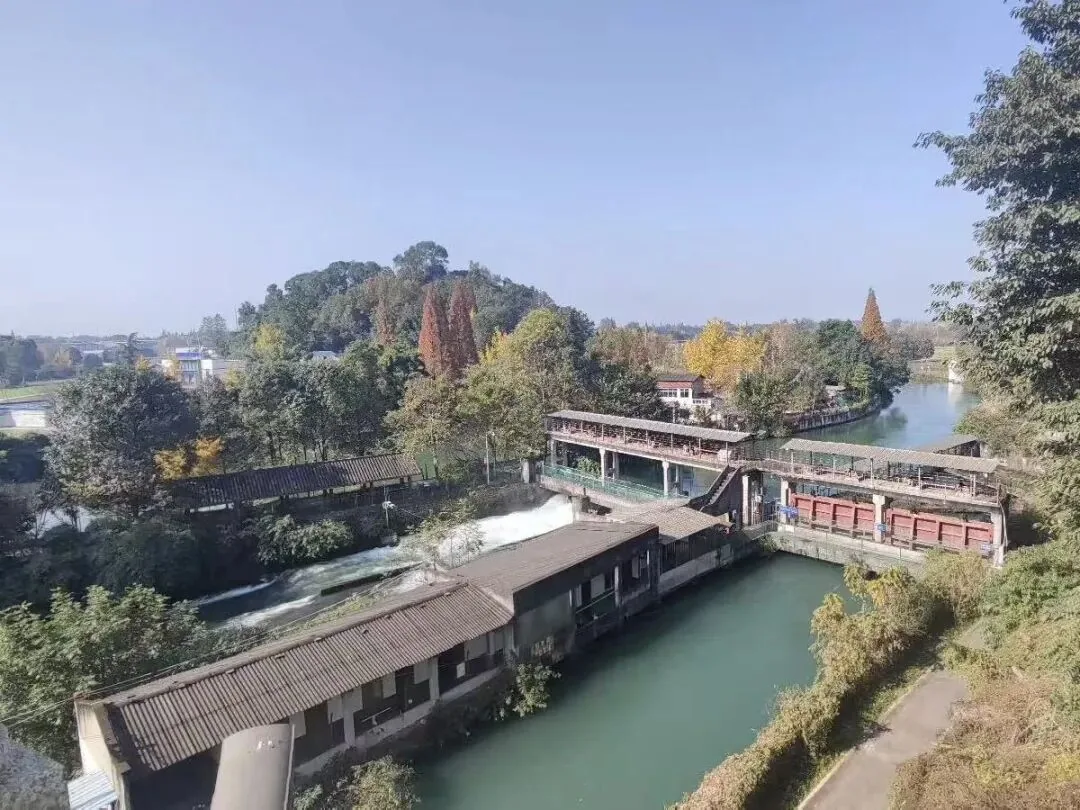
From the high platform at the temple, look down and you’ll see the Xuyan and Baitiao rivers winding around the foot of the hill, one in front and one behind. Further out, the western Sichuan “linpan” landscape spreads out — bamboo groves surrounding villages, fields crisscrossing, hamlets dotting the land. You can still make out the rice bundles freshly harvested from the autumn fields. The Chengdu Plain stretches endlessly to the horizon, as if it never ends.
A Cup of Tea and a Moment of Peace
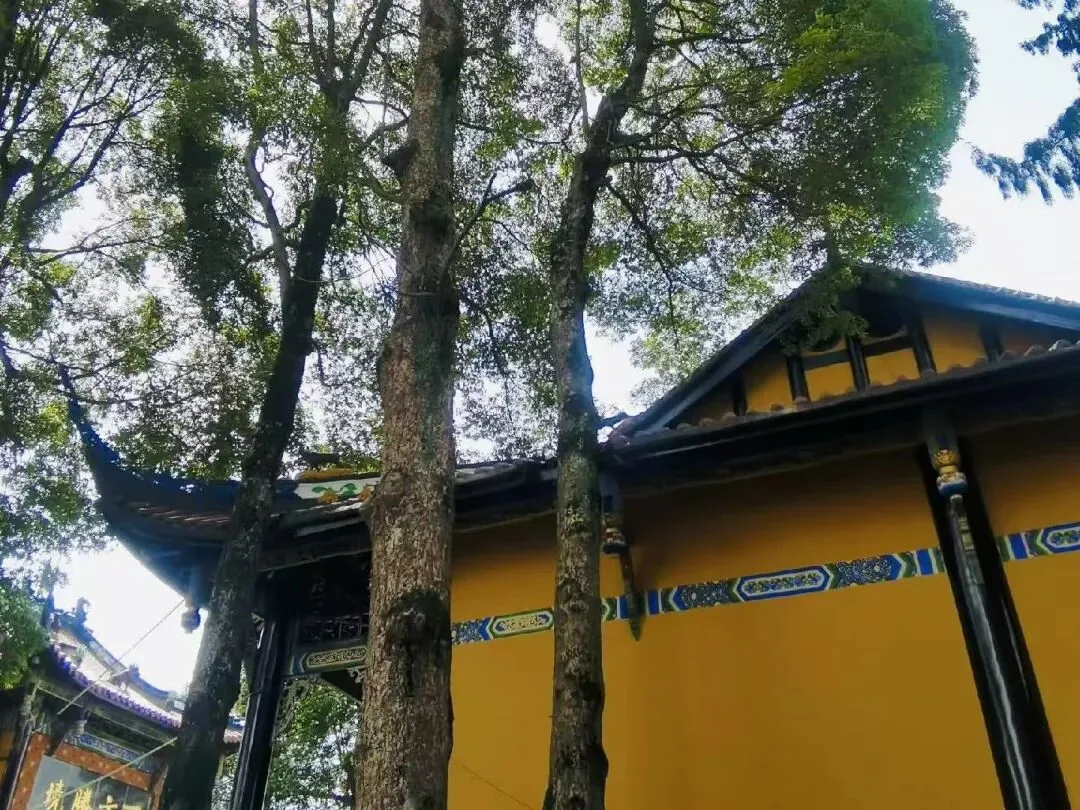
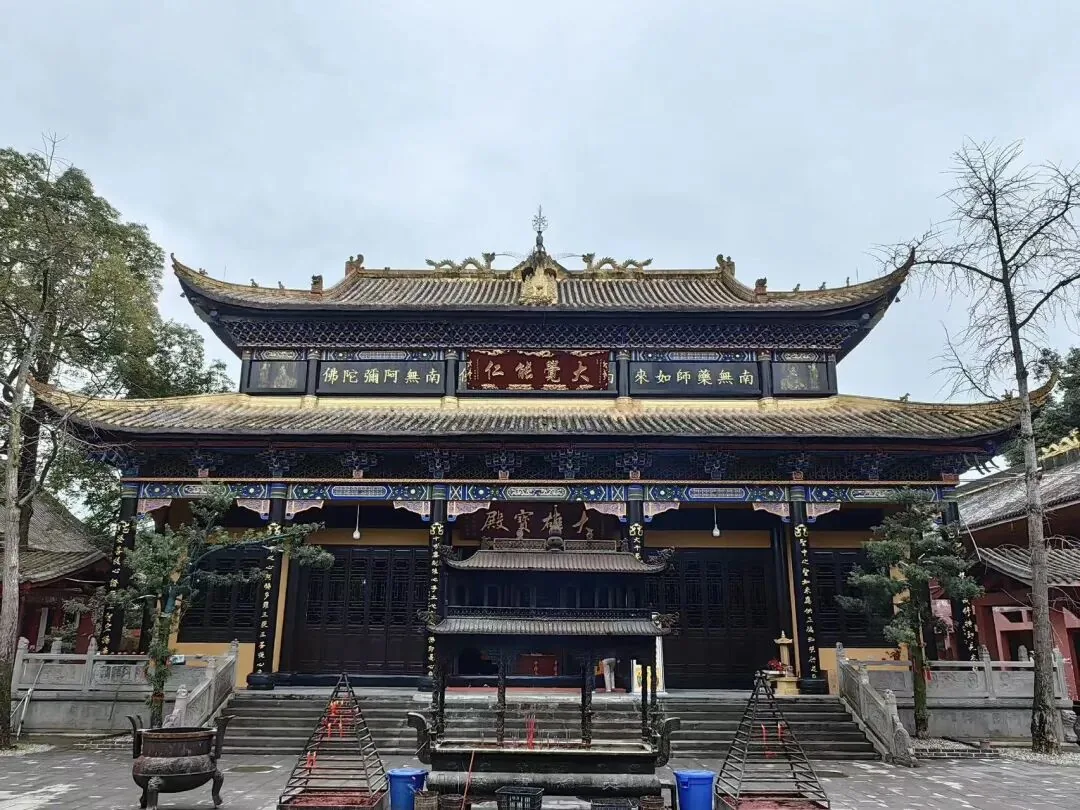
The temple’s bright yellow walls were repainted in recent years. In winter, plum blossoms appear here — though it’s not the season yet. For now, it’s a wonderfully quiet place to take photos on your own. In the courtyard, 10 RMB gets you a cup of tea. Sit under a tree and sip it slowly. Don’t think about work or life’s pressures. If the sun’s out, soak it up. If there’s a breeze, let the mountain air wash over you. All your anxiety will melt away here.
Local insight: Yan Junping’s line “I am happy in life and happy in death” used to sound like Daoist mysticism to me. But standing at Pingle Temple, I finally got it — it’s not passive resignation. It’s about truly learning to let go.
Practical Info
- Address: Pingle Village, Tangchang Town, Pidu District, Chengdu (Hengshan)
- Tickets: Free entry
- By bus: Take Metro Line 2 to Xipu, then bus P40 to Jiepai Station, and walk about 900 meters
- By car: Driving is more convenient — navigate to “Pidu District Pingle Temple,” about 1 hour from Chengdu. There’s a free parking lot at the foot of the hill.
- Special dates: Lunar New Year’s Day (mountain pilgrimage temple fair); 6th day of the 6th lunar month (traditional “pay respects at Pingle”); the 1st and 15th of each lunar month (more worshippers); otherwise, quite peaceful.
So — do you like the sound of Pingle Temple?