Yangping Xuanguan: A Taoist Temple Hidden in a 7,000-Mu Bamboo Sea
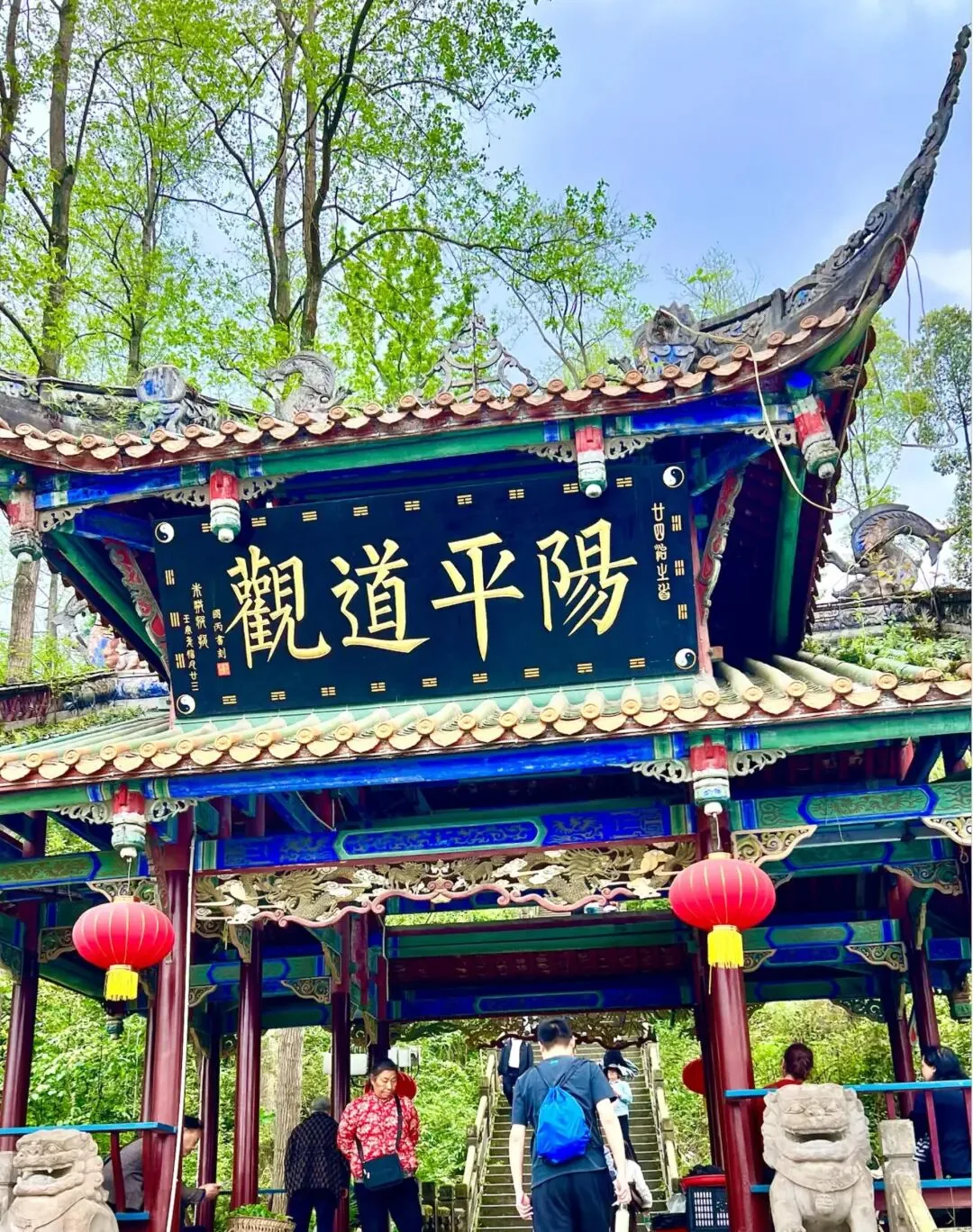
If you’re looking for a quiet escape from Chengdu that feels almost otherworldly, Yangping Xuanguan (阳平玄观) might be exactly it. Tucked into Yangping Mountain in the Jianjiang River valley of the Longmen Mountains in Pengzhou, this low-key Taoist site — also known as Yangping Guan or ancient Yangping Zhi — is the first of Taoism’s Twenty-Four Zhi (parishes). It’s revered in Taoist circles as the “central diocese” of the Way of the Celestial Masters, and it’s the very first parish established by Zhang Daoling, the first Celestial Master, when he came to Sichuan to spread the faith. Its cultural roots actually predate Mount Qingcheng, making it the source of Bashu Taoist heritage.
Surrounded by mountains and layers of nan bamboo, with the Jianjiang River winding gently through the valley, the temple’s red walls and flying eaves hide within a sea of green. There’s no noisy commercial atmosphere here — just the rustle of bamboo in the wind and the faint scent of incense, distilling 2,000 years of history into one peaceful spot.
The Deep Roots of Yangping Mountain
The spiritual foundation here goes back to ancient pre-Qin times. Long before Zhang Daoling arrived in Sichuan, Yangping Mountain was a sacred mountain for the ancient Shu Yufu tribe, known as the Shu King Shrine, where ancestors worshipped heaven, earth, and their forebears. It was an ancient spiritual sanctuary in the Jianjiang River basin.
In the first year of the Han’an era of the Eastern Han dynasty, Zhang Daoling came to Sichuan and founded the Way of the Five Pecks of Rice. He chose Yangping Mountain to establish Yangping Zhi, which oversaw the religious affairs of all twenty-four parishes in Bashu. The Yangping Zhi Dugong Seal was created here — the highest token of the Way of the Celestial Masters — and Yangping Xuanguan thus became the core hub of early Taoism.
During the Tang dynasty, to avoid an emperor’s name taboo, Yangping Zhi was renamed Yangping Hua. The temple expanded and incense flourished. Through the Song and Yuan dynasties it went through several changes, at one point becoming a Buddhist temple. After repeated rises and falls, the ancient halls gradually fell into ruin. It wasn’t until 1994, under the leadership of Daoist priest Fu Yuantian, that Yangping Xuanguan was rebuilt and revived as a practice site for both the Quanzhen and Zhengyi schools of Taoism. The long-interrupted Taoist rhythm returned to this valley.
What to See Inside the Temple
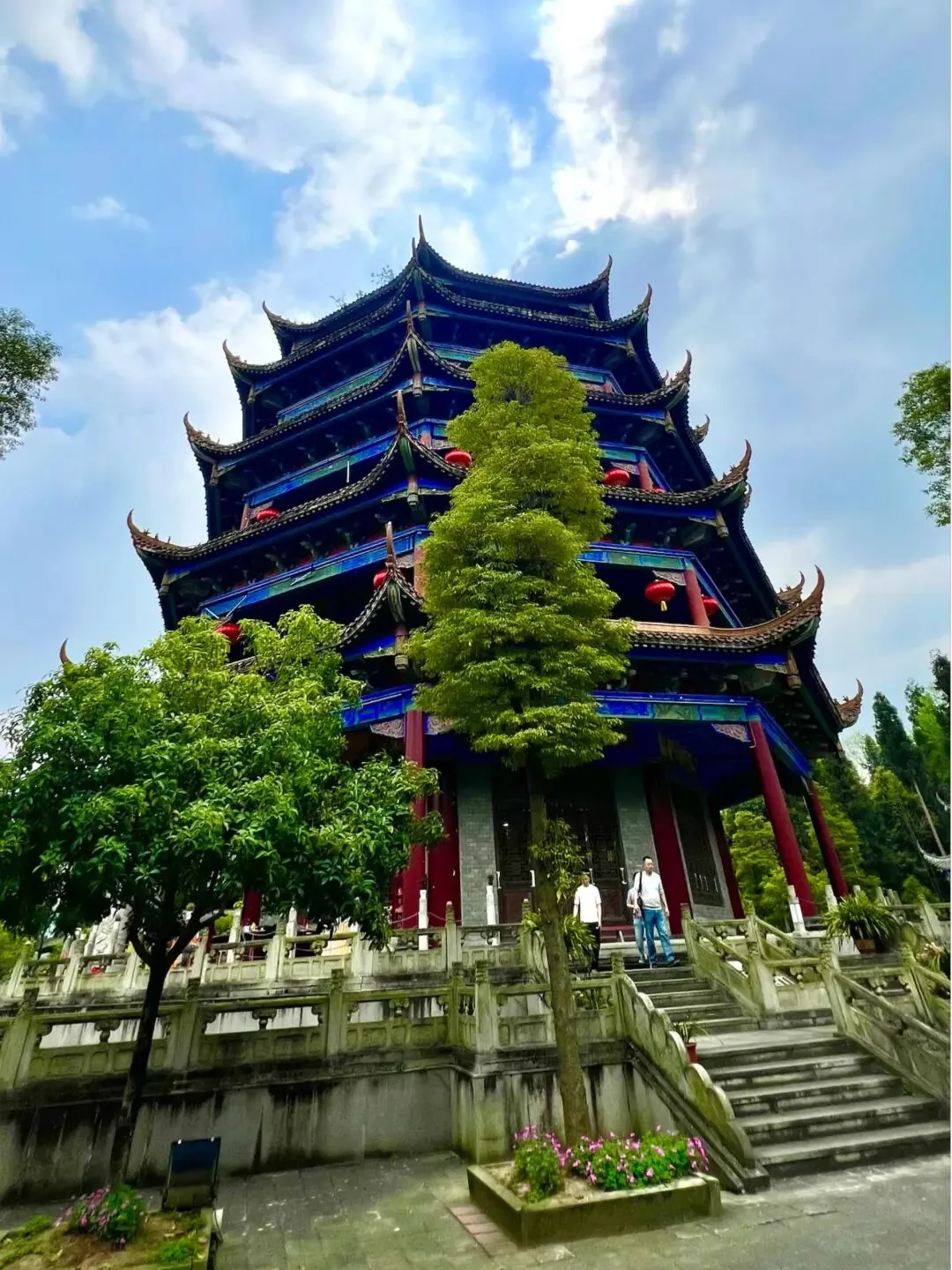
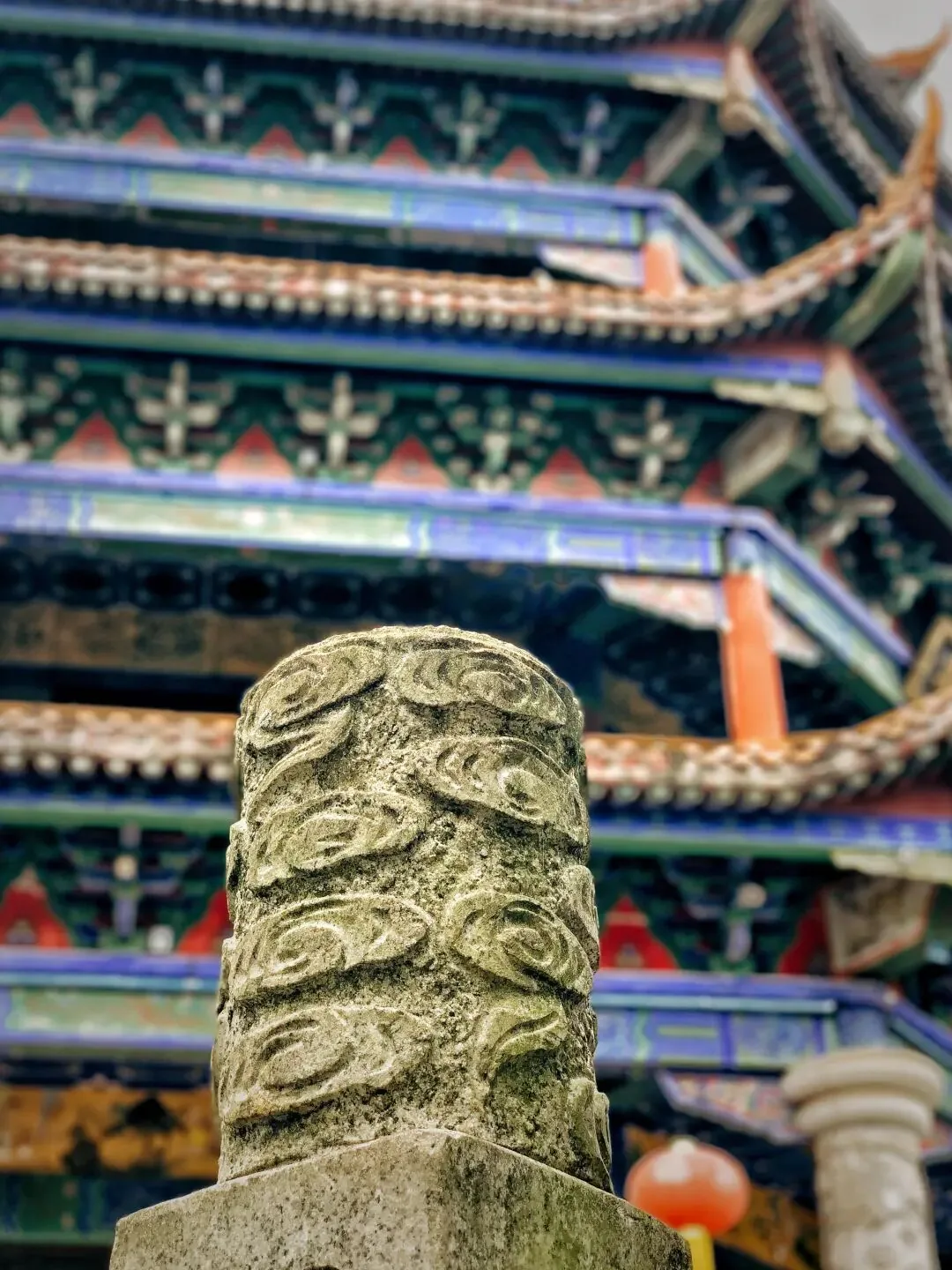
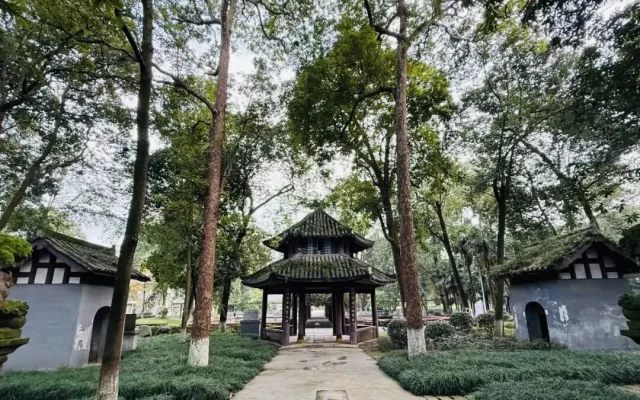
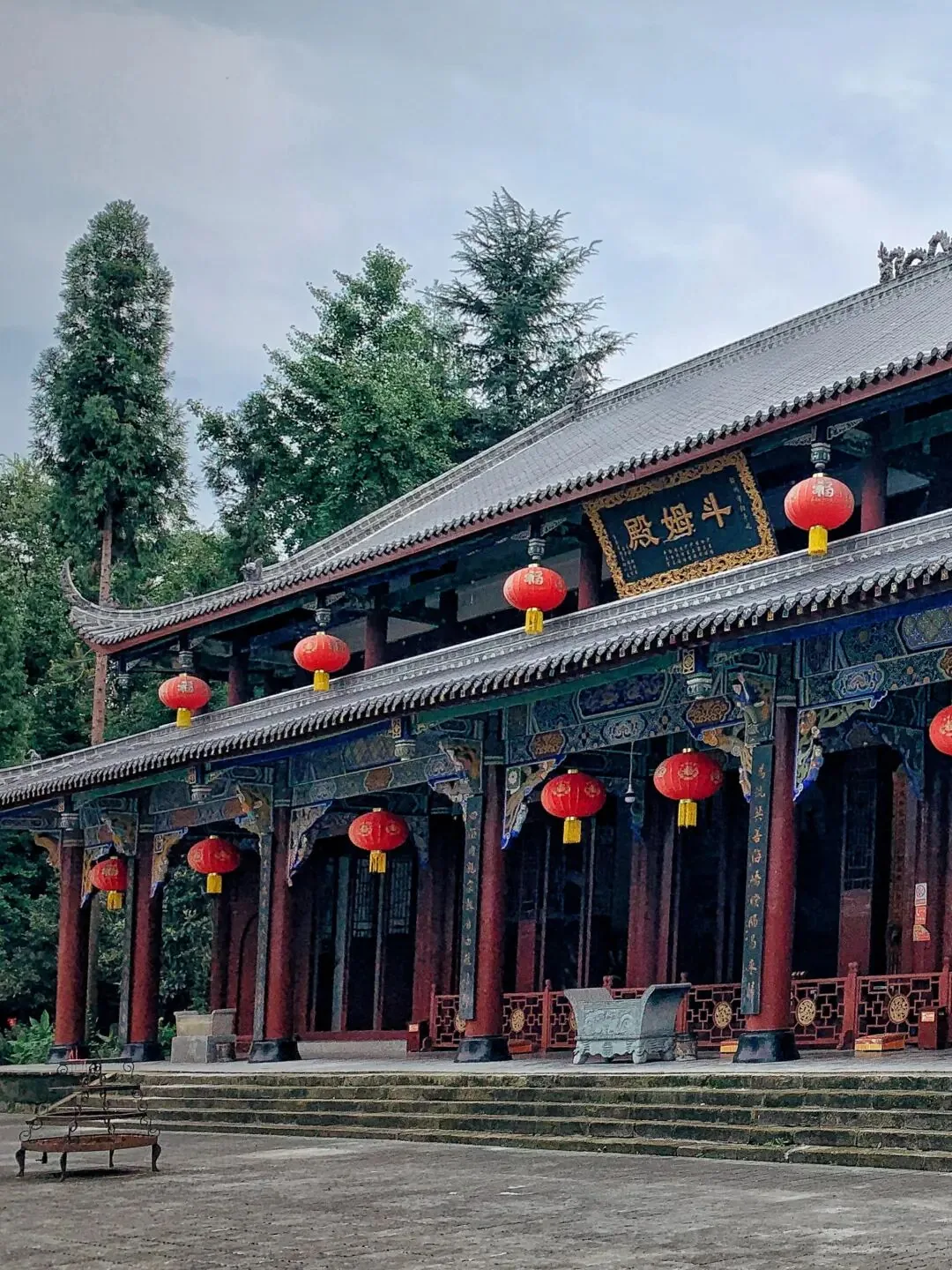
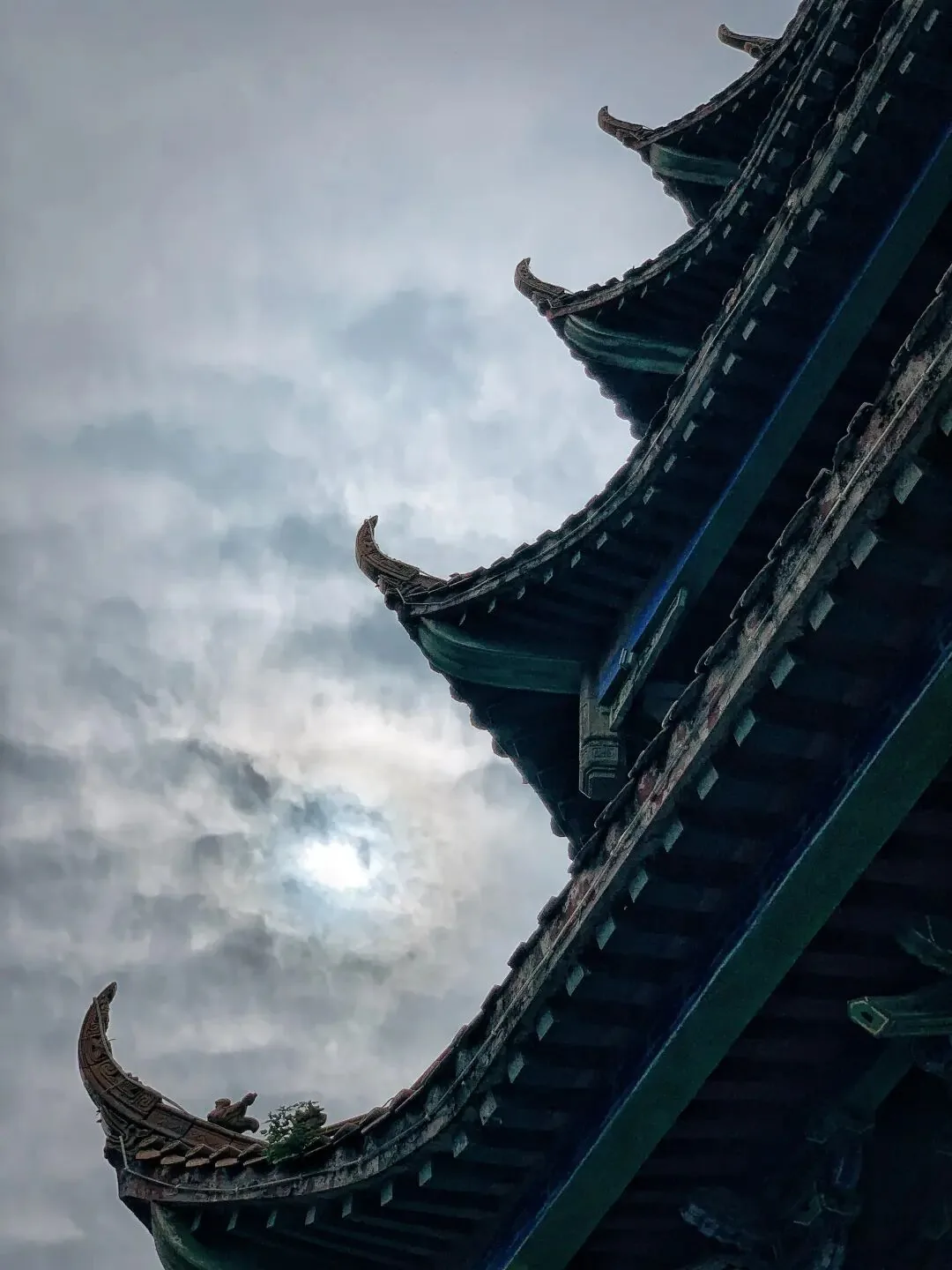
As you step into the temple, an ancient stone archway stands tall, its plaque inscribed with essential Taoist teachings. A long stone staircase climbs the mountain slope, threading through the bamboo sea. The entire complex is built along the mountain’s contours, rising layer by layer, with halls scattered in orderly fashion. Flying eaves and painted beams showcase the liveliness of Sichuan-style ancient architecture.
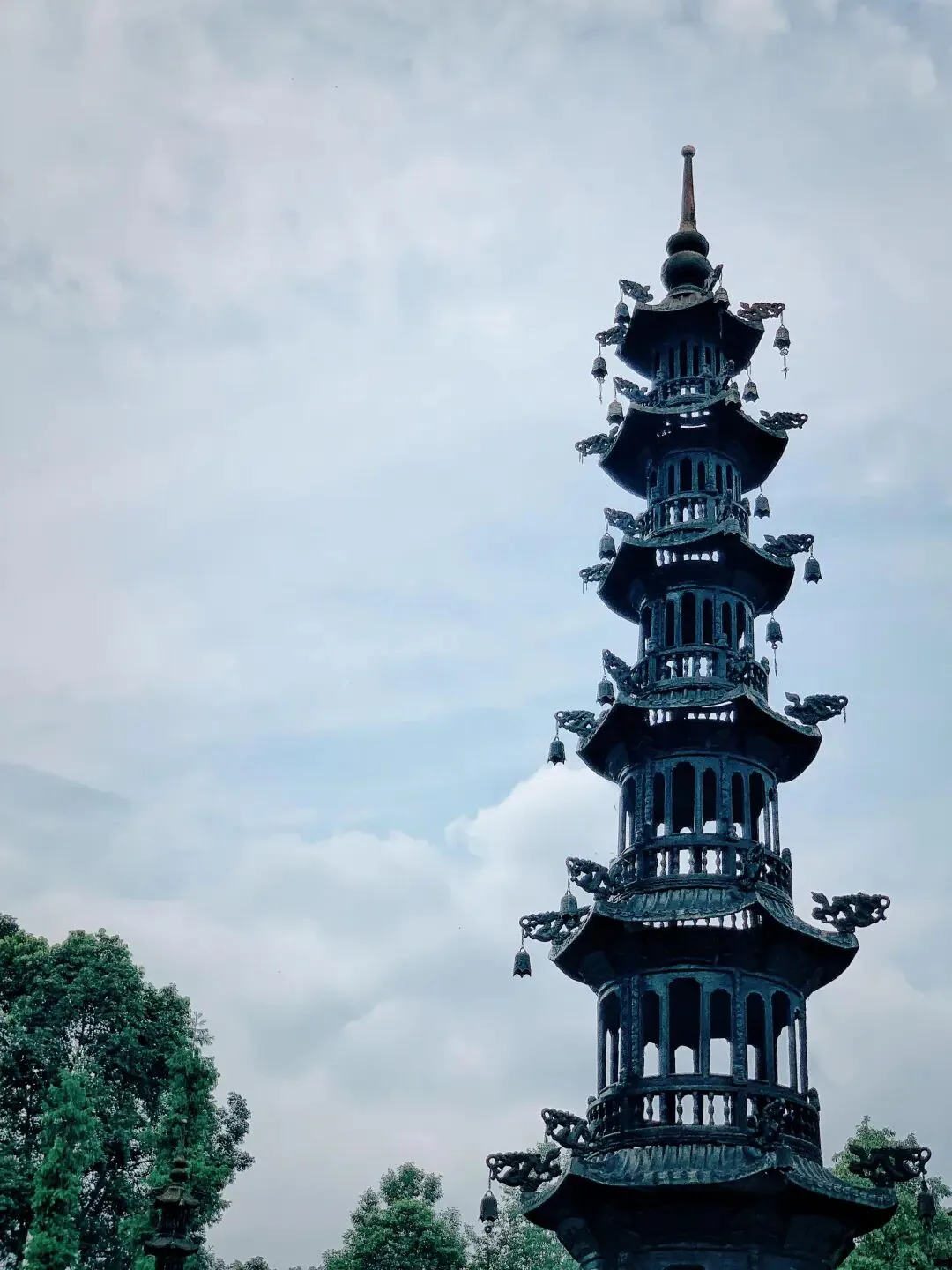
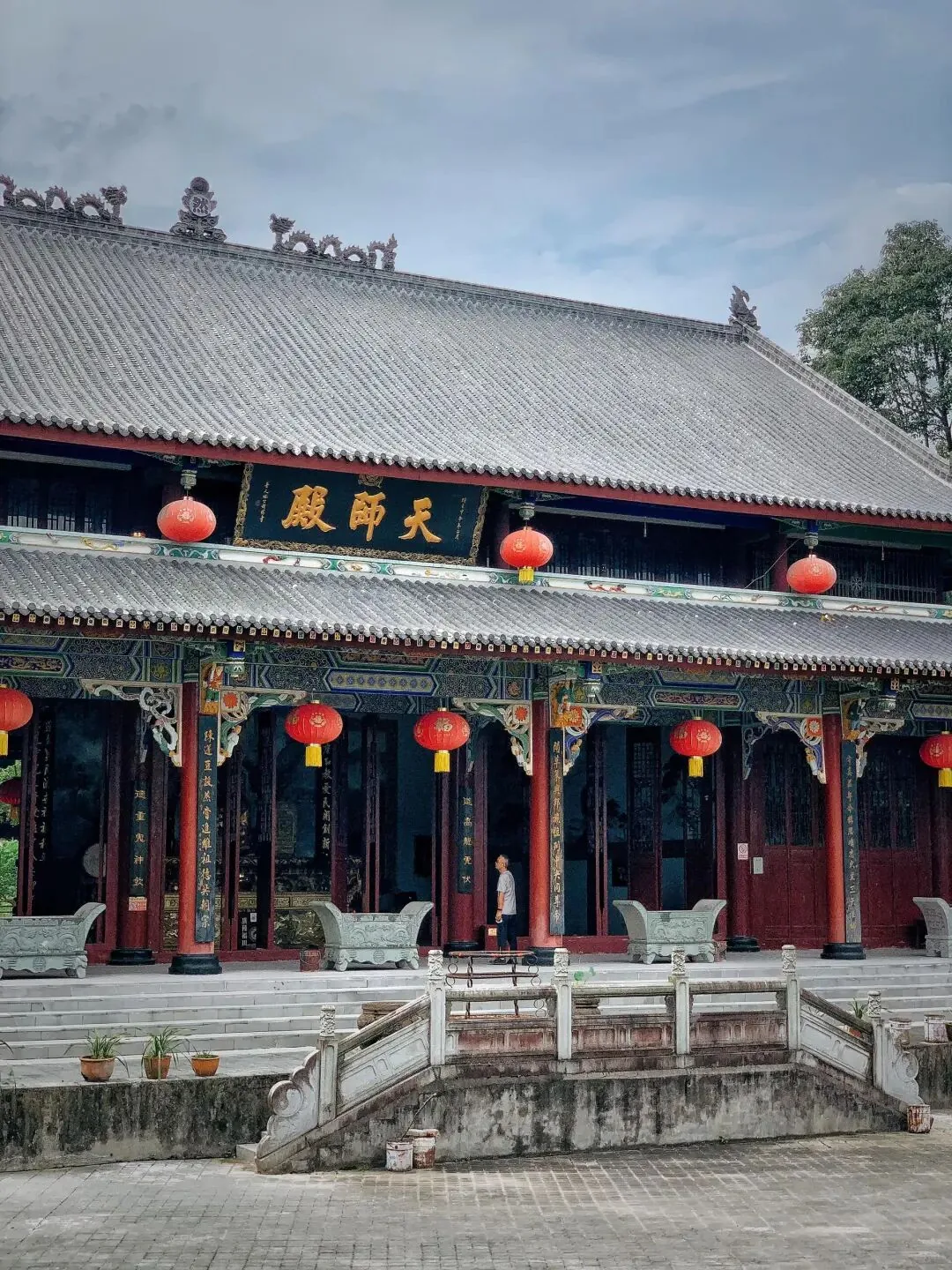
The most striking structure inside is the giant Bagua Pavilion. Towering high and incorporating the Taiji and Bagua concepts, it’s the signature building of Yangping Xuanguan. From the top, you can look out over the Jianjiang River valley and the endless bamboo sea. The Lingguan Hall, Tianshi Hall, Kuixing Hall, and Caishen Hall are arranged in sequence, their statues solemn and quiet. The Tianshi Hall enshrines Zhang Daoling, telling the story of his preaching and founding of the parish here.
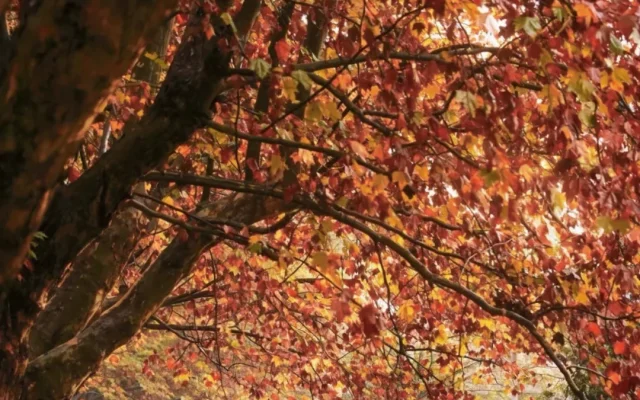
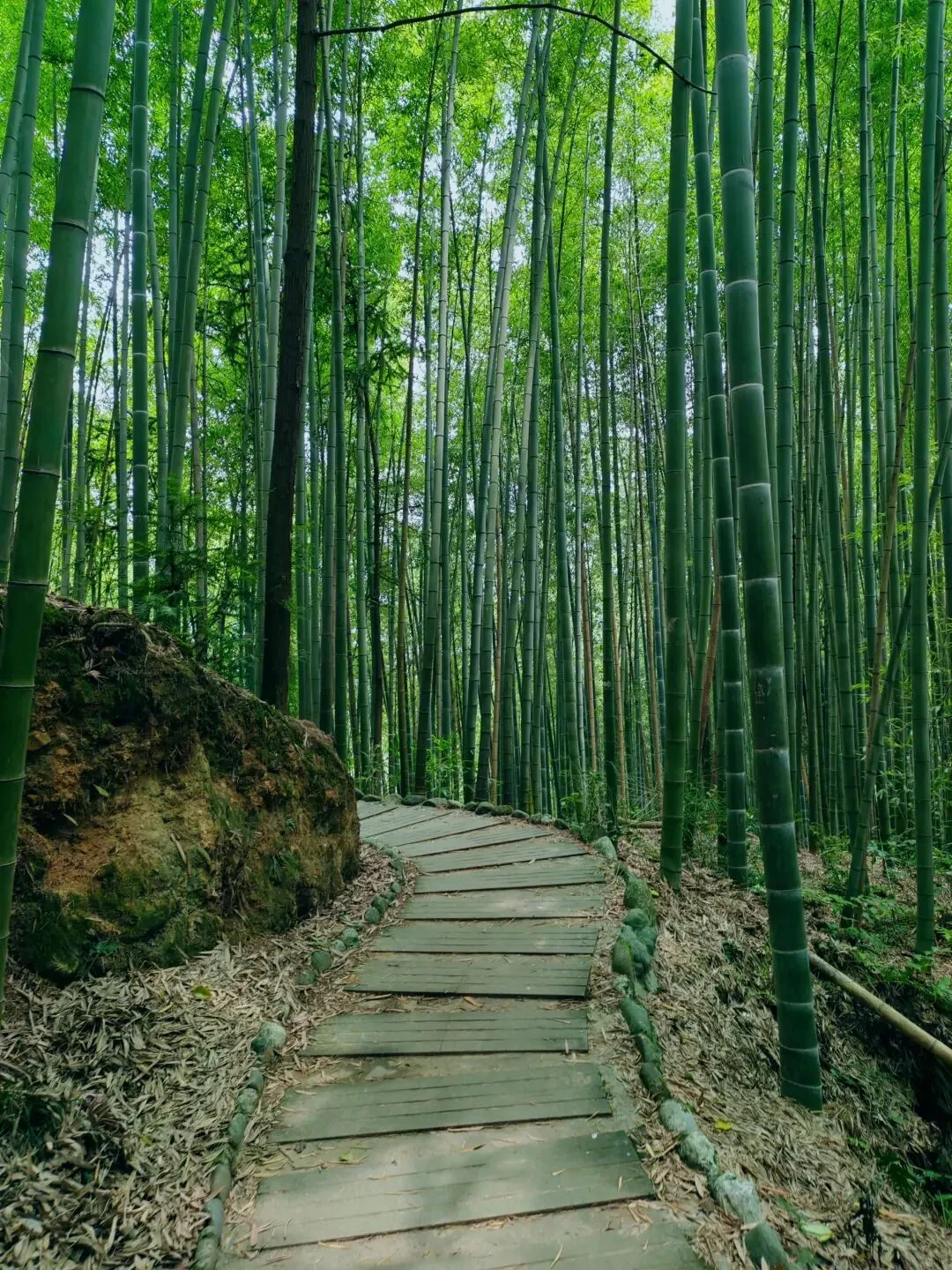
Outside the halls, ancient trees reach for the sky and bamboo groves cover the mountains. The 7,000 mu of nan bamboo form a huge natural oxygen bar. When the wind blows, the bamboo sea rustles; when mist rises, the halls are half-hidden in clouds — like the Penglai fairyland described by Wang Bo, a treasured place of incense.
Hiking Through the Bamboo Sea
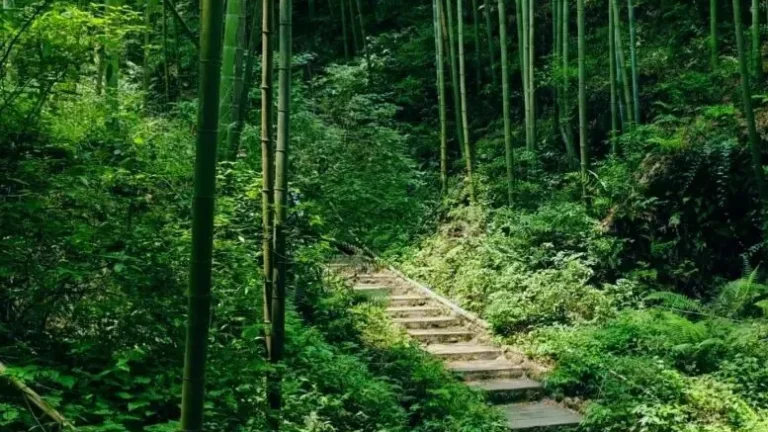
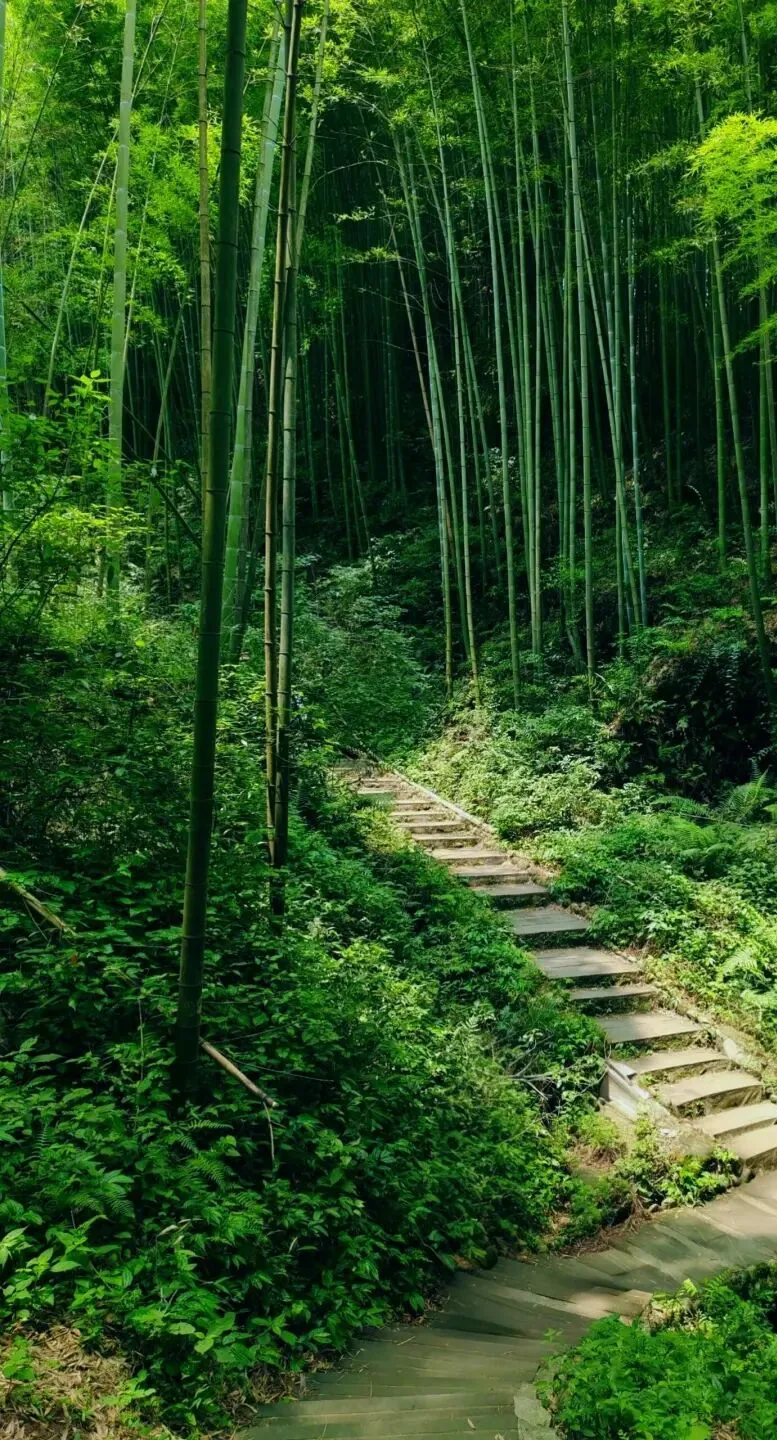
Yangping Xuanguan isn’t just a place for pilgrimage and seeking the Way — it’s also a popular light hiking destination around Chengdu. Behind the temple, a bluestone path winds through the bamboo forest, with a loop trail that passes through dense nan bamboo groves. The slope is gentle and the difficulty is very low. Strolling through the bamboo, surrounded by lush green, you’re insulated from the outside heat, and the air is moist and fresh.
As you walk, you can enjoy the beauty of the wild landscape and also quiet your mind to feel the Taoist concept of “the Way follows nature.” There are few tourists here, and no aggressive selling of incense or candles. It’s peaceful and serene — perfect for clearing your head and exploring ancient sites.
Pro tip: The stone steps in the bamboo forest can be damp, so bring non-slip shoes. In summer there are many mosquitoes, so pack mosquito repellent.
Practical Info
- Address: Yangping Village, Xinxing Town, Pengzhou City, Chengdu. Navigate to: 阳平玄观 (Yangping Xuanguan).
- Opening hours: 8:30–17:00. Last entry after 16:30, so plan to visit during the day.
- Tickets: Free. Parking is 10 RMB per car.
- Driving: About 65 km from Chengdu, roughly 1.5 hours by car. Take the Chengdu–Pengzhou Expressway, then head through Pengzhou toward Haiwozi. There are many curves, so drive carefully.
Good to Know