The Quiet Temple That Once Rivaled Daci Temple
Chengdu’s famous temples — Wenshu Monastery and Daci Temple right downtown — are packed every day. If you’re hoping for a quiet moment to soak up some real cultural depth, good luck. Most visitors glance around and move on. But here’s the thing: Chengdu has plenty of low-key, lesser-known temples that are genuinely fascinating. Today we’re talking about one of them: Longzang Temple in Xinfan, Xindu — an ancient temple almost nobody knows about.
A Temple Hidden Inside a Hospital
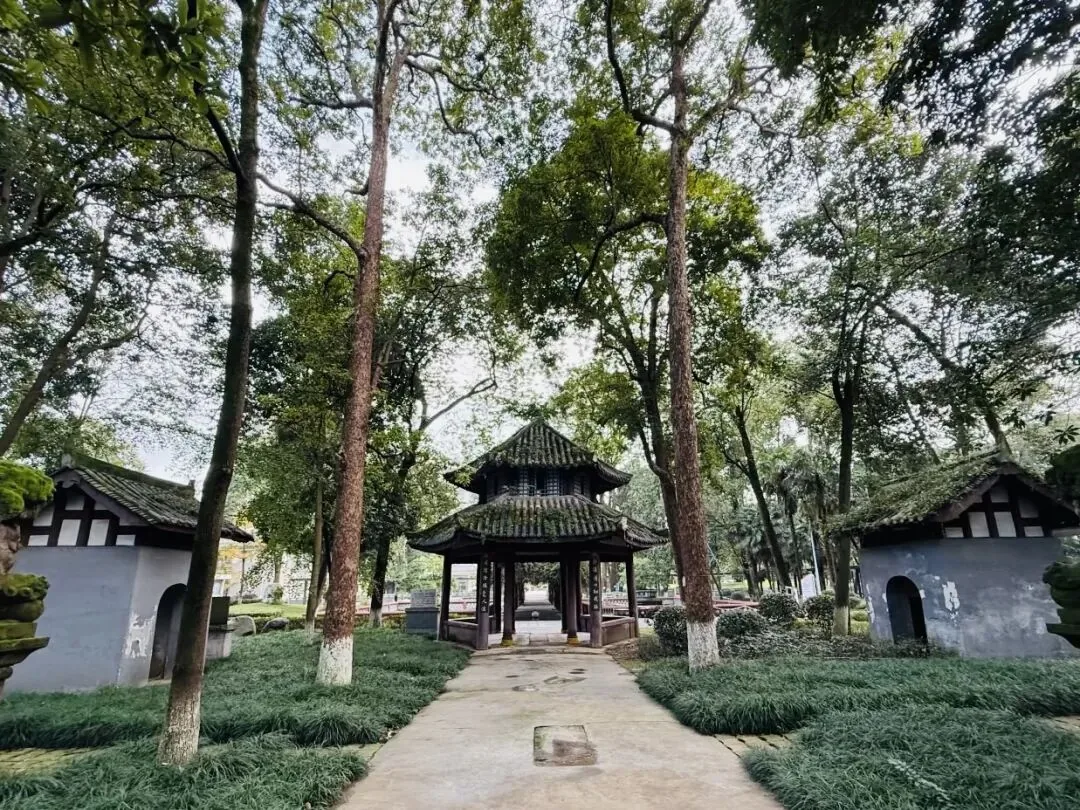
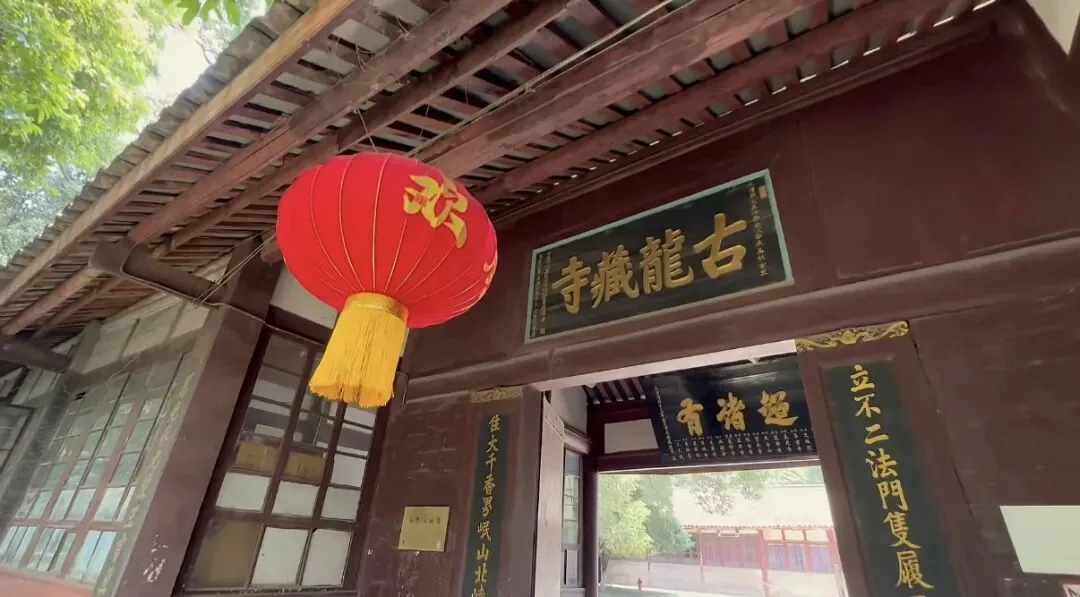
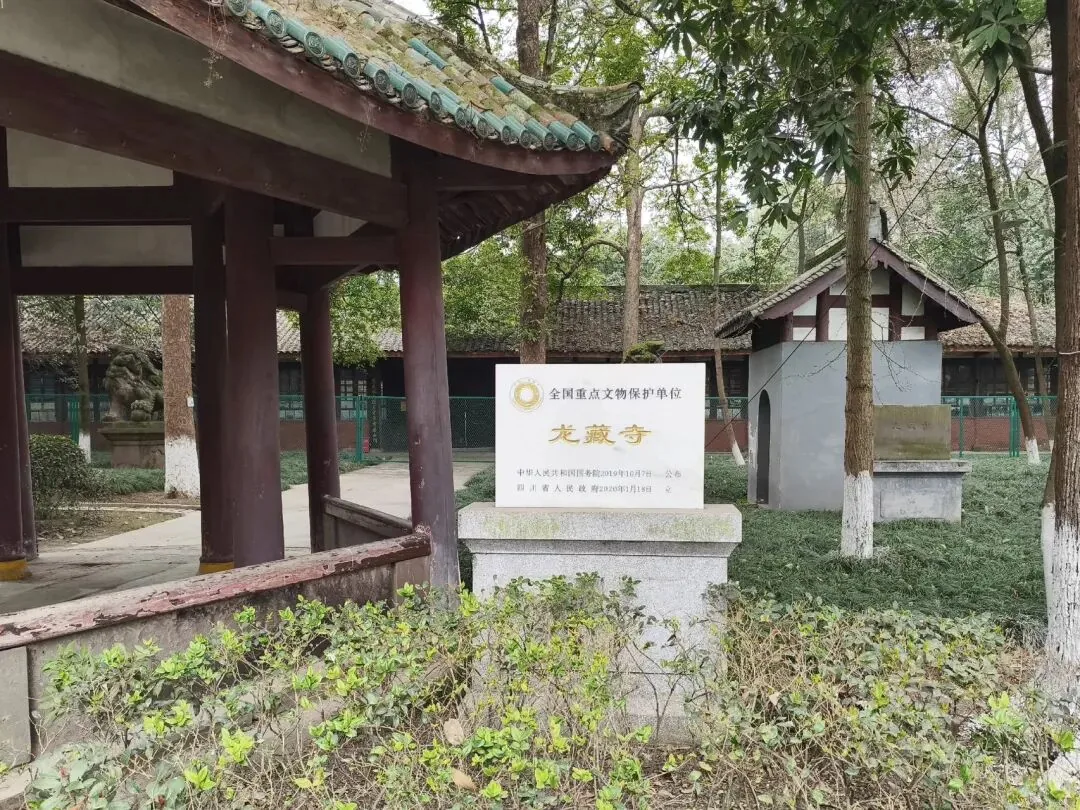
Locals have always called it Longzang (zang) Temple, the way we’ve said it since childhood. Almost no one has heard of it — it’s just that low-profile. Even its location is tucked away: it sits inside the Sichuan Provincial Revolutionary Disabled Soldiers’ Sanatorium. If you went looking for it on purpose, would you ever guess it’s inside a hospital?
A History Stretching Back to the Tang Dynasty
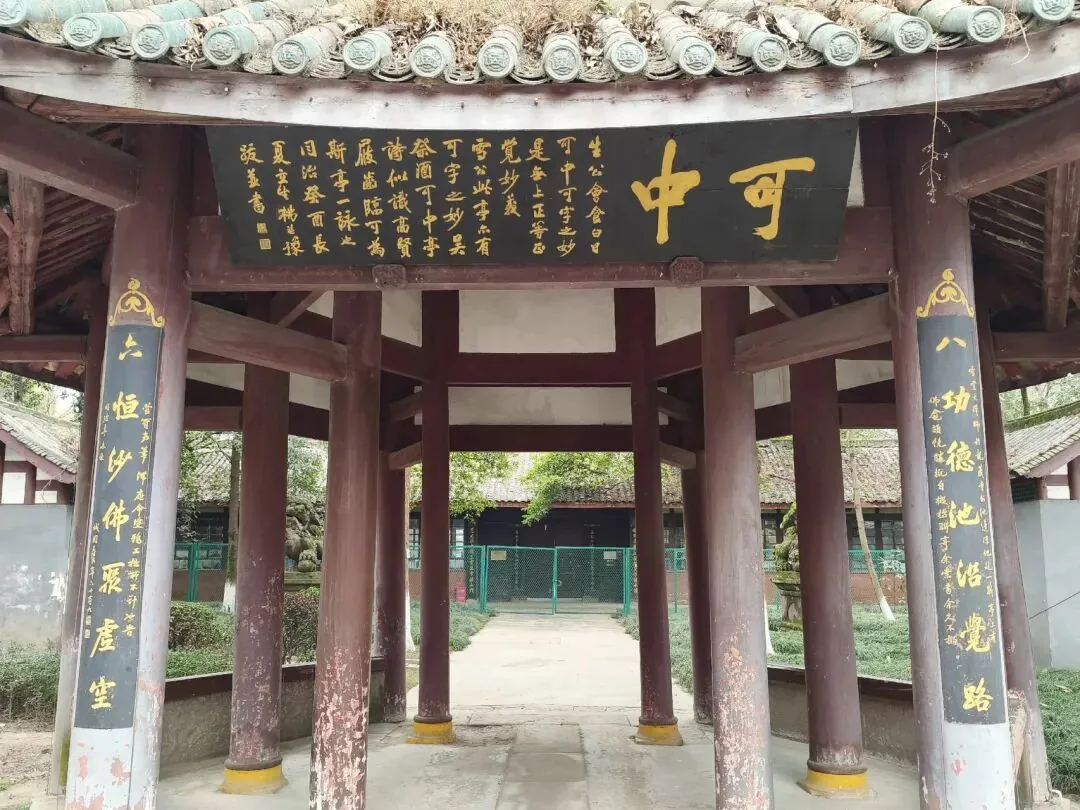
Longzang Temple has a long history. It dates back to the third year of the Zhenguan era of the Tang Dynasty, when it was first called Cihui Nunnery. For over 400 years after that, it was just an unremarkable little rural nunnery. Then, during the Northern Song, the temple was expanded and renamed Longzang Temple. It once stood alongside Daci Temple and Zhaojue Temple as one of Sichuan’s famous monasteries, covering over 300 mu with continuous halls and thriving incense. Later, from the late Yuan through the Qing, the temple was repeatedly destroyed and rebuilt.
Xue Tang and the “Number One Stele Forest of Western Sichuan”
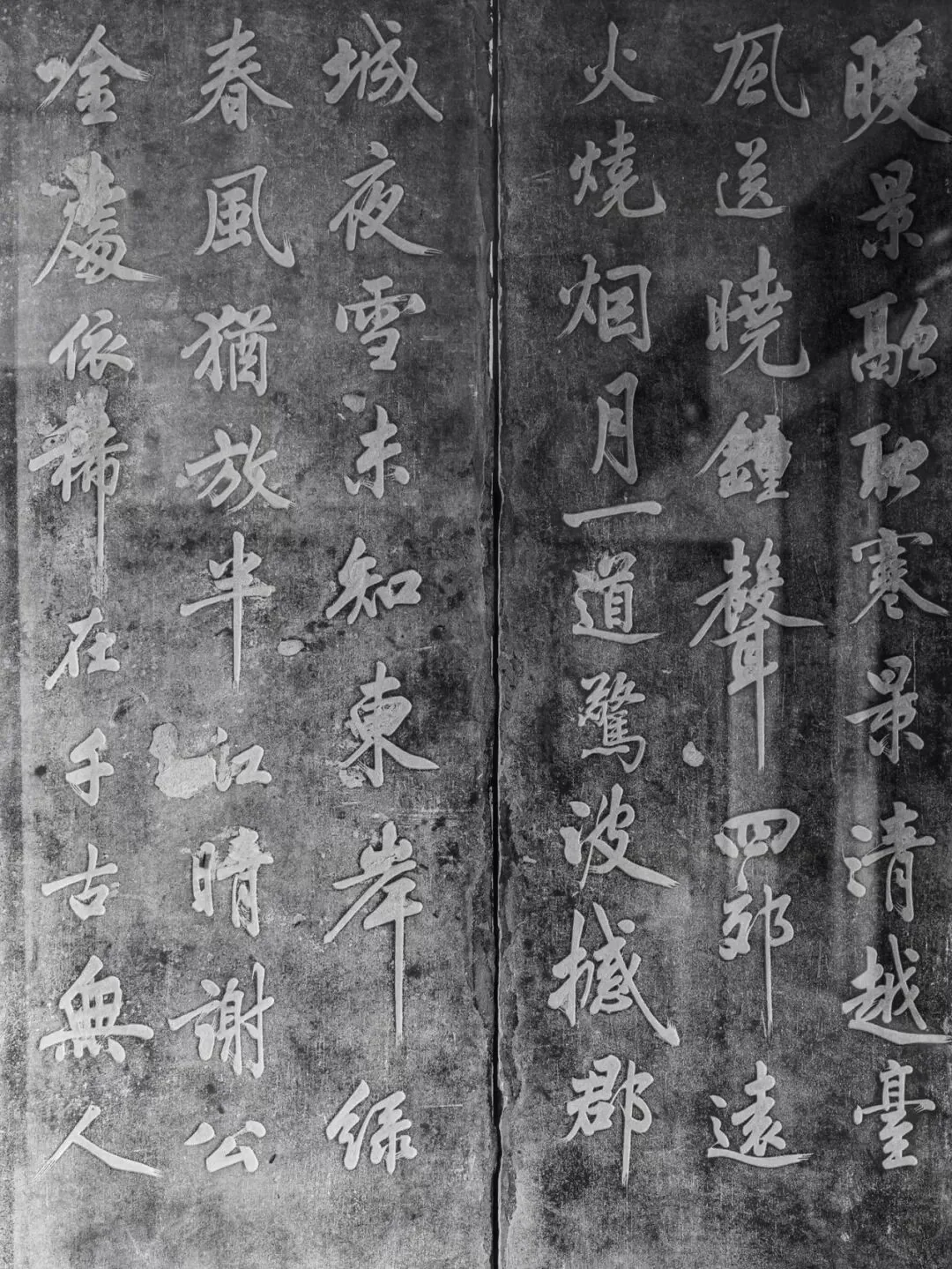
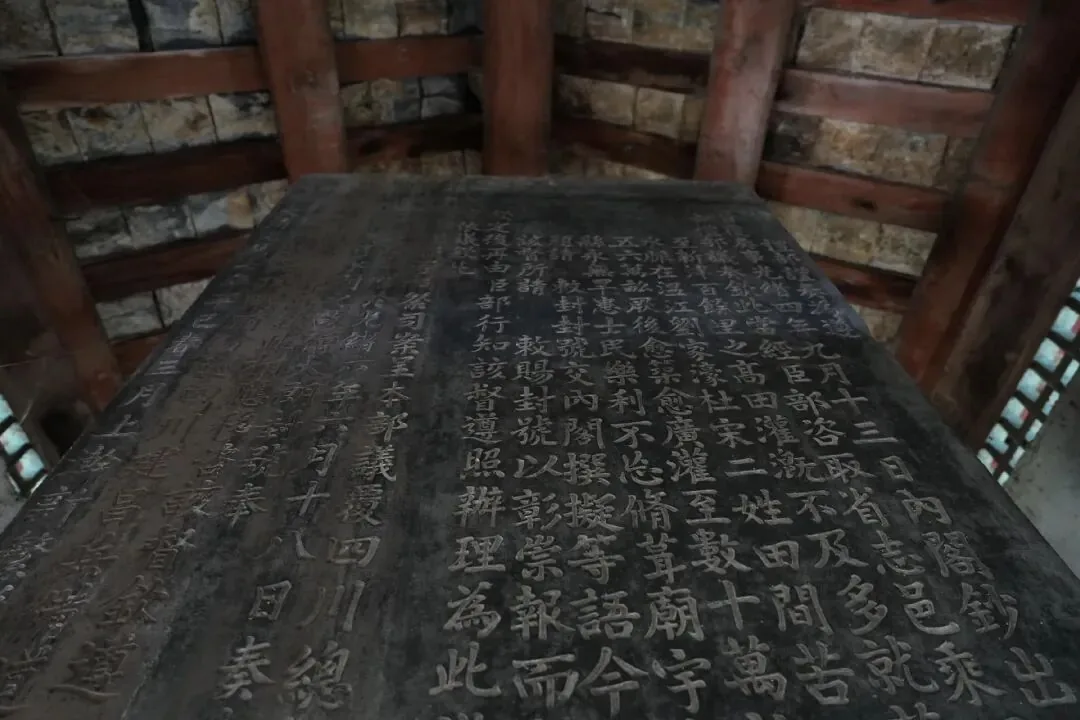
Xue Tang became a monk at 13 and became abbot of Longzang Temple at 32. He was famous throughout western Sichuan for his poetry and wrote over 2,000 poems in his lifetime. He turned this temple into a cultural highland of western Sichuan, founding a stele forest there and collecting calligraphy by masters through the ages — Su Shi, Huang Tingjian, Dong Qichang, He Shaoji. At its peak, the stele forest had over 200 steles, dense as a forest, and people called it the “Number One Stele Forest of Western Sichuan.” The temple once held over 4,700 woodblocks and more than 3,000 volumes of ancient books and local gazetteers — a collection unmatched in western Sichuan’s monasteries in both quantity and variety. That’s incredibly rare among Chinese temples.
Xue Tang was a man who understood friendship. One summer during the Guangxu era, he picked a basket of fresh lotus seeds, took a ferry along the Pi River to Chengdu, and gave them to his friend Huang Yunhu. Huang Yunhu was a descendant of Huang Tingjian and a poet himself. He peeled open a lotus seed and wrote back a poem:
“The lotus grower on the lake gives me new lotus seeds; the gentleman’s heart is the same, new or old.”
A lotus seed — “lianzi” — sounds like “lianzi,” to cherish someone. A single lotus seed crossed a river, and it crossed between kindred spirits. That evening, as Xue Tang waited for the ferry on the Tuo River bank, he wrote his own line:
“Wait until the sunset fades away, and cross the Tuo River with the moon at night.”
The poem was later carved into the stele forest. Today everything has scattered, but that bit of moonlight and lotus fragrance never did.
A Temple Built on Water, Now Overgrown
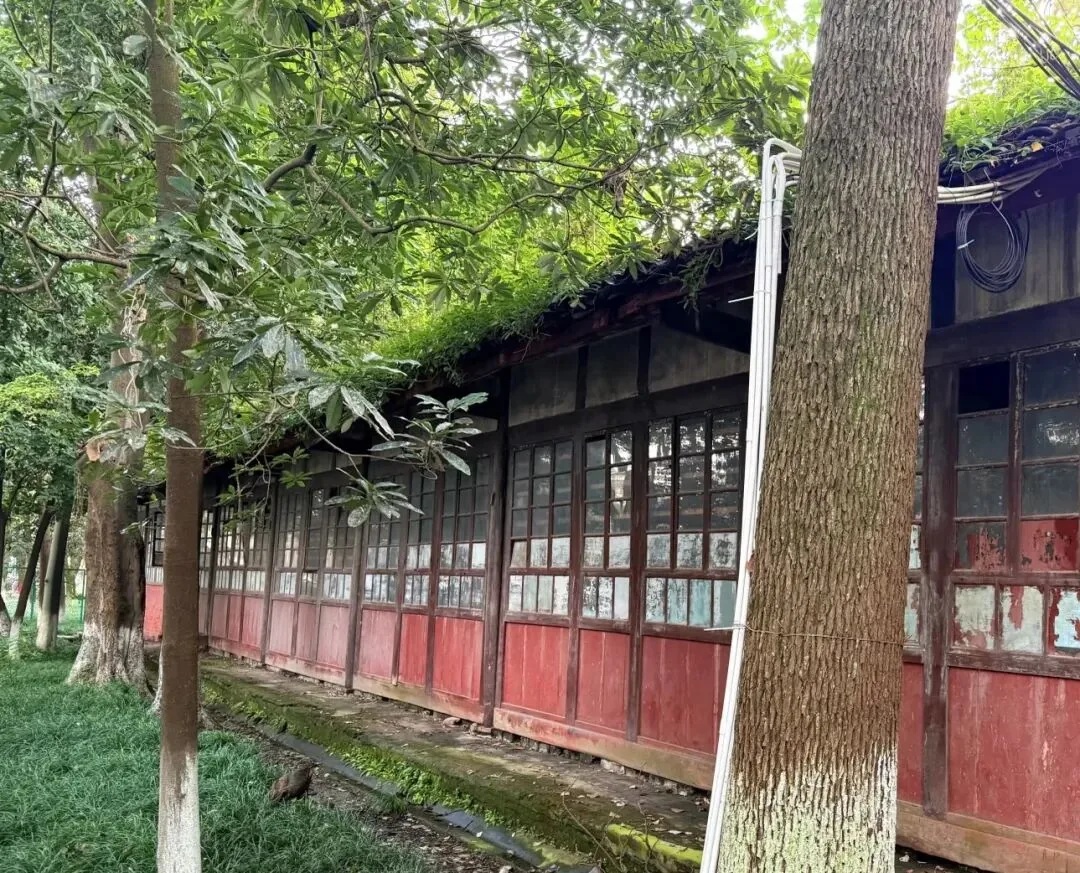
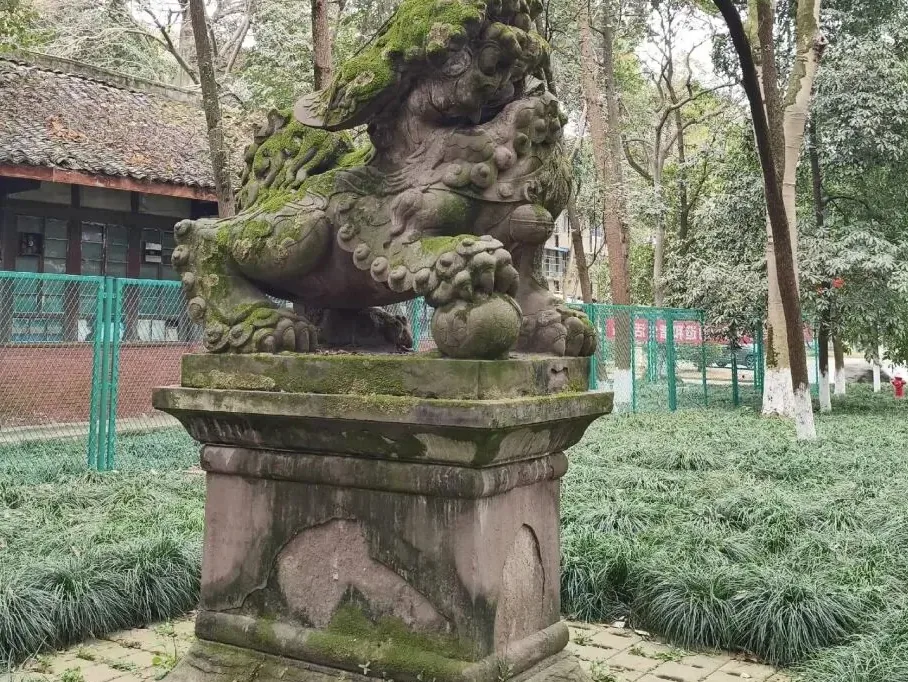
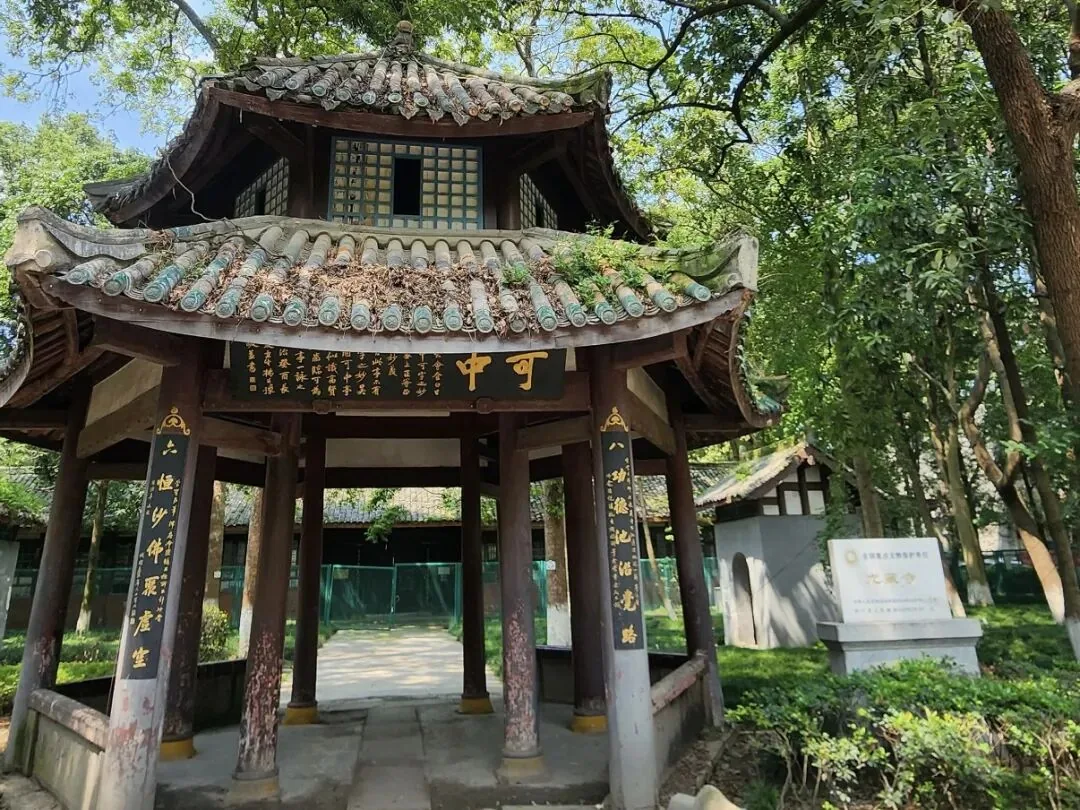
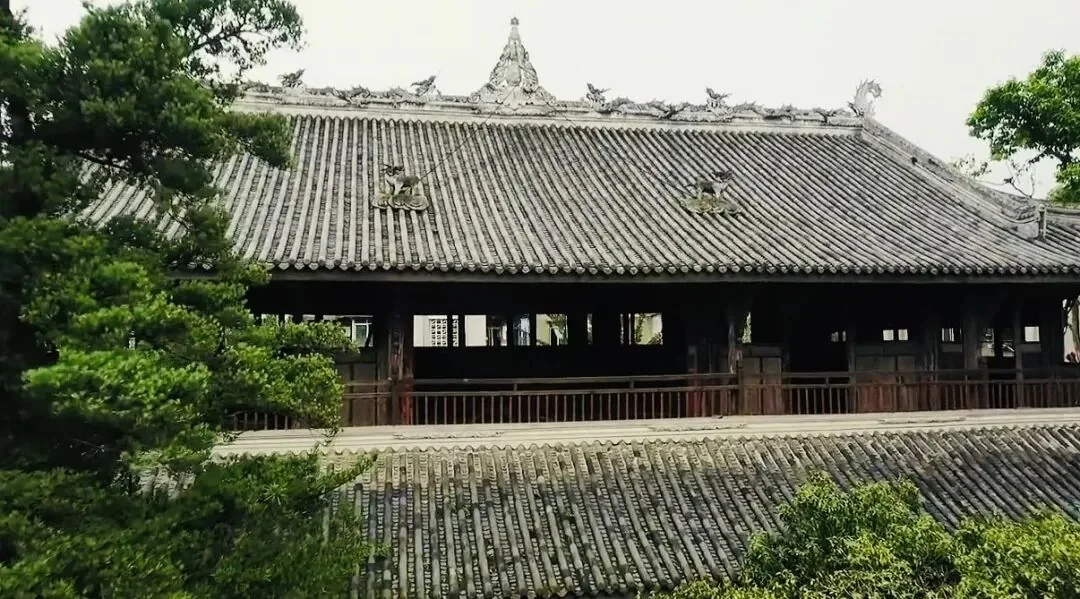
Longzang Temple is rooted in the fertile heart of the Chengdu Plain. It was built along the river, with water channeled into the temple grounds to form a unique circular water system — streams winding around courtyards, paths leading to quiet corners. But coming back now, it all feels like yesterday’s flowers. “Deserted” and “not fully open” have become this temple’s defining words.
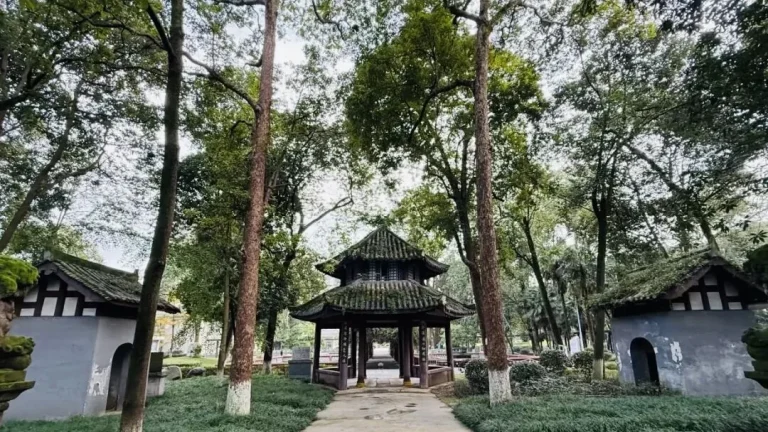
Walking in, you don’t feel grandeur — you feel quiet. The old trees are tall; camphor and osmanthus shade the courtyard cool. The red walls aren’t new, the dark tiles aren’t bright, but there’s a weight of history to them. In front of the mountain gate stand a pair of Qing Dynasty stone lions, 3.5 meters tall — the largest stone lions since the Qing.
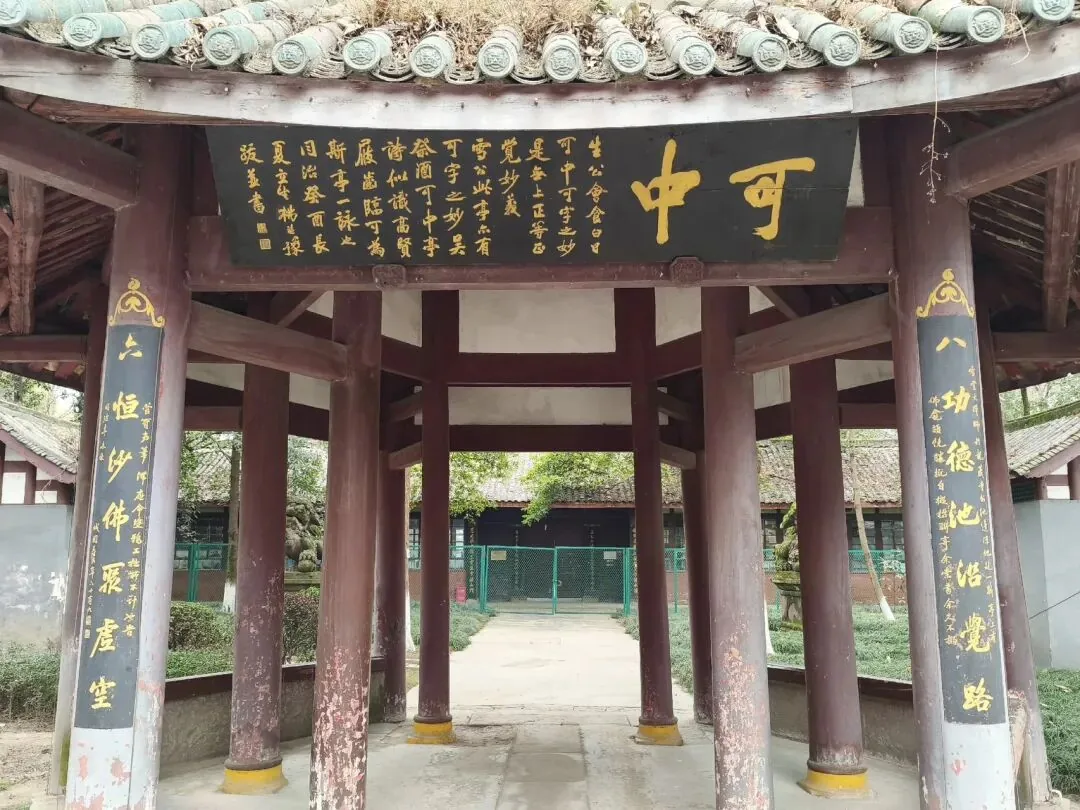
Local insight: The temple is fenced off with wire netting, but you can still make out the plaque reading “Ancient Longzang Temple.”
“Snow locks the Zen door in stillness, wind carries the ancient temple’s scent.”
That’s a line left by someone writing about Longzang Temple long ago. I came in autumn, when the osmanthus trees still held their last bit of fragrance. Through the mountain gate, past the Maitreya Hall, the courtyard doesn’t feel like a temple — it feels like an old academy. Low eaves, flat roofs, no swirling incense, no crowds — just wind coming from the Pi River, carrying a little moisture and a little ink.
The whole temple faces south, neatly symmetrical along its central axis: the hexagonal pavilion, the stele pavilion, the mountain gate, Maitreya Hall, Mahavira Hall, and Vairocana Hall arranged in sequence, with side rooms and courtyards tucked in between. The Mahavira Hall is one of the oldest buildings in the temple; on its beams there’s still an inscription from the first year of the Chenghua era of the Ming Dynasty.
The Ming Murals — A Cultural Treasure at Risk
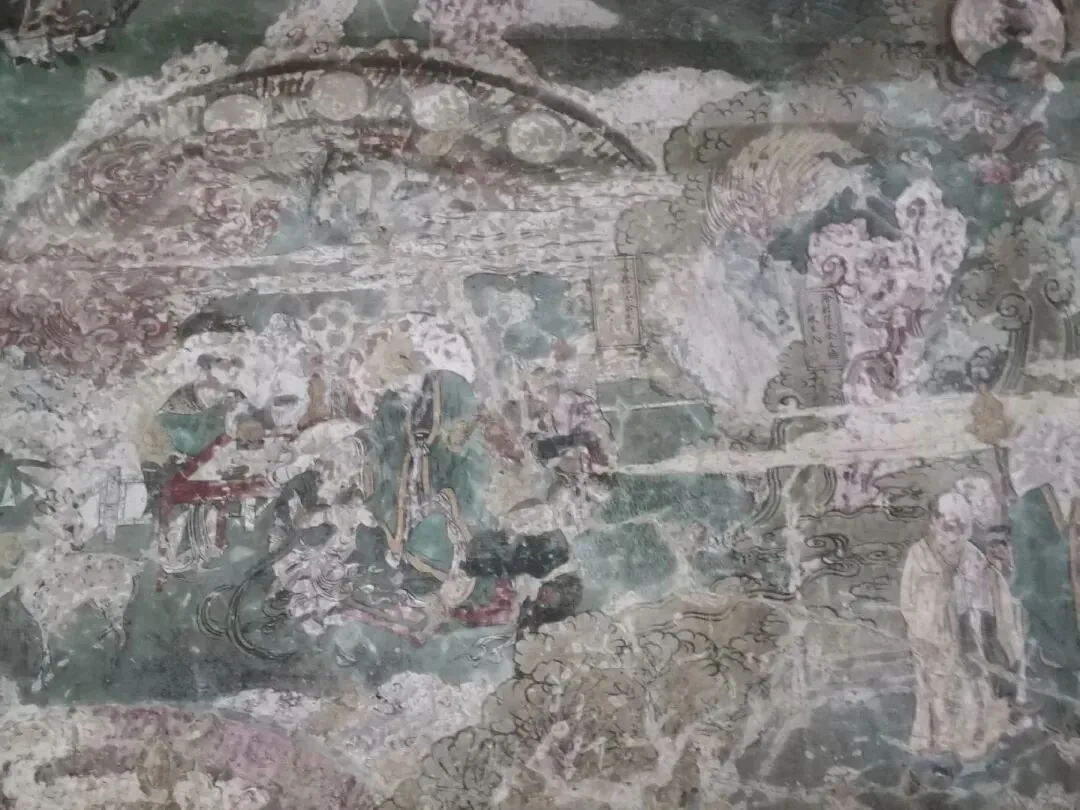
On the hall walls are Ming Dynasty murals, 114 square meters in total. After 600 years of wind and frost, they’re still brightly colored and lifelike. They’re one of the most important surviving Ming murals in western Sichuan, and their richness of content is rare even among Sichuan’s Ming murals. This is a genuine cultural treasure. Sadly, in earlier years the murals were left exposed to the rain with no one looking after them. Now restoration is extremely difficult — whether they can even be restored is uncertain.
Steles, Wartime Classrooms, and a Half-Line of Ink
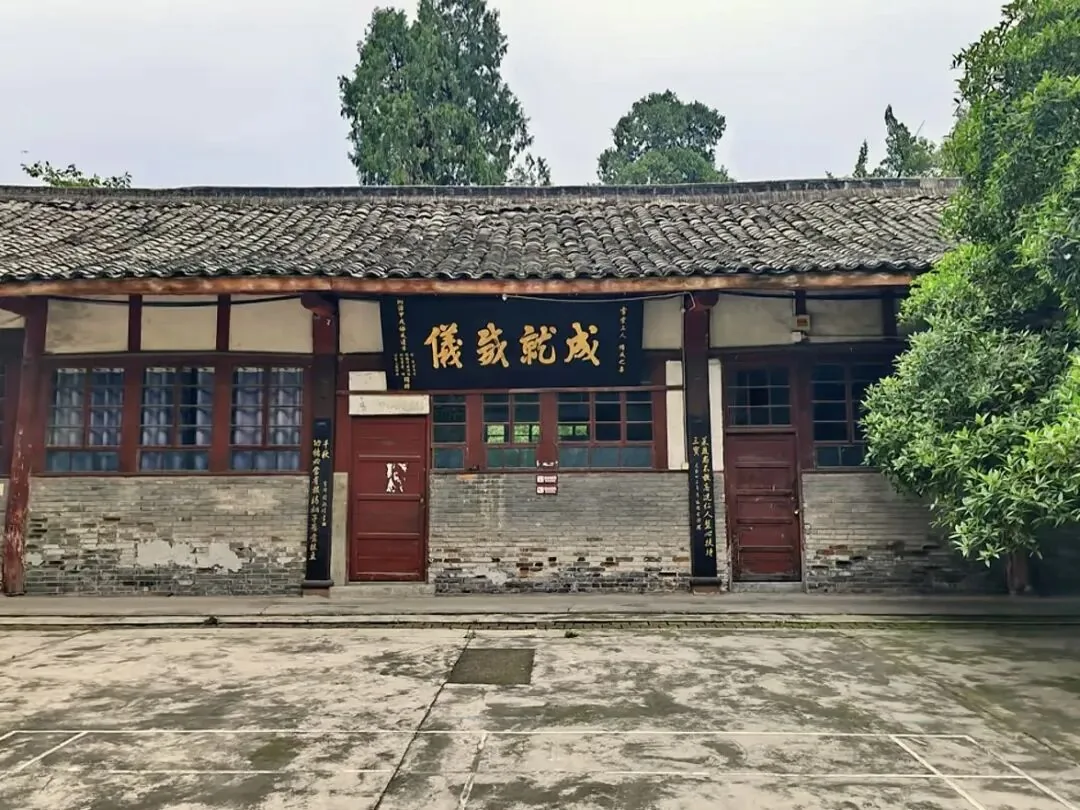
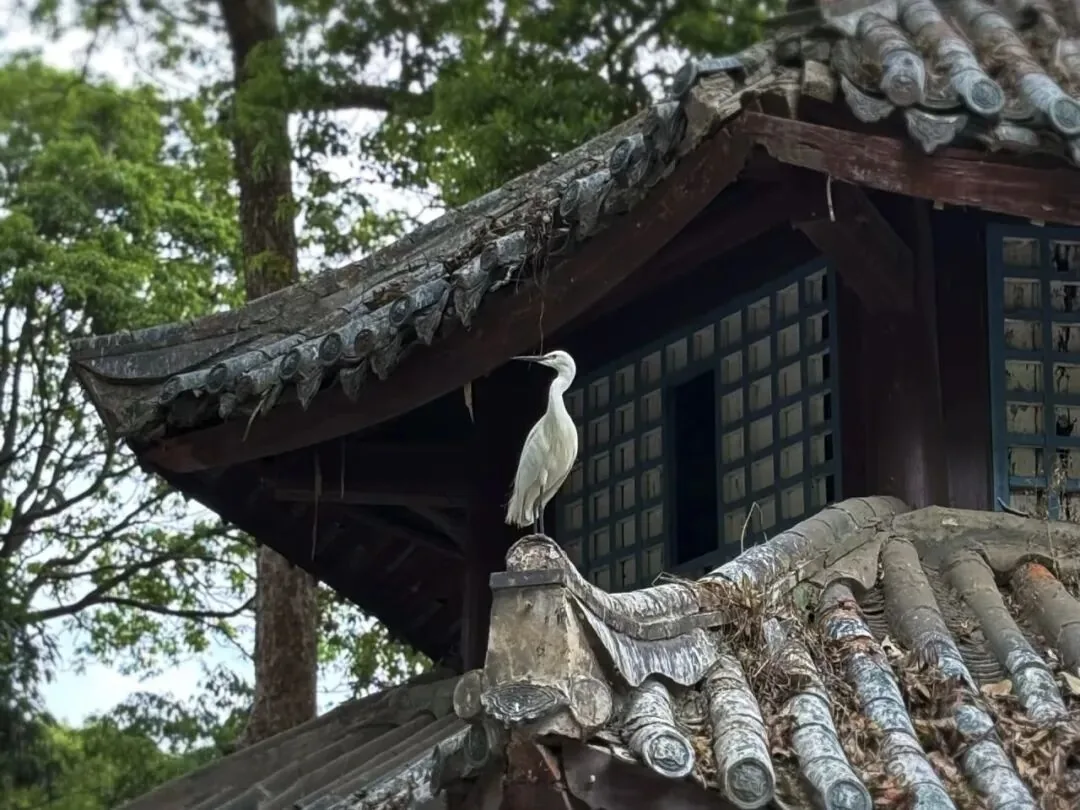
Today most of the temple’s steles have been moved to Xindu Gui Lake and other places, but the temple still holds stone carvings like the “Panorama of Longzang Temple” and the “Dalang Weir Stele Record.” Standing in the empty courtyard, you still feel that in some crack between bricks, half a line of unbroken brushwork is hiding.
During the War of Resistance, Chengdu Xiejin Middle School moved into the temple. Teachers and students kept teaching amid the chanting, full of patriotic fervor.
For all these years, Longzang Temple seems to have been under repair. I walked all the way around the old temple; they say it now covers over 300 mu. The main buildings are fenced off, but other areas are open to visitors. Who knows when it will fully open to the public.
A Forgotten Temple, and a Parting Thought
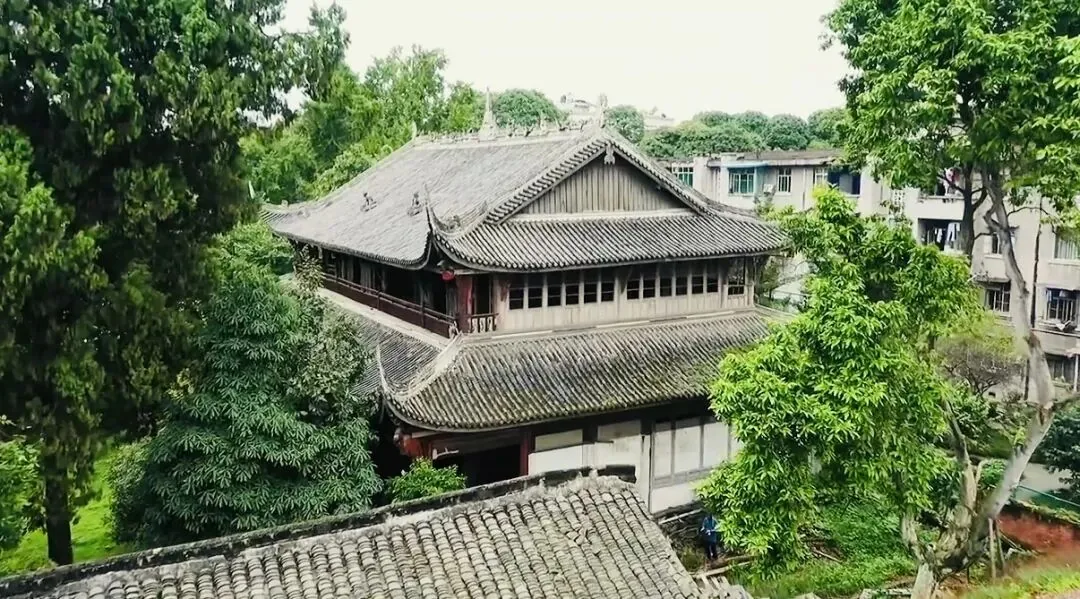
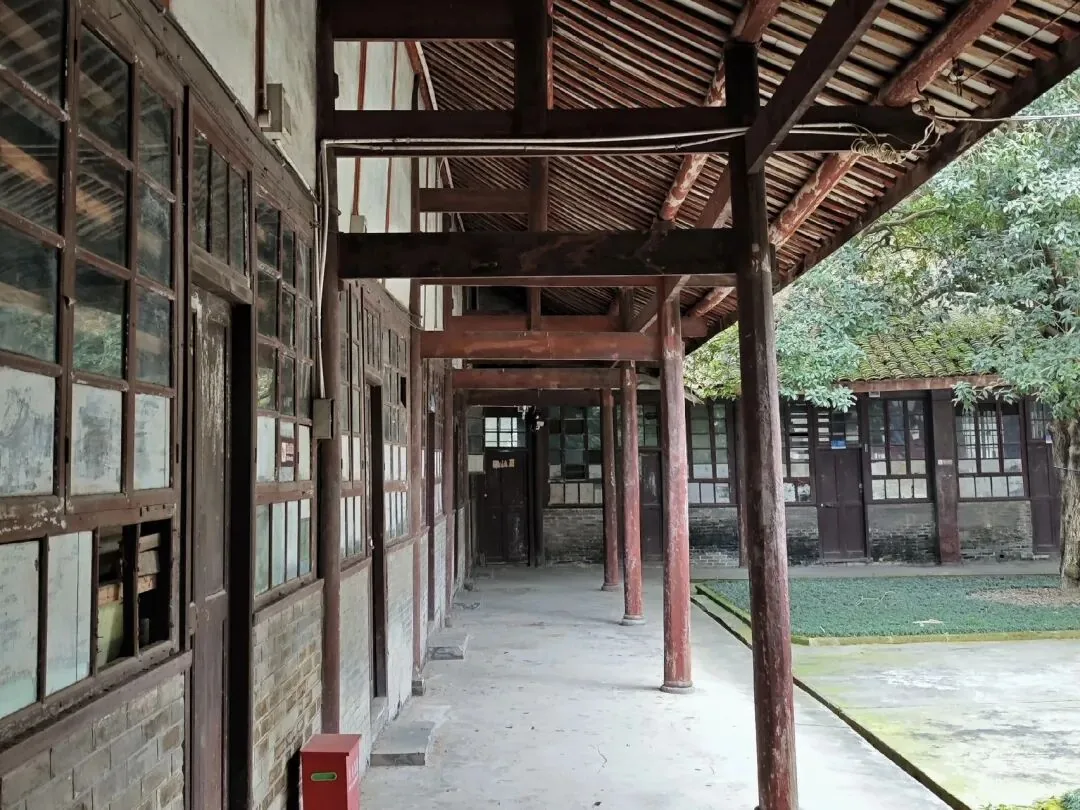
Now Longzang Temple feels like something forgotten. It was built, destroyed, rebuilt. It stored sutras, carved books, ran a school, healed the wounded — never loudly. Maybe that’s fine. There’s a cryptic couplet in the temple:
“Coming and going there, don’t take the wrong gate; passing through here, mind the road carefully.”
Its incense isn’t thriving, and few people come. It’s like it’s quietly keeping a piece of the past for Chengdu, for Xinfan, for everyone rushing through life. And for us, just passing by is already a kind of visit.
Practical Info
- Address: No. 86 Rongjun Road, Xinfan Street, Xindu District (inside the Sichuan Provincial Revolutionary Disabled Soldiers’ Sanatorium).
- Tickets: Free. The main halls are under repair and controlled — whether you can enter depends on the gatekeeper’s on-site permission. The murals aren’t guaranteed to be visible. Most visitors can only walk around the mountain gate, stele pavilion, and the outer area of the ancient tree grove.
- Getting there: Take Metro Line 6 to Xingsheng Station, transfer to Bus 712 to Rongjunxiao Station, then walk about 500 meters. By car, navigate to “Ancient Longzang Temple” — about 50 minutes from downtown Chengdu.
- Reminder: The temple is inside the sanatorium grounds, not a regular temple open to the public. Don’t expect to definitely get into the main hall to see the murals. Focus on the outer ancient buildings, stone inscriptions, and old trees.
Pro tip: Go in autumn if you can — the osmanthus is still fragrant, and the quiet is part of the experience.