Welcome to the Du Fu Thatched Cottage in Chengdu, the poetic heart of China. If you’ve ever read the line “An 8,000-mile storm shakes the autumn sky” and wondered about the man behind it, this is your stop. Du Fu — China’s “Poet Sage” — spent nearly four years in Chengdu, living in a modest thatched cottage and writing over 240 poems that would shape Chinese literature forever. Most of us know the famous verses. But what’s it actually like to stand where he stood?
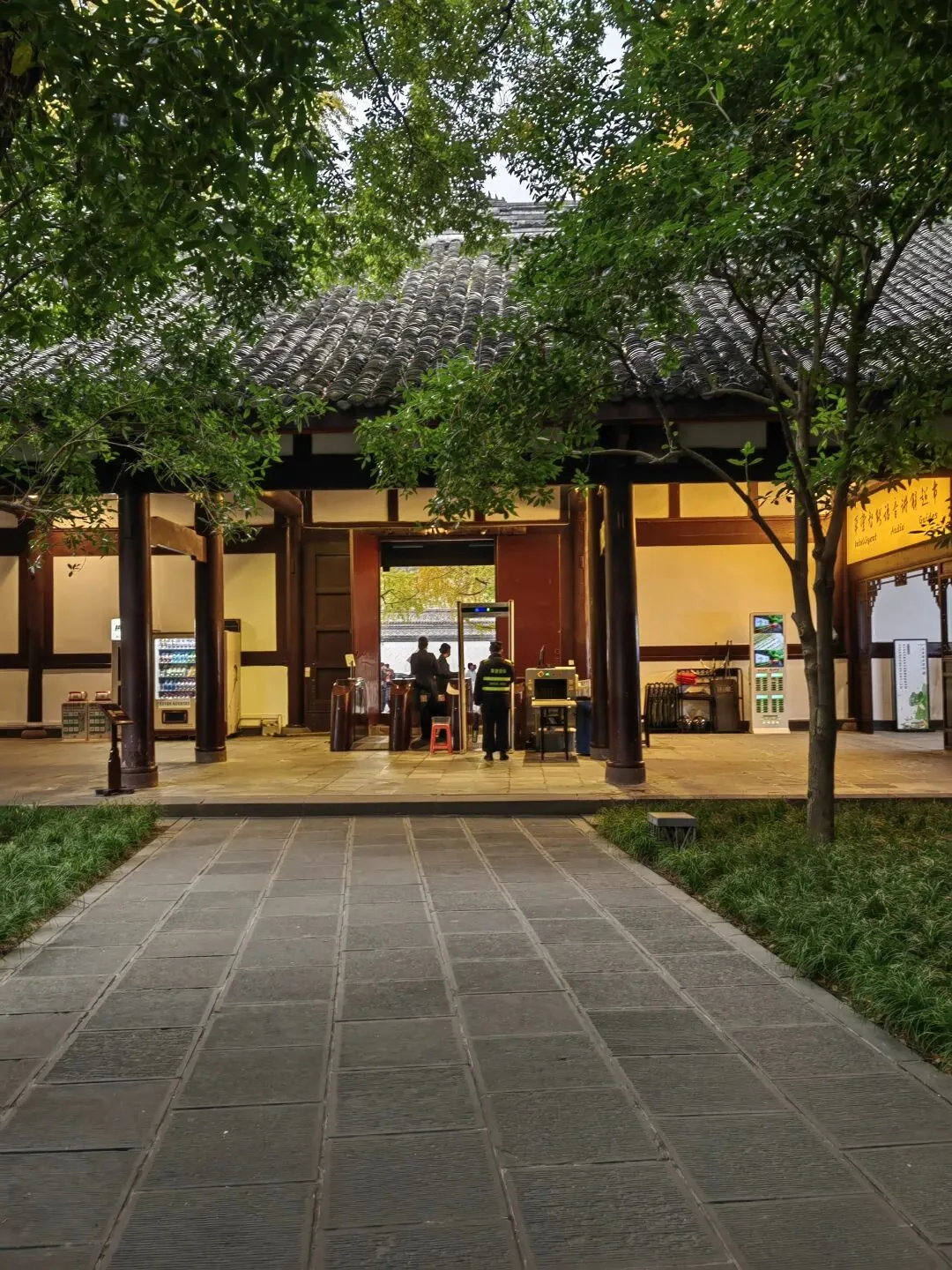
This guide walks you through the entire Thatched Cottage Museum (杜甫草堂), from the iconic red walls to the quiet corners where history feels close enough to touch. You’ll get the full route, the stories behind each stop, and the details that make this place so special. Allow about two hours — and yes, you’ll want to arrive with comfortable shoes.
Du Fu Thatched Cottage: Your Walking Route
Here’s the flow we’ll follow — no backtracking, just a smooth stroll through the grounds:
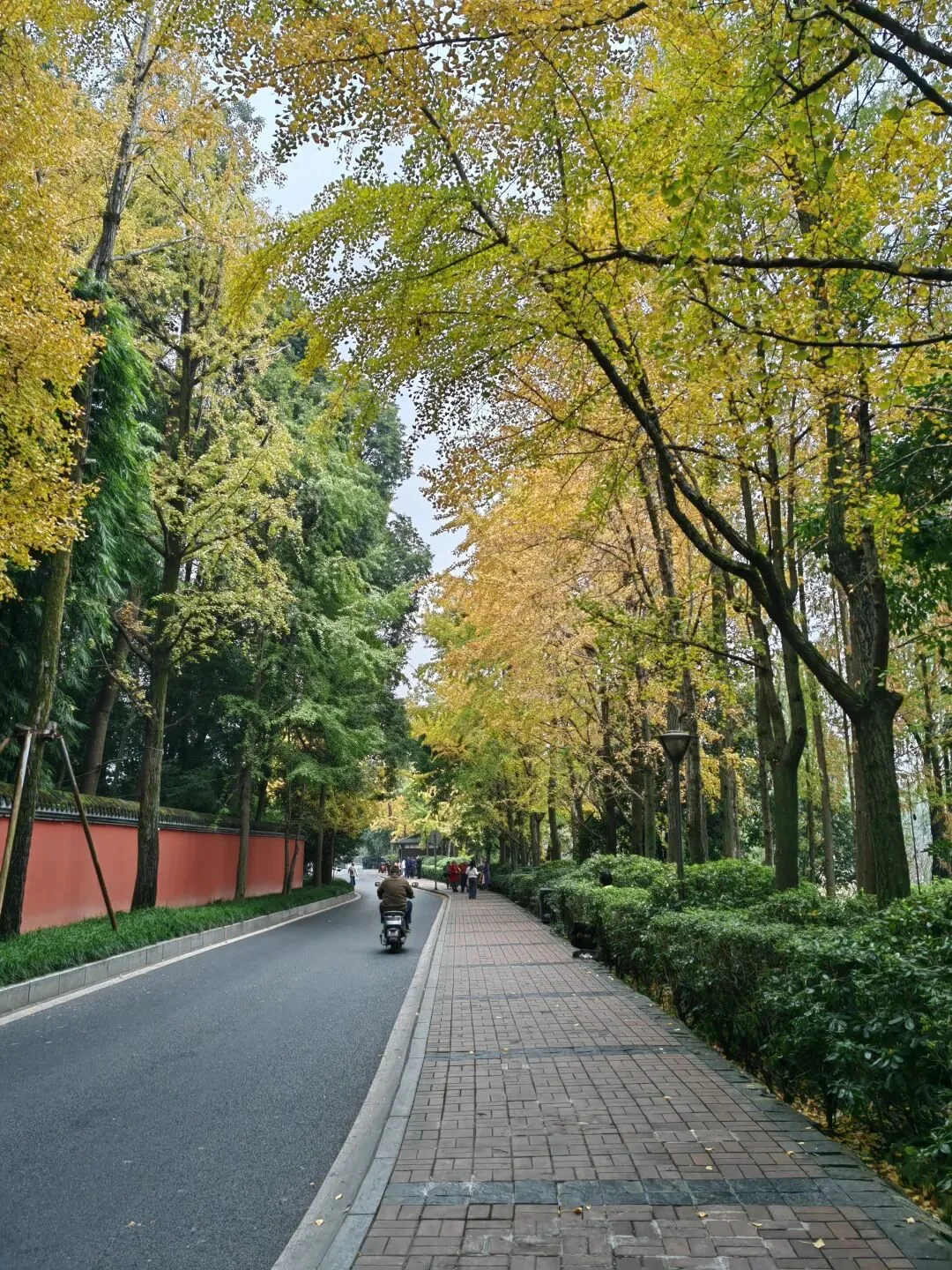
South Gate → Screen Wall & Flower Path → Da Xie (Grand Hall) → Poem History Hall → Firewood Gate → Gongbu Shrine → Shaoling Cottage Stele Pavilion → Thatched Cottage Residence → Tang Dynasty Ruins Exhibition Hall → Daya Hall → Wanfo Tower (optional) → Gift Shop → North Gate
The museum covers over 300 acres of bamboo groves, streams, and classic Sichuan-style gardens. The route is entirely walkable, with benches and water fountains along the way.
Stop 1: The Screen Wall & Flower Path (影壁与花径)
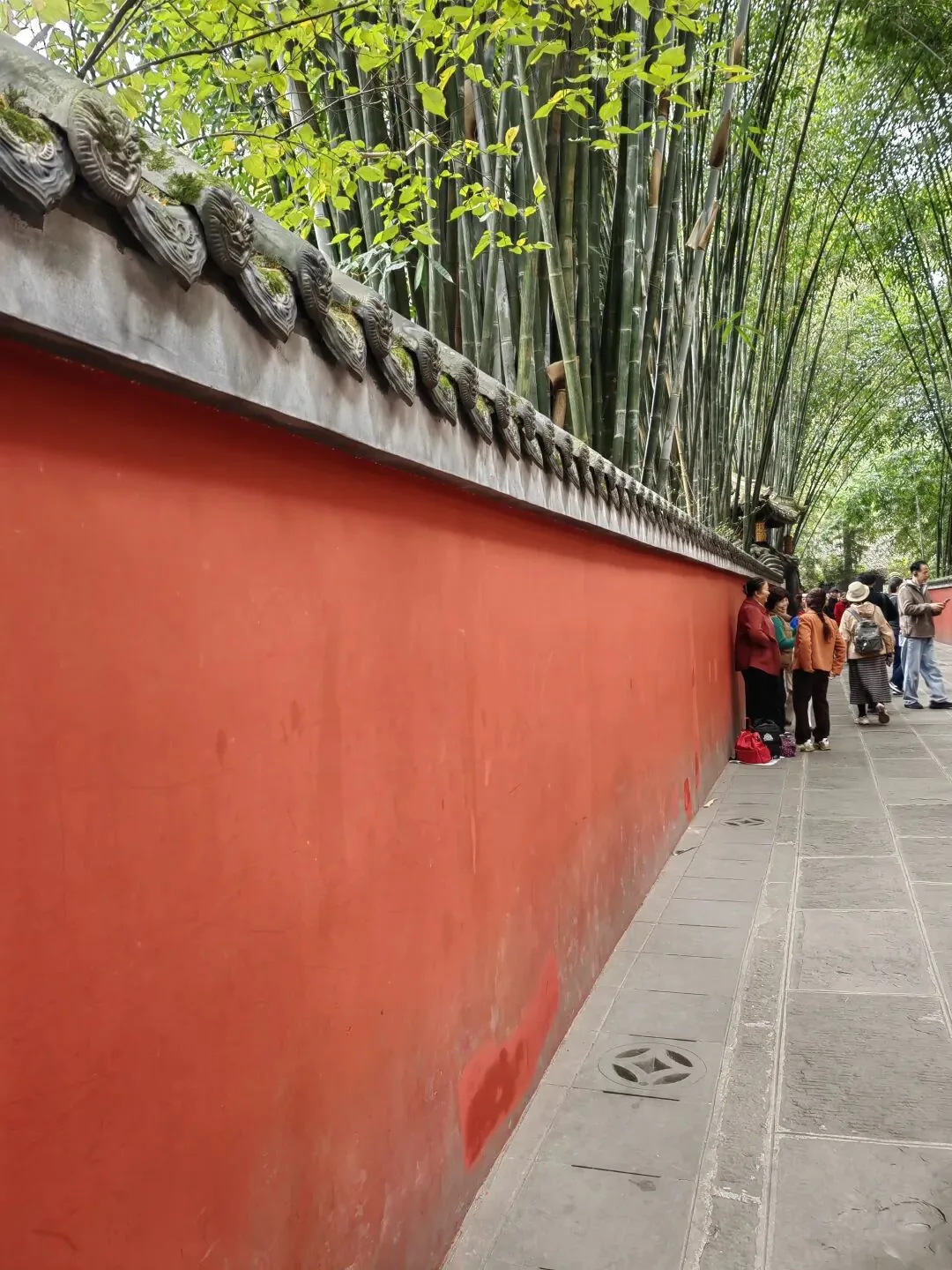
This is the spot you’ve seen in photos — the famous red-walled path lined with bamboo. And honestly, it’s even better in person.
The screen wall you’ll pass first isn’t just decorative. In traditional Chinese garden design, it’s meant to hide the view, creating a sense of mystery and keeping the garden’s full beauty from being revealed all at once. Think of it as the ultimate slow reveal.
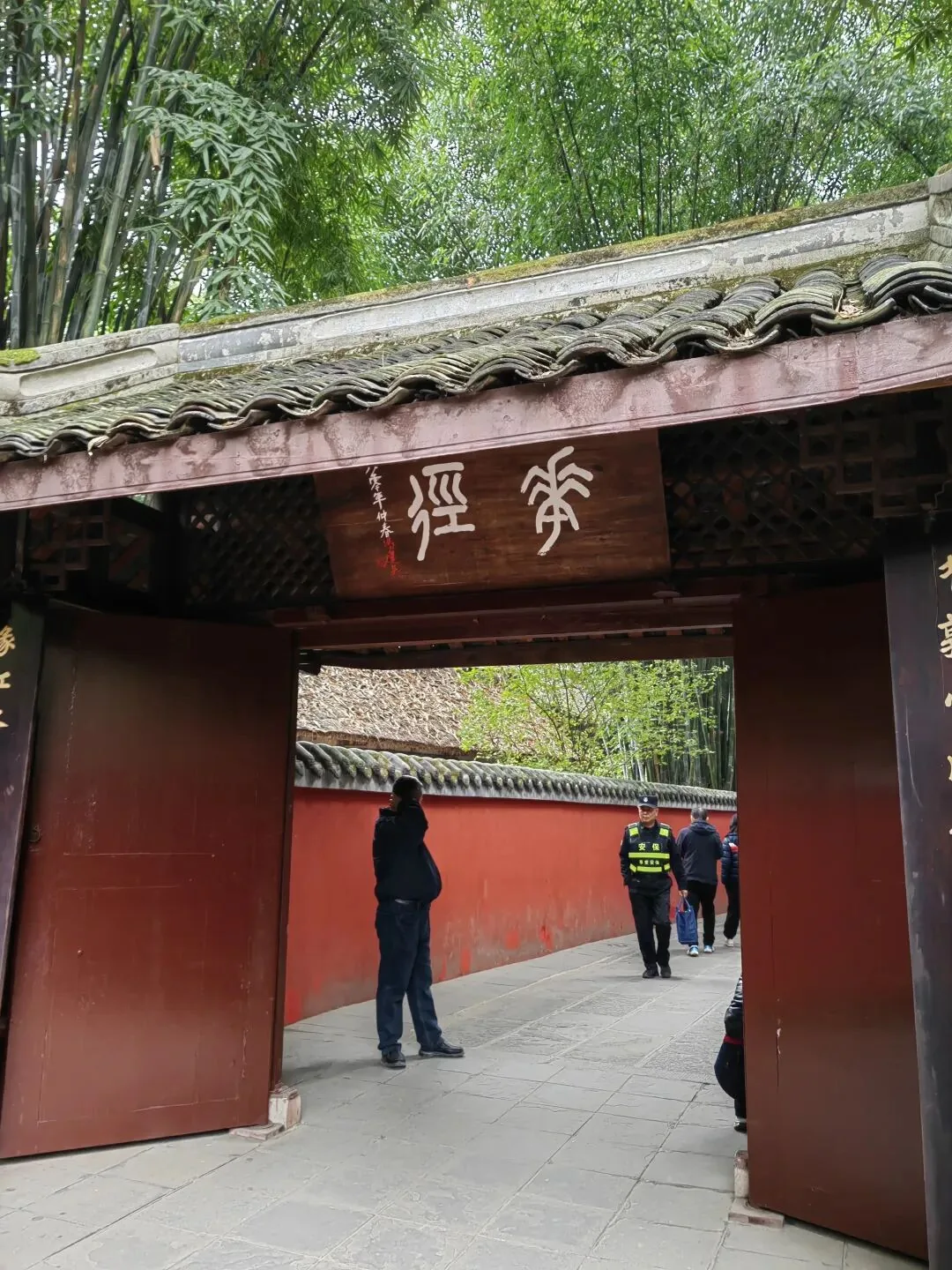
Beyond it lies Flower Path (花径), about 50 meters of red walls, towering bamboo, and stone paving that feels like stepping directly into a Tang Dynasty poem. Du Fu himself wrote a line about sweeping this path for an expected visitor: “The flower path has never been swept for guests; the thatched gate only now opens for you.” The flowers are long gone, but the bamboo remains — and the red walls, dating from the Qing Dynasty, still carry their warm, weathered glow.
Pro tip: This is hands-down the best photo spot in the whole museum, especially in the late afternoon when the light hits the red walls just right. Come prepared to linger.
Stop 2: Da Xie — The Grand Hall (大廨)
Past the Flower Path, you’ll reach Da Xie, the first memorial hall. “Xie” refers to an official’s office — fitting, since this is where you’ll get acquainted with Du Fu the man before diving into his world.
The centerpiece here is a 2-meter-tall bronze statue of Du Fu. Look closely: his face is gaunt, his brow is furrowed, and his hand — slender and elegant — seems ready to write. You can practically see him composing. Sculpted by a modern artist based on historical descriptions, it captures both the poet’s fragility and his quiet resolve.
Around the hall, display cases hold replicas of Tang Dynasty coins and everyday pottery — the kind of simple household items Du Fu would have used, which makes those lines about his leaky roof and cold home feel far more real.
Keep an eye on the columns, too. The couplets hanging here were written by scholars across the centuries in praise of the poet and this place. One of the most famous, by modern poet Gu Fuchu, reflects on how Du Fu, a wanderer himself, left behind a cottage that the world will never forget.
Stop 3: Poem History Hall — The Heart of the Museum (诗史堂)
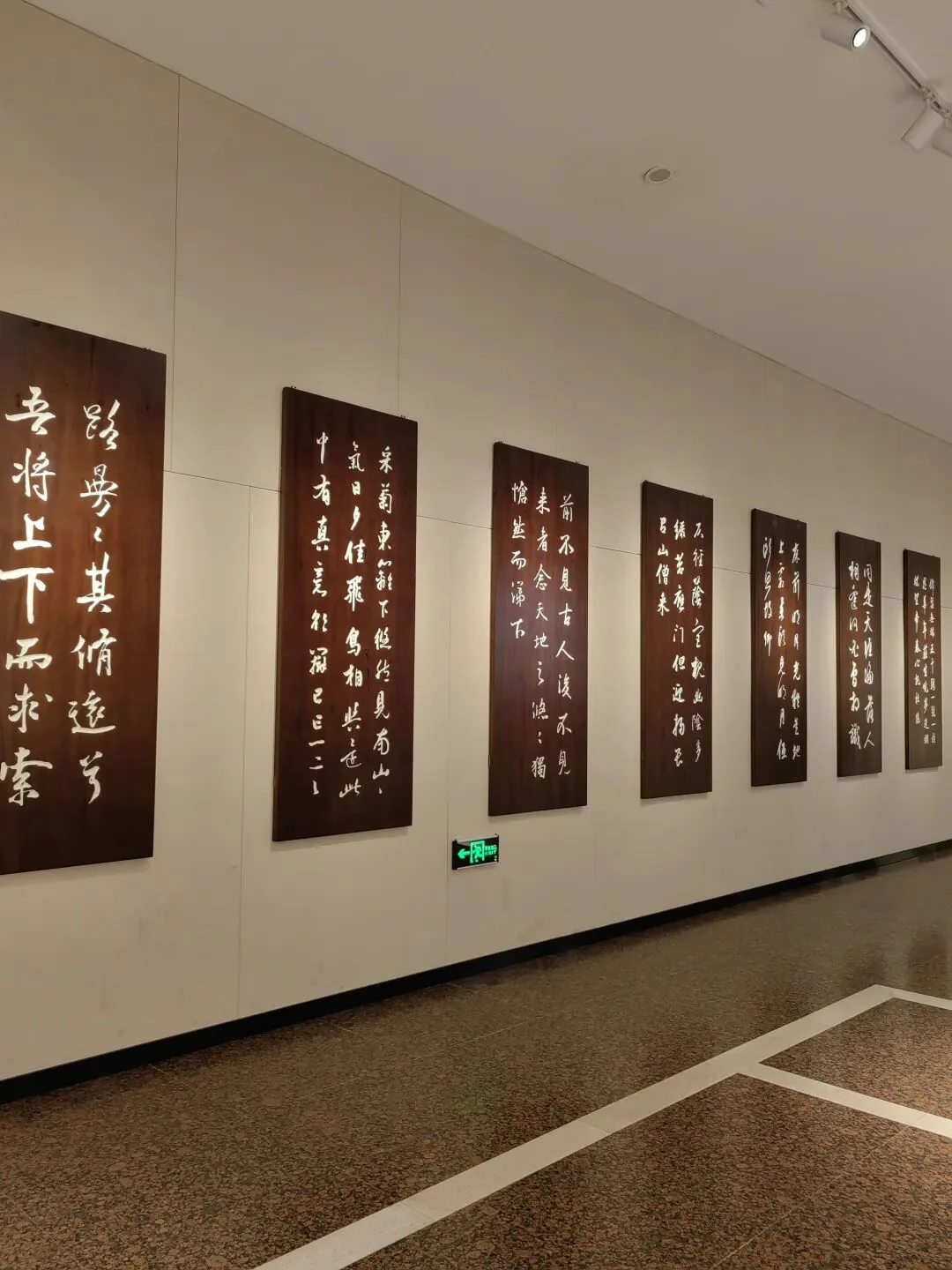
This is the core of the whole site. “Poem History” — that’s what people call Du Fu’s work, and for good reason. His poetry chronicled the rebellion and suffering of his era with such precision that historians consider his verses a record of history in their own right.
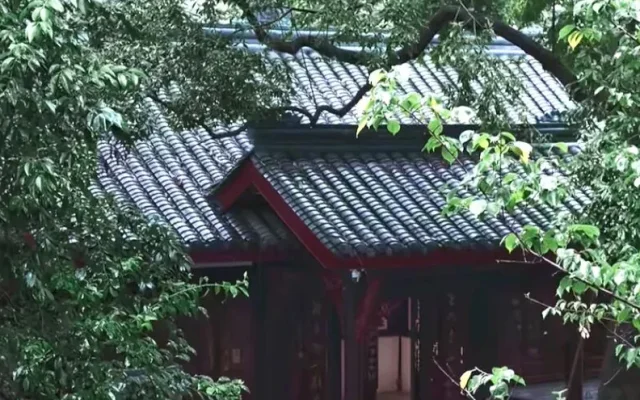
The hall itself is classic Sichuan architecture — dark tiles, white walls, wooden beams — with a serene, almost solemn atmosphere. Inside, you’ll find:
- Calligraphy and paintings by modern masters including Qi Baishi and Xu Beihong, all inspired by Du Fu’s poems and scenes of the cottage
- Historical couplets and inscriptions by literary figures paying tribute to the poet
- Display cases with documents and artifacts connected to Du Fu’s life and legacy
It’s one of those rooms where poetry and visual art fuse together — you can’t quite separate the words from the images anymore.
Stop 4: The Firewood Gate (柴门)
From grand halls to the humblest detail — welcome to the Firewood Gate. This is where Du Fu’s frugal life comes into focus. The two characters on the gate, “柴门,” were calligraphed by Qing Dynasty artist Pan Tianshou, with a simple style that matches the gate’s unpretentious charm.
This gate has been rebuilt to match Du Fu’s original description — rough wooden planks, a bamboo frame, no ornamentation. For the poet, this was the entrance to his refuge from war and official life. Around you, bamboo and chrysanthemums grow, echoing the plants he wrote about — and recalling that other famous reclusive poet, Tao Yuanming, who found his own contentment in a simple life.
Local insight: Du Fu cultivated his own vegetables and herbs here, living as a working poet-farmer. The simple farming tools on display are copies of what he would have used — they’re a quiet reminder that this great poet’s hands knew both brush and spade.
Stop 5: Gongbu Shrine — The Ancestral Hall (工部祠)
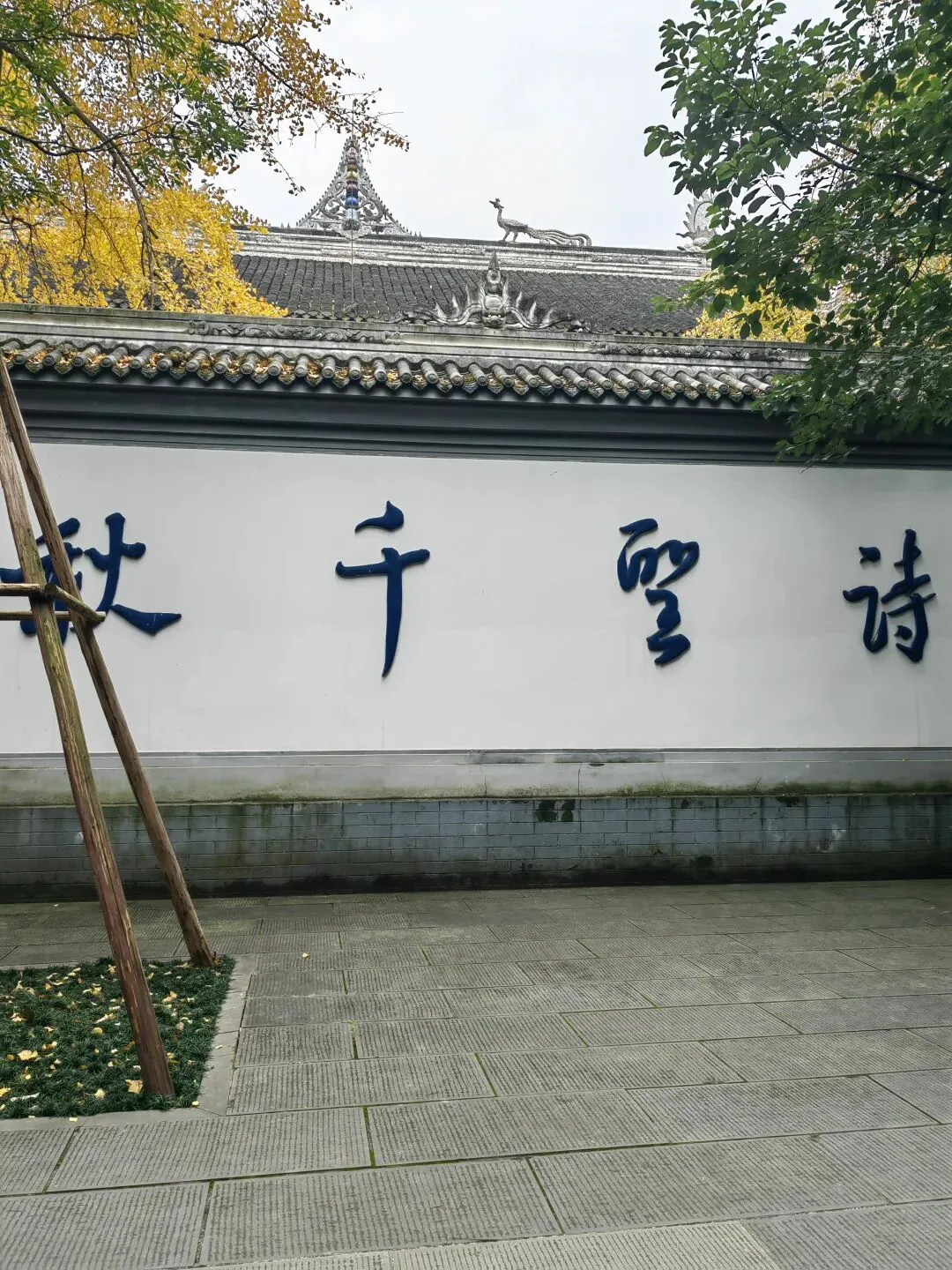
Du Fu’s highest official title was “Supervising Censor of the Ministry of Works” — jokingly, his desk job — yet later generations honored him with the name Du Gongbu. This hall is dedicated to him.
The shrine is a Ming-Qing era structure with elegant upturned eaves. Inside, you’ll find the statue of Du Fu alongside those of two other poets — the “companions” who worship here with him. (Historically, Song dynasty poets Huang Tingjian and Lu You were placed here in recognition of their devotion to Du Fu’s legacy.)
Two stone steles stand out here:
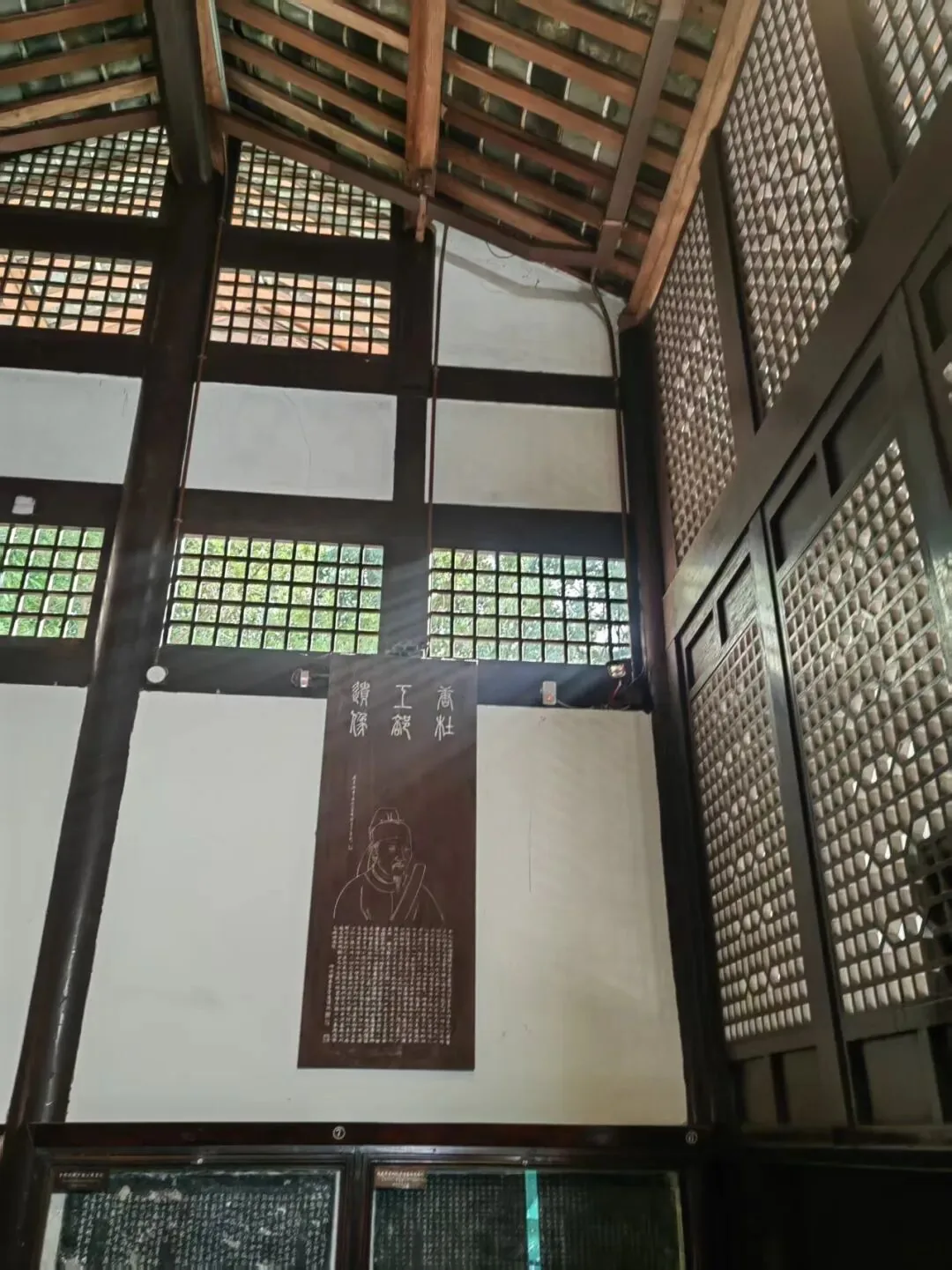
- A Qing Dynasty stele inscribed by Prince Guo (Yunli) with Du Fu’s famous poem “Happy Rain on a Spring Night” — calligraphy so graceful it feels alive, preserved for over 300 years
- A Ming Dynasty stele documenting the cottage’s reconstruction history — essential reading for anyone interested in how this place was rebuilt after natural disasters
Stop 6: Shaoling Cottage Stele Pavilion (少陵草堂碑亭)
You’ve probably seen this in every Chengdu travel guide. It’s the iconic octagonal pavilion with the stone stele reading “少陵草堂” — Shaoling Cottage — in the hand of Prince Guo, who inscribed it during a visit to Sichuan in the Qing Dynasty.
Here’s the story behind the name: “Shaoling” was Du Fu’s self-chosen nickname in his later years. Calling himself “Shaoling ye lao” — the old man of Shaoling — expressed his homesickness and the sense of being a wanderer far from his homeland. So when you see “Shaoling,” you’re seeing another name for the poet himself.
The red sandstone stele stands about two meters tall, its characters crisp even after centuries of weather. Plum trees surround the pavilion — a fitting choice. Plum blossoms bloom in winter’s cold, just as Du Fu’s spirit endured through hardship.
Stop 7: The Thatched Cottage Residence (茅屋故居)
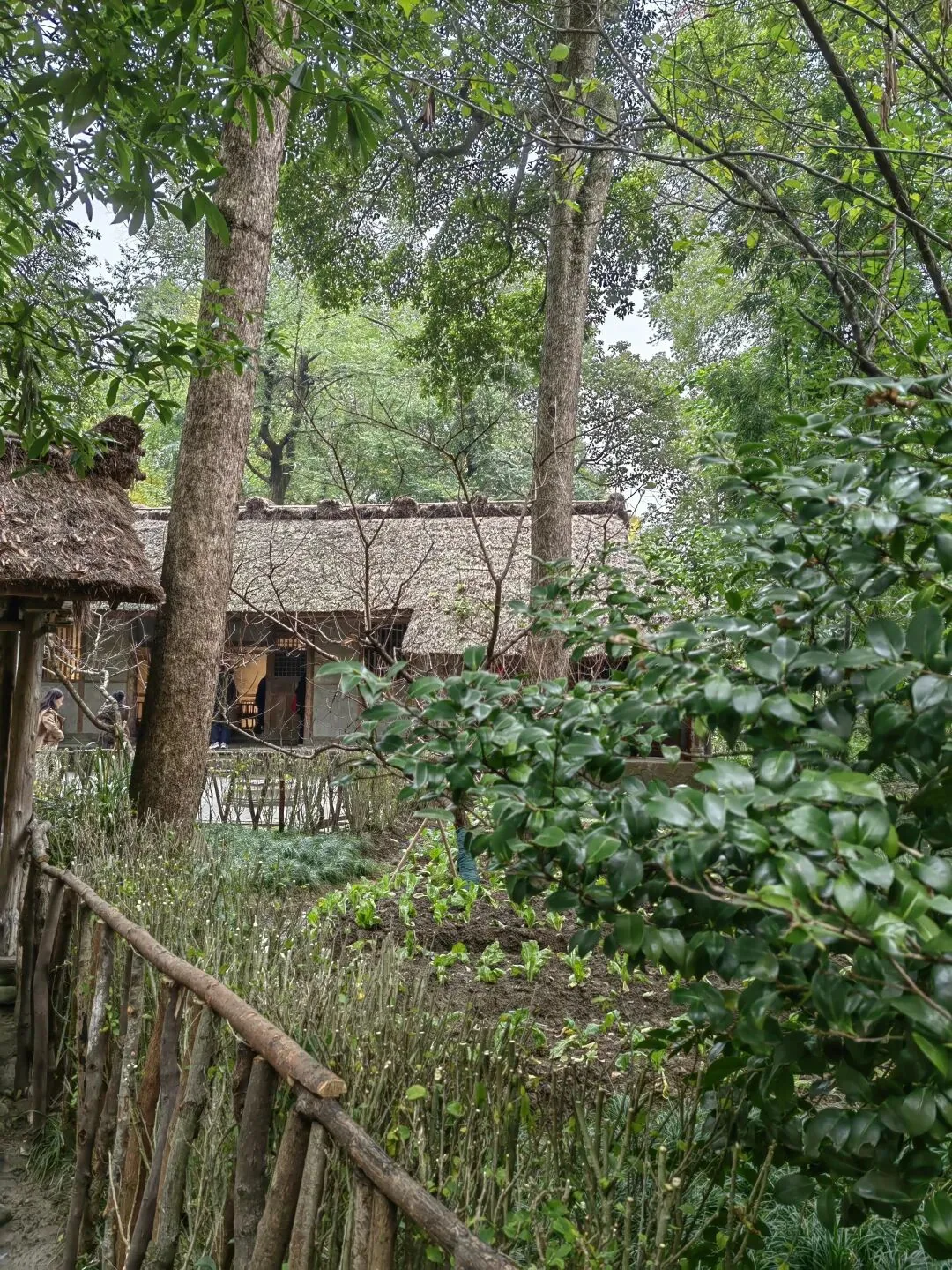
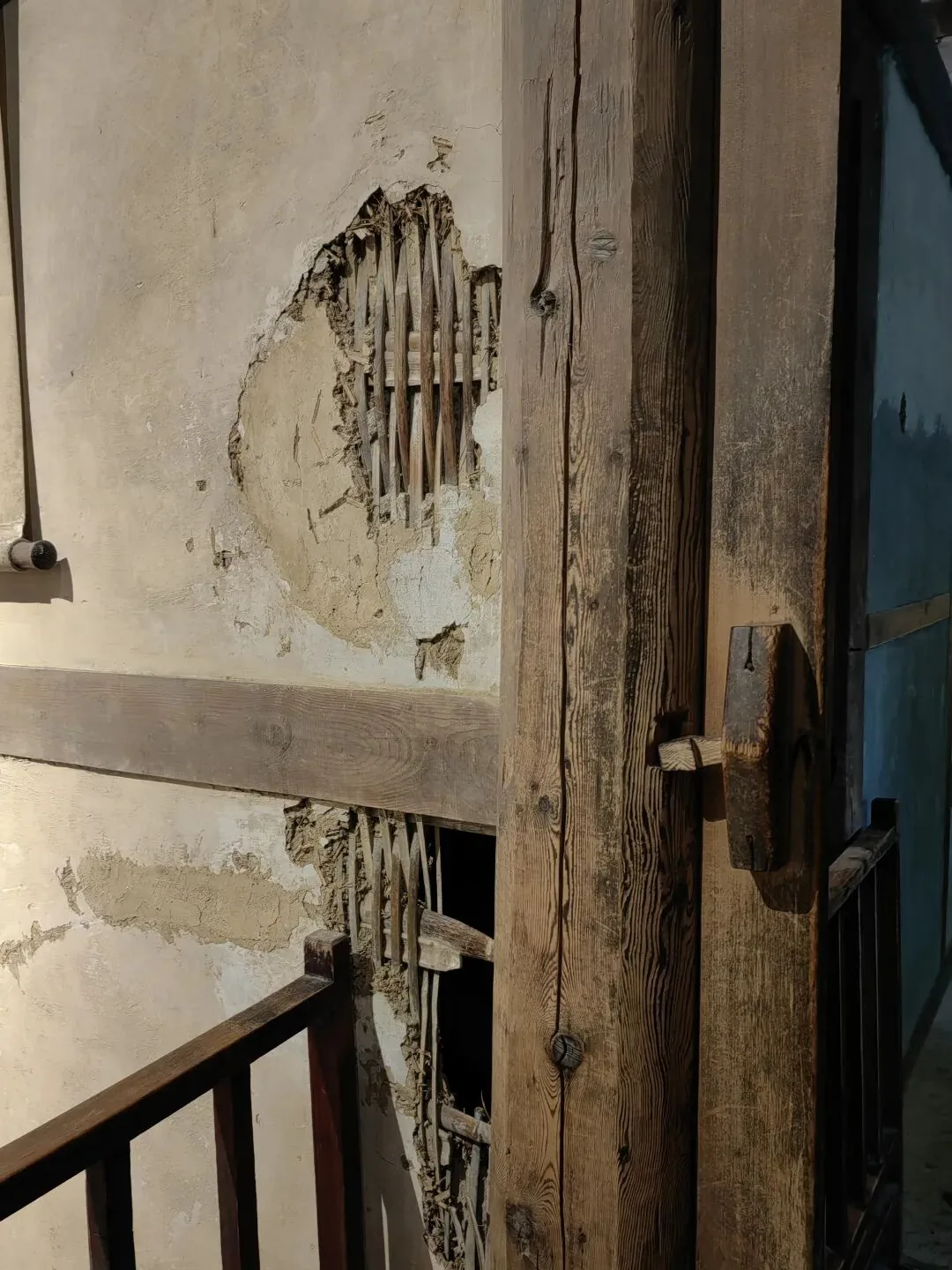
This is the immersive one. The cottage has been reconstructed based on Du Fu’s famous poem “Song of My Thatched Cottage Unroofed by Autumn Winds,” combined with the architectural style of Sichuan’s countryside.
The simple structure — mud walls, thatched roof, bamboo fence — contains three rooms: the bedroom, the study, and the kitchen, each filled with replicas of daily life objects from that era. It’s humbling. Du Fu wrote his most beloved poems in conditions most of us would find unlivable.
Out back, there’s a small vegetable garden with the kinds of greens and radishes he would have grown. It’s the most human part of the museum — a reminder that he wasn’t just a poet on a pedestal. He tilled the earth, fed his family, and worried about leaking roofs. And then he turned that pain into art.
Stop 8: Tang Dynasty Ruins Exhibition Hall (唐代遗址陈列馆)
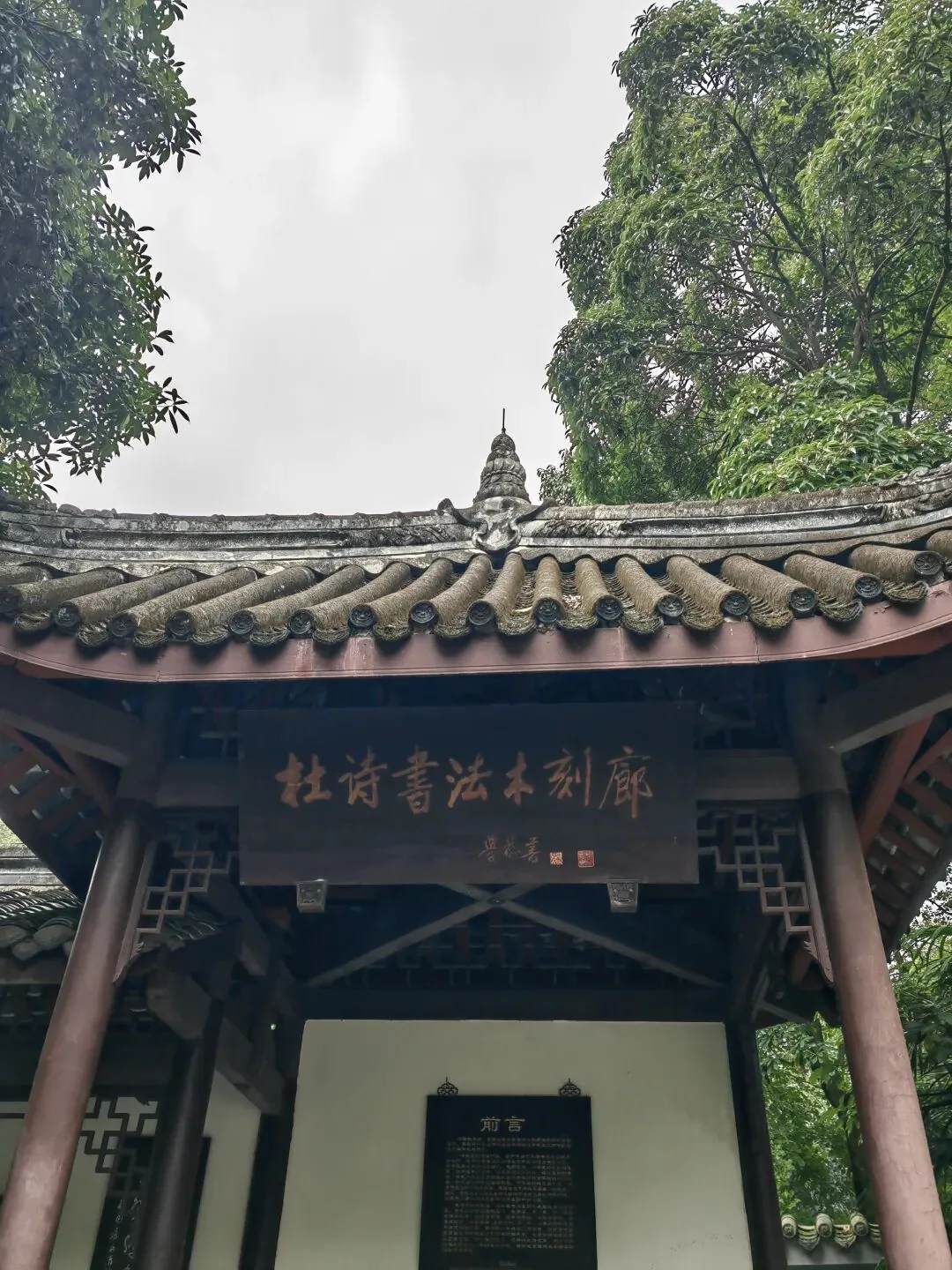
Ready to go underground — historically speaking. This is where the museum becomes an archaeological dig. Excavations here unearthed actual Tang-era building foundations and daily objects, providing hard evidence that people were living exactly where Du Fu describes living.
The hall presents:
- Tang Dynasty architectural remains and building materials
- Everyday pottery fragments showing household items of the era
- Coins including Kaiyuan Tongbao and Qianyuan Zhongbao, giving you a peek at the Tang economy
- Ornamental brick fragments with carved patterns — testaments to Tang craftsmanship
Worth knowing: these discoveries didn’t just confirm Du Fu’s story — they also helped fill in the gaps about how ordinary people lived in western Sichuan over 1,200 years ago. That’s significant, because most Tang-era records focus on the wealthy and powerful.
Stop 9: Daya Hall (大雅堂)
For the finale: Daya Hall, a modern reconstruction designed in Tang style — dramatic, grand, and a fitting tribute.
Inside, you’ll find the museum’s most artistic centerpiece: a huge mosaic mural. The hall also houses sculptures of 12 of China’s greatest poets — Qu Yuan, Li Bai, Wang Wei, Bai Juyi, Su Shi, Huang Tingjian, Lu You, and others — all positioned as heirs to Du Fu’s influence. It’s a visual lesson in how his poetry rippled through the centuries.
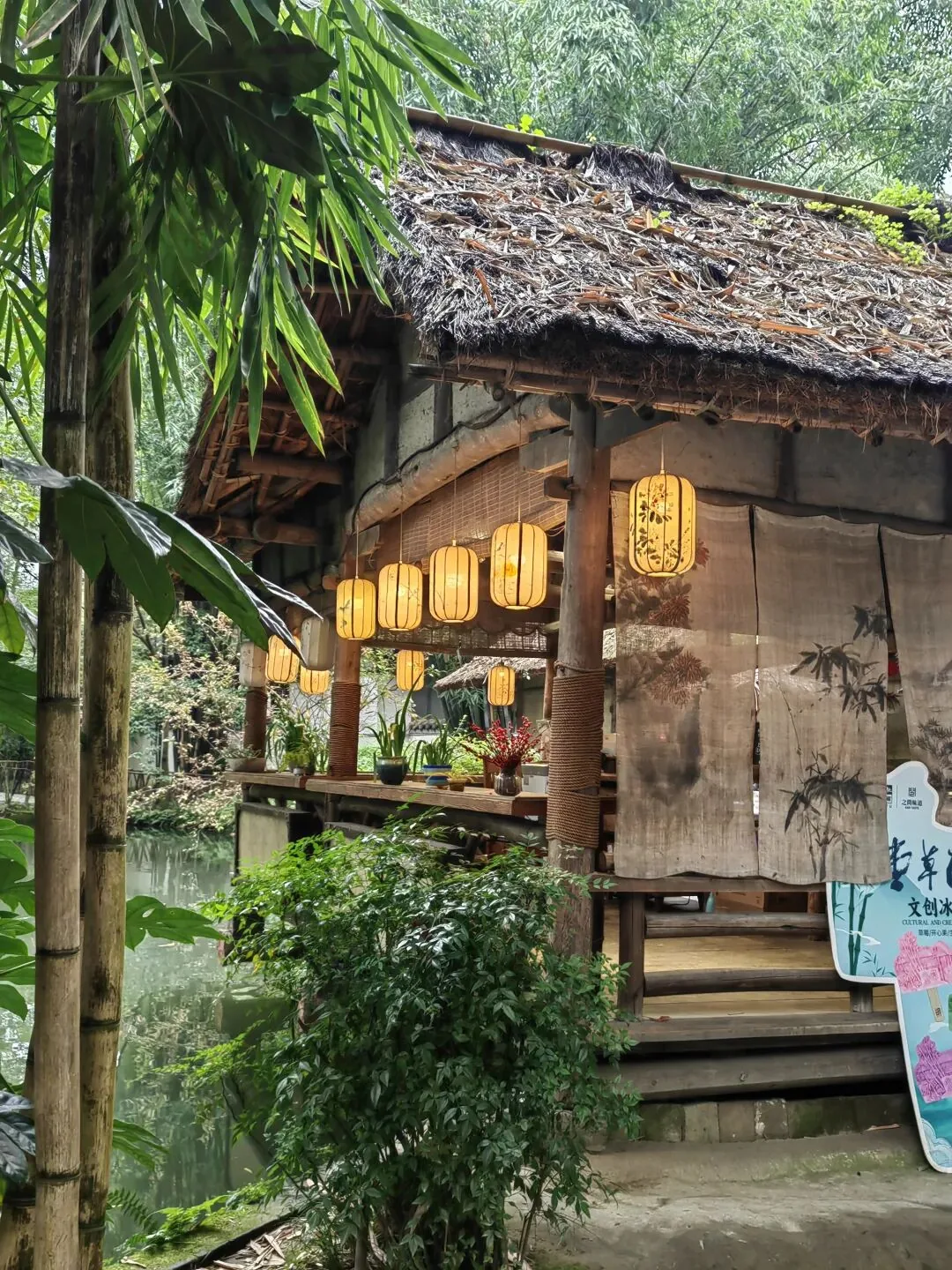
Stop 10: Wanfu Tower (Optional) & the Gift Shop (万佛楼 & 文创区)
If you have time and energy, climb Wanfu Tower — the highest point in the museum. From the top, you can survey the whole compound: bamboo, streams, and tiled roofs arranged like a verse of poetry. On clear days, you can even see Wanghuaxi Park in the distance.
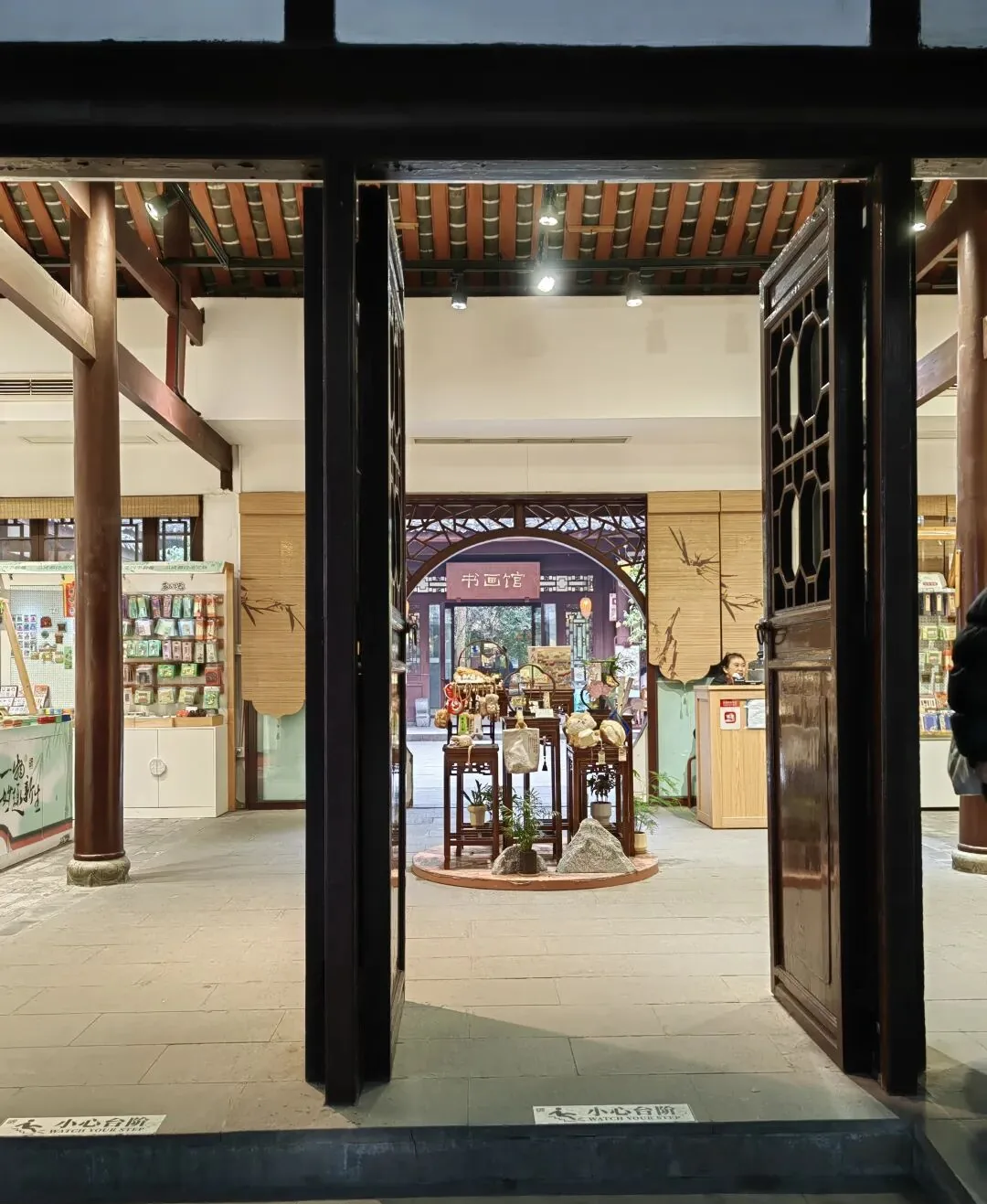
Then, on your way out, stop by the gift shop. It’s better than average for museum shops. Highlights:
- Handwritten copies of Du Fu’s poems
- Calligraphy bookmarks
- Bamboo ornaments
- Teaware decorated with poetry themes
- Products featuring 24 Yile figurines and Du Fu’s poetic lines
Before You Go: A Few Final Thoughts
A visit to Du Fu’s Thatched Cottage is about looking closer — seeing the man behind the poetry and the poet behind the history. From the dramatic red walls of Flower Path to the modest rooms of the thatched home, you’ll come away with more than just photographs. You’ll have a deeper sense of what “An 8,000-mile storm shakes the autumn sky” really meant to the man who lived it.
As Du Fu wrote: “When will this endless wandering finally cease?” Standing beneath the bamboo, listening to the stream, you might just feel a little closer to an answer.
Exit through the North Gate when you’re ready to head back to modern Chengdu. And if you’re combining this with other sights, the cottage sits close to Huanhuaxi Park — worth a stroll if you’ve got extra time in your day.
Happy wandering — and may the poetry stay with you long after you’ve left.