Chengdu’s Biggest Central Park: 3,450 Mu of Autumn Color at Tianfu Park
If you’ve been in Chengdu for more than five minutes, you’ve probably noticed how green this city is getting. Parks are a big reason why. These days, most people don’t have to walk far to find a spot to stretch their legs. And down in Tianfu New Area, south of the city, they’ve taken the whole “park city” idea up a notch. Everyone knows Xinglong Lake, the poster child for the area. But hardly anyone talks about the massive, often-overlooked park right next door.
That’s Tianfu Park — Chengdu’s largest urban central park.
Why Tianfu Park Is Worth Your Time
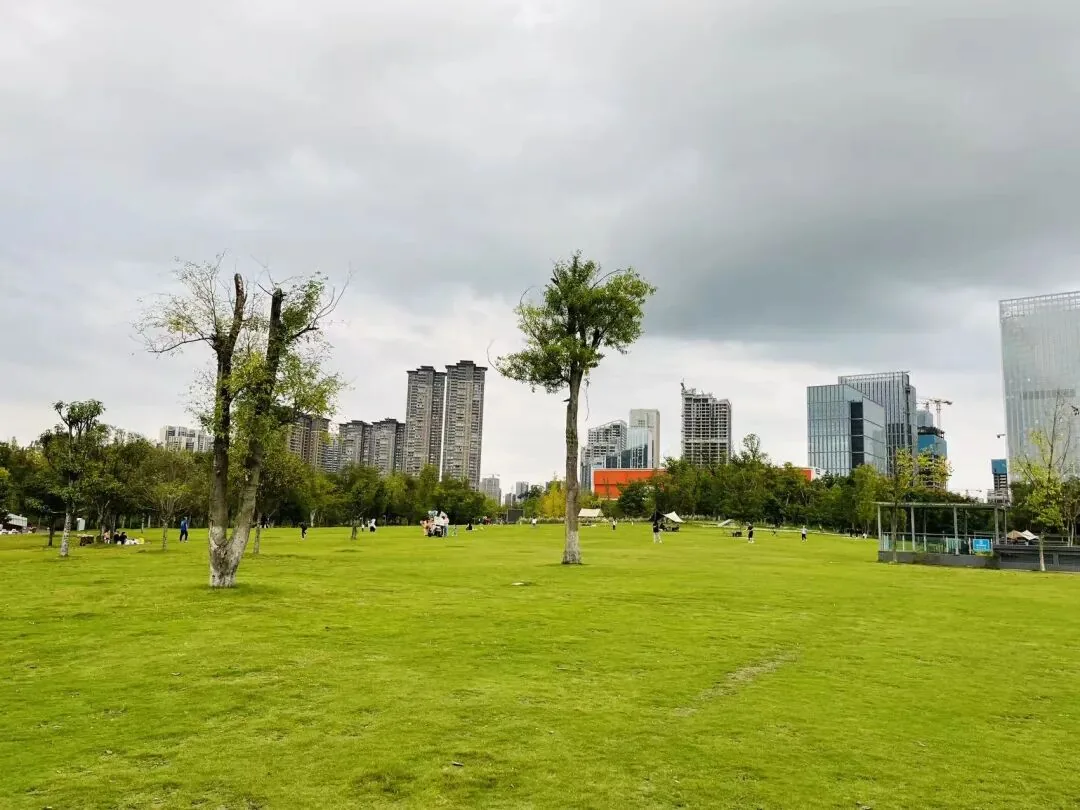
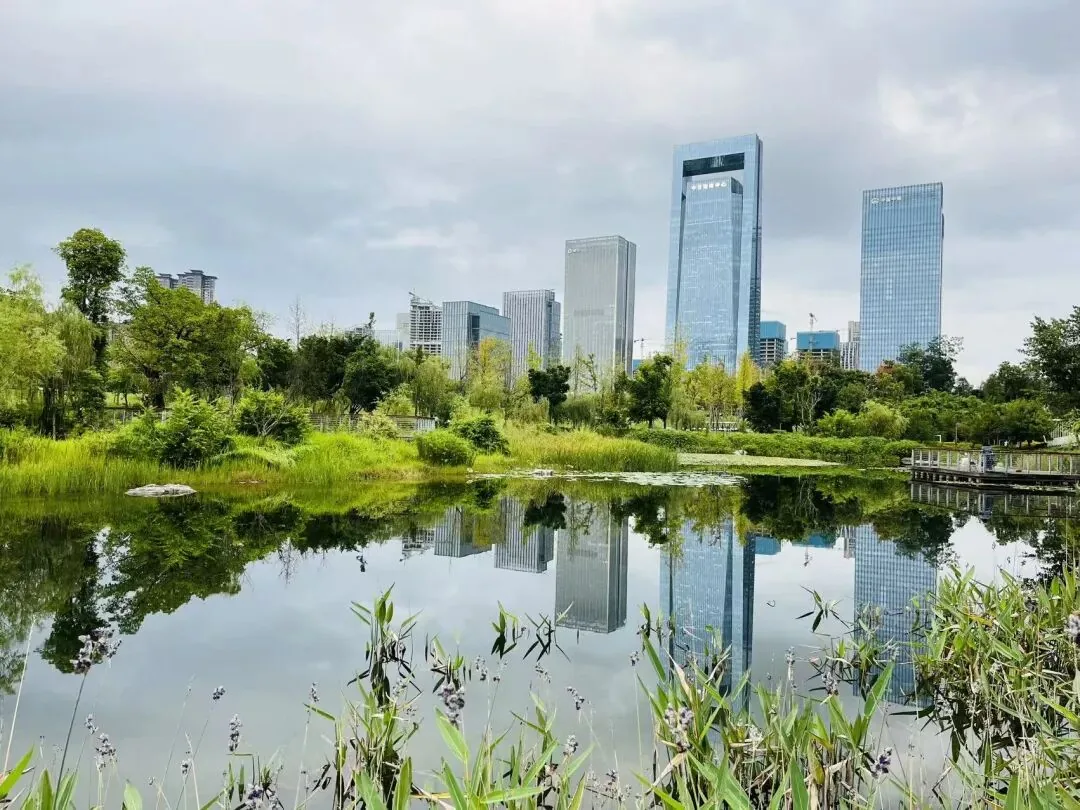
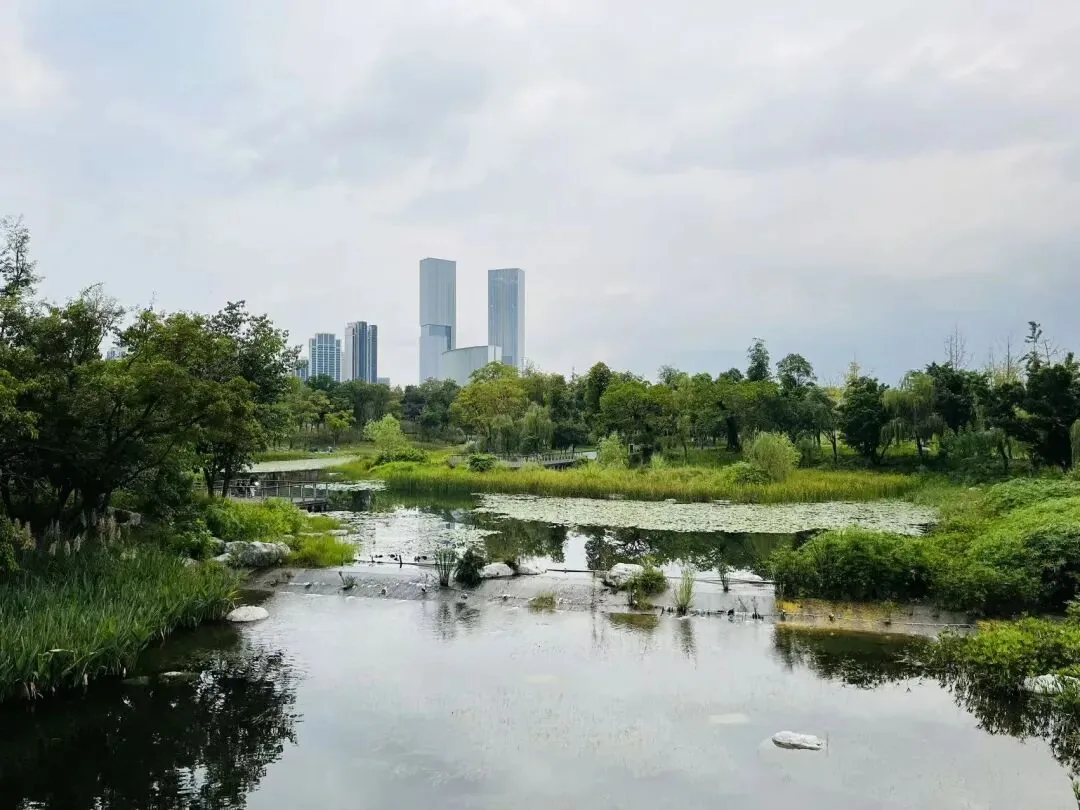
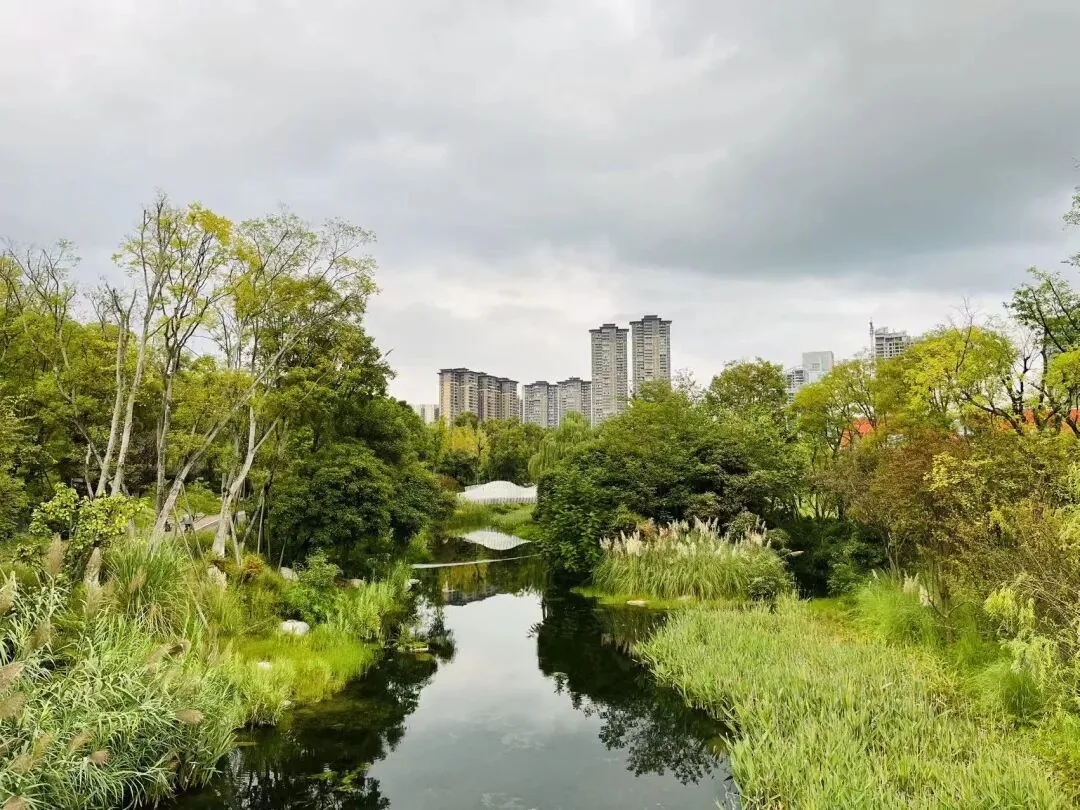
Tianfu Park has a location that’s hard to beat. Chengdu has plenty of giant parks, but very few sit symmetrically on both sides of a major city artery like this one. The park runs from Shuangyan Road in the north to Xiamen Road in the south, and from Yazhou Road in the west to Shuzhou Road in the east. It straddles Tianfu Avenue, with the two sides laid out almost symmetrically. Total area: 3,450 mu. Calling it the “Central Park of the South” is no exaggeration.
October in Chengdu is when the weather finally turns. The heat backs off, the sun stops being vicious, and the air gets crisp and clear. The park is wide open with no dense buildings — just big lawns, clear lake water, stands of trees, and a broad skyline. This is the perfect time to come wander, clear your head, and soak up some autumn.
What’s Blooming and Beautiful Right Now
Pink Muhly Grass
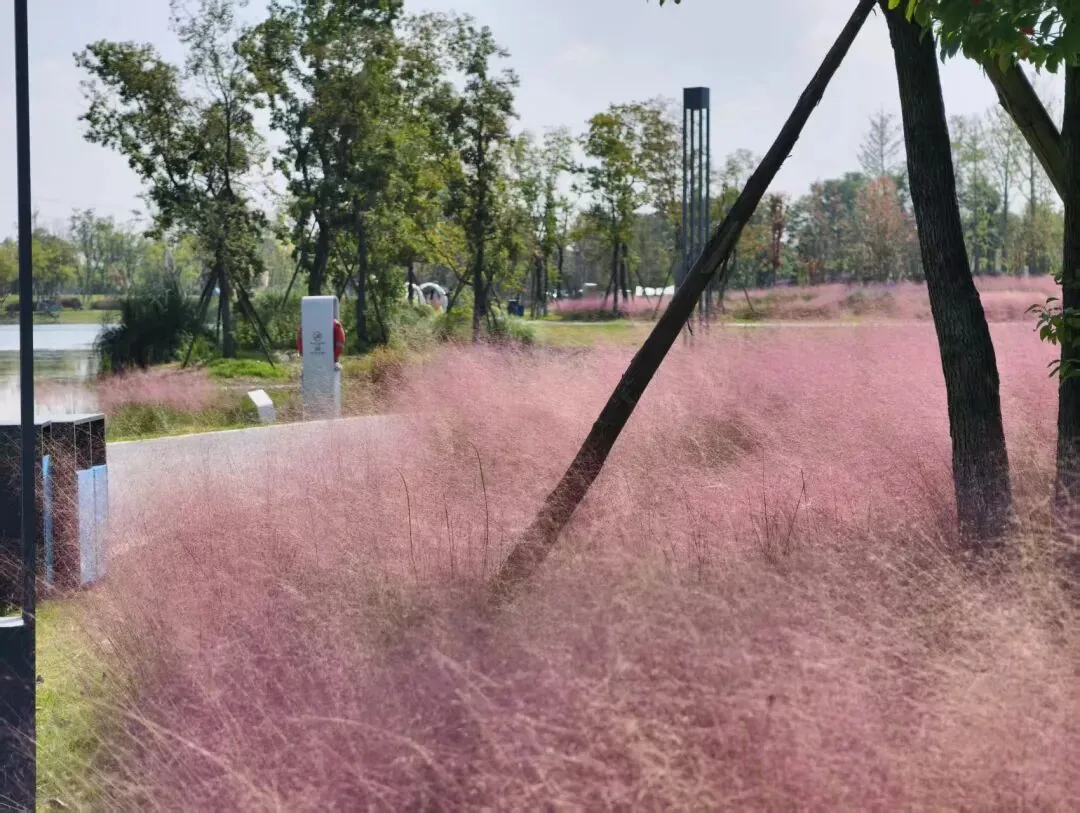
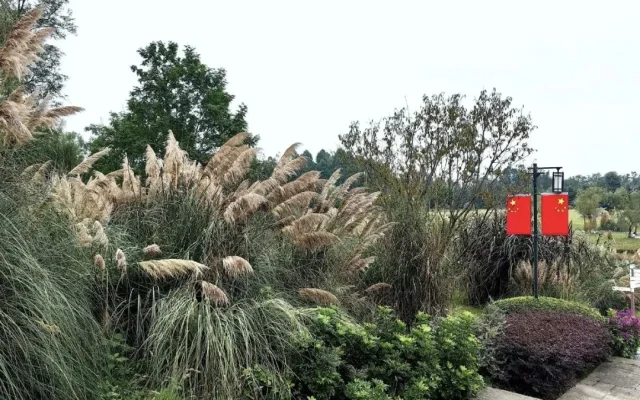
The absolute can’t-miss sight in the park right now is the huge patch of pink muhly grass. Its season runs from September all the way to November, and October is peak bloom. Near the section close to Tianfu No. 7 Middle School, the grass stretches in long ribbons along both sides of the path. From a distance it looks like a soft pink haze laid over the ground. Up close, the slender stalks sway gently in the wind — incredibly photogenic. Lately, plenty of Chengdu locals have been making the trip specifically to snap photos of this pink wonderland.
Reeds
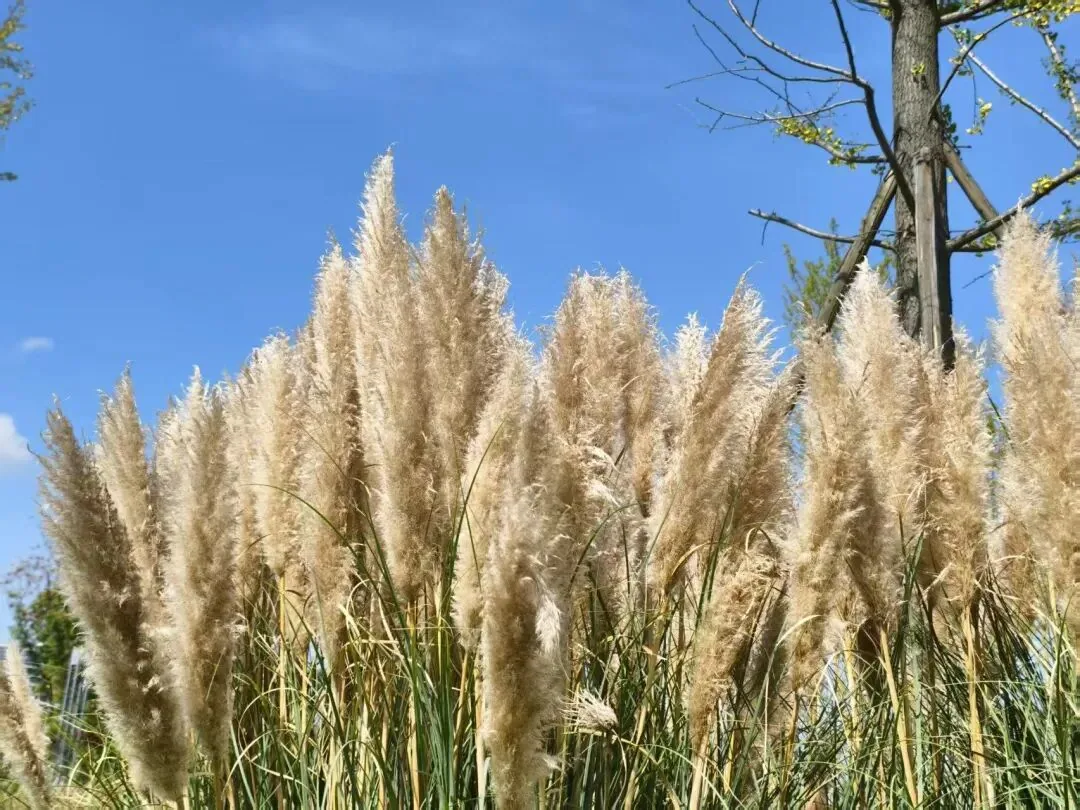
Along the lake shore, there are big stretches of reeds with silvery-white plumes standing taller than a person. Every time I see reeds, I get this feeling of wild openness and solitude — maybe it’s the color, maybe it’s the way they stand proudly toward the sky. When the wind blows, bits of leaf and fluff drift off.
Hibiscus
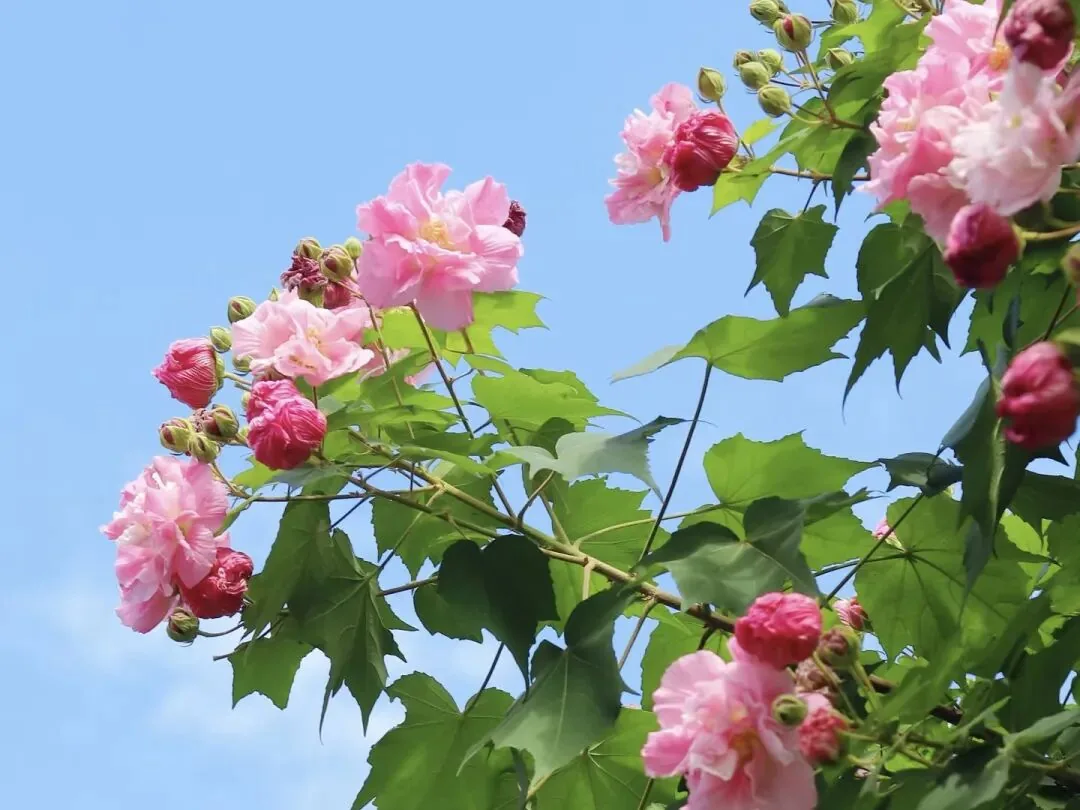
You’ll also spot hibiscus (muxu), which blooms this time of year and has a flowering period that can stretch for three months. Right now it’s in full display. Hibiscus is Chengdu’s city flower, planted in many parks, and Tianfu Park is no exception. The flowers come in pink and white, big and relaxed. Walk along the paths and you’ll bump into a cluster every now and then. The ancients called it “frost-defying flower,” and Su Shi wrote: “A thousand forests swept to yellow, only the hibiscus blooms alone.” Fits the mood perfectly.
Qinhuang Lake and the “Loneliest Tree”
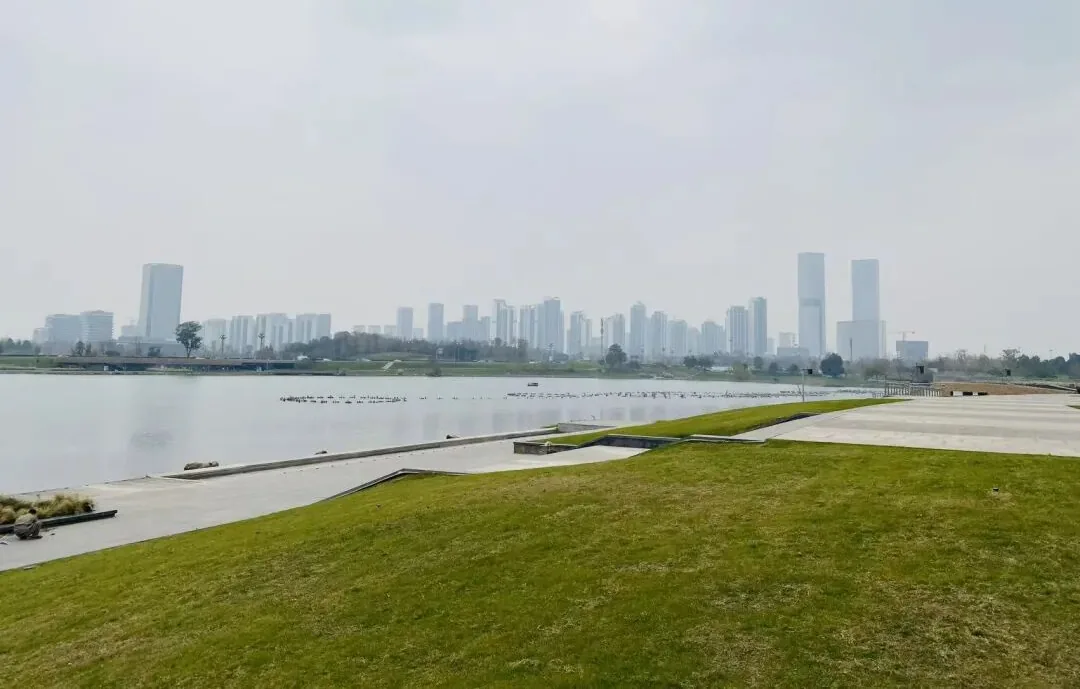
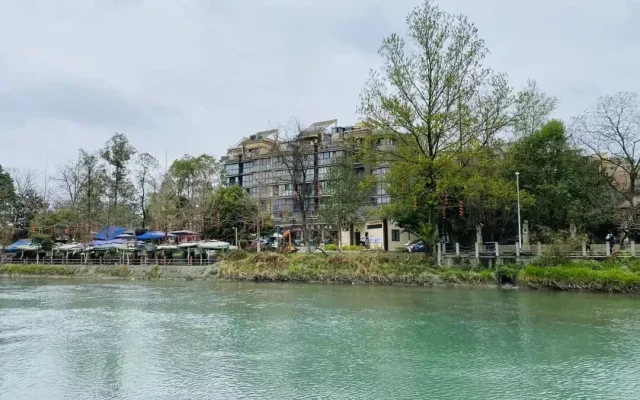
Many visitors make a beeline for Qinhuang Lake. The area used to be called Qinhuang Temple — no idea if it has anything to do with Emperor Qin Shi Huang, but it’s pretty bold for such a small lake to carry that name. The water is clear, and blue skies, white clouds, and high-rises reflect in it — great atmosphere. The Western China International Expo City sits on one side, and the Tianfu International Conference Center faces it directly. Along the lake you’ll find spots like Qixia Pavilion, Jinxiu Terrace, and a waterside platform. Oh, and when the jacarandas bloom each year, this place gets lively — because the “loneliest tree” sits right on the lawn by the shore.
Space to Breathe: Lawns, Picnics, and Doing Nothing
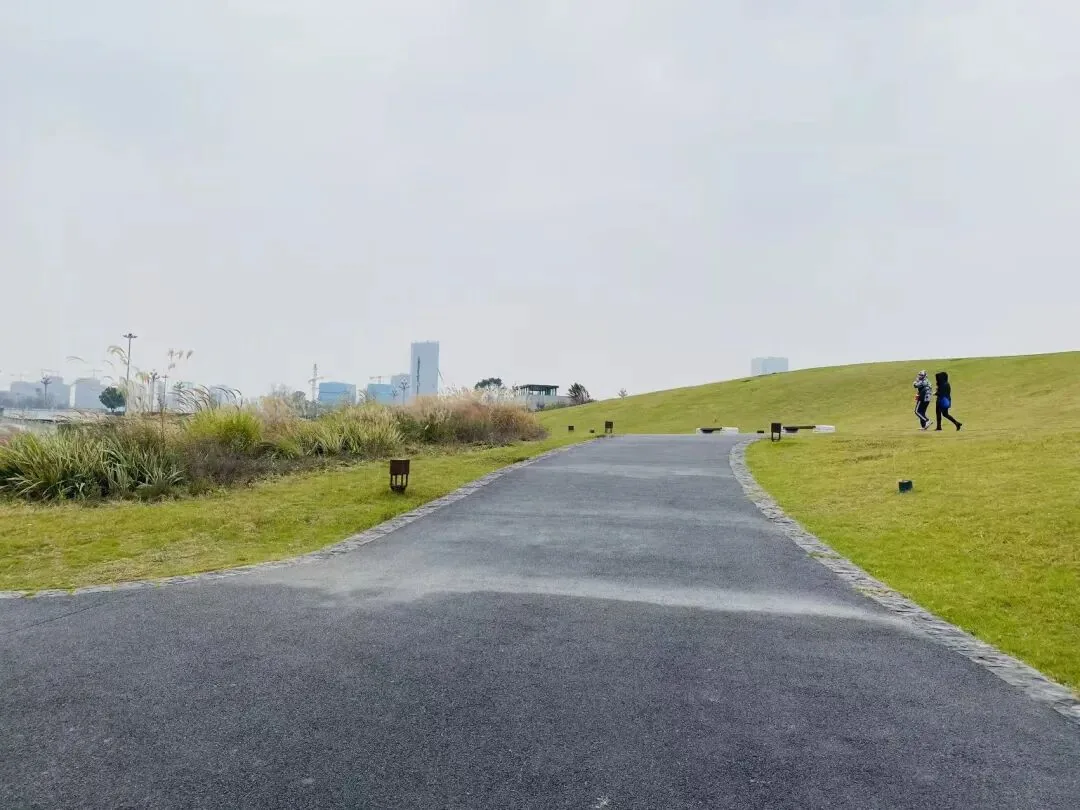
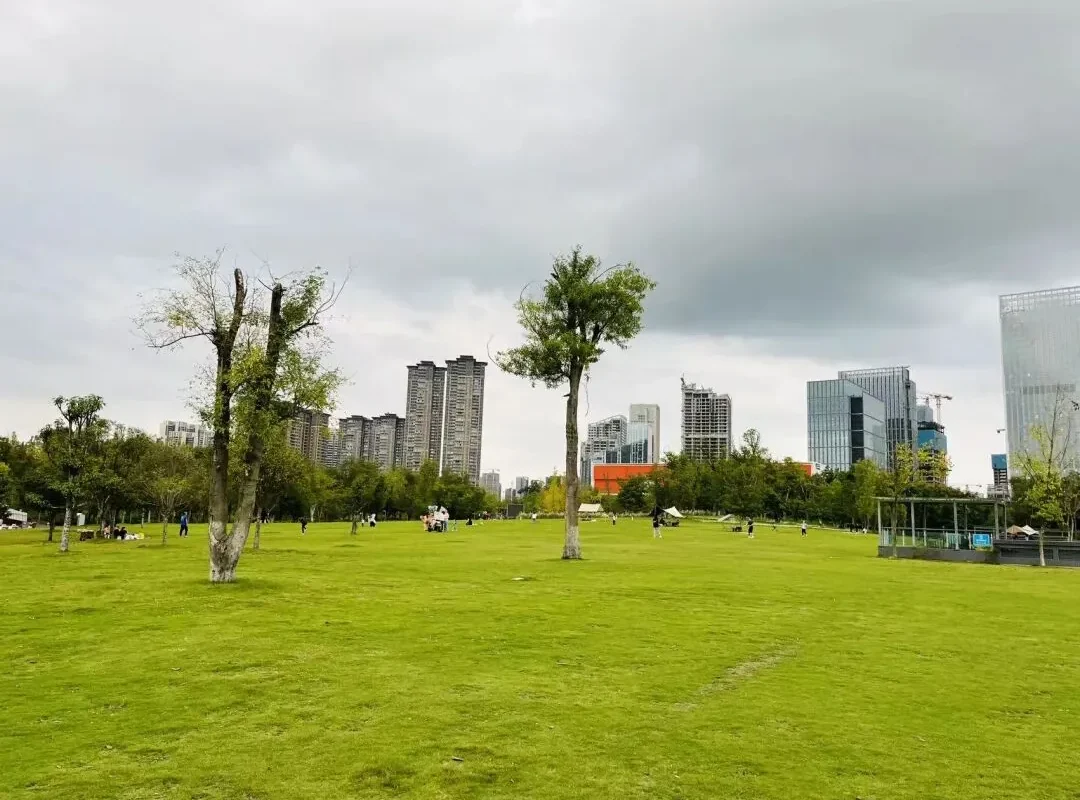
The best thing about Tianfu Park is its open, relaxed sense of space. Unlike small, cramped parks, here you get huge, flat, soft lawns. The weather is comfortable and the sun is gentle — perfect for picnics, camping, and chilling out. In October, the lawns sprout tents, canopies, kites, and dogs. Kids chase kites, adults lie on mats watching clouds, elderly folks stroll slowly along the lakeside loop. You can do a lot, or you can do nothing at all. Closing your eyes and listening to the wind pass by is just fine too.
Trees, Ginkgos, and Golden Daisies
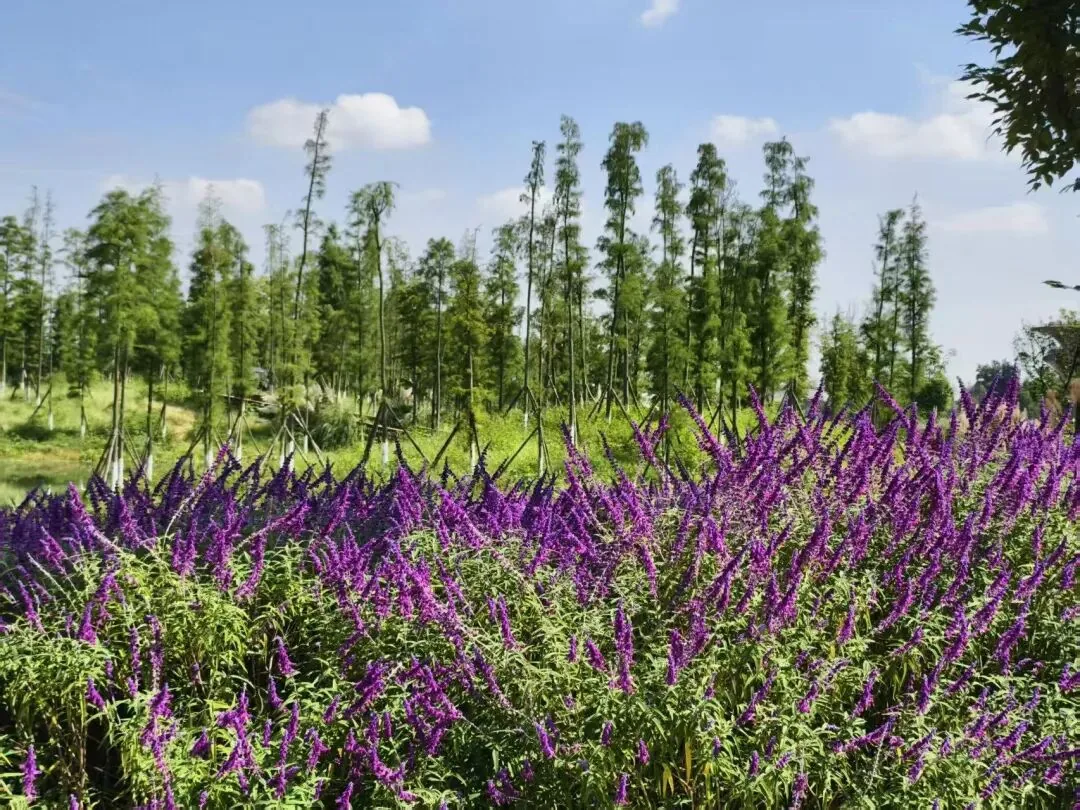
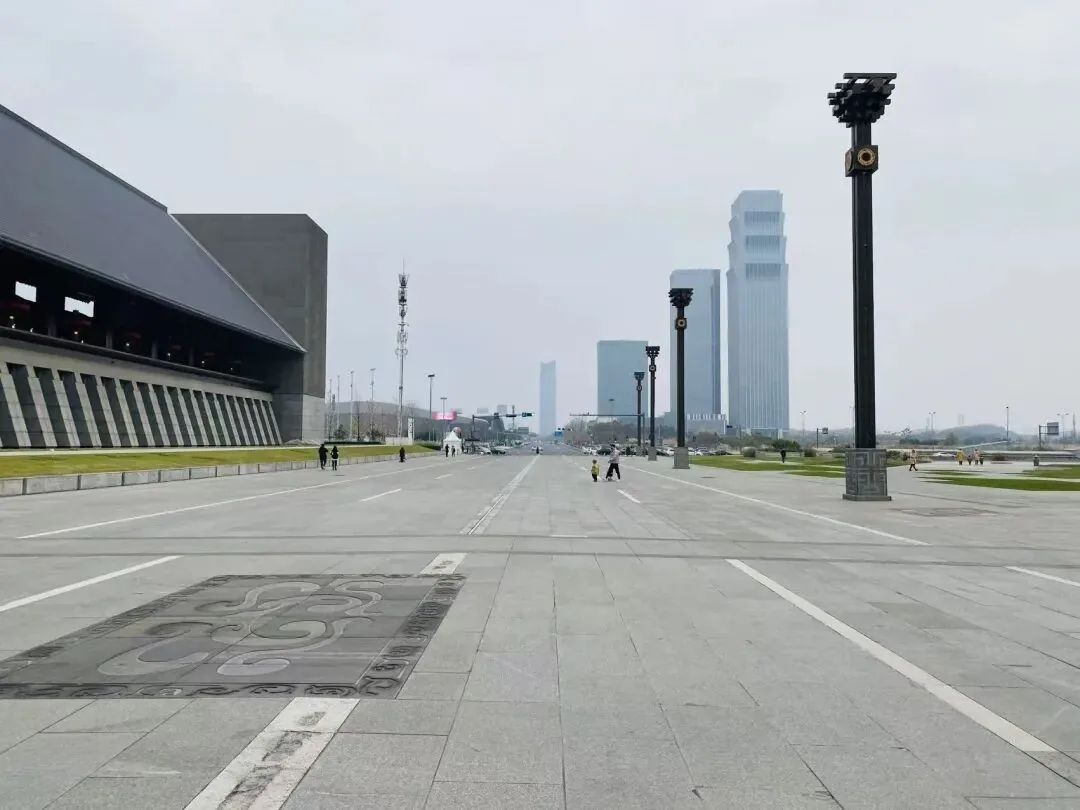
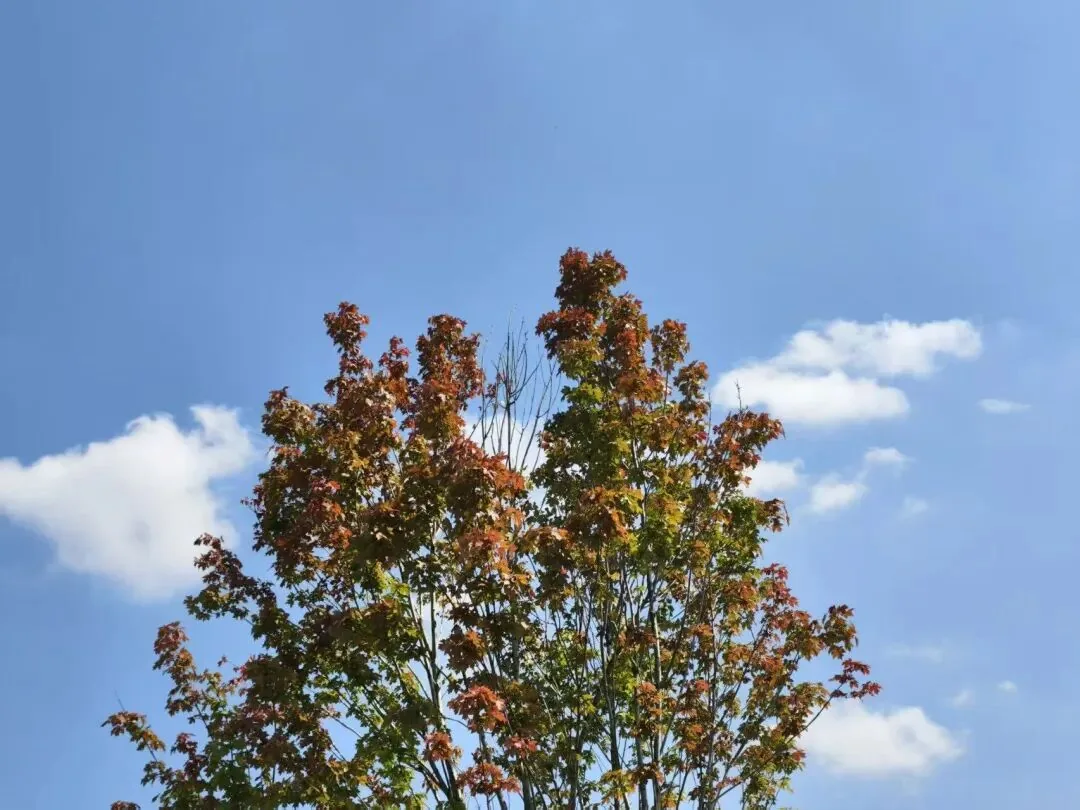
The park’s vegetation is lush, with thousands of trees scattered throughout. In early autumn, the green hasn’t faded yet, but gold, light red, and warm orange are slowly creeping in at the edges of the leaves. The ginkgo trees along the roads have started turning yellow, dropping a few leaves. Their straight trunks line up neatly, sunlight filters through the canopy, and when the breeze blows, the leaves shimmer and dapple the ground.
Along the paths and at the edges of the lawns, patches of golden daisies are blooming freely — bright yellow little flowers clustered together, fresh and eye-catching. Here and there, other flowers dot the grass, weaving yellow-green and red-green together, dressing the vast park in color. There’s none of the bleakness of late autumn — just the perfect vitality of early fall. One look and you feel refreshed and healed.
Practical Info
- Address: South Section 2 of Tianfu Avenue, intersection with Hangzhou Road, Tianfu New Area. Just search “Tianfu Park” in your navigation app.
- Tickets: Free.
- Getting there: Metro Line 1, Tianfu Park Station, exits A or B — direct. Metro Line 19, Honglian Station, exit A1. Metro Lines 1/6/18, Western China International Expo City Station — direct.
- Camping: Tents and canopies allowed on designated lawns. Open flames and barbecues are prohibited.
- Tip: The park is enormous — don’t try to walk the whole thing. Cycling is the best way to experience it. You can rent bikes, and it’s also convenient for bringing kids.
Pro tip: October is peak season for the pink muhly grass, so head there first if you’re short on time.
Local insight: Rent a bike — the park is way too big to cover on foot, and cycling lets you catch all the best spots without wearing yourself out.
October at Tianfu Park is vast, gentle, and refreshing. It has the clean, grand feel of an urban park, but also the fresh quiet of natural hills and fields. So — do you like parks like this?