Why Ginkgo Season Is Chengdu’s Best-Kept Autumn Secret
Late autumn and early winter are when Chengdu’s ginkgo trees hit their golden peak. The weather is crisp, the leaves are glowing, and the city slows down just enough to enjoy it. If you’re visiting in late November or early December, you’re in luck — this is the sweet spot.
Here’s a complete guide to four ginkgo spots you can reach by bus, with details on when to go, which bus to take, and whether you need a ticket. No navigation stress, no parking worries — just golden leaves and that roasted chestnut smell drifting from street corners.
Ginkgo Road (Jinniu District, Xi’an Road Subdistrict)
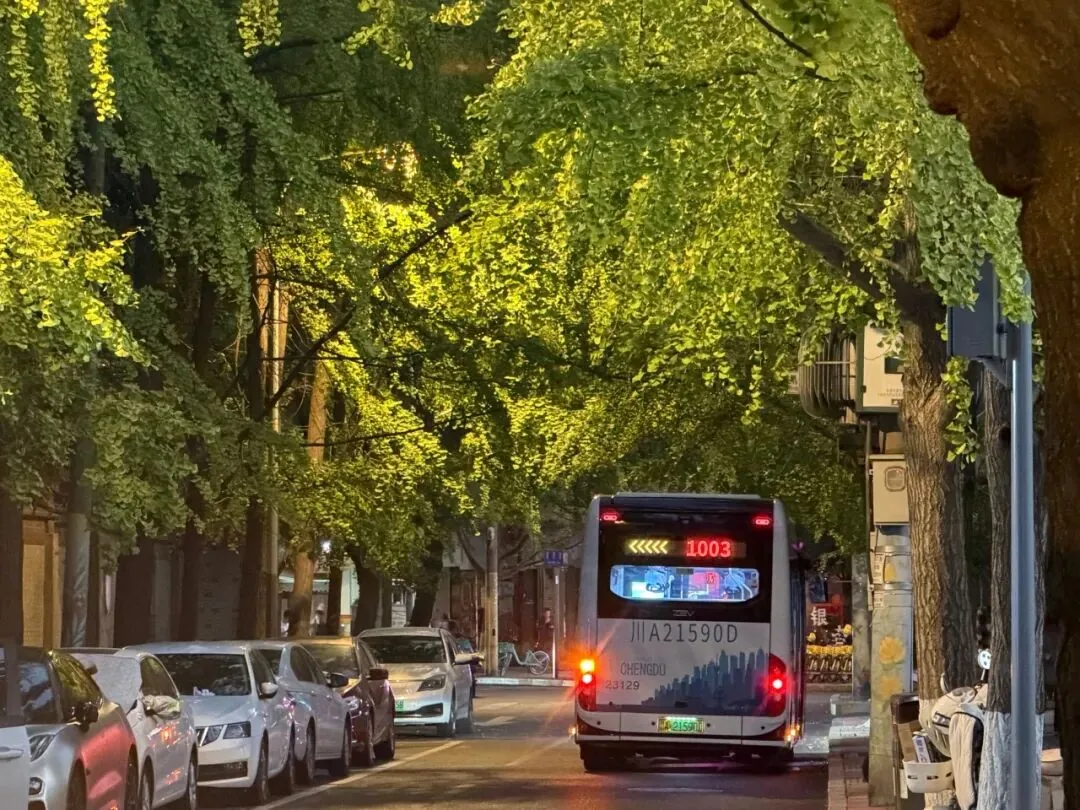
The highlight: Chengdu’s first ginkgo culture street, home to a 300-year-old ginkgo tree and over 100 more that form a golden canopy. It’s also where you’ll feel the most old-Chengdu neighborhood buzz.
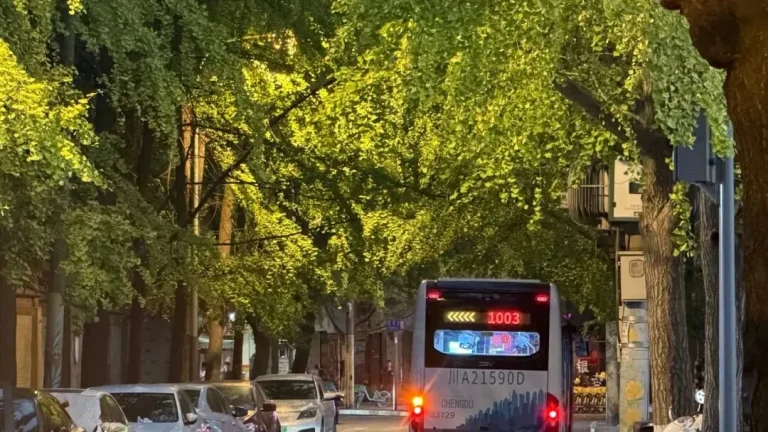
This is one of Chengdu’s classic ginkgo-viewing spots. In late autumn and early winter, tall branches arch over the street, creating a long golden dome. Fallen leaves scatter across the sidewalk, rustling as the wind blows through. Old residential buildings line the road, with small shops and eateries at street level. Ginkgo-themed graffiti covers walls and crosswalks. You’ll see elderly folks sunbathing, neighbors carrying groceries, and visitors stopping to take photos — all moving at that slow, easy pace that defines old Chengdu.
- Bus: Take bus 1003 and get off at Ginkgo Road North Station.
- Tickets: Free, open all day.
Pro tip: Come on a weekday morning if you want the street mostly to yourself — weekends get busy with photographers.
Wenshu Monastery (66 Wenshuyuan Street, Qingyang District)
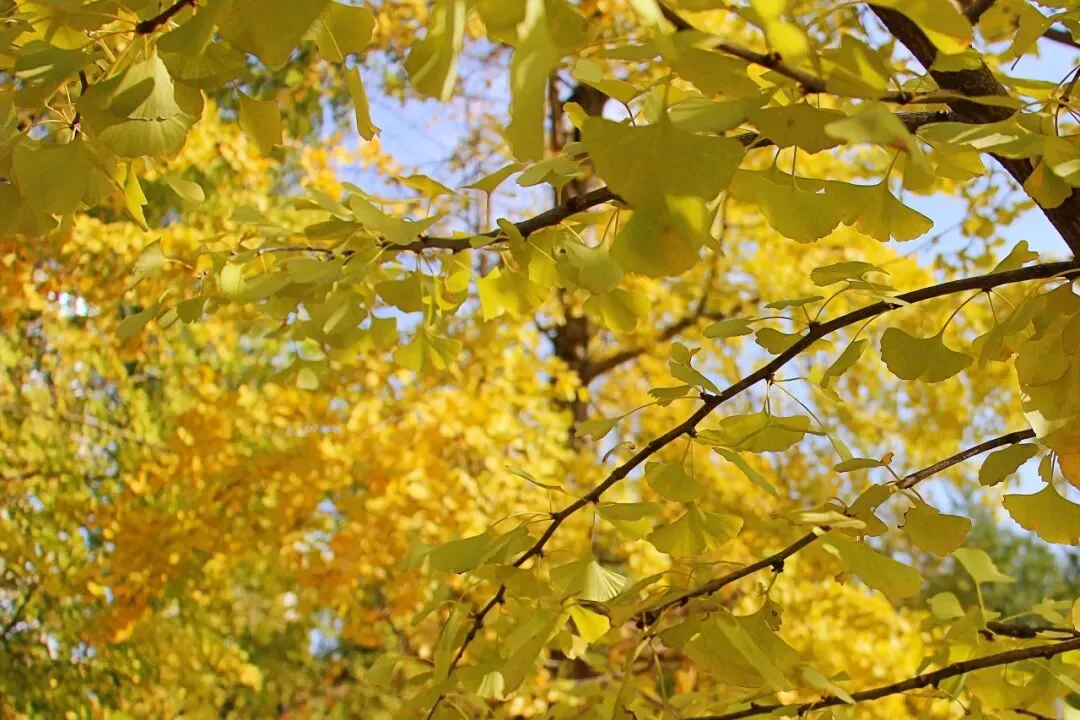
The highlight: Red walls and ancient temple architecture paired with golden ginkgo — a perfect backdrop for traditional-style portraits. And when you’re done, Wenshufang market street is right next door.
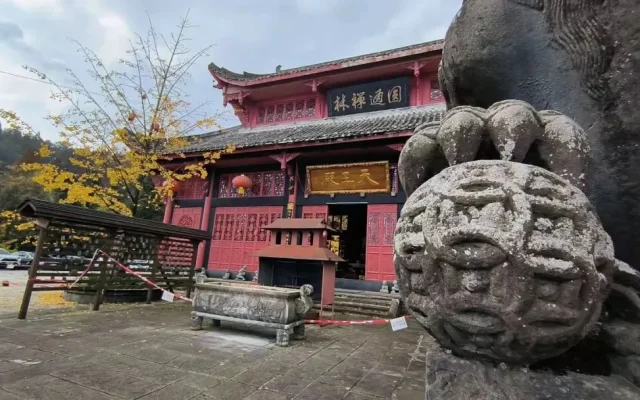
Wenshu Monastery hits its annual peak of beauty now. Golden leaves set off the temple’s red walls and dark tiles, and when the autumn wind blows, it sends down a gentle shower of gold. The entrance arch frames the scene nicely. The red-wall path near Xiangyuan (the tea garden) is especially photogenic — wear traditional or new-Chinese-style clothing for better texture in your photos. When you need a break, rest at Xiangyuan with a cup of covered-bowl tea or try the temple’s vegetarian dishes under the ginkgo trees. Exit the temple and you’re right at Wenshufang, where you can browse specialty shops and local snacks. It’s a full dose of autumn romance in the middle of the city.
- Bus: Take bus 1, 73, 80, or 106 and get off at Beidajie Station.
- Tickets: Free.
Local insight: The temple’s vegetarian restaurant is a nice change of pace — simple, affordable, and right under the golden leaves.
Jinxiu Alley (Intersection of Jinxiu Alley and Jinxiu Street, Wuhou District)
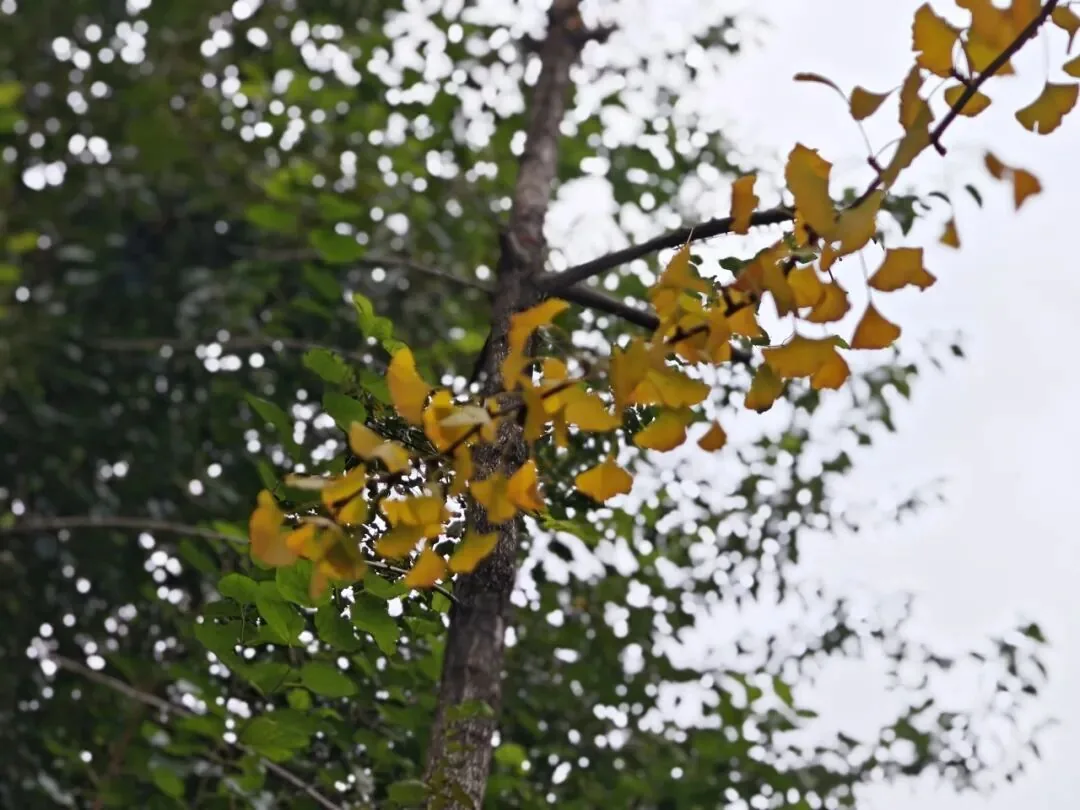
The highlight: A golden archway in an old alley south of the city — fewer crowds, quieter atmosphere, and a thick carpet of fallen leaves.
This is the South Gate’s limited-edition late-autumn romance. Narrow alleyways are lined with decades-old ginkgo trees whose crowns meet overhead, weaving a long golden corridor. During ginkgo season, vehicles are restricted at certain times, and the ground keeps a thick layer of fallen leaves. The alley stays extra quiet. Golden leaves on one side, old residential buildings on the other — neighborhood life and autumn scenery blend together, and even time seems to slow down.
- Bus: Take bus 49, 55, 62, or similar to Zhangling Temple (Metro Sichuan University Wangjiang Campus Station) and get off.
- Tickets: Free, open all day.
Du Fu Thatched Cottage (37 Qinghua Road, Qingyang District)
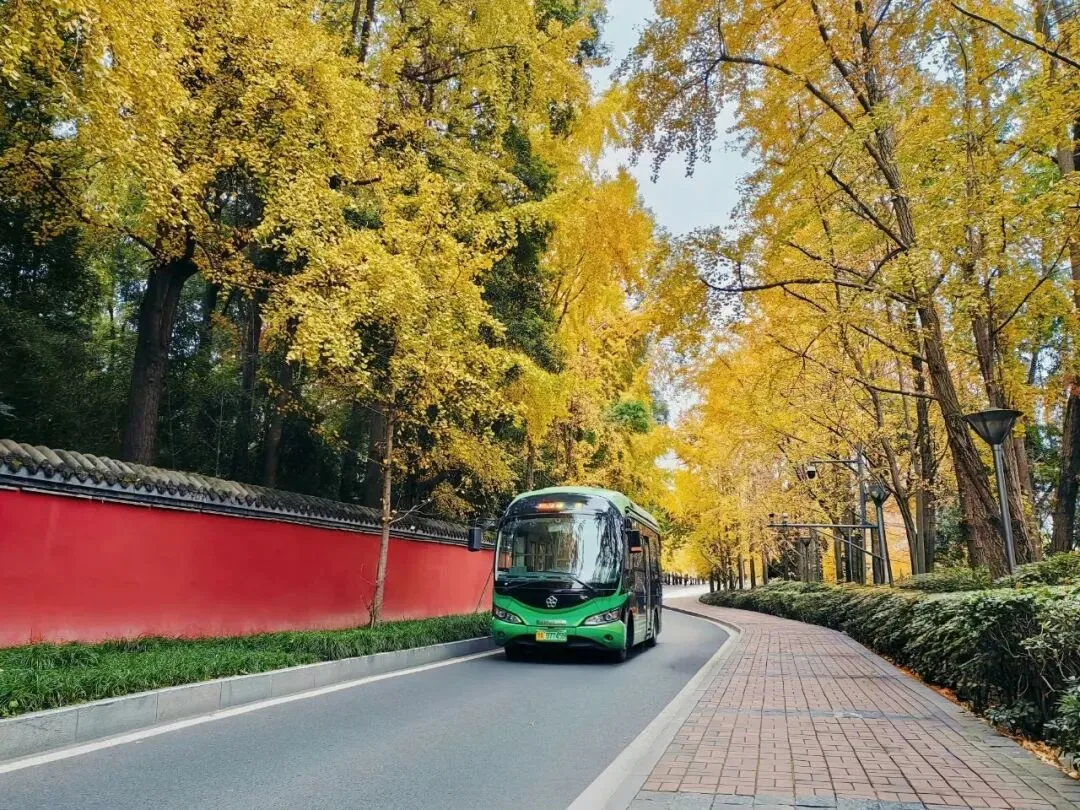
The highlight: A poetic autumn route that links three scenic spots — perfect for a half-day outing.
Start on Caotang Road, then walk through Huanhuaxi Park, and finish at Du Fu Thatched Cottage. Outside the cottage’s south gate, Caotang Road has ancient, quiet red walls that contrast beautifully with golden ginkgo. Continue on, and Huanhuaxi Park opens up with ginkgo trees spread across paths, lawns, and the water’s edge. By Canglang Lake, tree shadows cast soft reflections on the water. If you have time, step into Du Fu Thatched Cottage itself — ancient trees shade the grounds, and the red walls along Flower Path are just as photogenic with ginkgo. Walk past the Thatched Cottage, Gongbu Shrine, and Daya Hall to enjoy both autumn scenery and the quiet literary atmosphere of the poet’s old residence.
- Bus: Take bus 1024 and get off at Caotang Road East.
- Tickets: Caotang Road and Huanhuaxi Park are free; Du Fu Thatched Cottage requires a ticket (50 RMB).
Before You Go: Practical Tips
Chengdu’s urban ginkgo usually hits peak viewing from late November to early December, lasting about two to three weeks. Before heading out, check the ginkgo leaf-viewing index — when it reaches Level III, that’s the ginkgo’s invitation to come see it.
- Best light: Before 10 a.m. and after 3 p.m. give the softest light and the most translucent leaves.
- Don’t pick or eat fallen ginkgo nuts — raw ginkgo is mildly toxic.
- Watch your step after rain — leaf-covered ground gets slippery.
Riding the Bus Through Old Streets
Taking the bus through old neighborhoods is the most relaxed way to see ginkgo this season. No staring at navigation, no worrying about parking. You just watch the gold spread from street corner to alley end, smell roasted chestnuts drifting by, and spot an orange cat sunbathing at the alley entrance — all part of the moving autumn scenery outside the window.
This weekend, pick one spot and go.