The Best Neighborhood in West Chengdu: A Walk Through 2,000 Years of Kilns, Wartime Universities, and Movie Dreams
Most people who visit Chengdu stick to the famous spots. But if you ask a local, they’ll tell you the real flavor of the city is in its residential neighborhoods. Guanghua Subdistrict, in west Chengdu, is one of those places. It’s more than a cluster of trendy cafes and photo spots — it’s a layered slice of Chengdu history, from ancient kilns to a wartime university to a film studio that shaped generations of movie memories.
Here’s the thing: Guanghua isn’t on the typical tourist trail. But that’s exactly why you should go. You’ll find honest food, quieter streets, and stories that span nearly two millennia. Let’s break it down.
From Kilns to Classrooms: The Roots of Guanghua
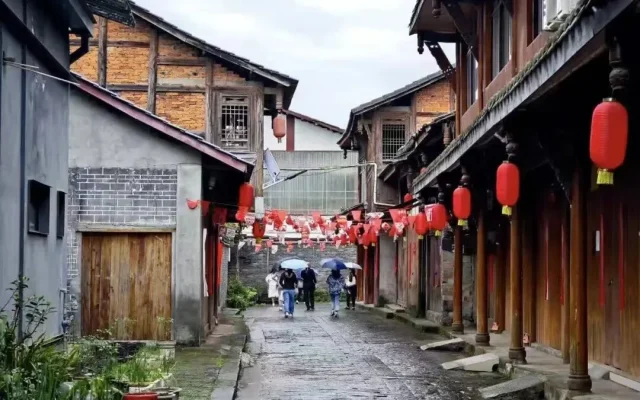
Long before it was called Guanghua, this area was known as Xiyao Village — literally “West Kiln Village.” The name says it all: it was a place for firing pottery. Archaeologists have unearthed brick tombs from the Eastern Han and Tang-Song dynasties, plus ancient kiln sites from the Sui and Tang periods. That puts the local kiln history at nearly 2,000 years. Many of the blue bricks and tiles used to build old Chengdu’s city walls and homes came from these kilns. Even the everyday jars and pots used by ordinary people were made here. Because it sat west of the old city, it was called Xiyao, and over time a village grew around it.
Older Chengdu locals still say “Xiyao” instead of Guanghua Village. As late as the 1980s and 90s, when foundations were dug for new buildings, workers would often turn up shards of pottery and old kiln bricks — markers of that centuries-long firing tradition.
A University Born in Wartime
The name “Guanghua” has a different origin, dating back to the War of Resistance. In 1937, the Battle of Shanghai broke out, and the campus of Shanghai Guanghua University was bombed to rubble by Japanese forces. The board of directors decided that even in wartime, education must not stop. They asked Xie Lin, dean of the business school, to go to Sichuan and set up a branch campus. Xie Lin was China’s first certified public accountant, and he had worked in Sichuan years earlier, so he knew the ropes and had connections. He raised funds and scoured for locations. In March 1938, he rented a house in Wangjiaba inside the city and managed to open the school.
By 1939, a new campus had been built on farmland in Xiyao Village, and the whole school moved in. Back then, the surroundings were all fields and vegetable plots. Local villagers would carry fresh produce to the school gate to sell at fair prices, and students and neighbors got along well. A horizontal plaque hung over the main gate, inscribed with “出为圭璋” — meaning graduates should go out and become pillars of the nation. President Xie also led teachers and students in planting a V-shaped cycad, saying it symbolized victory and that the war would surely be won.
Despite being a wartime school, the faculty was top-notch: famous scholars like Ye Shengtao and Xiao Gongquan taught here. Over ten years in Chengdu, the university produced more than 2,000 graduates, 80% of them from Sichuan, and many later became leaders in finance and economics.
The name “Guanghua” comes from a line in the Shangshu Dazhuan: “Sun and moon shine bright, day after day, ever renewing.” In 1952, during the national reorganization of universities, the finance and economics departments of Guanghua University merged with other institutions. They formed the Sichuan Institute of Finance and Economics — today’s Southwestern University of Finance and Economics. To commemorate this history, the campus is still called “Guanghua Garden.” Later, Guanghua Avenue and Riyue Avenue were also named from the same classic phrase — a way of carrying that educational legacy into the present.
Emei Film Studio: The Hollywood of West Chengdu
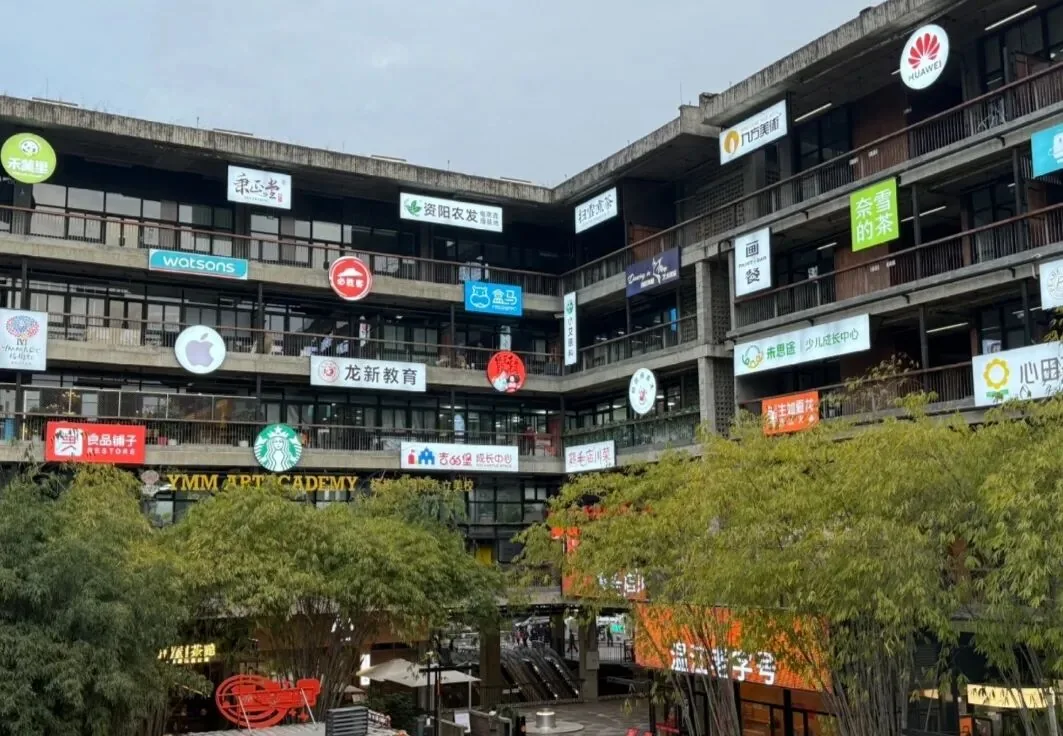
Now head to Eying 1958 Cultural and Creative Park on Qingjiang Road. Today it’s a spot for young people to grab coffee and take photos, but sixty years ago, this was the most fashionable cultural landmark in Chengdu’s western suburbs.
In 1958, the Emei Film Studio broke ground at Luojianian. The area was all farmland then, and from a distance only two white buildings stood out. Locals called them the “Little White Buildings.” The studio’s name was inscribed by Guo Moruo himself. He also wrote a poem line: “Poets as neighbors, farmers as companions.” It fit: the studio stood next to Du Fu’s Thatched Cottage, surrounded by fields.
Conditions were tough back then. The recording studio had poor soundproofing. During the day, civil aircraft flew overhead, and in the countryside, chickens and dogs made noise — impossible to record fine sound effects. For Sichuan opera films like The Magistrate Qiao’s Mix-Up, which demanded high audio quality, actors had to come at midnight to record. Any interruption meant starting over from the beginning.
Friday afternoons were the liveliest time of the week. The main cafeteria was temporarily turned into a cinema to screen internal reference films, and people from nearby work units would try every trick to sneak in. It became the hottest cultural event in west Chengdu. Later, films like The Corner Forgotten by Love, The Girl in Red, and Jiao Yulu — which took the country by storm — were all shot here. Actors like Pan Hong, Zhang Fengyi, and Sun Chun all cut their teeth in the studios beside these fields. For older Chengdu locals, the familiar “Emei Film Studio” title card at the start of movies they watched as kids came from this land in Guanghua Subdistrict.
Where Locals Eat: Guanghua’s Food Scene
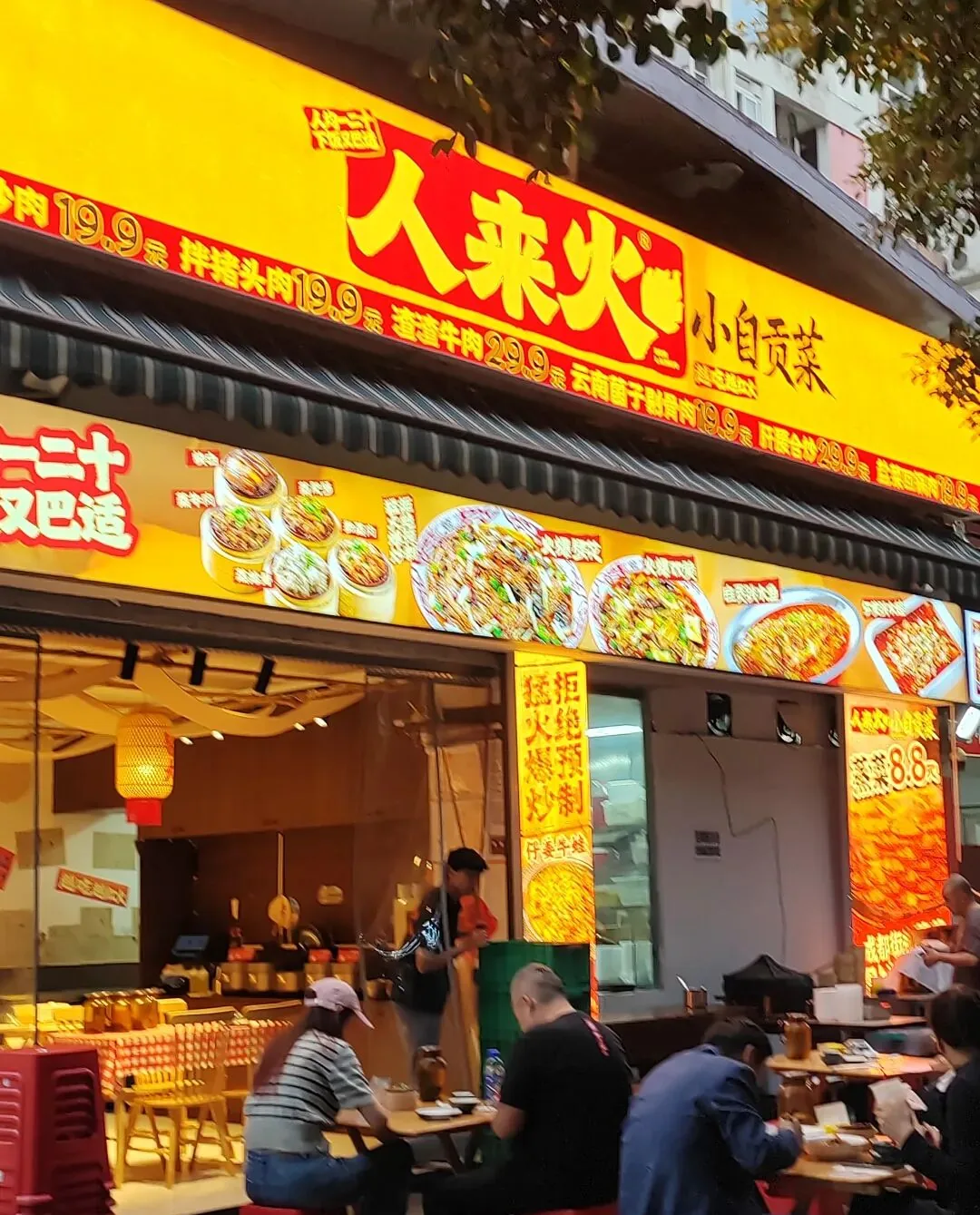
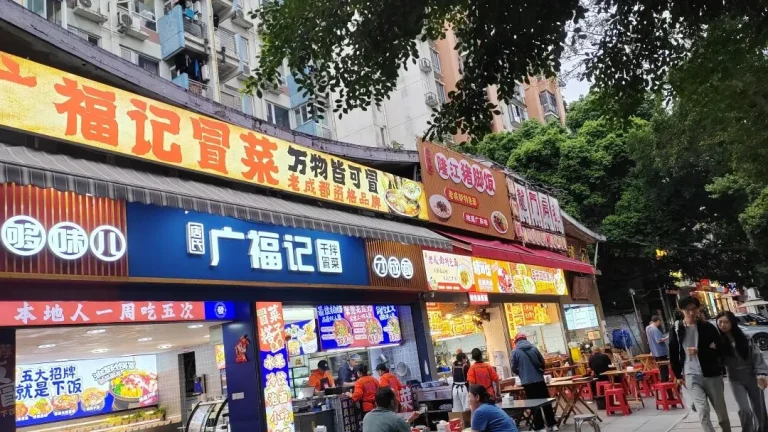
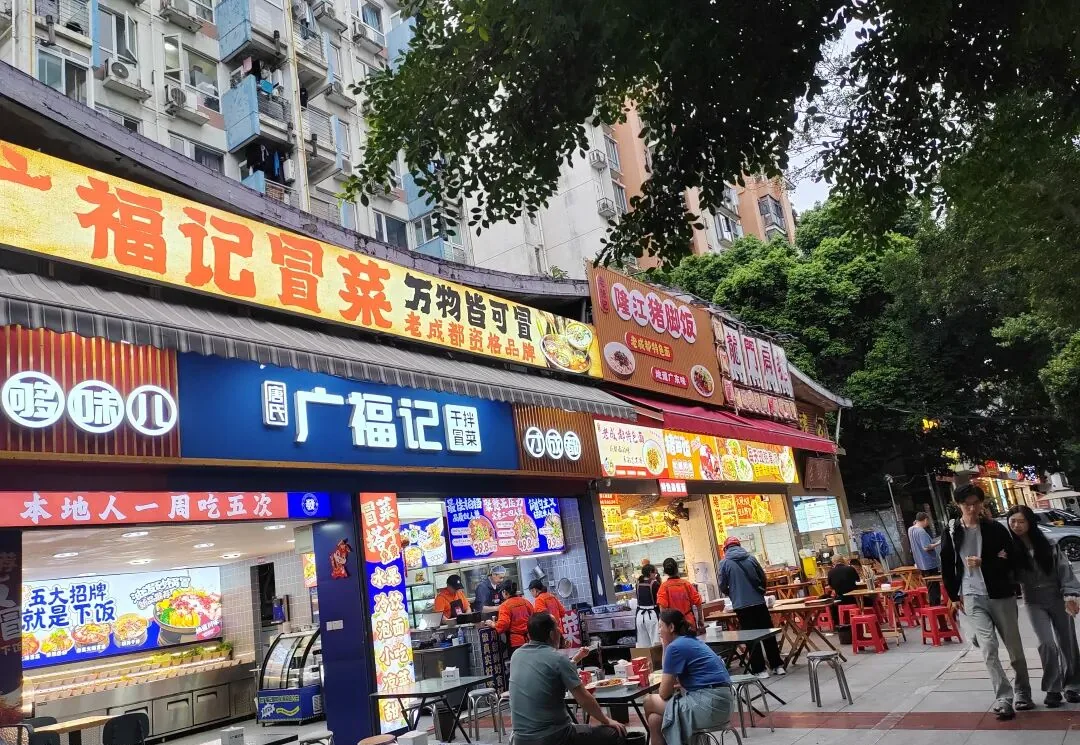
After all that history, let’s get to what matters here: eating. The beauty of Guanghua Subdistrict is that it’s a mature residential area. The restaurants downstairs have survived the scrutiny of neighbors for over a decade — so the flavors are reliable. Compared to tourist-oriented spots in Kuanzhai Alley, this place is more authentic, prices are reasonable, and the chance of a bad meal is low.
Pro tip: Skip the tourist traps and eat where the locals eat. In Guanghua, you can’t go wrong.
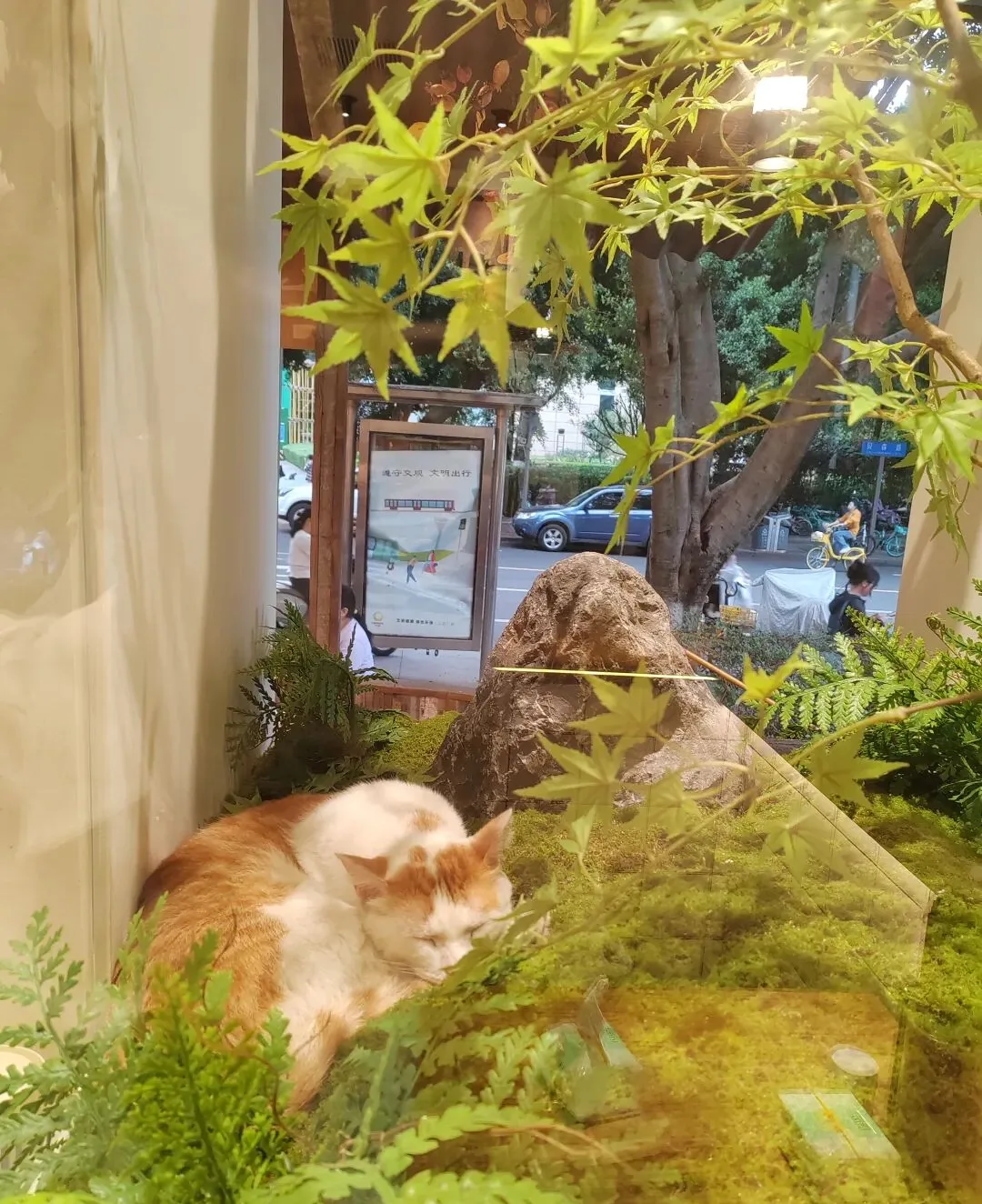
One spot worth seeking out is Emei Luoji Doufunao (tofu pudding) on the street corner. The decor has a bit of an artsy vibe, and the owner is a cat lover who built a transparent enclosure for the cats. The cats roam freely inside, gazing at diners through the glass — living a more comfortable life than most people.
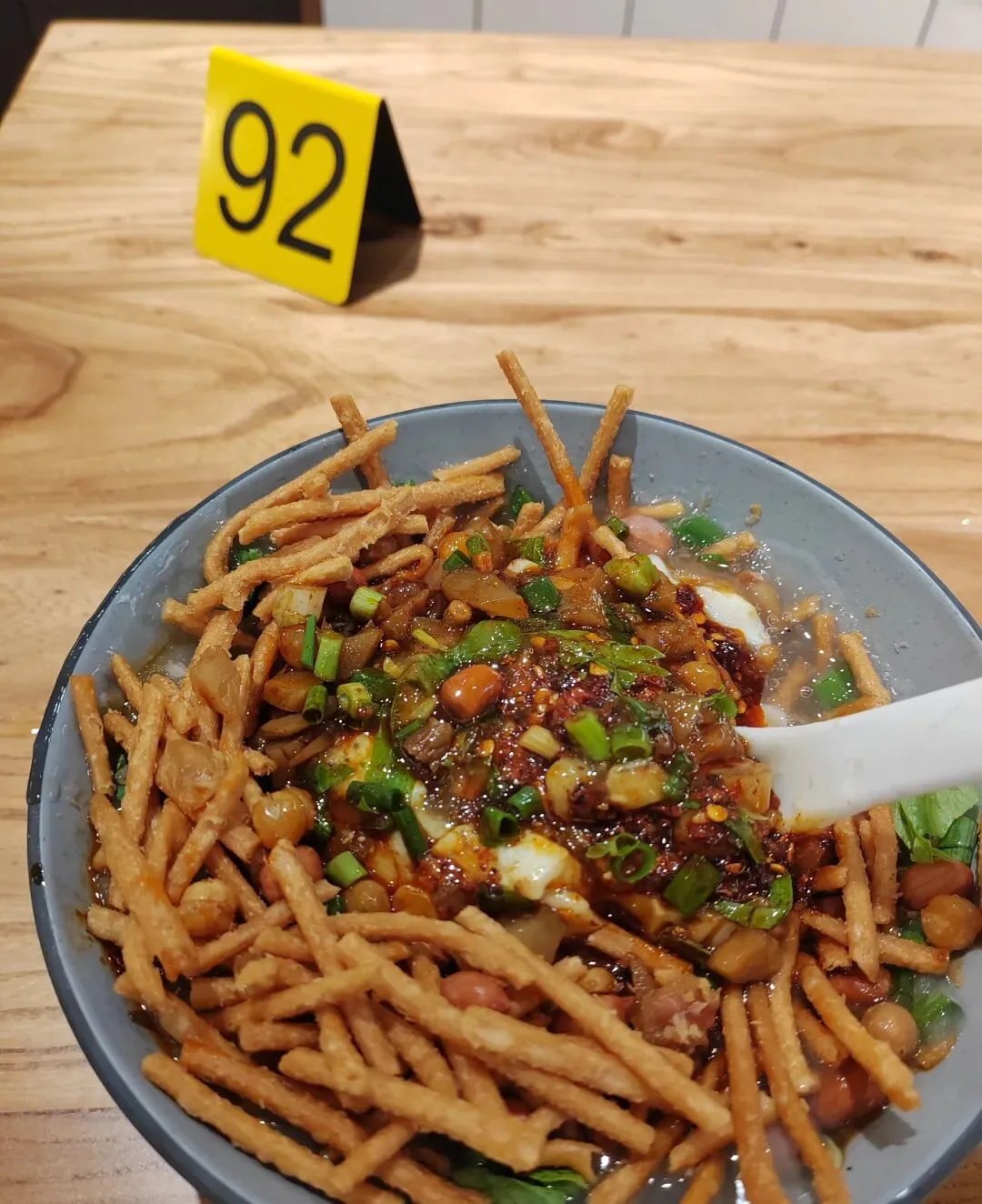
Coming from northern China, it’s easy to dislike Sichuan-style tofu pudding at first — the starchy, thick texture can read as gluey. Even without an appetite, it’s worth ordering a bowl. And then it’s hard to stop eating. Peanuts, beef, and crispy fried dough strands (sanzi) wrapped in a spicy, numbing sauce — one bite and your mouth waters. You’ll want another bowl. The shop also serves Leshan beef kebab burgers (kabing) and tofu kaka. Leshan people name their food casually, but the flavors are truly unique — completely different from northern meat sandwiches, with a distinctive savory kick.
Local insight: Don’t knock it till you try it — Sichuan tofu pudding is a whole different beast from what you might expect.
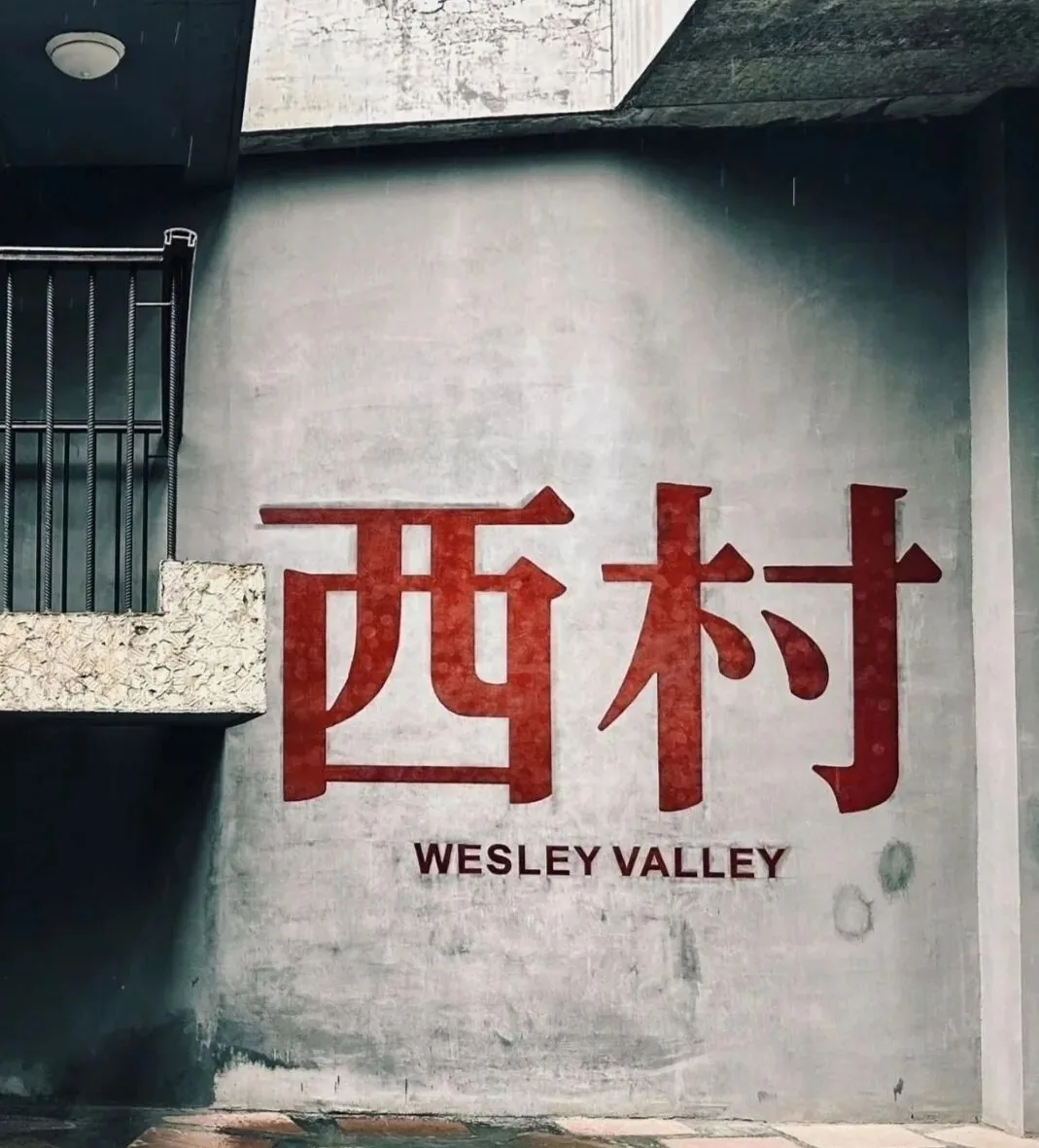
Xicun Courtyard: Industrial Chic Without the Crowds
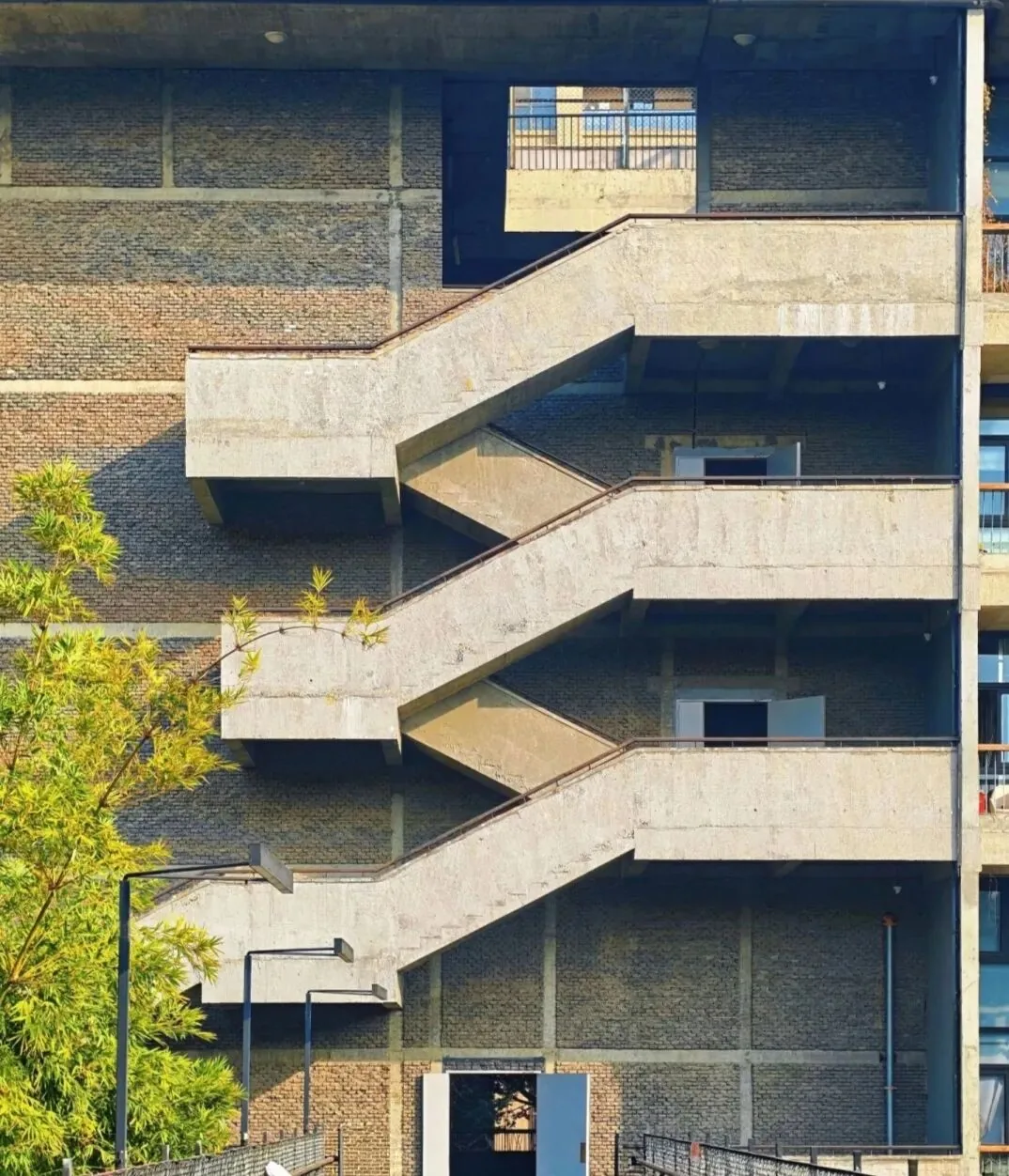
Not far from the core of Guanghua Subdistrict is Xicun Courtyard. Compared to the packed crowds at Jinli and Kuanzhai Alley, this place is much quieter. This is also a street that locals pass through often on their commute. The rough, industrial-style concrete stairs, paired with patches of green bamboo, create a striking contrast between old and new architecture — photogenic.
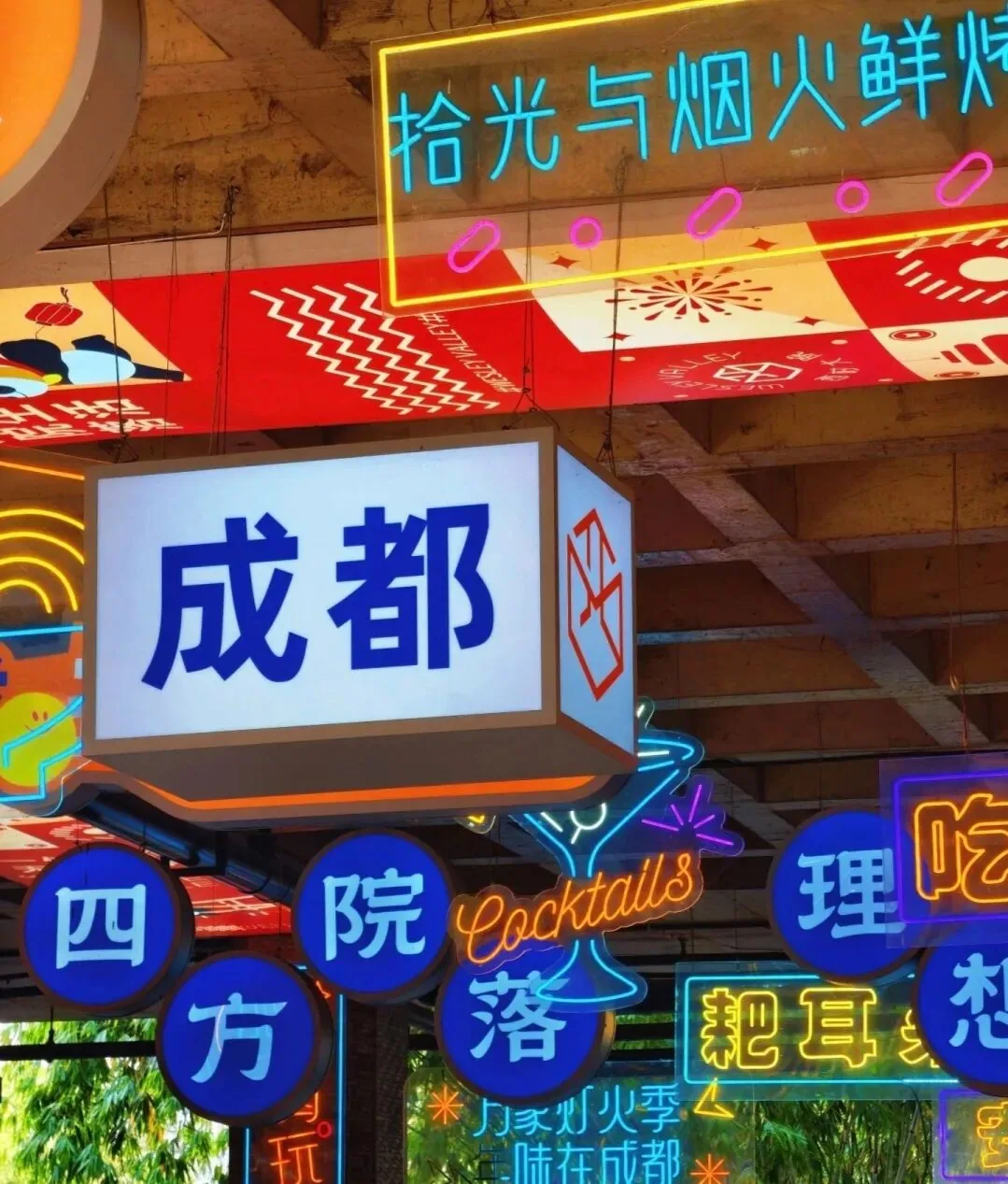
It’s a similar concept to Eastern Suburb Memory — both are renovated industrial sites. Xicun’s buildings even won a Chinese architecture award and were designed by Liu Jiakun. Inside, you’ll find food, shops, and places to stay, and transportation is convenient. It’s easy to like. As the saying goes online: “You gotta visit Xicun at least once.”
Honestly, if you’re visiting Chengdu from out of town, don’t fixate on Kuanzhai Alley. Instead, check out places like Eastern Suburb Memory and Xicun — the experience is completely different. You can clearly feel the collision and blending of old and new Chengdu. Order a beer or a coffee and sit for an afternoon; it’s like traveling back decades, watching the city change bit by bit.
Pro tip: If you want a quieter, more local side of Chengdu, Xicun Courtyard is worth a stop.
A Neighborhood That Tells Chengdu’s Story
The more you explore, the more you realize how fascinating this patch of Guanghua is. From a kiln village to a wartime campus to a dream factory of light and shadow, and finally to today’s bustling core of west Chengdu. Nearly 2,000 years have only added weight to the name “Guanghua.”
Today, the sound of reading still echoes on campus, the old alleys are alive with the bustle of daily life, and young creatives drift in and out of Xicun. It has both the deep stories of the past and the grounded joys of everyday life. That’s probably the most comfortable aspect of Chengdu’s old neighborhoods.