October in Chengdu is when the heat finally breaks. The sky sometimes drizzles, sometimes lets the sun through, but it never gets hot — there’s a wide-open, faraway feeling that puts you at ease. It’s the perfect time to head to the hills, breathe some fresh air, and stretch your legs. So where should you go?
How about hiking to Tiansi Temple (天国寺) in Dujiangyan? It’s a quiet spot that few people know about.
Why Tiansi Temple Is Worth the Trip
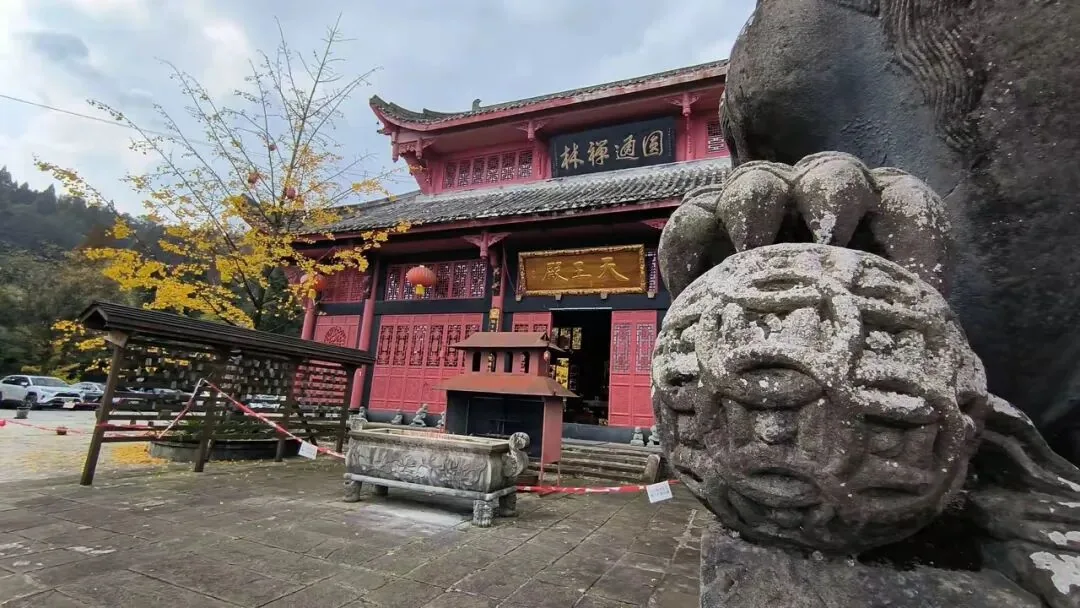
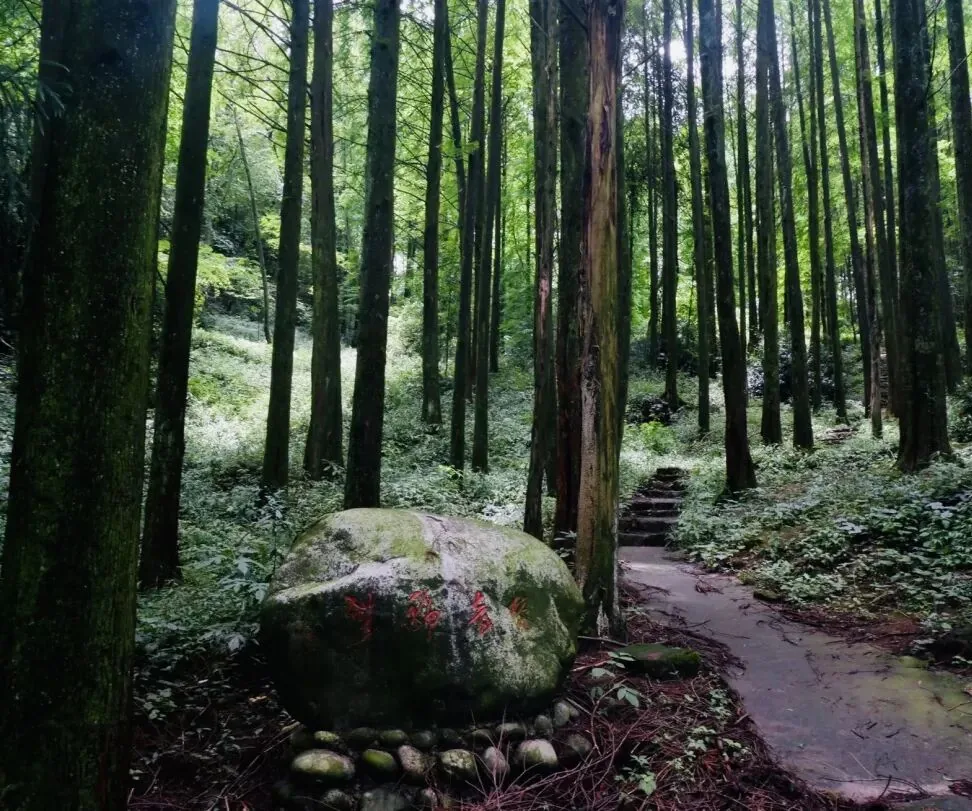
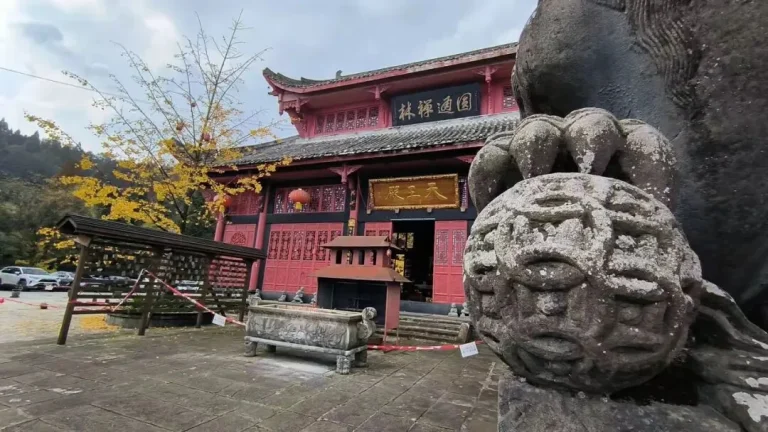
Tiansi Temple, also called Yuantong Chanlin (圆通禅林), sits in Mayan Village (Taoyuan Village), Daguan Town, Dujiangyan. It’s part of the World Cultural Heritage site of Mount Qingcheng, at an elevation of over 1,300 meters. The highest peak nearby, Shisun Peak, reaches nearly 1,945 meters. The temple lies in the foothills of the Qingcheng range, wrapped year-round in ten thousand acres of forest.
Unlike the busy, commercialized Mount Qingcheng scenic area, this place feels raw and quiet — the old temple and the wild hills keep their pure, natural character.
A Temple With Deep Roots
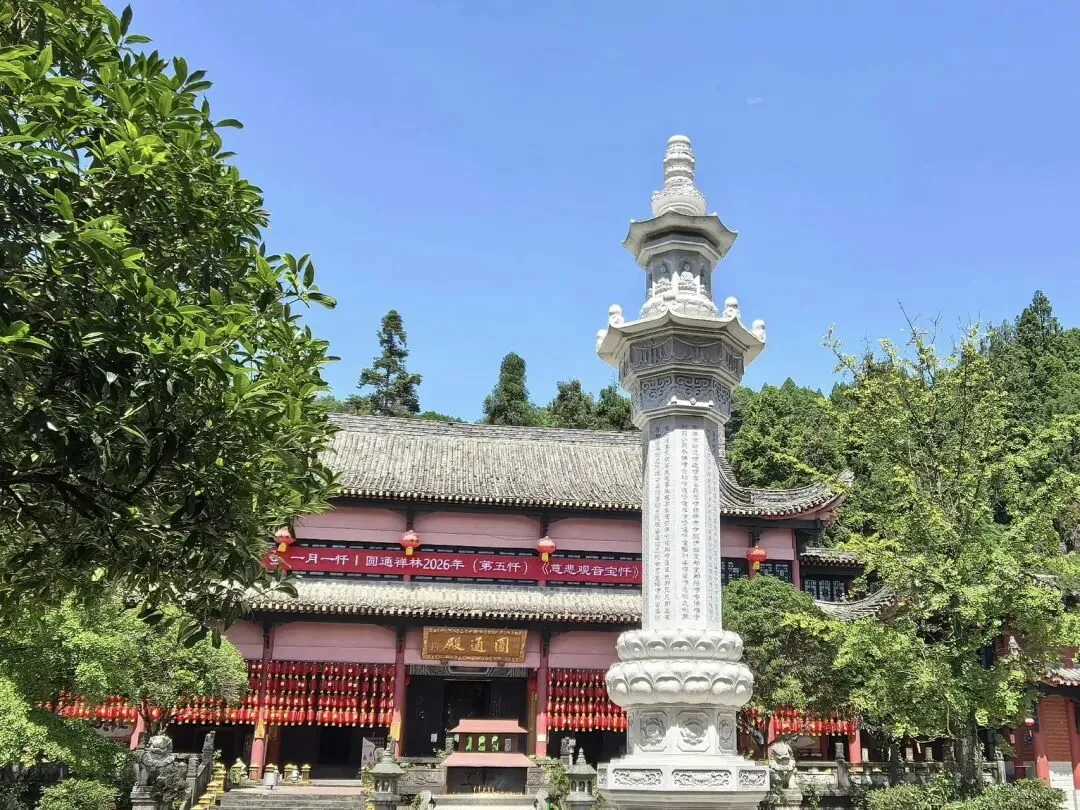
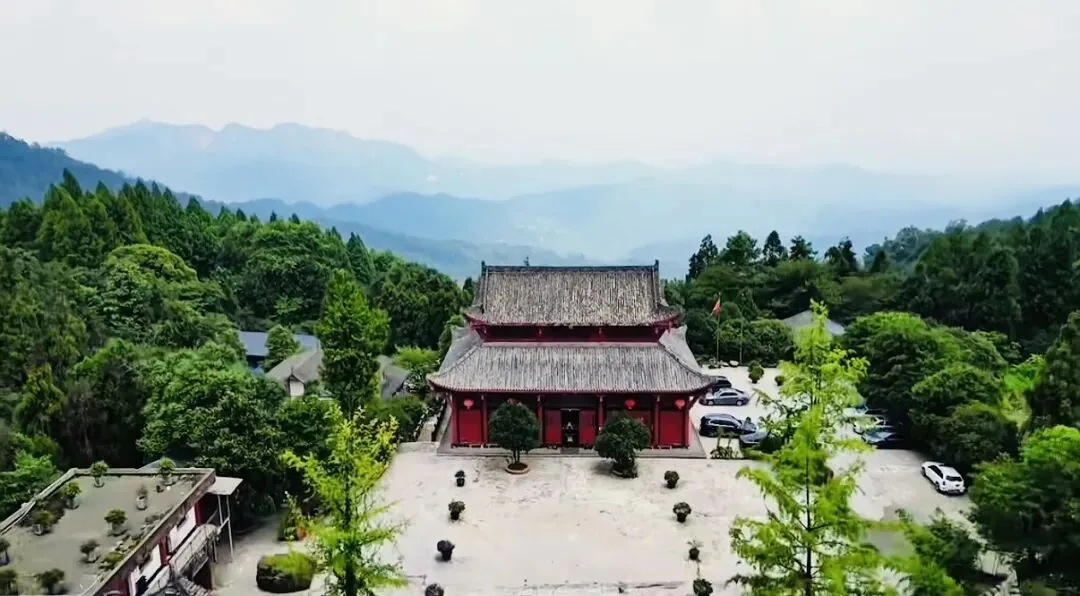
The history here goes way back — all the way to the Jin Dynasty. In the Tang Dynasty it took the name “Tiansi Temple” from the mountain, and in the Song Dynasty it was renovated and renamed “Yuantong Temple.” It was destroyed in the wars at the end of the Ming Dynasty.
At the end of the last century, Chan Master Kuanlin, abbot of Chengdu’s Wenshu Monastery, led a reconstruction effort. The temple reopened in 1996.
Today the grounds include the Hall of Heavenly Kings, the Guanyin Hall, the Wuguan Hall (dining hall), guest rooms, and meditation huts. Next to the Mahavira Hall stands a stupa containing the relic remains of the late Master Kuanlin.
The temple follows “four nevers”: never charges admission, never deviates from Buddhism, never commercializes, and never charges fees. That’s why it stays so peaceful and uncrowded — some people call it “Wenshu Monastery’s back garden.”
The temple also offers vegetarian meals and lodging, but you need to check in advance whether they’re open to visitors that day.
The 6-Kilometer Loop Hike
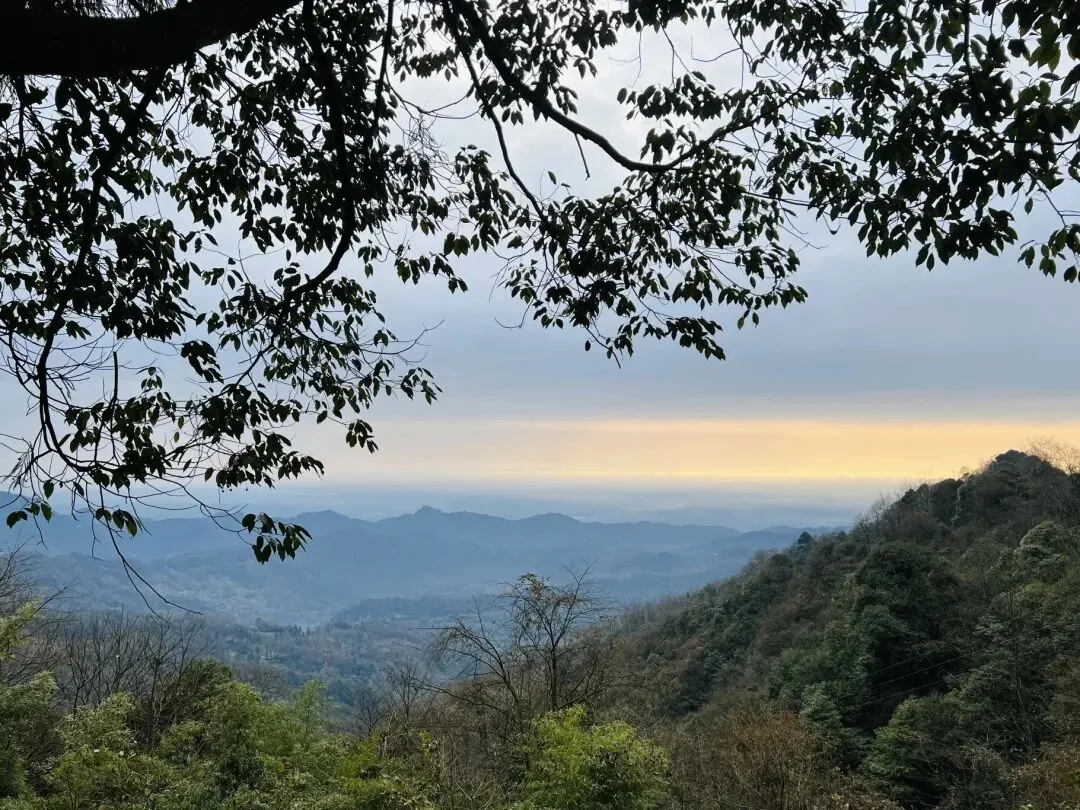
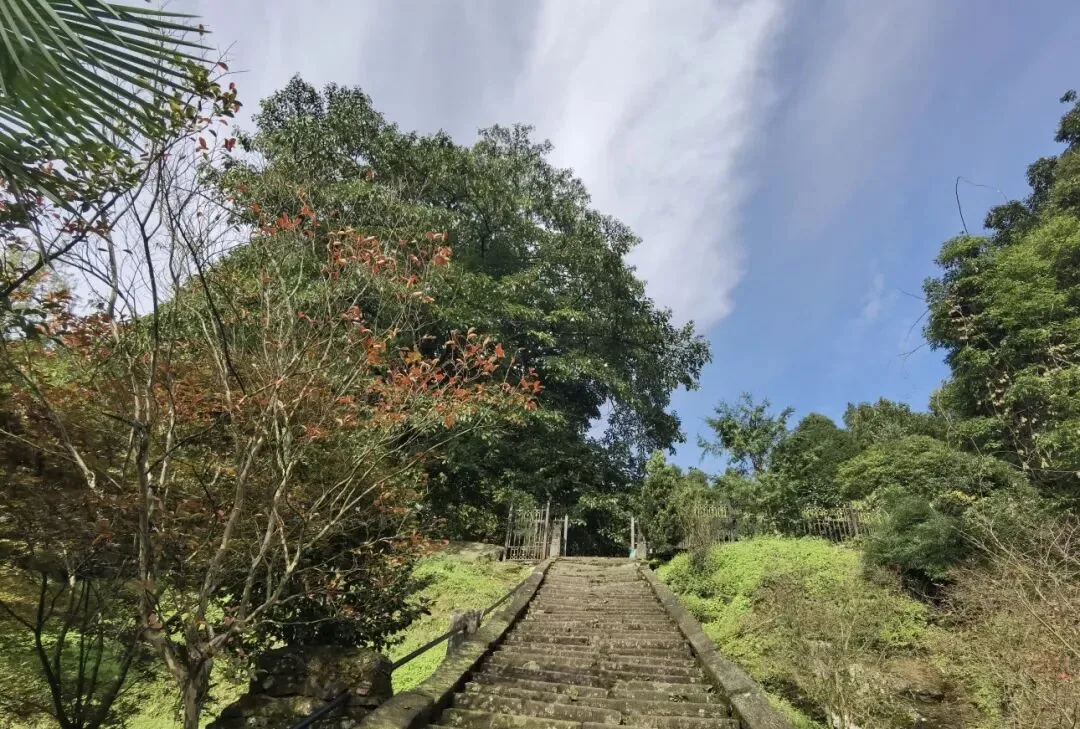
Autumn is a great time to hike here — the mountain air is rich, the route is gentle and moderate, and the whole loop is about 6 kilometers. The difficulty is average; you’ll see families with kids out enjoying it too.
We took the North Loop: starting from the temple, you head up the mountain path on the right side, passing through bamboo groves and fir forests, until you reach Zaojiwo Viewpoint. Then you follow the ridge line downhill, cutting through wild trails and tea fields to loop back to the temple. It took us about 3 hours. The middle section along the ridge requires constant climbing, and it’s mostly dirt path. At this time of year, walking slowly up the mountain dirt road is full of surprises.
What You’ll See Along the Way
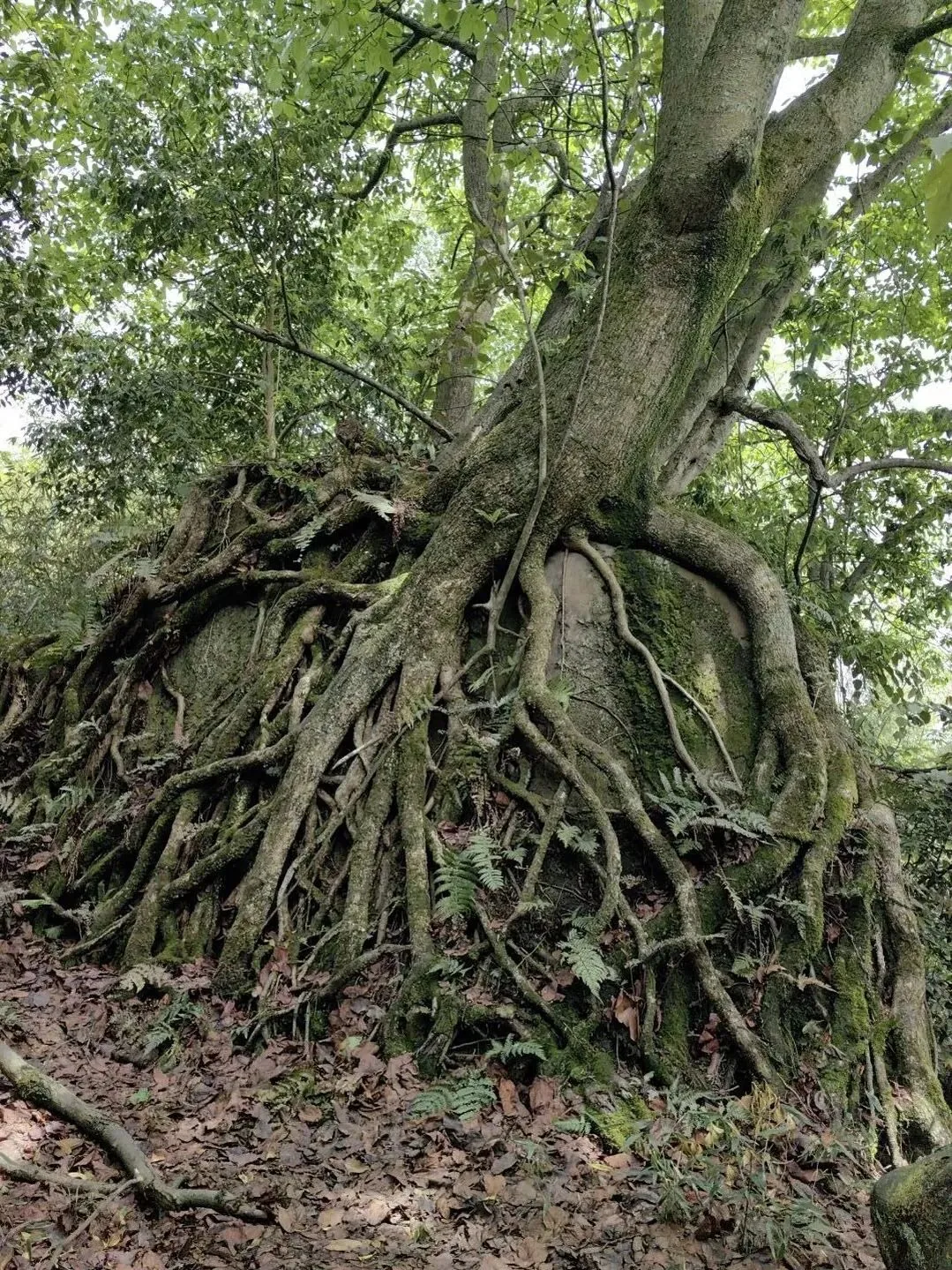
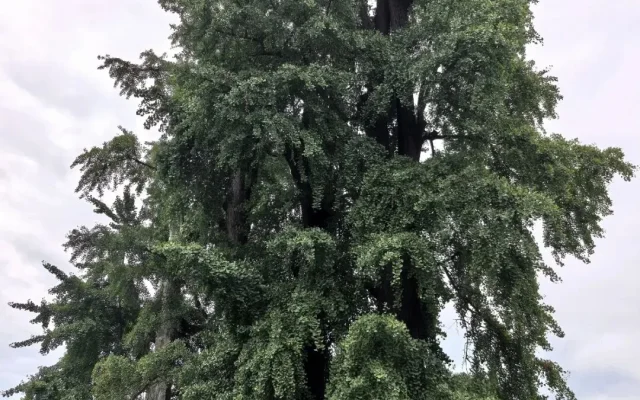
In October, the mountain path is at its best — “half green, half yellow.” Dense trees line both sides: fir, plane trees, and mixed woods layered together. The first stretch is thick bamboo forest; then the path steepens, the bamboo shadow fades, and firs and ginkgos appear. Some leaves are still green, others have quietly turned yellow.
As the old saying goes, “One falling leaf tells you autumn has arrived.” But in these mountains, autumn doesn’t fall — it climbs up step by step, and you see it little by little between breaths.
Maybe it had rained not long before; the stone steps were wet, and the air smelled of rotting leaves, moss, and distant osmanthus mixed together. Not sweet, not bitter — just the smell of the forest.
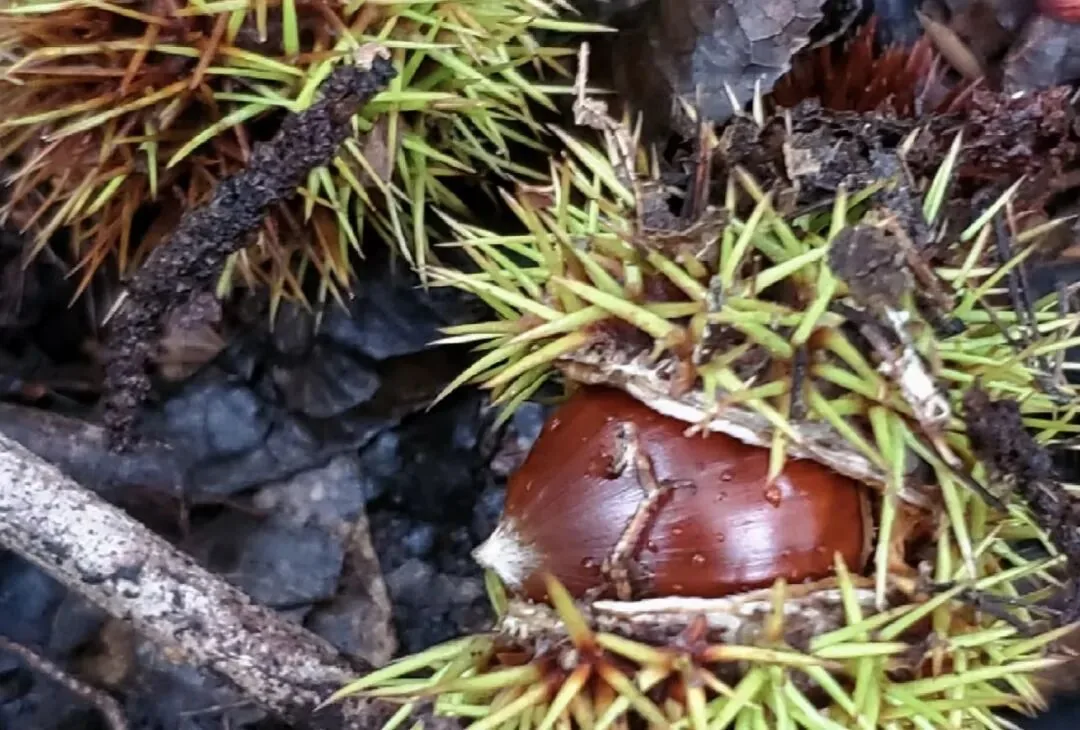
Right now you can find lots of wild chestnuts on the trail, mostly chinquapins (锥栗). Each burr holds a single nut, smaller than a regular chestnut, with a pointed tip. They’re scattered all over the ground, and plenty of parents and kids are happily picking them up — it’s so much fun. You’ll also see bunches of kiwi fruit, though they’re a bit sour. You can find mushrooms in the woods too, like coral fungi, but we didn’t pick them — they don’t taste good.
The Temple Grounds
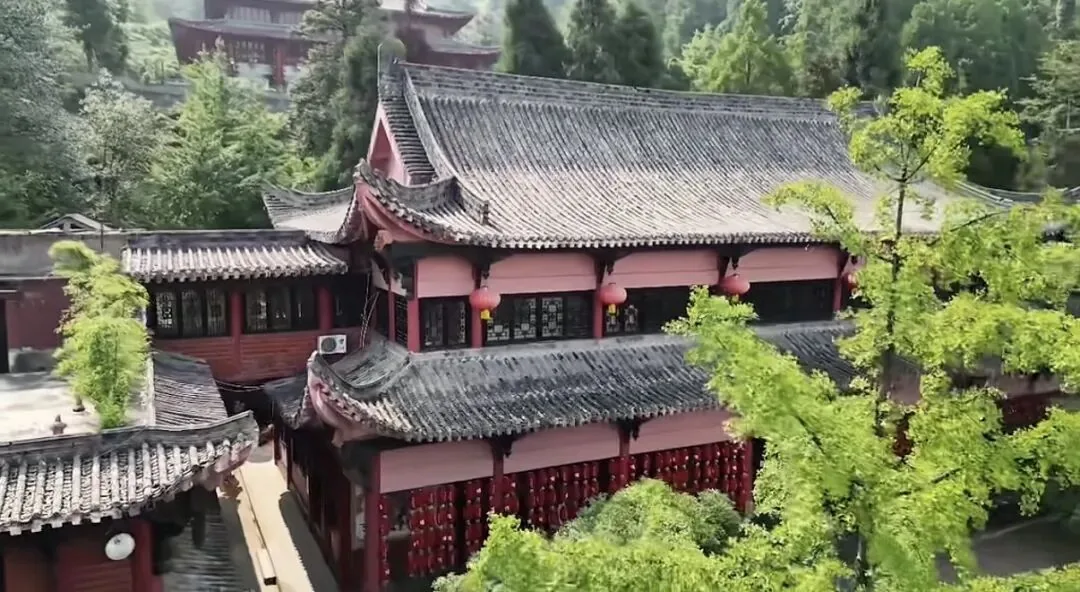
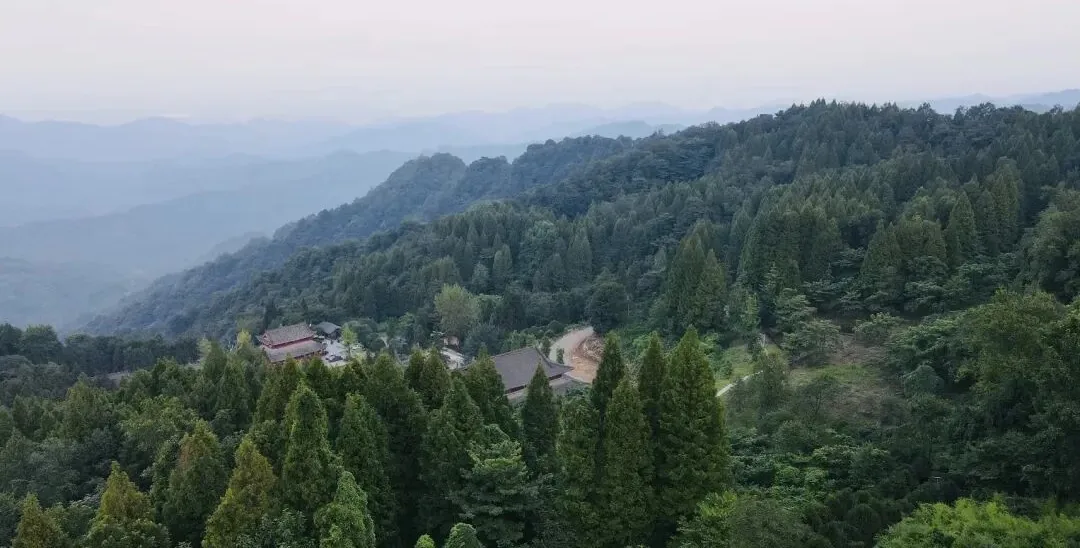
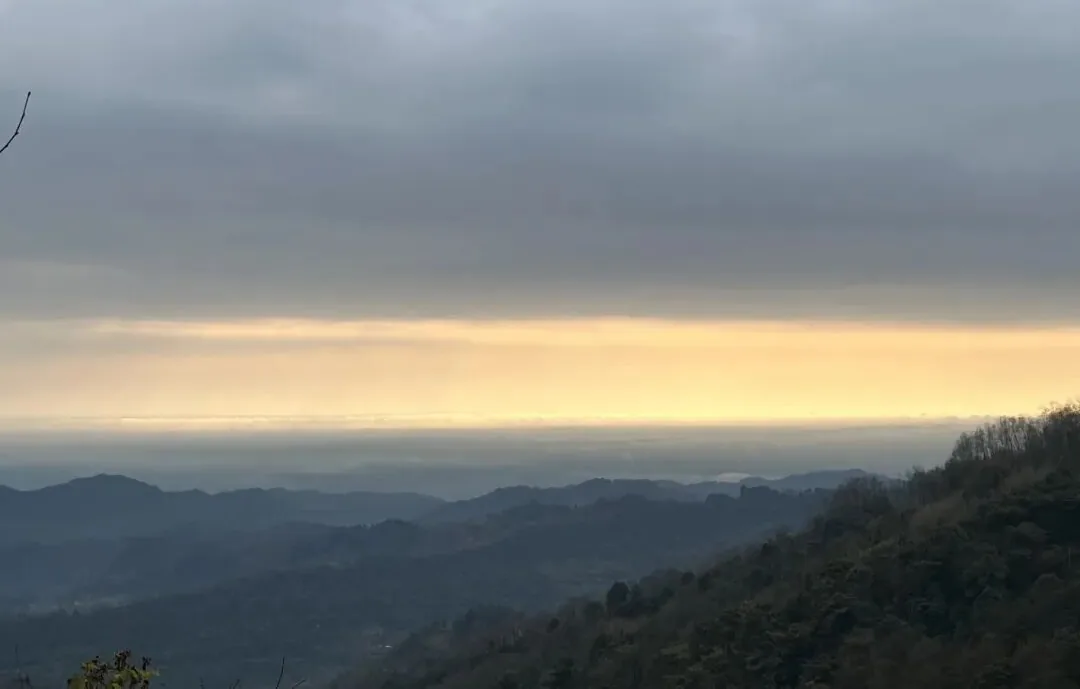
The temple covers 240 mu — it’s genuinely large. From the high platform you can gaze out at the distant mountains, the sky clear and vast, blue and white clouds set against the autumn forest. The view opens up wide and far.
The wild hills stretch out, a fresh breeze blows freely, and you truly feel that relaxed, broad-minded ease of climbing high and looking far.
There are very few visitors. An old lay devotee sat on the steps in front of the hall, soaking up the sun, eyes half-closed — maybe asleep, maybe thinking about something far away.
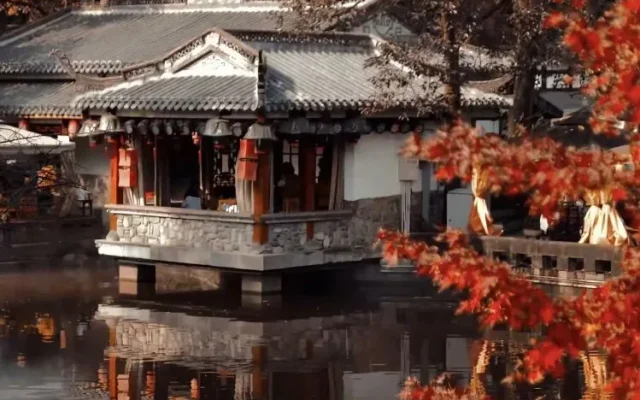
The temple is clean and tidy, quiet and elegant, far from the noise, at peace with the world. It carries a calm, Zen-like atmosphere.
All the restlessness of the world settles into peace in this deep-mountain temple. The best healing isn’t rushing toward excitement — it’s returning to the hills, returning to your own heart.
Practical Info
Address: Tiansi Temple, Mayan Village (Taoyuan Village), Daguan Town, Dujiangyan City.
Tickets: Free.
Public transport: Take the Chengdu-Qingcheng Intercity Railway to Qingchengshan Station, then a taxi. There’s no direct bus — relying purely on public transport is a hassle and not recommended.
Driving: Driving is recommended. From downtown Chengdu it’s about 1–1.5 hours. Navigate to: Tiansi Temple (Yuantong Chanlin). The last few kilometers up the mountain are narrow, with many curves and steep grades — it’s a one-way road, so slow down when passing oncoming cars. Be cautious on rainy days. There’s a temple parking lot at the top.
Vegetarian meals: Meals aren’t available every day. Lunch is around 11:00–11:30. It’s best to confirm in advance whether they’re open to the public that day — it can fill up when there are many people.
Lodging: The temple offers accommodation, with single rooms and standard rooms. Prices range from around 100 RMB, including three vegetarian meals. Conditions are simple — it’s not a hotel, but it’s a place to quiet your mind.
So take advantage of the pleasant autumn weather and the first reddening of maple leaves. Bring your family or gather some friends, walk this little path toward the deep clouds, and spend half a day as a carefree guest in the mountains.