PingLe Ancient Town: A Slow Autumn Escape from Chengdu
Sometimes you just want to wander an old town when the crowds are gone. Fewer people means quiet, room to breathe, and a closer connection with the place and its history. Late autumn is exactly that season — the hills are turning brilliant, and it feels like a gift from nature.
PingLe Ancient Town (平乐古镇) in Qionglai, Chengdu, shows a different, lovelier face in late autumn. I visited once in summer, when the heat drew families to play in the water and the town buzzed. Now, though the calendar says early winter, it still feels like deep autumn — the season that makes a place beautiful without losing a touch of melancholy.
Bai Juyi’s poem Late Year says: “Frost falls, water returns to the ravine; wind blows, leaves return to the mountain.” PingLe is that kind of place. The river flows slowly, the trees shed their leaves, and all the noise settles down.
This is PingLe in late autumn.
A Town Two Thousand Years Old
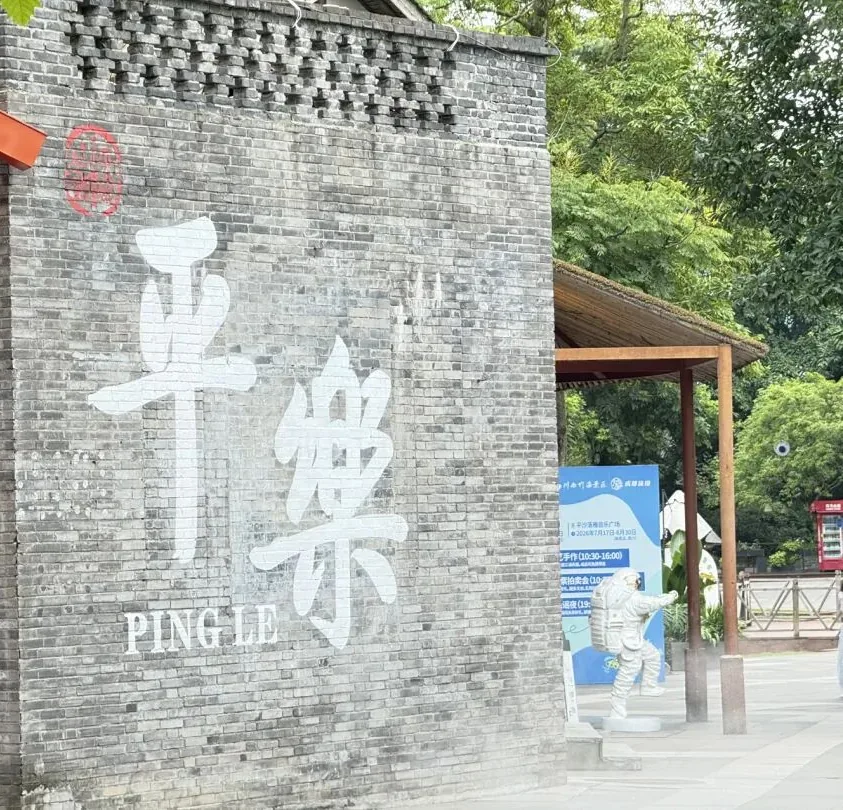
PingLe was once called “PingLuo” — plain and settlement. It became a market town in the Western Han dynasty, over two thousand years ago. In prehistoric times, during the reign of the legendary Shu king Kaiming, the flat land surrounded by hills drew early settlers who dug canals, farmed, and built waterworks. The settlement took its name from the flat terrain.
By the Qin and Han dynasties, it was a post station on the Southern Silk Road and one of the starting points of the Tea Horse Road. The Commentary on the Water Classic records the waterways of Shu and calls this stretch “BaiMu River” — a name that stuck.
Walking the Old Streets
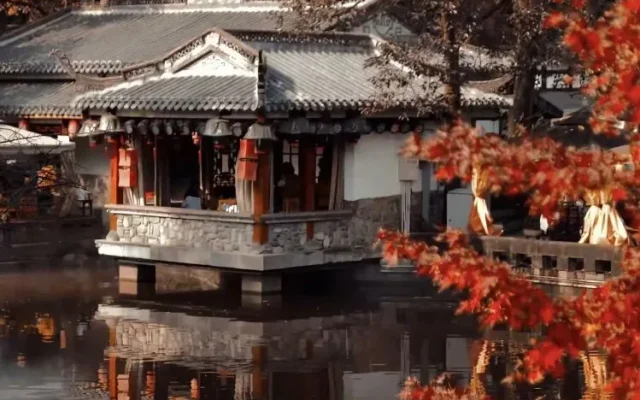
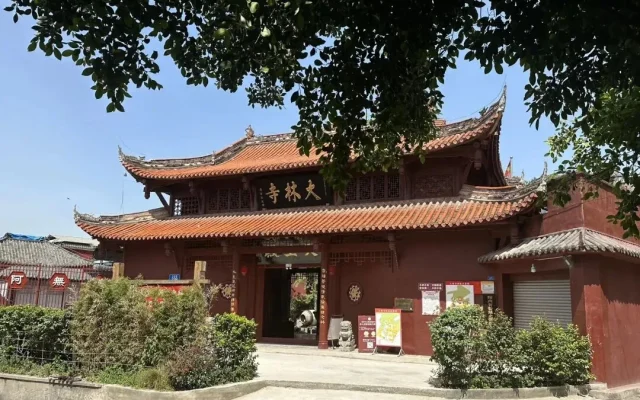
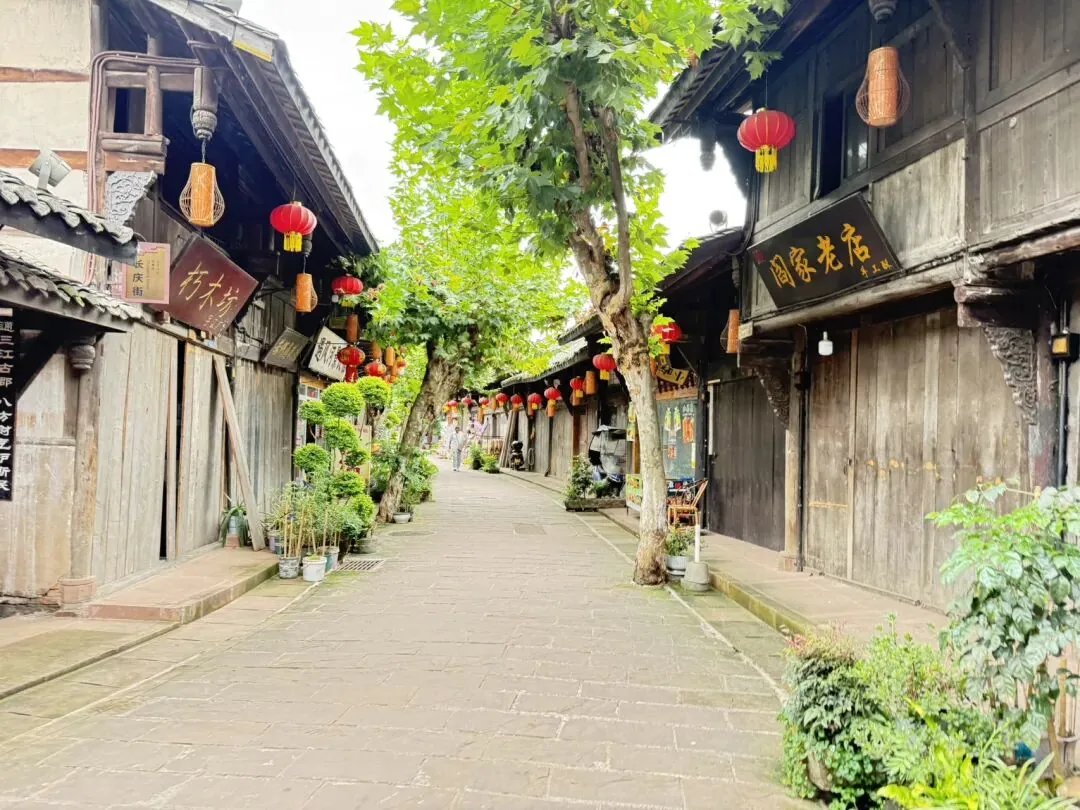
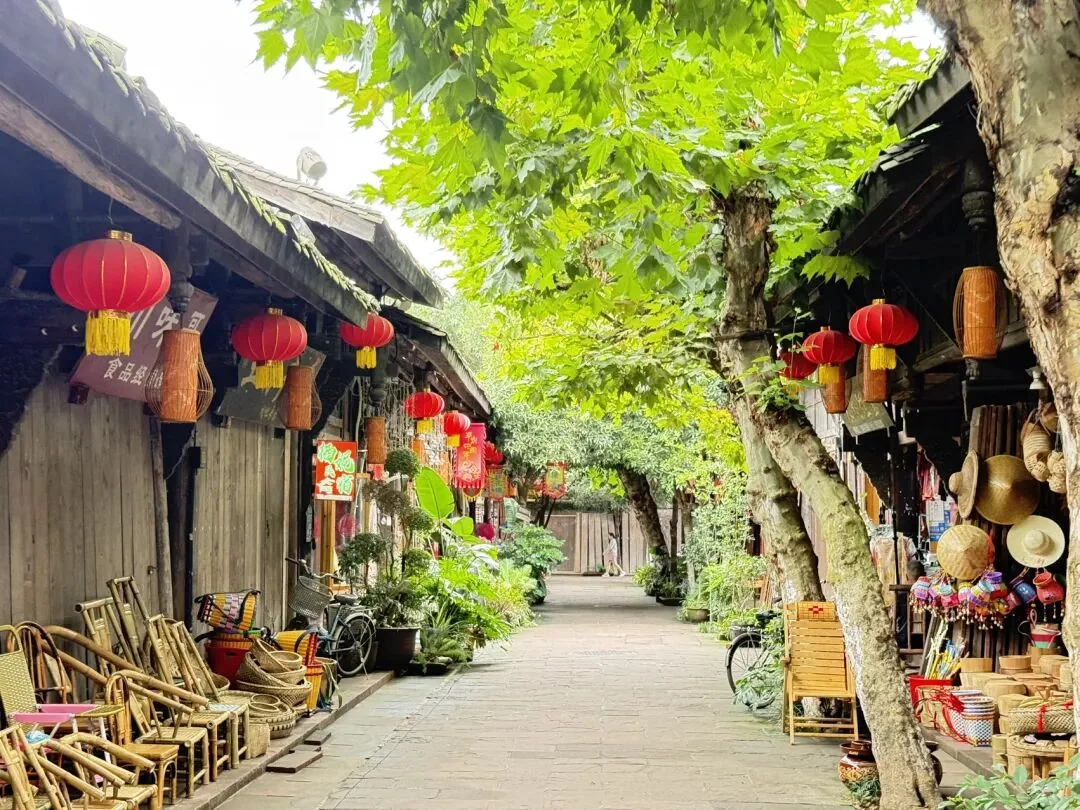
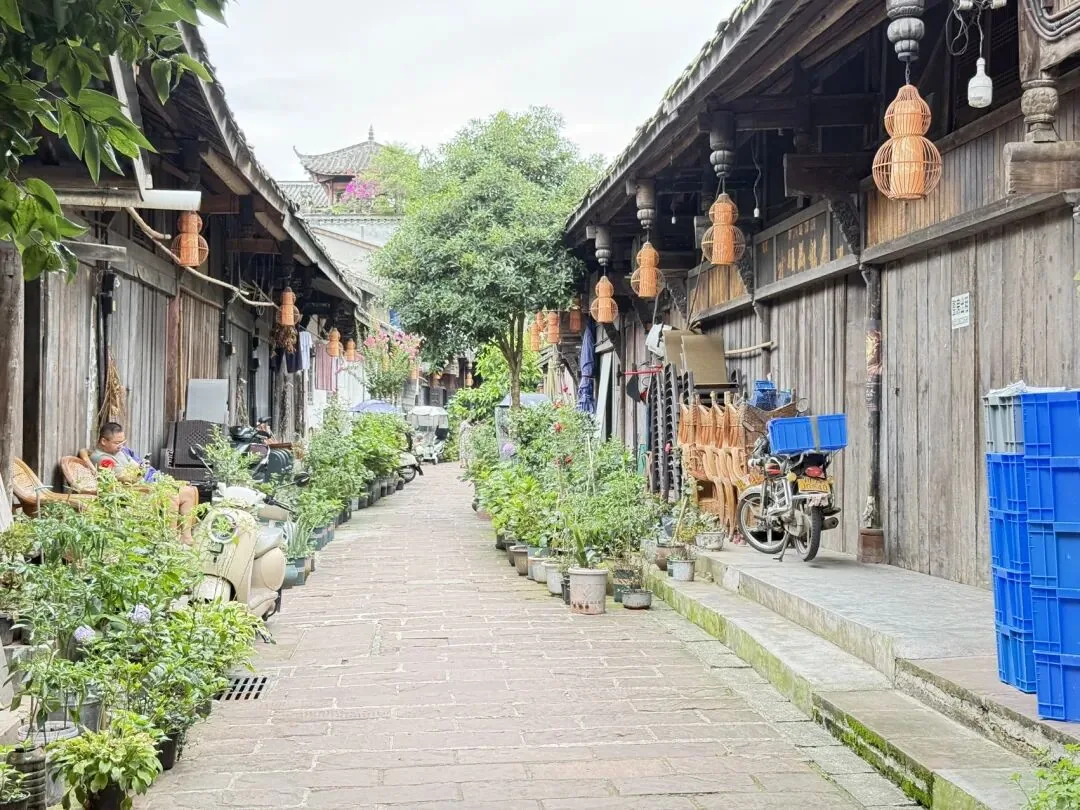
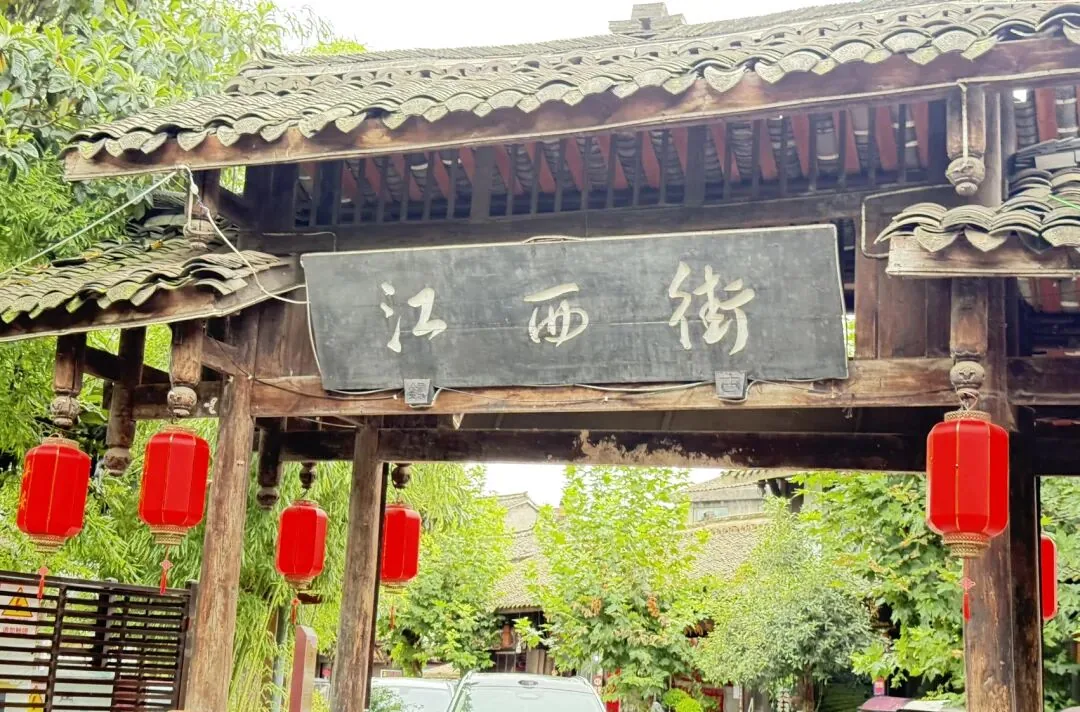
Step into the old town and the streets are still bluestone, winding and narrow. The wooden houses on both sides date from the Ming and Qing dynasties. YuWang Old Street, ChangQing Street, BaDian Street, YuShi Street, and ShunCheng Street link one after another, and most people who live here are locals.
It’s low season now, so tourists are few, but many shops stay open. The owners aren’t necessarily trying to sell you anything — they just keep the doors open and mind their shops at an easy pace. Some weave bamboo baskets, some make straw sandals, some sell herbs. These are old trades, and you can still see them here.
The LeShan Bridge and the BaiMu River
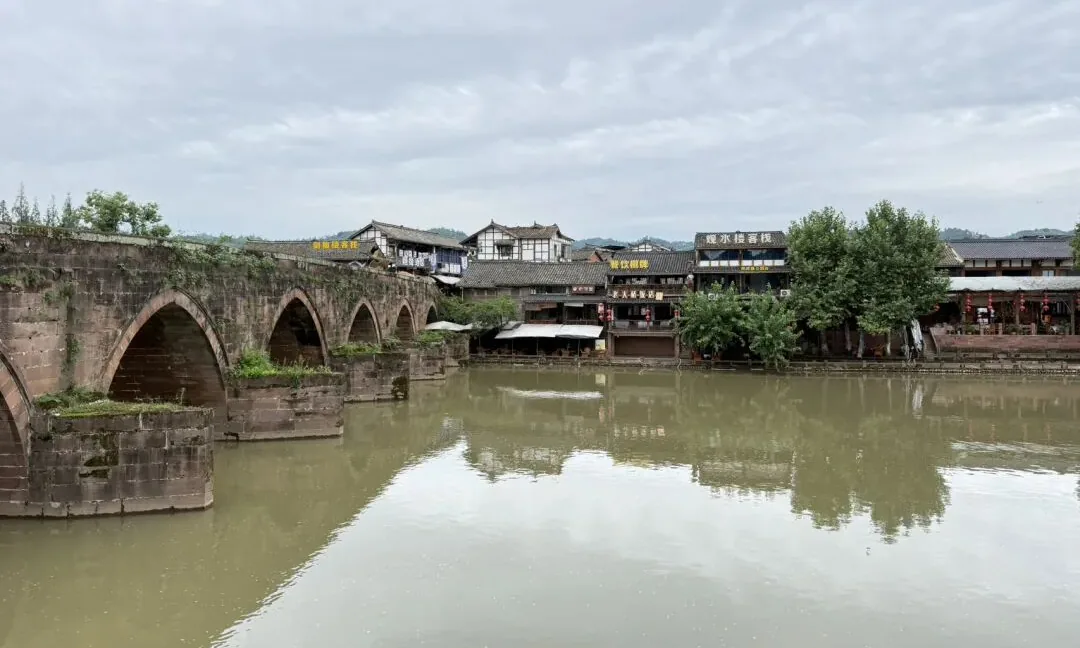
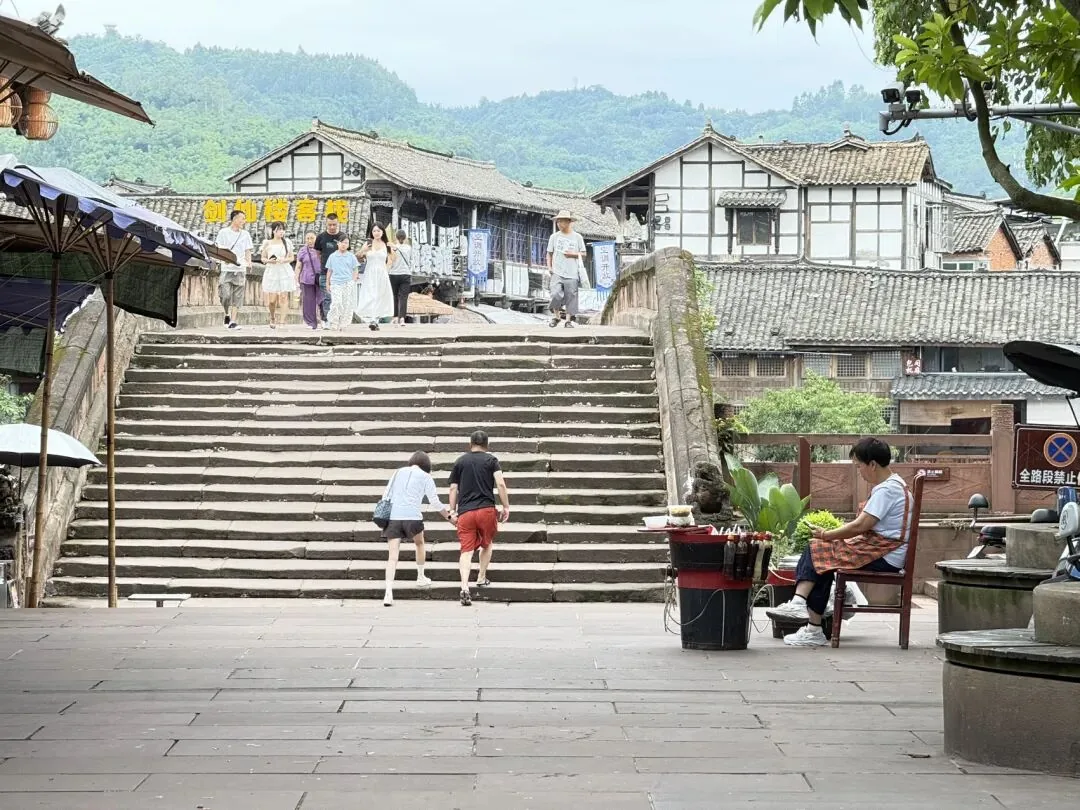
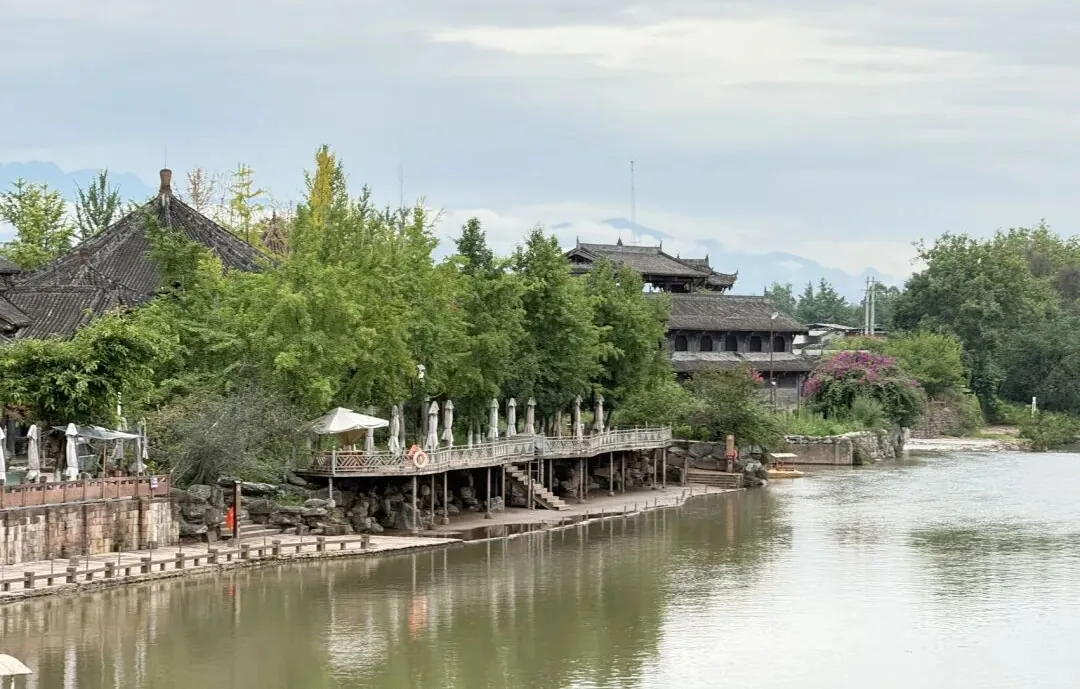
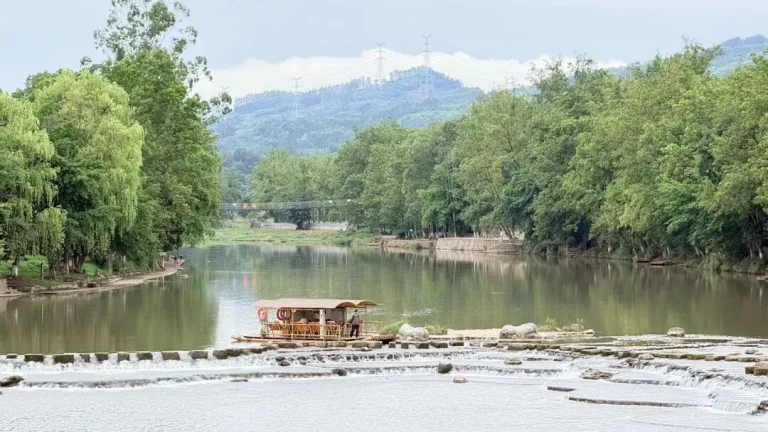
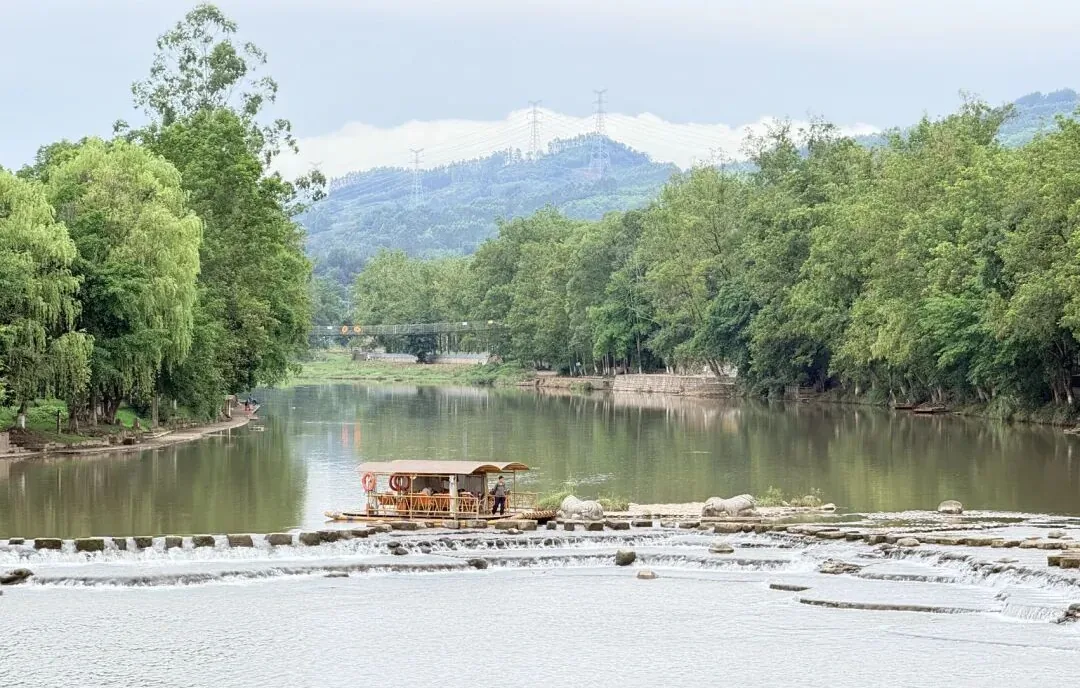
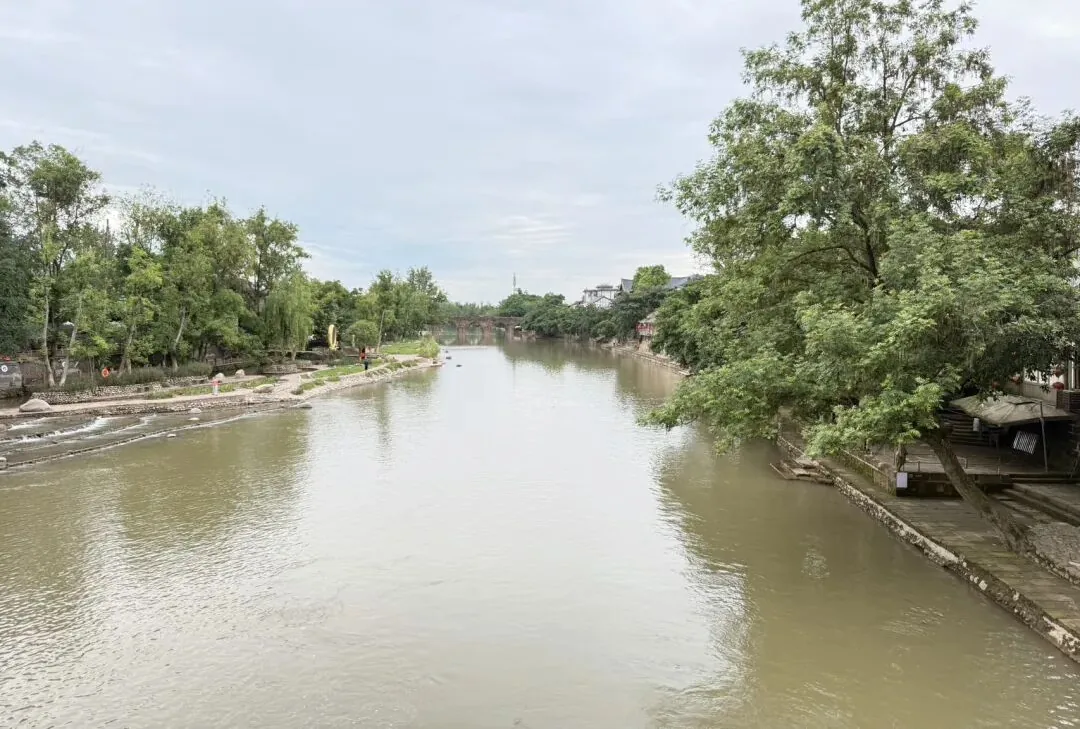
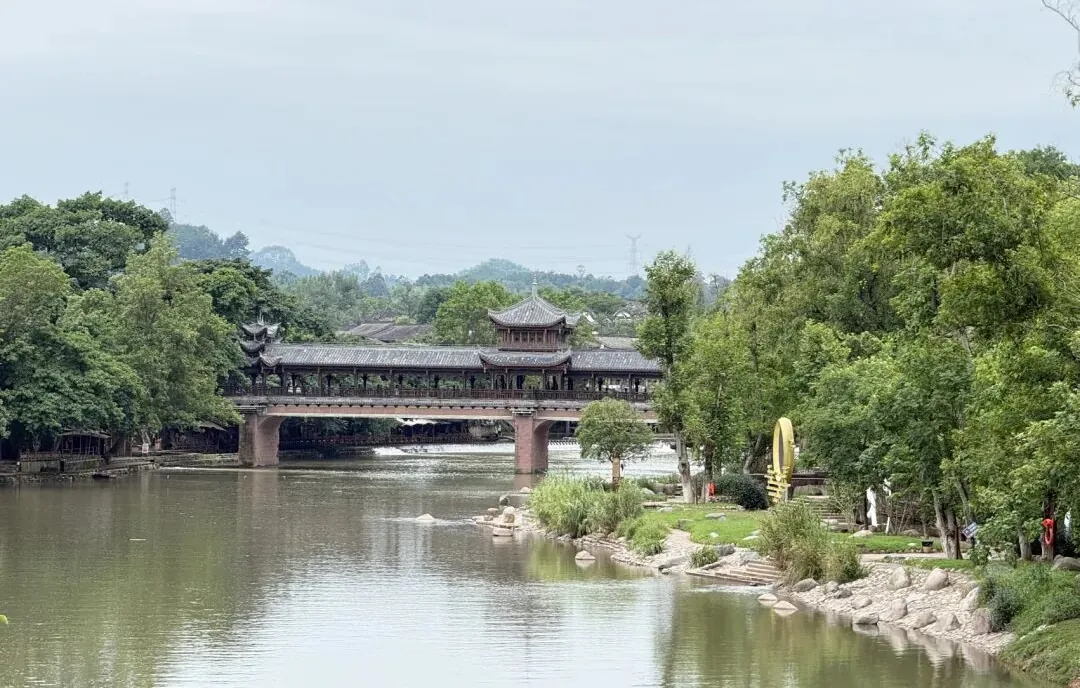
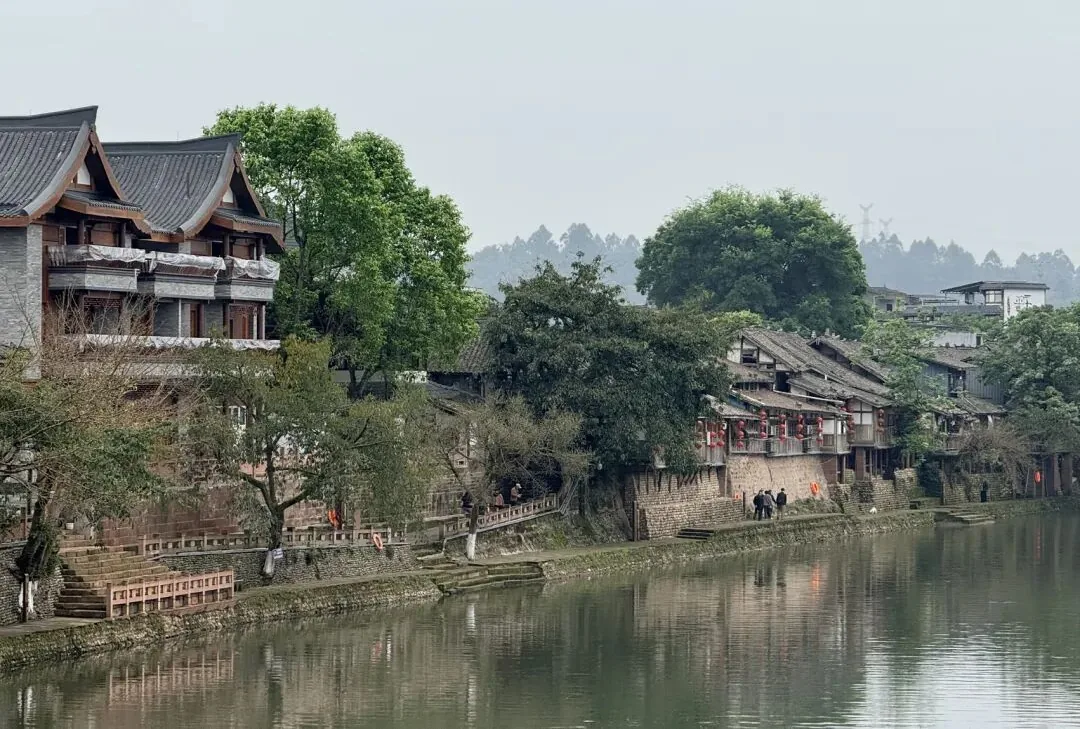
The BaiMu River rises at YuXiao Peak on TianTai Mountain and flows west to east through the town, splitting into three channels. Across the water stands the town’s landmark: LeShan Bridge (乐善桥), an old stone bridge built in the Qing dynasty. It’s named after its initiator, a generous man who loved to do good. The bridge has seven arches and is built entirely of local red sandstone — one of the largest surviving ancient stone arch bridges in Sichuan.
A local scholar named Xiong Weifang from Qiongzhou wrote in the Tongzhi era: “Seven arches open like new goose teeth; ten thousand feet have trodden the rainbow’s waist.” The first line describes the bridge’s shape. The second recalls the busy water-and-land wharf of its day. More than 160 years later, the ten thousand have dispersed, but the bridge remains.
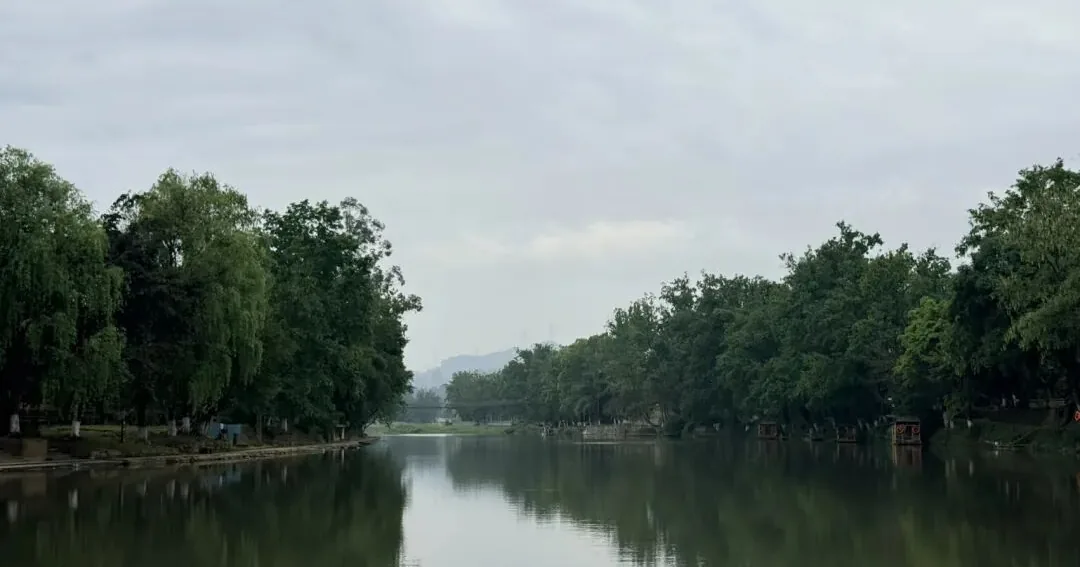
In late autumn the river is at its clearest. The water level drops and stone steps emerge. From the bridge, the hills layer darker and darker into the distance, the sky feels higher, and the river ripples gently. Sometimes a white bird skims the surface. In the morning, thin mist rises from the water and blurs the bridge, the buildings, and the far hills into a pale ink wash. The whole town seems not yet awake — and you realize how quiet everything is.
The Thirteen Ancient Banyans
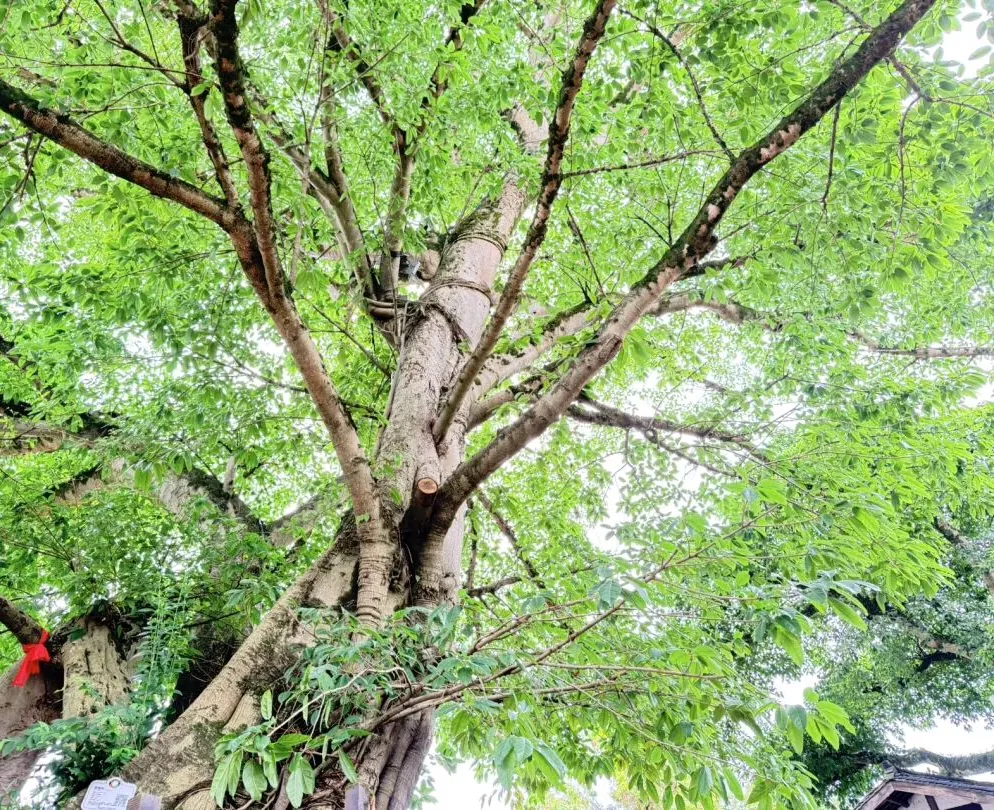
Along the riverbank stand thirteen ancient banyan trees in a row. The oldest is over 1,400 years old. Aerial roots drop into the soil and grow into new trunks. Other trees are turning yellow and red now — a few plane trees have leaves the color of caramel, and when the wind blows they fall onto the river and drift slowly downstream without hurrying. Only the banyans stay deep green, lush even in winter.
Sitting under them, watching leaf after leaf pass by, you understand the name PingLe: ping means slow, le means peace.
Autumn Colors Beyond the Town
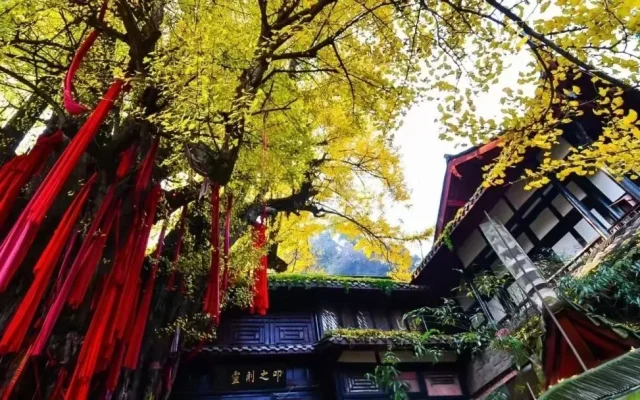
Outside town, ancient ginkgo trees line the Qin-Han post road, and the stone path is carpeted in gold. The rowan trees have turned fully red, dotting the green — the most pleasing color combination of western Sichuan autumn. PingLe’s fallen leaves aren’t in some empty mountain, but they have a certain ease about them, swept or not, autumn is there.
Bamboo Country
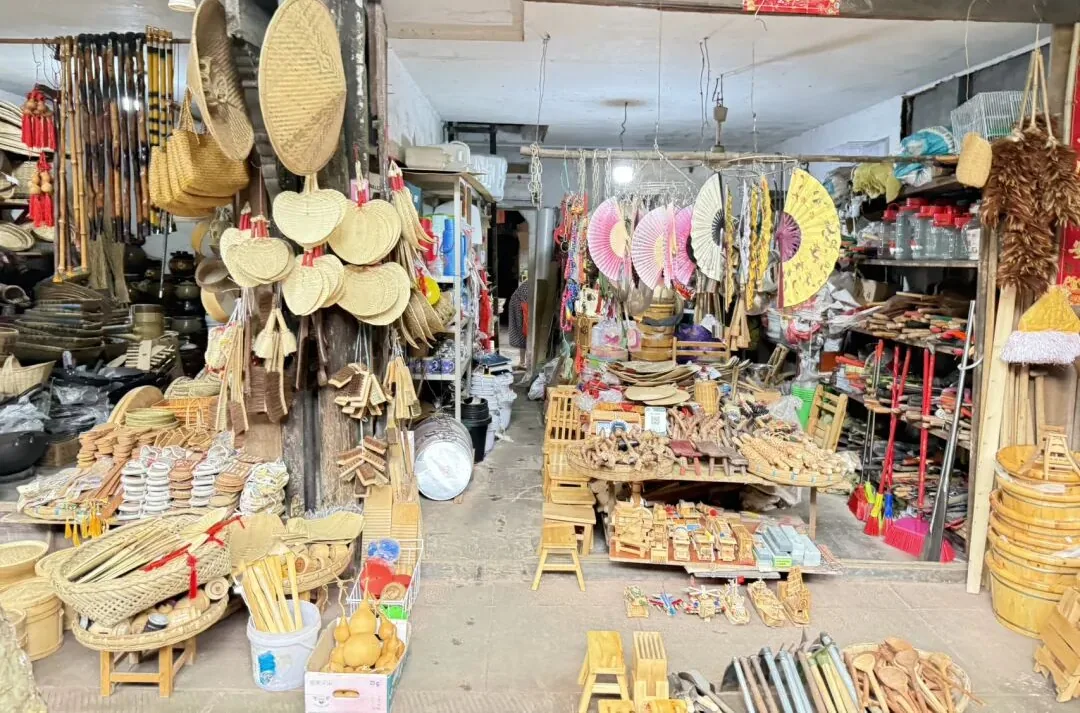
PingLe is known as “bamboo country.” In the LuGou and JinJi Valley areas, the hills are covered with ci bamboo and nan bamboo. In late autumn the groves are still green, though the edges of the leaves turn faintly yellow. Bamboo weaving is famous here. LuGou Bamboo Sea still contains Song dynasty papermaking sites, which flourished in the Ming and Qing; dozens of sites remain. Come in autumn and the weaving shops hang new bamboo baskets and fans outside — you can buy one to take home.
What to Eat
When mealtime comes, a bowl of freshly cooked milk-white soup noodles (奶汤面) arrives, paired with skewers of red-oil bobo chicken (钵钵鸡) — numbing, spicy, fragrant. Take a bite of just-steamed corn bun (玉麦馍馍) and you’re set. If you’re lucky, the old riverside restaurants may have fragrant fish (飘香鱼) freshly caught from the BaiMu River.
Local insight: The old riverside restaurants are where you want to be at mealtime — that’s where the fresh river fish shows up.
A Living Old Town
Many people call PingLe a “living old town.” Yes, it has tourists and shops, but the bustle only comes on holidays. Now the town is as it always was: the river flows year after year, the bamboo groves shed leaves year after year, and the elderly sit at their doorways chatting (摆龙门阵) — easy and calm.
The town was once called “PingLuo” — plain and settlement — later changed to “PingLe,” meaning a life of peace and joy. I don’t know if next autumn the leaves will be this green, this yellow, this red. But I know the BaiMu River will keep flowing, and the town’s autumn will deepen year after year. So — do you like old towns like this?
Practical Info
- Location: PingLe Town, Qionglai City, Chengdu, on the banks of the BaiMu River. It was a post station on the Southern Silk Road and is now rated a 4A scenic area.
- Tickets: The core old street area is free. ChuanXi Bamboo Sea (JinJi Valley) requires a separate ticket. LuGou Bamboo Sea is free for hiking.
- By public transport: Take the high-speed train from Chengdu West Station to Qionglai Station. From there, transfer to bus 304 straight to the old town.
- By car: From Chengdu city → ChengWenQiong Expressway → QiongMing Expressway, exit at PingLe. About 1.5 hours total. The old town sits about 3 km from ChuanXi Bamboo Sea.
- Food: Milk-white soup noodles, bowl-bowl mutton (碗碗羊肉), bobo chicken, blood curd (血旺), leaf-wrapped rice cakes (叶儿粑), frozen cake (冻糕), stone-ground tofu pudding (石磨豆花). Also worth trying: Qionglai sweet-skin duck (邛崃甜皮鸭) and bamboo-tube ice jelly (竹筒冰粉).
- Tip: There are many guesthouses in the old town, mostly along both banks of the BaiMu River, many with river-view rooms. Nights are quiet, and in the morning you can see mist on the water. It’s low season now, so plenty of options cost under 100 RMB — great value.
Pro tip: Book a river-view room and set your alarm for early morning — the mist over the BaiMu River is worth waking up for.