Why Xilai Ancient Town Deserves a Spot on Your Autumn List
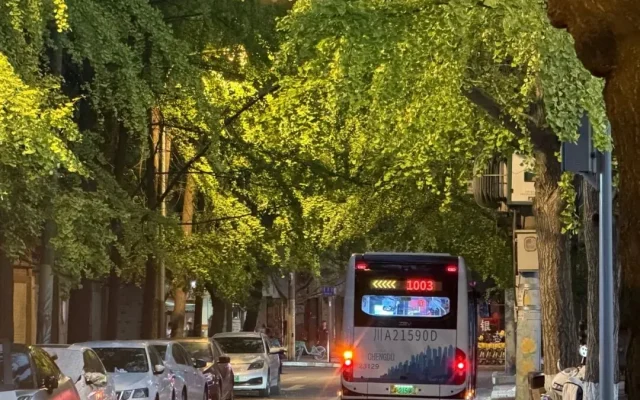
Late November in Chengdu means one thing: everyone’s out chasing autumn colors. The ginkgo trees are golden, the lacquer trees are red, and any place with a name is packed on a sunny weekend. If you’re craving some peace and quiet, Xilai Ancient Town in Pujiang is the answer. It’s small, it’s low-key, and it’s especially lovely in late autumn.
A Riverside Town with a Story
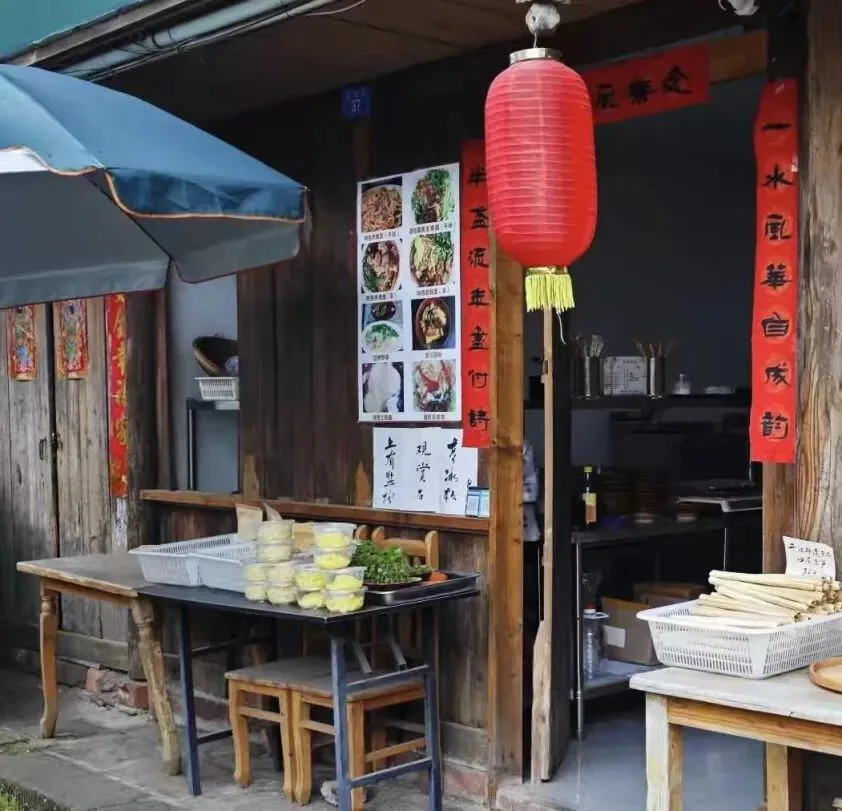
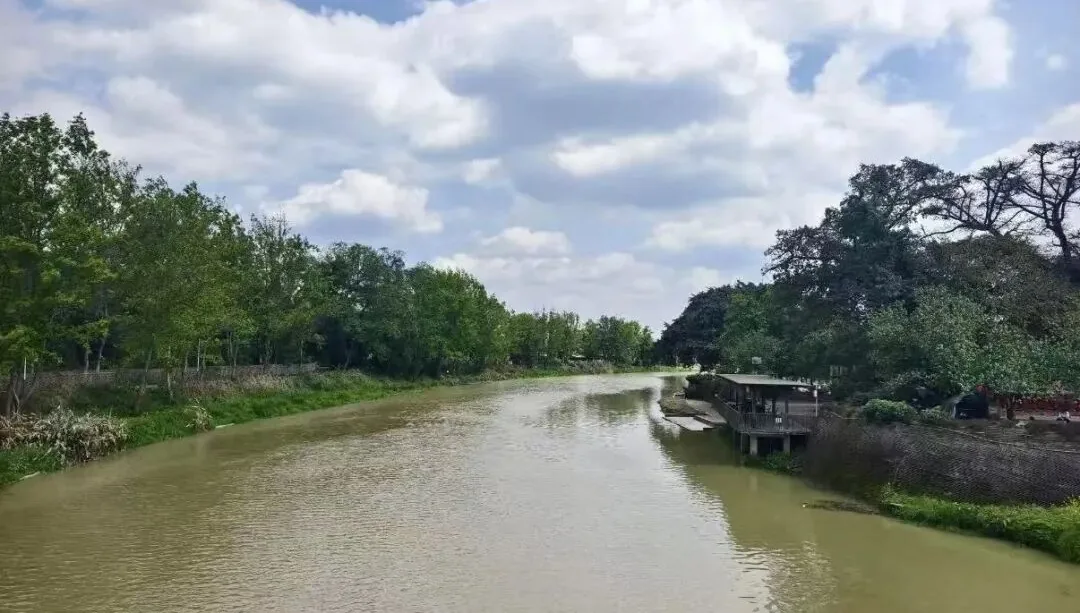
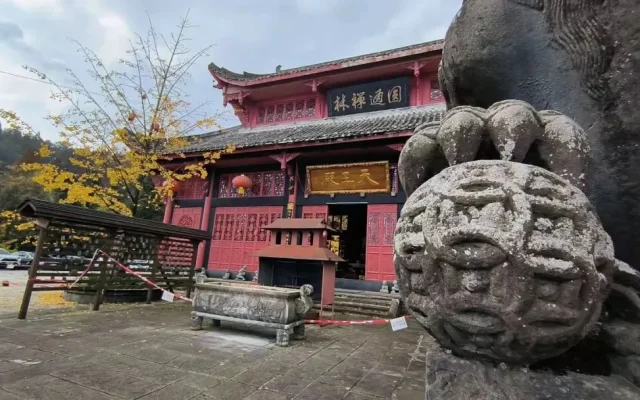
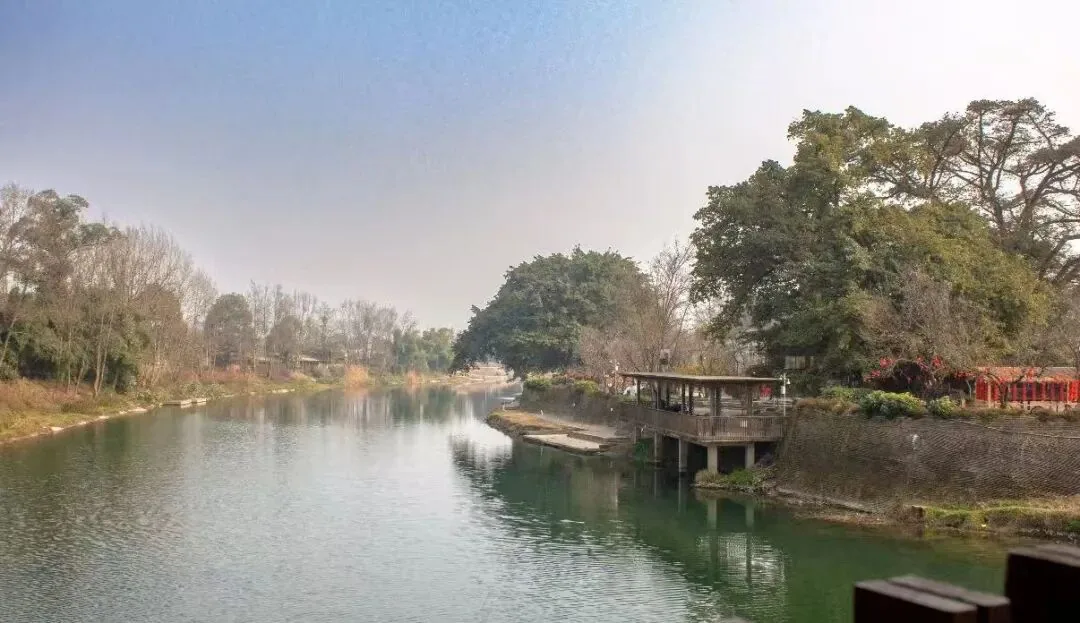
The Linxi River flows gently past the town, with the rolling Changqiu Mountains behind it. Xilai has a long history: in the second year of the Western Wei Emperor Gong, Linxi County was established here, named after the river. Over several dynasties, it served as a county seat for more than 500 years. In the Northern Song dynasty it was downgraded to a town, and in the Ming dynasty it was placed under Pujiang. In the Qing dynasty, a new market town was built on the south bank of the Linxi River and called “Xilai.” Locals say the name comes from a flood that washed a wooden statue of Guan Gong from a temple upstream down to this riverbank, where it came to rest. The villagers took it as a good omen and built a temple on the spot, meaning “fortune comes from the west.” The old saying “First the Guandi Temple, then Xilai Market” still circulates at the old street entrance.
The town is surrounded by mountains on three sides and faces the river on the fourth. In the past, it was a busy river port connecting Pujiang, Mingshan, and Qionglai. Tucked away in the southwest corner of the Chengdu Plain, amid green hills and clear water, it stays quiet. Even on weekends, visitors are few — perfect if you like your peace.
The Twelve Ancient Banyan Trees
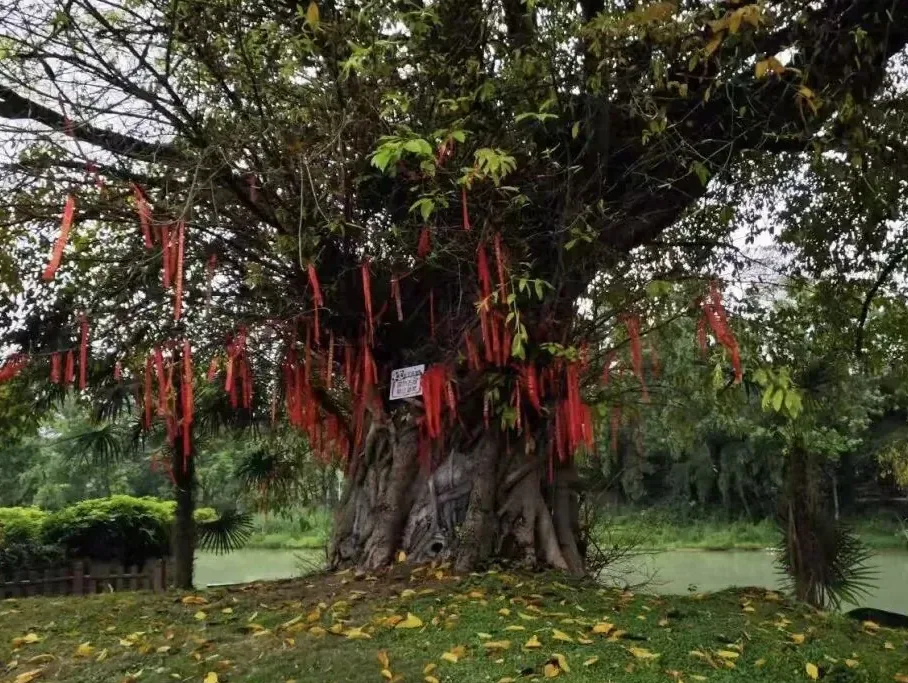
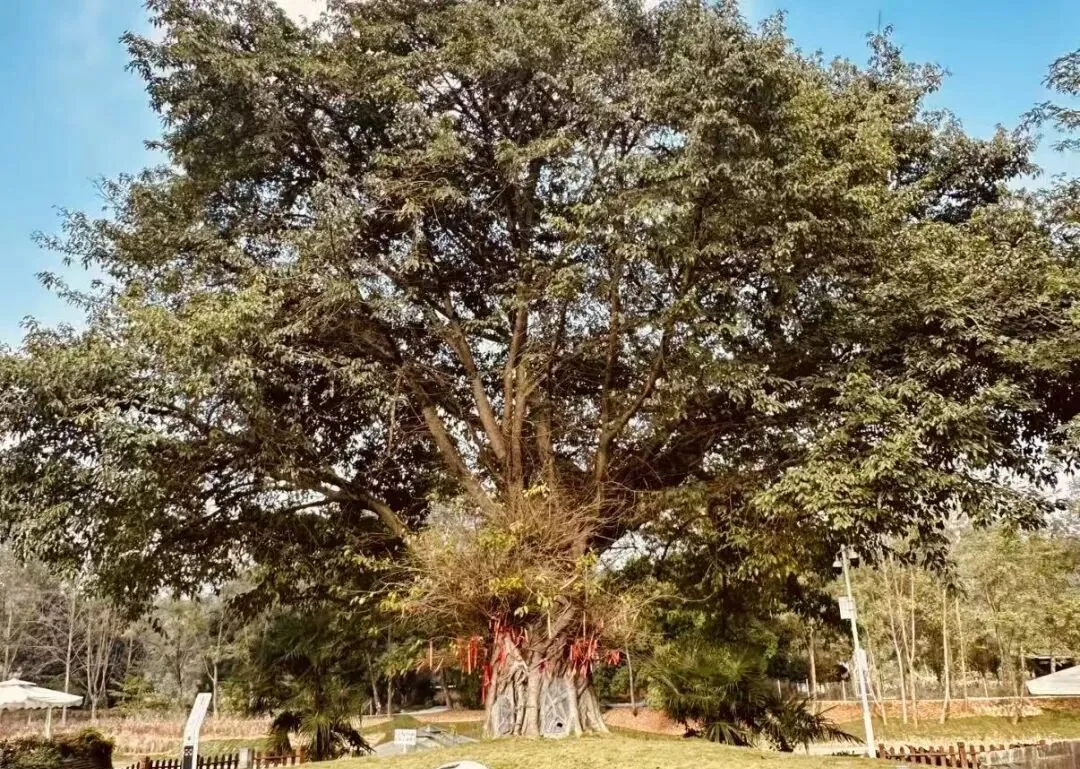
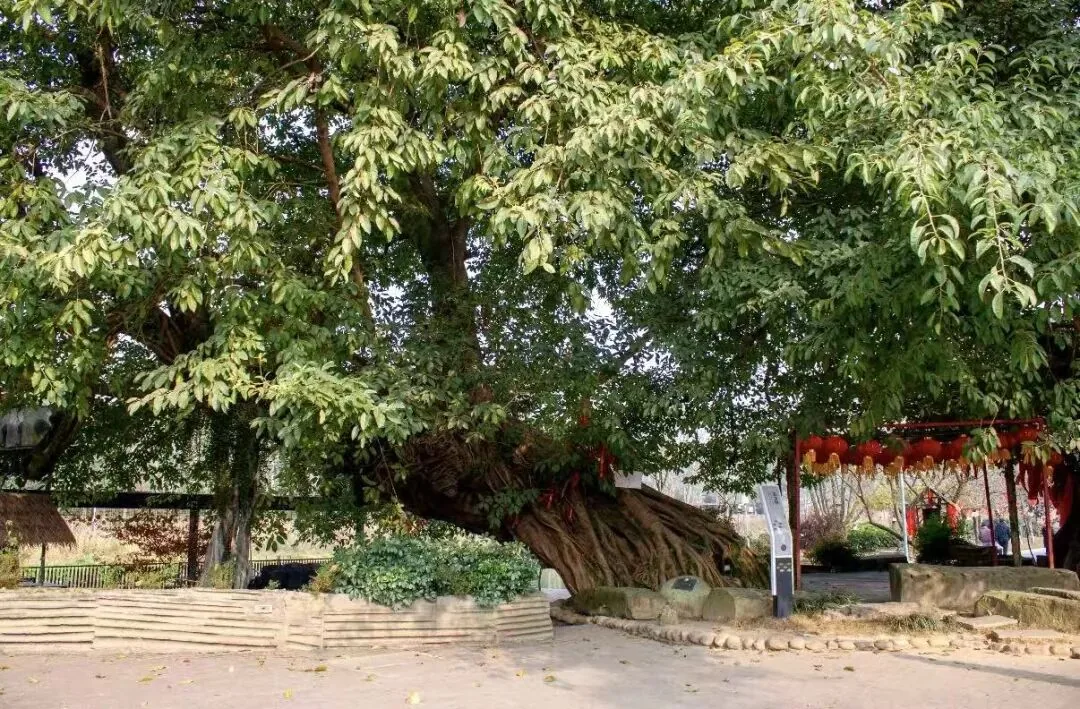
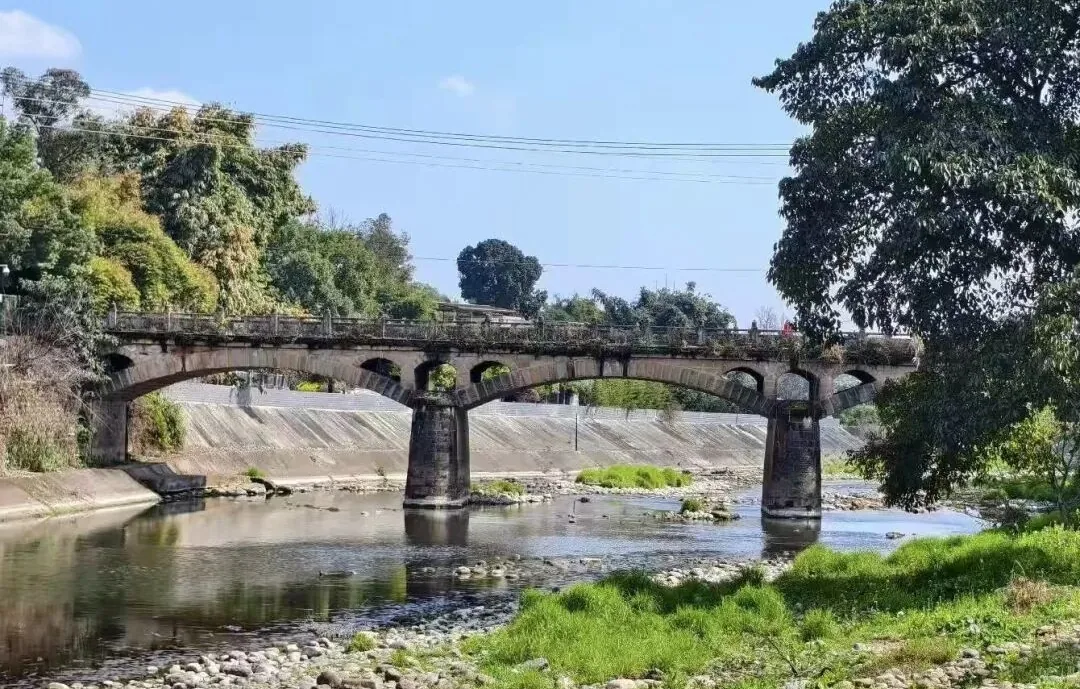
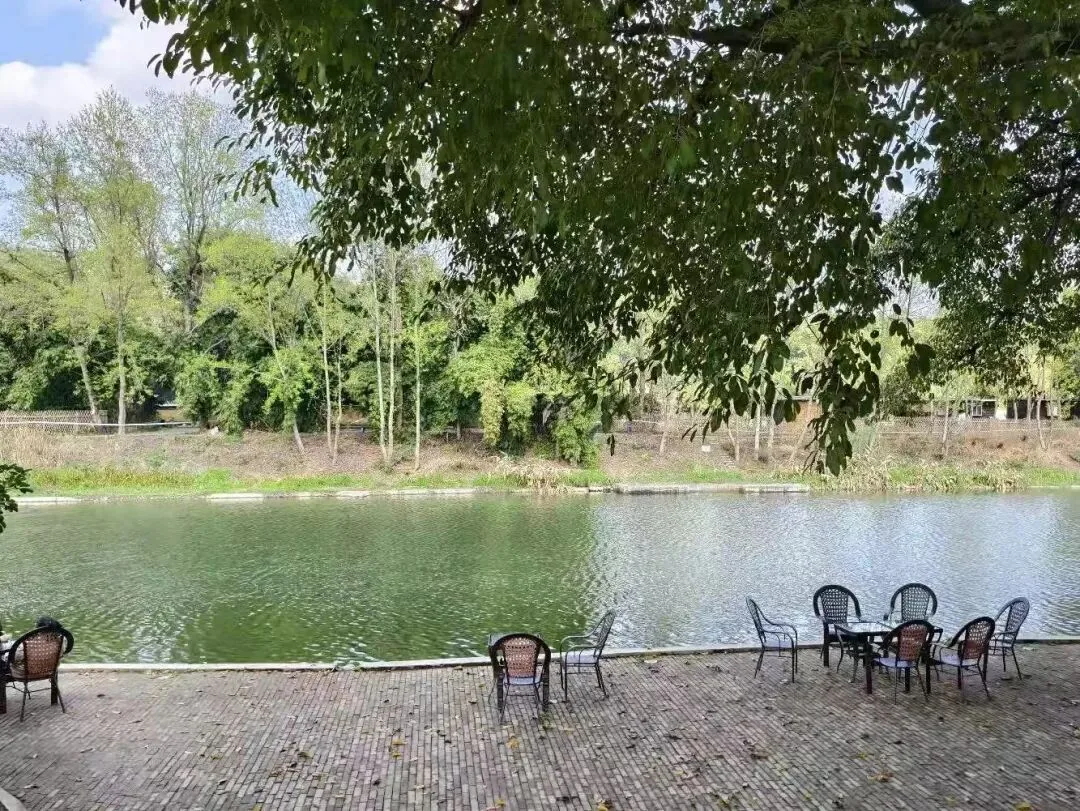
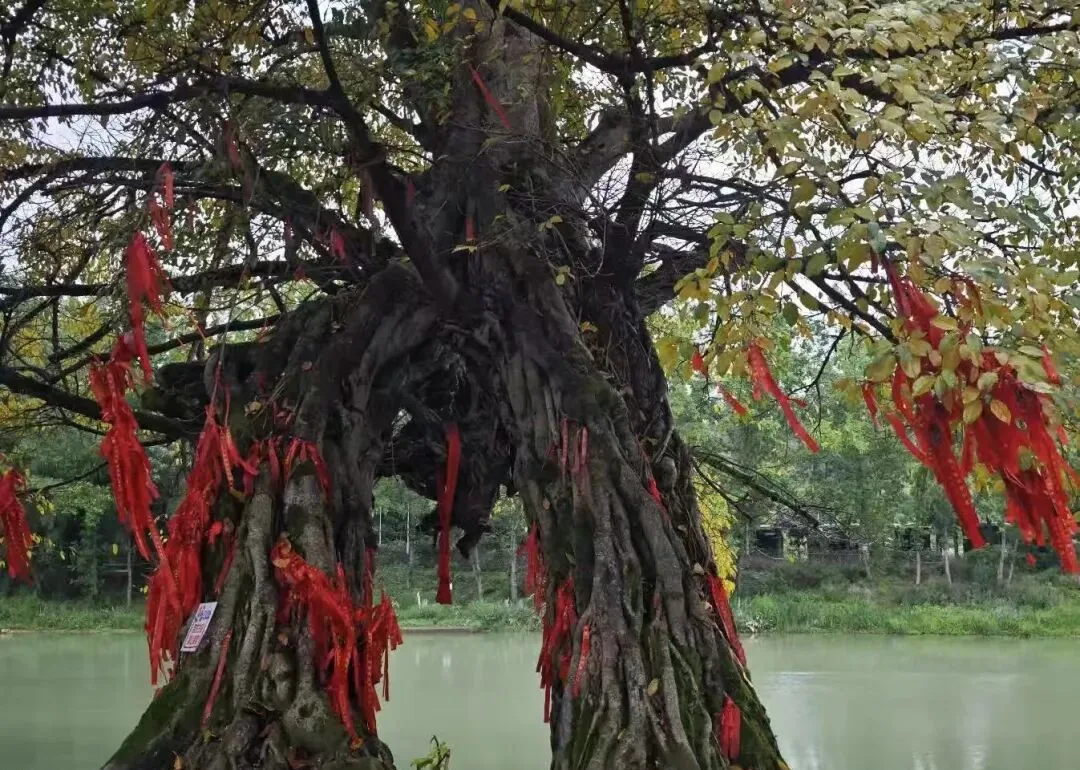
Xilai’s most famous sight is a row of 12 ancient banyan trees along the Linxi River. Also called huangge trees, the youngest is at least 500–600 years old, and the oldest is said to be over a thousand. The trunk of the largest takes four or five people to wrap their arms around. Seeing one such tree is rare; seeing a dozen in one place is a treat.
Their aerial roots hang down like an old man’s beard, and the canopy blocks out the sky. In late autumn, while ginkgo and dawn redwood turn yellow and red across the Chengdu Plain, these banyans stay green — a deeper, heavier green, like aged wine. Some leaves are starting to yellow, drifting down when the wind blows.
Liu Zongyuan once wrote: “After rain in the mountain city, a hundred flowers fall; banyan leaves fill the courtyard, orioles cry in confusion.” When flowers fade and banyan leaves cover the ground, it’s the most ordinary yet grand finale of late autumn in the south. Standing under the tree, looking up at sunlight filtering through thousands of branches and leaves, you feel as if the tree has frozen in time — for centuries, for millennia.
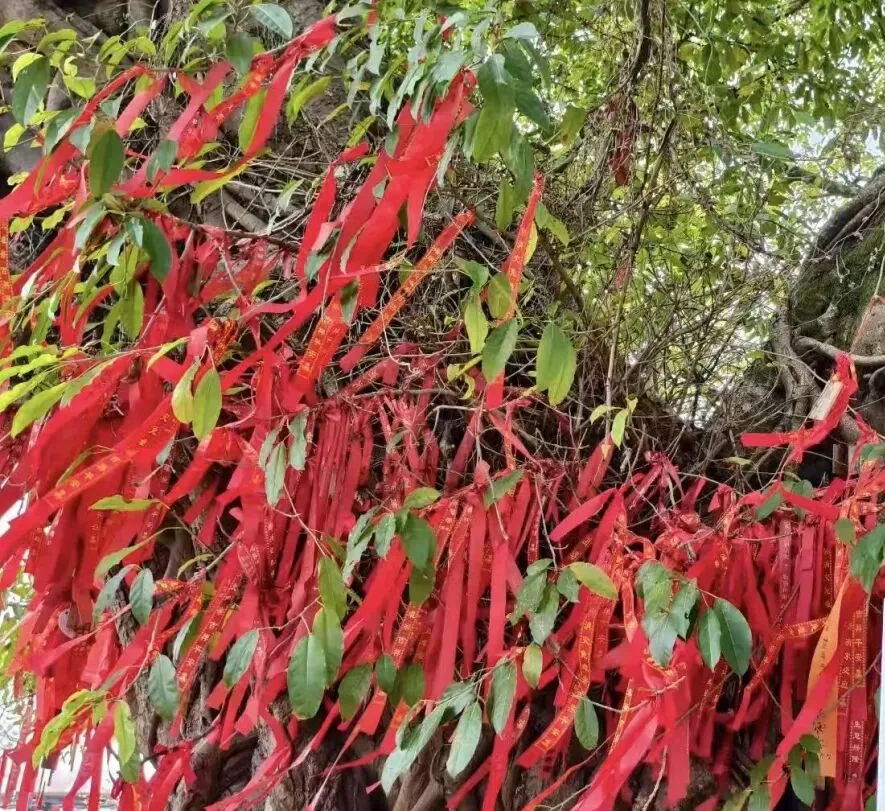
Each of the 12 trees has a name. The most famous is the “Husband and Wife Banyan,” two trunks that grow separately but merge tightly at two meters up, impossible to tell apart. Locals hang red ribbons on it during festivals, adding a splash of color. There’s also the “Brothers Banyan” standing side by side, the oddly shaped “Dinosaur Tree,” the “Zhang Fei Tree,” the “Guanyin Tree,” and more.
Sitting under one of the banyans for a while, you feel the gentle sun and the soft breeze. It’s quiet, save for the occasional rustle of leaves. These trees have stood here for centuries. “If trees are like this, how can people endure?” They grow so fast, yet human life is so brief. They have watched counties rise and fall, markets change, generations come to market and go home. A human life lasts barely a hundred years — you’d be lucky to catch even one-thousandth of their autumns.
Local insight: The old teahouse by the river has been open for ages. A covered-bowl tea costs just a few to a dozen yuan, and you can sit for half a day. Before the cold sets in, sit by the trees, watch the river drift by, and listen to locals chat. It’s the kind of slow afternoon city life rarely allows.
To me, no words are more worth listening to than the language of trees.
Beyond the Banyans: What Else to See
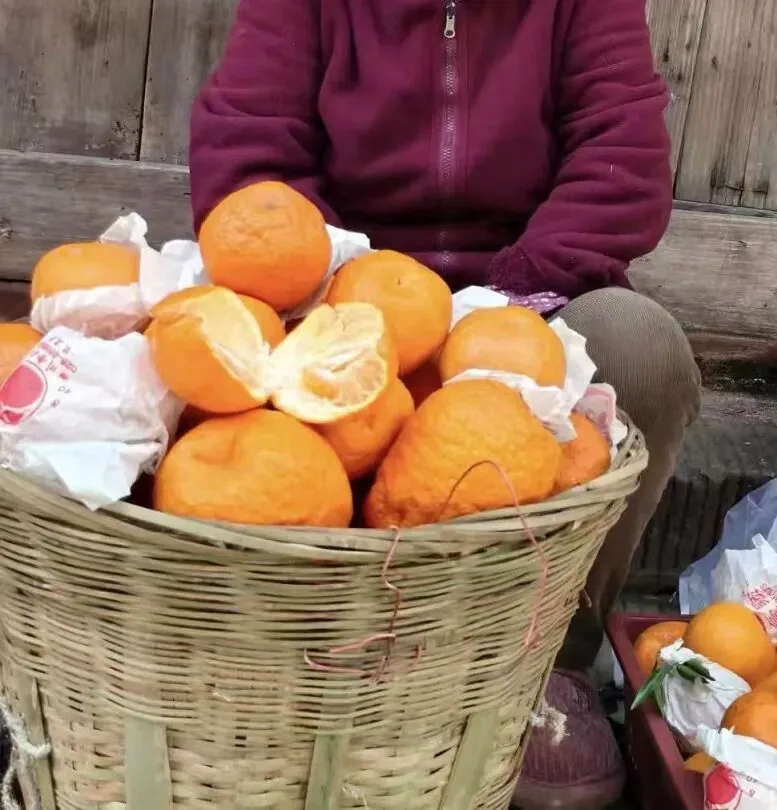
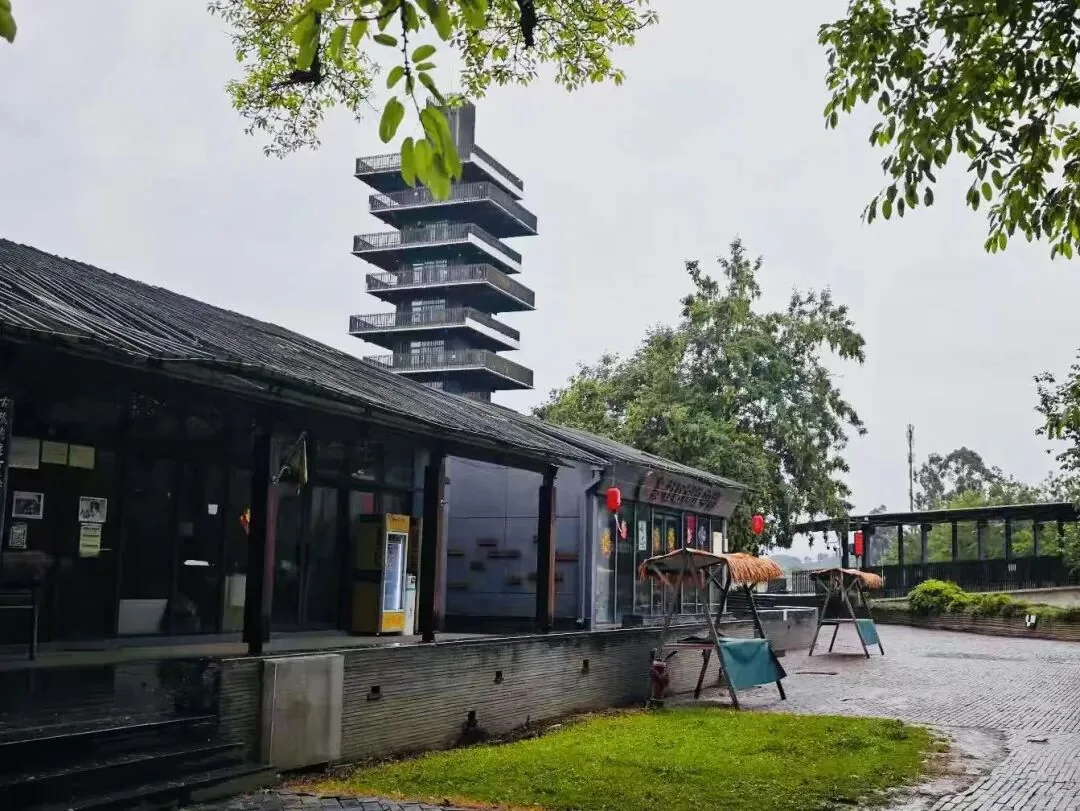
At the town entrance stands a six-story Wenfeng Pagoda, built in the Qing dynasty. Legend says it was erected to calm floods and boost literary fortune. Today it’s a sunny spot for elders, and many grannies and grandpas set up stalls nearby selling fresh vegetables and mountain goods. Most visitors pause here. One old lady sits under the pagoda selling pomelos, golden peels piled in bamboo baskets, her bright magenta padded jacket clashing vividly with the fruit.
Next to her are Ehime oranges and ponkan mandarins, yellow-green fruits stacked like small mountains. The soil and water here seem especially kind to citrus; this time of year they’re ripe, fresh, and tasty.
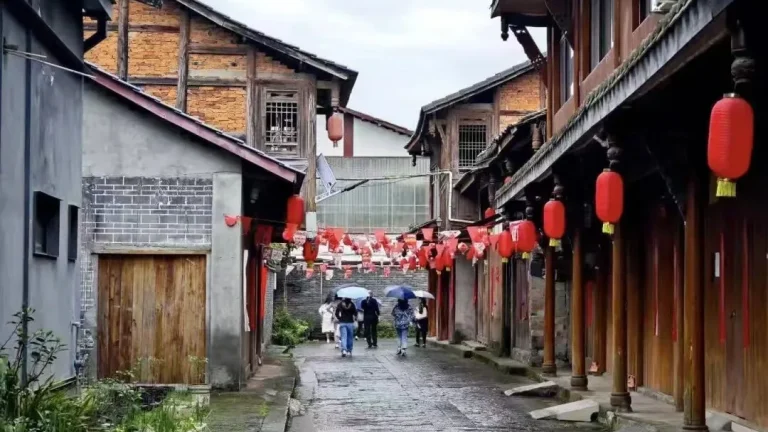
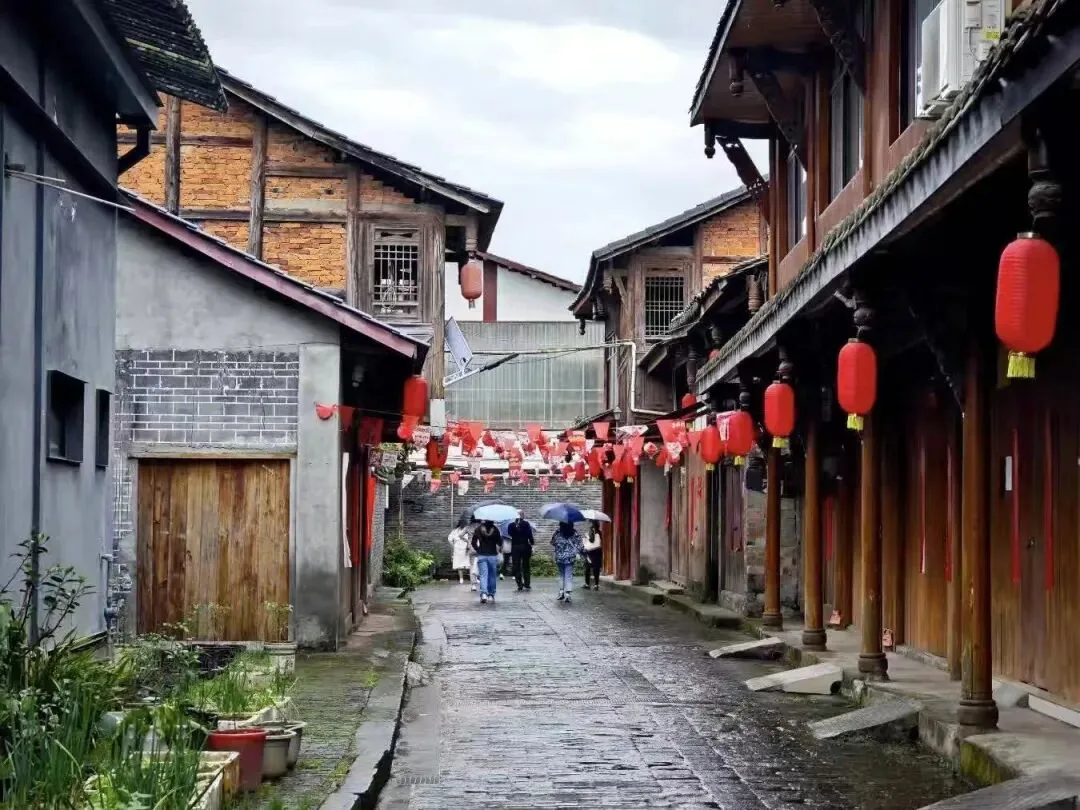
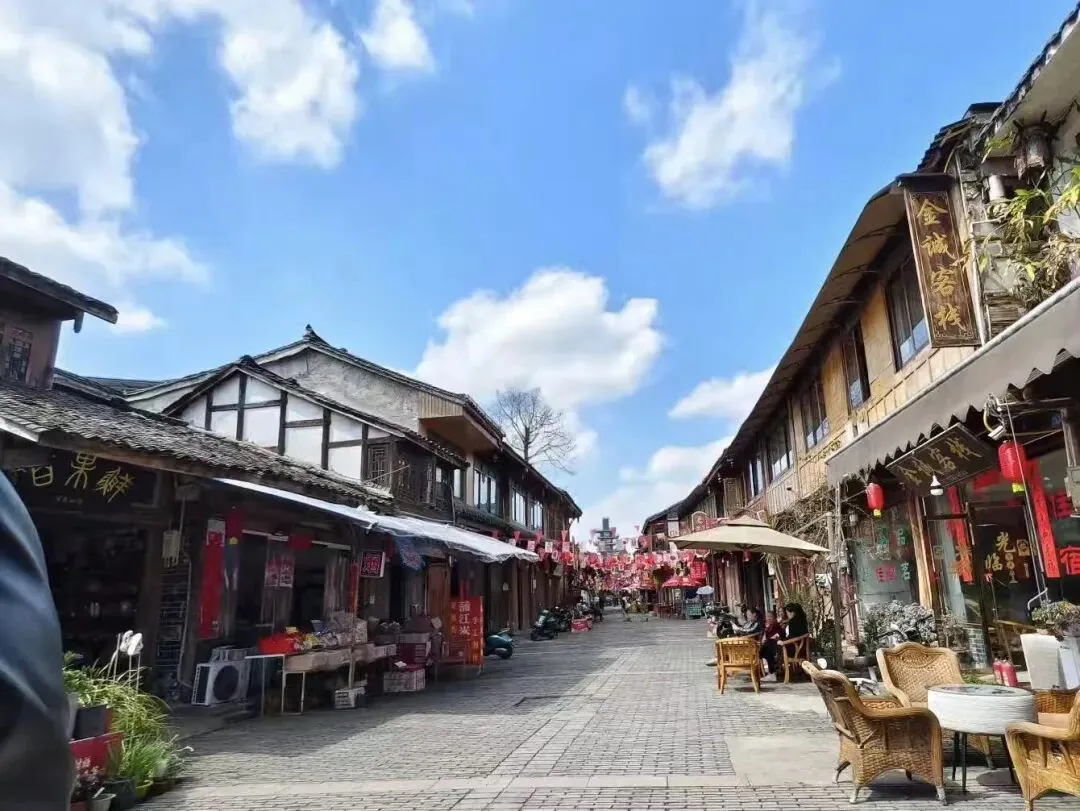
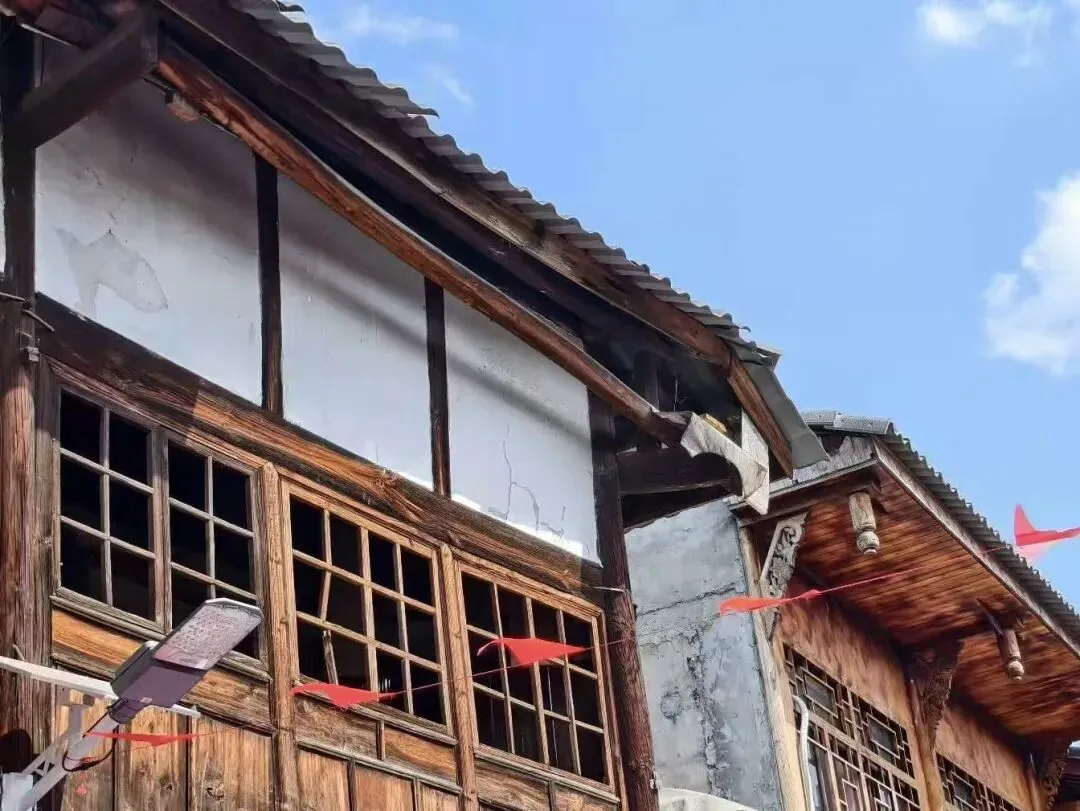
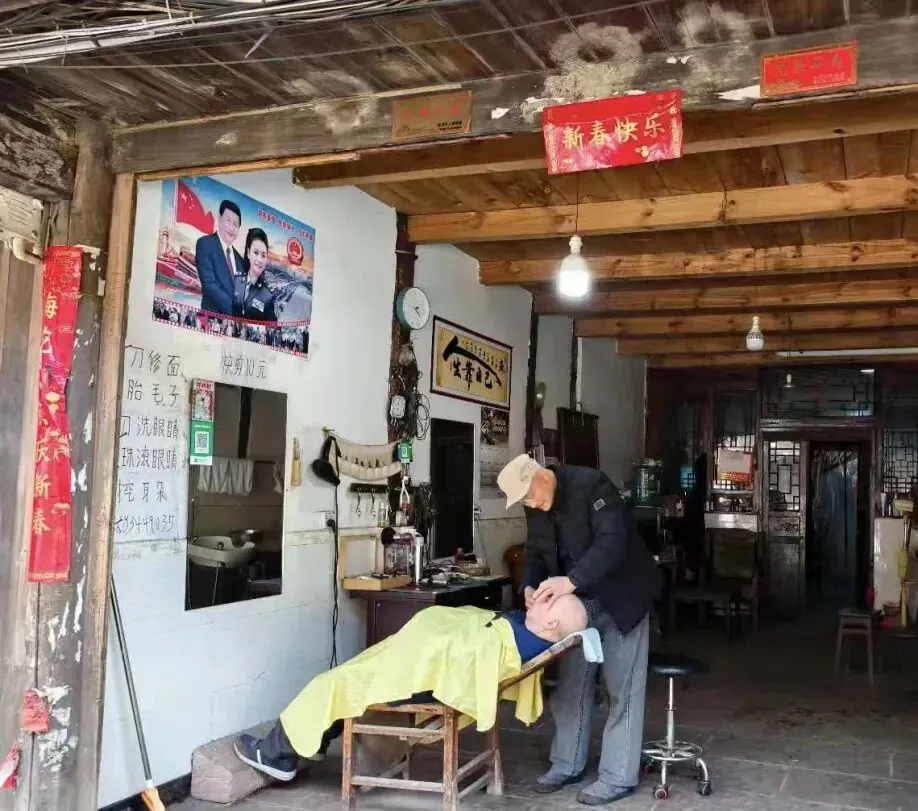
The old streets are typical Ming-Qing style, with three main lanes: Wenfeng Street, Boji Street, and Longyan Street. Bluestone slabs wind along, moss in the cracks, wooden frame structures with grey tile roofs. Locals still live here — some weave bamboo, some dry corn outside their doors, shopkeepers scroll on their phones. There’s no commercial feel at all. Most residents are middle-aged or elderly; the young have gone to the city for work, and those who stay hold a deep attachment to their hometown.
Pro tip: The autumn sky in downtown Chengdu often has a grey-blue cast, like washed-out cloth. But in Xilai it’s especially clear. The ginkgo, tallow, and maple trees along the streets turn gold, orange-red, and russet — a true autumn palette.
In an age where everything moves fast, Xilai is almost stubbornly slow. And that stubbornness is exactly what makes it feel right for a quiet, aimless autumn day. Here, solitude isn’t a lack — it’s allowed, even encouraged. Only when you slow down can you feel your own inner peace.
Practical Info
- Address: Xilai Town, Pujiang County. Navigate to “Xilai Ancient Town” or “Linxi Tower.”
- Tickets: Free entry.
- Public transport: From Chengdu West Station, take the Chengdu-Pujiang express train to Xilai Station, then walk about 1.4 km to the town. Or take Metro Line 10 to Xinping Exit B, transfer to Pujiang Bus 950 to Fruit Logistics Center Station, then Bus 2 to Xilai Town.
- Driving: About 1 hour from downtown Chengdu.
- Food & drink: Bowl-bowl mutton, Linxi River fish, Pujiang rice candy, ponkan/Ehime oranges, Quejian tea, fatty intestine blood curd, handmade fermented black beans.
This is the kind of place worth a late-autumn trip.