Chengdu Hidden Gems: Walk the Real Streets
Most Chengdu visitors hit Kuanzhai Alley, Wuhou Shrine, and Jinli — only to find crowds and cloned souvenirs. The real magic lives in Chengdu hidden gems: native streets and old neighborhoods where locals eat, drink, and play mahjong. This four-day walking route connects panda valleys, ancient towns, and no-frills food streets without a single tourist trap.
Here’s the route logic: start with fresh-air nature, then ease into the city’s living heritage. Everything is reachable by metro or bus, and each day forms a clean loop with zero backtracking. I’ve also folded in a complete day-by-day itinerary at the end, so you can do it all in four relaxed days.
First, the Big Picture: Your 4-Day, No-Backtracking Route
- Day 1: Morning high-speed rail from Xipu Station to Lidui Park → 7:30 AM panda feeding time at Panda Valley → 10 AM bus (No. 102) to Qingcheng Back Mountain for hiking and creek splashing → overnight in Tai’an Ancient Town (try the white-fruit chicken stew)
- Day 2: Morning at Jiezi Ancient Town (wade in the river, wander old lanes) → afternoon bus + intercity rail to Anren Ancient Town for the Republic-era mansions → overnight in Anren
- Day 3: Take the Anren shuttle back to the city → afternoon tea and brown-sugar guokui at Jinsi Street → early evening fly-restaurant dinner on Shiyi Street (Eleven Street) → riverside walk at Wangping Street → late-night snacks at Fuqin Night Market (from 10 PM)
- Day 4: Slow morning wandering more old-city lanes → evening metro Line 19 to Tianbaowan Bridge Night Market for riverside eats by the water
Pro tip: Start with the pandas and mountain air before the city’s food-and-tea pace. By Day 4 you’ll be eating like a local without even trying.
Chengdu Hidden Gems: Nature, Pandas & Ancient Towns
1. Panda Valley (Dujiangyan Panda Base) — 都江堰大熊猫基地
This is a national panda rewilding and release base spread across 2,004 acres of forest — home to just 30-some giant pandas and over a hundred red pandas. Unlike the crowded city base, there are no tour groups in sight. Wooden boardwalks put you at eye level with pandas lounging in trees. Arrive at 7:30 AM opening to catch breakfast time — munching bamboo, climbing, tumbling.
Worth knowing: From 11 AM to 2 PM, pandas nap in their air-conditioned rooms — you’ll only see their backs. Go early. Tickets are limited to 16,000 per day; book 7 days ahead on the official WeChat account. No walk-up ticket window. No flashes when photographing, and skip the vendors outside the gate (prices are doubled).
- Getting there: Metro to Xipu Station (Line 2) → intercity C-train to Lidui Park Station (25 min, ¥10) → bus No. 14 to the gate (10 min). Or from Chadianzi Bus Station: direct bus, ¥15, departs continuously.
- Ticket: ¥55
After the pandas, catch bus No. 102 from the base entrance directly to Tai’an Ancient Town (20 min).
2. Qingcheng Back Mountain — 青城后山
Skip the front mountain’s incense-and-crowds scene entirely. The back mountain is a 20°C green escape even in summer — bamboo forests, canyon streams, waterfalls, suspension bridges, and shallow pools where you can kick off your shoes and wade. It runs about 8°C cooler than the city, and a light 3-hour hike takes you through: Tai’an Ancient Town → Wulong Gully → Longyin Gorge Plank Path → Santan Fog Springs (Three Pools and Misty Springs).
Not feeling energetic? Take the Jinli Cable Car one-way for ¥30 up the mountain, then hike down along the streams. The negative oxygen ions alone are worth it.
- Ticket: ¥20 (half price for students)
- Getting there: From Panda Valley, bus No. 102 to Tai’an; or from Xipu high-speed rail to Qingchengshan Station, then the ¥16 tourist shuttle bus.
- ⚠️ Watch out: Rain ponchos and straw sandals sold at the foot of the mountain are a total rip-off — bring your own. Ticket sales stop at 4:30 PM; don’t cut it close. And summer afternoons with thunderstorm risk close the mountain — no exceptions.
- Eat here: 味水记忆 (Weishui Memory) at Tai’an Ancient Town — 25-year-old spot famous for white-fruit chicken stew (白果炖鸡), a crystal-clear, richly flavored broth. Pair it with Qingcheng cured pork. Around ¥50 per person.
3. Jiezi Ancient Town — 街子古镇
This is a 1,000-year-old stop on the ancient Tea-Horse Road where about 70% of residents are locals who have lived there for generations — the opposite of a scripted tourist town. Ming and Qing dynasty houses spread along the Wei River (味江), and the gentle shallows are perfect for wading or even catching small fish with your hands. A bowl of covered-bowl tea by the river costs ¥20; settle in for an afternoon and watch grandpas play mahjong and trade gossip. No factory-made souvenir shops here.
- Admission: Free (only the Guangyan Zen Temple charges a small fee)
- Getting there: From Qingcheng Back Mountain, bus No. 102 (30 min); or direct bus from Chadianzi Station in Chengdu, ¥18.
- Eat here: Zhou Xuewang (周血旺), freshly-baked tang ma bing (sesame flatbread), and ya-cai leafy-rice cakes (芽菜叶儿粑).
- ⚠️ Watch out: The main street’s “trendy” shops are overpriced — the good food and views are up the small lanes off the Wei River’s upper stretch. And you don’t need to hire a guide; the town walks itself.
4. Anren Ancient Town — 安仁古镇
China’s only “museum town”: 27 Republic-era mansion complexes blending Chinese and Western architecture, plus 55 museums. There’s no rented-costume tourist trap here — instead, a vintage trolley (¥10) clatters through the streets, genuinely transporting you a century back. The Jianchuan Museum Cluster and Liu Family Manor together tell the story of Western Sichuan’s last 100 years.
- Admission: Main street free; ¥99 all-museum pass (about half the price of individual tickets)
- Getting there: From Jiezi → bus to Qingchengshan Station → intercity rail to Dayi Station → bus No. 211 (30 min). On weekends, an Anren holiday shuttle runs direct from Chengdu West Station.
- Eat here: Liu Xuewang (刘血旺), Peng Chicken (彭鸡肉), and Tangchang fermented tofu (唐场豆腐乳) — the last one is a local gift staple at Spring Festival.
- ⚠️ Watch out: Old-timey souvenirs and street-side cheongsam rentals come with hidden costs — casual “fittings” sometimes cost money. The ¥99 pass is the best value; skip the add-ons.
Old-City Chengdu Hidden Gems: Streets Where Locals Live
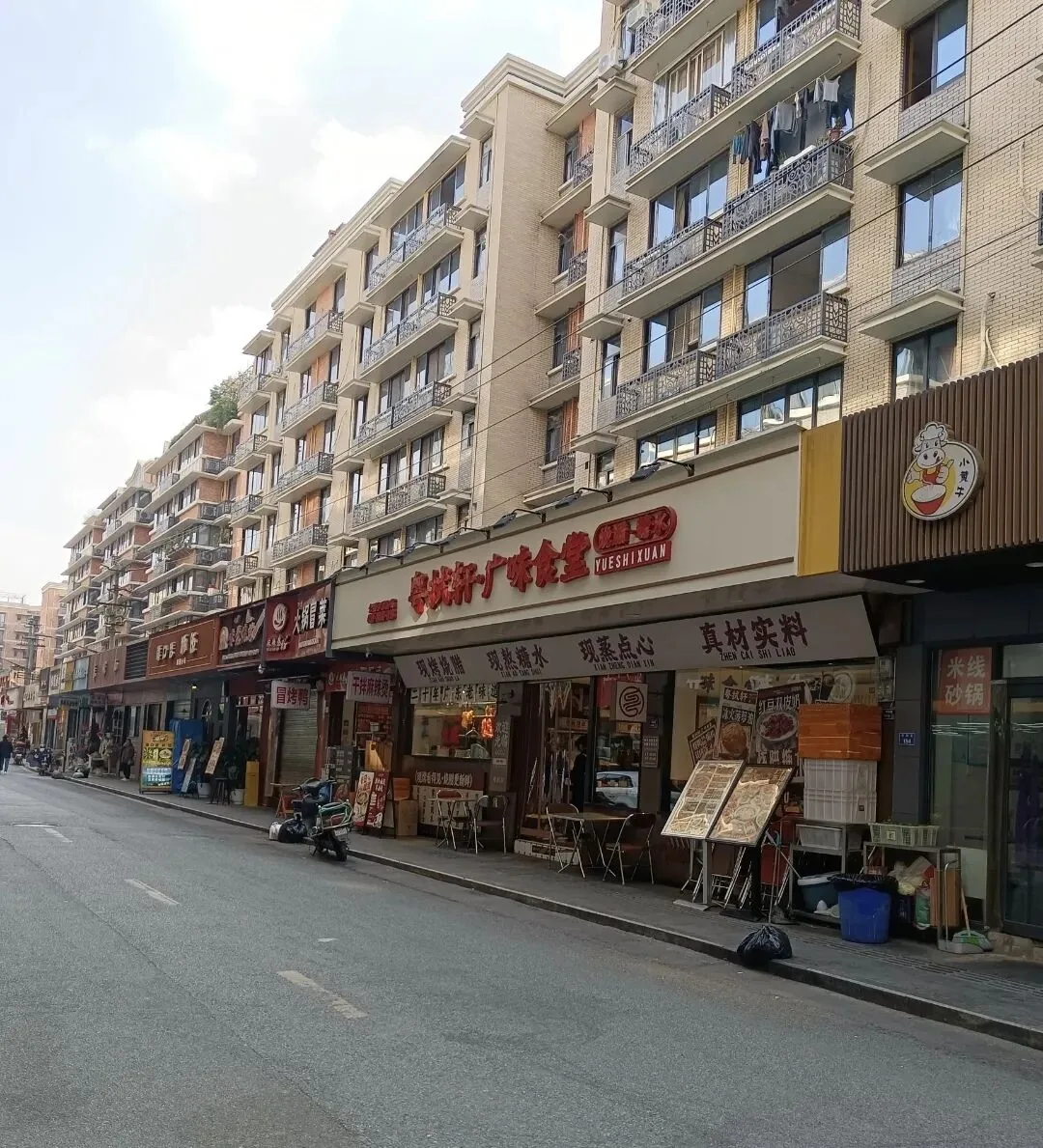
5. Jinsi, Yinsi & Tongsi Streets — 金丝街/银丝街/铜丝街 (near Wenshu Monastery)
Walk four minutes from Wenshu Monastery metro station exit K and you’ll land in three parallel lanes that have been the heart of Chengdu’s gold, silver, and copper handicraft trade since the Ming and Qing dynasties. The street layout hasn’t been touched in centuries, and it shows — low old courtyards, tiny neighborhood tea houses, and retired local men gossiping over ¥10 jasmine tea. Zero Instagram-bait shops.
- Getting there: Metro Line 1, Wenshu Monastery Station, Exit K, 4-minute walk.
- Eat here — don’t miss these:
- Qiu Erge (邱二哥) charcoal-grilled brown sugar guokui — a 30-year-old local institution. ¥5, molten brown sugar center that literally bursts out. Cash only, and when they sell out, they close.
- Zhidehao (治德号) steamed beef with chili — a recipe from the 1930s, eaten wrapped in a guokui. Classic old-Chengdu street food.
Local insight: Head straight for the three residential lanes. The Wenshu Monastery main street itself is a tourist trap — this is the neighborhood that locals actually live in.
6. Eleven Street (Shiyi Jie) — 十一街 (behind Jiuyan Bridge)
A 200-meter lane hidden behind Jiuyan Bridge, this is Chengdu’s most unpretentious “fly restaurant” (苍蝇馆子) street. It’s never been touristified — no facades, no logos, just a narrow residential alley where tiny plastic stools appear from nowhere at mealtimes. The customers? Office workers and old residents. Nobody takes photos; everybody eats.
- Getting there: Metro Line 6, Niuwangmiao Station, Exit D, 7-minute walk.
- Food to order:
- Yaoji Noodles (幺鸡面): crispy-pork wontons and zha jiang noodles with a serious, deeply-sauced flavor.
- Lao Maza Small Hotpot (老马扎市井小火锅): douhua (tofu pudding) and beef tallow hotpot base — no pot-bottom fee — eaten on low benches on the street. This is the local late-night spot.
- Budget: ¥30 per person fills you up.
- ⚠️ Everything here runs on local reputation only — no influencers, no online hype. Go hungry and go early for a stool.
7. Wangping Street + Xiangheli — 望平街与祥和里
Skip the crowded Taikoo Li shopping district. Wangping Street’s riverside walkway is flat, pleasant, and delightfully unphotographed. But the real trick? To dodge the overpriced “trendy” cafés on Wangping’s main strip, turn into Xiangheli — the residential lane behind it. Here, community restaurants that have been feeding the neighborhood for 10+ years cost half the price.
Evening plans? Meihua Theater (梅花剧社) does a full Sichuan opera (折子戏) show for ¥15. After that, catch free street performances by the river on the Paper Plaza (纸广场), and nurse a ¥20 bowl of tea watching the 339 Tower light up the skyline.
- Getting there: Metro Line 3 → transfer to Line 2 → Dongmen Bridge Station, 5-minute walk.
- Eat here: Xiajia Seafood (夹夹大) for huoxiang stir-fried crab, Chef Er’s spicy chicken (厨二尖椒鸡), and Heji egg puff cakes (贺记蛋烘糕) — queues of locals at all three.
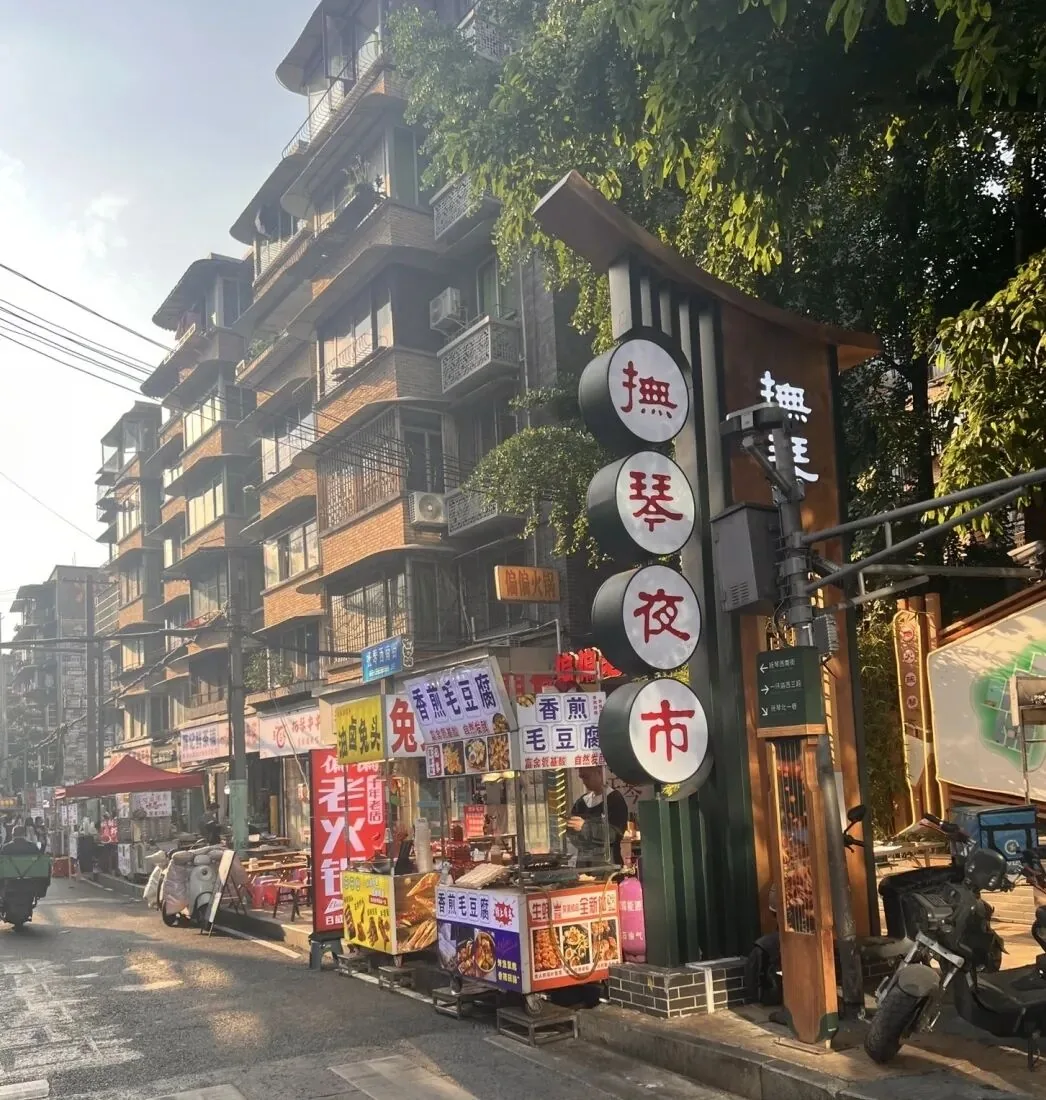
8. Fuqin Night Market — 抚琴夜市
Chengdu’s west-side night market for 20+ years, fully upgraded in 2026 but still resolutely local. Over 130 food stalls, with a rule that only two stalls may sell the same item — so you won’t hit an endless row of identical skewer shops. Nightly chaos you can trust. The 100-meter stretch of old-Chengdu wall murals is a time capsule of 1980s life, and the daytime tea houses turn into dinner-time smoke by evening.
- Best time: 6 PM, right when stalls open — thinnest crowds.
- Getting there: Metro Line 2 → transfer to Line 5 at Zhongyi Daxue Sheng Yiyuan → Fuqin Station, 3-minute walk.
- ⚠️ Search for “抚琴西南街” (Fuqin Xinan Street) in your map app — a generic “Fuqin Night Market” search sends you the wrong way.
- Eat here: Fu Ji grilled pig brain (傅记烤脑花), scallion-grilled pig large intestine (大葱烤肥肠), Zhang Niang black-bamboo chicken (张嬢黑竹香鸡). Around ¥30 per person, stuffed.
9. Tianbaowan Bridge Night Market — 天保湾大桥夜市, Shuangliu
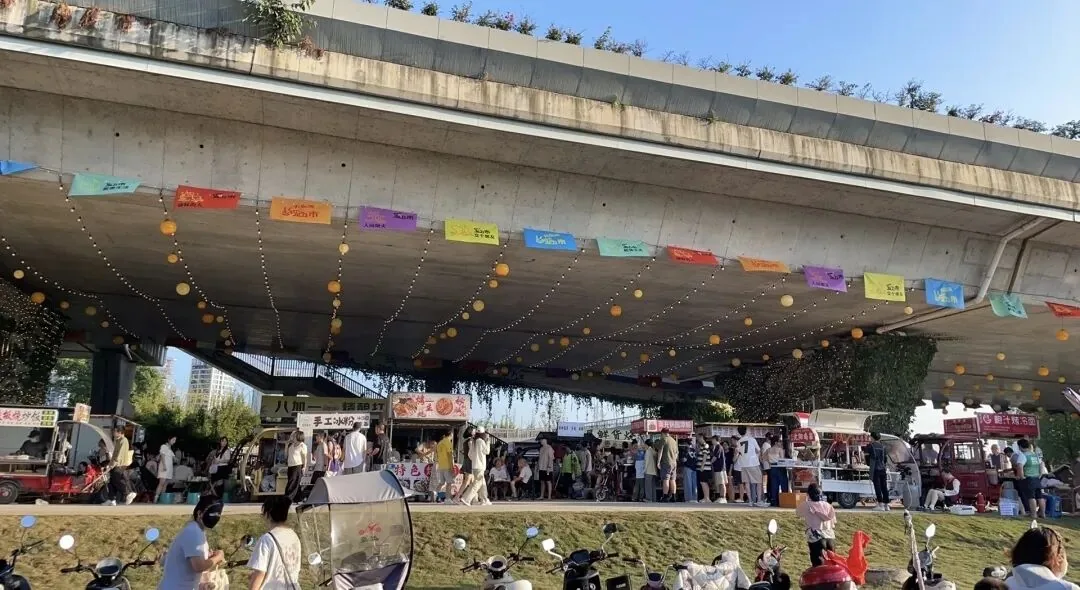
Chengdu’s only night market built under a bridge across the river — and the 230-meter-wide river keeps it breezy and cool even in summer. On one side: a free open-air disco dance floor. On the other: over 100 affordable food stalls. At 8 PM, they roll out a free open-air classic film screening. And since local farmers bring their own produce here, the fruit is cheap and genuinely fresh. Open 5 PM–1 AM.
- Getting there: Any metro → transfer to Line 19 → Honglian Station, Exit C, 10-minute walk.
- Eat here: Aunt Li’s hand-shaken bingfen (李嬢手工气泡冰粉), Zhang Ge grilled sweet potato (张哥烤苕), and Chaoshan hand-pounded beef balls (潮汕手打牛丸).
- Best time: Weekends get crowded — get there early to secure a good spot by the river.
Practical Essentials: Getting Around & Common Traps
The route logic: All spots are linked in a single outward loop — no backtracking. West first (nature, pandas, towns), then back toward the city center for food streets and night markets, ending at the riverside market south of town.
Transport summary:
| Destination | Best Route from City Center | Cost | Time |
|---|---|---|---|
| Panda Valley | Metro Line 2 to Xipu + C-train to Lidui Park + bus 14 | ¥10 + ¥2 | ~40 min |
| Qingcheng Back Mountain | High-speed rail to Qingchengshan + shuttle | ¥16 + ¥20? | ~1 hr |
| Jiezi Ancient Town | Direct bus from Chadianzi | ¥18 | ~1 hr |
| Anren Ancient Town | Intercity rail to Dayi + bus 211 | ~¥20 | ~1.5 hr |
| Jinsi/Yinsi/Tongsi St | Metro Line 1 to Wenshu Monastery | ¥2-4 | ~20 min |
| Eleven Street | Metro Line 6 to Niuwangmiao | ¥2-4 | ~25 min |
| Wangping St | Metro Line 2 to Dongmen Bridge | ¥2-4 | ~20 min |
| Fuqin Night Market | Metro Line 2→5 to Fuqin | ¥3-5 | ~35 min |
| Tianbaowan Night Market | Metro Line 19 to Honglian | ¥3-5 | ~40 min |
Note: Costs are approximate and based on single-trip metro fares; high-speed rail costs vary. Always check the latest schedules on official apps.
Common traps to avoid: – Skip the “trendy” snack shops on main streets — double prices for identical food. – Carry small change for cash-only local shops (like Qiu Erge’s guokui). – Book panda tickets early — 16,000 daily caps sell out fast. – Search the exact Chinese name for night markets — generic English searches often route you to the wrong spot.
After your last night at Tianbaowan Bridge, head back on Line 19. You’ve walked the real Chengdu — no filters, no tourist script.