Zhaojue Temple: A Local’s Guide to Chengdu’s ‘First Zen Forest of Western Sichuan’
If you’ve ever wandered past a steady stream of monks heading in one direction — to class? to lunch? — and wondered where they were going, you’ve probably stumbled near Zhaojue Temple. This is one of Chengdu’s most storied Buddhist sites, and it’s free, easy to reach by metro, and perfect for a slow half-day of quiet, photos, and a little history. For anyone searching for Zhaojue Temple Chengdu, this guide covers everything you need.
Here’s the thing: the name “Zhaojue” means “to enlighten those who awaken later with the light of Buddhist truth,” drawn from Mencius (Jinxin, Part II): “The wise, by their own clarity, enable others to be clear; now, by their own confusion, they try to make others clear.” In other words, those who wake first guide those who wake later.
A Quick History of Zhaojue Temple
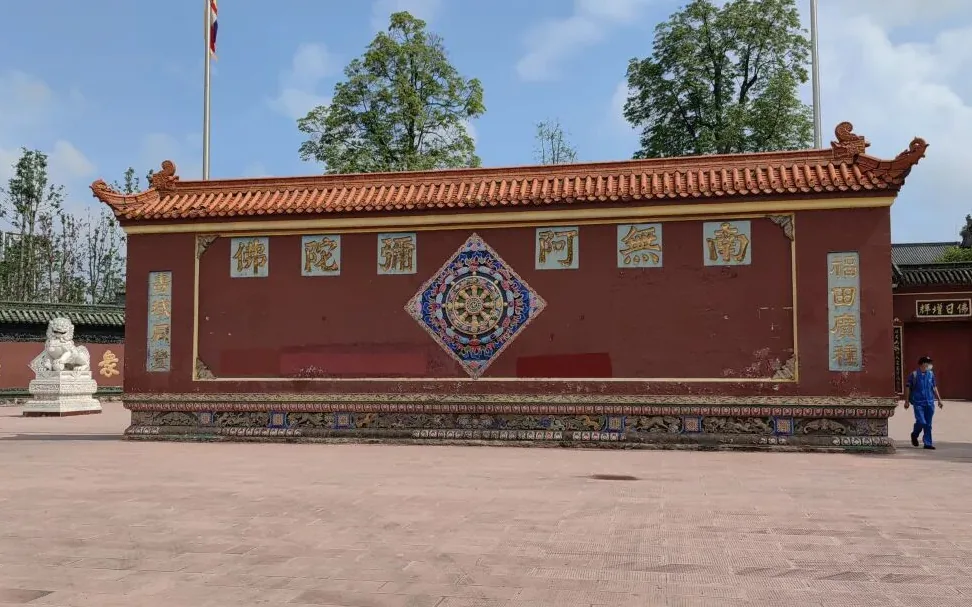
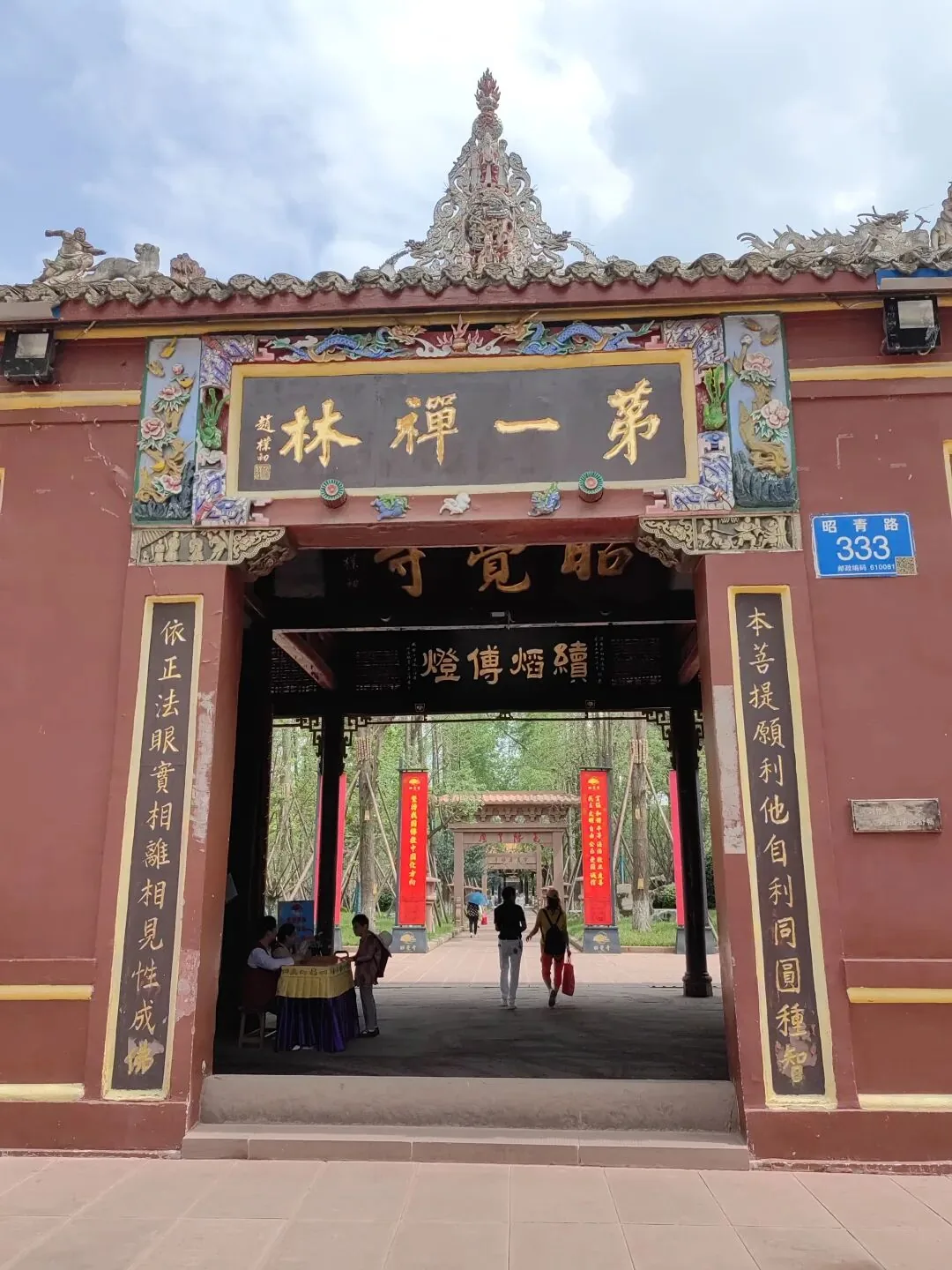
The site began as the residence of Dong Chang, Sima (a military/government post) of Meizhou during the Han Dynasty. The house was called “Jianyuan.” When Emperor Xizong of Tang fled to Chengdu for refuge, he bestowed the name “Zhaojue” on the temple.
During the Tang Dynasty, Chan master Xiumeng — a successor in the Caodong school of Zen — became abbot of Jianyuan Temple, expanded it, and by imperial order changed its name to “Zhaojue.”
In the Five Dynasties and Ten Kingdoms period, Zhaojue Temple was damaged in warfare, leaving only “five rooms and three hundred plots of farmland.” Later the halls declined and the temple fell into ruin.
In the Northern Song (1008), Chan master Yanmei — the fifth-generation dharma heir of Master Xiumeng — became abbot and spent over 30 years carrying out a full restoration, expanding halls and rooms to more than 300. At the end of Yuanfeng (1085), Chan master Chunbai of the Linji school took over as abbot, and Zhaojue Temple became known as the “First Forest of Western Sichuan.” During Emperor Huizong’s reign, it was the head of all temples in western Sichuan.
Fan Zhen wrote a five-character regulated verse, “Visiting Zhaojue Temple,” describing its flourishing state:
The heat steams, nowhere to escape, / Yet here it suddenly turns cold. / Along pine-lined steps I walk without end, / In stone rooms, Zen finds its own peace. / Autumn ponds swell with mandarin ducks, / At dusk the bat-filled courtyard lies wide. / Climbing to gaze, I see farmhouses, / Half their fences and thatch undone.
In the Ming Dynasty, Zhu Yuanzhang ordered the Prince of Shu Xian to expand the temple. After repairs, the surrounding walls wound for over 700 zhang. But during the Chongzhen era of the Ming, it was destroyed in the fires of Zhang Xianzhong’s war.
In the Qing Dynasty, Chan master Zhangxue Tongzui settled at Zhaojue Temple in a thatched hut, raised funds to rebuild, cleared land for farming, and gradually formed the great temple with seven main halls that became the “First Forest of Western Sichuan.”
Zhang Daqian, fleeing the invaders into Sichuan, lived at Zhaojue Temple for 5 years and produced many fine paintings there. Using a vigorous, flowing “iron-wire” fine-line brush technique, he painted a Shakyamuni Buddha image and a Namo Amitabha Buddha image, each installed in the Putong Pagoda Courtyard. The large round table of lacquered nanmu wood that Zhang Daqian used is still in the temple today.
Zhaojue Temple is a key stronghold of the Linji school of Zen, and also has an esoteric (Vajrayana) altar, hosting Tibetan lamas who come to propagate the dharma.
Emperor Kangxi inscribed the plaque “Dharma Realm, Exquisitely Solemn” and composed a poem:
Entering the gate, no temple seen, / For ten li, hear the wind in pines. / Fragrance drifts through the golden realm, / Clear shade carries the azure sky. / Frosty bark, old monk’s discipline, / Heavenly sounds, the Brahma voice flows. / Close by, the Penglai trees, / Spring light in shared lushness.
Main Buildings & Photo Spots
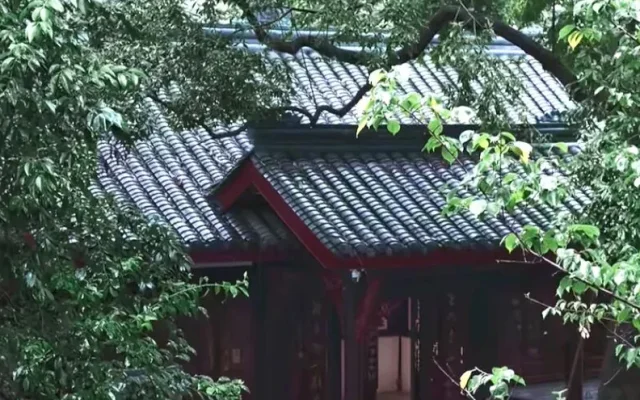
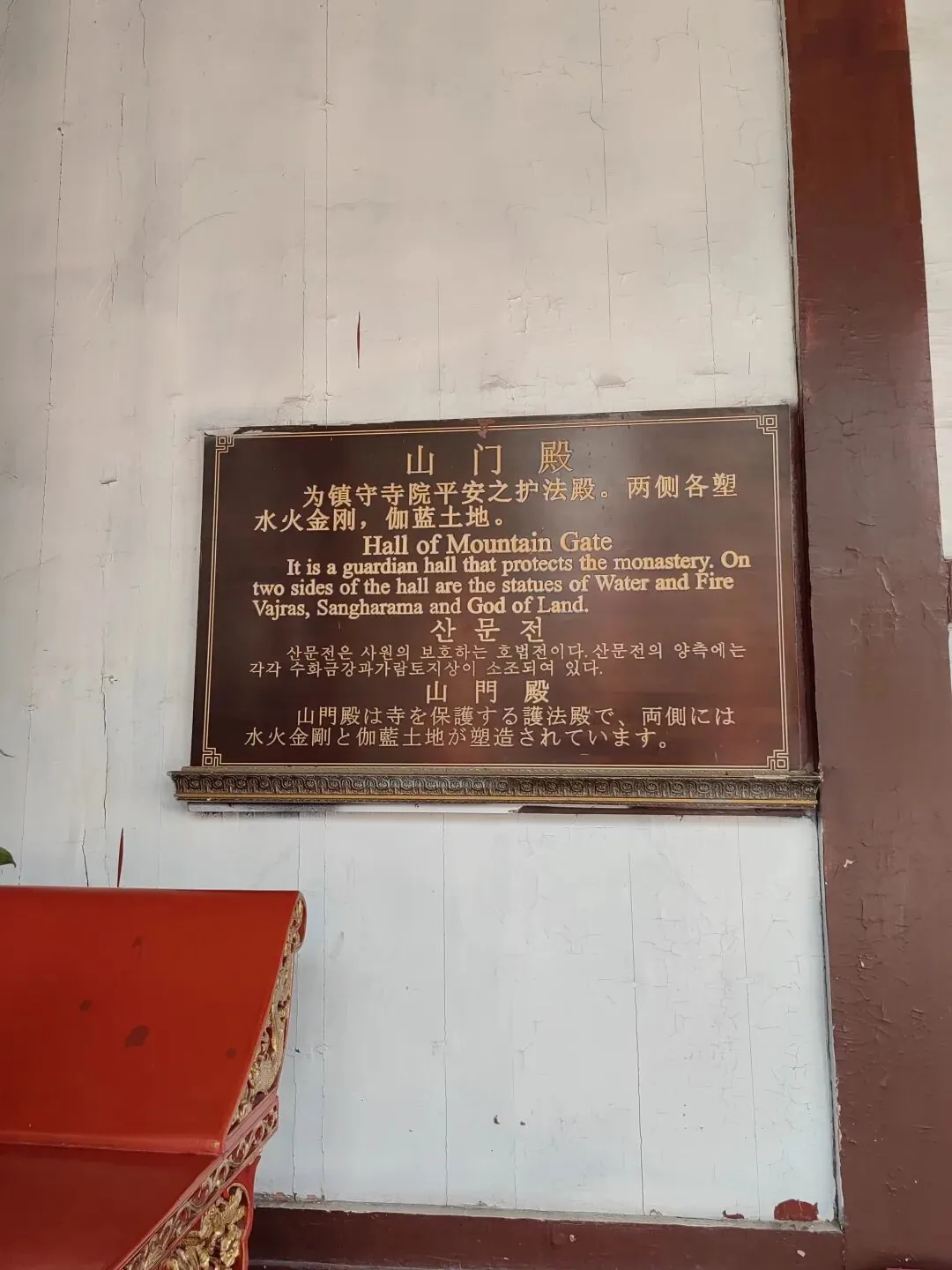
Mountain Gate
The horizontal plaque above the Mountain Gate reads “First Zen Forest.” The gate bearing the “Zhaojue Temple” plaque is right next to the zoo.
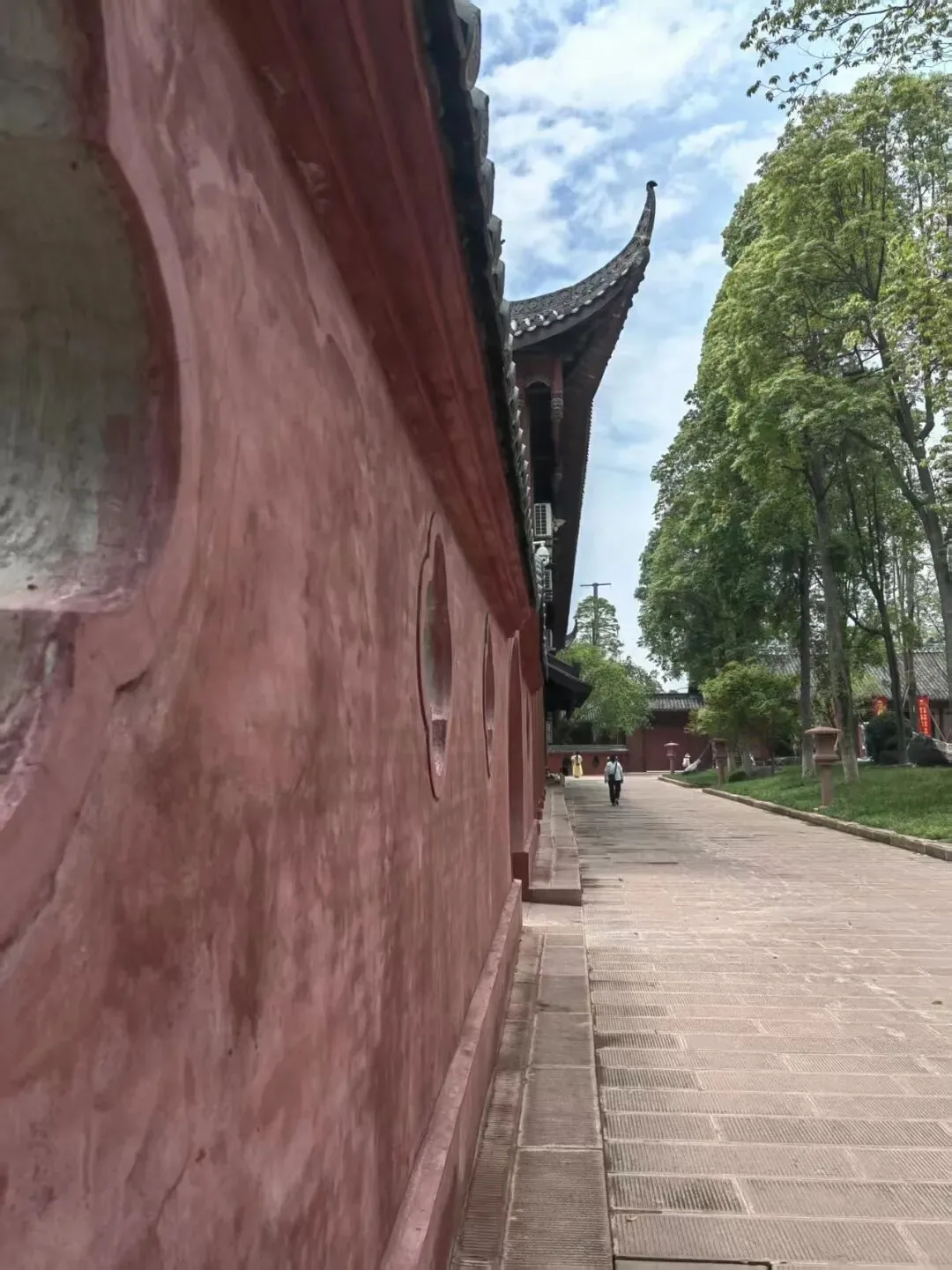
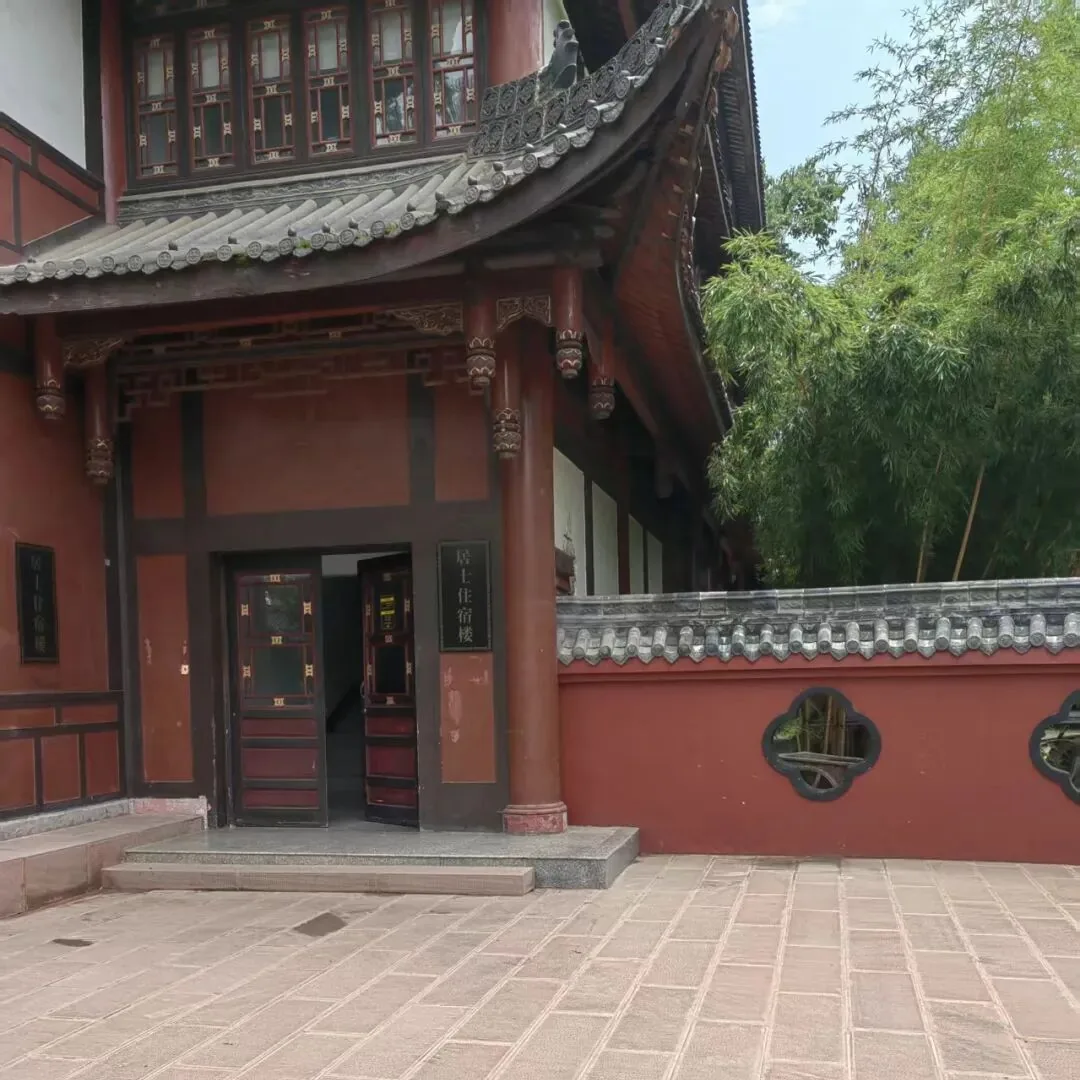
- Highlights: Red walls and gate, the “First Zen Forest” plaque — great for hanfu or ancient-style photography
- Photo angles: Front of the main gate, the ancient-style wall at the side gate, the red wall and bamboo grove corner
Mahavira Hall (Daxiong Baodian)
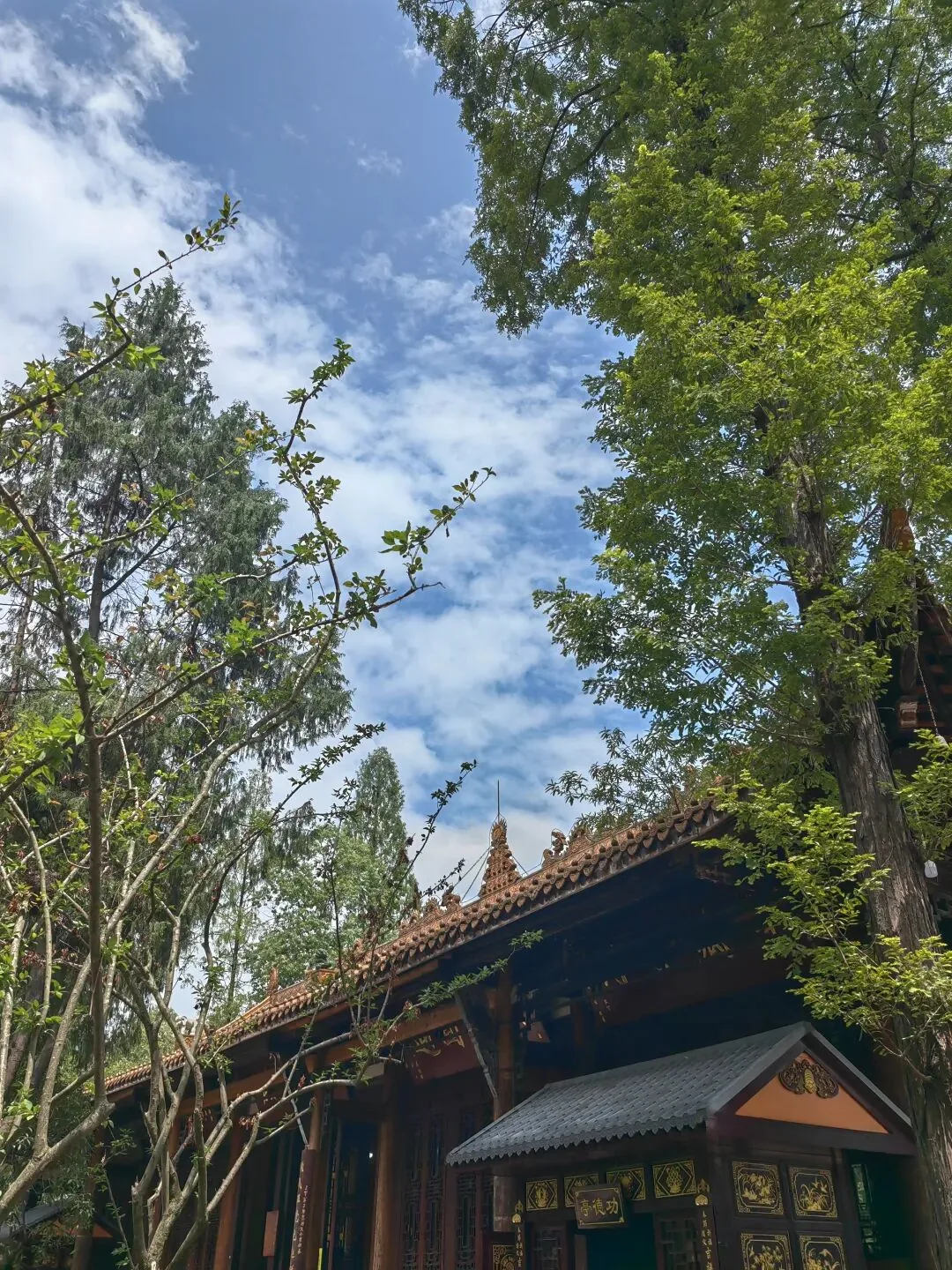
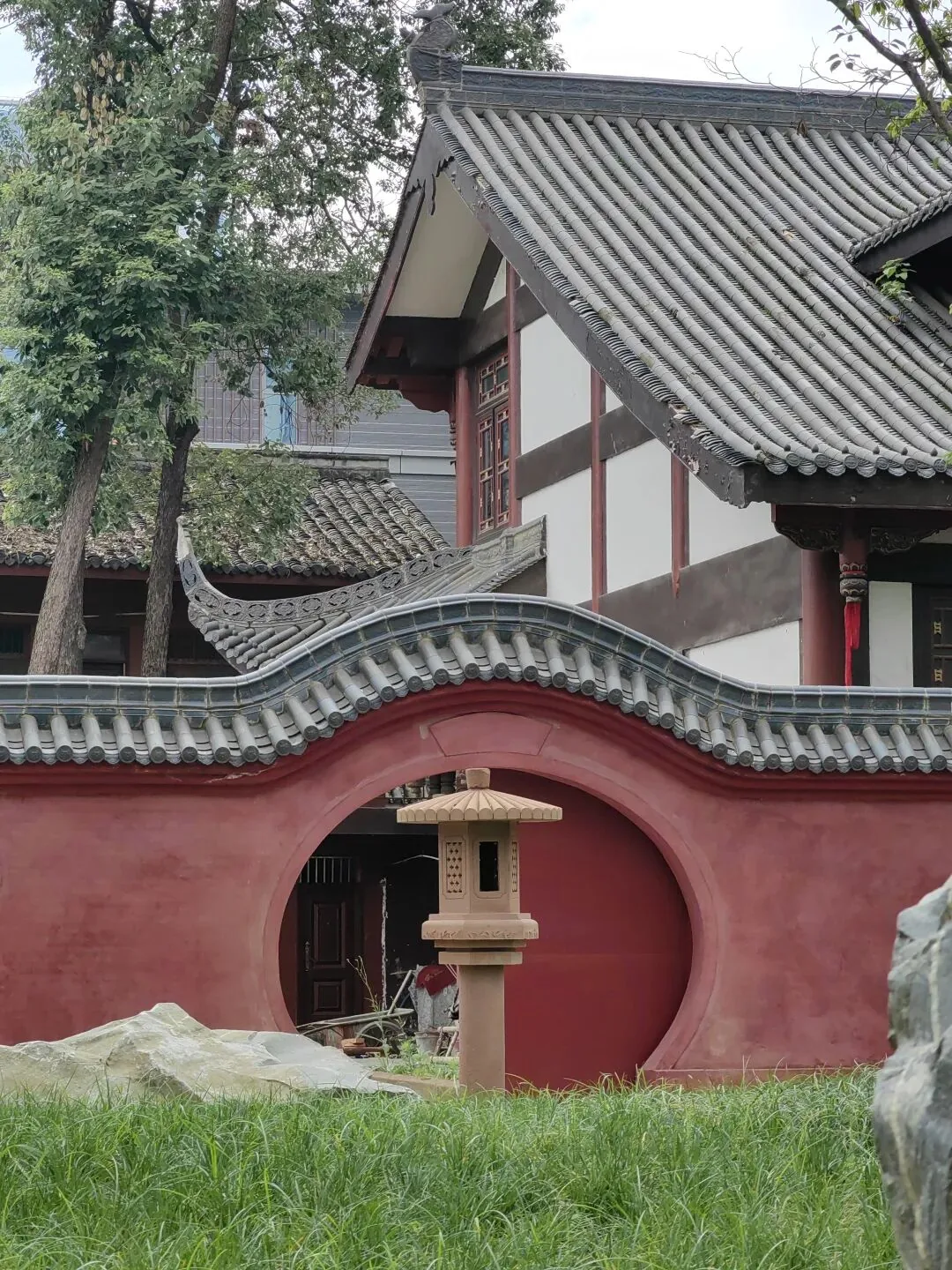
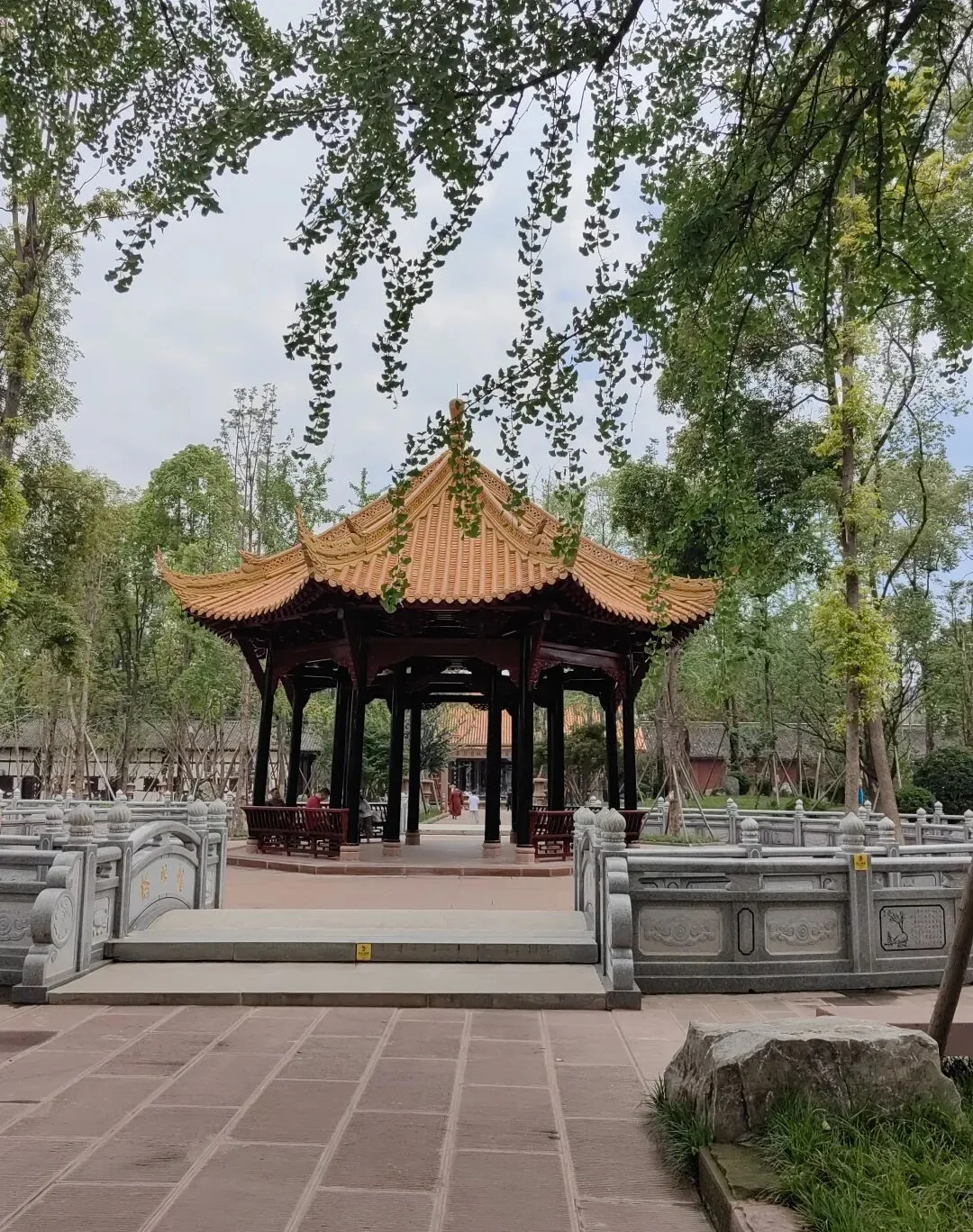
The Mahavira Hall has a double-eaved hip-and-gable roof and enshrines three white marble Buddha statues: Vairocana Buddha, Locana Buddha, and Shakyamuni Buddha.
Shakyamuni Buddha appeared in an age when human lifespan was 100 years, of the Kshatriya caste; his father was Suddhodana, his mother Maya, and he lived in Kapilavastu. He attained enlightenment under the Bodhi tree, taught for 49 years, saved countless beings, and left behind the Three Baskets and Twelve Divisions of scriptures.
- Dharmakaya Buddha: Vairocana (Sanskrit: Vairocana), meaning “light shining everywhere,” also called Mahavairocana. He is the embodiment of cosmic truth, formless and omnipresent, the ultimate essence of Buddhahood. Esoteric Buddhism reveres him as the highest deity, dwelling in the Pure Land of Eternal Stillness and Light.
- Sambhogakaya Buddha: Locana (Sanskrit: Locanabuddha), meaning “vast wisdom, light shining everywhere,” the body of merit manifested after perfect practice. He teaches bodhisattvas of the first ground and above, dwelling in the Pure Land of Real Reward. The great Locana Buddha at Fengxian Temple in the Longmen Grottoes (17.14 m tall) is his most representative image.
Flanking the three-body Buddhas are standing statues of Ananda and Mahakasyapa.
- Ananda was chosen as the Buddha’s constant attendant when the Buddha was 55, accompanying him for 25 years, handling daily life, conveying teachings, and recording sermons. Renowned for his extraordinary memory, he was called “Foremost in Hearing Much.” He was the Buddha’s cousin, deeply trusted, and the core disciple who stayed by his side until the Buddha’s parinirvana.
- Mahakasyapa was not an attendant but the great ascetic disciple known as “Foremost in Dhutanga.” He practiced dhutanga his whole life — wearing rag robes, sitting under trees, eating one meal a day, refusing comfortable monastery living. Older than the Buddha, he practiced independently early on, later converted, and became famous for strict precepts and ascetic practice. At the Vulture Peak assembly, through the “flower held up, smile” transmission, he awakened to the Buddha’s mind — and is revered by Zen as the First Patriarch of the West. After the Buddha’s parinirvana, he presided over the first Buddhist council. In old age he entered samadhi on Mount Kukkutapada, preserving his body through supernatural powers, waiting for Maitreya Buddha to appear and receive the robe and bowl.
On both sides of the hall are 18 arhat statues with varied expressions. The Seven Past Buddhas are: Vipasyin, Sikhin, Visvabhu, Krakucchanda, Kanakamuni, Kasyapa, and Shakyamuni.
- Highlights: Core main hall, enshrining giant white marble three-body Buddhas (Vairocana, Locana, Shakyamuni)
- Photo angles: Center of the hall plaza, east side red wall and bamboo grove corner
Tree-Wrapped Stele
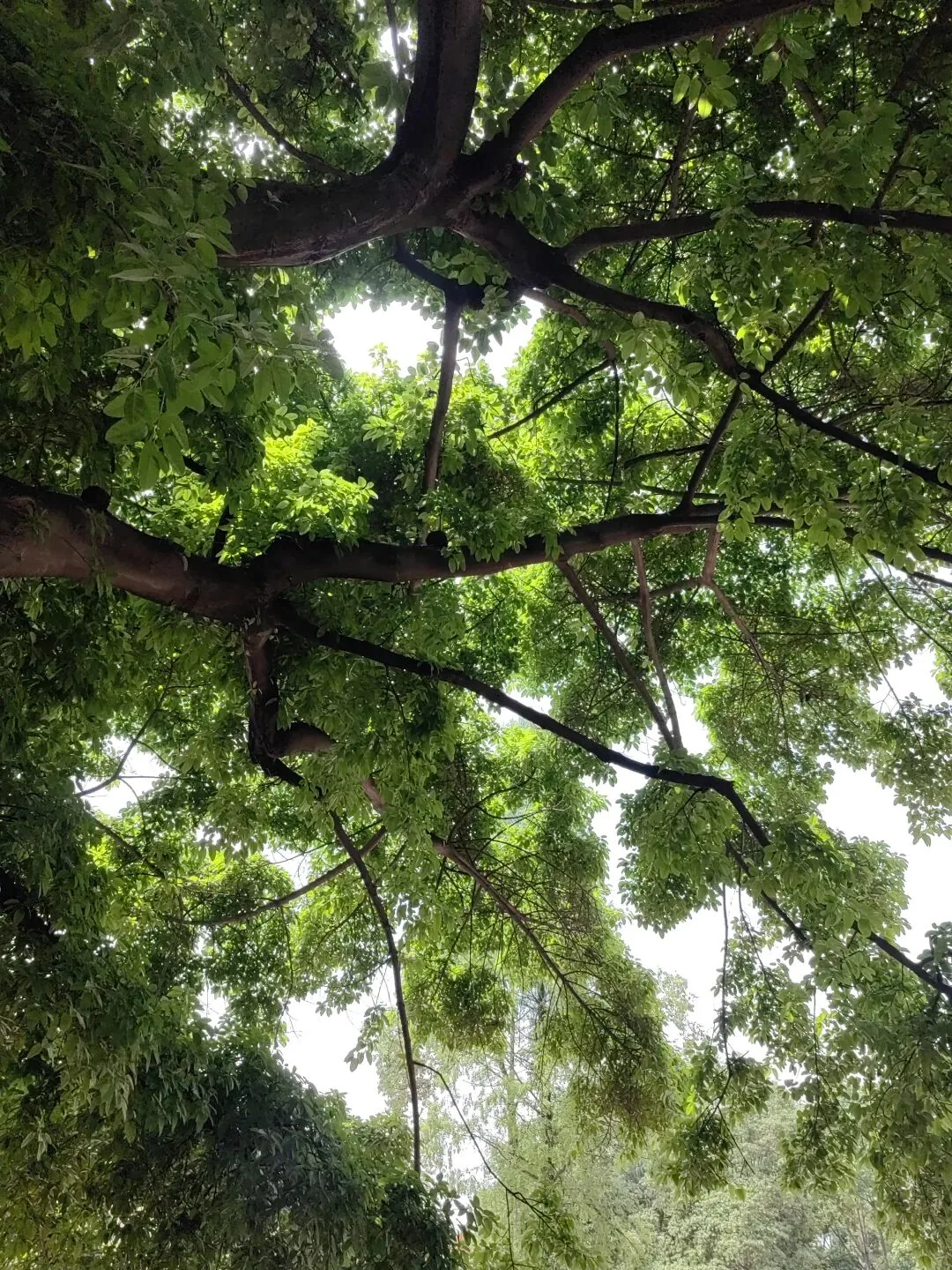
Outside the Mahavira Hall is the “Tree-Wrapped Stele.” This is a thousand-year-old tree with a stone stele wrapped inside it. It’s said that the temple’s Patriarch Daokui left a prophecy: “Tree wraps stele, coconut ladle flies, pillar lands, Patriarch returns” — and all of it came true. So this tree-wrapped stele became the temple’s spot for verifying Buddhist truth.
Legend says that after Patriarch Poshang revived Zhaojue Temple, he widely accepted disciples and glorified the Shuangguai Zen lineage. One day, Patriarch Poshang told his disciples he was going out to wander. He said: if the courtyard pillar in the hall left its stone base, the ladle on the incense table flew away, and the two huangguo trees outside wrapped around the central stele — and he still hadn’t returned — then install a new abbot to head the temple and carry on the Shuangguai Zen dharma.
Three years after the Patriarch left, one day a wooden pillar in the Patriarch Hall indeed left its stone base. Three more years passed, and the ladle on the Mahavira Hall’s incense table indeed vanished. Three more years passed, and the two huangguo trees outside the Mahavira Hall had grown and wrapped around the central stele. But Patriarch Poshang never returned.
Chengdu people later called the hall with the “pillar off its base” the “Dangling Foot Tower.” The hall is about 9 m tall, with sixteen nanmu pillars about one chi five cun in diameter. Among the four pillars inside the hall, the one on the left near the door has its lower end suspended, about one chi above the drum-shaped stone base. It’s a marvel of ancient wooden architecture. It matched the temple’s ancient virtuous one, Ming Dynasty Patriarch Daokui’s prophetic verse: “Tree wraps stele, eaves ladle flies, pillar lands, Patriarch returns.”
- Highlights: Thousand-year-old tree wrapping a stone stele, one of the “Three Wonders of Zhaojue,” considered by locals a spot for efficacious wishes
- Photo angles: Full view of the ancient tree, close-up of stele and tree together
Yuantong Hall
Yuantong Hall is in the northeast corner of the temple. Its roof combines a “hip-and-gable top” and a “pavilion spire top” — a hall structure unique to Zhaojue Temple. It adopts an outer-square, inner-circle shape, combining tower and hall. The four corners have double-eaved hip-and-gable roofs; the center rises as an octagonal pyramidal roof, with 7 tiers of flying eaves, 24.2 m tall. The whole building uses 156 pillars, exquisitely structured. Inside is a 12.2 m tall four-faced thousand-hand Guanyin statue, each face with multiple Buddha heads, many hands and eyes — recorded as 1008 hands and eyes — symbolizing Guanyin’s boundless vow to save all beings.
- Highlights: Tower-hall combined architecture, enshrining thousand-hand thousand-eye Guanyin
- Photo angles: Overall exterior of the pavilion, for Chinese-style Zen photos
Sutra Library (Cangjing Lou)
The Sutra Library has a double-eaved hip roof, with dragons and phoenixes carved on the main ridge. It houses many ancient scriptures of historical and cultural value, and is not open to the public.
- Highlights: Precious scriptures, ancient steles and stone carvings, jade Buddha statue
- Photo angles: Stone steps in front of the building, classical eaves
Heavenly Kings Hall (Tianwang Dian)
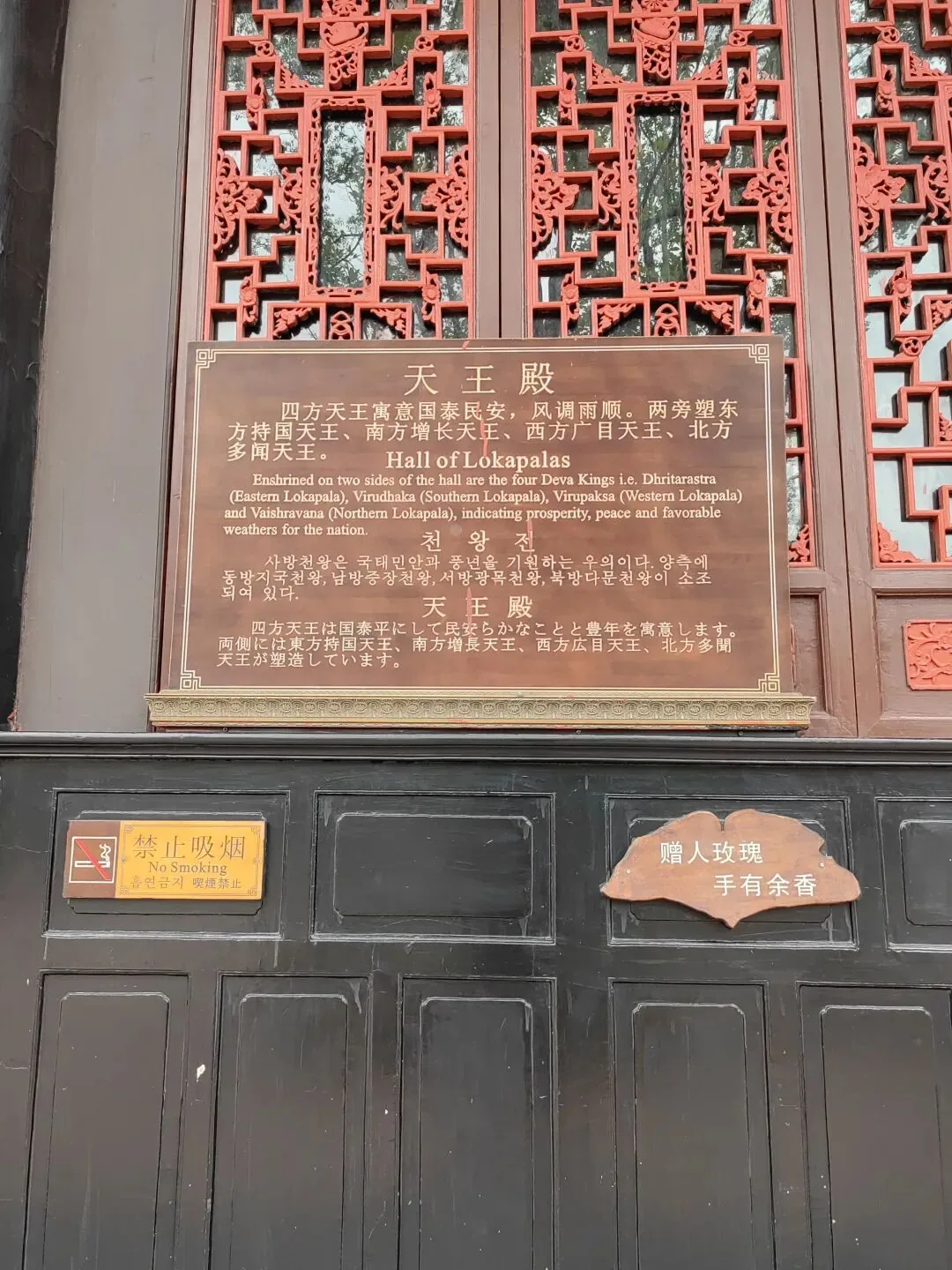
The Heavenly Kings Hall enshrines Maitreya Buddha, the Four Heavenly Kings, and others. The stone bridge in front of the hall is the oldest, one of the few surviving historical relics.
- Highlights: Red walls and gate, “First Zen Forest” plaque — great for hanfu or ancient-style photography
- Photo angles: Front of the main gate, the ancient-style wall at the side gate, the red wall and bamboo grove corner
Dharma Teaching Hall (Shuofa Tang)
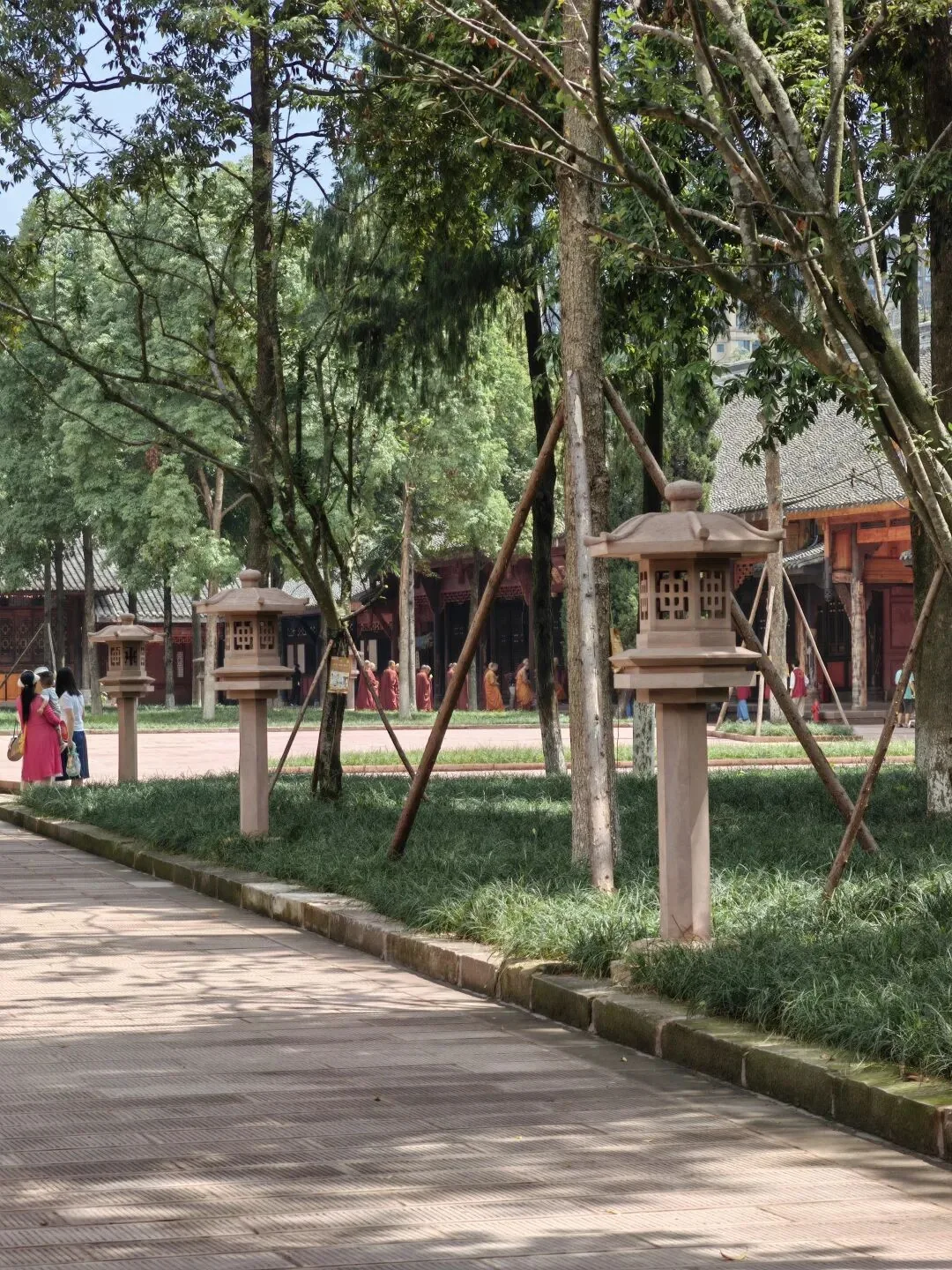
The Dharma Teaching Hall is five bays wide, grand in scale, where the abbot teaches the dharma. Chan master Guiyi praised it in his poem “Dharma Teaching Hall”: “Merit adorns the Buddha’s hall, / In the dharma hall the teaching resounds like thunder; / Why sit cross-legged under a tree, / When you can listen carefully before the steps.”
Stupa Area
- Highlights: Yuanwu Zen Master Stupa, ancient site of the Linji school ancestral temple, rich historical heritage
- Photo angles: Ancient stupa forest path, for quiet ancient-style shots
Essential Info
- Opening hours: Year-round 08:00–17:00 (last entry 16:30)
- Tickets: Free, no reservation needed. With ID you can receive 3 free incense sticks
- Suggested visit time: 1.5–2.5 hours, relaxed pace, good for quiet prayer and photos
Getting There
- Metro: Take Line 3 to Zhaojue Temple South Road Station, exit C, then walk about 10 minutes
- Bus: Routes 1, 10, 60, 63, 69, 70, 71 to “Zhaojue Temple Bus Stop”
- Driving: Parking lot at the entrance, 10 RMB per vehicle, no time limit, easy parking
- Combine with the zoo: From Zhaojue Temple, walk about 15 minutes to Chengdu Zoo — great for a family day out
Etiquette & Tips
- No photography inside halls — only exterior architecture
- The temple has a vegetarian dining hall / Zen tea courtyard (when I visited, the temple was under repair and it wasn’t open)
Pro tip: Bring your ID — you can get 3 free incense sticks, and no reservation is needed.
Local insight: The Tree-Wrapped Stele is considered a wish-granting spot by locals. If you’re here for a quiet moment, this is the place to pause.