Chengdu’s 26°C Escape: A Free Ancient Temple Hike 1.5 Hours from the City
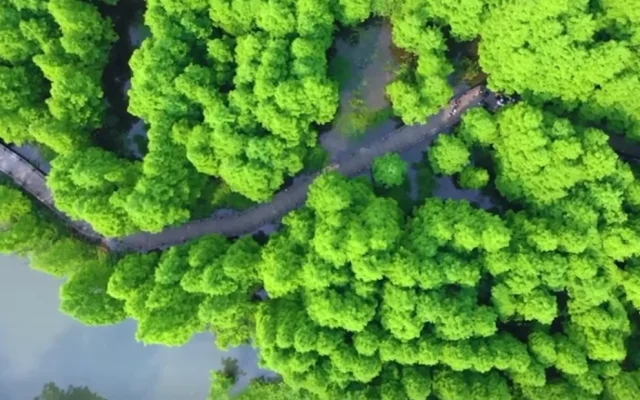
Step out of the car and the mountain breeze hits you at 26°C. Back in Chengdu, it’s 35°C right now. This is Yunding Mountain (云顶山) in Jintang (金堂), a free summer hiking getaway just outside the city.
Here’s the thing — this isn’t just a cool escape. It’s a place where a temple rose from ashes, where a stone city held off an army for 15 years, and where a birdcage carved from solid rock has stayed spotless for centuries. Ready to lace up your shoes?
The First Glimpse: A Birdcage That Time Forgot
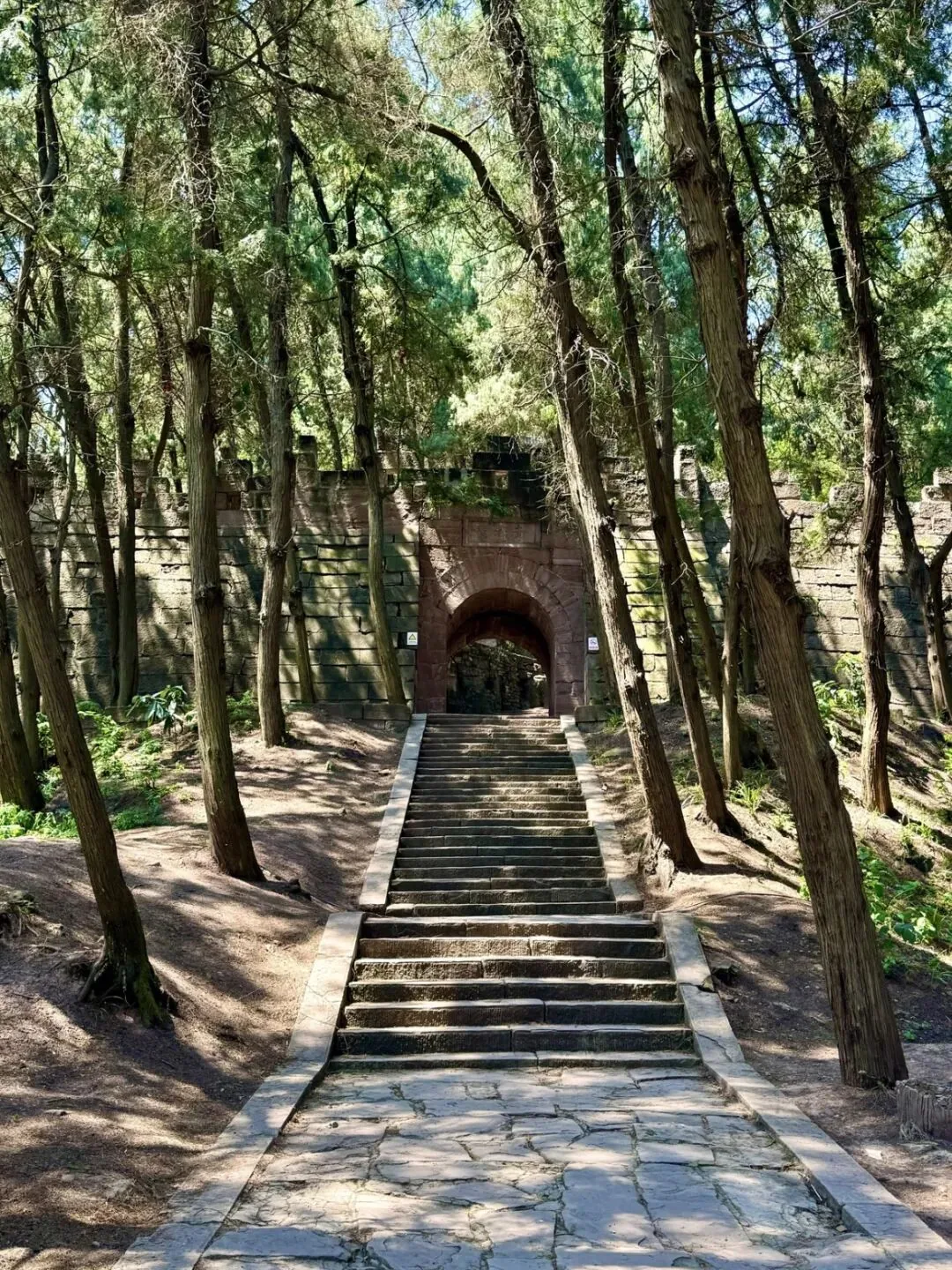
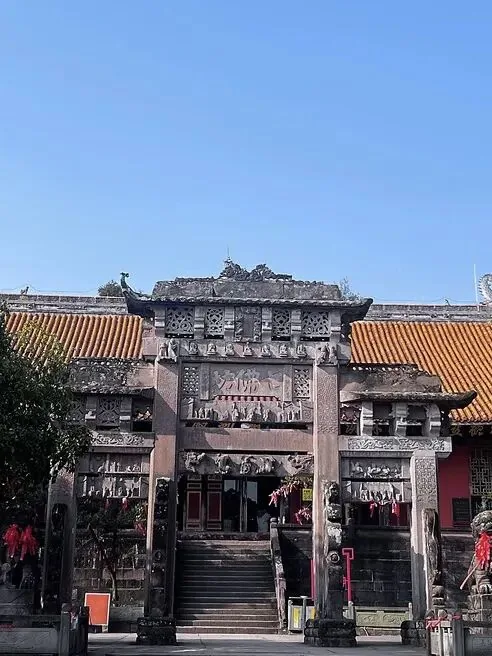
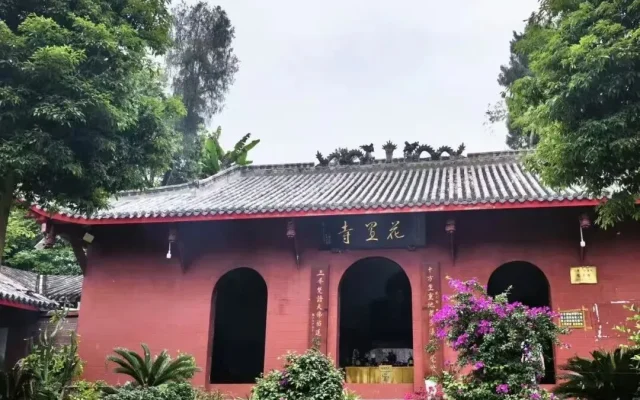
Walk up the mountain path, and ancient cypresses slice the sunlight into tiny pieces. After about 40 minutes, you reach the gate of Ciyun Temple (慈云寺).
Step through, and the first thing you see is a stone archway. On top sits a birdcage carved from a single piece of stone — hollowed out, intricate. For hundreds of years, not a single bird dropping has landed on it. The stone walls nearby are covered in graffiti, but this birdcage stays clean, as if freshly washed.
Stand there long enough, and a phrase comes to mind: “Birds don’t land, dust doesn’t cling.”
That’s just your first look at Yunding Mountain. The real story — the heart-stopping part — is still ahead.
From Ashes to Sanctuary: The Temple That Wouldn’t Die
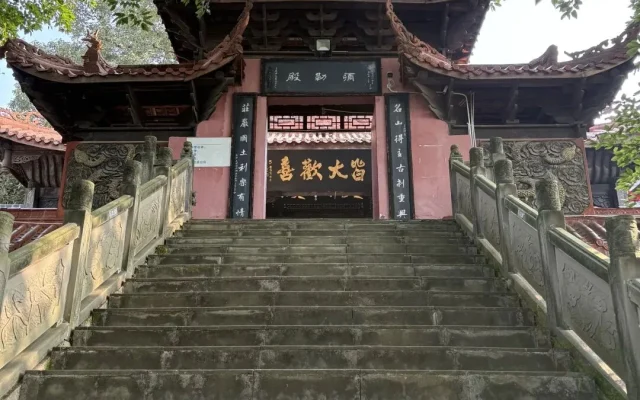
Turn from the archway and walk a few steps inward. You’re now at the Mahavira Hall (大雄宝殿).
The bluestone slabs in front are laid out neatly. Wind passes through the temple door, and all you hear are your own footsteps. Under every single slab lies scorched earth from over 300 years ago.
In the late Ming Dynasty, Zhang Xianzhong (张献忠) came. According to the Jiaqing Jintang County Gazetteer: “The rebel’s poison spread; every famous temple and ancient monastery in Shu was put to the torch.” One fire, and everything was gone.
Ciyun Temple was originally built during the Southern Qi and Liang dynasties. Lu You (陆游) visited and wrote: “Leaping on my horse to Cloud Peak, I want to call out to the flying immortals.” Then, after the fire, nothing was left.
In the 7th year of the Kangxi reign (1668), a monk named Zhuyi arrived. He had wandered for over ten years and finally returned to Yunding Mountain. Standing on the scorched earth, he decided to stay. The county gazetteer records: “Cut the dense vines of vexation, clear the nameless weeds.” In plain terms: stop overthinking, just get to work. He carried stones himself, mixed mud himself, through wind and rain.
Later, Fu’an took over, then Xiangfang continued the work, and Qingchan rebuilt the mountain gate. Generation after generation, they built for over a hundred years.
A temple rising from ruins isn’t a miracle. It’s one unwilling heart, plus another unwilling heart. When enough unwilling hearts gather, a temple grows again from the rubble.
The Couple Trees: Silent Witnesses to a Millennium
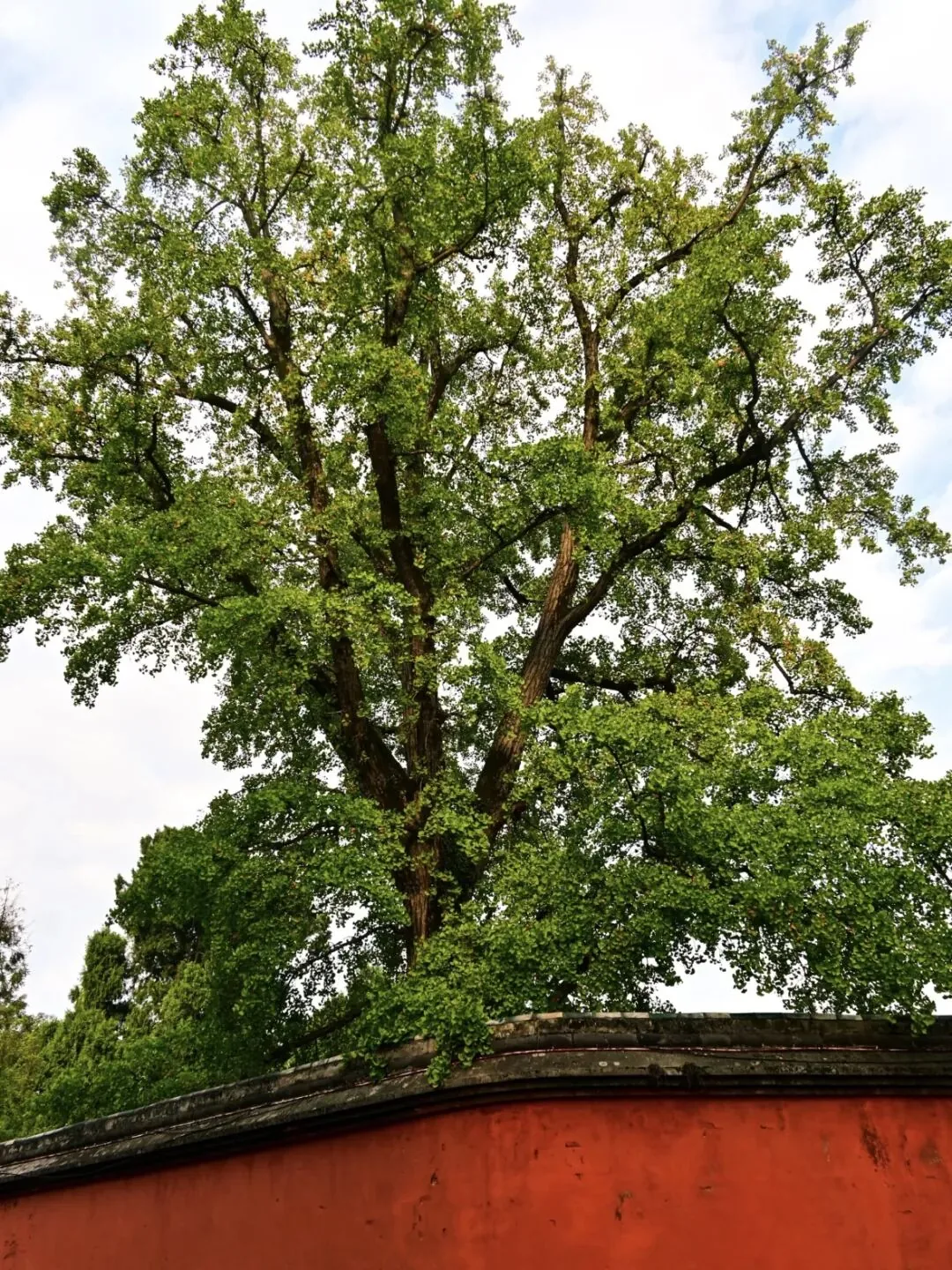
Leave the Mahavira Hall and head behind the temple. Two ginkgo trees stand there — one female, one male. Locals call them the “Couple Trees.” They’re so thick that three people with arms outstretched can barely wrap around them.
In summer, the trees are lush green. Stand beneath them, look up, and sunlight filters through the leaves in tiny fragments.
A sign beside them says the trees are “nearly a thousand years old.” They were here when the Song Dynasty built the city walls. They were here when Zhang Xianzhong came. They were here after Ciyun Temple burned down. Fire has scorched them, earthquakes have shaken them, warhorses have galloped past them. They never speak. But standing together, they are the answer.
The View That Opens Your Soul: Little Three Gorges
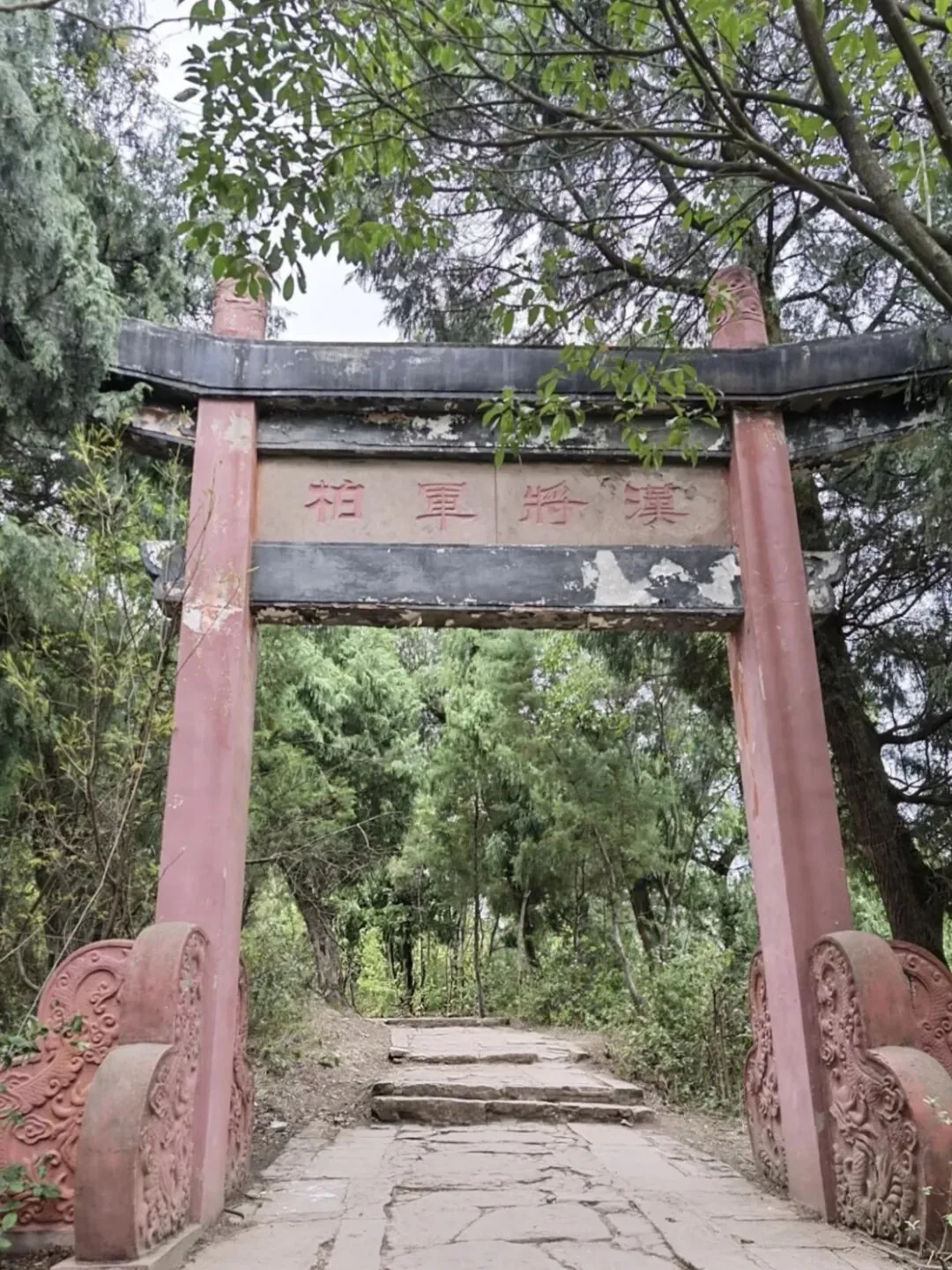
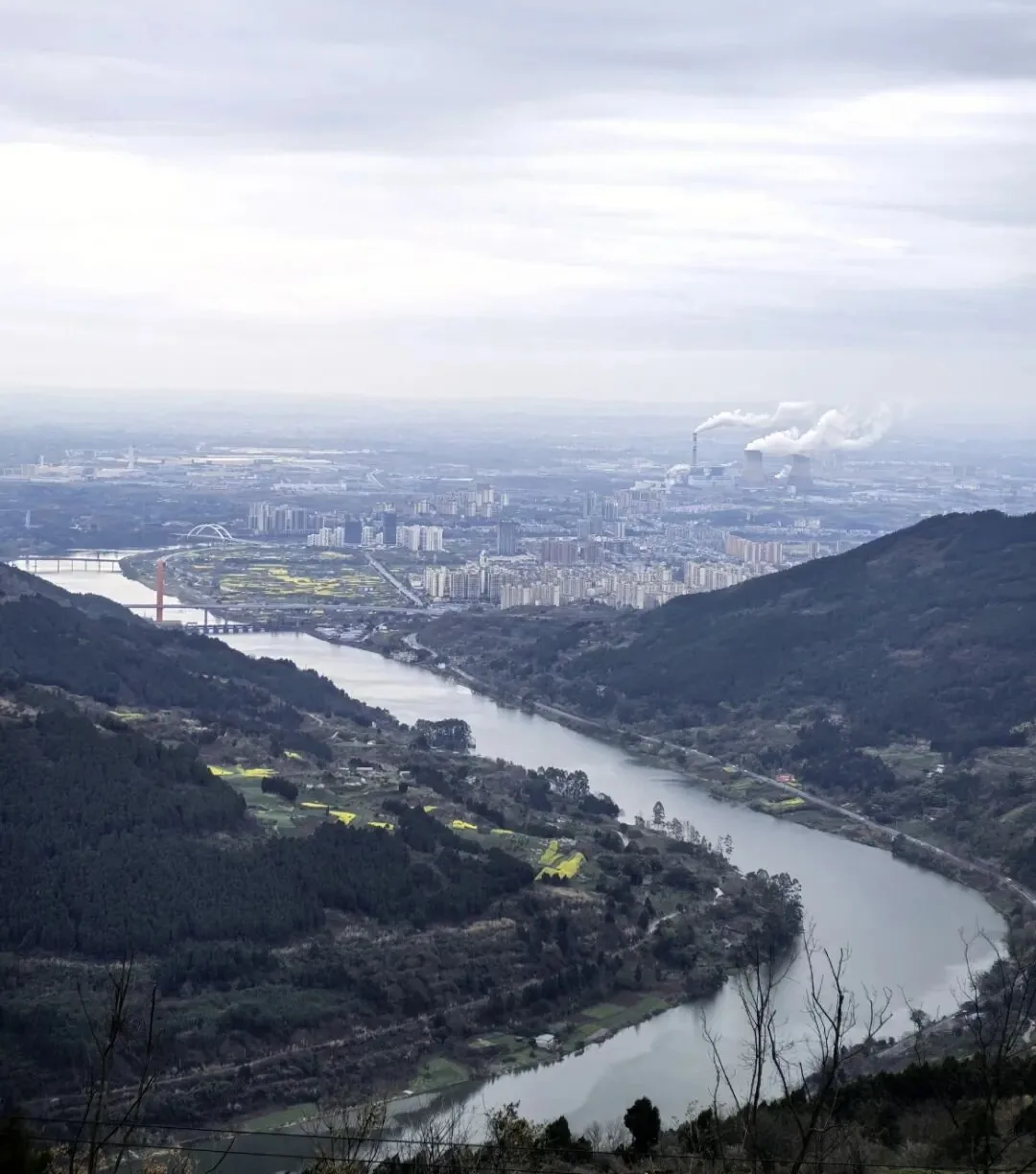
Exit the temple gate and head toward Egongbao (鹅公包). The path narrows, the ancient cypresses thicken, and cicada song drifts down from the treetops — not noisy, just present.
Among the forest, a stone archway stands quietly, inscribed with “Han General Cypress” (汉将军柏). Stone steps stretch deep into the woods. Legend says that when Zhao Yun (赵云) stationed troops here, his warhorse was startled and uprooted the tree. He replanted it with his own hands. One archway, one tree — a Three Kingdoms dream that’s been passed down for a thousand years on Yunding Mountain.
A few more steps, and the view suddenly opens. The Tuo River (沱江) is right below, splitting the mountains and winding for ten li. This is what Jintang locals call their “Little Three Gorges.” Wind comes off the river, carrying moisture and the scent of grass and trees. The water is calm, as if nothing ever happened.
From Ciyun Temple to here is exactly 15 minutes. For river views, this is the best spot on the whole mountain.
Pro tip: The walk from the temple to this viewpoint is short and worth every step. Bring a light jacket — the river breeze can be cool even in summer.
The Wall That Held Back an Empire: Changning Gate
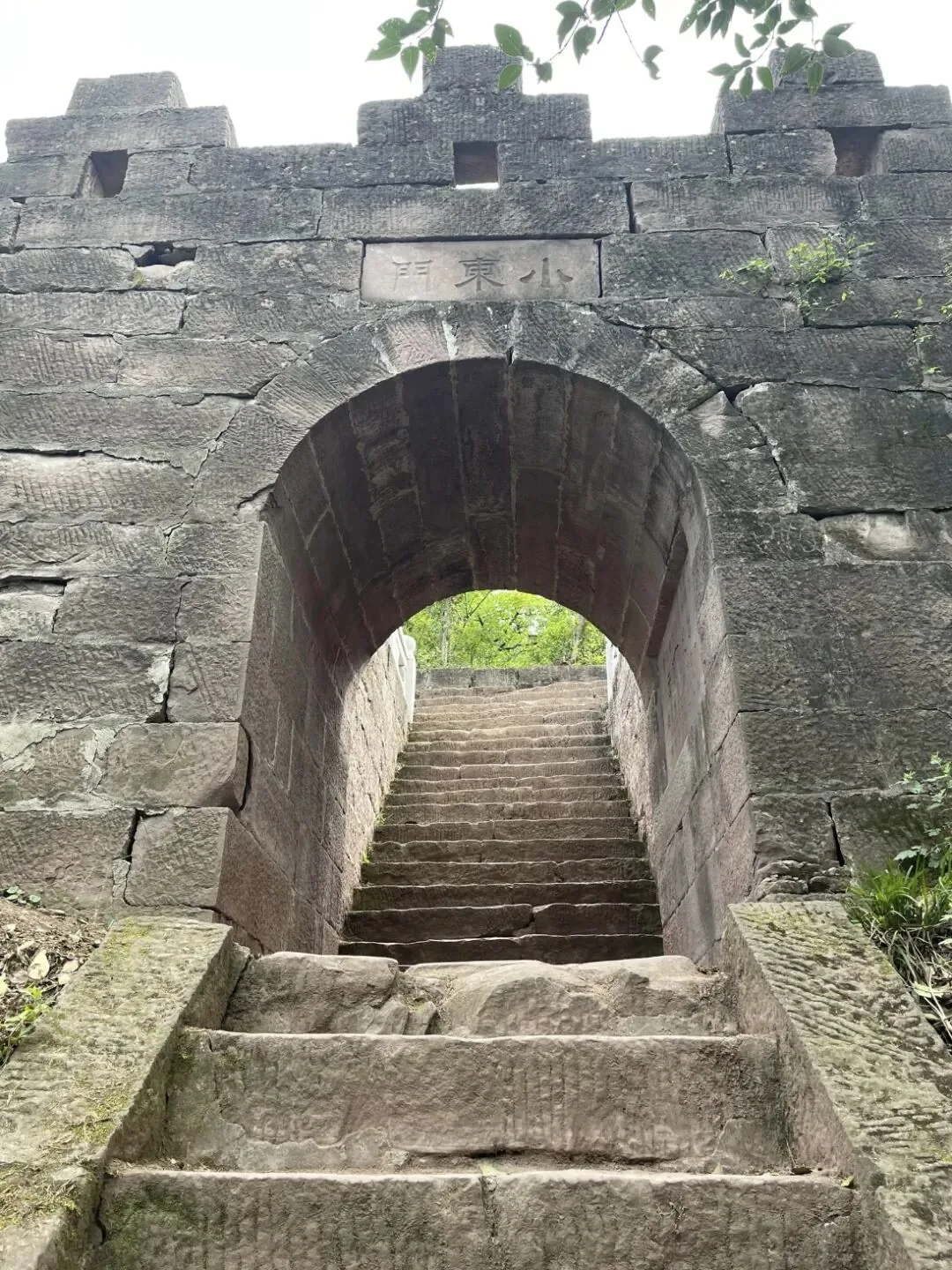
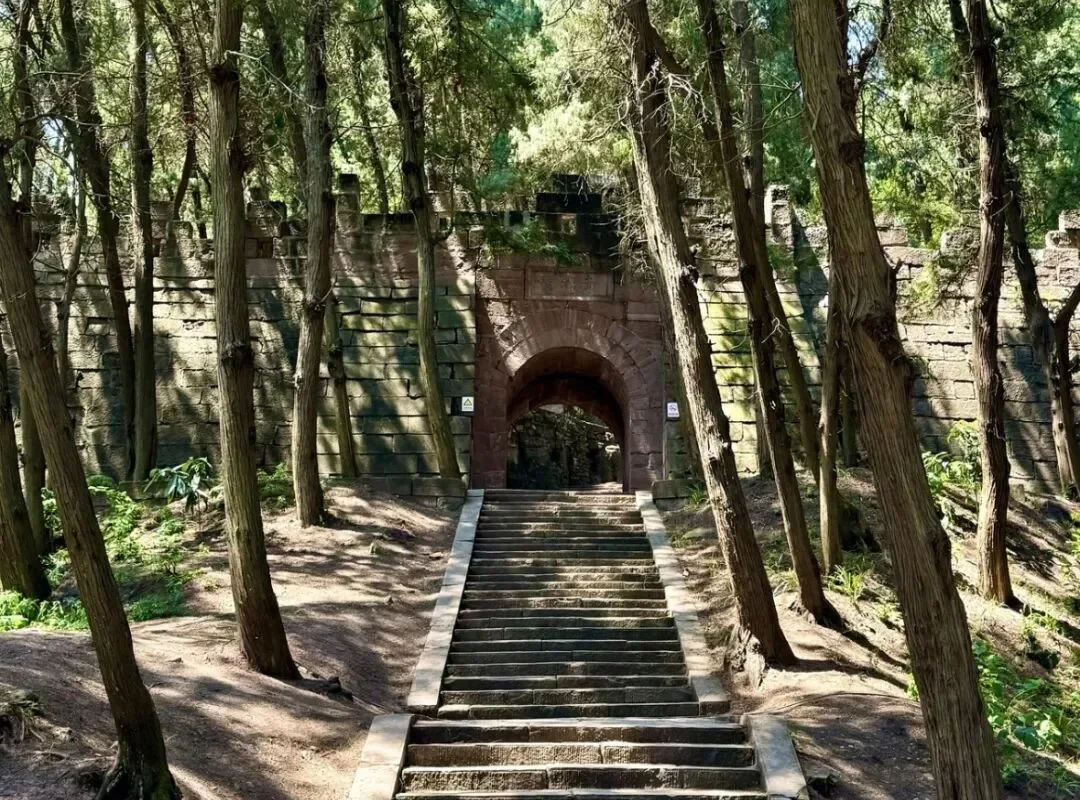
After the river view, turn back the way you came. On the way down, you’ll pass the same wall you saw on the way up — Changning Gate (长宁门).
In the 3rd year of the Chunyou reign of the Southern Song (1243), the famous general Yu Jie (余玠) brought 8,000 soldiers here. They built a full ring of stone walls following the mountain’s contours. Together with the Diaoyu City in Hechuan, it became one of Sichuan’s most critical defense lines. This wall held off the Mongol invasion for a full 15 years. The History of Song records that Yunding Stone City ultimately “fell when food ran out.” On the day the supplies were cut off, what were the soldiers thinking? No one knows.
Stand in the gate arch and press your fingers against the stone — rough, cold. Your fingertips trace the chisel marks, left by some stonemason 800 years ago. He didn’t leave his name. But he left a wall. Walls outlive names.
Wind rushes past from behind, moaning, then scatters into the forest.
800 years ago, the soldiers defending the city looked at the same river. 300 years ago, Monk Zhuyi stood here looking at the same scorched earth. Now you stand here, seeing the same wind, the same quiet.
Practical Guide: Hiking Yunding Mountain
Getting There
- Navigation: Set your map to Yunjinli Leisure Farmhouse (云锦里休闲农家乐). It’s a 1-hour drive from Chengdu. No entrance fee.
Hiking Routes
- Family Route (3 km, 2 hours): Fengjie Farmhouse (凤姐农家菜) → General Cypress → South City Gate → Ciyun Temple → return the same way.
- Classic Route (6 km, 3 hours, ~300 m elevation gain): Fengjie Farmhouse → South City Gate → Cannon Platform → Ciyun Temple → Xiaoyao Flat → back to start.
- Challenge Route (9 km, 4 hours, ~550 m elevation gain): Yunjinli → Yuanjue Ancient Temple → North City Gate → Seven Buddha Rock → Egongbao → Ciyun Temple → Cannon Platform → back to start.
Trail Conditions
Mostly stone slab paths and stone steps, with some dirt trails.
Food
- Ciyun Temple vegetarian meal: 15 RMB (11:30–12:30, free for children).
- Cold noodles and ice jelly available at the temple gate.
- Farmhouses along the way offer meals.
Tips
- Bring mosquito repellent.
- Keep quiet inside the temple.
- Pet-friendly.
- Stay safe and leave no trace.
Local insight: The vegetarian meal at the temple is simple but satisfying — and the timing is strict. Arrive hungry and on time.
A Closing Thought
As you leave, the birdcage on the Seven Buddha Archway (七佛坊) still turns gently in the wind, making a faint creaking sound, like time counting for you. The scorched earth that Monk Zhuyi saw 300 years ago has grown trees, a temple, and another group of people willing to stop and stay.
Birds don’t land, dust doesn’t cling. Some kinds of cleanliness, even time can’t take away.