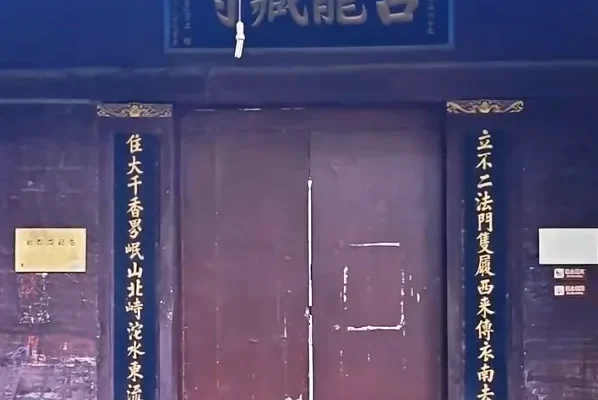
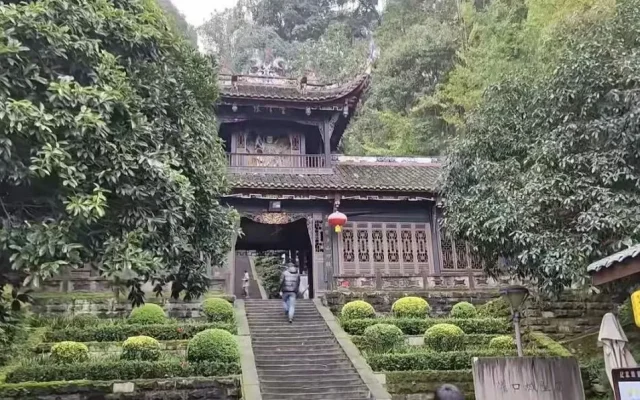
If you’re tired of those sprawling modern parks — the ones with endless lawns, scorching summer sun, and zero classical Chinese charm — you’re not alone. There’s something special about the old-school gardens, and Xinfan East Lake (新繁东湖) in Xindu District is a perfect example. It’s quiet, ancient, and packed with literary history.
Here’s the thing: this isn’t the Donghu Park in Jinjiang District, downtown Chengdu. Same name, totally different place. Xinfan East Lake has been around for over a thousand years, and its historical depth and serene atmosphere are something no modern park can replicate. That’s why it’s survived for centuries.
Why This Ancient Garden Matters
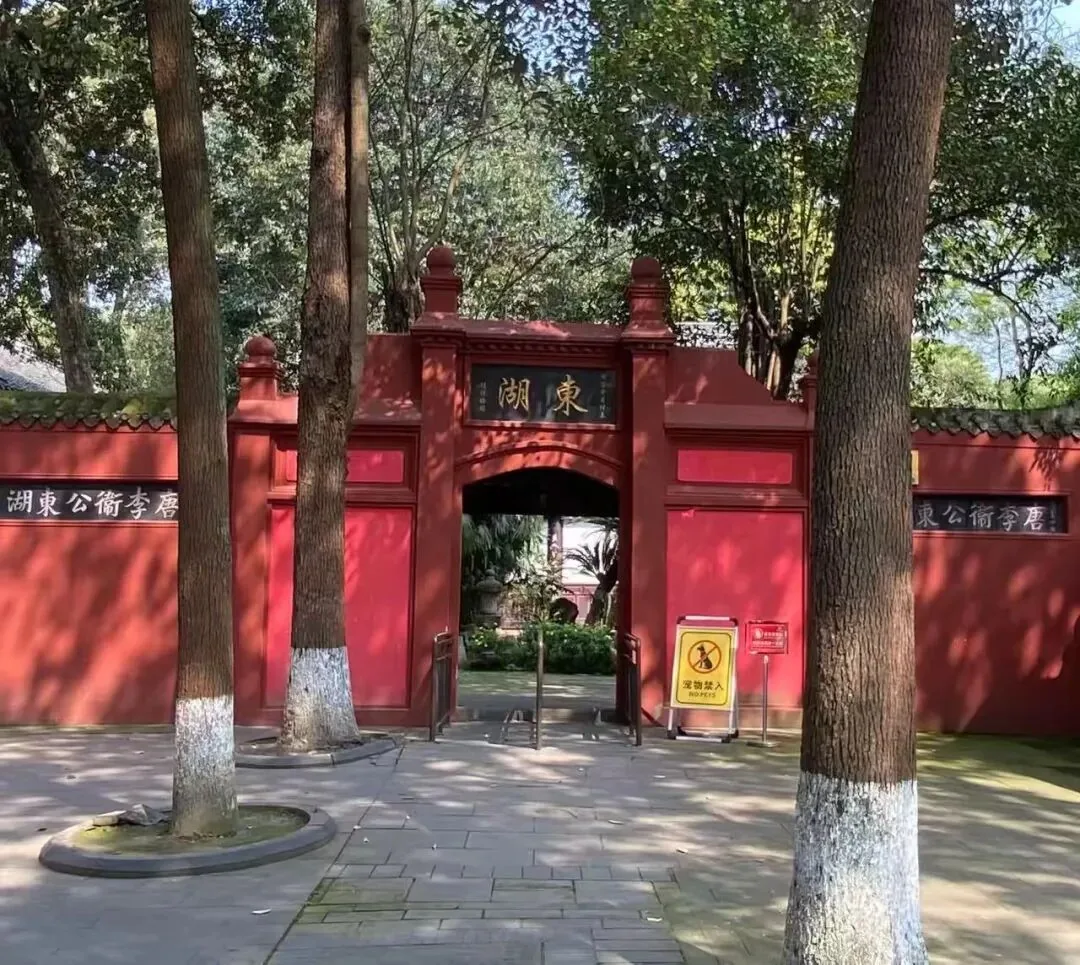
Xinfan (新繁), historically known as “Fanyi” (繁邑), was once a big deal. It was the “Xin” in the top five counties of the Chengdu Plain — “Wen, Pi, Chong, Xin, Guan” (温郫崇新灌) — not Xindu as many assume. These days, it’s a modest street-level town, but its legacy lives on in this remarkable garden.
Here’s a jaw-dropping fact: Xinfan East Lake is one of only two existing classical gardens in China that date back to the Tang Dynasty with verifiable historical traces. The other, Jiangshouju (绛守居) in Xinjiang County, Shanxi, is now just a rammed-earth platform and a pond. But Xinfan East Lake? It’s still a fully walkable, enjoyable classical park. That’s why it’s called the “only surviving Tang Dynasty garden in China” — and it predates the famous Suzhou classical gardens by over 400 years.
A Garden Born from a Tang Dynasty Statesman
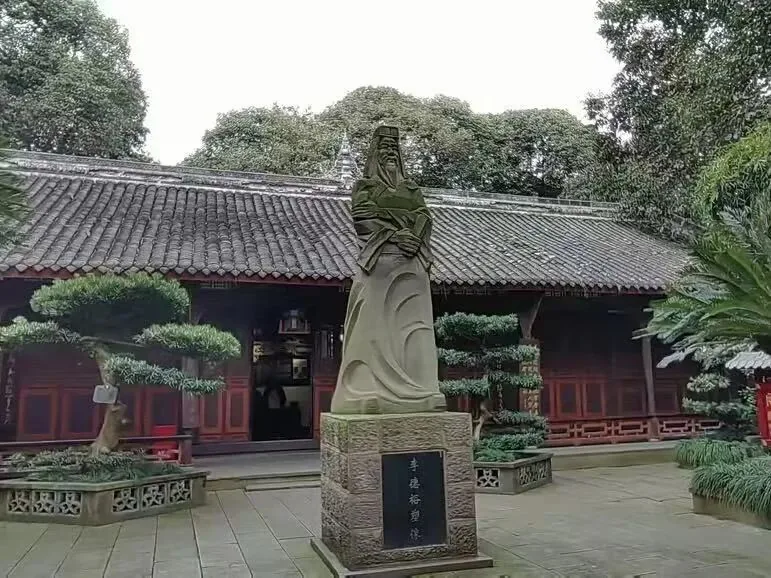
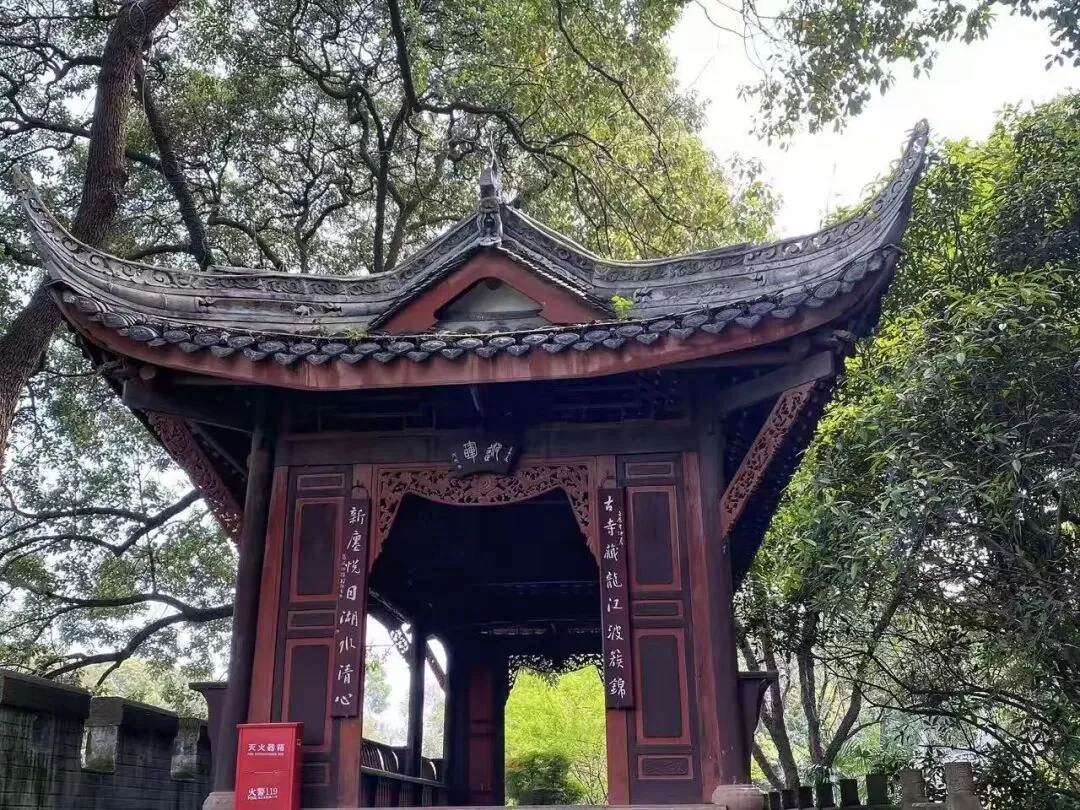
In the Tang Dynasty, the renowned prime minister Li Deyu (李德裕) fell out of favor and was sent away from Chang’an to serve as the county magistrate of Xinfan. He dug this lake east of the county office — hence the name “East Lake.” The park is compact, covering just 27 mu (about 4.5 acres), with water taking up a third of that, roughly 9 mu (1.5 acres). Unlike the intricate, ornate Jiangnan gardens, this is a classic Western Sichuan garden, rich in historical resonance. Over the centuries, literary figures like Li Deyu, Wang Yi, Mei Zhi, and Zhao Bian all visited, adding to its scholarly aura.
What to See at Xinfan East Lake
The Entrance and the Lake
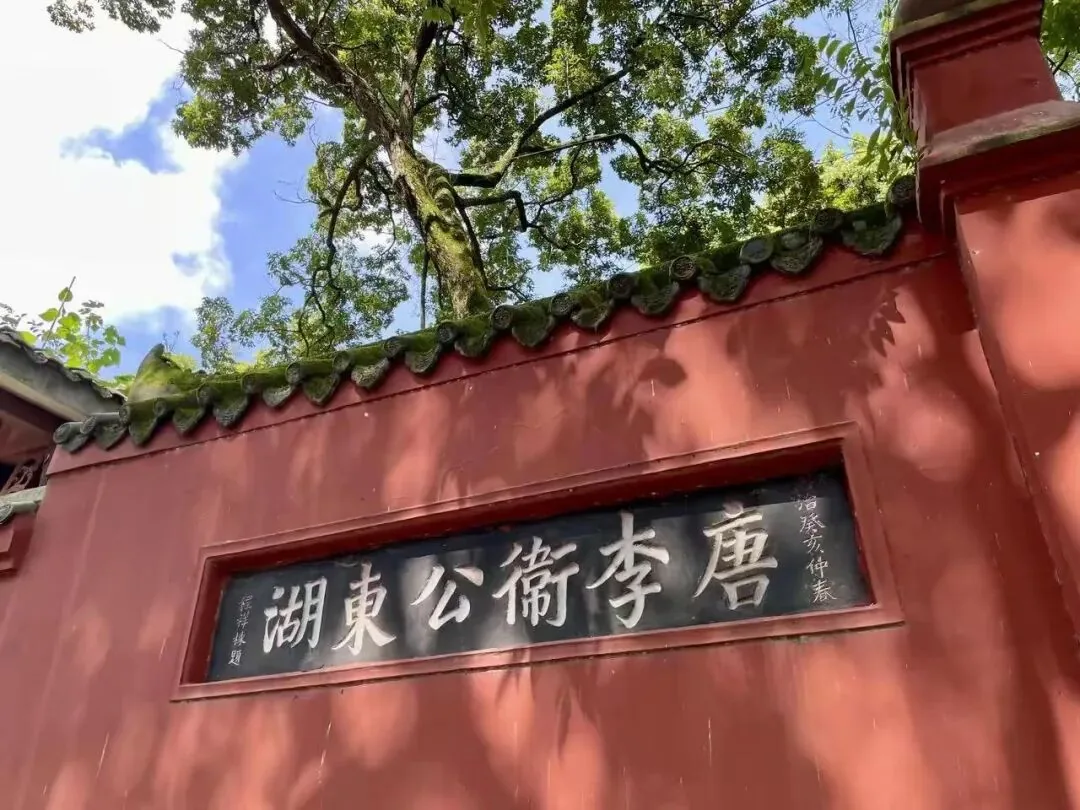
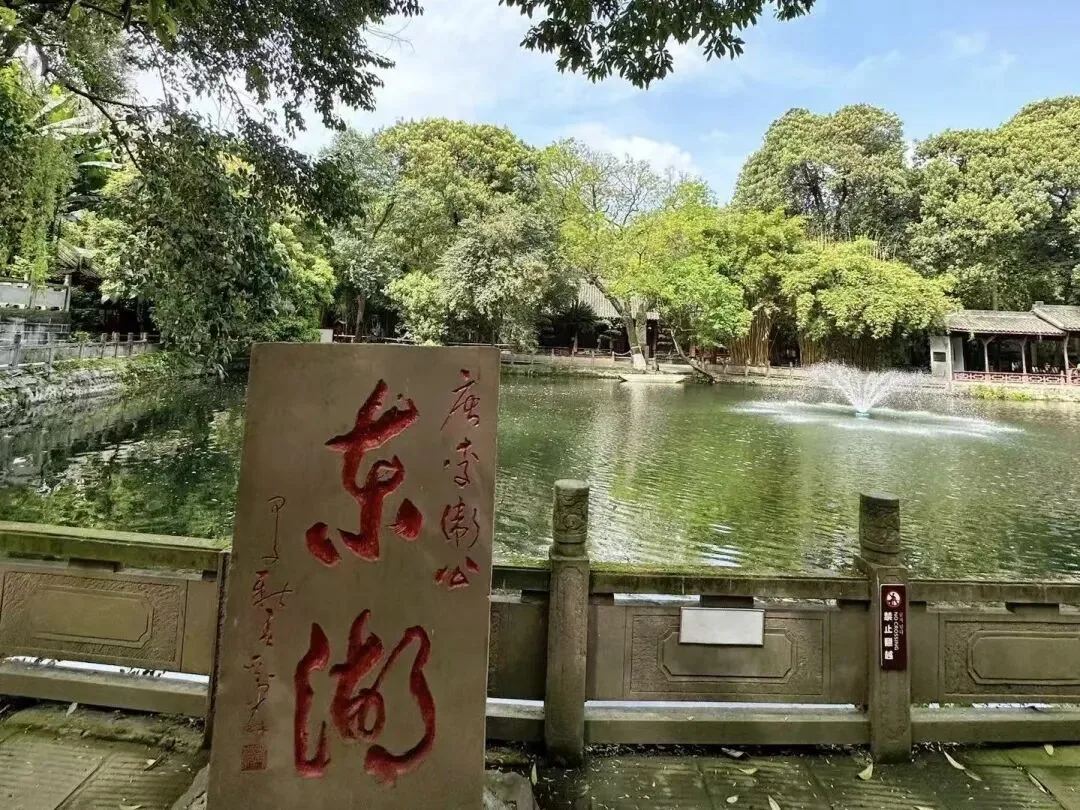
As you enter, you’ll see the characters “东湖” (East Lake) inscribed by Cheng Xiangdong, a county magistrate during the Tongzhi reign of the Qing Dynasty. The calligraphy is simple yet weighty. Flanking it are the prominent words “唐李卫公东湖” (Tang Dynasty Duke Li Wei’s East Lake). The lake water is channeled from the Qingbai River, and in summer, this place is a natural cool retreat. Towering camphor trees, ancient cypresses, and dense bamboo line the paths. A breeze skims the water, carrying the fresh scent of greenery and moisture — it’s pure relief.
The Three Islands and Their Pavilions
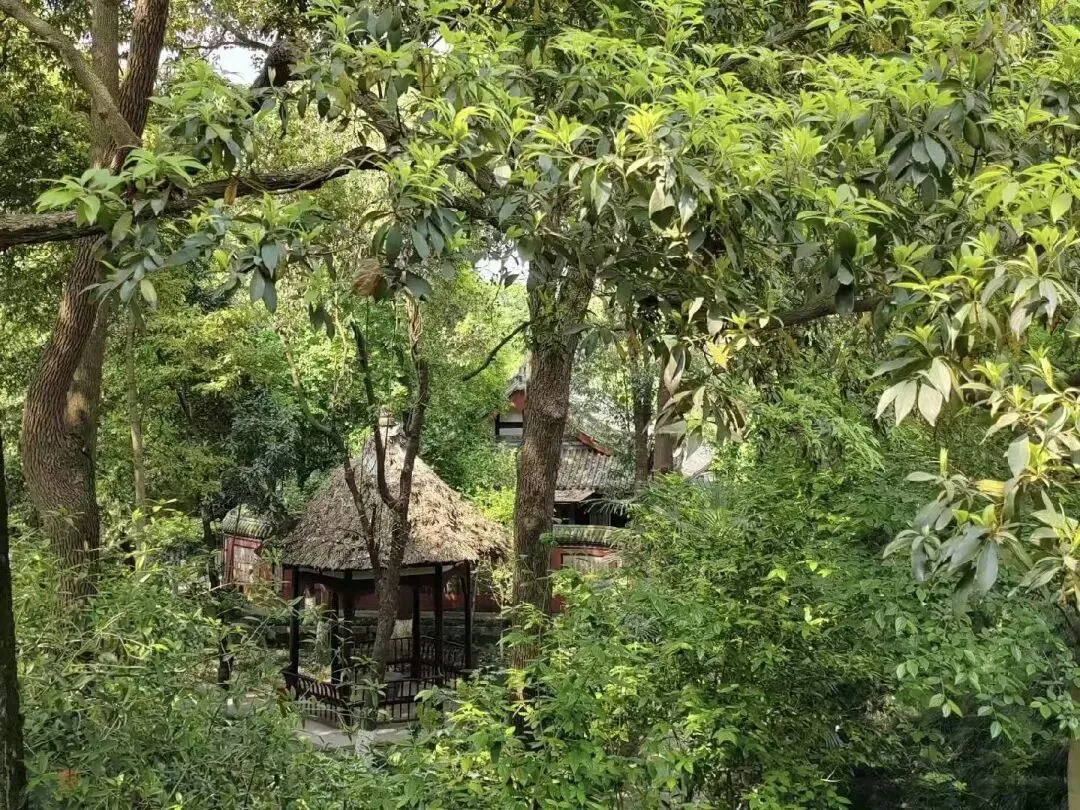
On three islands in the lake stand the Huaili Hall (怀李堂), the Ancient Cypress Pavilion (古柏亭), and the Chengxia Pavilion (城霞阁). There’s also a rockery called “Bat Cliff” (蝠崖), shaped like a bat resting on the water. Though man-made, it looks completely natural — a perfect example of the Tang Dynasty gardening philosophy: “Though made by man, it seems heaven-made.”
Halls, Shrines, and Memorials
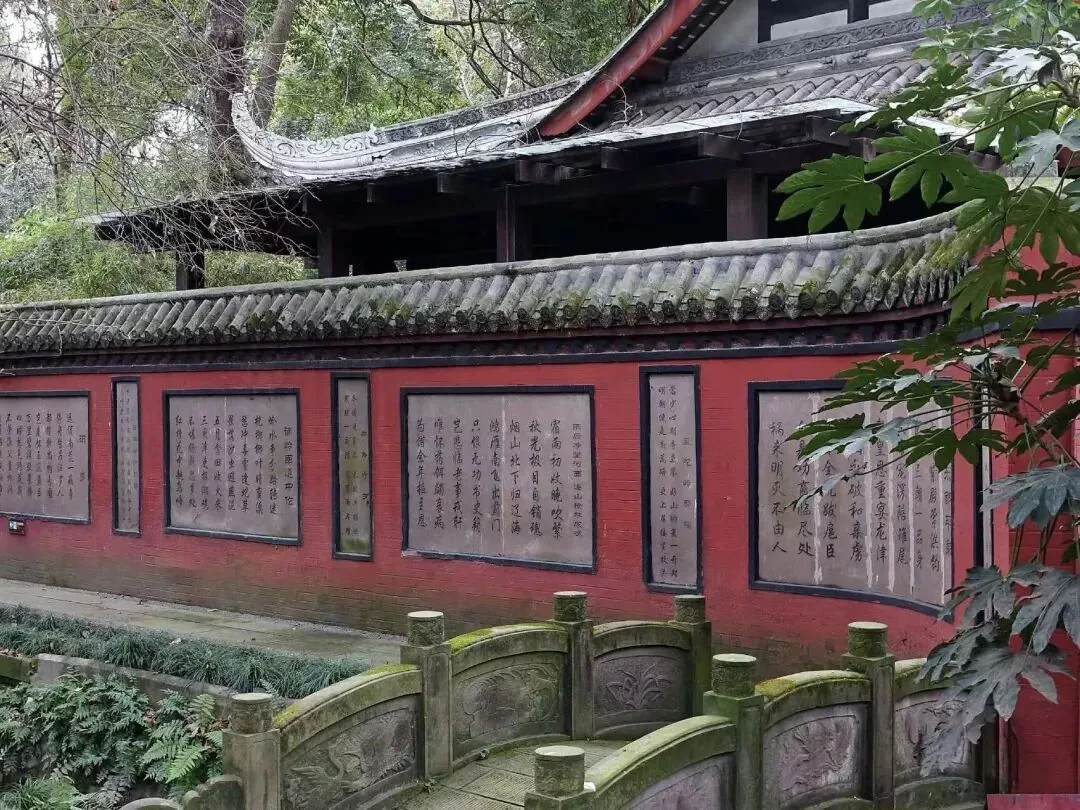
- Huaili Hall (怀李堂) sits at the heart of the garden, with a four-meter-tall statue of Li Deyu in front. The poet Li Shangyin once called him “a prime minister for the ages, a noble scholar of his time.”
- Sanxian Hall (三贤堂) honors three sages: Tang Dynasty prime minister Li Deyu, Northern Song Xinfan magistrate Wang Yi, and Northern Song scholar Mei Zhi.
- Qingbaijiang Tower (清白江楼) commemorates Zhao Bian, the Northern Song “Iron-Faced Censor” known for his integrity.
- Sifei Shrine (四费祠) honors the Fei family, who produced six virtuous scholars across four generations during the late Ming and early Qing dynasties.
Every building and plaque has its own story. The garden is dotted with over twenty Qing Dynasty stone inscriptions and more than thirty famous calligraphic couplets.
A Walk Through a Living Painting
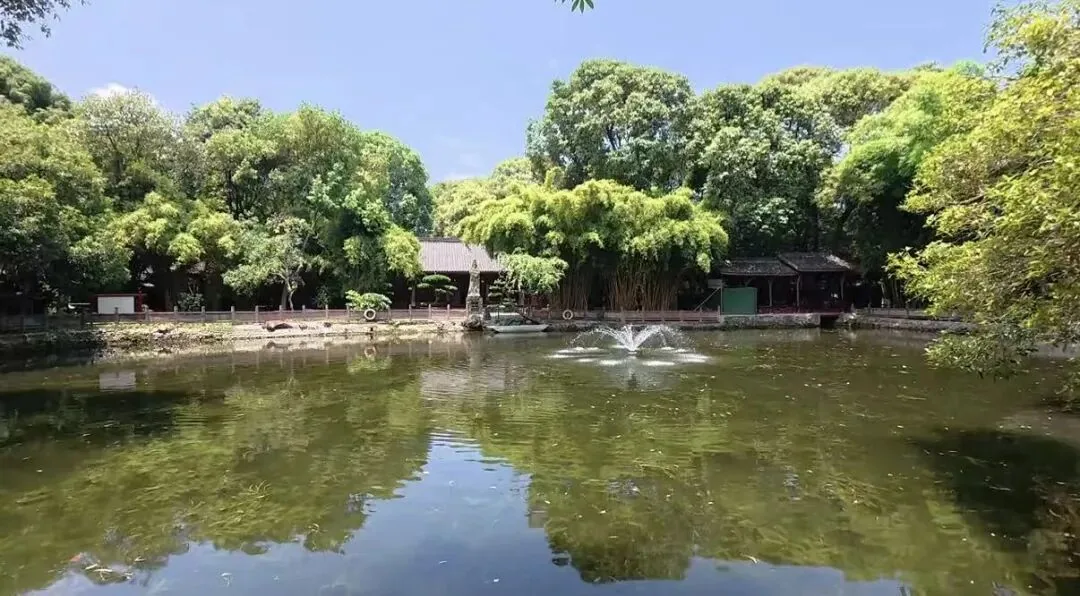
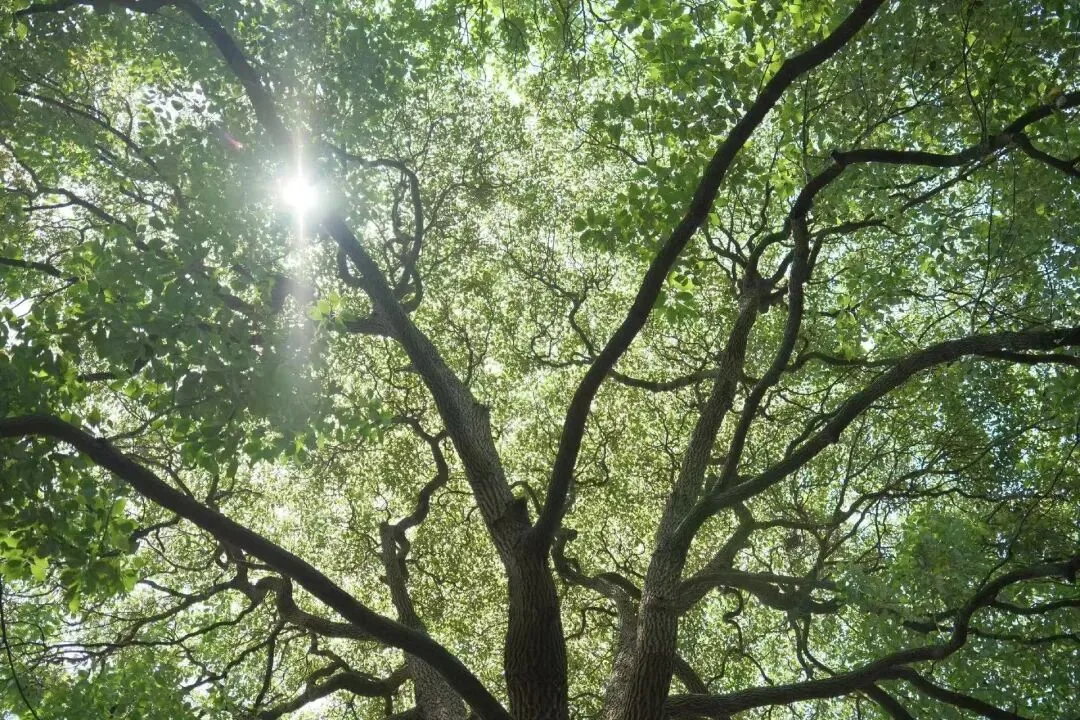
The layout is compact yet never crowded, intricate yet airy. The lake isn’t a vast, endless body of water — it winds and curves like a river with several bends, dotted with islands, bridges, and pavilions. Under the pavilions, lush vegetation and winding stone paths create a scene at every step. Keep an eye out for the Quancui Pavilion (蜷翠亭), Ancient Cypress Pavilion (古柏亭), and Banmei Pavilion (伴梅亭) scattered along the way.
Local insight: If city noise and stress are getting to you, this is the place to come. A slow stroll here has a way of smoothing out your mind.
Practical Info for Your Visit
Address
No. 112 Zhengxi Street, Xinfan Street, Xindu District (新都区新繁街道正西街112号). Important: Navigate to “新繁东湖” (Xinfan East Lake) — don’t accidentally end up at Jinjiang East Lake in the city!
Tickets and Hours
- Ticket price: 2 RMB — and it hasn’t changed in decades. You can re-enter multiple times in one day, making it an incredible deal.
Getting There
Take Metro Line 27 to Shifo Station (石佛), exit from Exit C2, then transfer to Bus X46 and get off at Jinlong Street 1st Stop (金龙街1站).
Food Nearby
Xinfan is a well-known food town in Western Sichuan. Don’t miss these local specialties:
- Huangji Douban Chaos (黄记豆瓣抄手) — wontons in spicy bean sauce
- Tuji Yerba (涂记叶儿粑) — steamed glutinous rice cakes
- Dengji Spring Rolls (邓记春卷)
- Xia Tofu Pudding (夏豆花)
- Qin Tihua / Yuji Yuangtang Tihua (秦蹄花/余记原汤蹄花) — pig’s trotter soup
- Wang Shugen Pressed Duck (王树根板鸭)
- Xinfan Pickles (新繁泡菜)
Pro tip: Arrive hungry and make a day of it — the garden is small enough to explore in a couple of hours, leaving plenty of time to sample the local eats.
A Timeless Escape
Xinfan East Lake may be off the beaten path, but that’s exactly its charm. It’s a place where history lingers in every stone and leaf, where you can step back over a thousand years without leaving Chengdu’s orbit. Whether you’re a history buff, a garden lover, or just someone craving a peaceful afternoon, this ancient gem is worth the trip.