Chengdu’s West Side Is Blooming: 300+ Acres of Flowers at Wangjiawan
September might just be the best month of the year in Chengdu. The summer heat is gone, the winter chill hasn’t arrived, and the breeze is light. The world is still green, but with splashes of color creeping in. It’s a beautiful season — and right now, there’s a spot on Chengdu’s west side that’s absolutely worth a visit. Why? Because flowers are everywhere, and so is color.
That spot is Wangjiawan Flower Sea (汪家湾花海) in Wenjiang, where pink muhly grass and sulfur cosmos are in full, fiery bloom.
Where Is Wangjiawan Flower Sea?
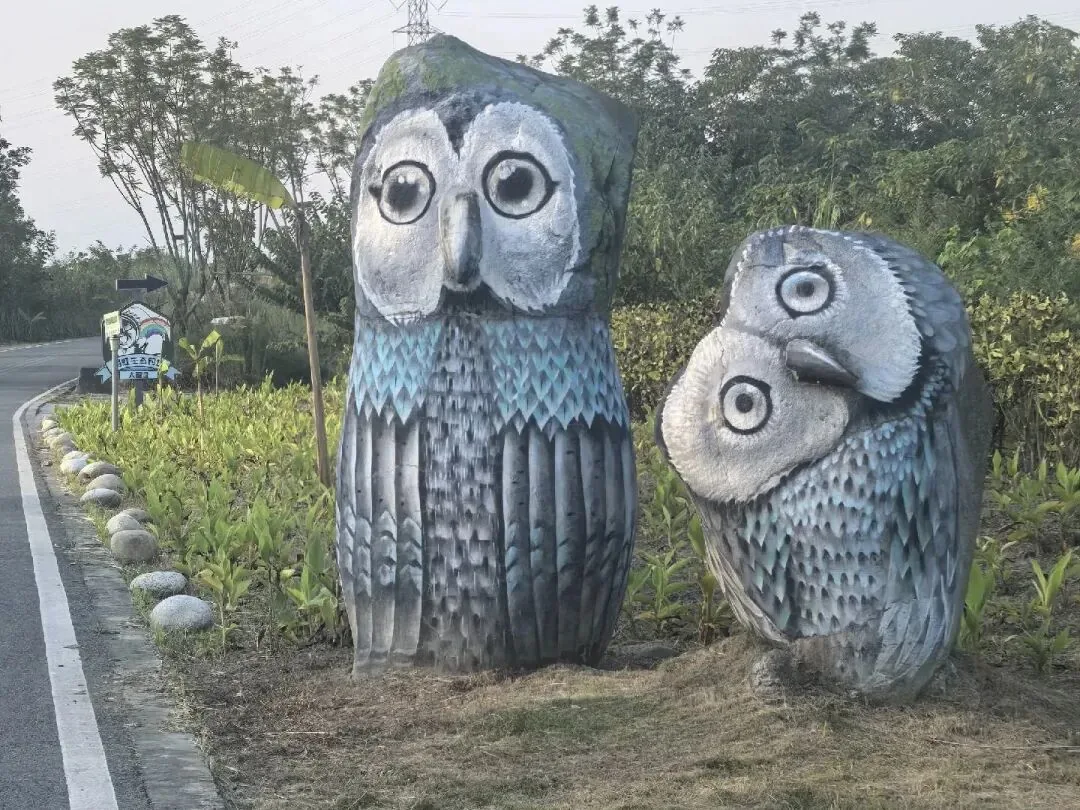
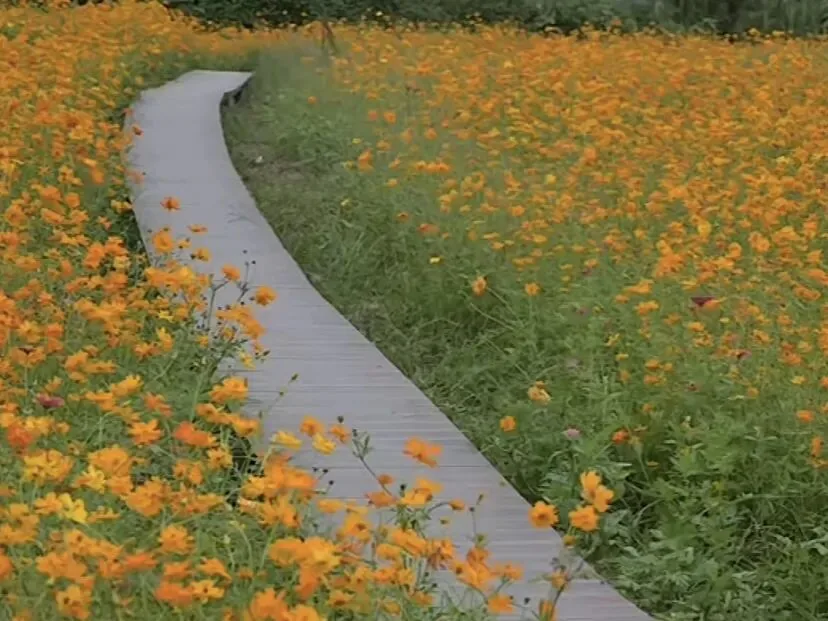
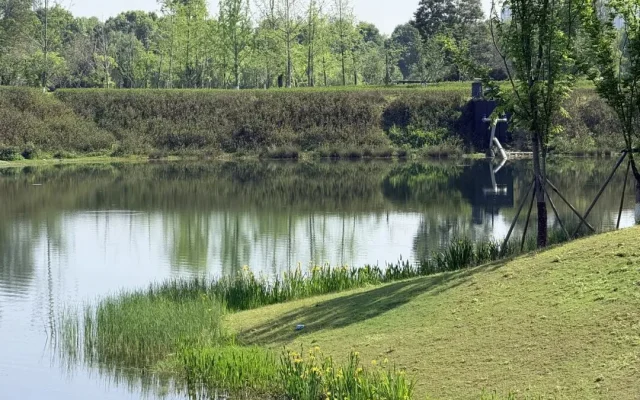
Wangjiawan Flower Sea sits in Shou’an, Wenjiang, right by the Minjiang River. It covers over 300 mu (about 50 acres). Wenjiang has long been considered Chengdu’s most livable area, but finding a good spot to actually go out and enjoy has never been easy. In September, Wangjiawan becomes Wenjiang locals’ own backyard garden — no need to travel far to soak in a sea of flowers.
It wasn’t always this pretty. Years ago, this area was over a thousand mu of tidal flats — not suitable for growing crops. Then, 8 years ago in 2018, Shou’an Town cleaned up the thousand-plus mu of flats and scattered flower seeds on about a hundred mu of idle riverbank land: things like gesang flowers, sunflowers, and yellow cosmos. Eventually, it bloomed into a flower sea. The area gradually expanded to over 300 mu, and now different flowers bloom in every season. Right now, the stars of the show are pink muhly grass and sulfur cosmos.
The Flowers You’ll See
Sulfur Cosmos (黄秋英)
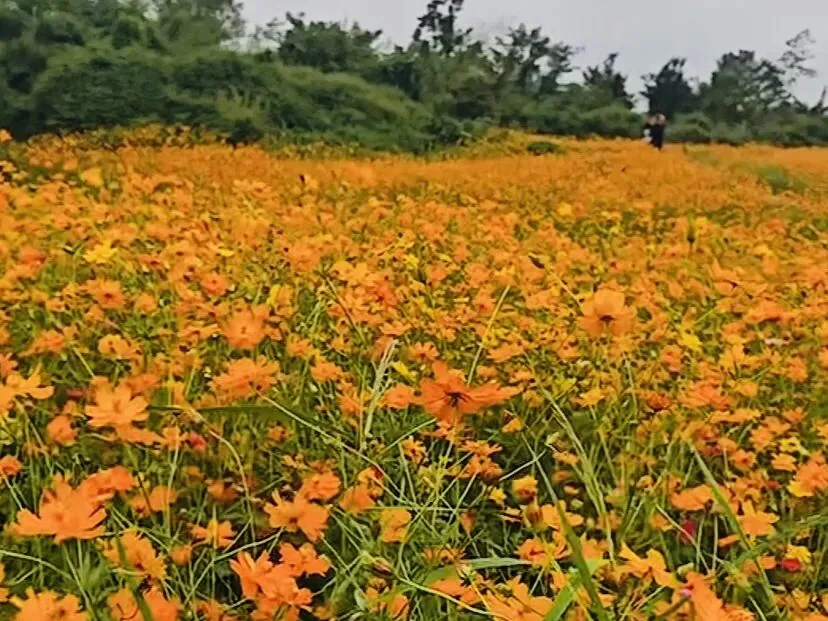
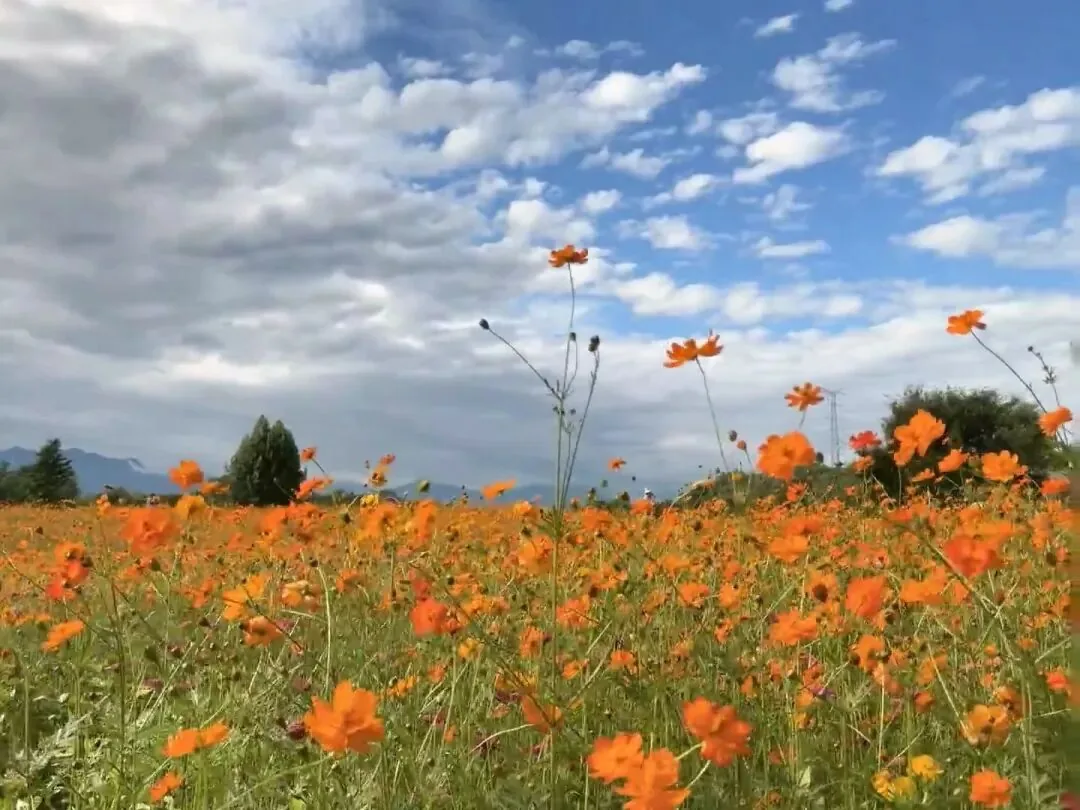
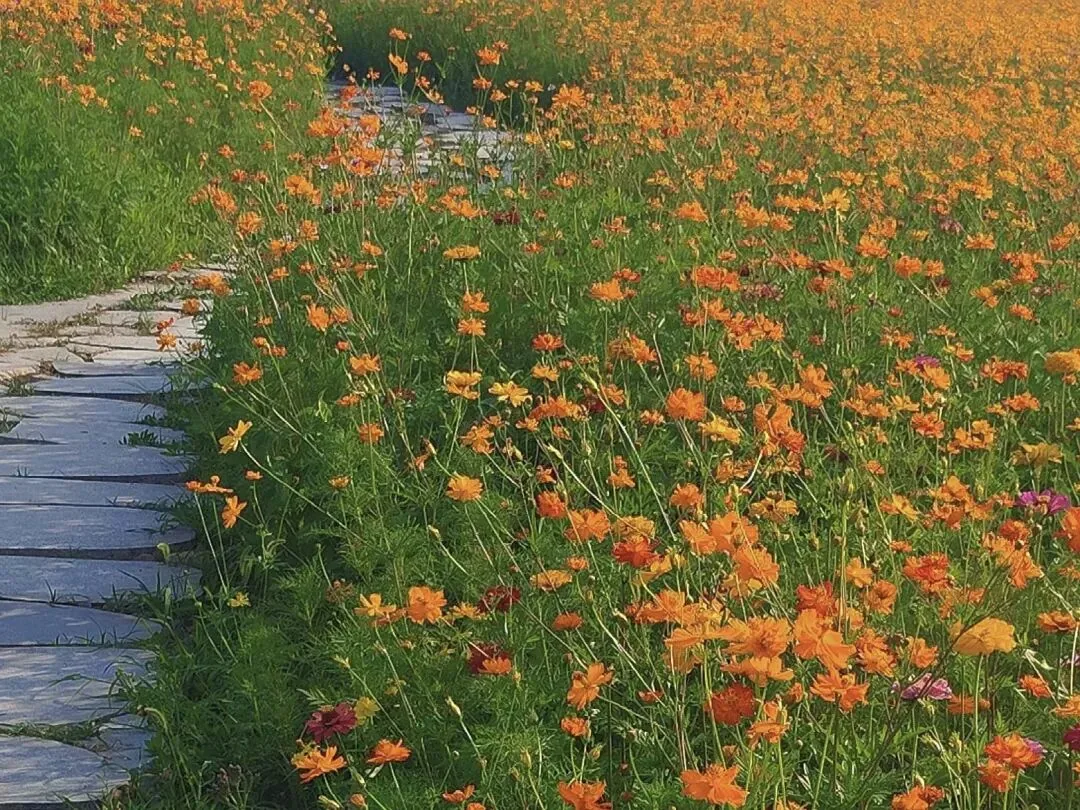
Walk along the dirt field paths and you’ll see swaths of sulfur cosmos — locals prefer to call it huang qiuying (yellow cosmos). It’s a type of chrysanthemum, the kind of flower that blooms gloriously with just a little sunshine. Its color resembles burning sulfur, which is how it got the slightly chemical-sounding but actually quite romantic name “sulfur cosmos.”
Sulfur cosmos is a cousin of the common cosmos, but its colors are more intense — orange-yellow, orange-red, more vivid. Whole fields of it bloom with abandon, petals layered like little suns. Bright yellow and orange-red flower heads crowd together, stems standing straight, leaves with fine serrated edges, each plant topped with two or three open blooms, looking lively in the sun. When the wind blows, the whole field ripples in waves, one layer chasing another into the distance. Wooden boardwalks and footpaths are set aside in the flower fields, so you can walk deep into the sea of flowers. Photos here look really good.
Pink Muhly Grass (粉黛乱子草)
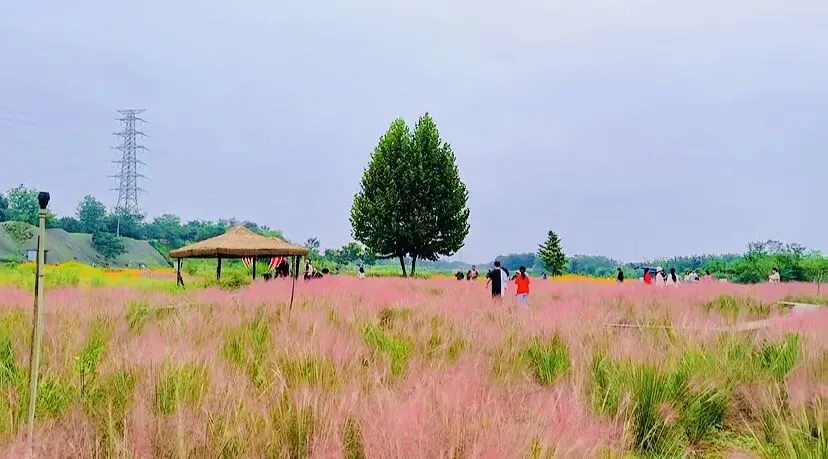
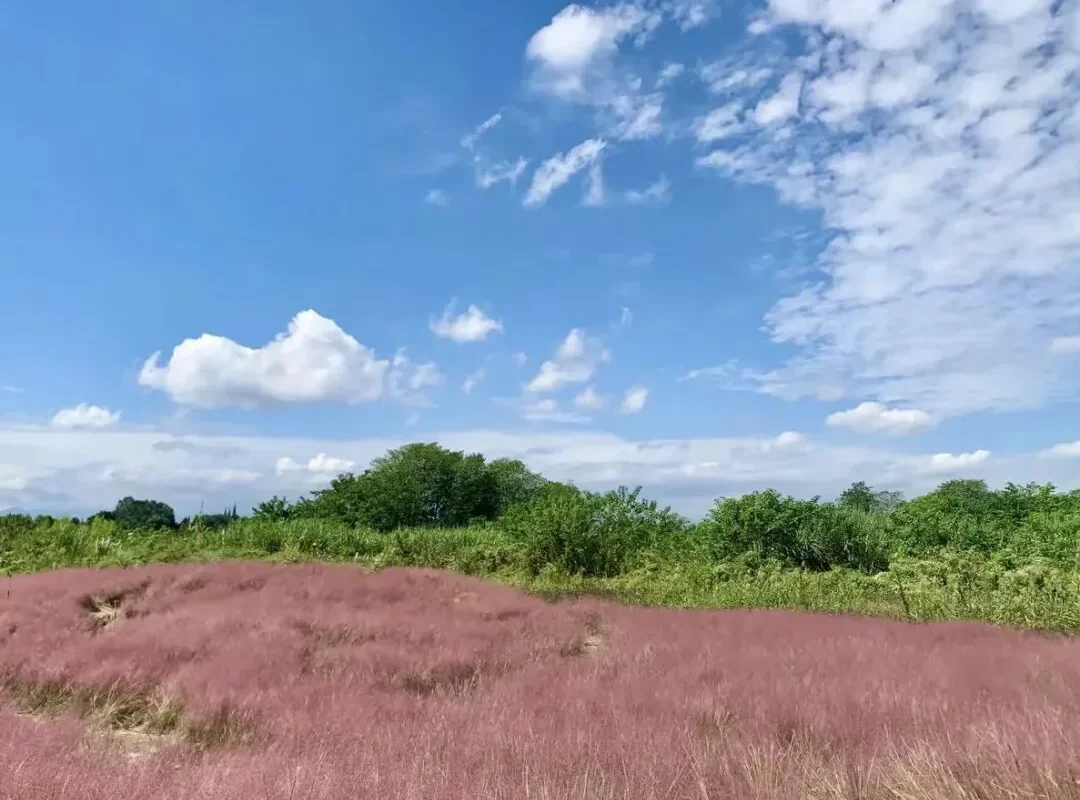
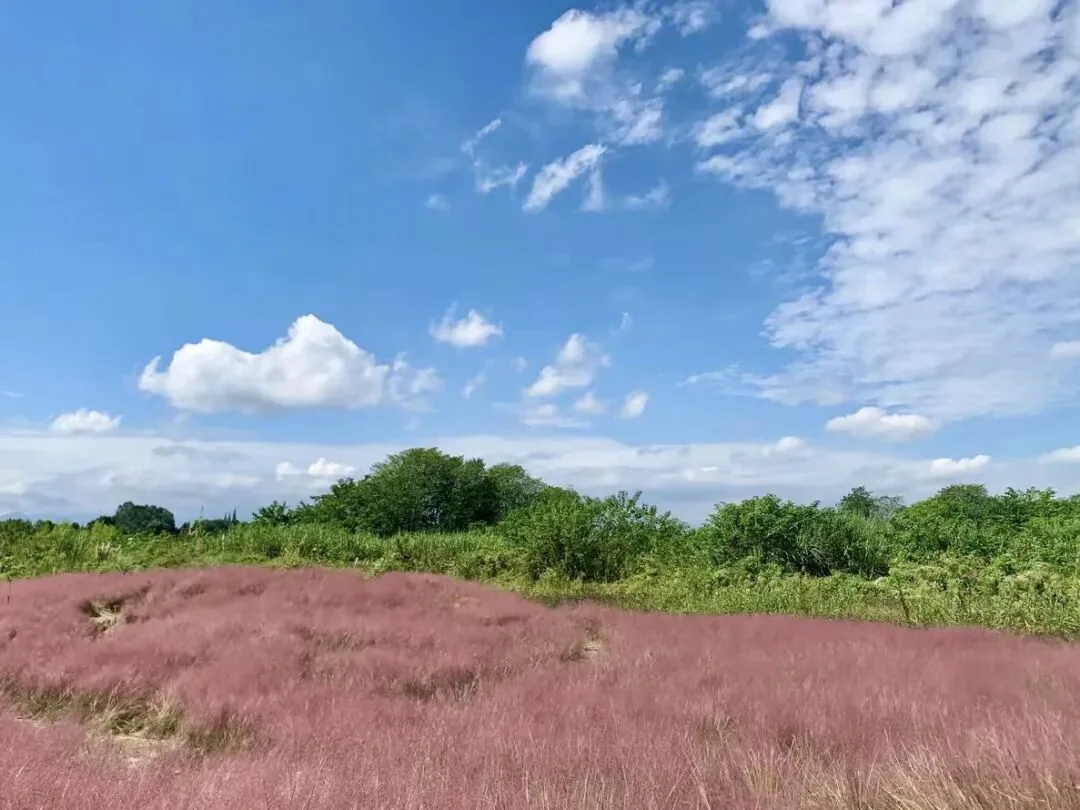
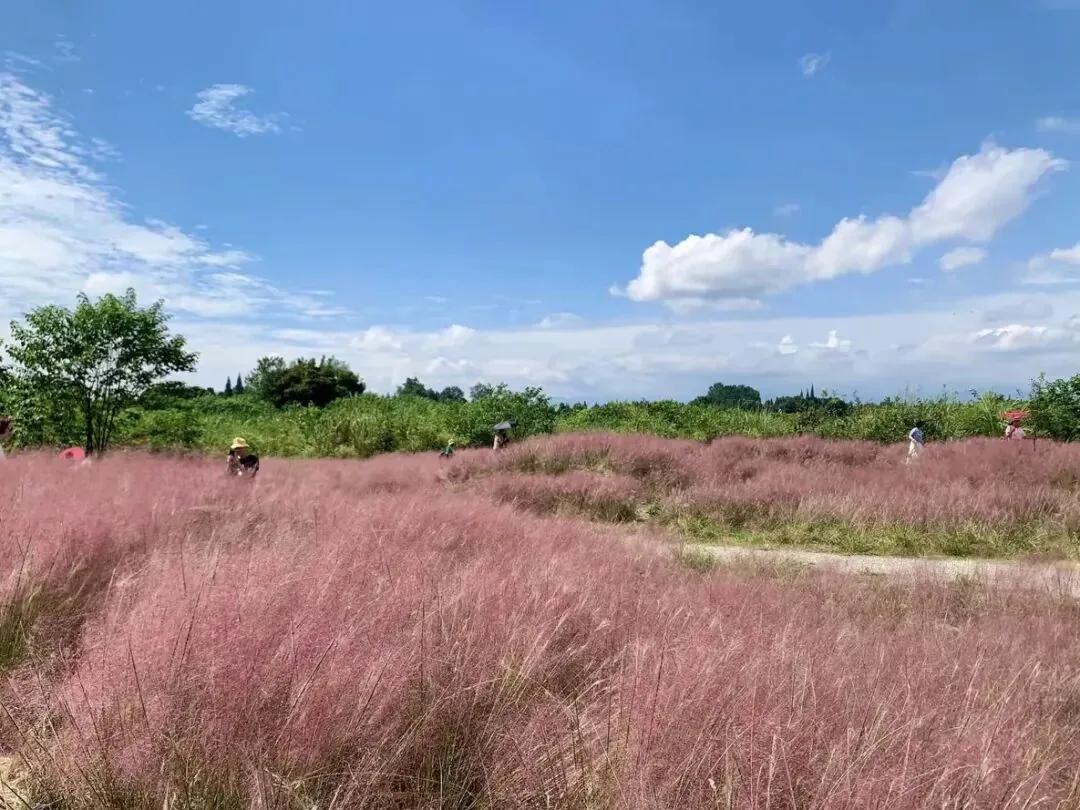
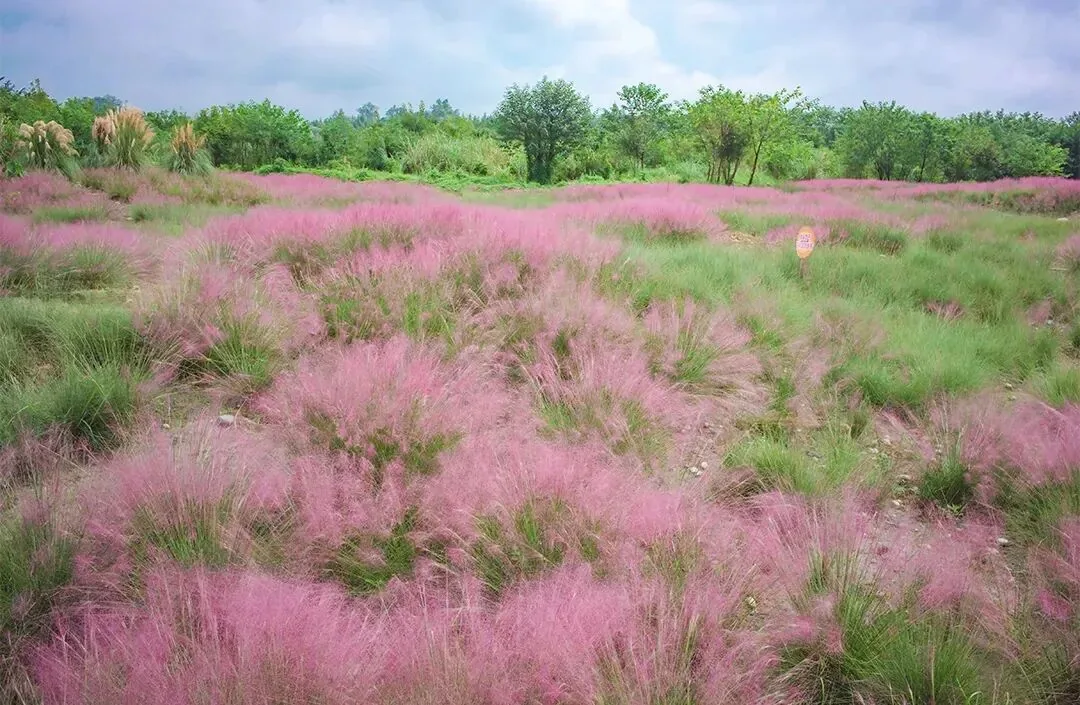
Not far away is a completely different scene: pink muhly grass. If sulfur cosmos is a bright flame in September’s flower sea, then pink muhly grass is a layer of pink mist floating on the earth. This is a flower spike native to North American prairies. After being introduced to China, people gave it this beautiful, gentle name because its spikes are pink and its appearance is soft and graceful. The best viewing period is September to November each year.
The beauty of pink muhly isn’t just its color — it’s also the “muhly” part, the messiness. Messy but orderly, that’s what makes it muhly grass. Walking along the fields, a single plant looks unremarkable. You need to see it in large patches — hundreds of plants crowded together form a cloud of mist. From a distance, it’s soft and beautiful. The stems crisscross and grow at angles, not lined up or standing in rows. When the wind comes, they all lean in one direction; when it stops, they slowly stand back up. That layer of pink moves, one layer pressing another. Standing on the boardwalk, you’re half-submerged in the flower sea — every casual shot looks great.
What Makes It Special
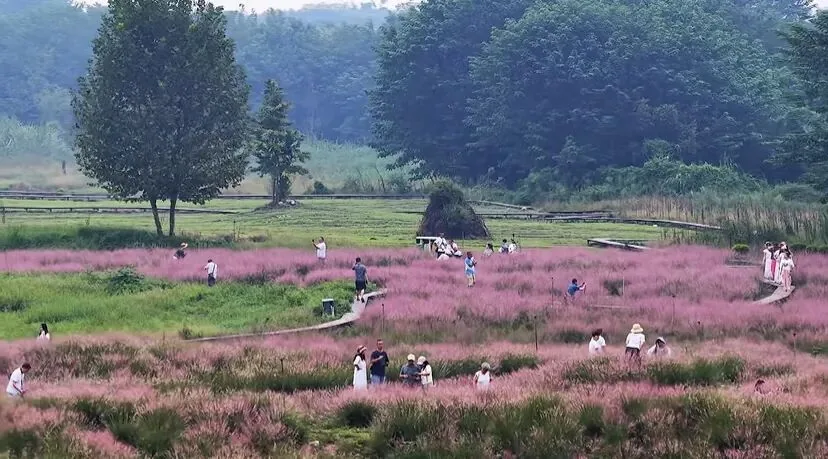
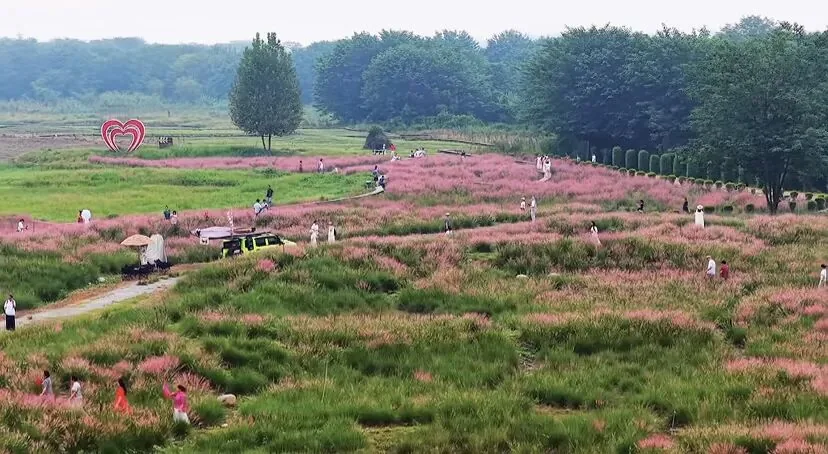
With sulfur cosmos on one side and pink muhly on the other, Wangjiawan is at its most beautiful right now. Boardwalks and footpaths run through the flower fields, so you can walk deep in. The air carries a faint scent of grass and trees. From a high vantage point, it’s even more impressive.
The area around the flower fields has gotten lively too. There are small stalls selling tangyou guozi (sugar-oil rice balls), fried potatoes, cold noodles, and grilled sausages. Local villagers also set out their own vegetables and fruit.
Local insight: Many people say internet-famous flower fields always “die in the light” — beautiful in photos, disappointing in person. But Wangjiawan is different. There’s no deliberate theme-park construction here; everything is natural. While enjoying it, though, it’s best to walk along the boardwalks and edge paths, and not trample or damage the flowers.
“Plants have their own nature; why seek to be plucked by admirers?” We only need to appreciate them. This September has had a lot of rain, but luckily the weather has been decent these past few days — it’s worth a trip.
Practical Info
- Address: Wangjiawan Flower Sea, Shou’an Town, Wenjiang District, Chengdu (search “汪家湾花海” in your navigation app)
- Tickets: Free
- Transport: Take Metro Line 19 to Jinxing Station, Exit C. Transfer to bus W24 or W32 → get off at Yushi Changkou Station, walk 500 meters to the flower sea entrance.
So if you’re in Chengdu this September and craving a little color without leaving the city far behind, Wangjiawan is your spot. Go on a sunny day, bring your camera, and take it slow.