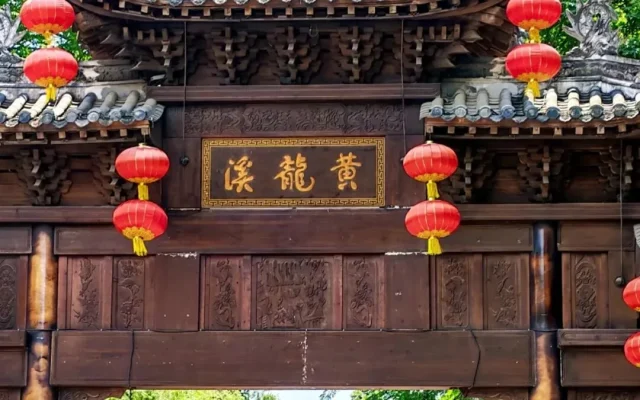
If you’ve been seeing photos of red spider lilies (石蒜, shísuàn) popping up all over Chengdu this September — at Qinglong Lake, Culture Park, and beyond — here’s a surprise: one of the most unexpectedly beautiful spots for seeing wangcong shrine spider lilies is a quiet, ancient garden to the west of the city. Welcome to Wangcong Shrine (望丛祠, Wàngcóng Cí), a place that feels like stepping back into the Shu kingdom.
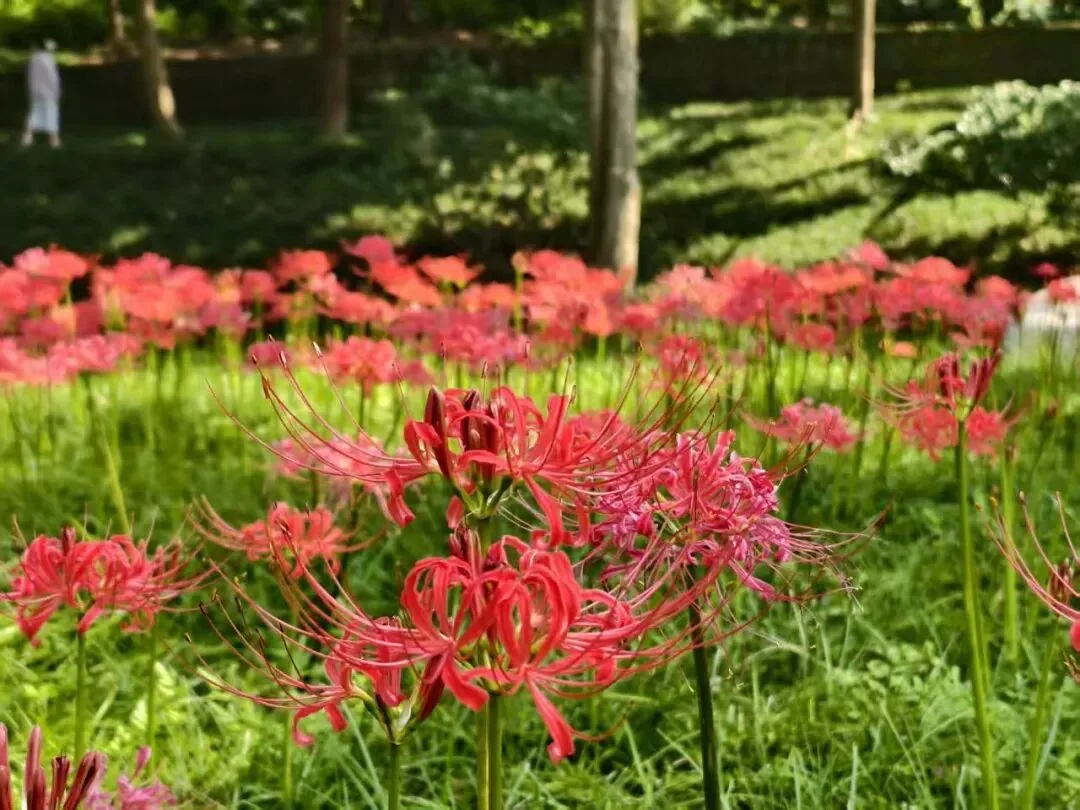
This isn’t just another park. Wangcong Shrine has stood for over 1,500 years, earning the title “First Shrine in Shu” (蜀中第一祠). It’s the only ancient shrine in Southwest China dedicated to two rulers: Emperor Wang (望帝, Wàng Dì) and Emperor Cong (丛帝, Cóng Dì) — the legendary leaders who taught farming and tamed the floods, laying the foundation for the Land of Abundance. And in early September, its grounds become a sea of red spider lilies, creating a scene that’s equal parts romantic, poetic, and deeply atmospheric.
Why Everyone’s Talking About These Flowers
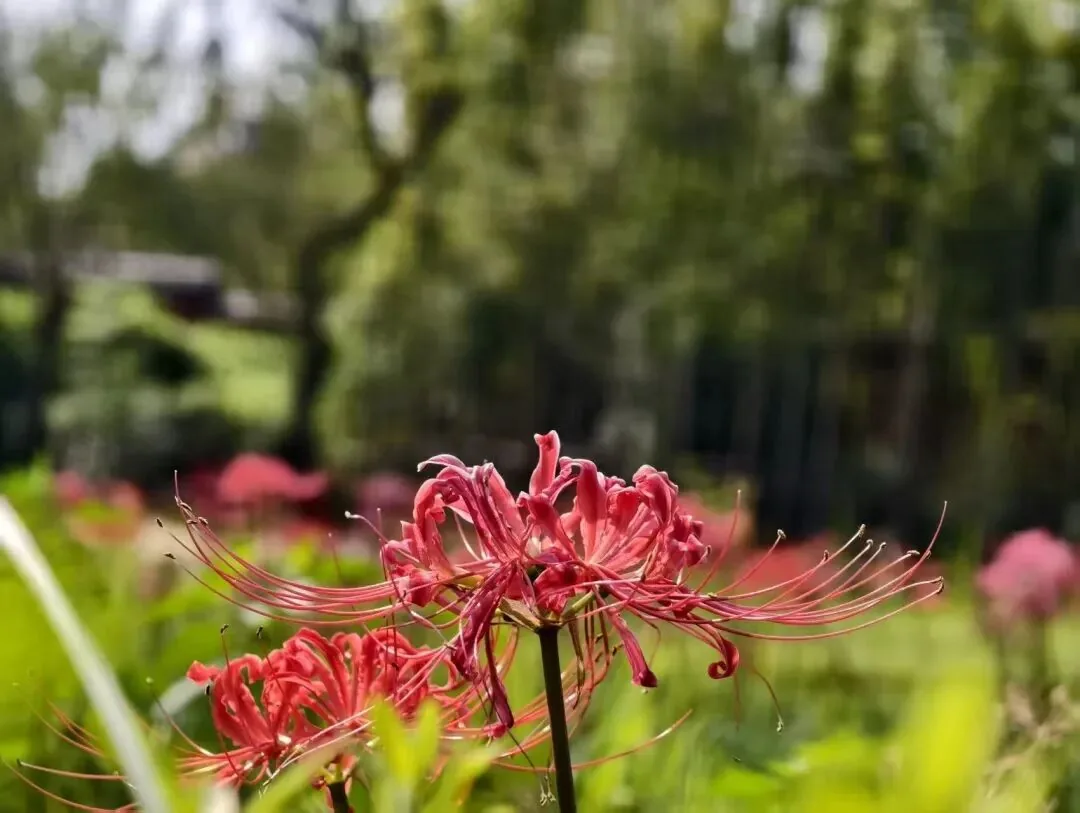
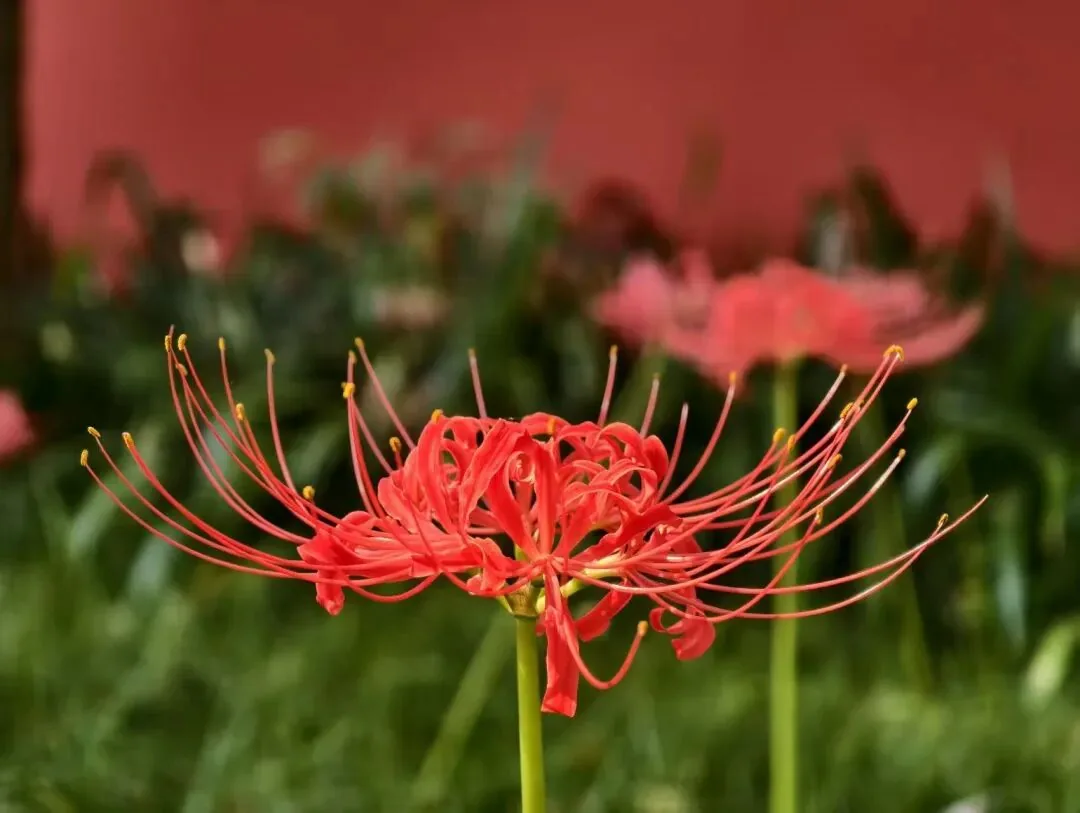
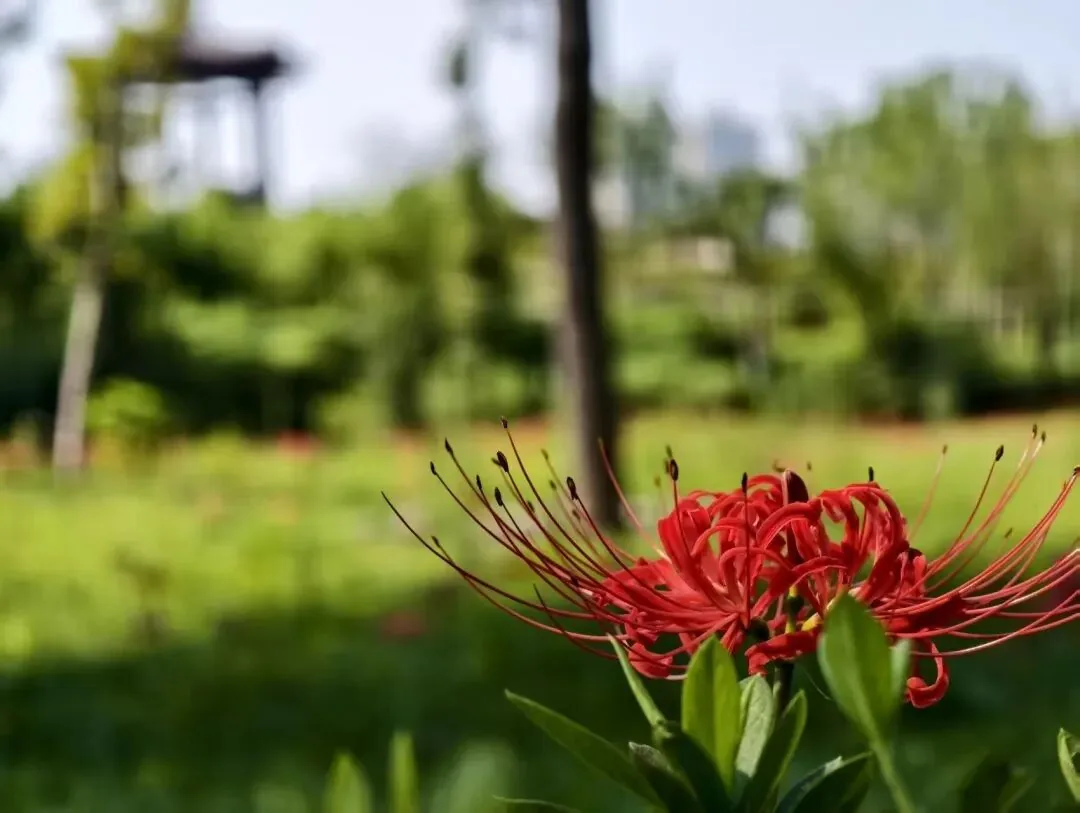
You might know these blooms as “彼岸花” (bǐ’àn huā) or “manjushage” — but here’s the thing: those names are imports. In China, this flower has a much older, more auspicious name: 金灯花 (jīn dēng huā), or “golden lantern flower,” because its blossoms resemble ornate palace lanterns. Ancient poets praised it, saying it “shines brighter than ten thousand branches and stands out among all flowers.”
So, if you ask a local, they’ll likely encourage you to call it shísuàn or jīn dēng huā — not bǐ’àn huā. The latter carries a heavy, melancholic vibe from Japanese folklore, where it’s associated with the autumn equinox and the afterlife. But here in China, it’s a symbol of good fortune.
The Legend of the Flower That Never Meets Its Leaves
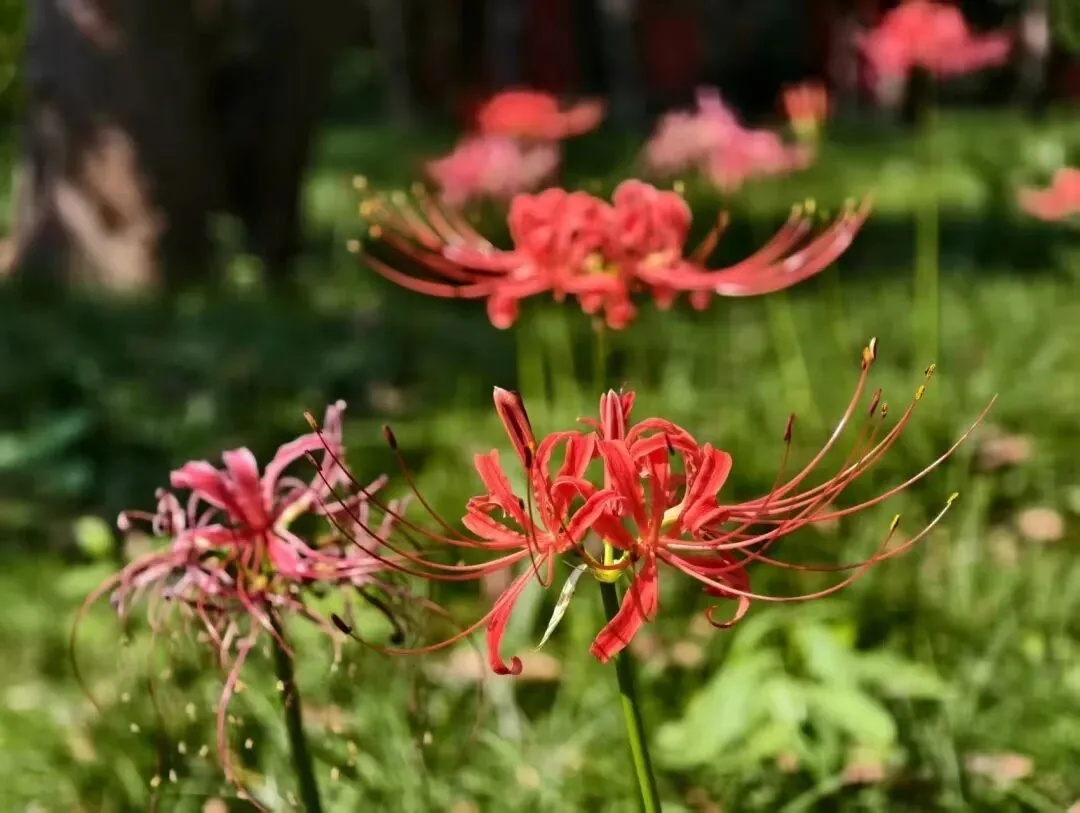
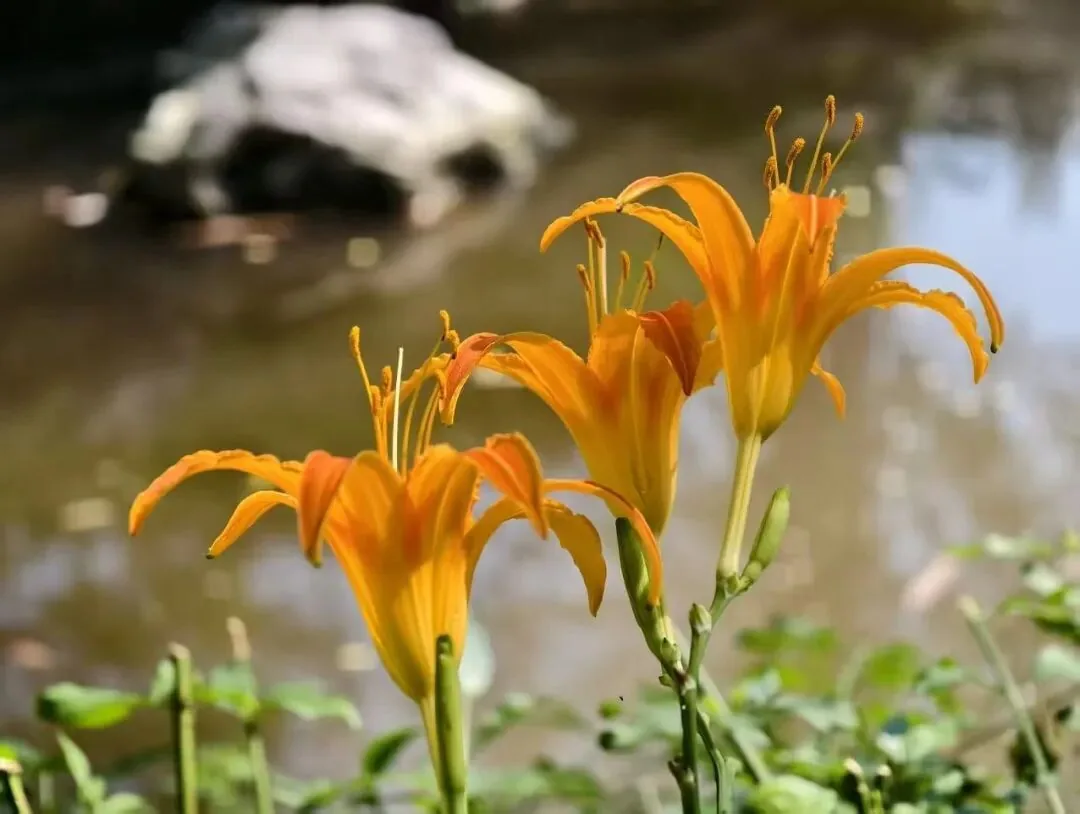
One of the most fascinating things about spider lilies is their life cycle: the leaves appear in late autumn and die back in early summer, while the flowers bloom in late summer and early autumn. They literally never see each other. This “flower and leaf never meet” phenomenon has inspired a tragic love story — the flower spirit Manju and the leaf spirit Sasha, who love each other across lifetimes but can never be together. Each reincarnation, they catch a whiff of the flower’s scent and remember their past love, only to be separated again.
It’s a beautiful, bittersweet tale that adds a layer of mystery to these already striking blooms. But at Wangcong Shrine, the story takes on a local twist.
A Walk Through the Shrine in Early September
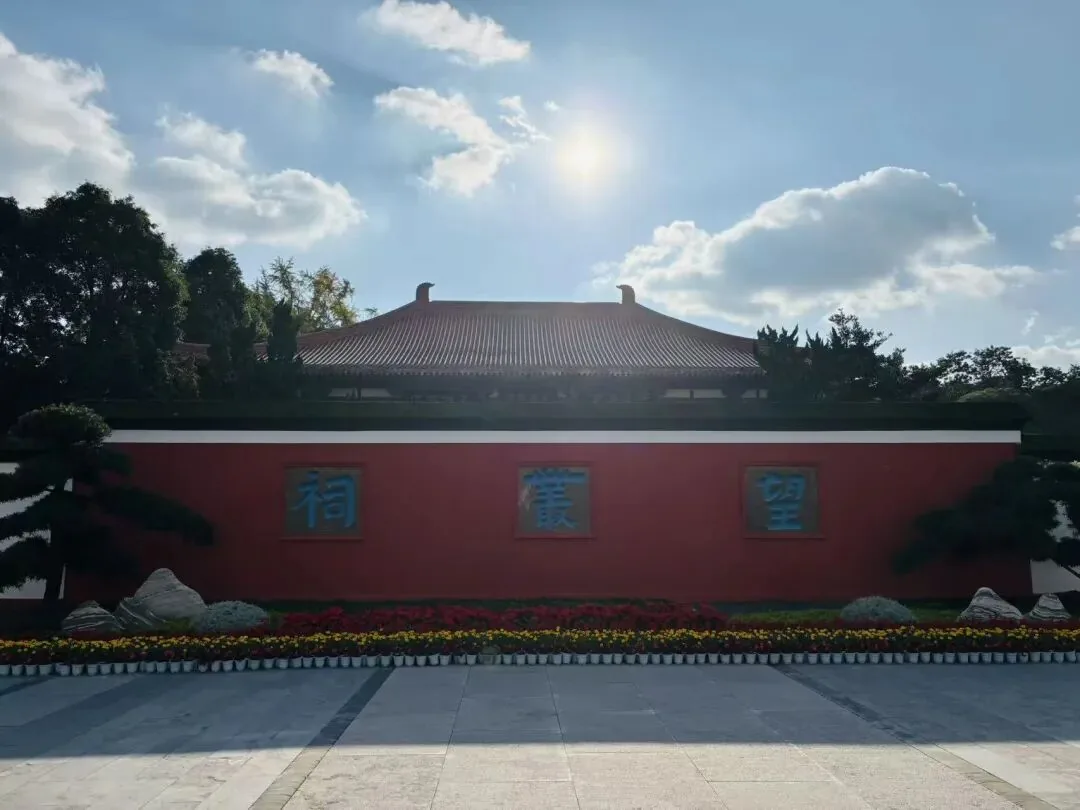
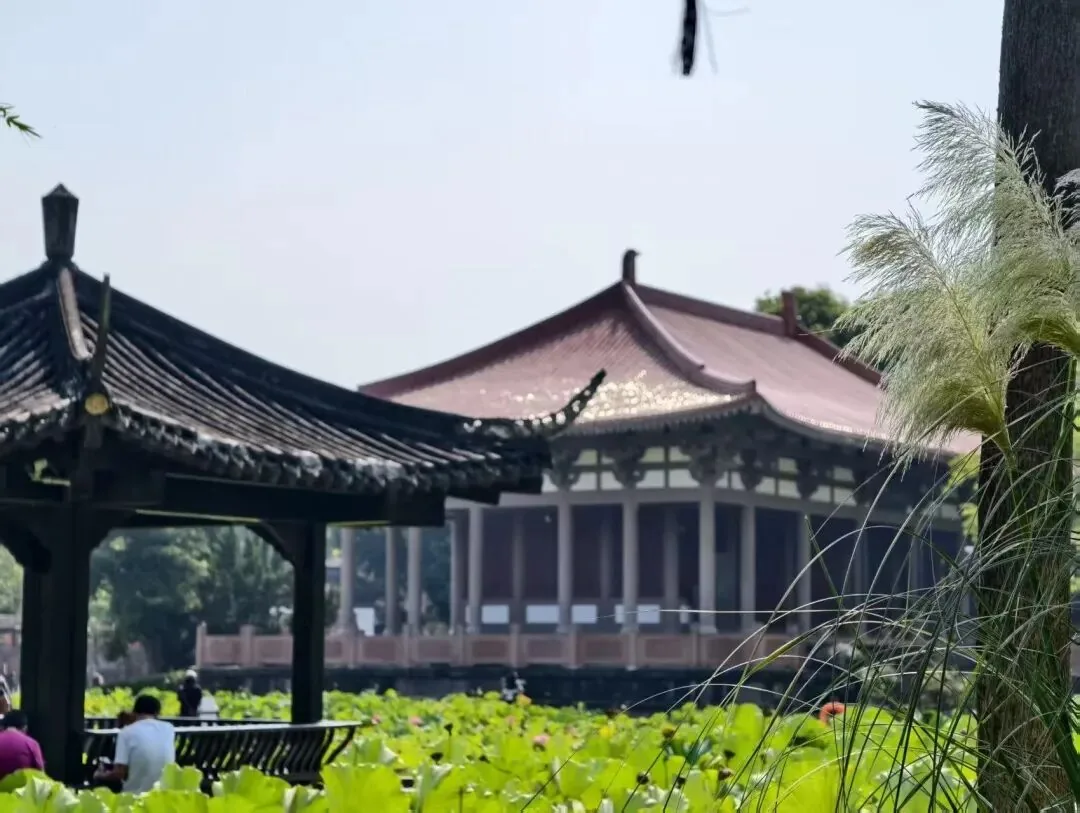
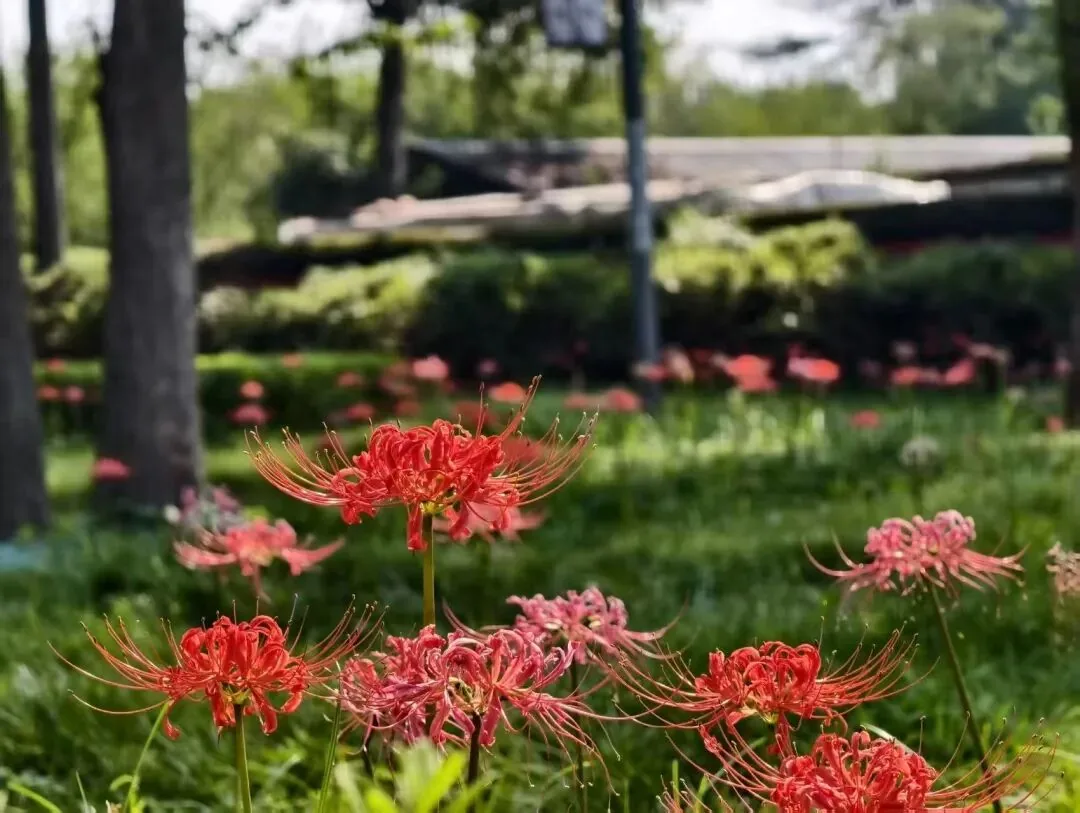
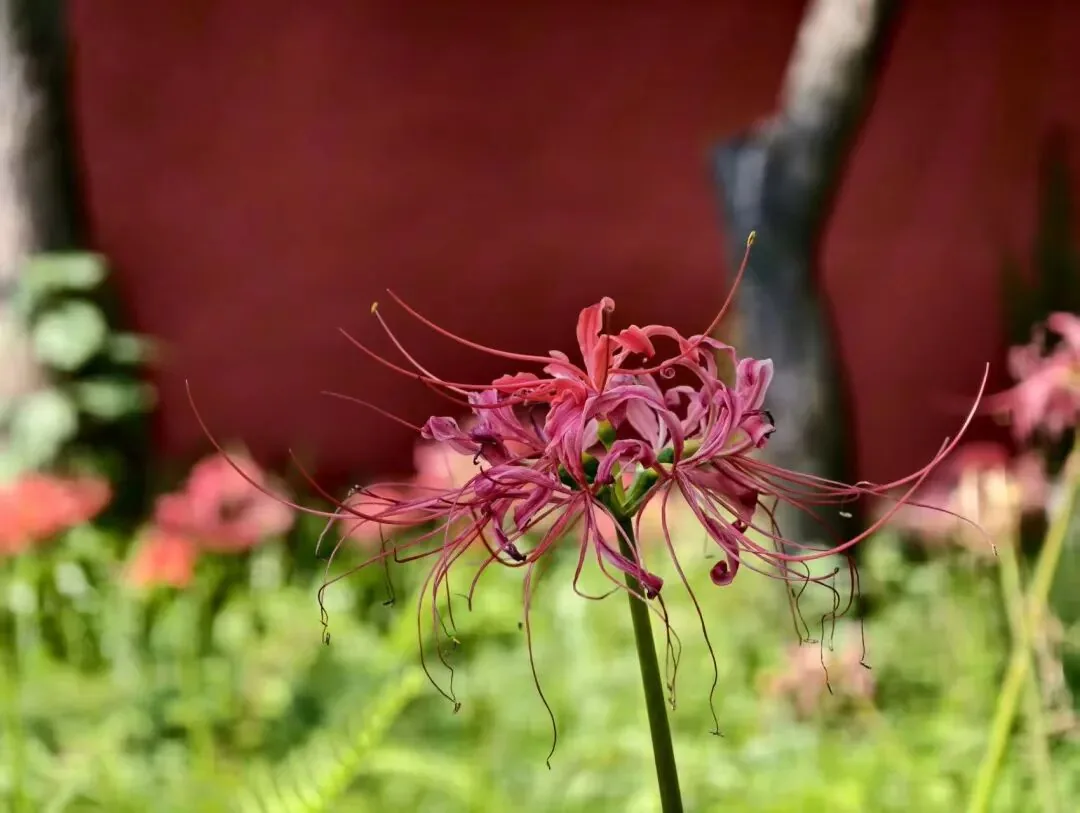
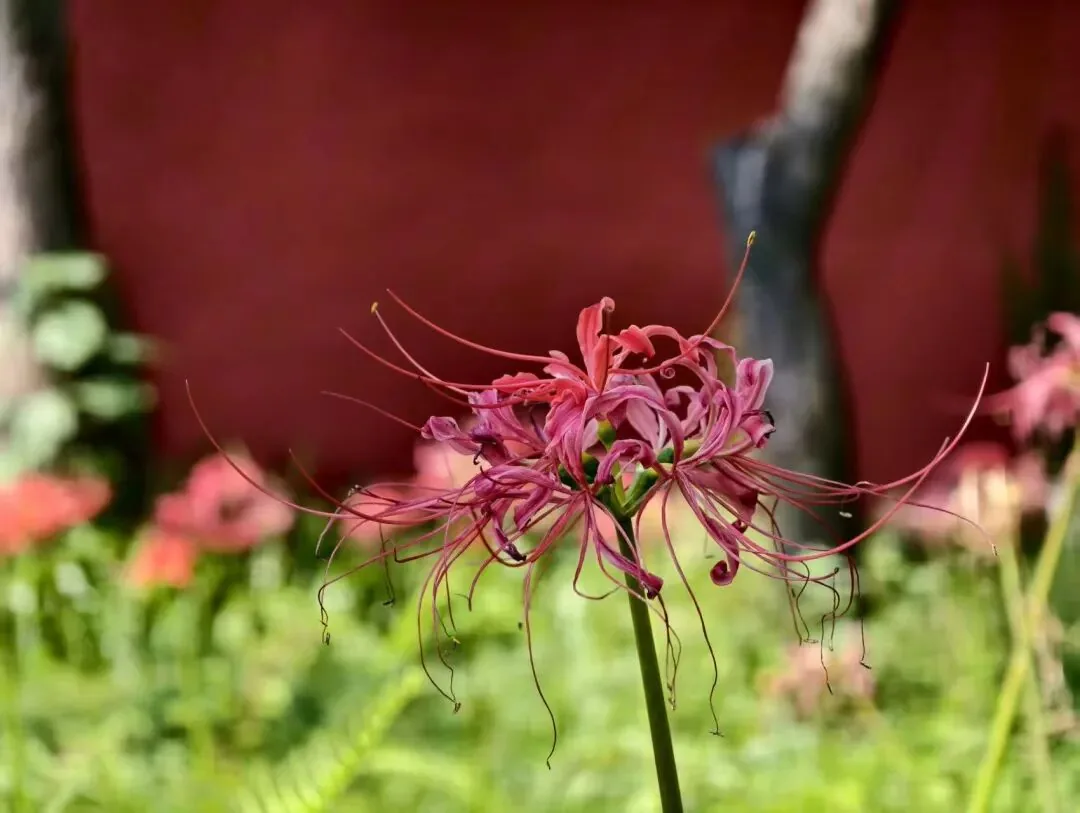
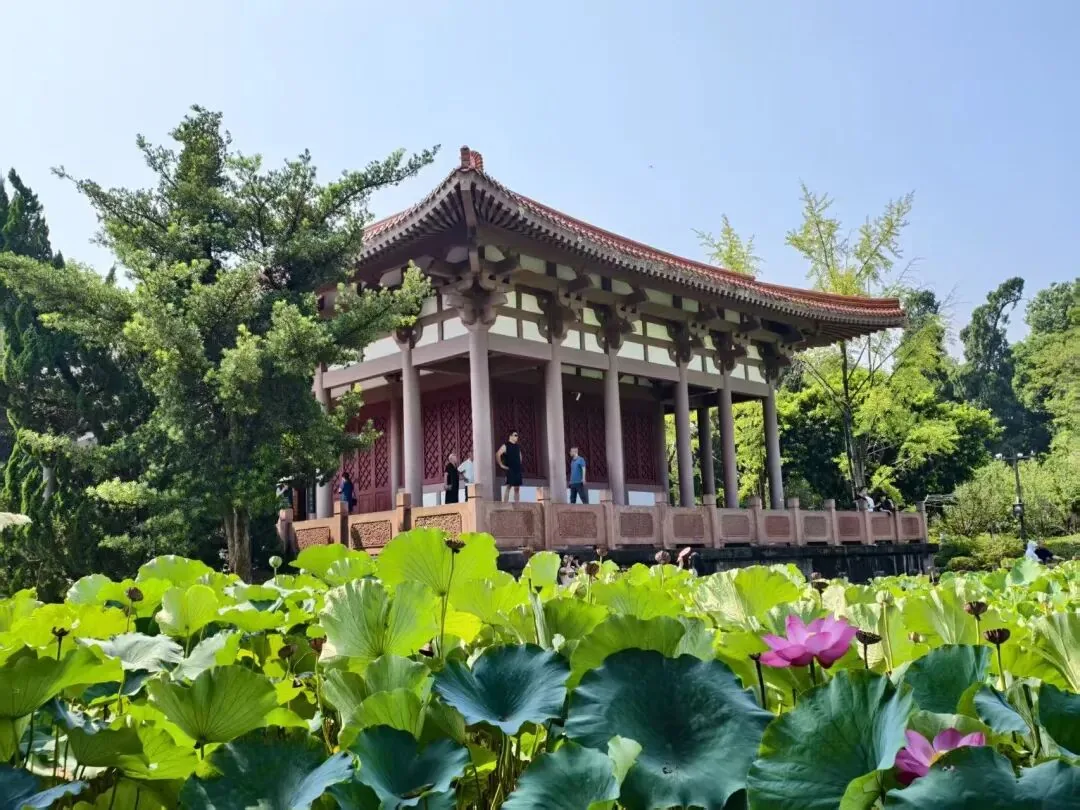
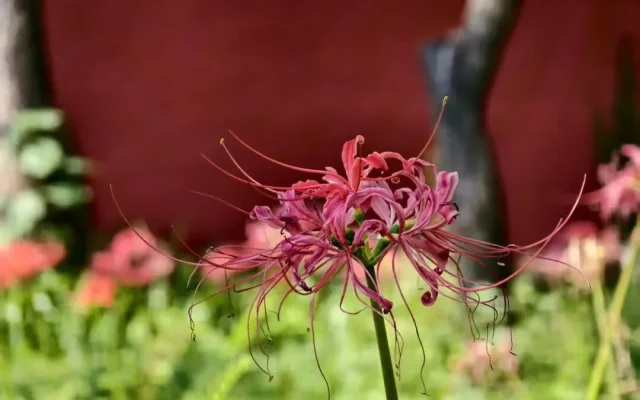
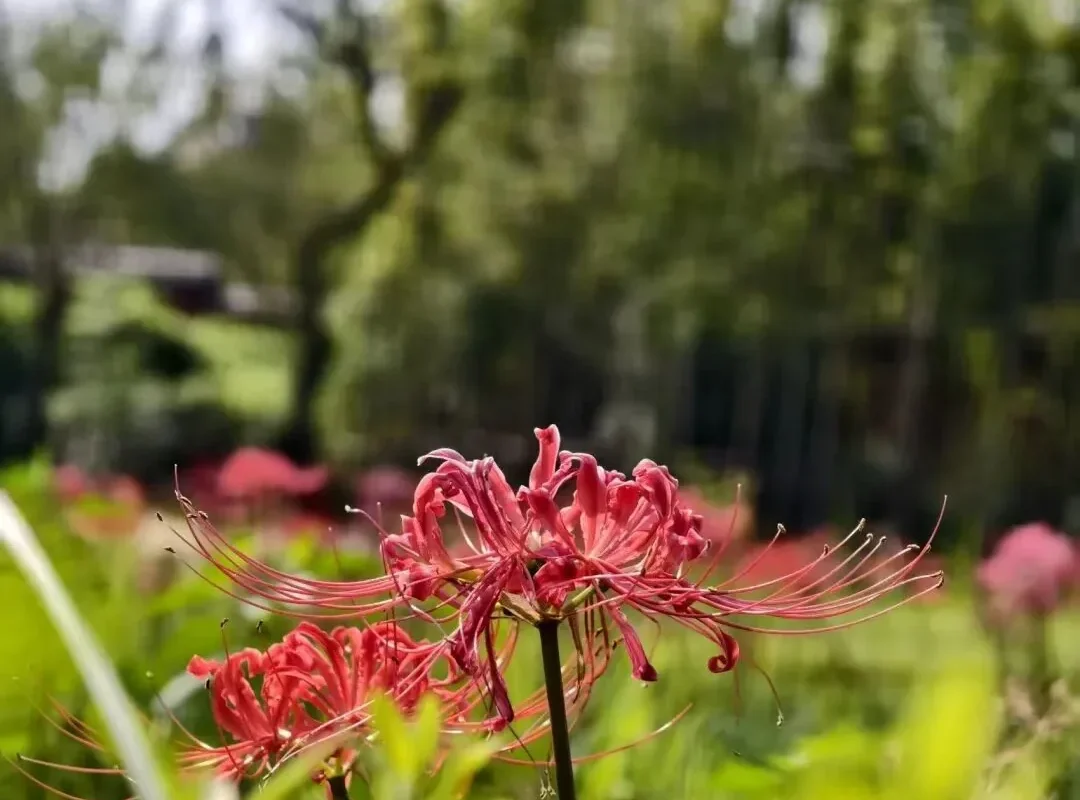
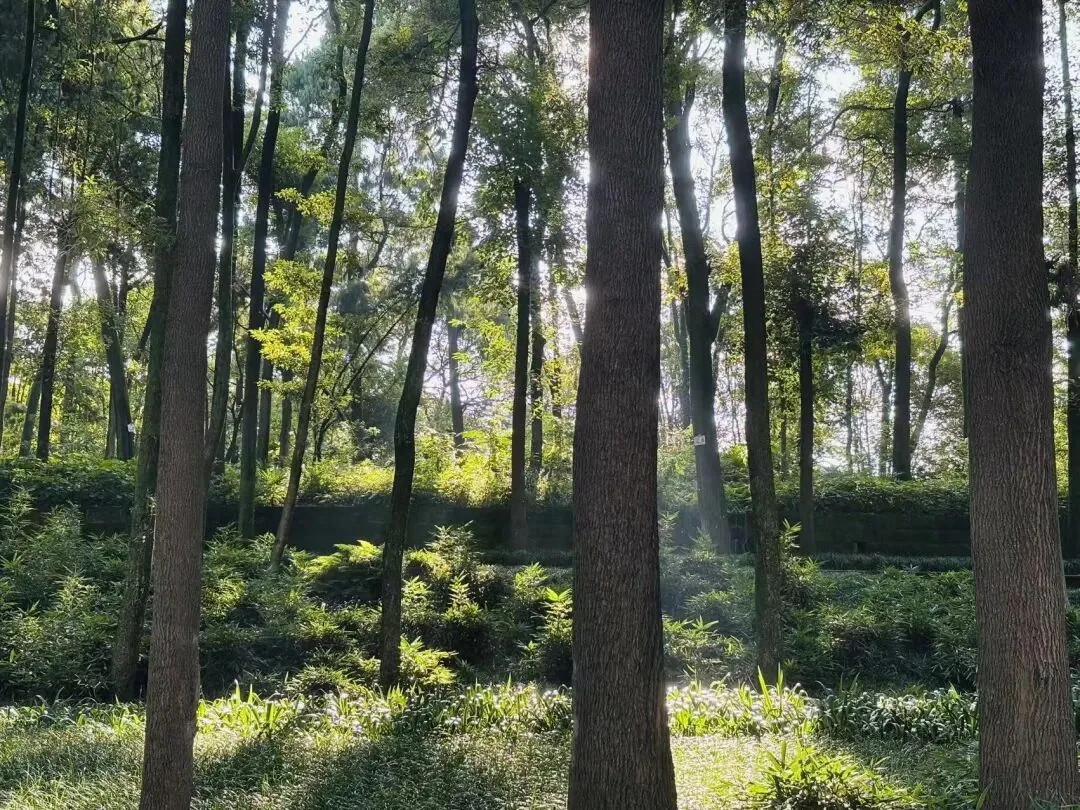
Early September is the absolute best time to see the spider lilies here. The summer heat has faded, and the garden feels fresh and cool. As you stroll along the lake, you’ll notice the lotus leaves are starting to wither, some still holding onto their last blooms. And then, tucked under the shade of ancient cypress trees, along the slopes near the emperors’ tombs, and beside the streams — clusters of spider lilies rise from the soil, their bare stems topped with fiery red petals that curl back like dragon claws.
Local insight: The red blooms against the shrine’s vermilion walls, dark tile roofs, and ancient cypress trees create a scene that feels more dignified than sorrowful — a perfect blend of nature and history.
You’ll find not just the classic red variety, but also yellow and pink ones, all growing in dense patches along Bie Ling Lake (鳖灵湖). It’s a photographer’s dream, and you’ll see plenty of people snapping photos of the flowers against the classical architecture.
The Legend of Emperor Wang and the Cuckoo
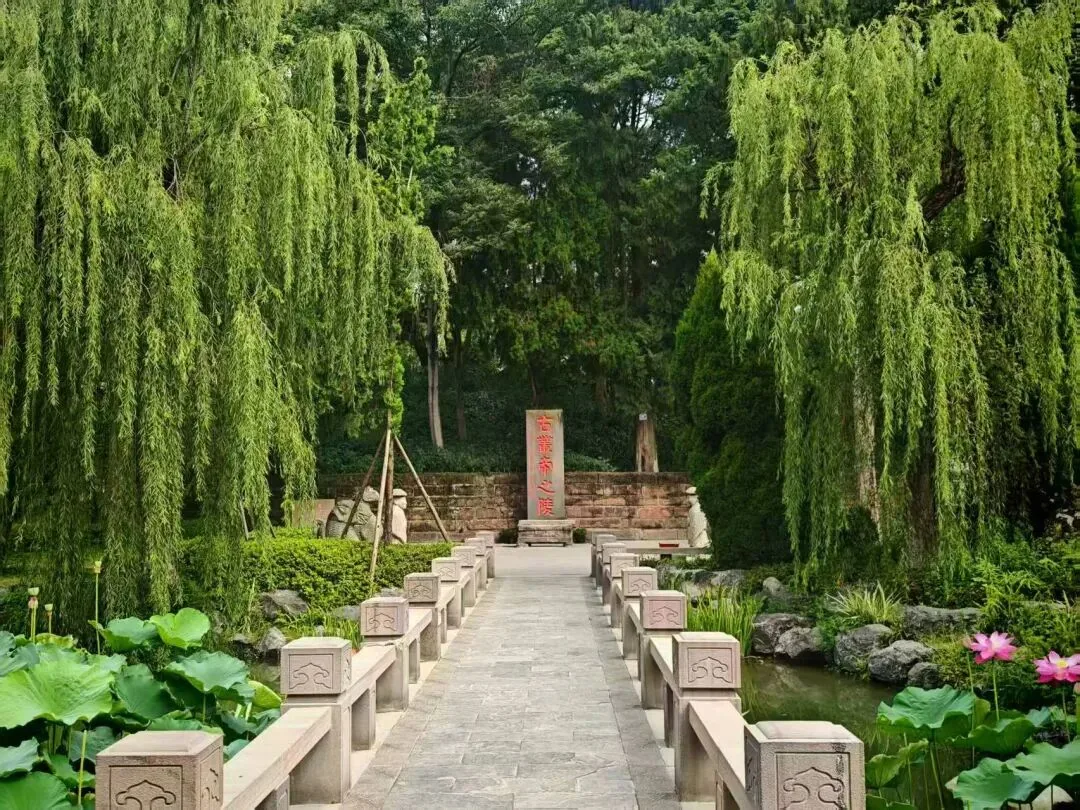
Here’s something special: the spider lily’s “flower and leaf never meet” story echoes a legend from right here at Wangcong Shrine. Emperor Wang, after abdicating his throne, is said to have transformed into a cuckoo bird. Every spring, he would cry out to urge farmers to plant their crops, until his calls turned to blood, staining the hillside azaleas red. His longing for his land and people is another kind of “difficult to meet” — and now, the spider lilies blooming beside his tomb feel like a quiet tribute, keeping that memory alive.
Some visitors mistake the spider lilies for Emperor Wang’s incarnation, but the emperor’s spirit lives on in the spring azaleas, the Tingjuan Tower (听鹃楼), and the Ziguì Garden (子规园) — places that celebrate his story. The spider lilies, on the other hand, bloom in early autumn, not through birds or blood, but by simply rooting themselves in the soil. Two flowers, each with their own season, never interfering with each other.
Why These Flowers Thrive Here
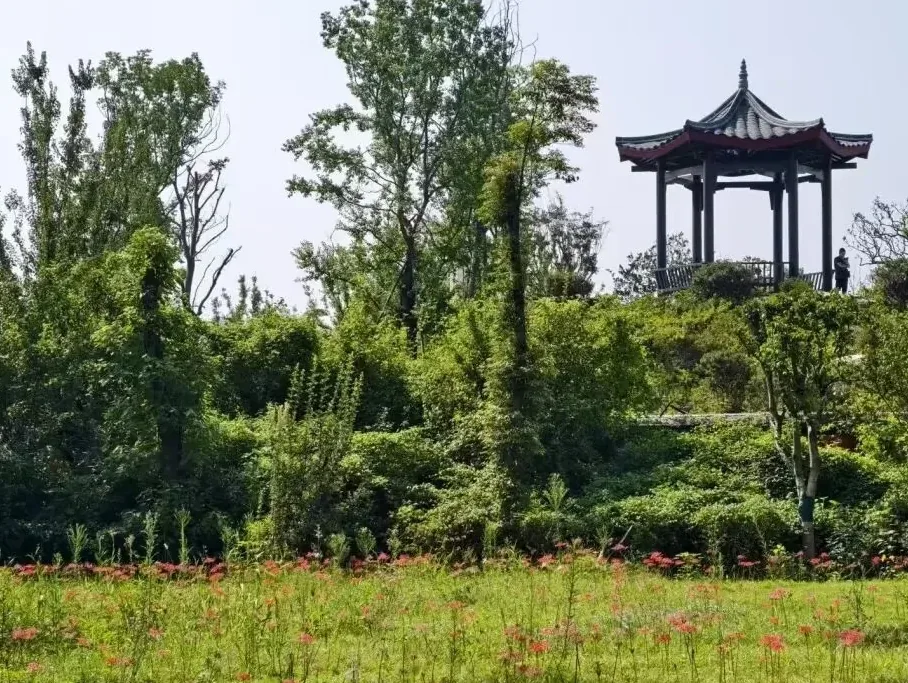
Spider lilies are native to China, and they’re tough. They don’t need special soil, they don’t mind shade, and they return year after year without fail. That’s why they’re so at home in Wangcong Shrine’s damp, cypress-shaded environment. They’re low-key, resilient, and quietly beautiful — much like the shrine itself.
Practical Tips for Your Visit
- Address: 3-4 Wangcong Middle Road, Pidu District (成都市郫都区望丛中路3-4号)
- Admission: Free
- Getting there: Take Metro Line 6 to Wangcong Shrine Station (望丛祠站), exit A or D, then walk about 5 minutes. If driving, just navigate to “Wangcong Shrine” — there’s plenty of street parking nearby.
- Combine with: The newly built Wangcong Park (望丛公园) is right next door, so you can easily visit both in one trip.
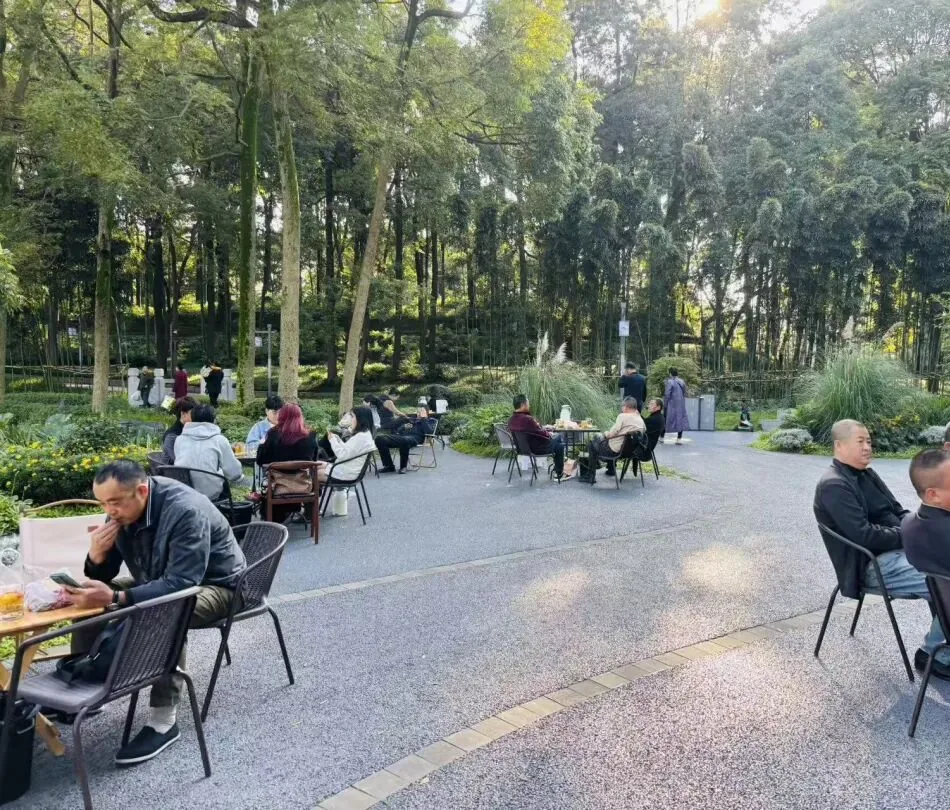
Pro tip: If you need a break, stop by the tea house inside the shrine. Order a bowl of covered tea (盖碗茶, gài wǎn chá), sit back, and soak in the tranquil scenery — it’s the quintessential Chengdu way to spend an autumn afternoon.
A Final Thought
This autumn, if you have some free time, take a stroll through Wangcong Shrine. It’s a rare chance to experience the romance of the season amidst a thousand-year-old garden, surrounded by flowers that carry stories of love, loss, and enduring memory.
So, do you like the look of Wangcong Shrine?