The Slow Side of South Chengdu: Tiexiang Temple Water Street
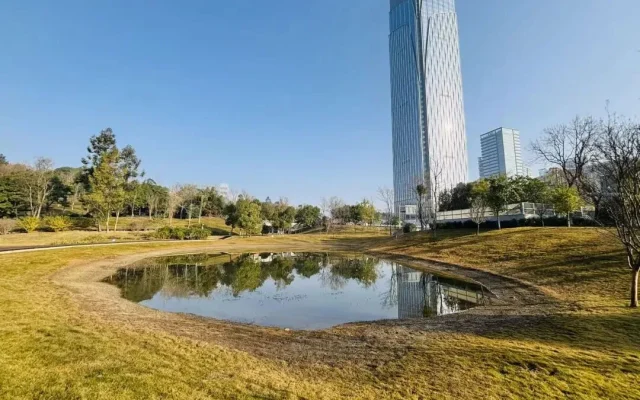
You’ve probably heard that Chengdu is a city people can’t bear to leave. But if you spend time in the southern part of the city — the South Gate area — you might wonder where that famous laid-back vibe went. Down here it’s all rushing crowds, traffic, and gleaming office towers. It feels as busy as Beijing, Shanghai, Guangzhou, or Shenzhen.
Here’s the thing, though — even in the middle of all that hustle, there’s a pocket of old-school Chengdu calm. It’s called Tiexiang Temple Water Street (铁像寺水街), and it’s a slice of slow living right in the middle of a busy modern district.
What You’ll See at Tiexiang Temple Water Street
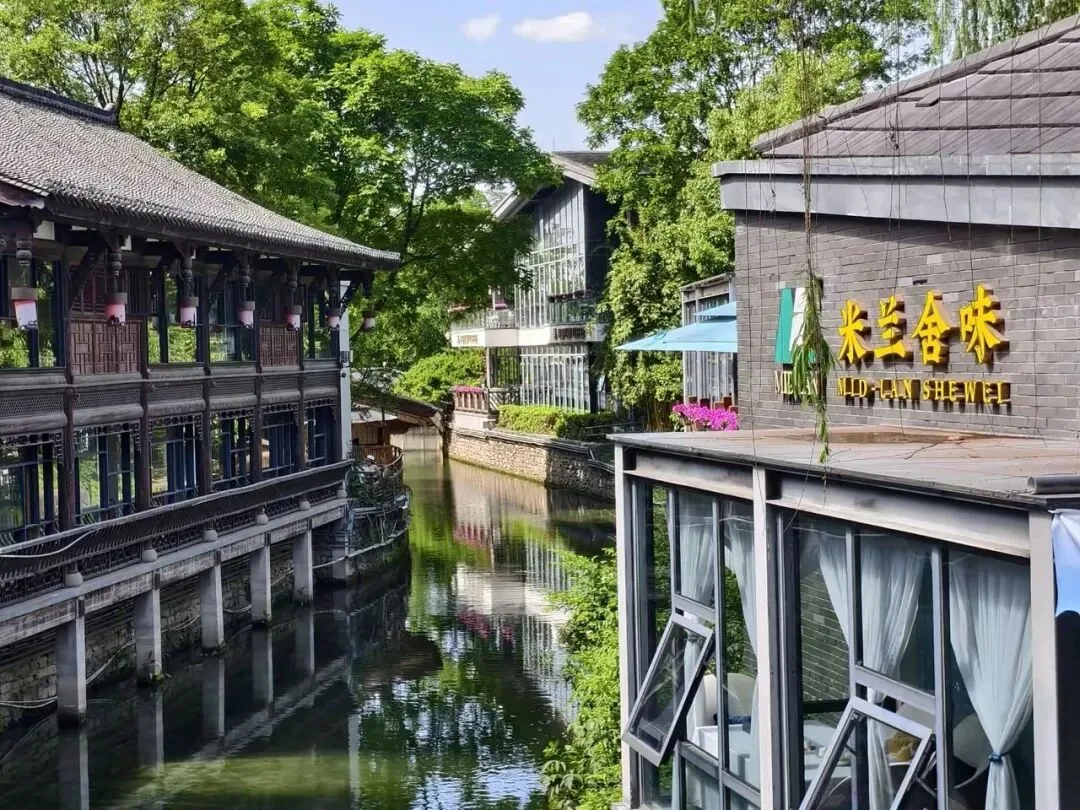
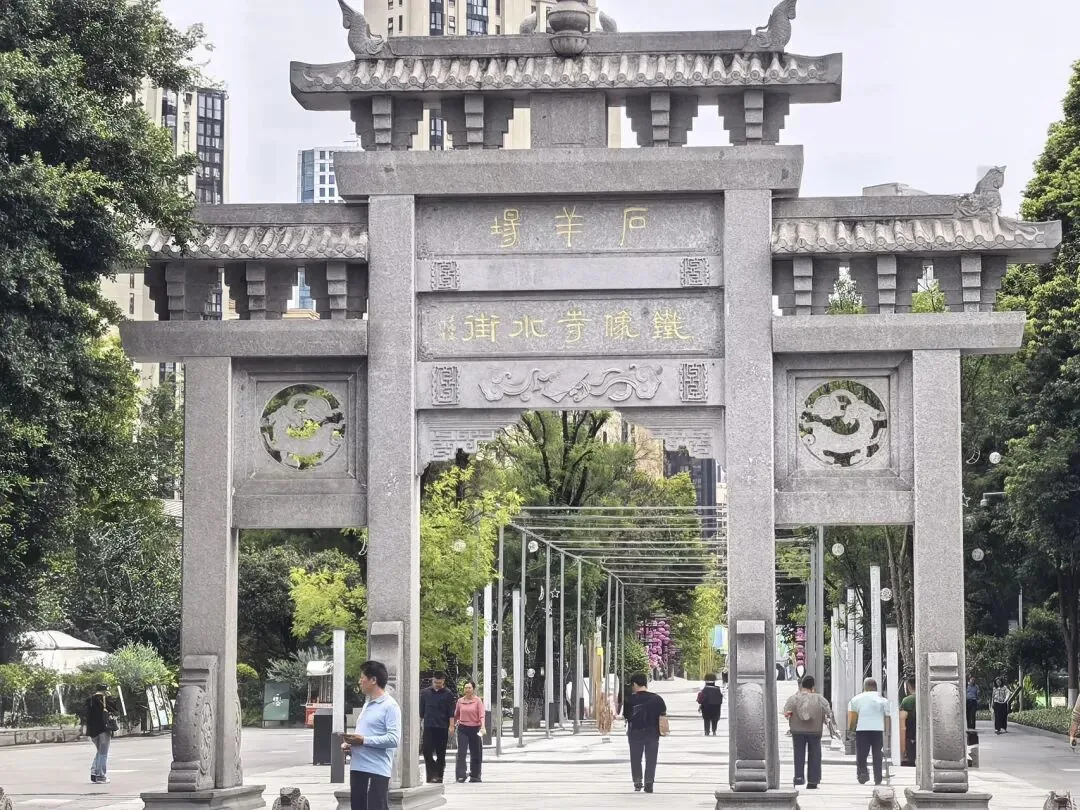
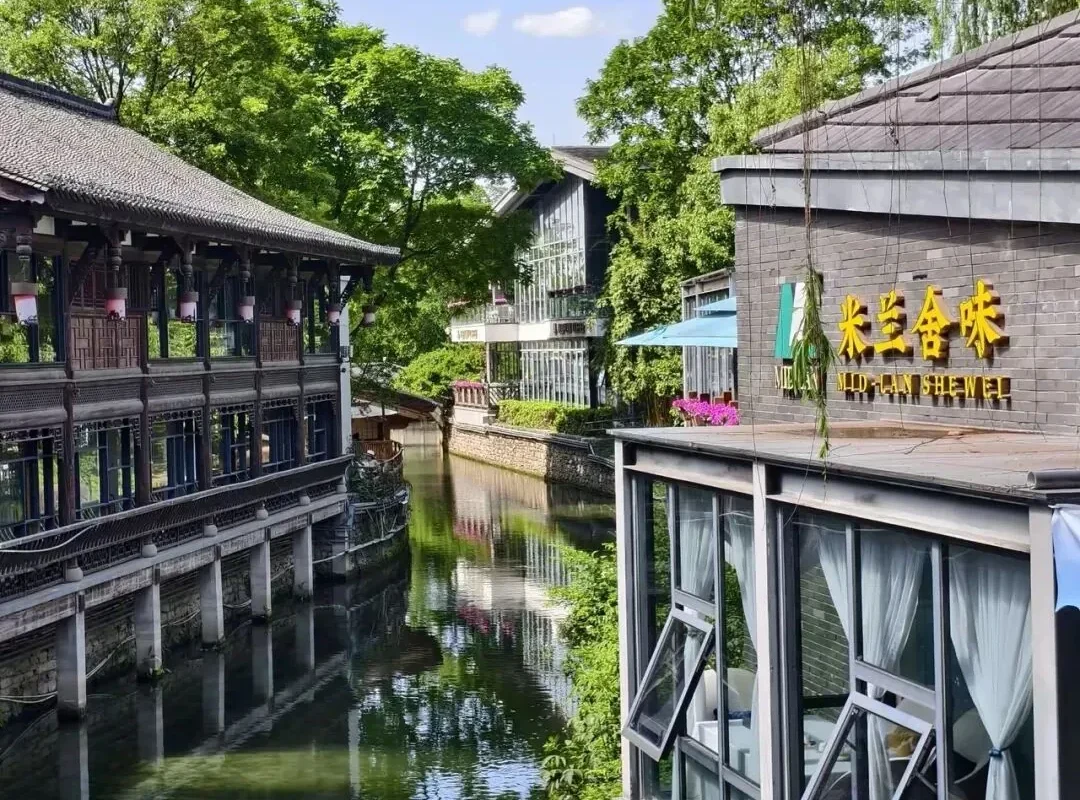
Step in and the first thing you notice is the architecture: grey tiles, wooden lattice windows, red walls, and bamboo shadows. A narrow stream runs right through the middle of it all — that’s the Xiaoji River (肖家河), flowing north to south and stringing together courtyards, old trees, lotus ponds, and a traditional opera stage.
The whole water street covers 163 mu (about 27 acres). Black-awning boats (wupengchuan) are moored along the banks, willow branches dip into the water, and there’s a quiet sense that this is exactly why someone decided to leave a slow ribbon of water in the busiest part of the city.
Tiexiang Temple: The Ancient Temple Next Door
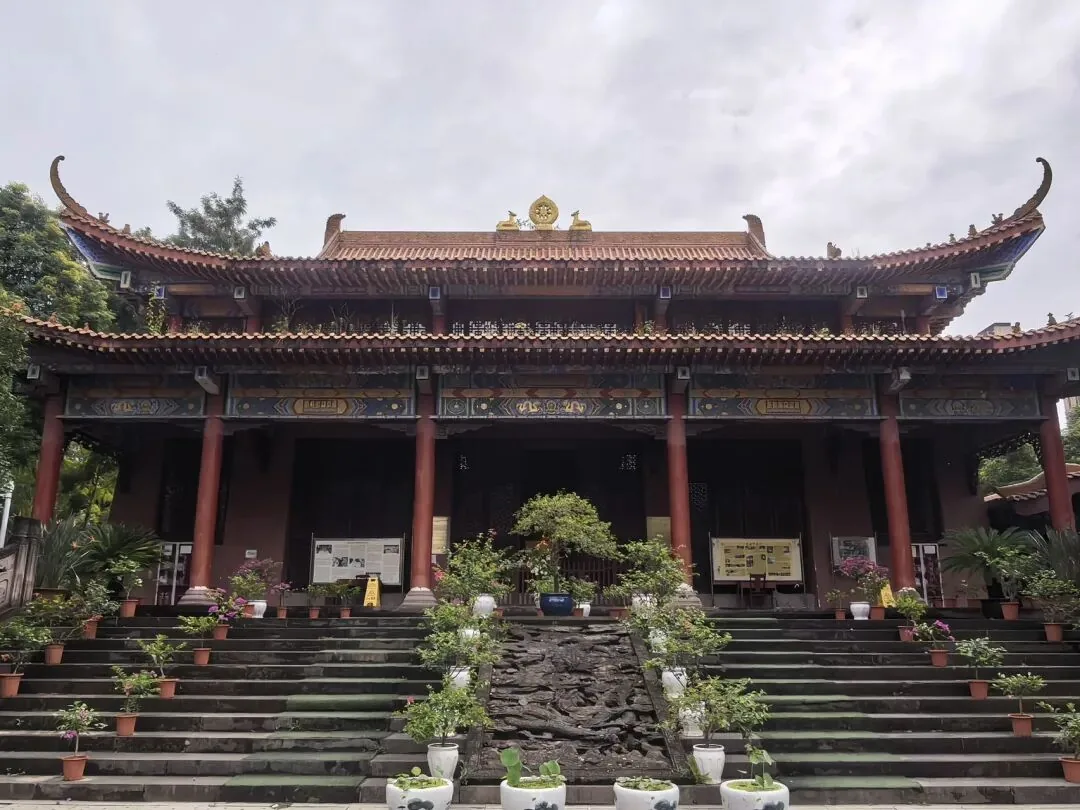
Right beside the water street sits an old temple — Tiexiang Temple. It was first built during the Ming Dynasty’s Wanli era, more than 400 years ago. Legend has it that an iron statue of Shakyamuni Buddha was unearthed here, which is how the temple got its name.
Over the centuries the temple has gone through ups and downs. In the last century it housed China’s first higher education institute for Buddhist nuns — the Sichuan Buddhist Nuns’ College — though that later moved away. Today it’s an ordinary temple again. The three characters “铁像寺” above the gate are bold and powerful, and inside the grounds are quiet and peaceful. It’s the kind of place that makes you relax without even trying.
A Water Street Full of Chengdu Landmarks
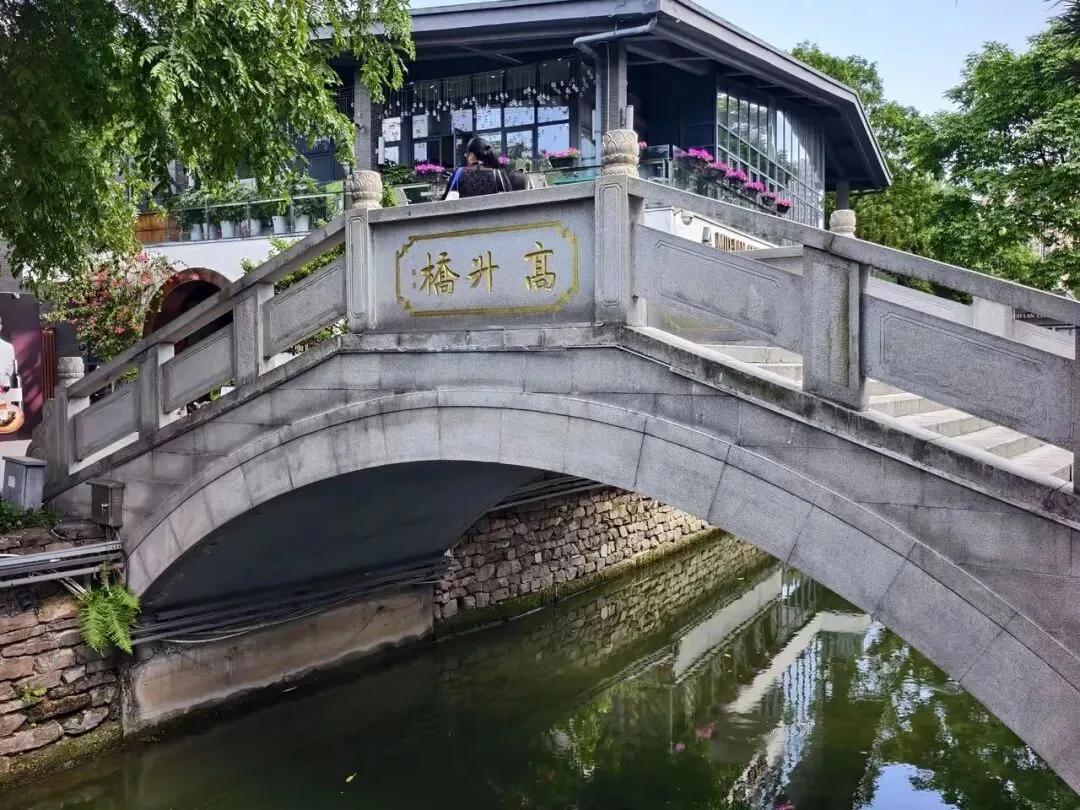
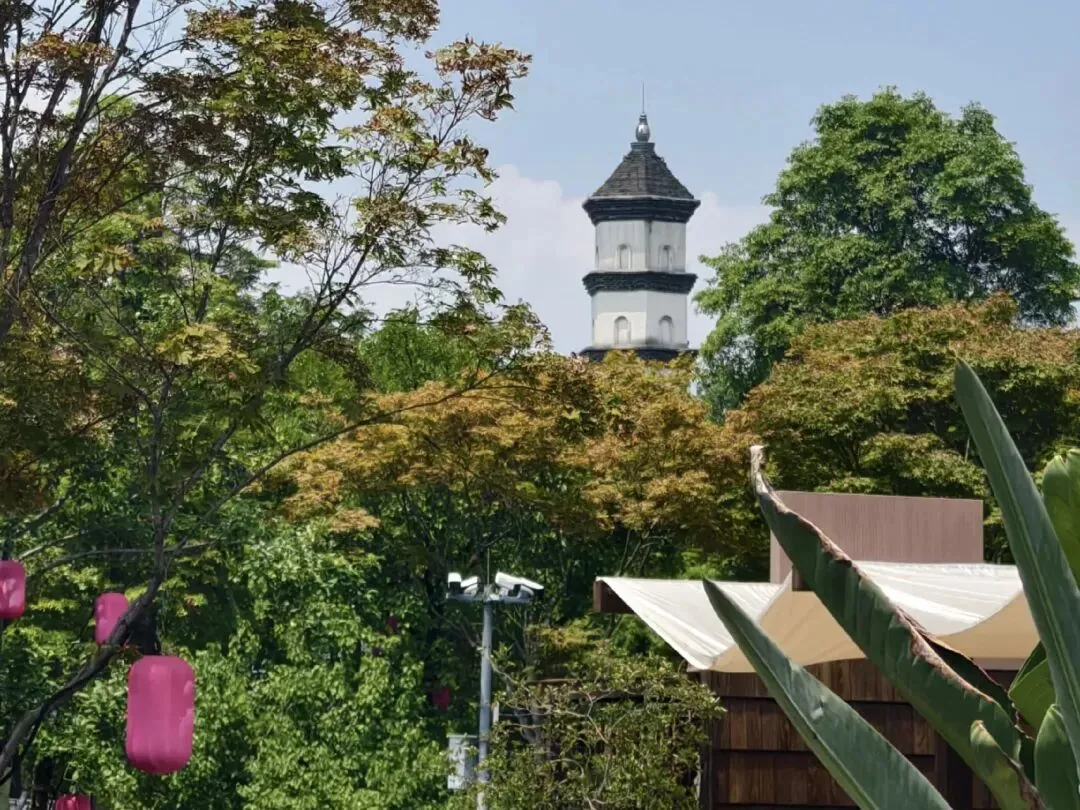
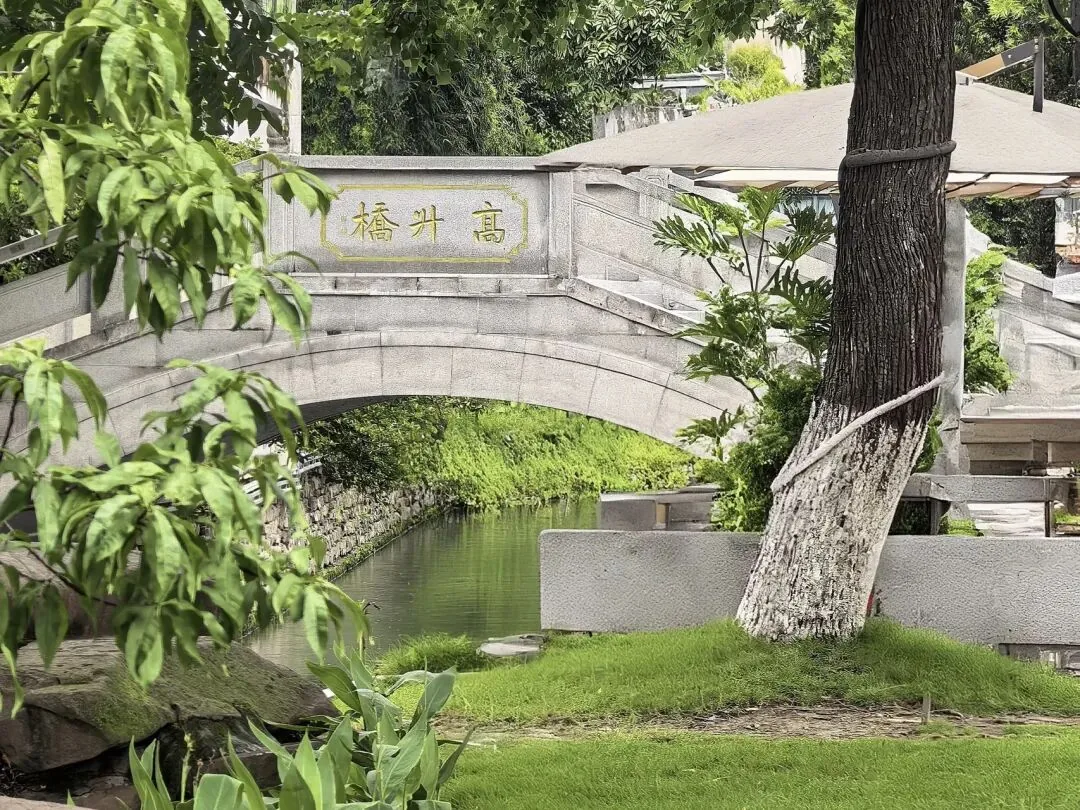
The landscaping here is something special — it faithfully recreates many of Chengdu’s famous landmarks. Along the Xiaoji River you’ll find six well-known Chengdu bridges: Gaosheng Bridge, Ximian Bridge, Tongjin Bridge, Sima Bridge, Wanfu Bridge, and Wanli Bridge.
Du Fu wrote of his thatched cottage, “My home west of Wanli Bridge, north of Baihua Pond.” Chengdu people have lived by water and remembered their history through bridges since ancient times. The Huilan Tower on the water street is modeled after the one in Qionglai, and the old opera stage is based on the one in Luocheng Ancient Town in Qianwei County, Leshan. Every view here has a story behind it, showing off the deep history of the Bashu region.
September at the Water Street: Osmanthus Season
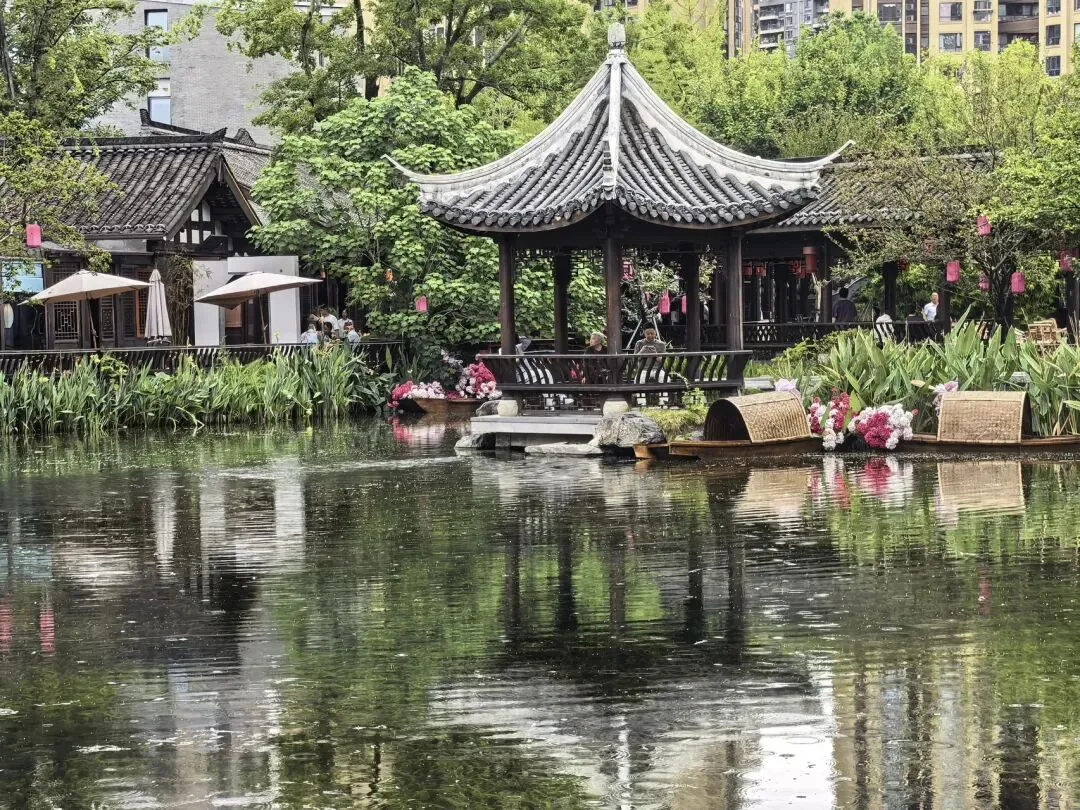
The river is living water, flowing gently along the Xiaoji River, winding through the street. The buildings on both banks are classic western Sichuan style — upturned eaves, wooden window lattices half open.
By September, Chengdu’s summer heat is fading, and autumn rains wash the sky clean. The river runs shallow and calm, no longer covered with the lush lotus leaves of midsummer — the lotus ponds are starting to show their withered stems.
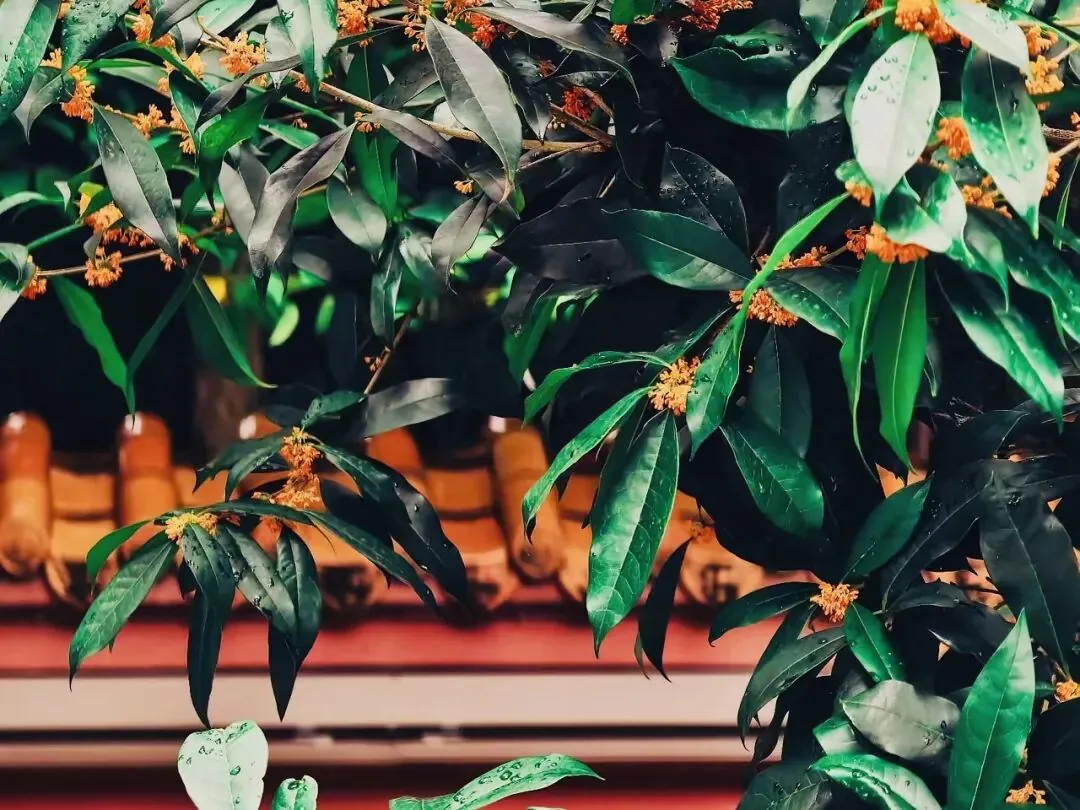
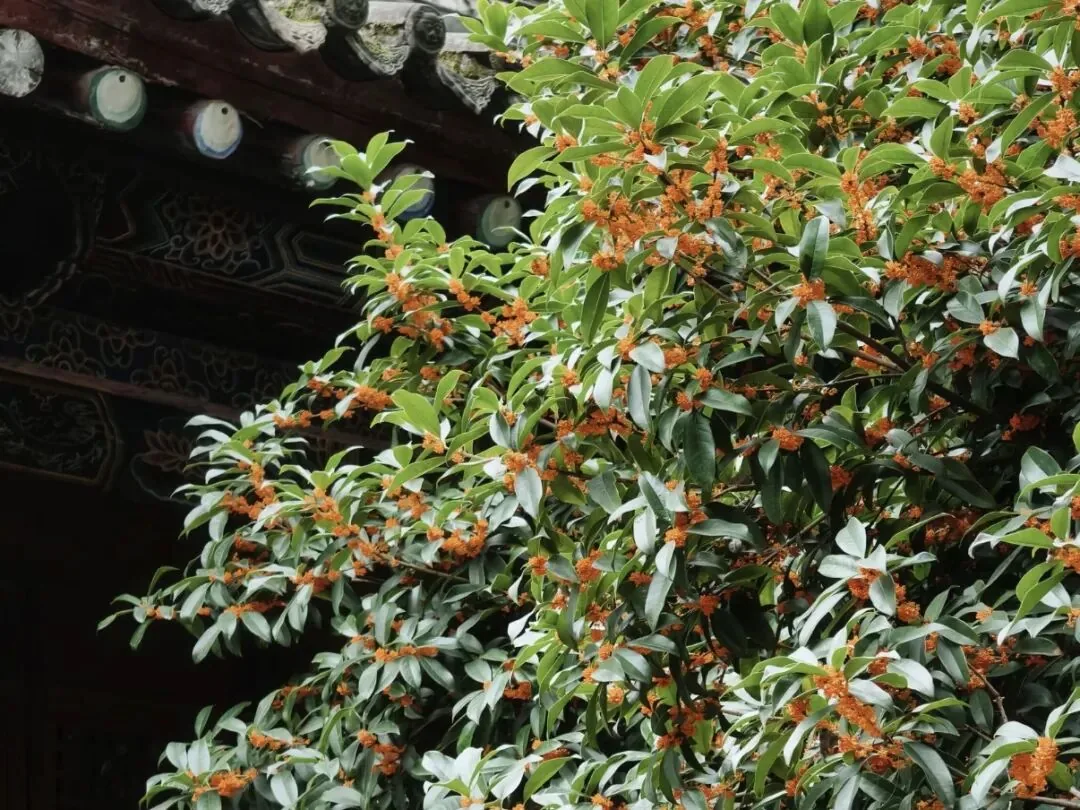
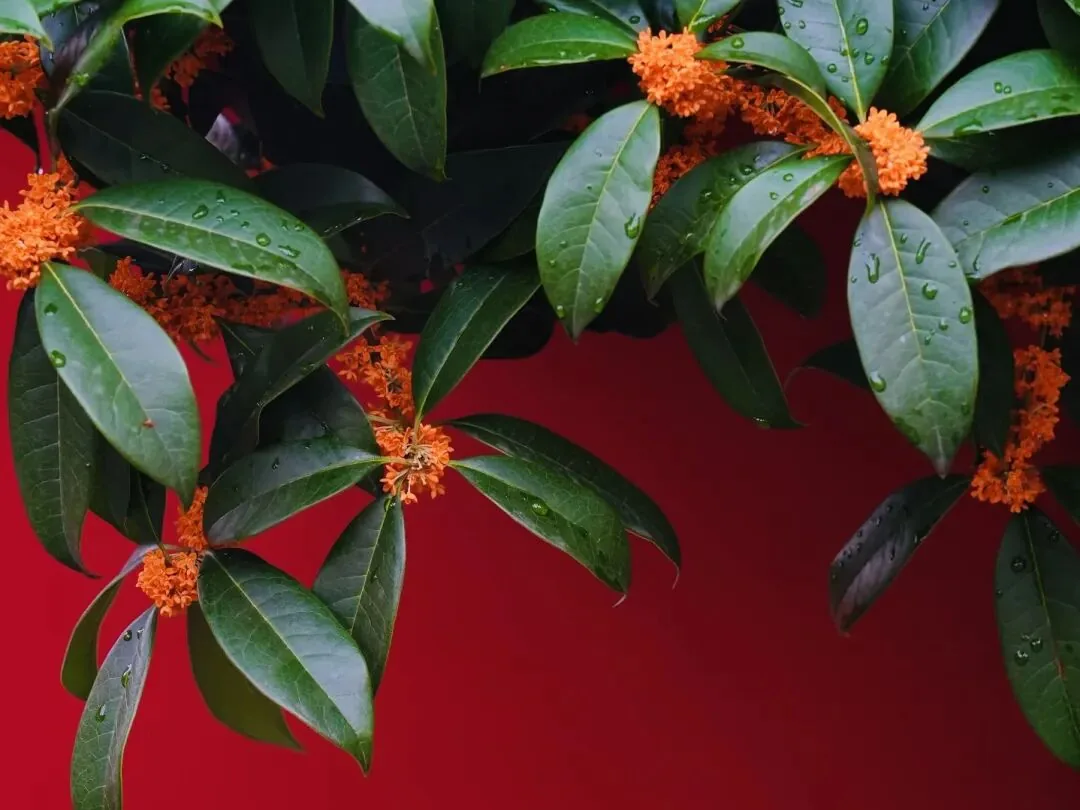
Oh, and one more thing — it’s September, and the osmanthus trees along the water street are in bloom. The moment you walk in, you catch that faint, refreshing fragrance.
Osmanthus trees are scattered along the riverside walkways, beside the courtyards, and under the red walls of Tiexiang Temple. Golden osmanthus and silver osmanthus hide among layers of green leaves, with tiny pale-yellow blossoms clustered on the branches — understated, but with a scent that cuts right through the air.
You don’t need to hunt for the trees. Just stroll along the stone-paved path, and when an autumn breeze blows through, that sweet, mellow fragrance hits you — light, never cloying. When the wind picks up, tiny osmanthus petals drift down like rain.
Tea, Opera, and the Art of Doing Nothing
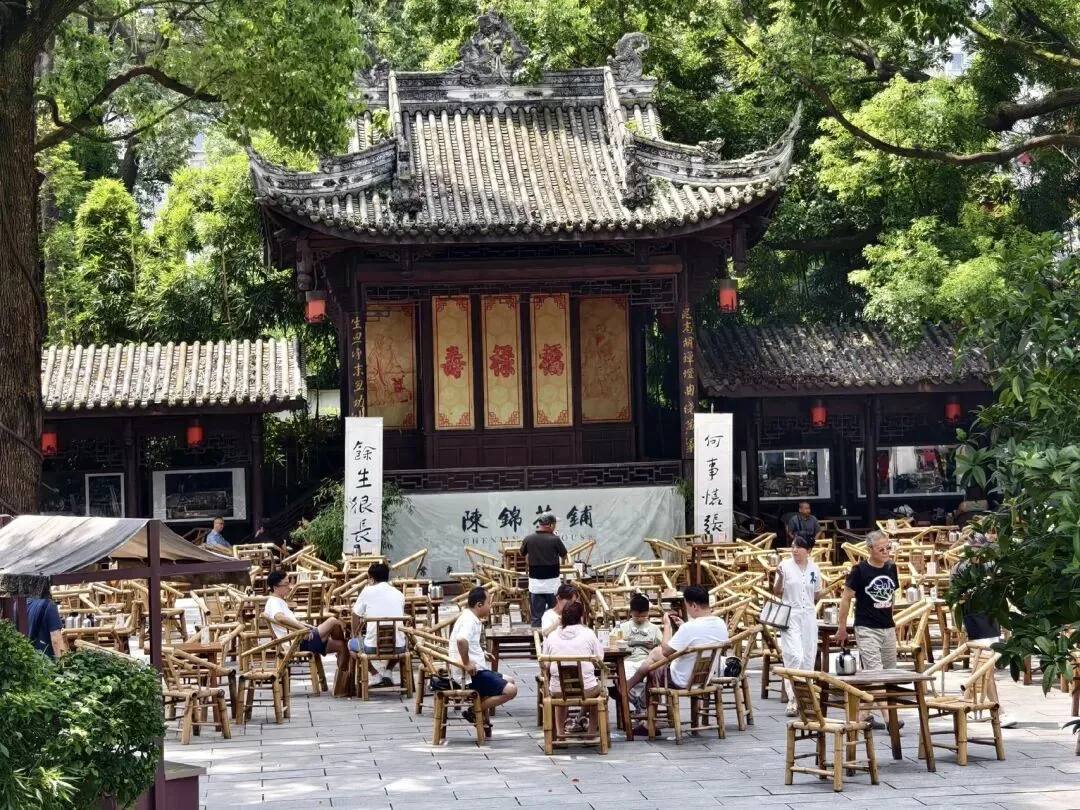
What makes the water street truly charming is the people who spend time here. Under century-old camphor trees, the bamboo chairs and covered-bowl tea (gaiwan cha) feel warm and familiar. On either side of the opera stage hangs a couplet: “Life is long, why hurry?” Countless visitors have photographed it — it’s pure, unfiltered relaxation.
A cup of plain tea costs just over 10 RMB, and you can sit there all afternoon. The audience under the stage isn’t just old men fanning themselves with palm-leaf fans — it’s also young people in suits who just got off work. This is what people mean by “slow life in the fast south, old Chengdu in the new south.” On one side, the high-rise offices of the High-tech Zone; on the other, unhurried tea drinkers in the water street. Two ways of life, living side by side without conflict.
Some people say it’s too lively here. I think it’s just right.
Su Shi wrote, “Where the heart is at peace, there is home.” A foreign place can be home; old and new can both be home. What matters isn’t the era — it’s whether you’re willing to stay a little longer.
Why This Place Stays With You
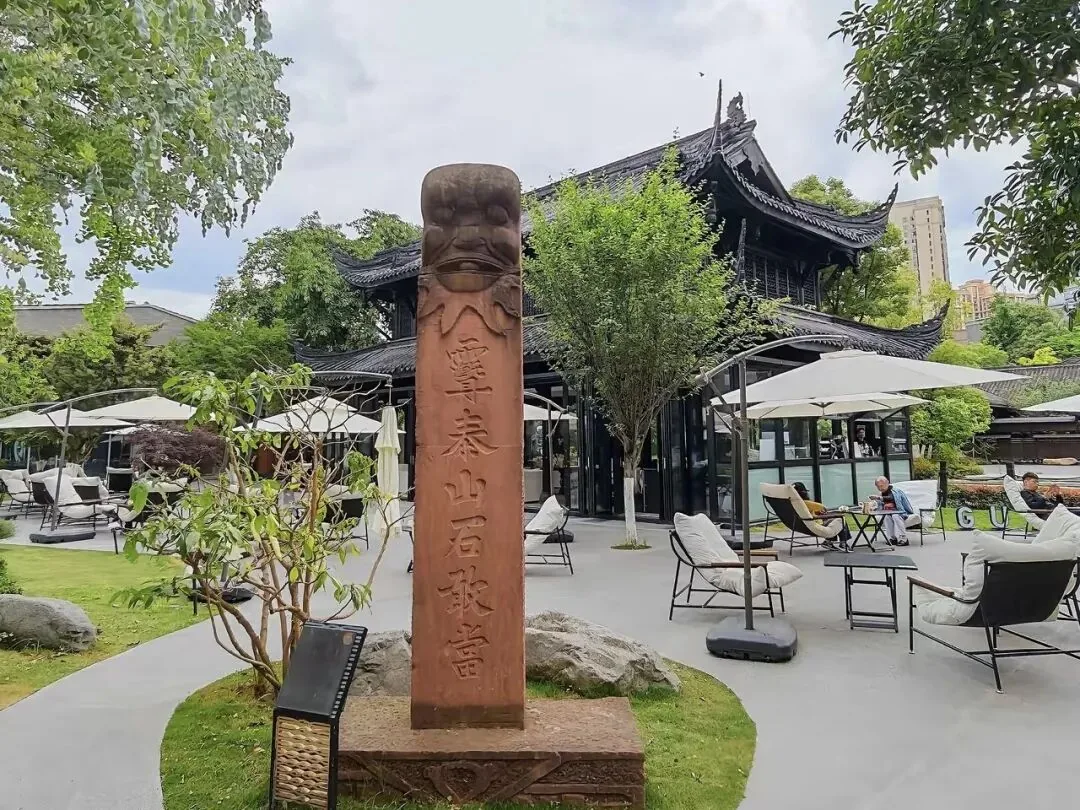
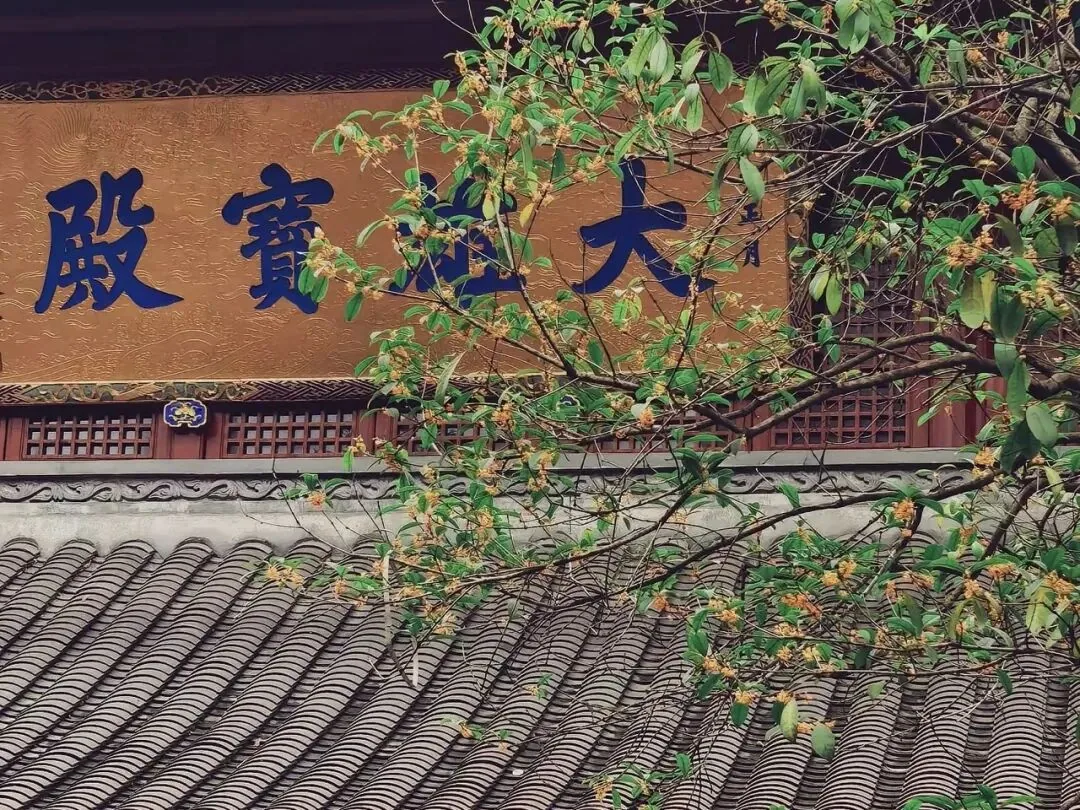
Many people say Chengdu is a city you don’t want to leave. But what really makes you want to stay isn’t the bustle of Chunxi Road or the fame of Kuanzhai Alley — it’s places like Tiexiang Temple Water Street. It has both fast and slow, it doesn’t reject modernity, and it doesn’t discard tradition. Like an old Chengdu local who’s seen it all, it just goes about its days in its own easygoing way.
September sunlight is soft and clear, no longer scorching. It filters through the leaves and casts dappled, shifting shadows on the stone path. The water street feels just right now — pleasant temperatures, perfect for a slow walk. After autumn rain, the air is moist, the plants are fresh. The rain is rarely heavy — mostly a fine drizzle. Walk with an umbrella, watch raindrops fall on the river, listen to them tap on the eaves, and the osmanthus fragrance grows even richer in the damp air.
For a moment you understand: Chengdu people aren’t laid-back because they’re lazy. They’re laid-back because they know that even in a fast-paced life, you have to carve out some slow time for yourself.
So toss that word “busy” aside and let the water carry the hours away. After all, a half-day of leisure is rare in this floating life — and the water street has exactly that.
Pro tip: Osmanthus in Chengdu typically blooms from September to October. Tiexiang Temple Water Street’s osmanthus is now in full bloom — it’s a gorgeous time for photos.
Practical Info
- Address: 88 Tiexiang Temple Road, High-tech Zone, Chengdu
- Admission: Free all day
- Metro: Line 5 to Jincheng Lake Station, Exit C, then about a 10-minute walk
- Bus: K4 (BRT) to Jincheng Lake Metro Station; Bus 40 or 162 to Jinnan Avenue Tianfu 1st Street Intersection; Bus 240 to Shengbang Street Middle Stop
- Note: Chengdu osmanthus generally blooms from September to October. The osmanthus at Tiexiang Temple Water Street is in full bloom now — great for photos.