A Hidden Classical Garden in West Chengdu: Shuyun Garden
Chengdu’s environment has been getting better and better in recent years, and more parks keep popping up. A lot of people assume you have to head into the busy city center to find a good park — but honestly, that’s not true anymore. These days, the districts on the outskirts of Chengdu have plenty of parks that are well worth a wander.
Pidu District has long had a reputation as a relatively underdeveloped area. But here’s the thing — its environment has already changed dramatically, and the parks here are beautifully built. Shuyun Garden (蜀韵园) is a classical garden tucked away in the west of the city.
What Is Shuyun Garden?
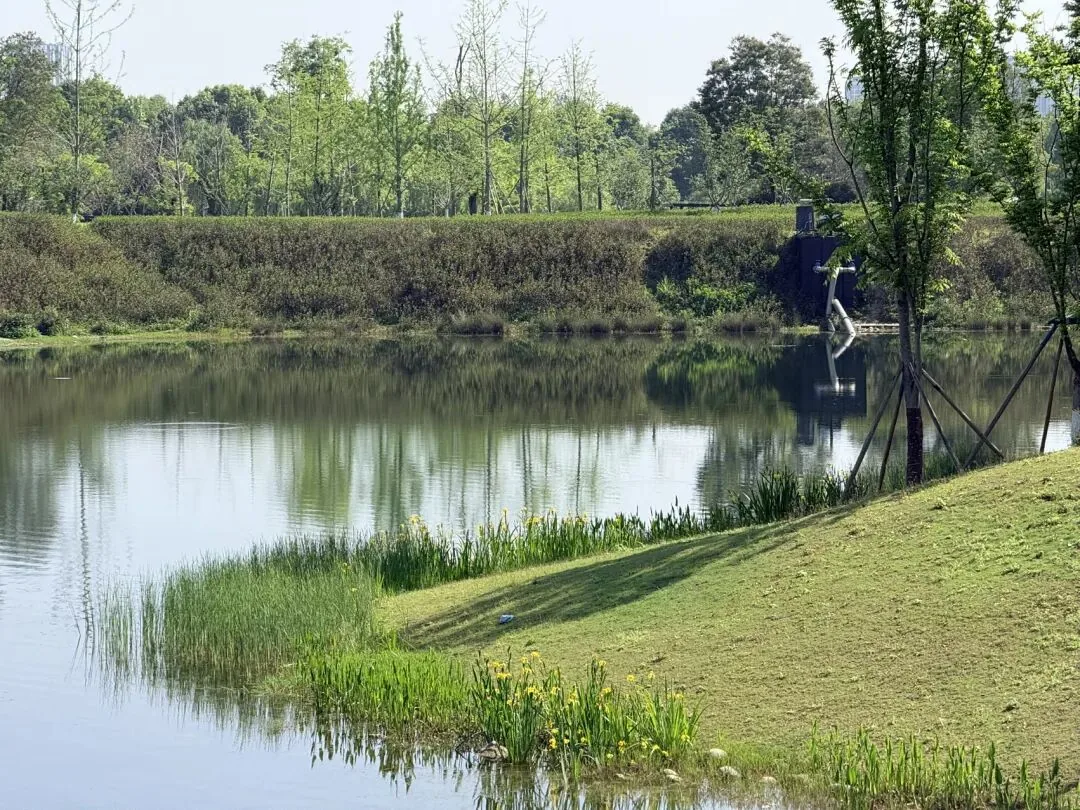
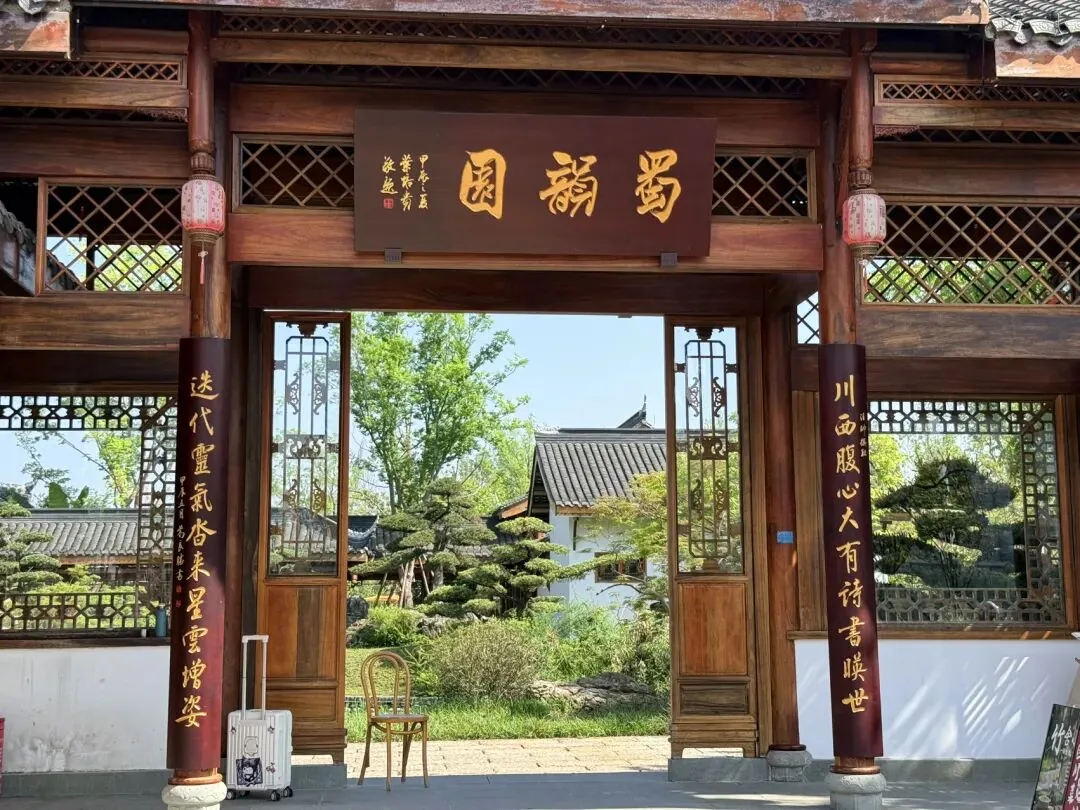
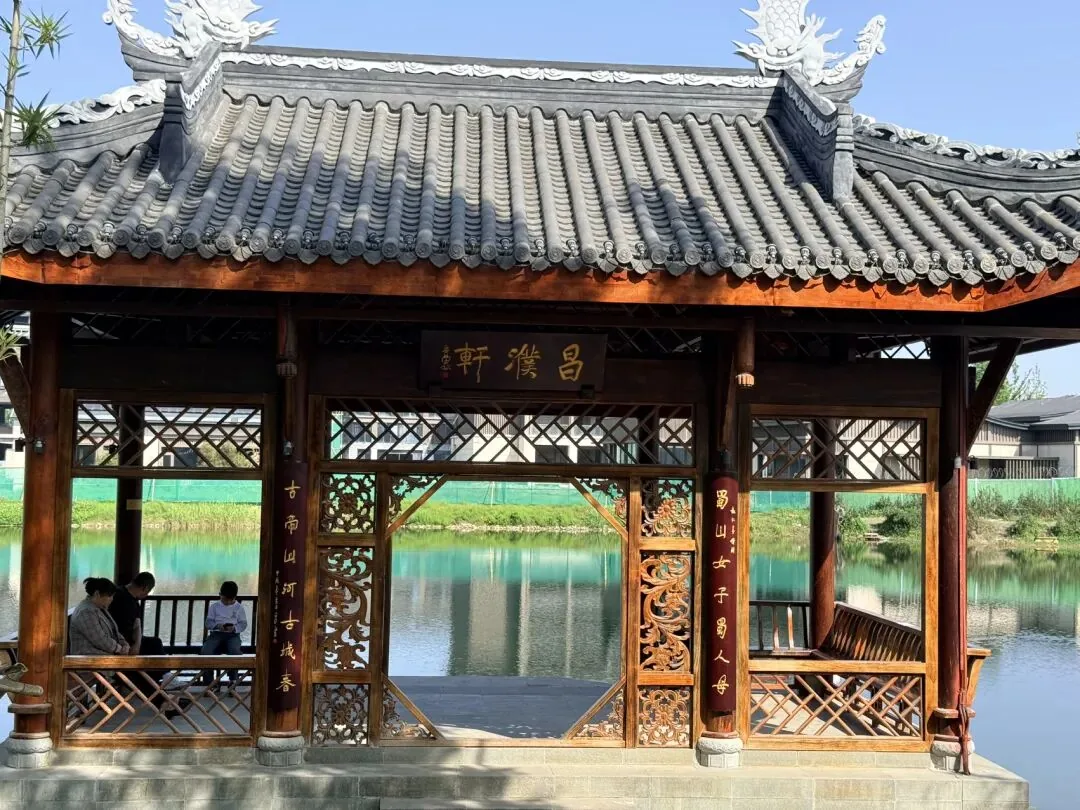
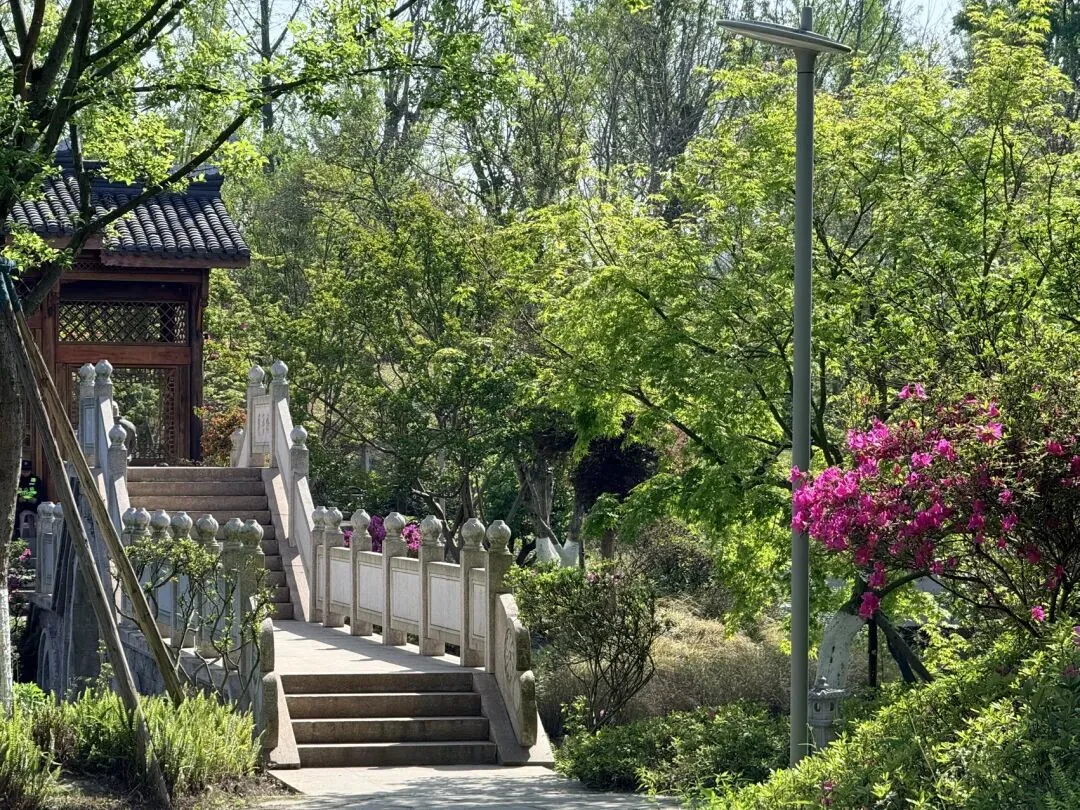
Just from the name, you can tell Shuyun Garden is a garden style unique to the Sichuan region. It isn’t in Xipu or other spots closer to the city — it sits next to Chengdu Science Fiction Park on the west side of Pidu’s urban area. The location is really tucked away, because there are several parks clustered nearby: Maker Park, Science Fiction Park, Qingshui River Ecological Art Park, and more. Shuyun Garden sits right in the “gap” between them.
Shuyun Garden covers 84 mu — which is actually not small at all, roughly the size of eight standard soccer fields. It was only completed at the beginning of this year, so it’s a new park. The design works with the local terrain, and there’s a river here — the Qingshui River, which flows down from Dujiangyan, passes through Pidu, and runs through this park too.
Compared with today’s parks that span hundreds or even thousands of mu, those big parks have nothing but size — none of that classical Chinese charm. I actually prefer the old way of making gardens: piling slopes to make hills, shaping water and stacking stones, mountains and water leaning on each other. Step into the park and you don’t feel the heat at all.
Architecture That Feels Like a Step Back in Time
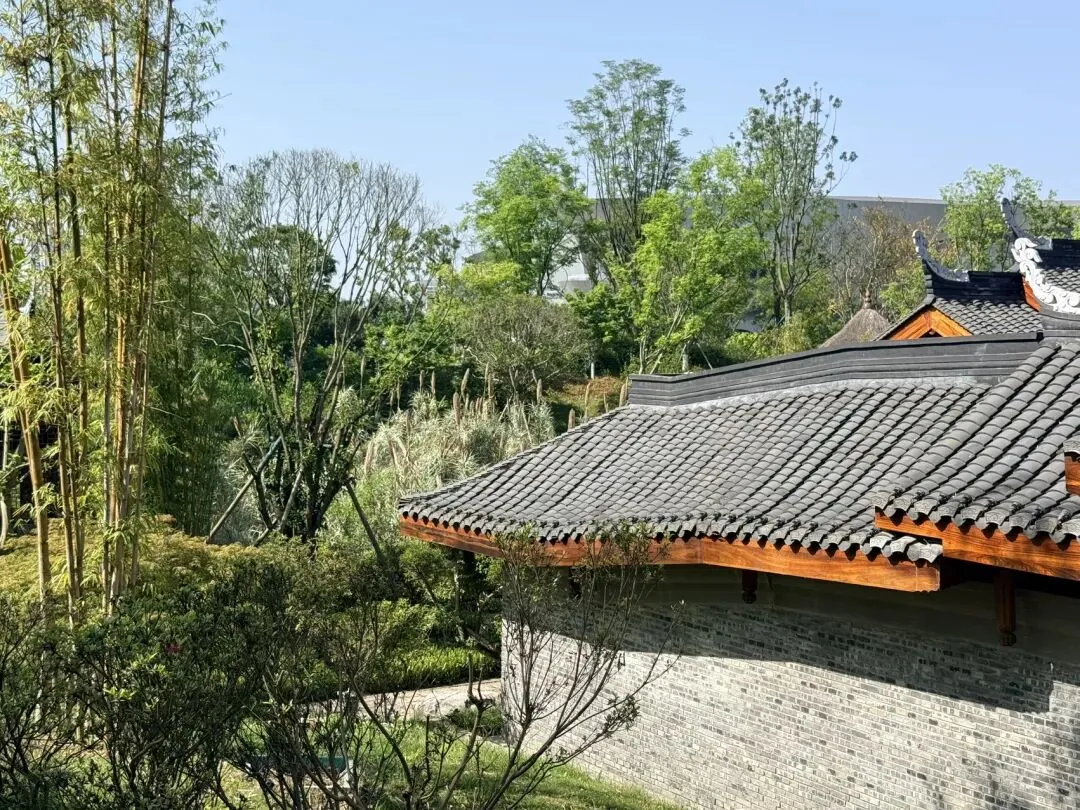
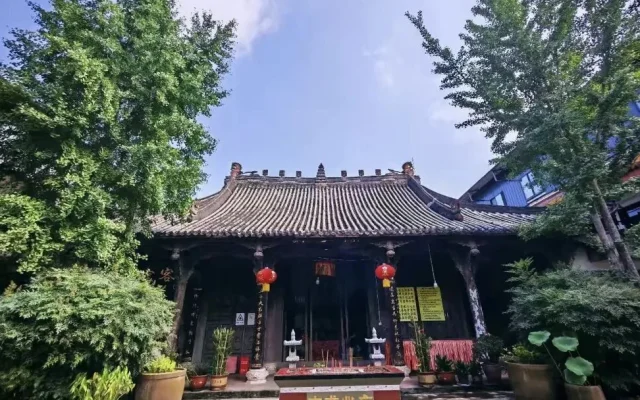
Shuyun Garden’s buildings are really distinctive — and there isn’t just one or two of them, they’re densely packed. The main structures use red rosewood (红花梨木) and traditional mortise-and-tenon joinery, with no modern reinforced concrete anywhere. It gives you a back-to-basics feeling.
With flying eaves, upturned corners, and carved beams and painted rafters, courtyards like Yuancui Hall (远翠馆) and Liuyun Pavilion (流韵阁) are scattered in a natural, uneven layout. Covered corridors link the courtyards together, perfectly showing off the delicacy and elegance of Western Sichuan architecture — and there’s a thick sense of history to it too. These buildings are packed with old-world charm in photos.
Local insight: The architecture here is dense and photogenic — bring a camera, because every courtyard and corridor is worth a shot.
Tea by the Lake and a View From Ziyun Pavilion
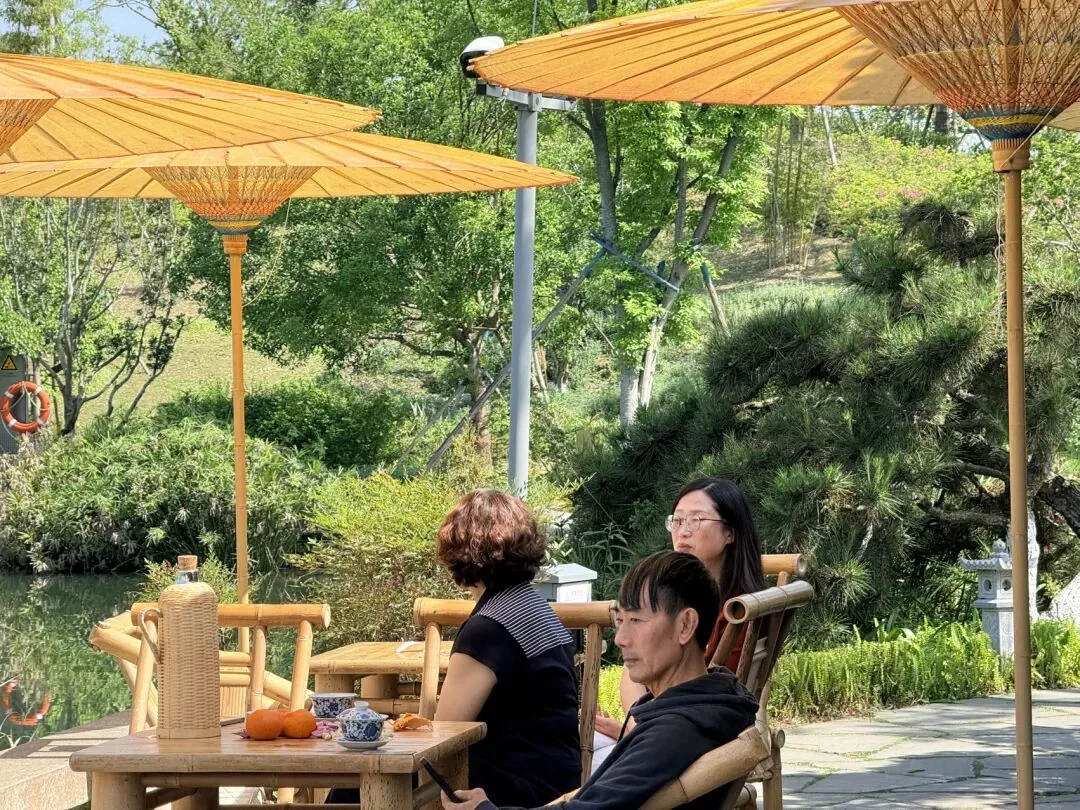
In the buildings along the lake shore, you can drink tea and take a rest. Bamboo chairs and tables sit by the water under umbrellas. Brew a cup of gaiwan tea and chat with friends — or, if you’re on your own, just quietly look across at the mountain peak on the other side. On the hill stands a pavilion called Ziyun Pavilion (子云亭), very elegant, and from the pavilion you can take in the whole park at a glance.
Yingjuan Lake, Streams, and a Waterfall
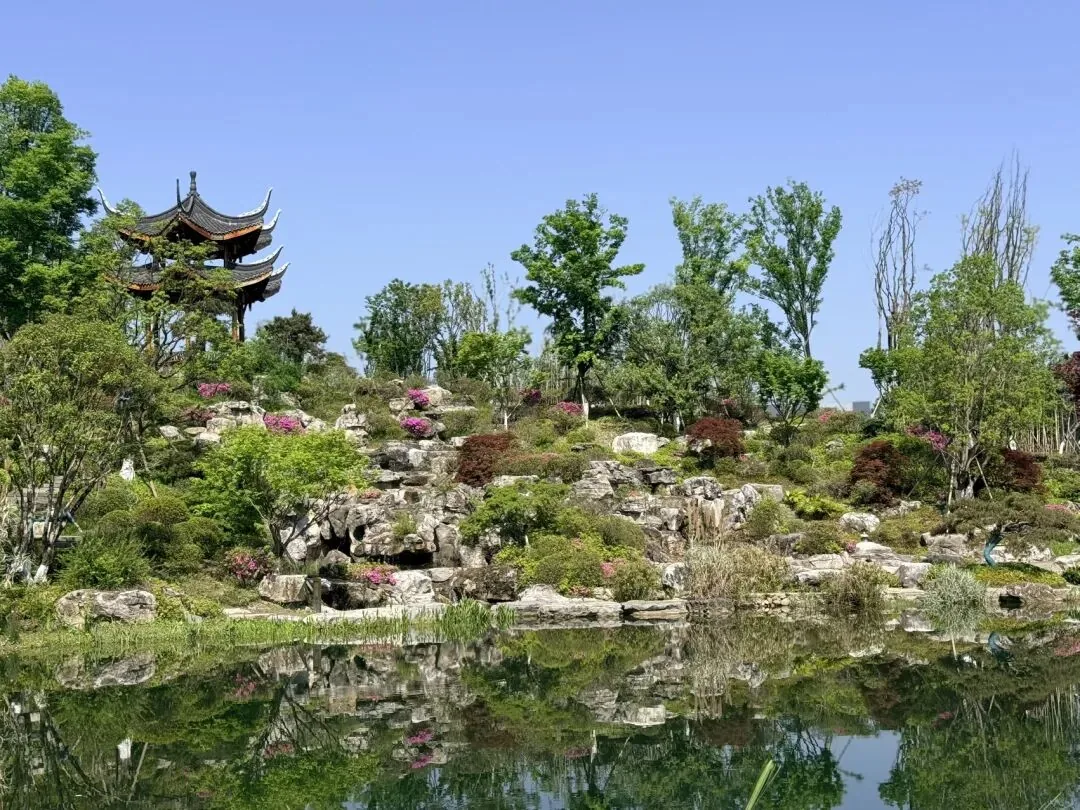
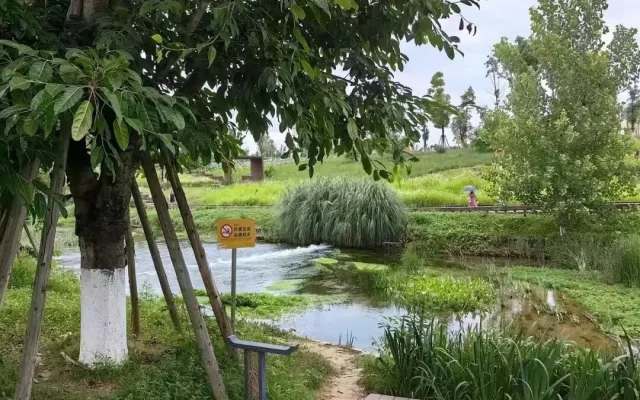
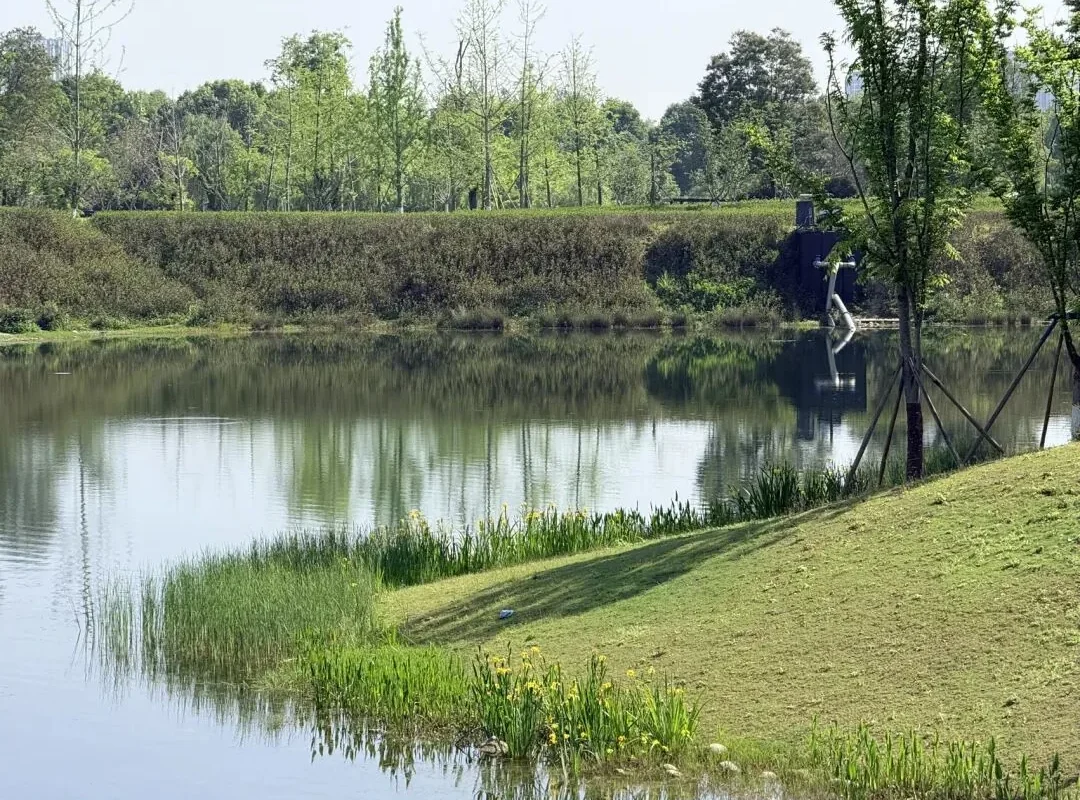
Streams run through the park nonstop, and in the middle there’s a lake called Yingjuan Lake (映鹃湖). The entire park is built around this lake. The water is very clear and shimmering. On the side near the mountain there’s also a waterfall and cascading water — the water flows slowly down from above, and standing underneath looking up, it feels quite imposing. Pidu District is flat plains, so having a mountain peak like this is pretty satisfying.
Eleven Bridges and Winding Stone-Paved Paths
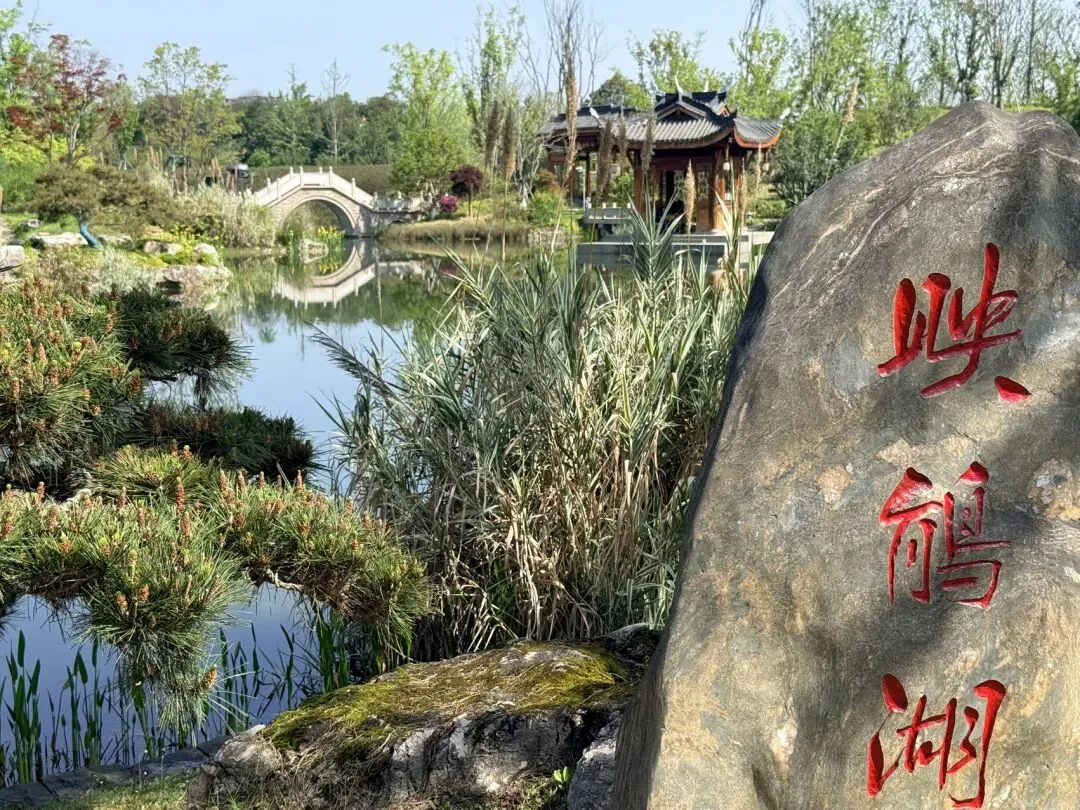
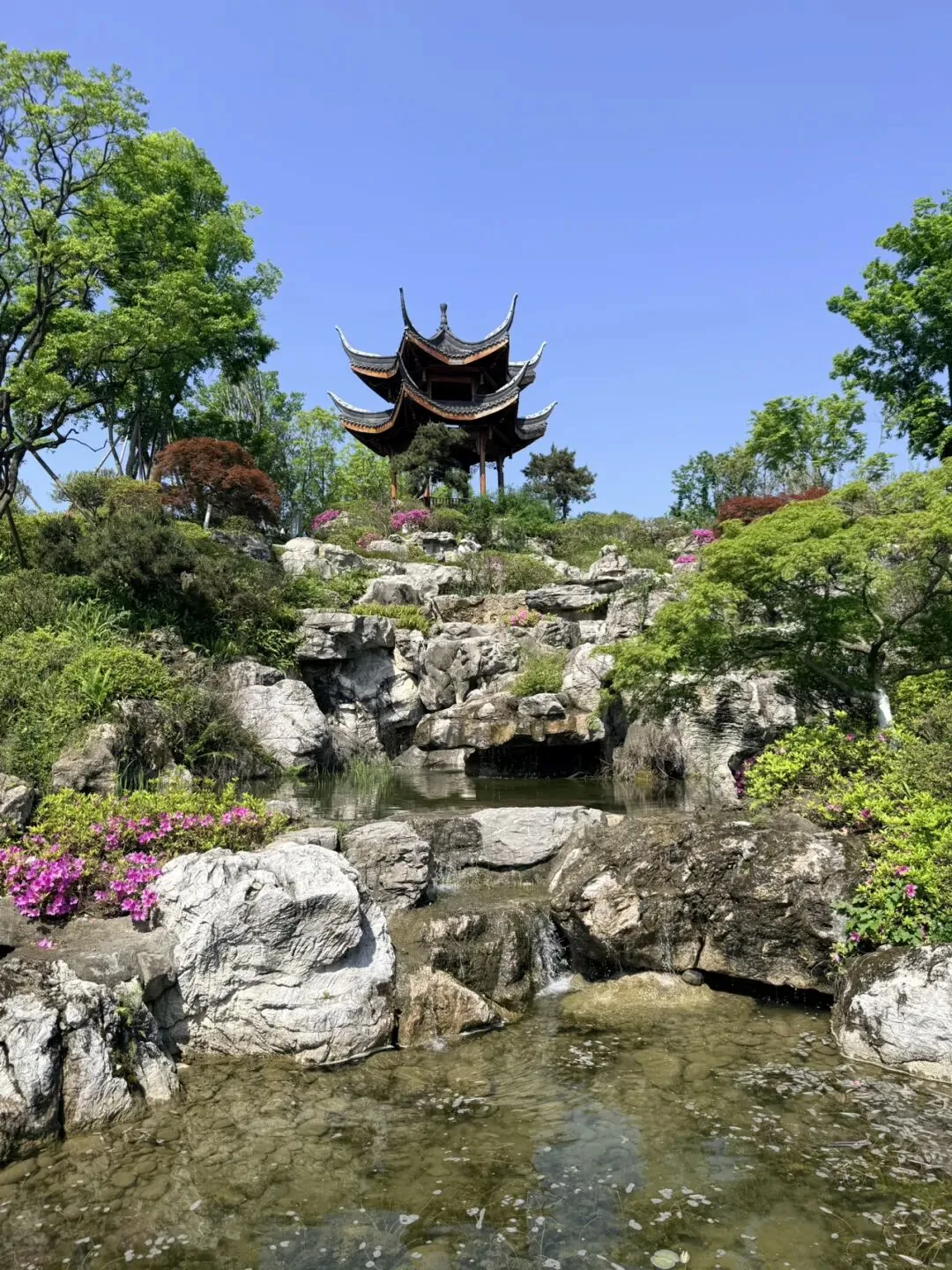
The park isn’t big, but it has a lot of small bridges — reportedly 11 of them, all antique-style and each one different. With small bridges and flowing water like this, it feels like you’re in a Jiangnan garden.
The park’s paths wind and turn, paved with bluestone underfoot. The little paths crisscross, so you can find many different routes. Lots of flowers, grasses, and trees are planted on both sides, on the slopes and along the greenways. There are many sights in the garden too, including the Silkworm Cocoon Pavilion (蚕蔟榭) — a tribute to Pidu as the “home of Sichuan embroidery” — the lake-heart pavilion built right on the water, and the Yingjuan Lake stone tablet.
Many people are out in beautiful hanfu, striking poses and taking photos. This place is great for traditional-style photos.
Modern Meets Classical: Views of the Chengdu Science Fiction Museum
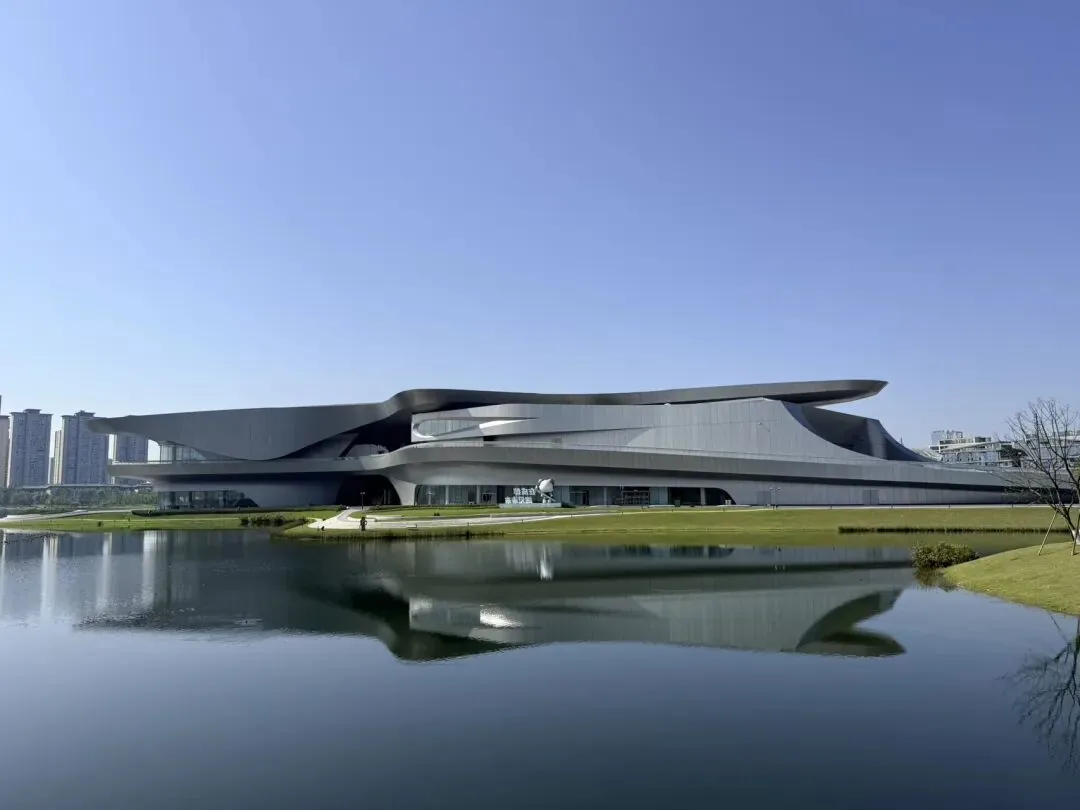
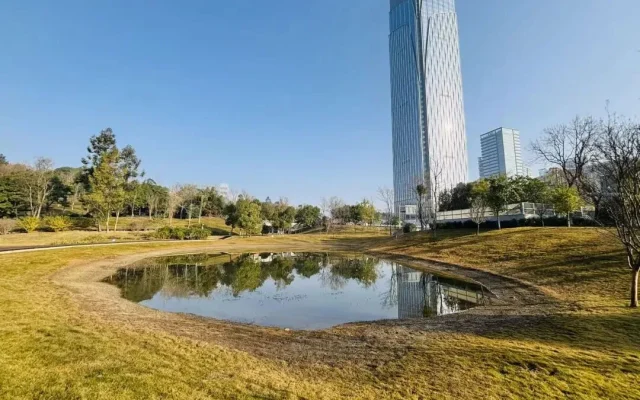
From a high point in the garden, you can look out at the Chengdu Science Fiction Museum not far away — a super-modern building that looks like a spaceship, or maybe a flying saucer. It’s extremely futuristic. On one side is a modern park, and on the other is the classical Shuyun Garden. You can absolutely visit these parks one after another. Still, I prefer a park like Shuyun Garden, because parks like this are truly rare now.
A Quiet Spot Locals Love
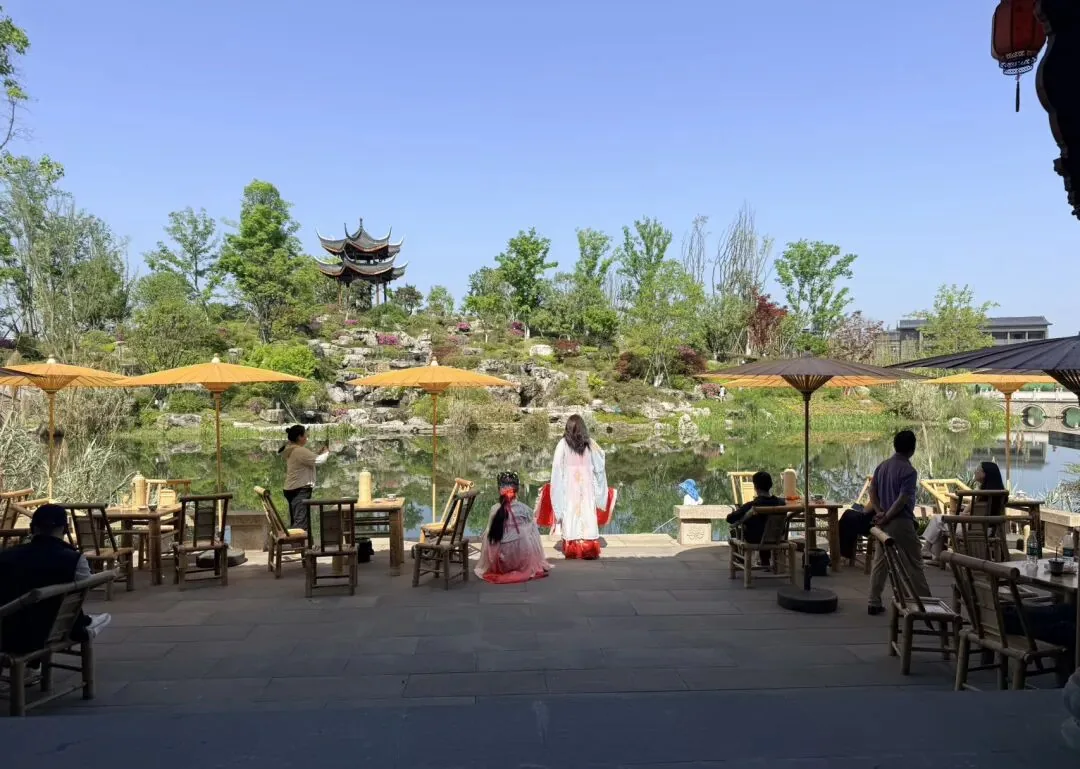
It’s already autumn now, but the weather is still a bit hot. I think in a little while the scenery in the park will look completely different again. Some people come here to find that old-style look for their camera; some come to rest their body and mind after being busy; and some just pass by and get drawn in by the scenery.
Shuyun Garden is really lovely. It isn’t in the bustling city center, there aren’t many tourists — mostly locals come to hang out. It stands quietly by the Qingshui River, giving the people who live here one more place to go in the future. So — do you like classical gardens like this?
Practical Info
- Address: No. 266, Section 2, Deyuan North Road, Pidu District — inside the World Science Fiction Park (Jingrong Lake) area.
- Tickets: Free.
- Getting there: Take Metro Line 6 to Wangcong Temple Station, transfer to Tram Rong Line 2 to Dayu East Road Station, then walk about 800 meters.
- Tip: Shuyun Garden is inside Science Fiction Park. Don’t navigate to the “Xilai Shuyun Garden” near Kuanzhai Alley — the two places are completely different.
- What to wear: Hanfu, Qipao, new Chinese style, or plain-colored dresses. Avoid clothes with overly busy colors — the photos come out great. Small props like an oil-paper umbrella or a folding fan add to the traditional atmosphere.
- Best photo spots: Low-angle shots of the water reflections at Duiying Bridge; low-angle lake views at Duiying Bridge; and from the top of Dujuan Slope, shoot down over the whole garden and the Science Fiction Museum.