Finding Real Calm at a 1,100-Year-Old Zen Forest Near Chengdu
Some days you just need to get out of the city. If you’re based in Chengdu and craving quiet — the kind you can’t really find between honking taxis and endless notifications — there’s a place about an hour’s drive away that might do the trick.
Head to Pengzhou, to Shuangsong Village in Danjingshan Town, deep in the Chalong Mountains. Navigate to “Sanmei Chanlin” (三昧禅林), park at the mountain gate for 5 RMB, and step into another century. On a rainy day there’s hardly anyone around, and the air smells of wet grass and trees. Honestly? That’s the perfect time to come.
What Is Sanmei Chanlin?
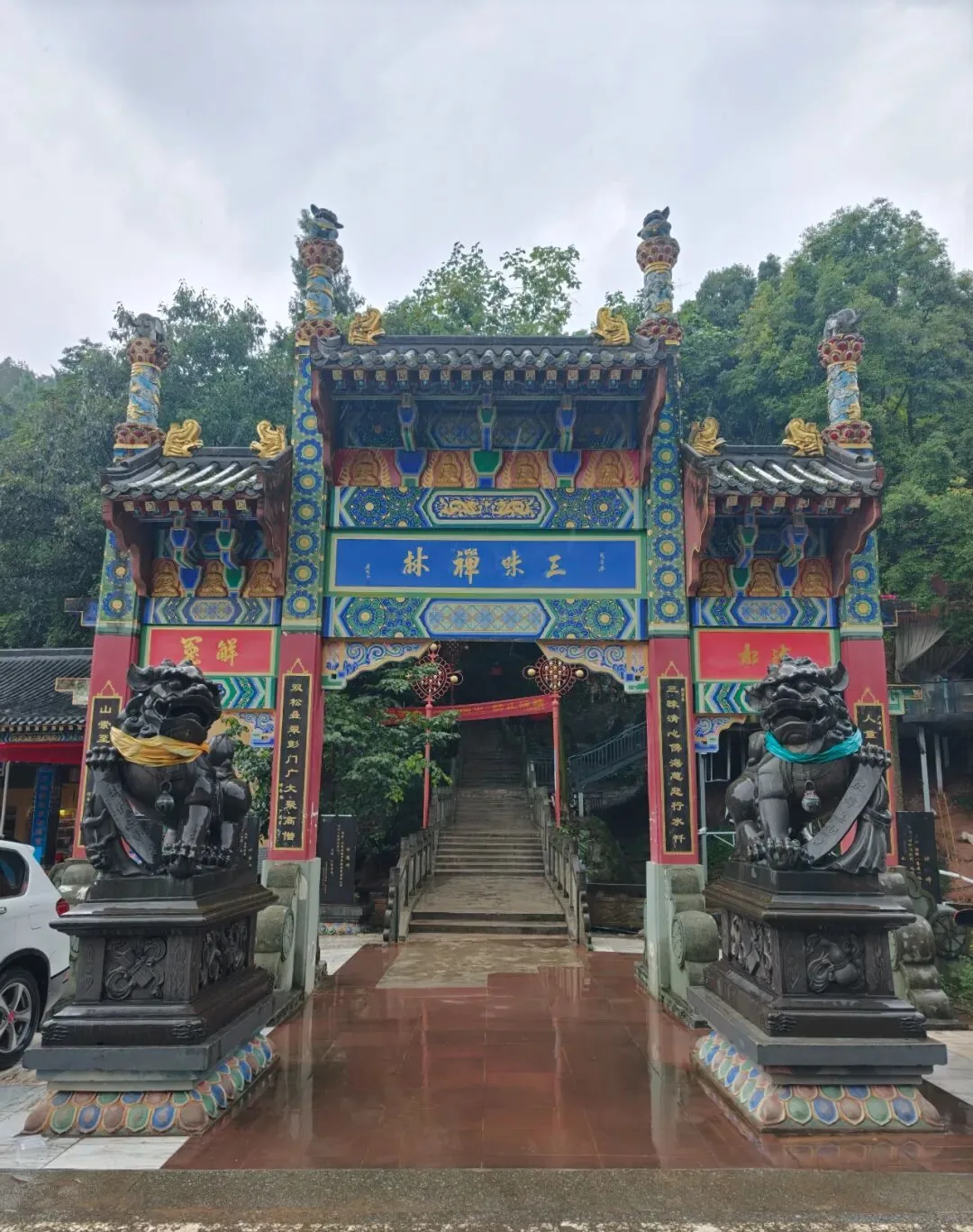
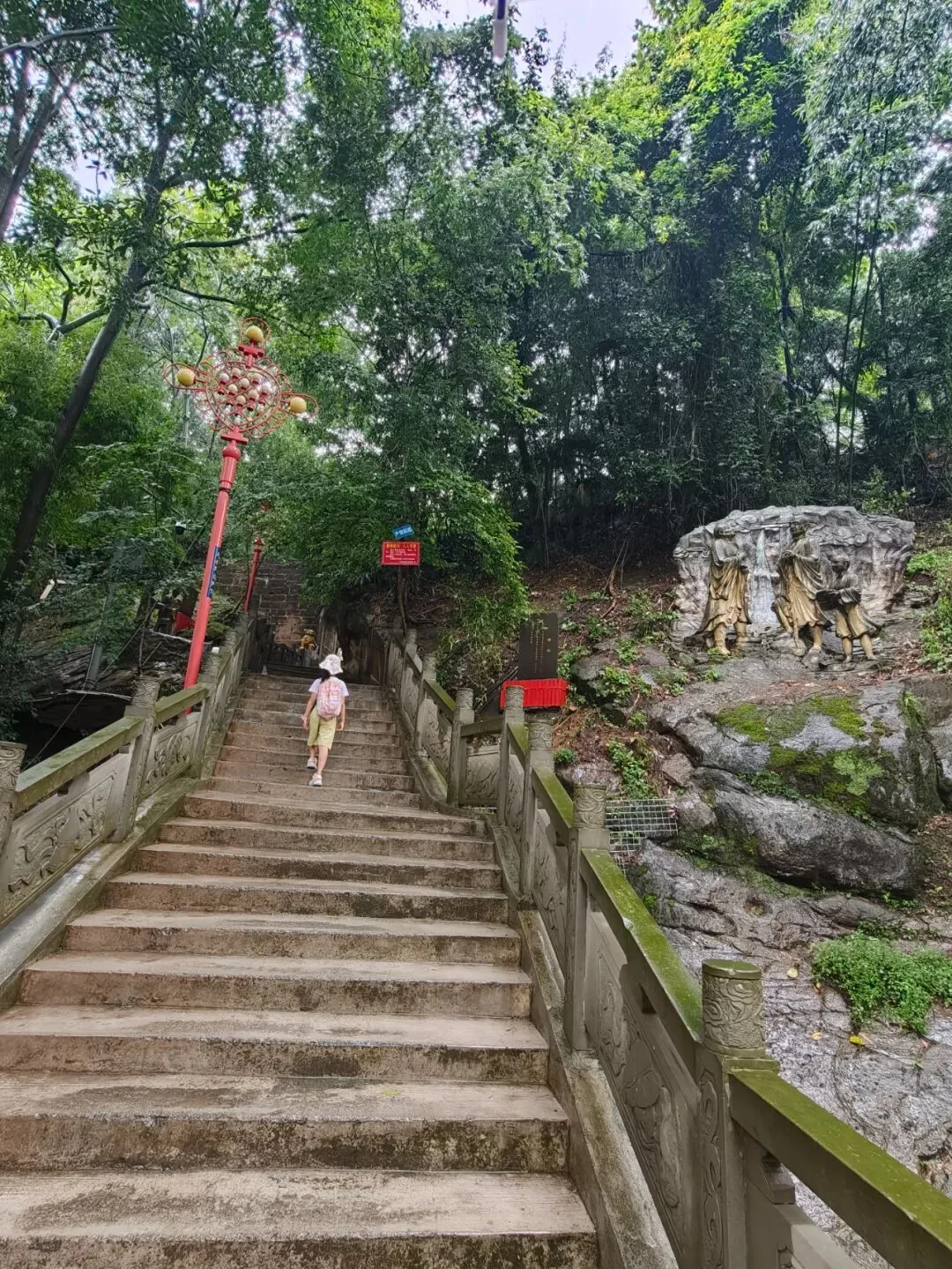
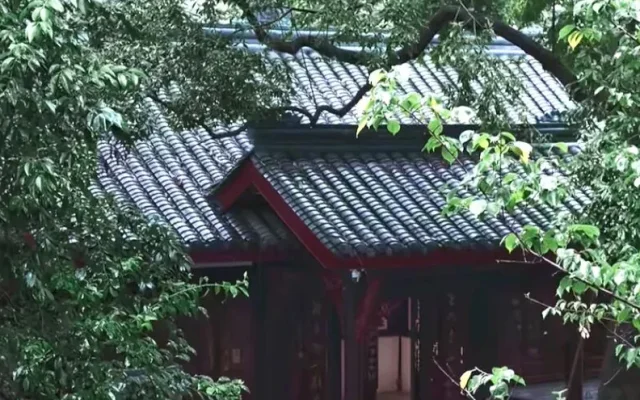
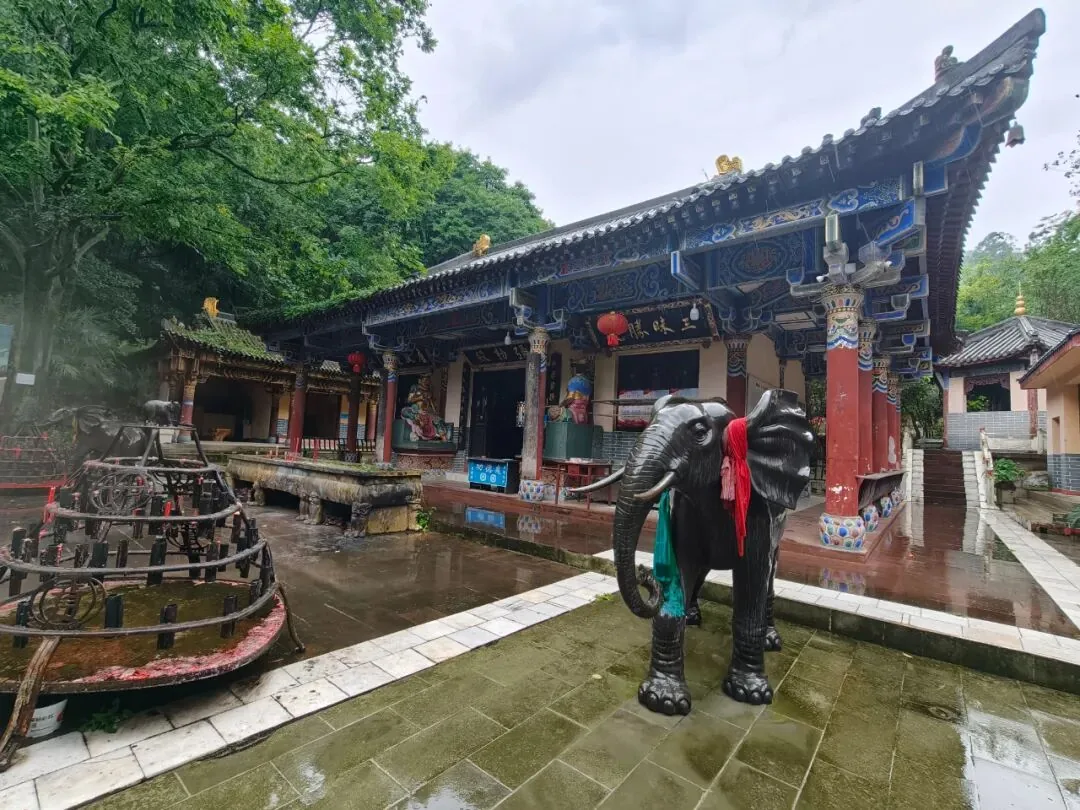
Sanmei Chanlin was founded in the 13th year of the Xiantong era of Emperor Yizong of Tang (872 AD) — that’s over 1,100 years ago. It was the practice site of the Tang-dynasty monk Master Wuda. The complex is made up of three Zen temples arranged along the mountain: Upper Sanmei Shuiting Temple, Middle Sanmei Zhide Temple, and Lower Sanmei Anguo Temple. As the local saying goes: “the lower temple welcomes pilgrims, the middle temple is for meditation, the upper temple hides at the peak” — a step-by-step ascent.
The Thousand Buddha Cliff and Stone Archway
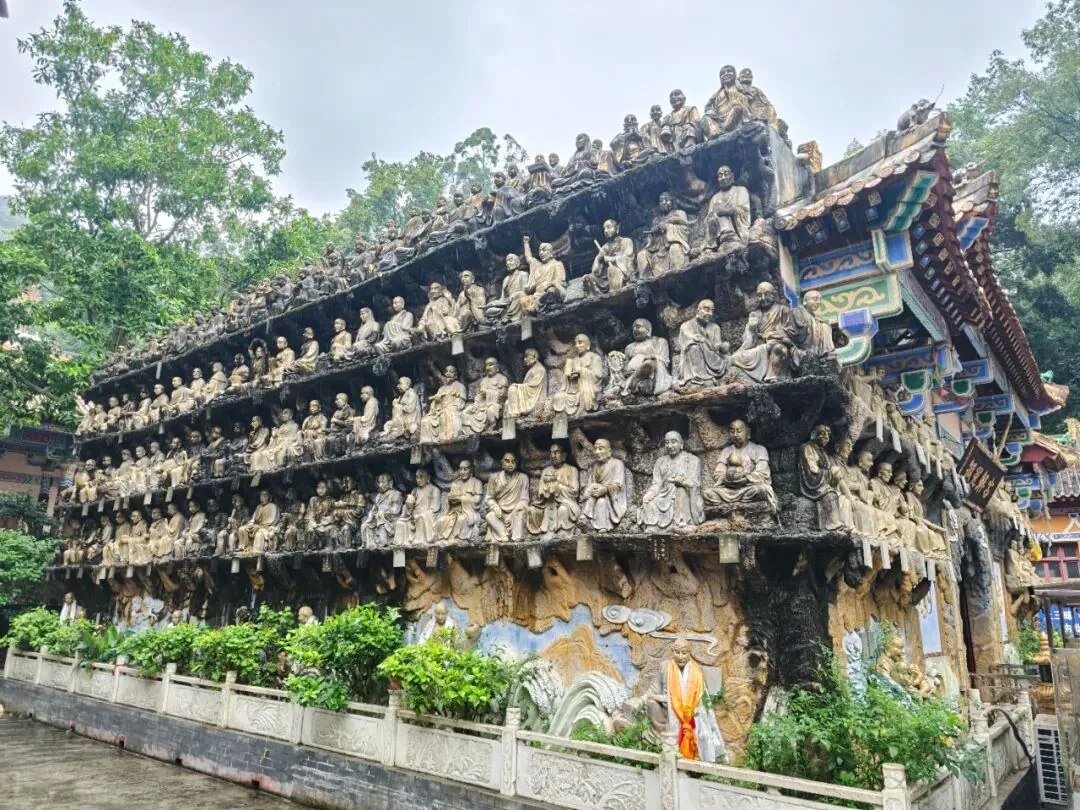
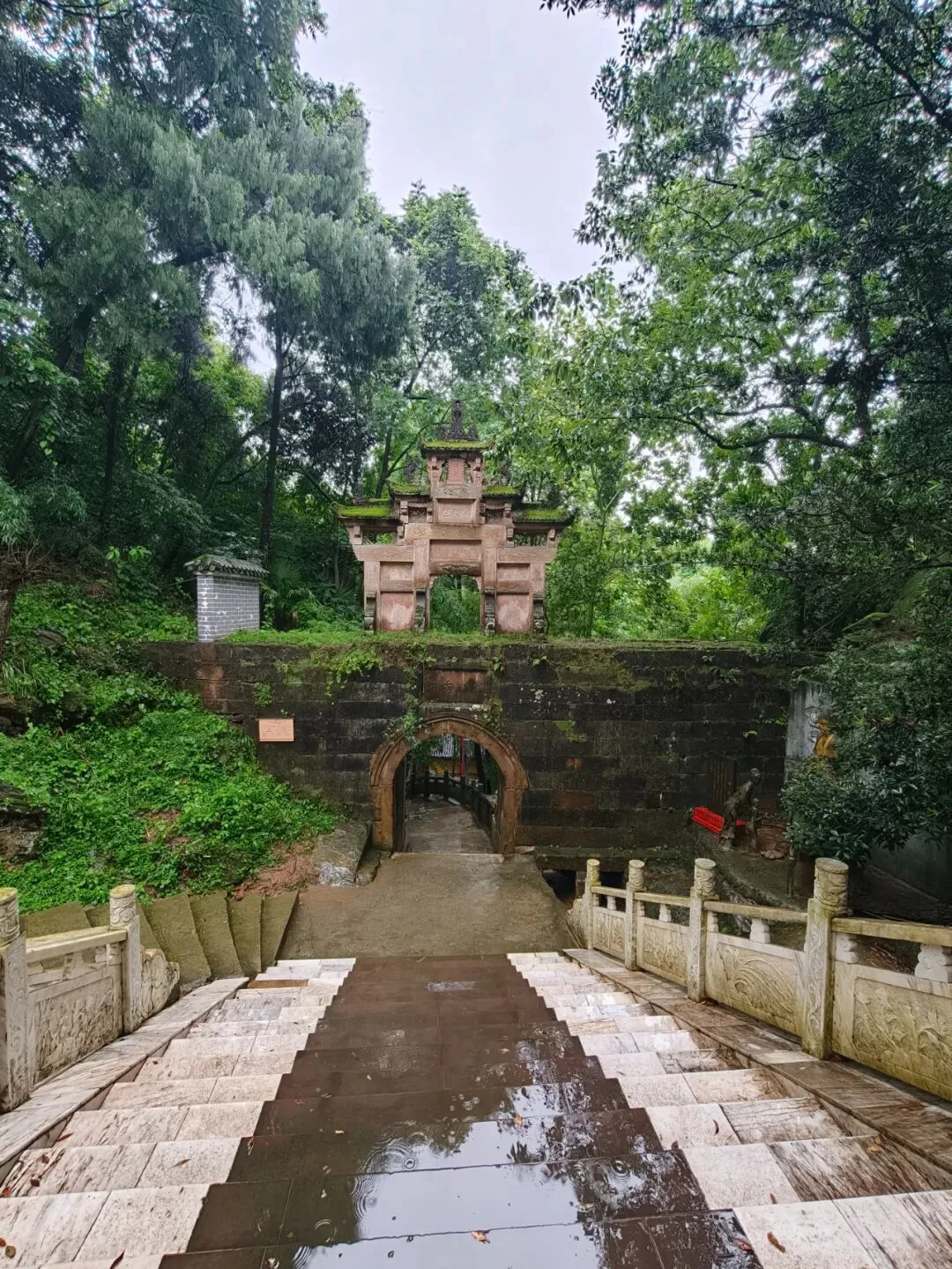
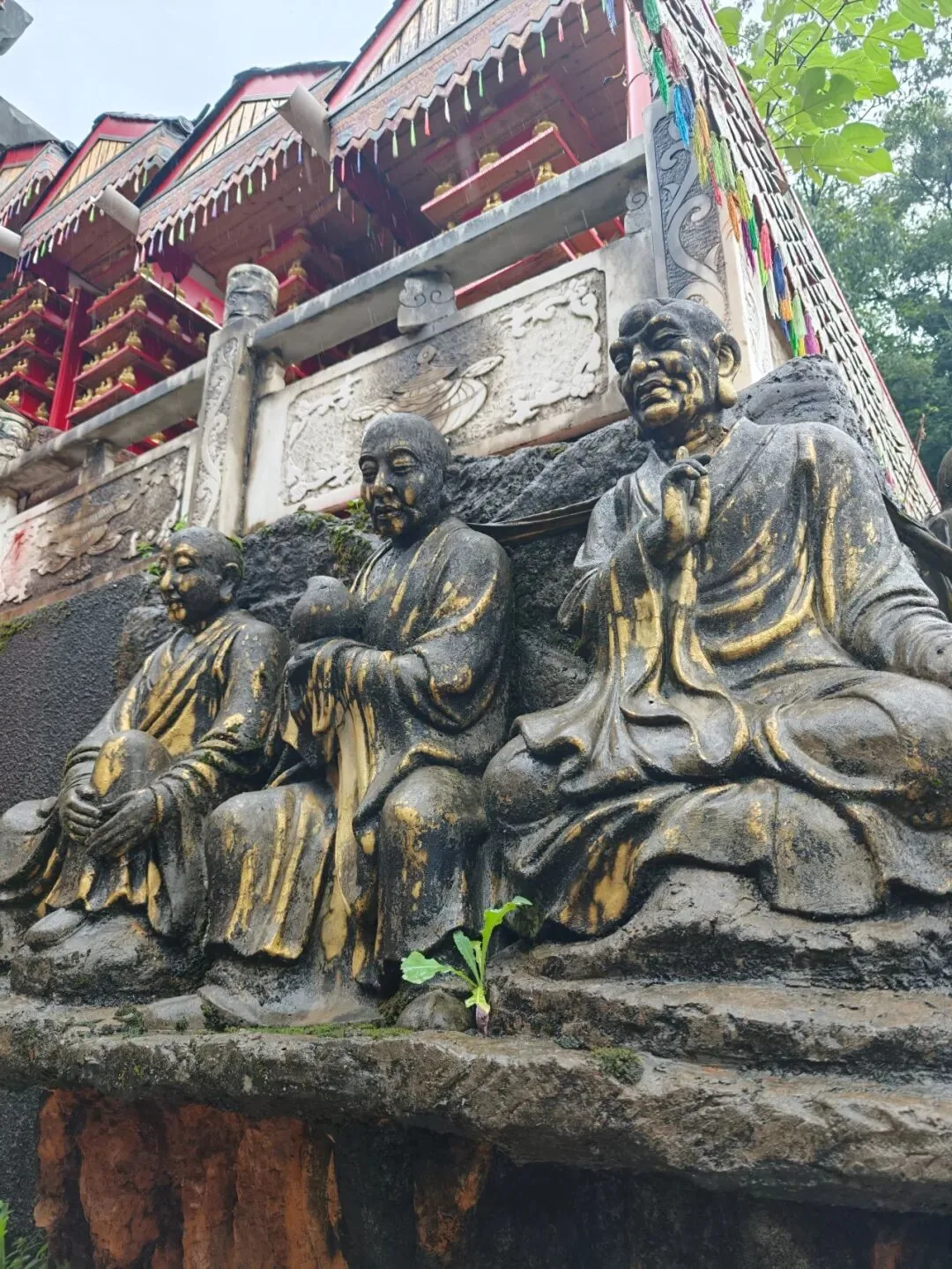
Step through the mountain gate and the first thing you’ll see is the Thousand Buddha Cliff (千佛崖) rock carvings. First created in the Tang dynasty and added to over the centuries, there are now 37 grotto niches containing over 1,000 Buddha and Bodhisattva figures of all sizes. Raindrops fall on the stone figures and trace slowly down the folds of their robes, washing the centuries-weathered faces into sharper clarity.
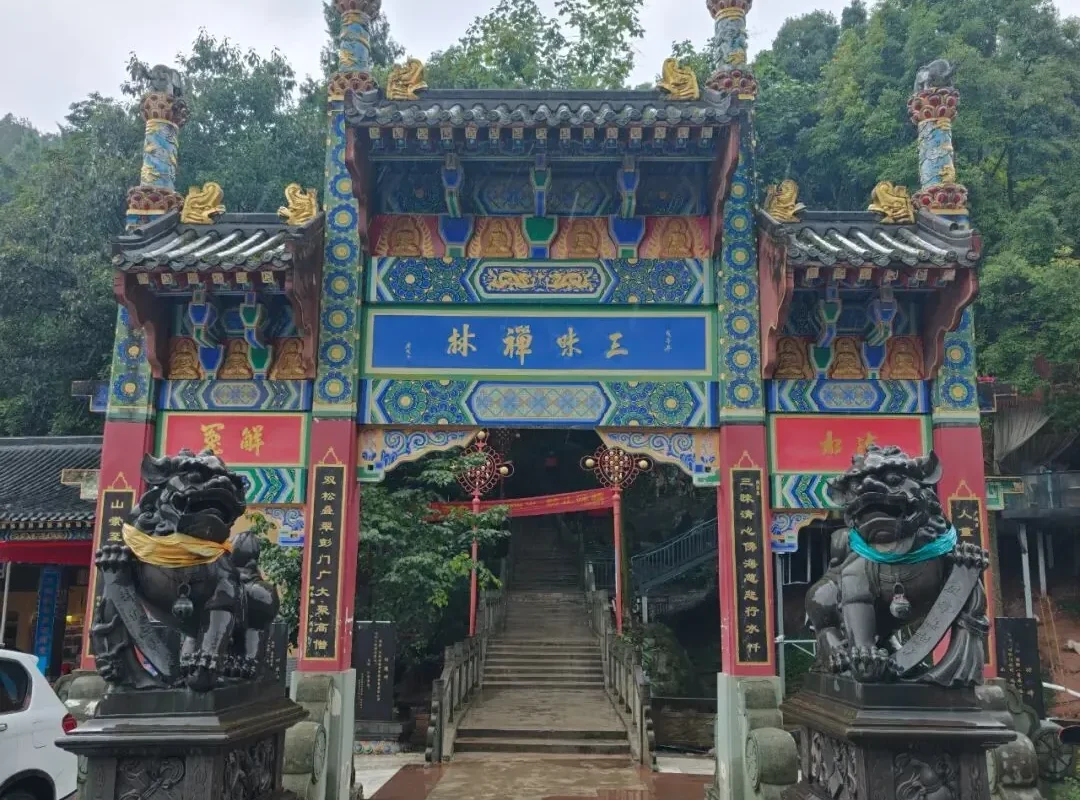
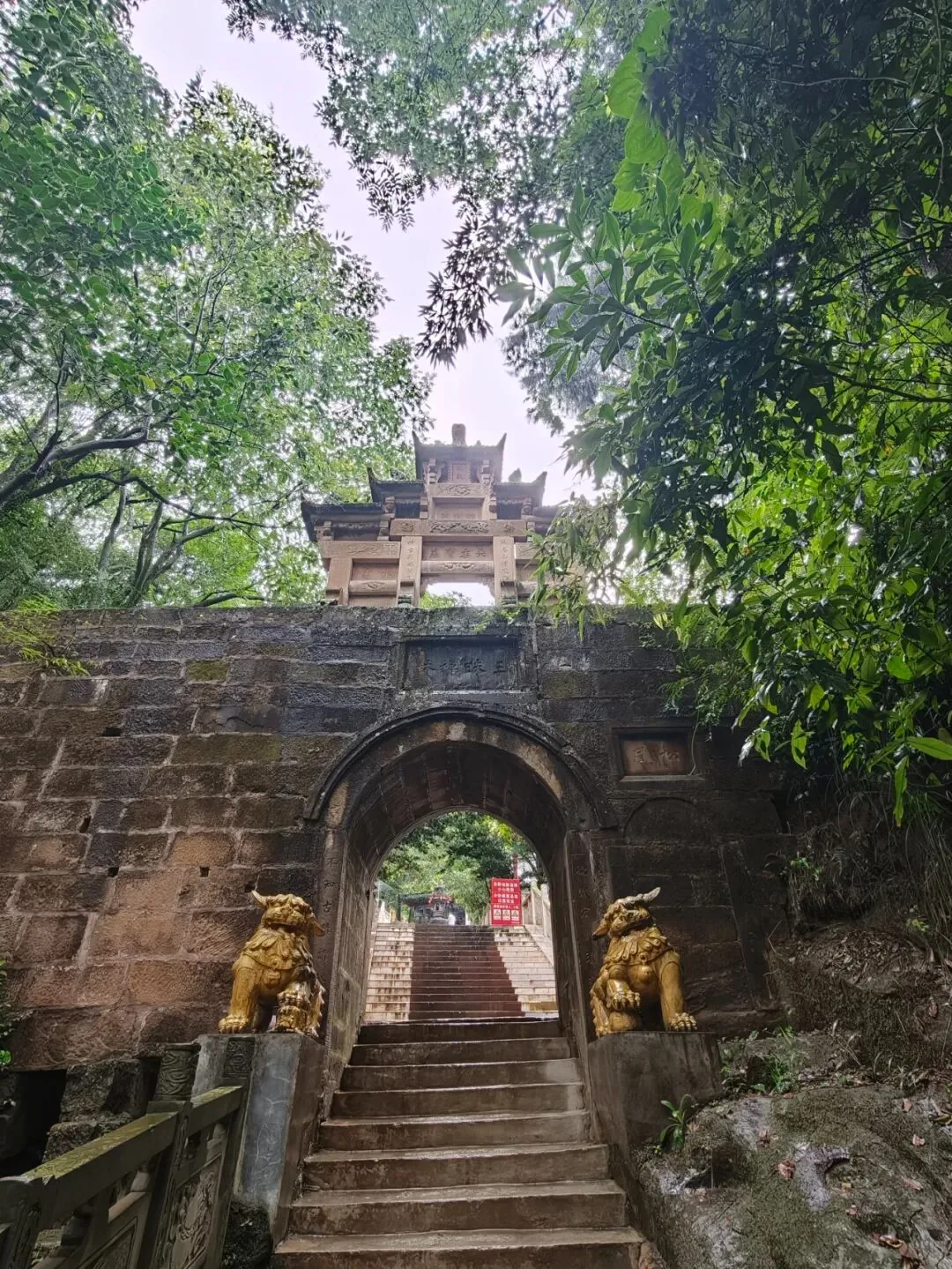
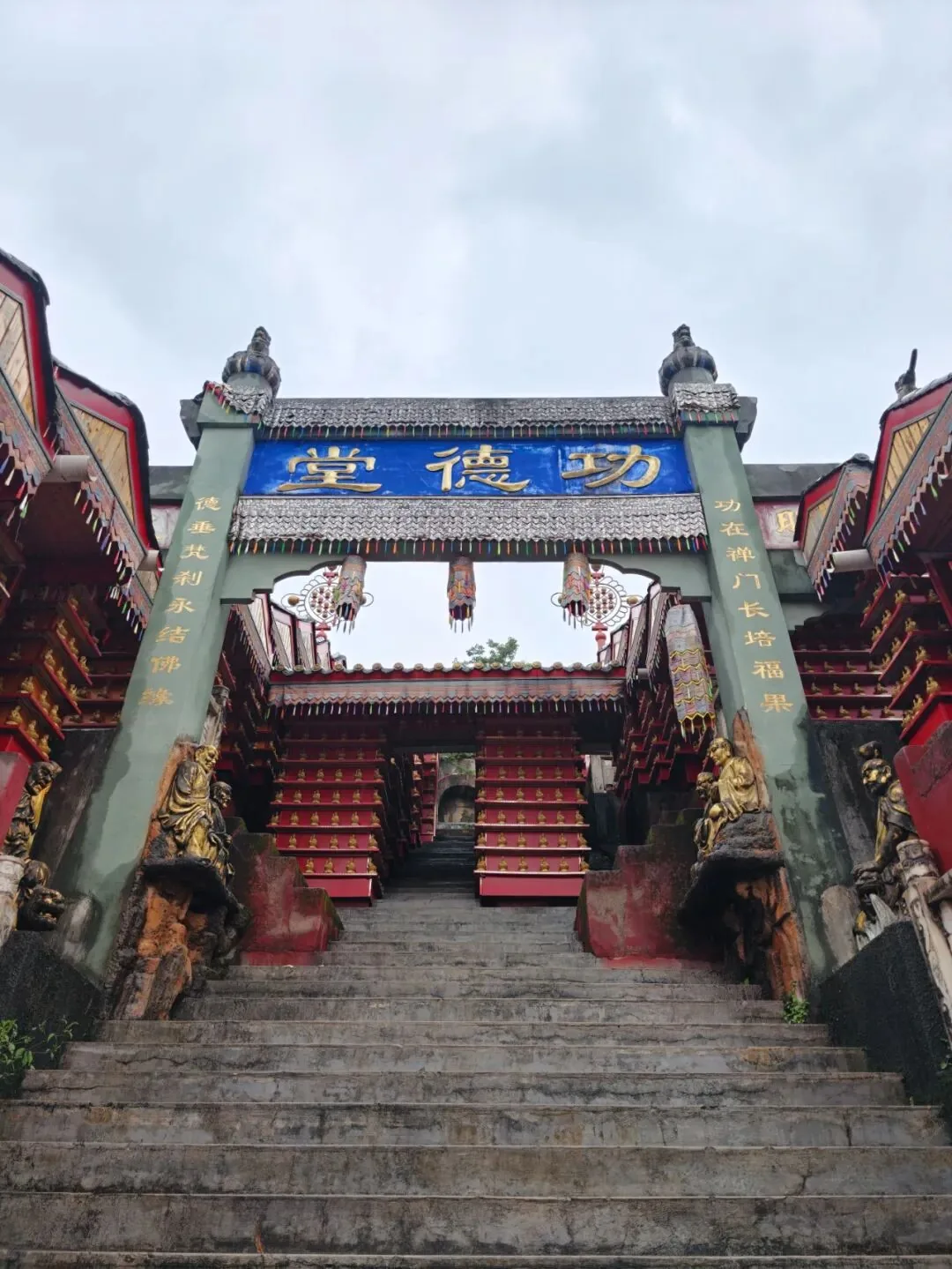
Connected to the Thousand Buddha Cliff is a stone archway built in the 5th year of the Tongzhi era of the Qing dynasty (1866). It’s a double-eaved, three-tier, four-pillar, three-bay structure. The characters “三昧禅林” are carved on the front — solemn and ancient. On the back, the four characters “盛唐古迹” (“Relics of the High Tang”) are, if anything, even more intriguing.
Lower Sanmei Anguo Temple: The Main Reception Area
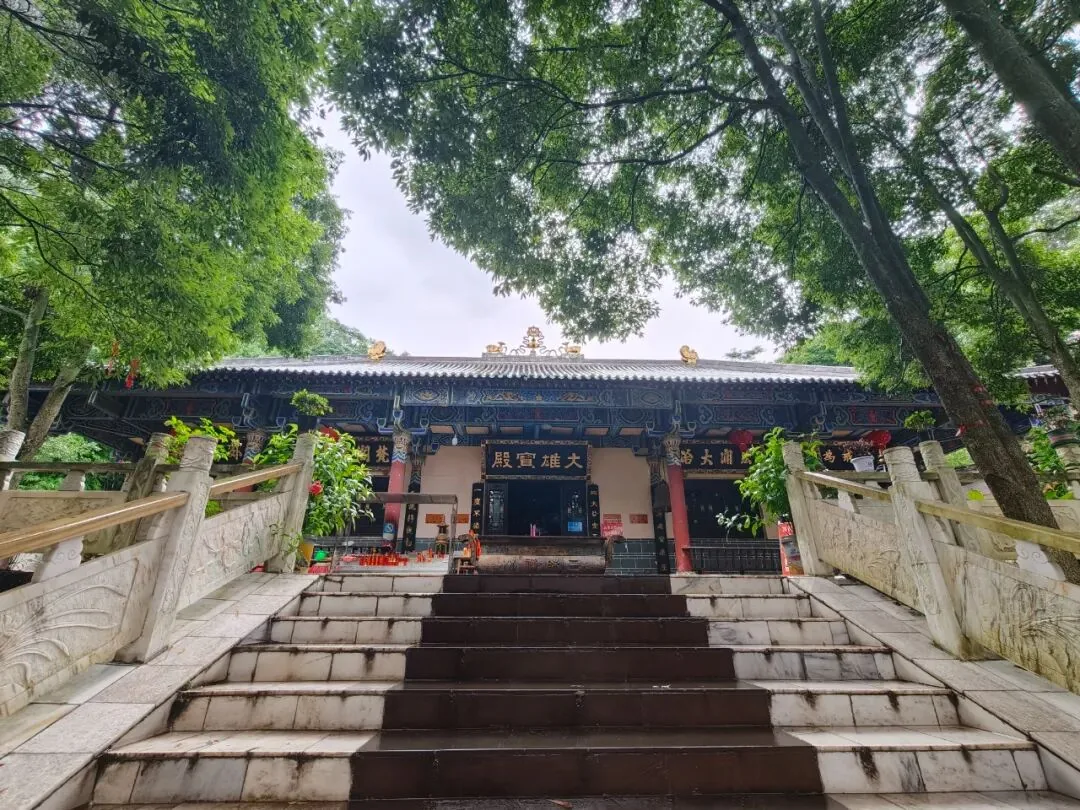
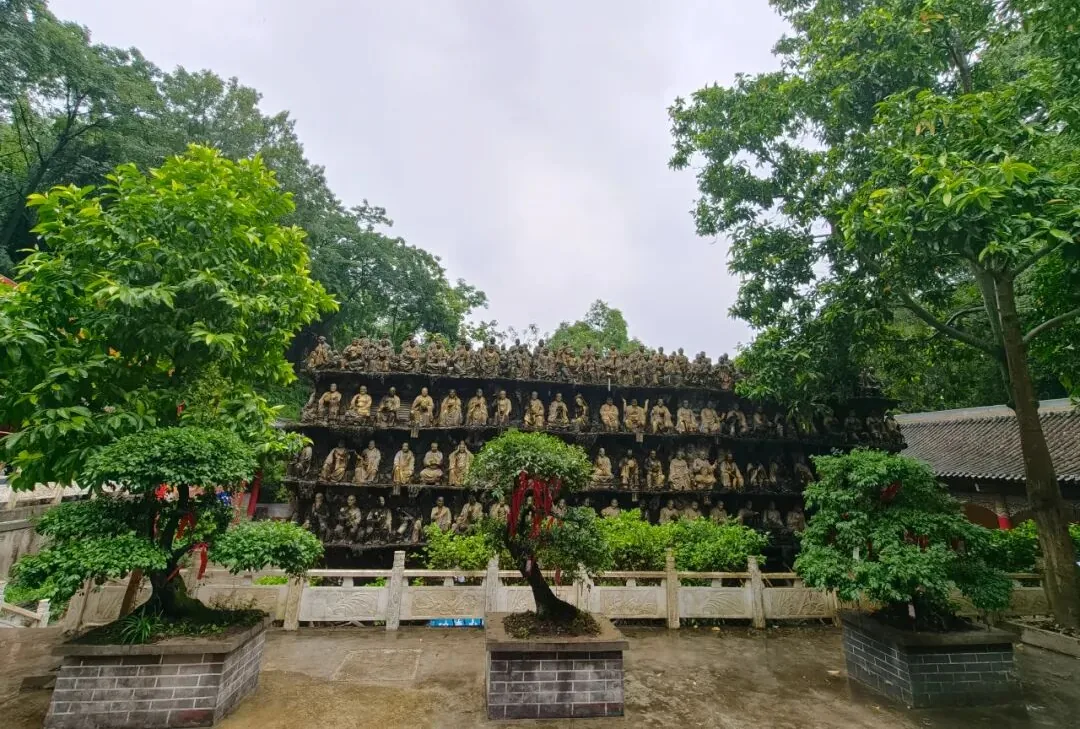
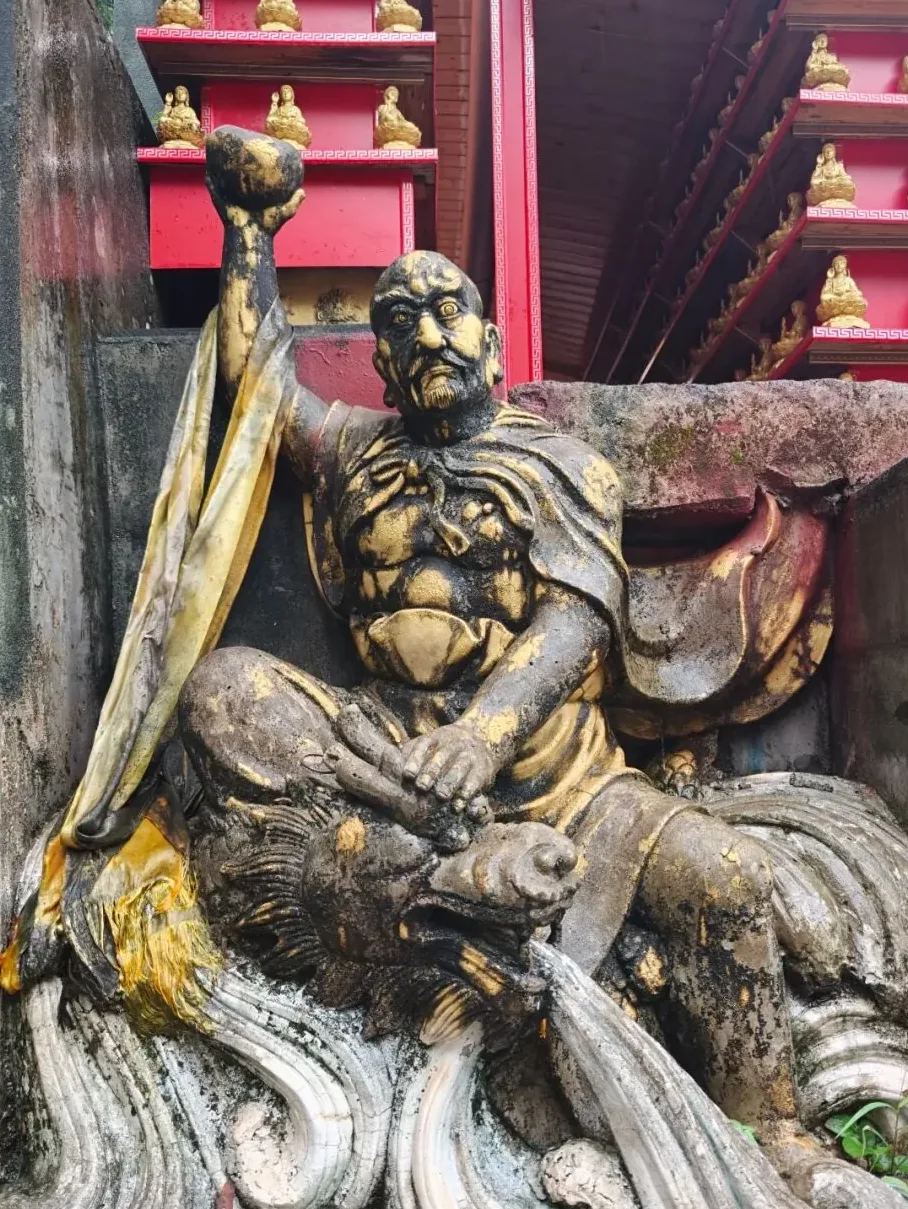
Pass through the archway and stone steps wind upward. Along the mountain path, golden arhat statues appear from time to time. Lower Sanmei Anguo Temple is the main reception area, with the Maitreya Hall, the Mahavira Hall, and the God of Wealth Hall all connected.
The heart of it is the ancient Jieyuan Cave (古解冤洞), where 500 golden arhat statues are enshrined inside and out, arranged along the mountain’s contours, each with a different expression. Beside the cave there’s a well — legend says Master Wuda once washed and healed his “human-face sore” here.
The Legend of the Human-Face Sore
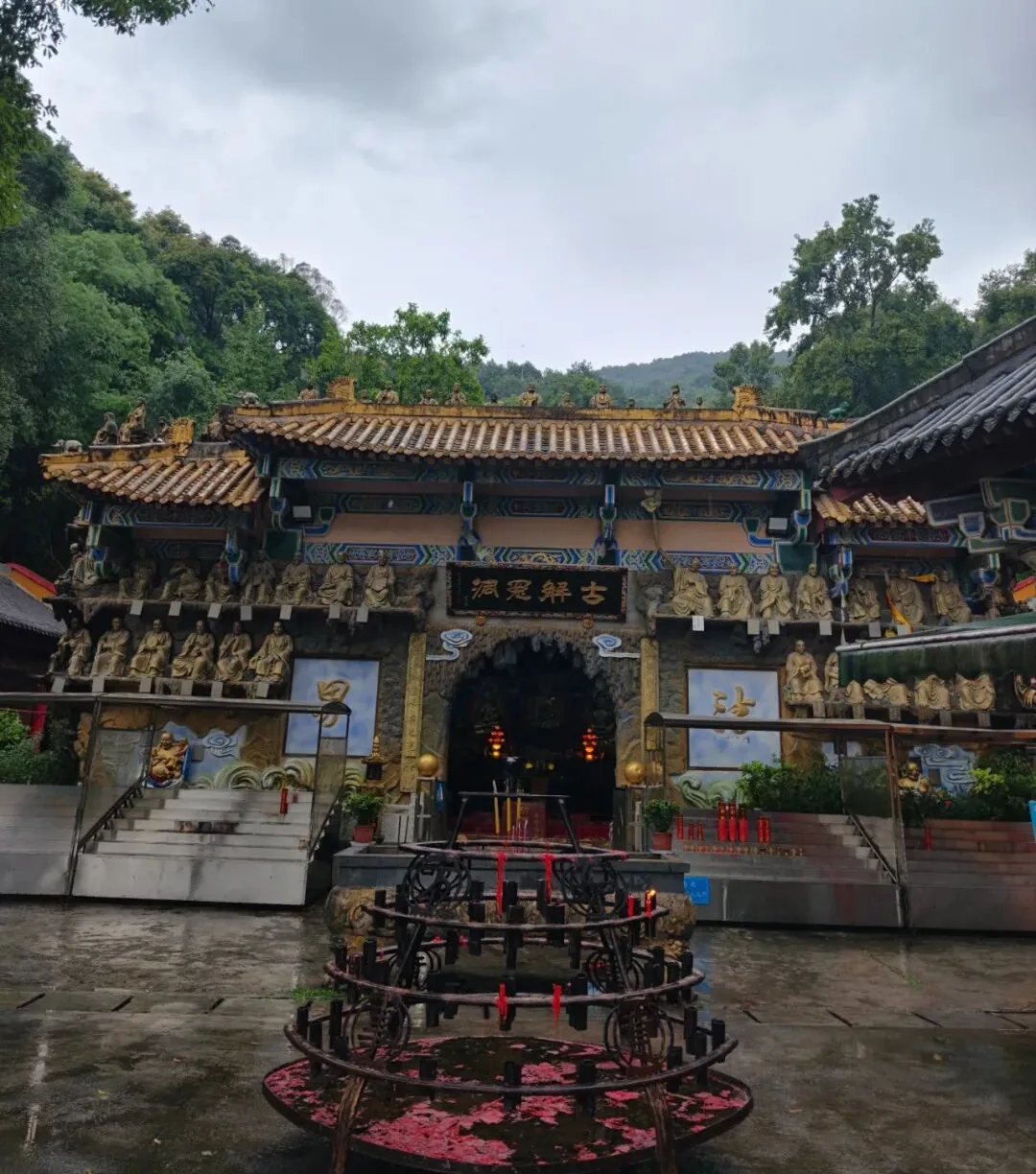
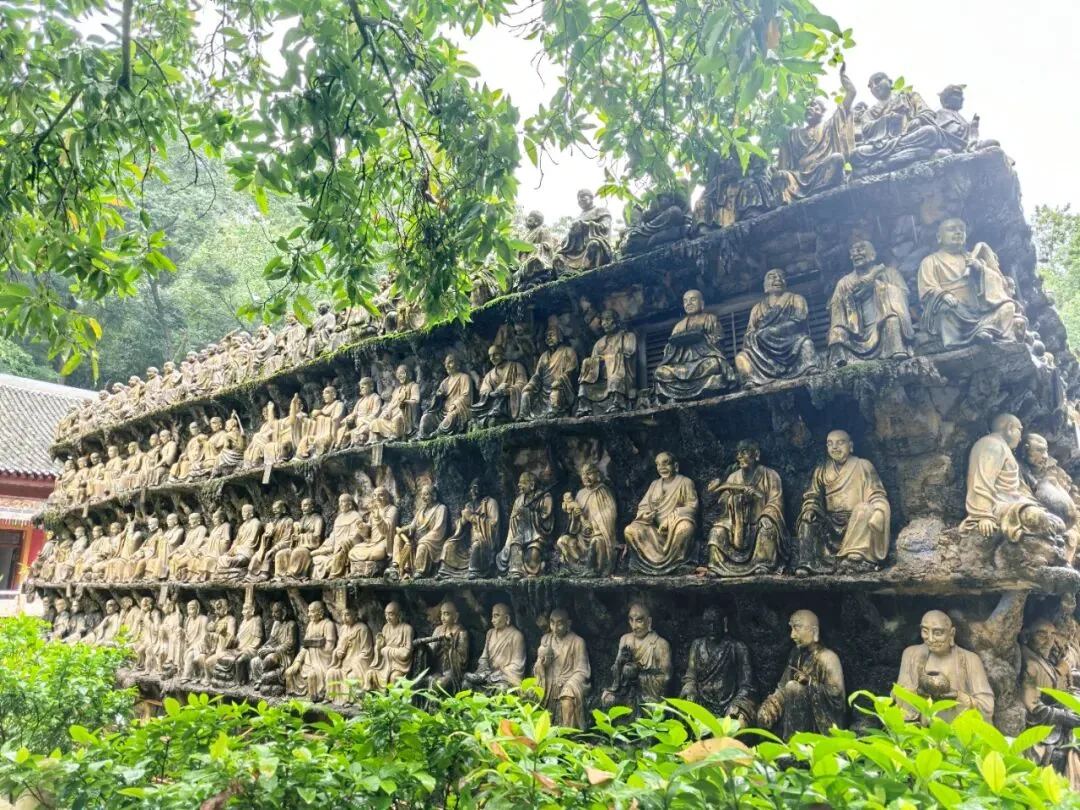
Speaking of that sore, there’s a story that’s been passed down for a thousand years. Master Wuda was brilliant as a young man — at 13 he set up an altar to preach and became famous throughout Shu. Emperor Yizong of Tang invited him to the palace to lecture and gave him a sandalwood throne. But as soon as he sat on it, pride arose in his heart. The moment that thought appeared, a human-face sore grew on his knee — complete with eyebrows, eyes, mouth, and teeth. It was agonizing. Doctors were helpless. Eventually, a strange monk told him to wash it with mountain spring water, and it healed.
Grateful for this grace, the Master wrote the Compassionate Sanmei Water Repentance (慈悲三昧水忏), which is still passed down today. The story is about pride and repentance — one thought of arrogance, and trouble follows. There’s also a statue of Jigong in the temple. Locals say he wandered here, saw the green mountains and clear waters, and stayed a while. True or not, it adds a bit of wild charm.
Middle and Upper Sanmei: Meditation and the Sacred Spring
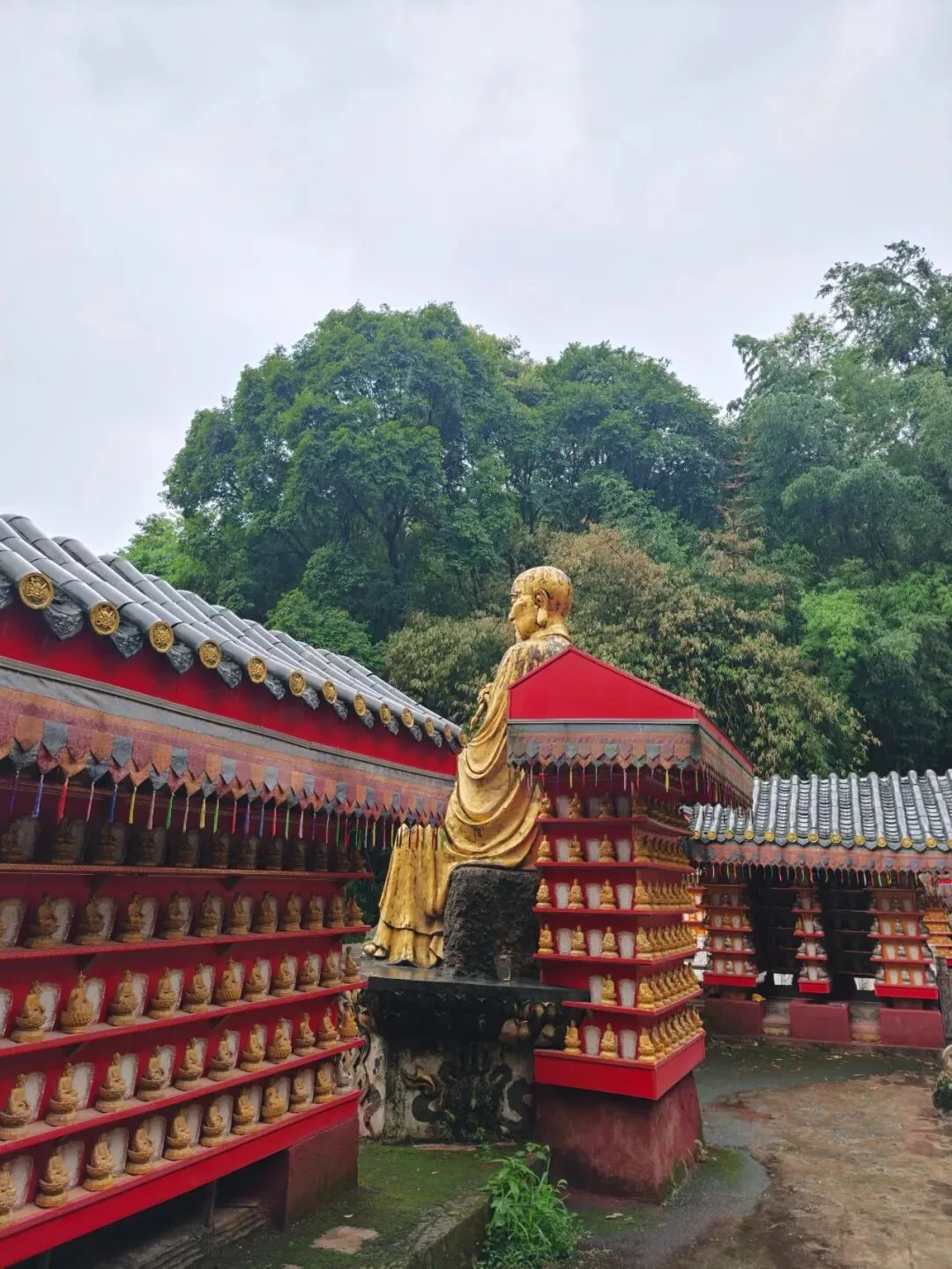
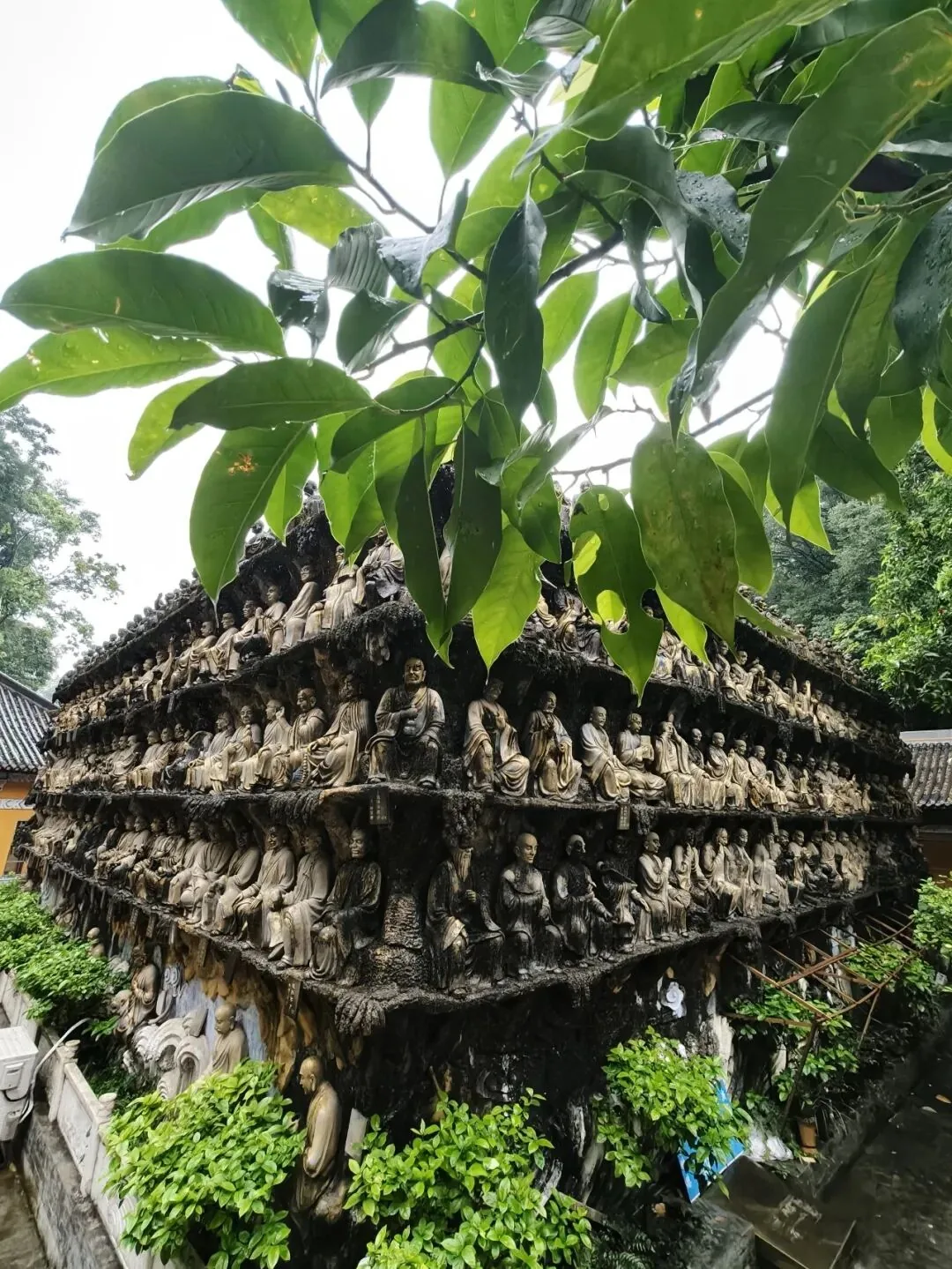
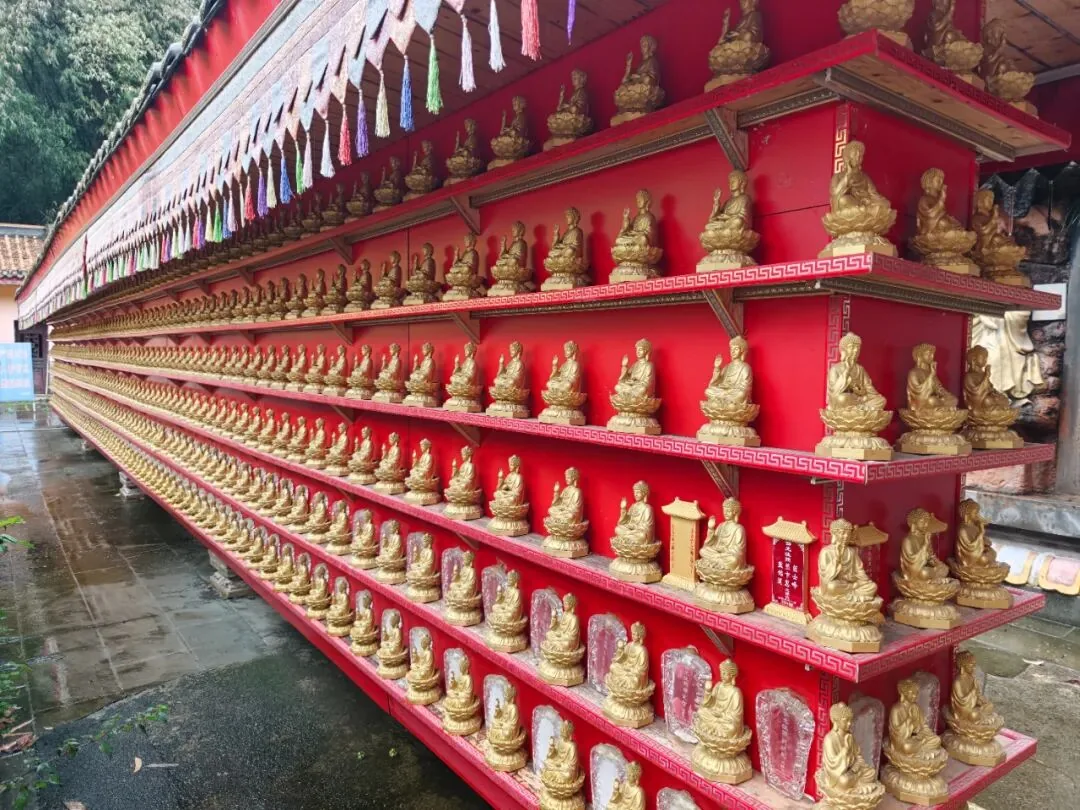
Further up, Middle Sanmei Zhide Temple is the core meditation area, with Master Wuda’s tomb behind the temple. The climb to Upper Sanmei is a bit steep, but worth it. Behind the hall of Upper Sanmei Shuiting Temple is the Sacred Water Pavilion, built during the Chongzhen era of the Ming dynasty. The spring below it is clear and sweet — it doesn’t dry up in winter or overflow in summer. This is the true source of the water Master Wuda used to wash his human-face sore. A monk told me the spring is rich in selenium, and locals often make special trips to collect it for brewing tea and cooking rice.
The Reclining Buddha and the Back-Mountain Trail
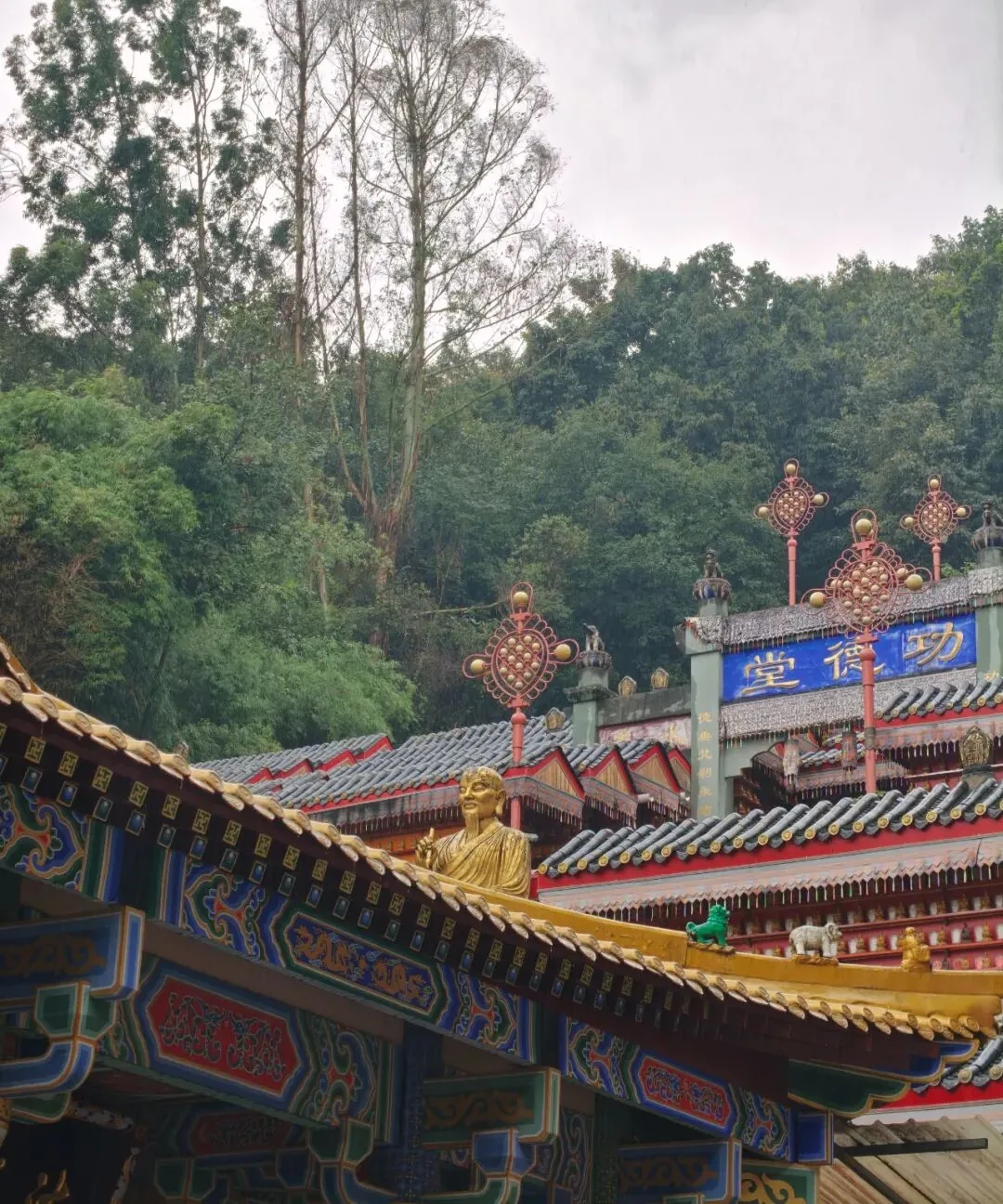
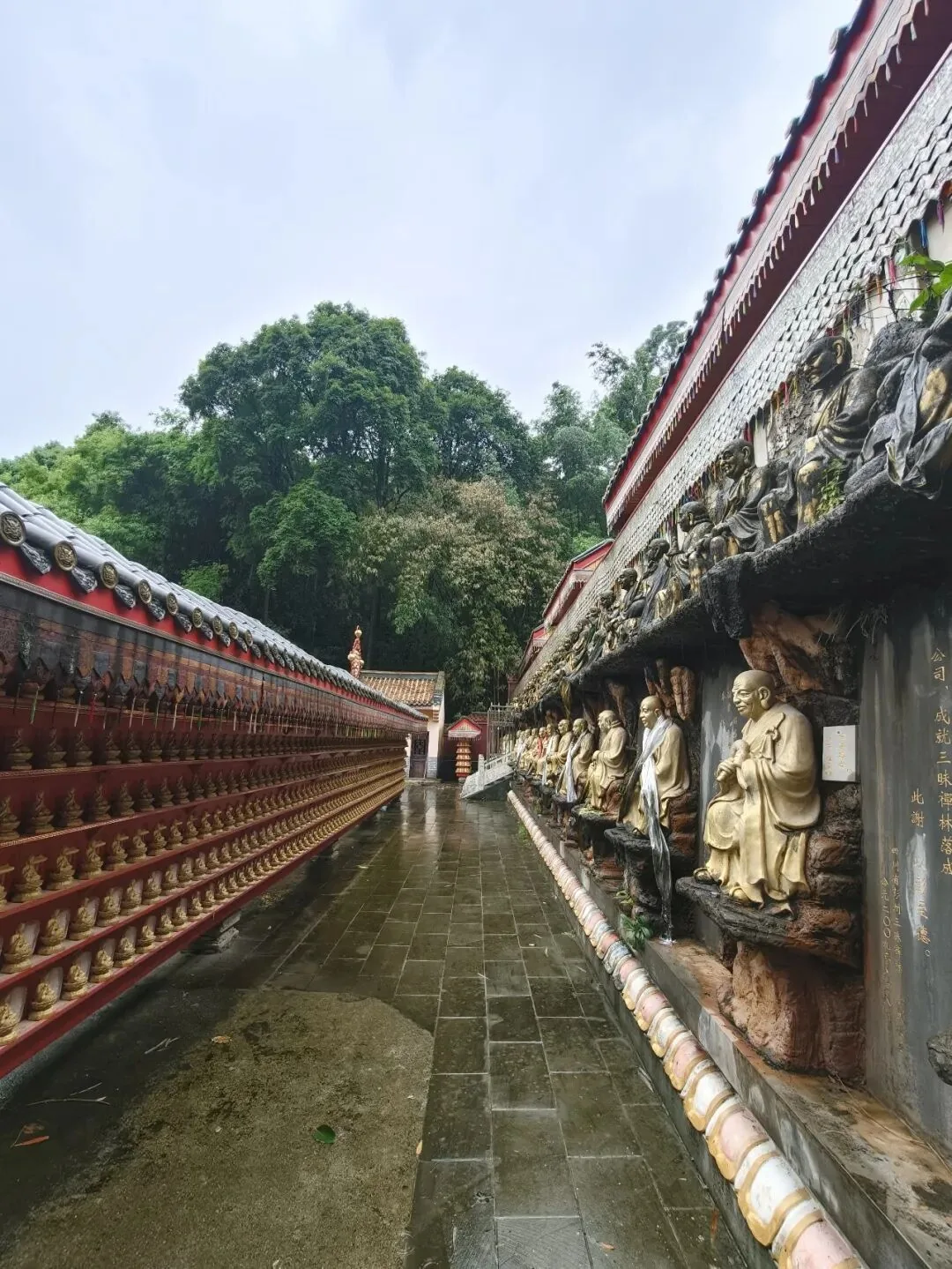
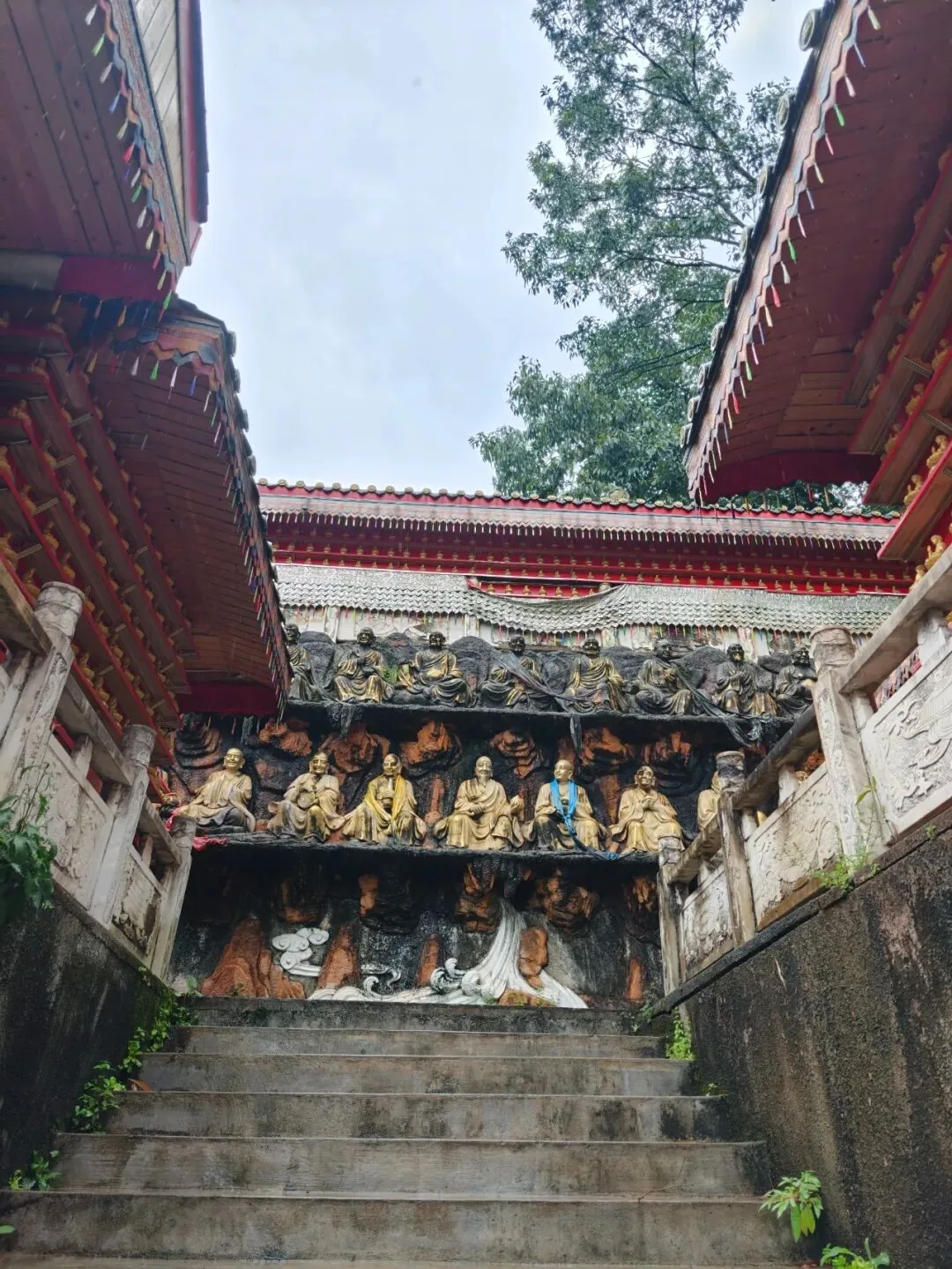
Along the mountain path to Upper Sanmei there’s a niche with a reclining Buddha rock carving, lying on its side among the rocks. On a rainy day the light falls softly on the Buddha — it’s incredibly peaceful. If you’re fit, you can continue from the peak of Upper Sanmei toward the back mountain, through plum groves and wild paths to Danjing Mountain — a total of 7 to 10 kilometers. The paths were slippery in the rain, so we didn’t go, and turned back the way we came.
Food and Practicalities
By the time we came down, we’d missed the meal window. I hear the vegetarian food is good — 10 RMB per person, buffet-style, especially the stewed radish. On a rainy day it warms you right through. But we missed it. There are no snack stalls in the Zen forest, and only the nearby guesthouses serve food. So we bought instant noodles at the little shop by the gate, sat under the eaves, and ate with the sound of rain — and somehow it felt strangely romantic.
Pro tip: The vegetarian meal is served from 11:00 to 12:00, 10 RMB per person. Don’t miss it like we did.
Why Rainy Days Are Actually Perfect
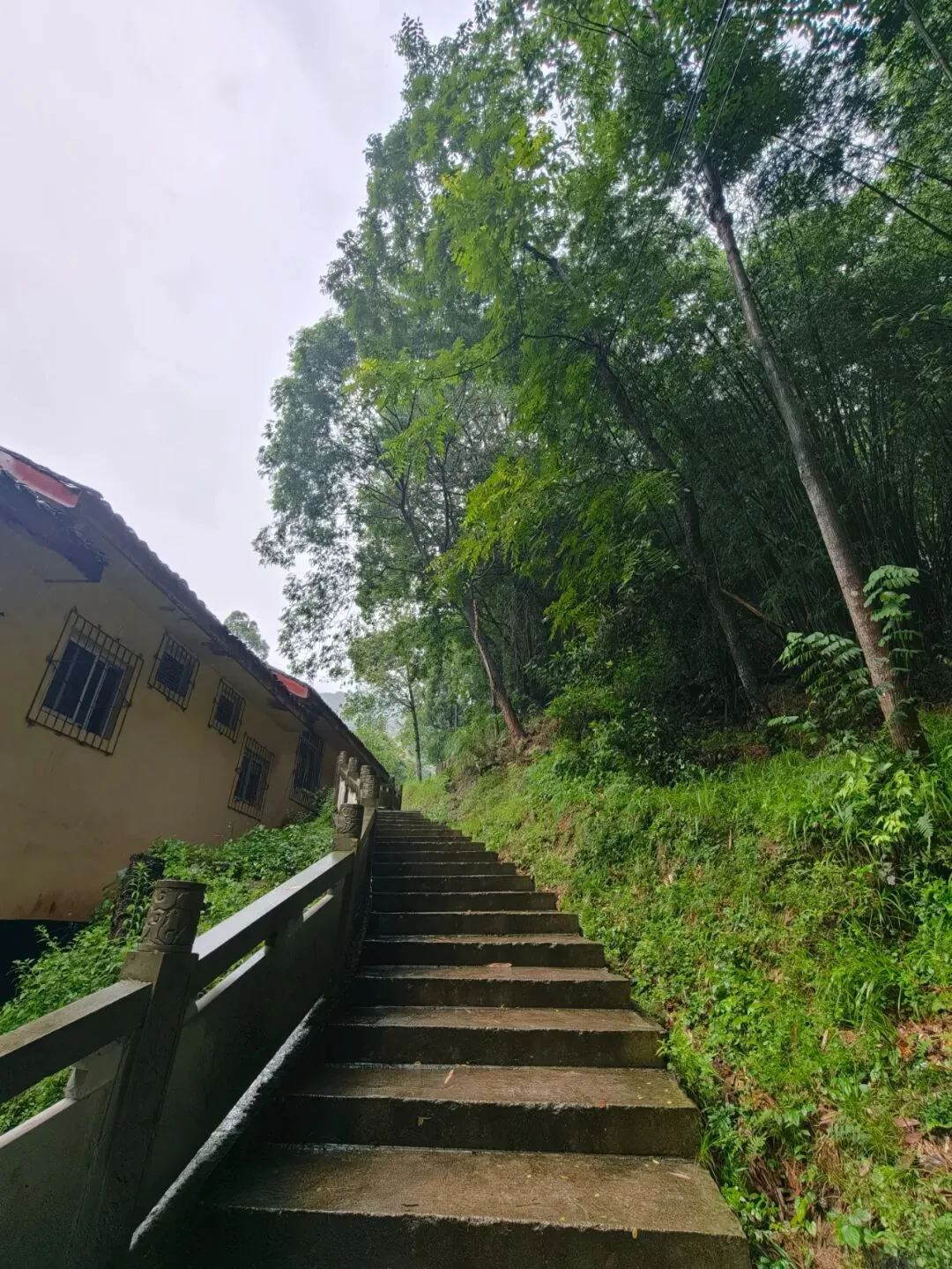
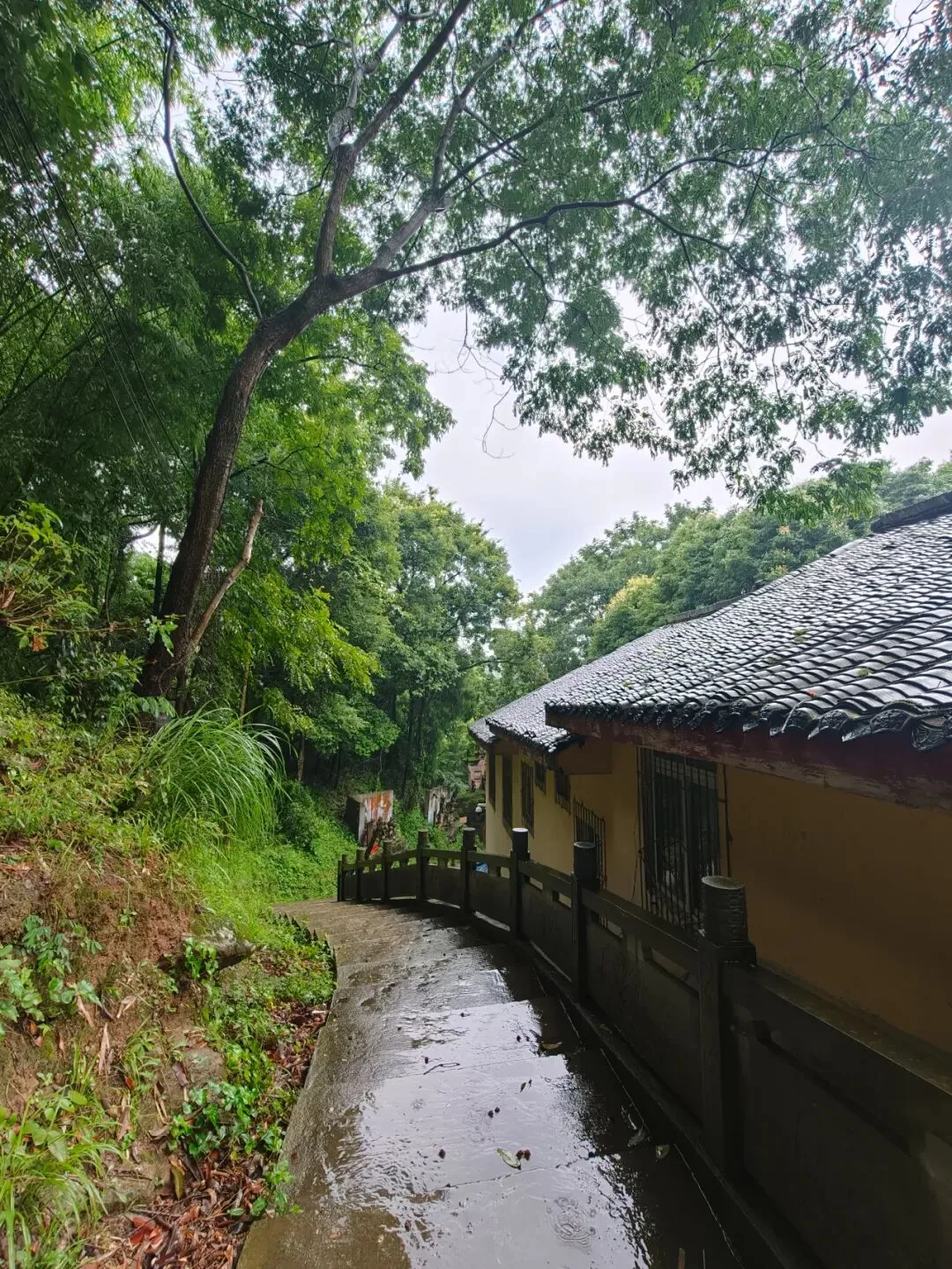
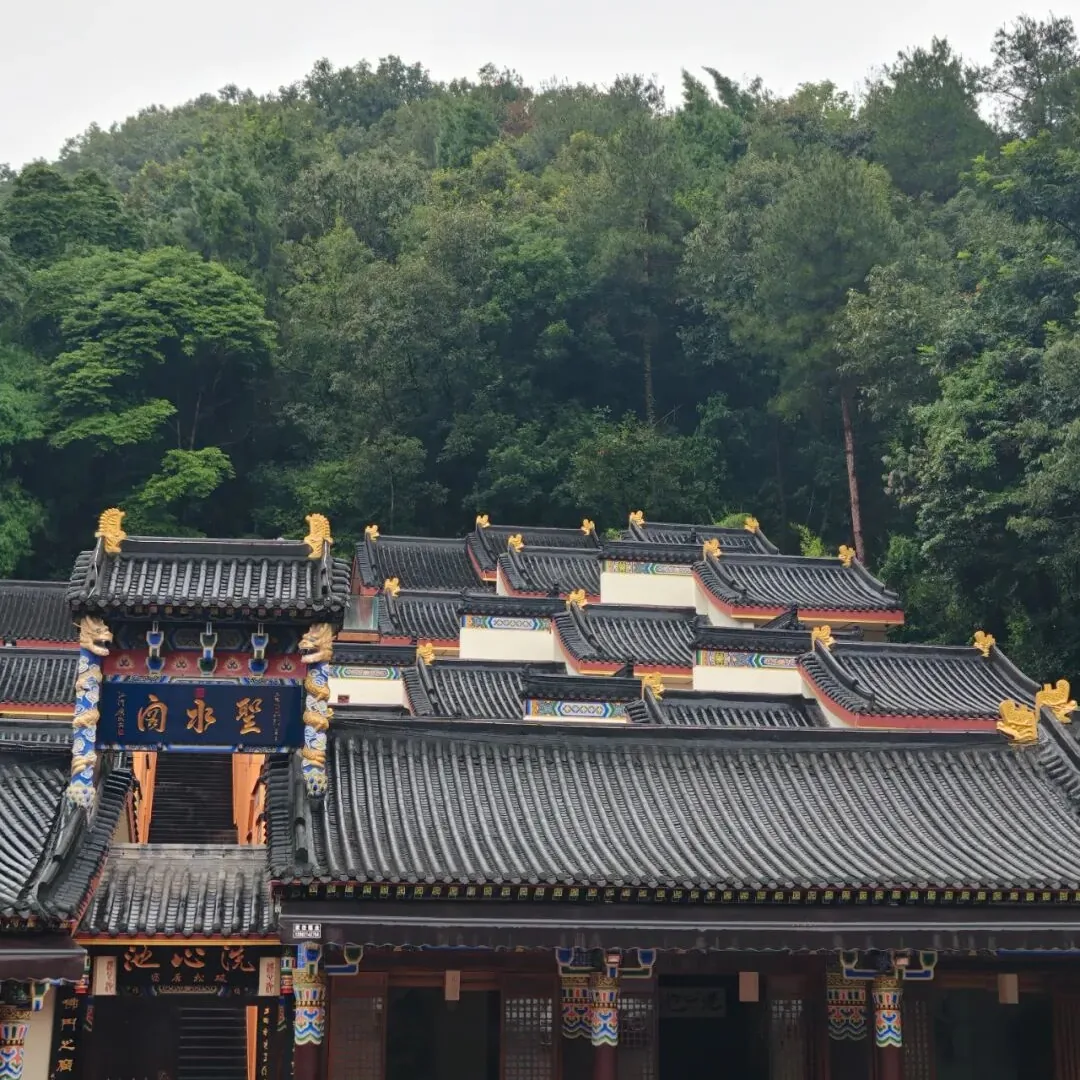
Rainy days have their own charm. Fewer people, stone steps washed shiny, crisp air. Walk slowly with an umbrella, watch the rain run down the Buddha faces at Thousand Buddha Cliff, watch mist rise slowly from the valley. It’s a kind of calm that’s hard to find in the city.
“Sanmei” means to clear the mind of distractions and find peace. A thousand years ago Master Wuda washed away his illness here. A thousand years later, we walk in — aren’t we also hoping to wash something away? The restlessness accumulated in the city, the thoughts that won’t stop.
The sound of rain on Chalong Mountain is probably better than anything else.
Sanmei Chanlin: Visitor Info
- 📍 Address: Chalong Mountain, Shuangsong Village, Danjingshan Town, Pengzhou
- 🎫 Tickets: Free entry; parking 5–10 RMB
- 🚗 Getting there: About 1 hour by car from downtown Chengdu
- 🕚 Vegetarian meal: 11:00–12:00, 10 RMB per person
- 💡 Tips: Wear non-slip shoes on rainy days; bring your own water and snacks