The 1,700-Year-Old Gingko Trees of Rensheng Temple: A Quiet Autumn Day Trip from Chengdu
Autumn is the season to slow down and look around — at the flowers, the trees, the best scenery the world has to offer. Right now, gingko trees all over Chengdu are turning gold, and you can feel the excitement in the air.
About an hour’s drive from downtown Chengdu, in Guanghan, two ancient gingko trees at Rensheng Temple (仁圣宫) are turning gold. If you’re looking for a peaceful autumn escape that pairs perfectly with a visit to Sanxingdui, this is it.
Why Rensheng Temple Is Worth the Trip
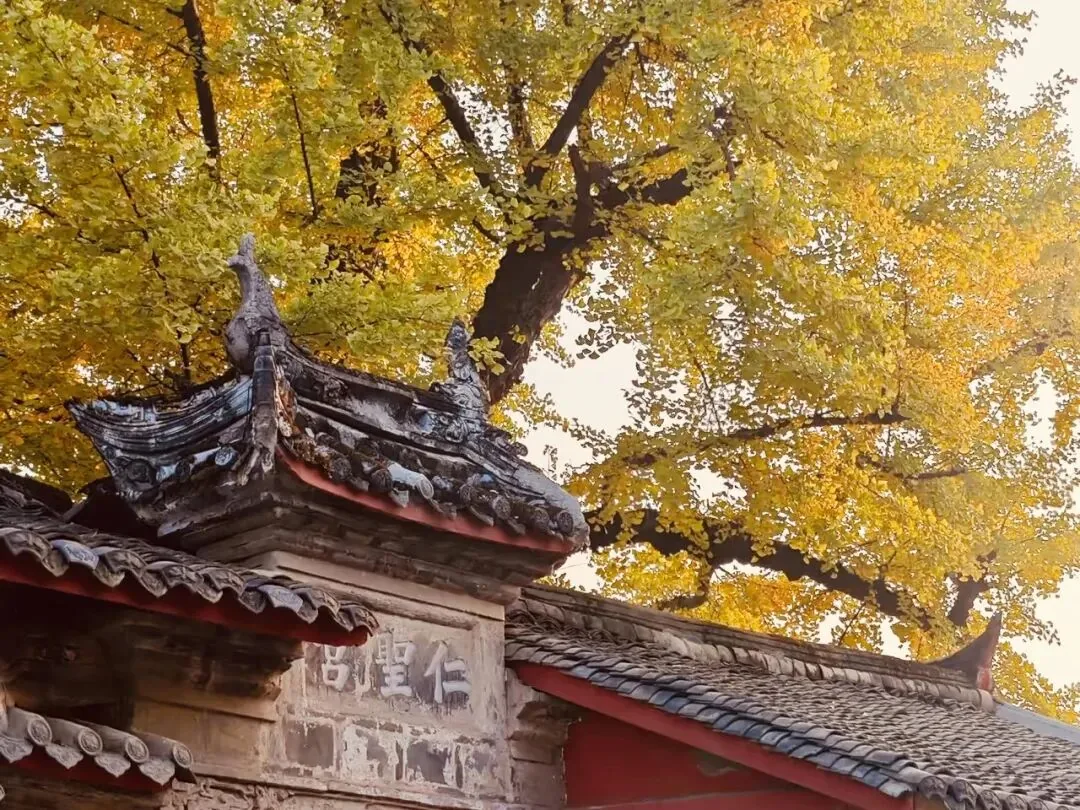
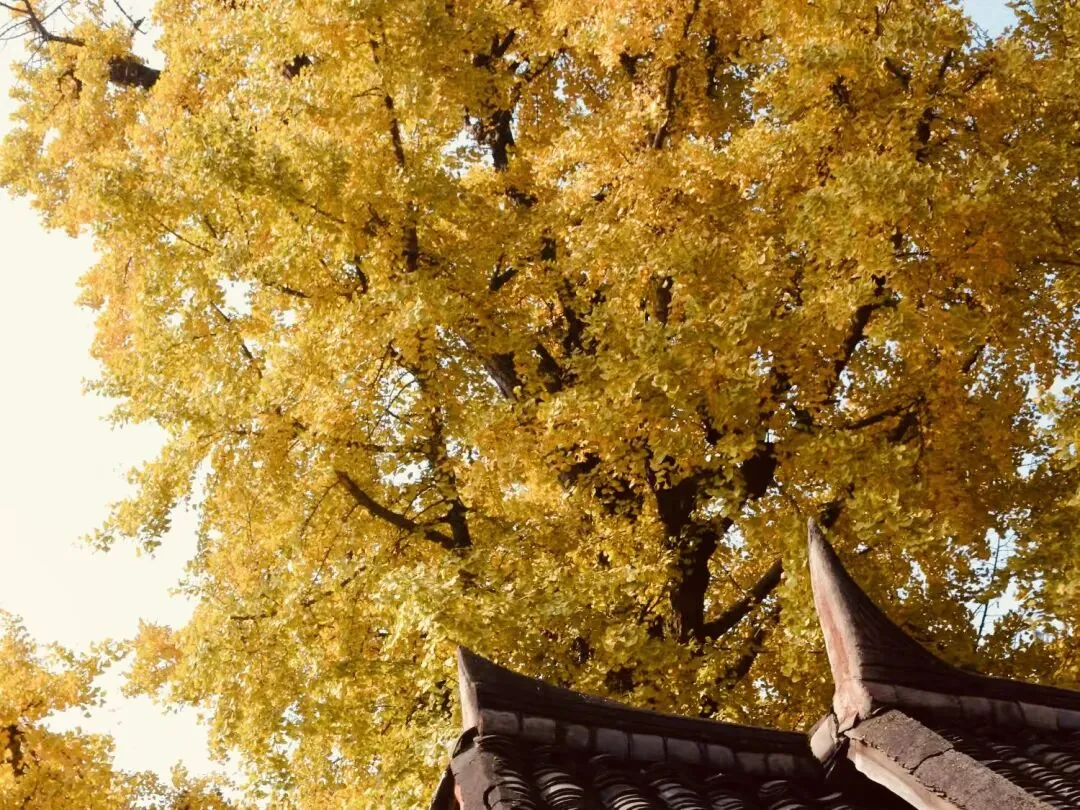
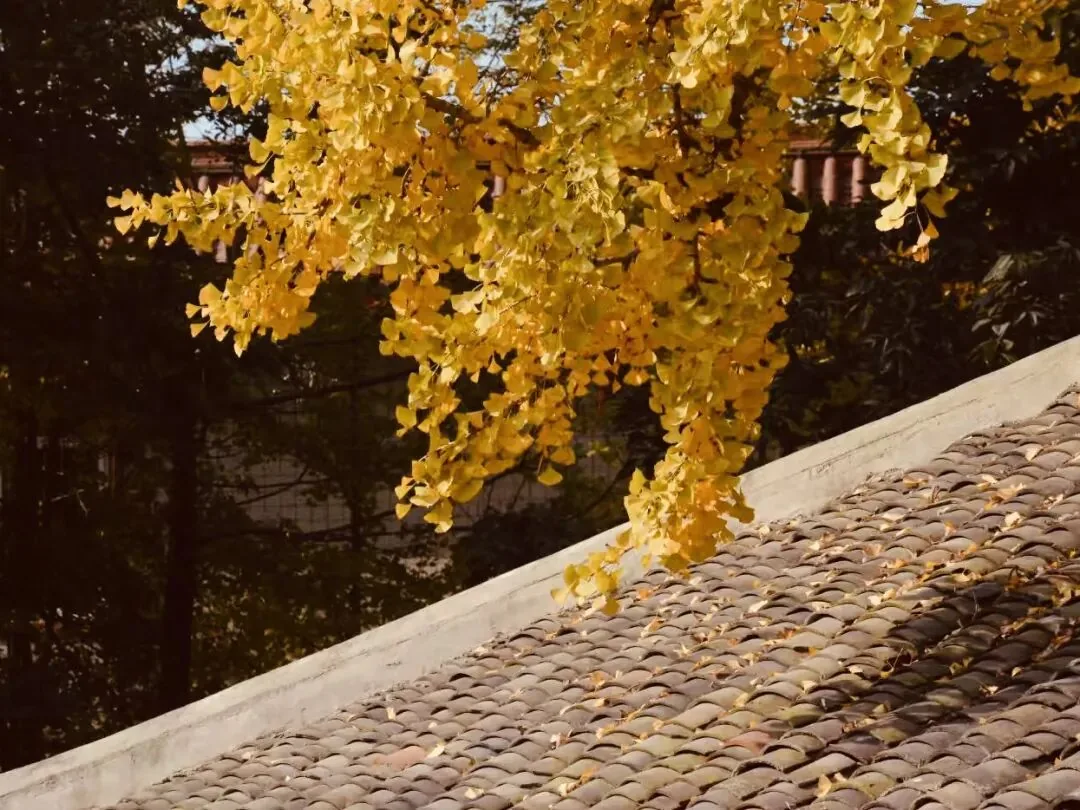
Rensheng Temple sits right on the border with Pengzhou. It’s a small place — just 7 mu — and it’s only 4 kilometers from the Sanxingdui Museum. The temple is in Baiguo Village, and “baiguo” is actually another name for gingko. Most days, there are almost no visitors here, and it feels quiet and deserted. But every late autumn, during gingko season, people show up without any coordination, all drawn by the two ancient trees in the courtyard.
The tiny courtyard is almost completely covered by the canopy of these two gingko trees. They stand in the temple yard, one female and one male, known locally as “Baiguo Grandpa” and “Baiguo Grandma.” According to legend, they’ve stood here together for over 1,700 years.
Zhuangzi wrote in Xiaoyaoyou about a mythical tree that took 8,000 years as spring and 8,000 years as autumn. These two gingkos are real, and they’ve calmly lived through 1,700 springs and autumns. Every year around this time, they’re at their most beautiful.
Rensheng Temple itself is a Qing Dynasty temple, first built in 1840 — only about 200 years ago. The two gingko trees are older than the temple, older by more than 1,000 years. The trees came first, the temple came later. The temple was built specifically for these two trees.
A Humble Temple in the Countryside
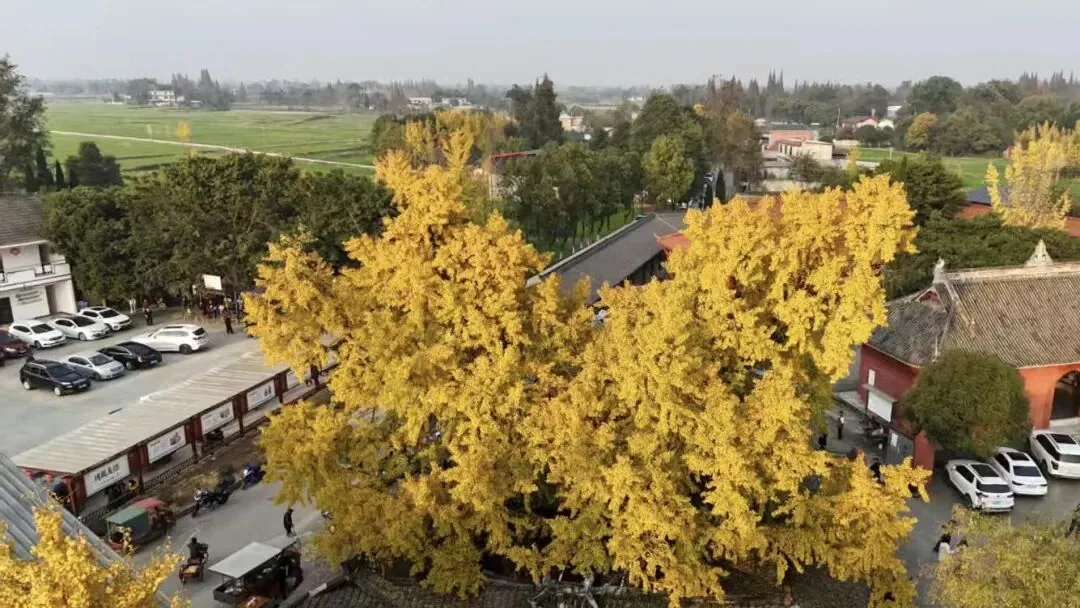
Rensheng Temple sits in an ordinary western Sichuan village. It doesn’t have the grandeur of famous mountains or big temples. The gate is low, the courtyard walls aren’t high. If not for the huge canopies poking out over the wall, passersby probably wouldn’t stop.
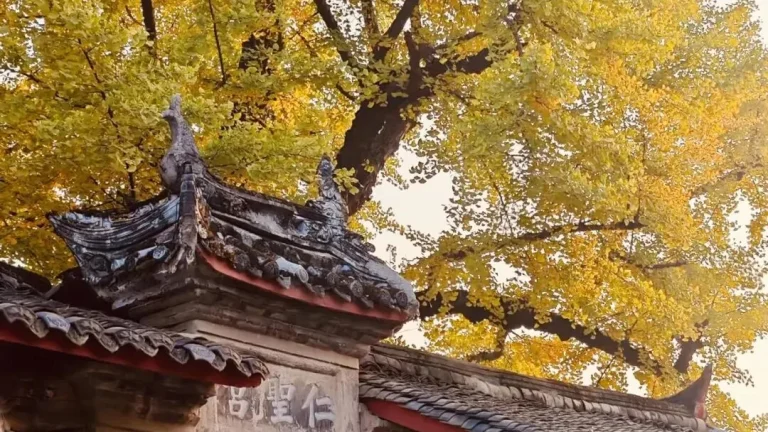
Red walls and green tiles, flying eaves and upturned corners peek through the leaves. These two trees are simply enormous — each one needs four or five people to wrap their arms around it. The trunks are so thick that everything around them feels cramped by comparison.
Local insight: The trees are older than the temple by over 1,000 years — locals built the temple for the trees, not the other way around.
The Golden Season: What to See
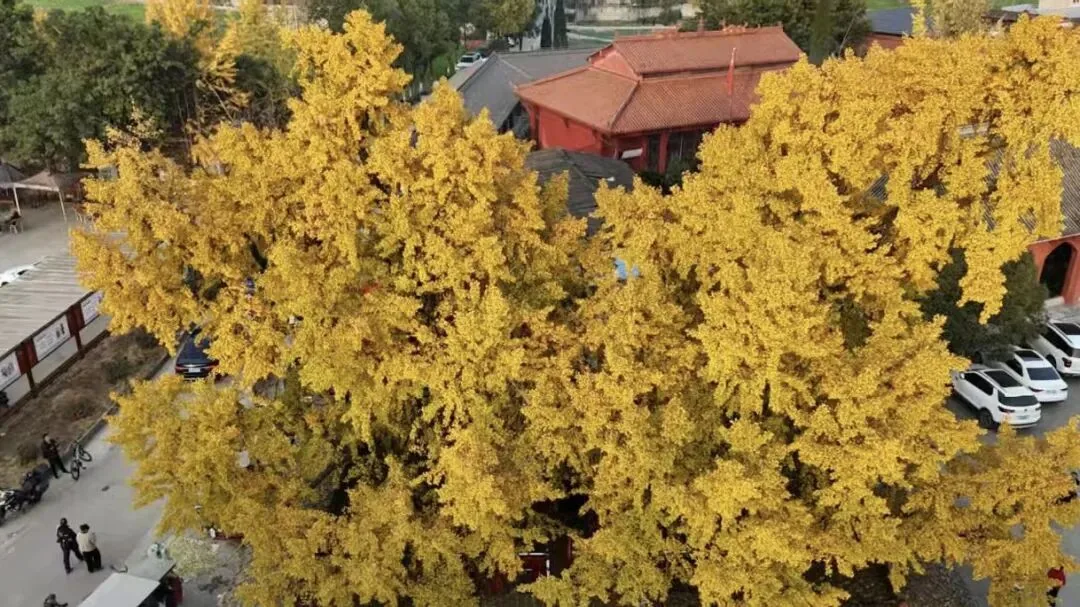
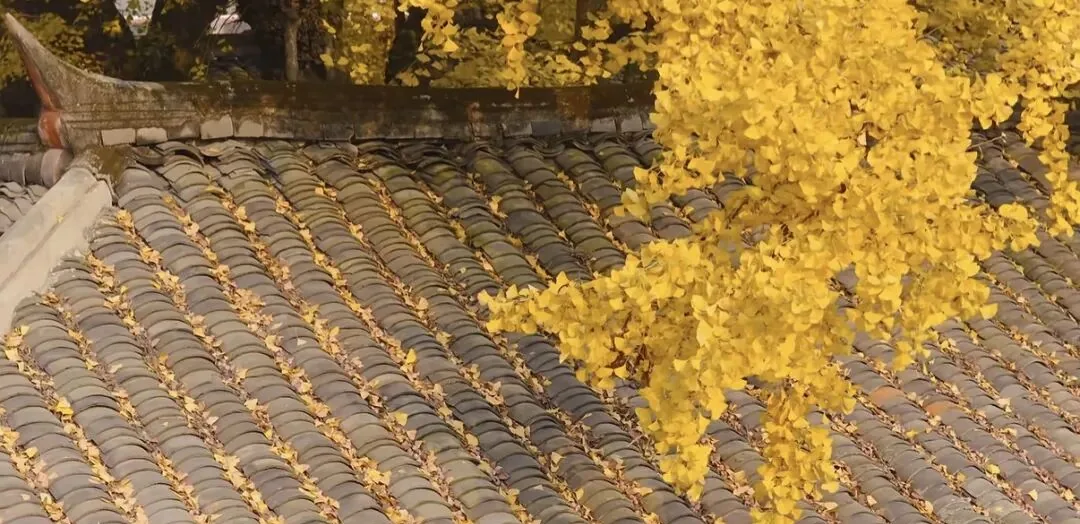
Late autumn is their grandest moment of the year.
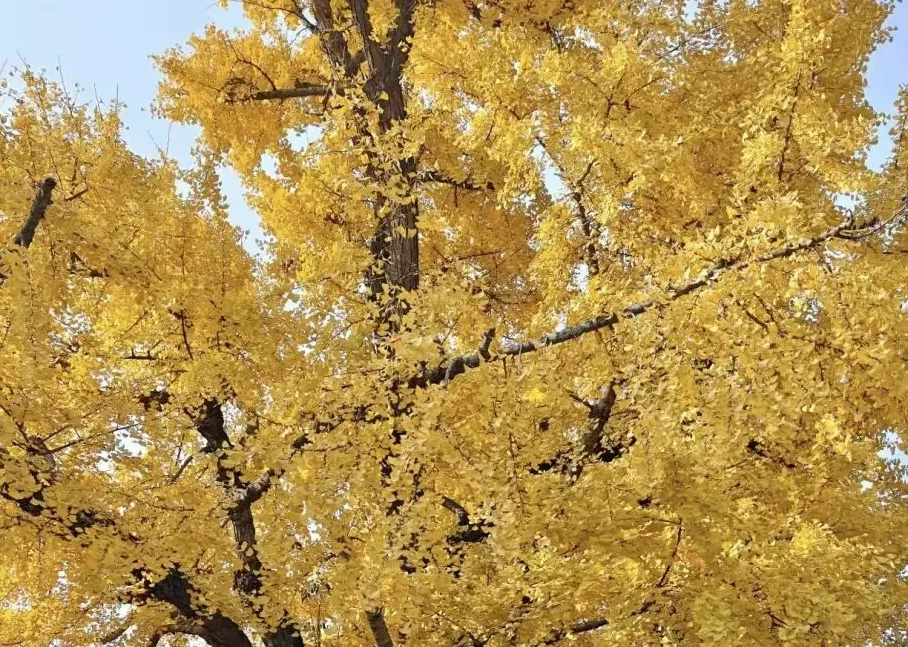
The whole canopy turns gold, like two giant open umbrellas, branches weaving together in the air. If you come on a sunny day, it’s even better — sunlight filters through the leaves and the whole courtyard glows. The gold seems to spill right out of the leaves. Against the golden foliage, the temple no longer feels solemn; it feels gentle. When the wind blows, leaves fall like golden rain, covering the blue-brick path with a soft rustle underfoot.
Lately, plenty of people have been making the trip specifically to see these two trees. When you arrive, the area under the trees is already full of people — aunties striking poses, young women in hanfu, everyone pulling out phones and snapping away. It’s a bit lively, but it has a warm, down-to-earth energy that takes away the loneliness of late autumn.
Overhead is a dense golden dome. The air mixes with the faint scent of incense and the slightly bitter smell unique to gingko leaves. People sit quietly on the stone benches under the trees, watching leaves fall and the light move. In front of the hall hangs a couplet: “Baiguo Grandma sends good people heavenly children and jade maidens.” It is easy to sit there and zone out for a while.
Red Ribbons and Local Traditions
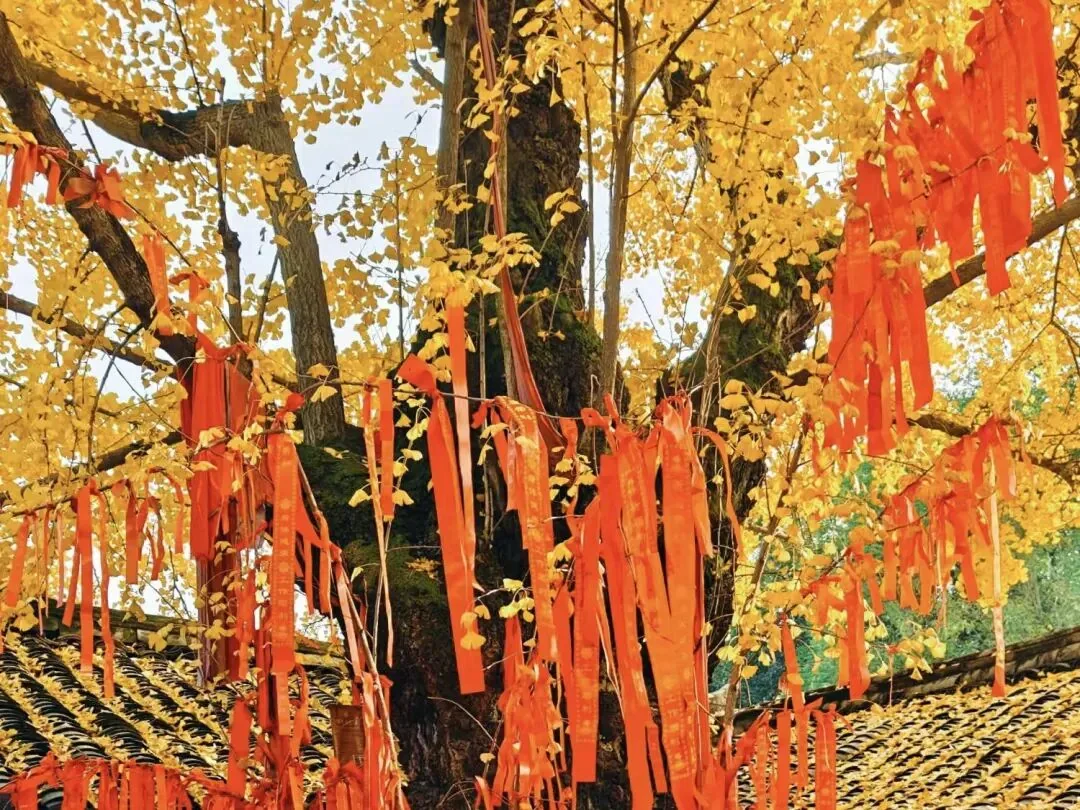
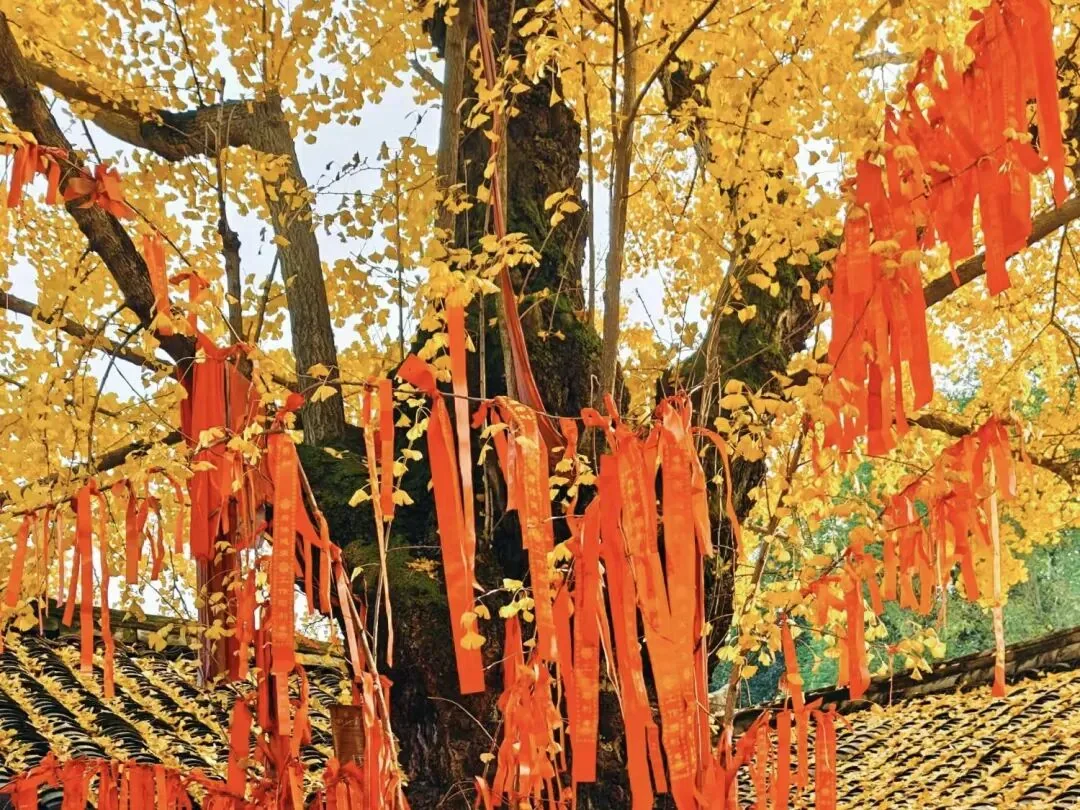
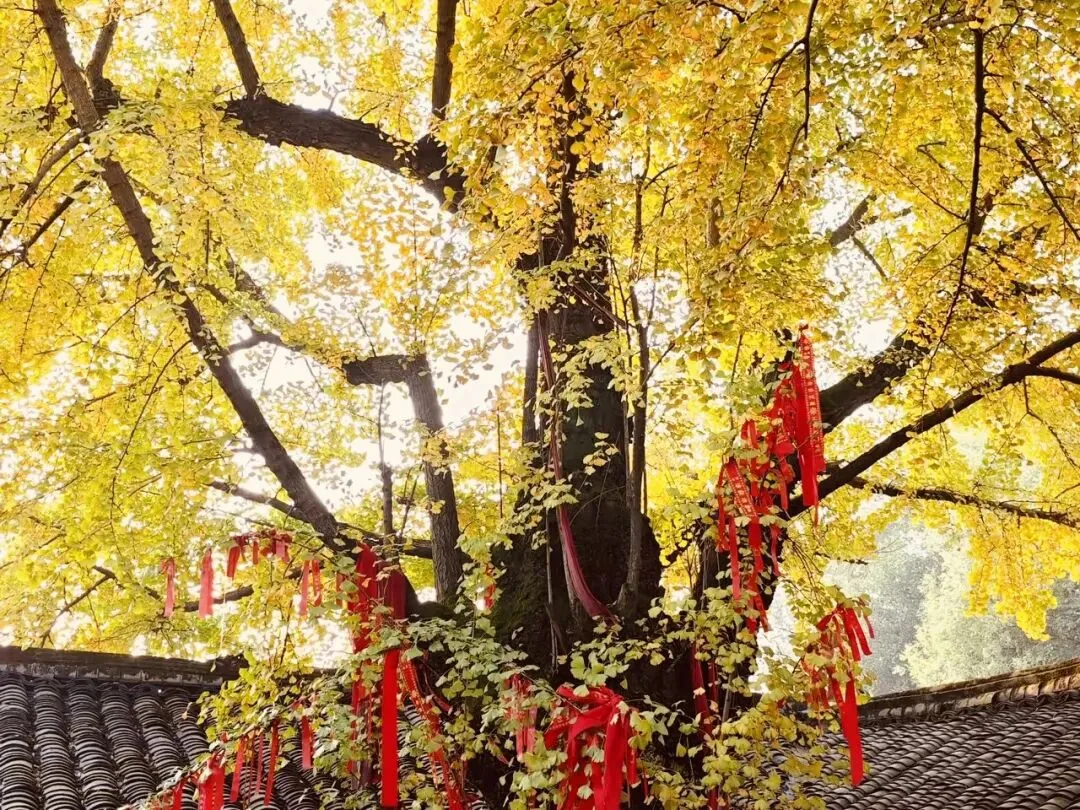
The weathered branches are densely hung with bright red prayer ribbons, red and yellow interwoven.
For centuries, locals have come here every autumn and winter to pray. The red ribbons carry people’s hopes for peace and are wrapped around the ancient trees. In the biting autumn wind, the ribbons flutter gently, contrasting with the still trees and the scattered golden leaves. It adds a warm, human touch to the cool, quiet temple.
Pro tip: Come on a sunny day for the best light through the leaves — and go before the wind strips the branches bare.
A Landscape Steeped in History
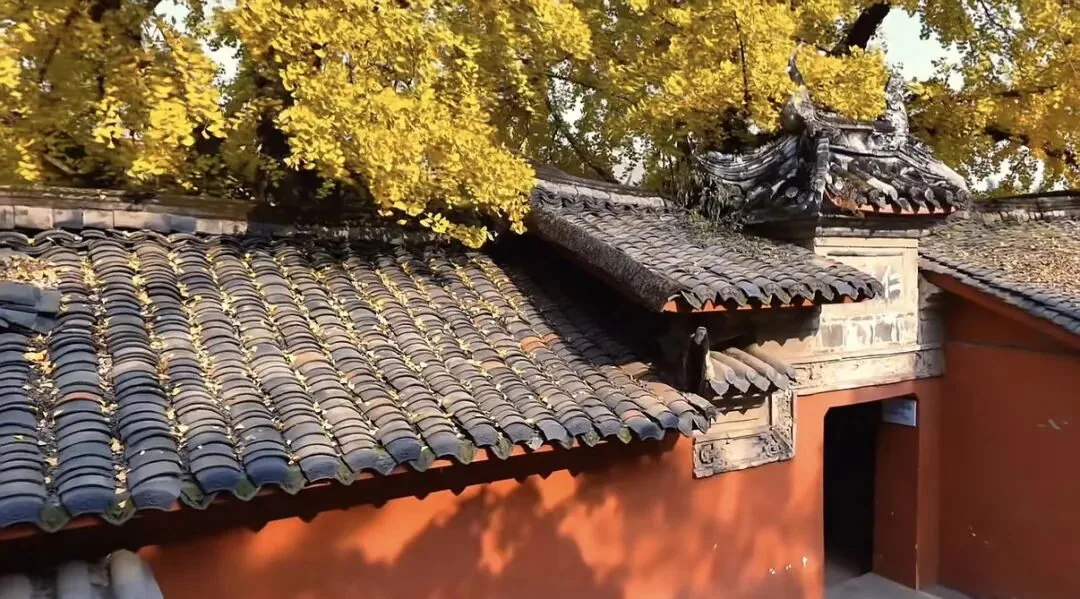
Three thousand years ago, the ancient Shu people cast bronze here. They left behind a civilization that “slept for three thousand years and amazed the world upon waking.” Three thousand years later, two ancient gingko trees turn gold year after year in this old temple. On one side, bronze that stunned the world; on the other, silent ancient trees — together they guard the ancient memory of this land.
Zhang Ruoxu wrote, “Generations come and go without end, but the river moon year after year looks the same.” Li Bai wrote, “People today don’t see the moon of old, but the moon of old once shone on the ancients.” Visitors come and go, generation after generation. These two trees are still here, blooming in golden autumn.
The Surrounding Countryside
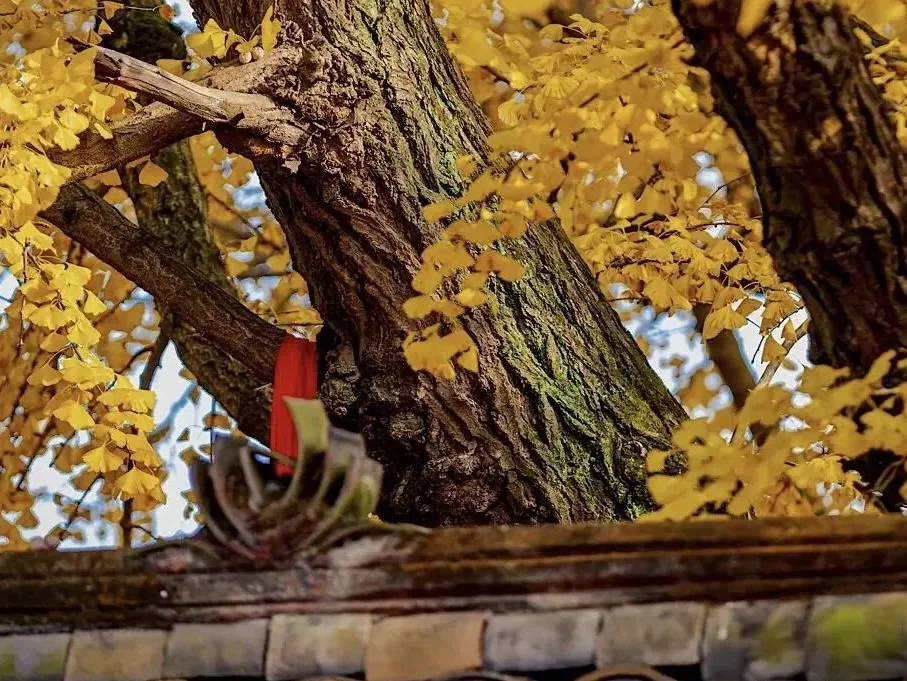
Around the temple are fields and countryside, far from the city. Standing in the middle of the courtyard and looking out, you see the temple’s autumn scene — red walls and golden leaves — up close, and the flat, open countryside in the distance.
People love the splendor of autumn scenery, but Rensheng Temple’s late autumn holds its own moving beauty. Autumn here isn’t bleak or desolate. It’s the resilience of ancient trees, the quiet of red walls and old temples, the gentleness of leaves falling.
The most moving autumn scenery isn’t always the loud, spectacular kind. Sometimes it’s this quiet wonder tucked away in the countryside that makes you stop and catch your breath. So — do you like places like this?
Practical Info
- Address: Rensheng Village, Sanxingdui Town, Guanghan City (formerly Baiguo Village, Nanxing Town).
- Tickets: Free.
- By public transport: Take Metro Line 3 to Machao West Road Exit B, then transfer to Xindu Tourist Line XL01 and get off at Sanxingdui Museum. From there, a taxi ride of about 4.5 kilometers takes you to the temple.
- By car: About 1 hour from Chengdu. It’s very close to the Sanxingdui Museum, so it’s easy to combine both in one trip.
- Best time for golden gingko: Late November to mid-December is best. The leaf-falling period is short — after a big wind, the leaves are gone quickly. Try to go on a sunny day.
So if you’re in Chengdu this autumn and want a quiet, free, and genuinely local experience, Rensheng Temple and its two 1,700-year-old gingko trees are waiting. Pair it with a Sanxingdui visit and you’ve got a perfect day out.