Chengdu’s 600-Year-Old Pagoda Forest: A 1-Hour Escape to Jintang Mountain
Here’s the thing — sometimes you just need to get out of the city. Not a big expedition, not a week off. Just one hour east of Chengdu, there’s a mountain ridge where the wind comes up from three rivers, a 600-year-old pagoda forest sits quietly in the trees, and a 10 RMB vegetarian meal will fill you up.
This is Jintang Mountain (金堂山). It’s a loop hike — about 9 km, 4 hours, 500 m of elevation gain — that’s friendly for beginners and kids. You’ll start at Kaizhao Temple, climb to Erdao Ping ridge, walk along the spine of the mountain to Sanxue Chan Monastery, and loop back. No tickets, no crowds, no rush.
Getting There & The Route
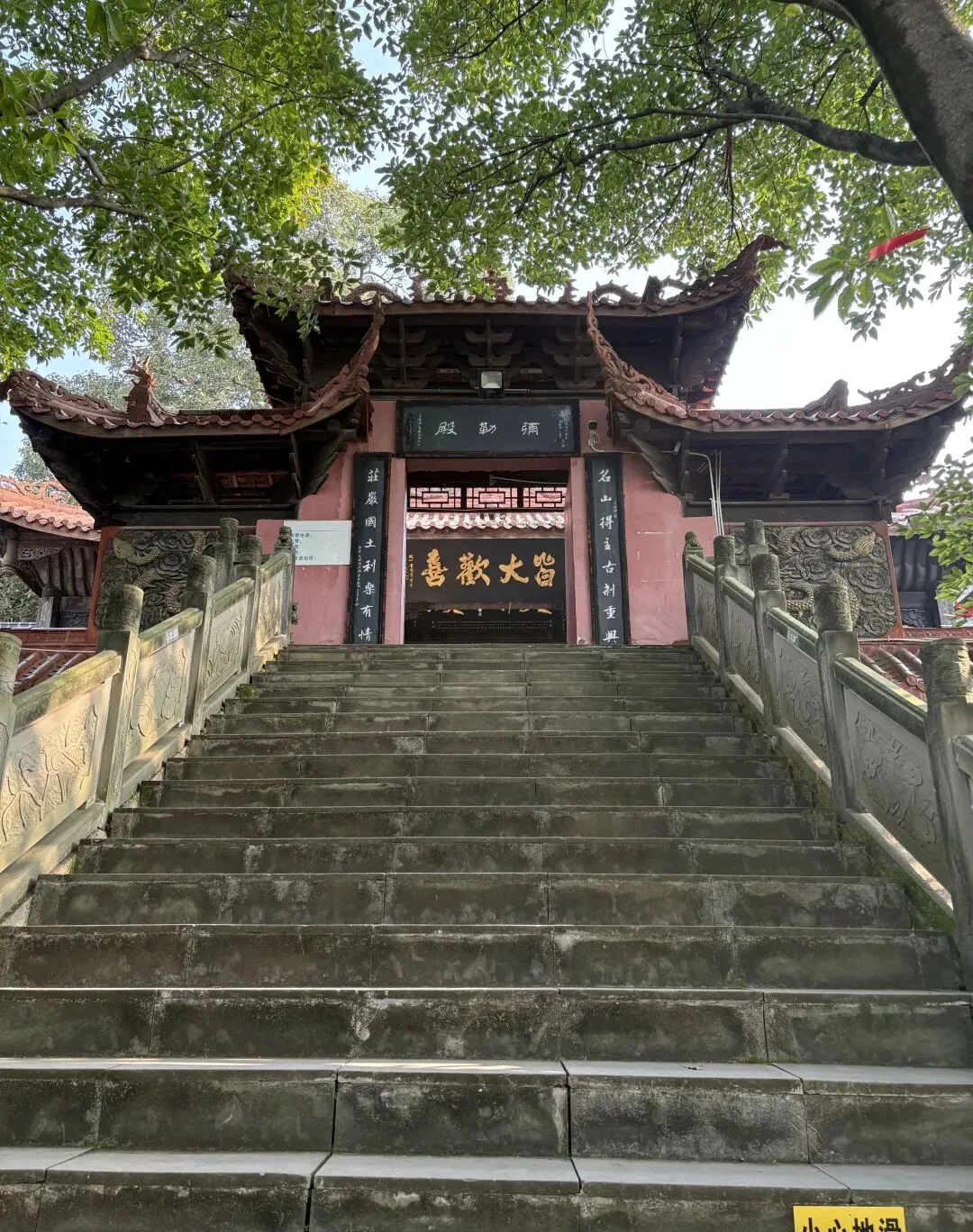
Navigation: Set your map to Jintang Kaizhao Temple (金堂开照寺). From Chengdu, it’s about a 1-hour drive. No entrance fee. Free parking at the temple, but spaces are limited — arrive early.
By public transport: Take Metro Line 3 to Chengdu Medical College Station, transfer to Bus 902 to Jintang Passenger Transport Station, then transfer to Jintang Bus 2 to Sichuan Boiler Factory Station (the terminus).
The loop (about 9 km, 4 hours, ~500 m ascent): Kaizhao Temple → Erdao Ping ridge → Sanxue Chan Monastery → Kaizhao Temple. Beginner and family-friendly.
Terrain: Stone steps, dirt ridge trails, gravel paths, and concrete roads.
Pro tip: There’s no food or water along the trail — bring plenty of water and snacks. The only toilets are at Kaizhao Temple and Sanxue Chan Monastery.
Kaizhao Temple: The First Gate
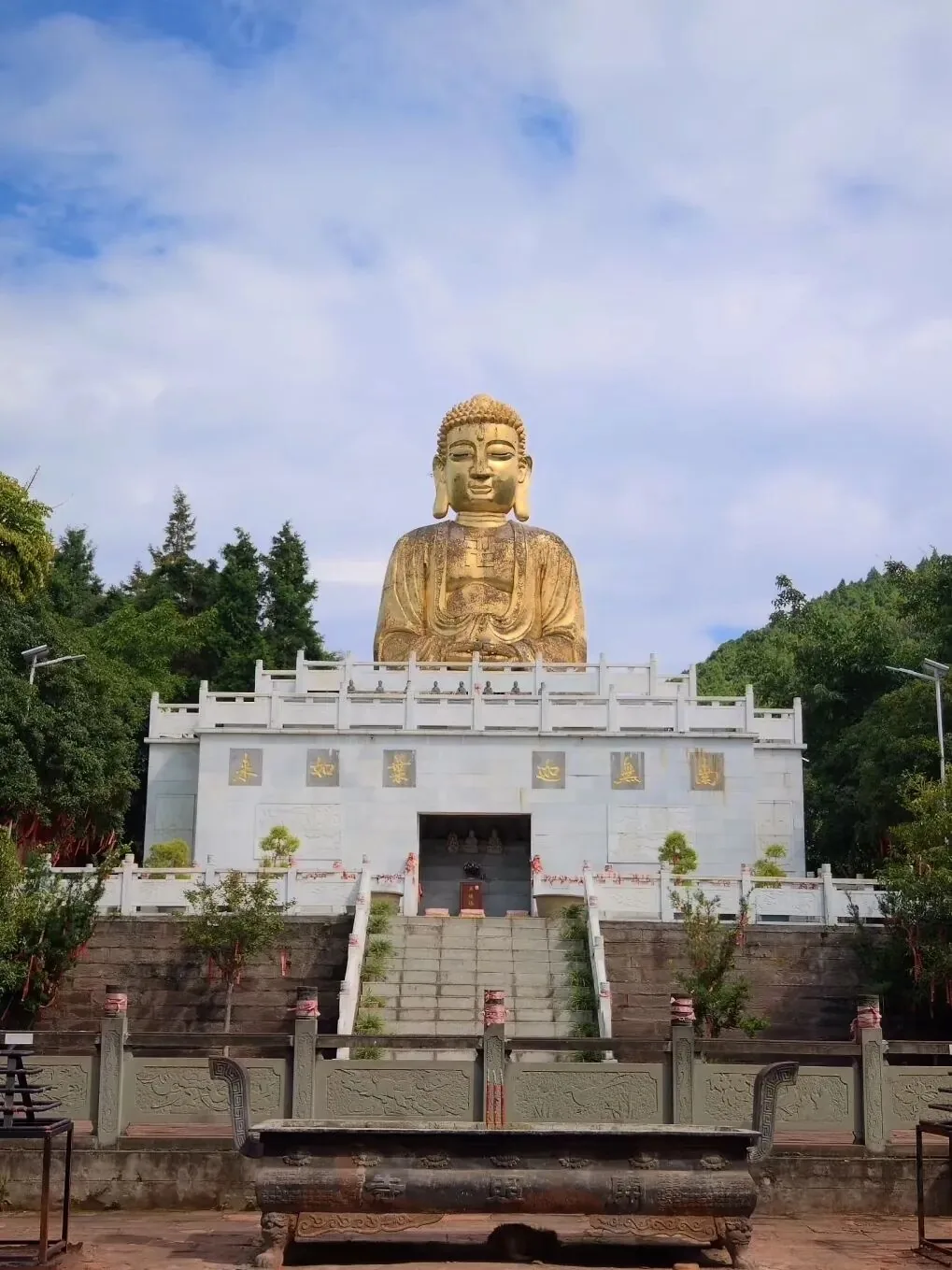
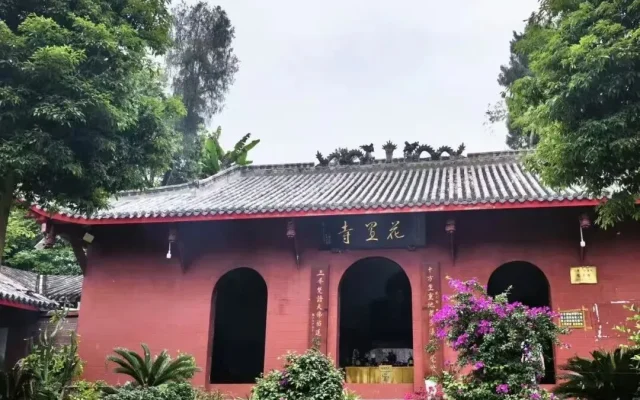
Kaizhao Temple (开照寺) sits at the foot of the mountain — the first gate you’ll pass through.
On the slope behind the temple, a 17-meter sitting statue of Kasyapa Buddha (迦叶如来) looks out over the valley. It’s the largest open-air golden Buddha in the Chengdu area.
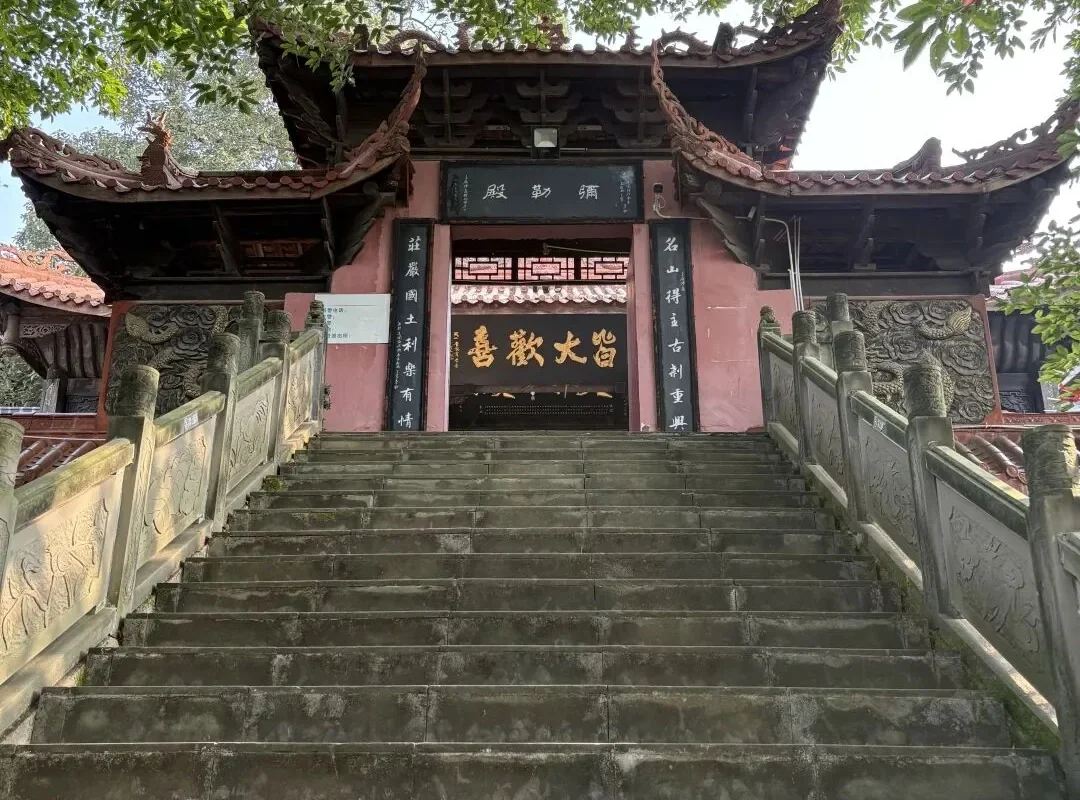
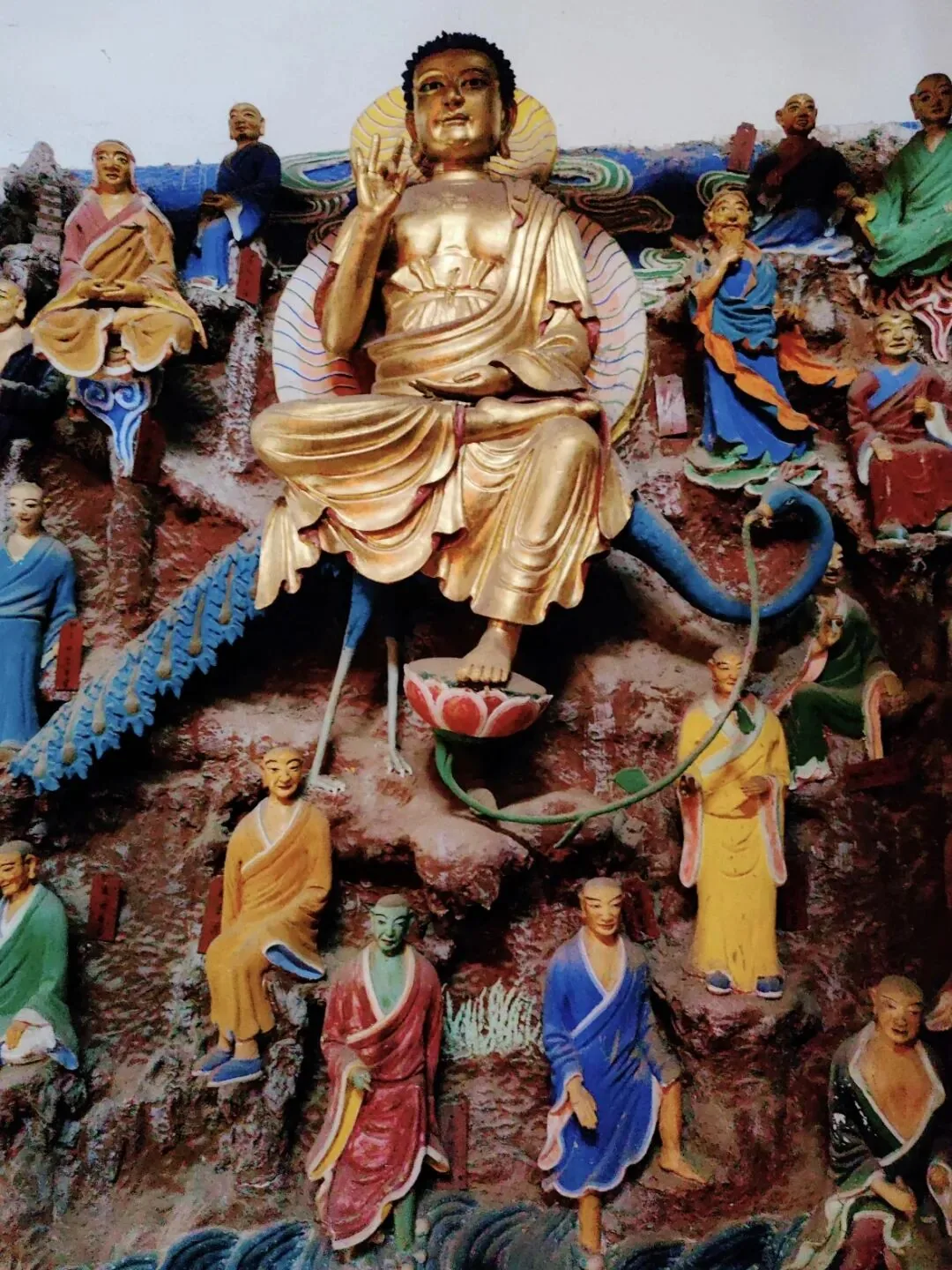
Inside the Guanyin Hall, 514 arhat statues are arranged in tiers — some lean out from behind rockeries, others stand before cloud-patterned murals. Joy, anger, sorrow, and calm — a whole spectrum of human expression.
The Ridge Walk to Erdao Ping
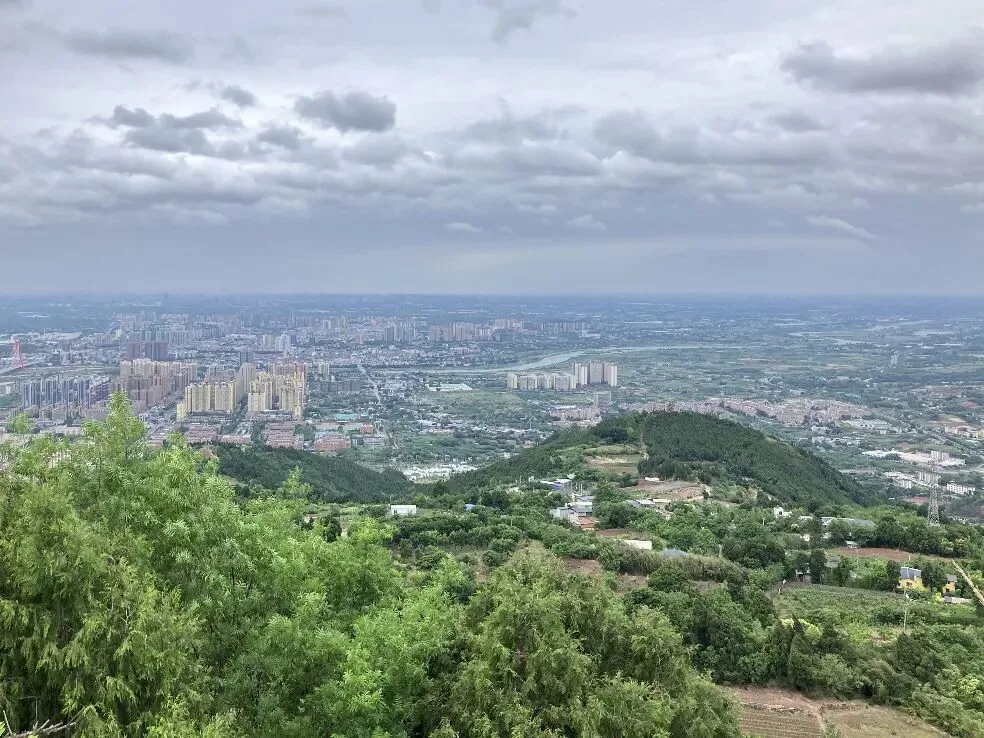
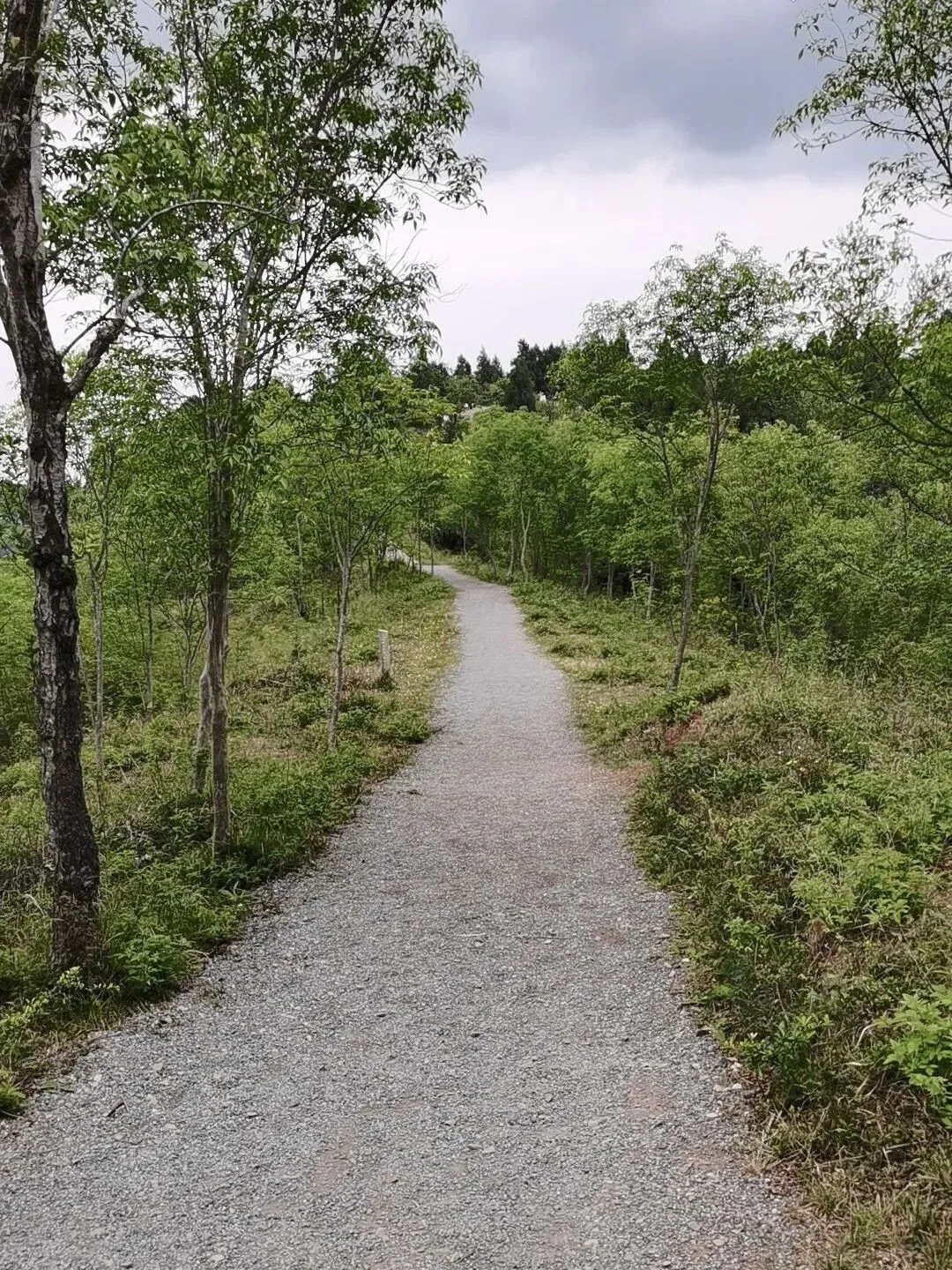
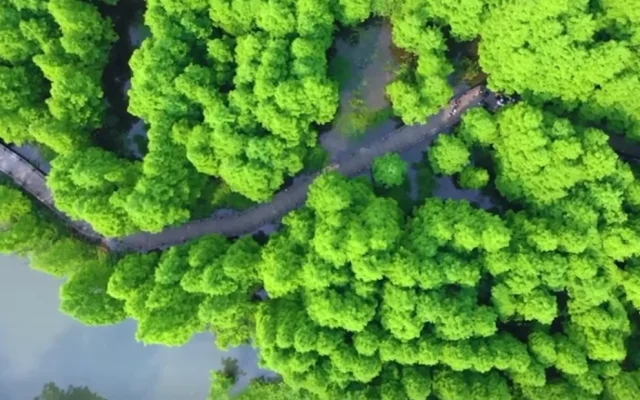
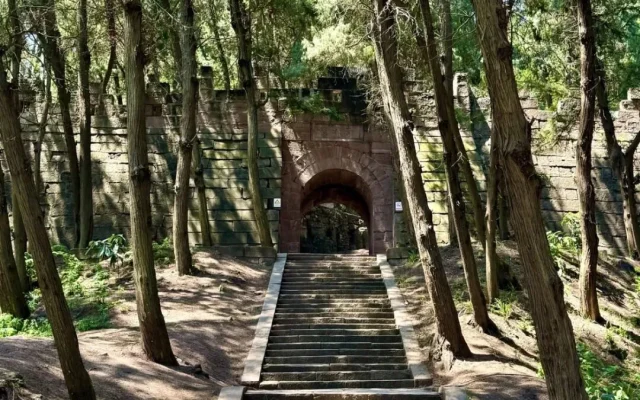
Leave the temple and follow the path uphill. The stone slabs give way to dirt, but the slope stays gentle. After about 40 minutes, you reach Erdao Ping (二道坪).
The wind arrives before the view does. It funnels up from where three rivers meet, slips through your collar and sleeves, and sweeps away the city heat you carried up here.
Below your feet, the Tuo River (沱江), Zhong River (中河), and Pi River (毗河) converge. Jintang County town spreads out in the distance, and the Hantan Shuangdao Bridge (韩滩双岛大桥) spans the water. After rain clears, the far mountains feel close enough to step onto.
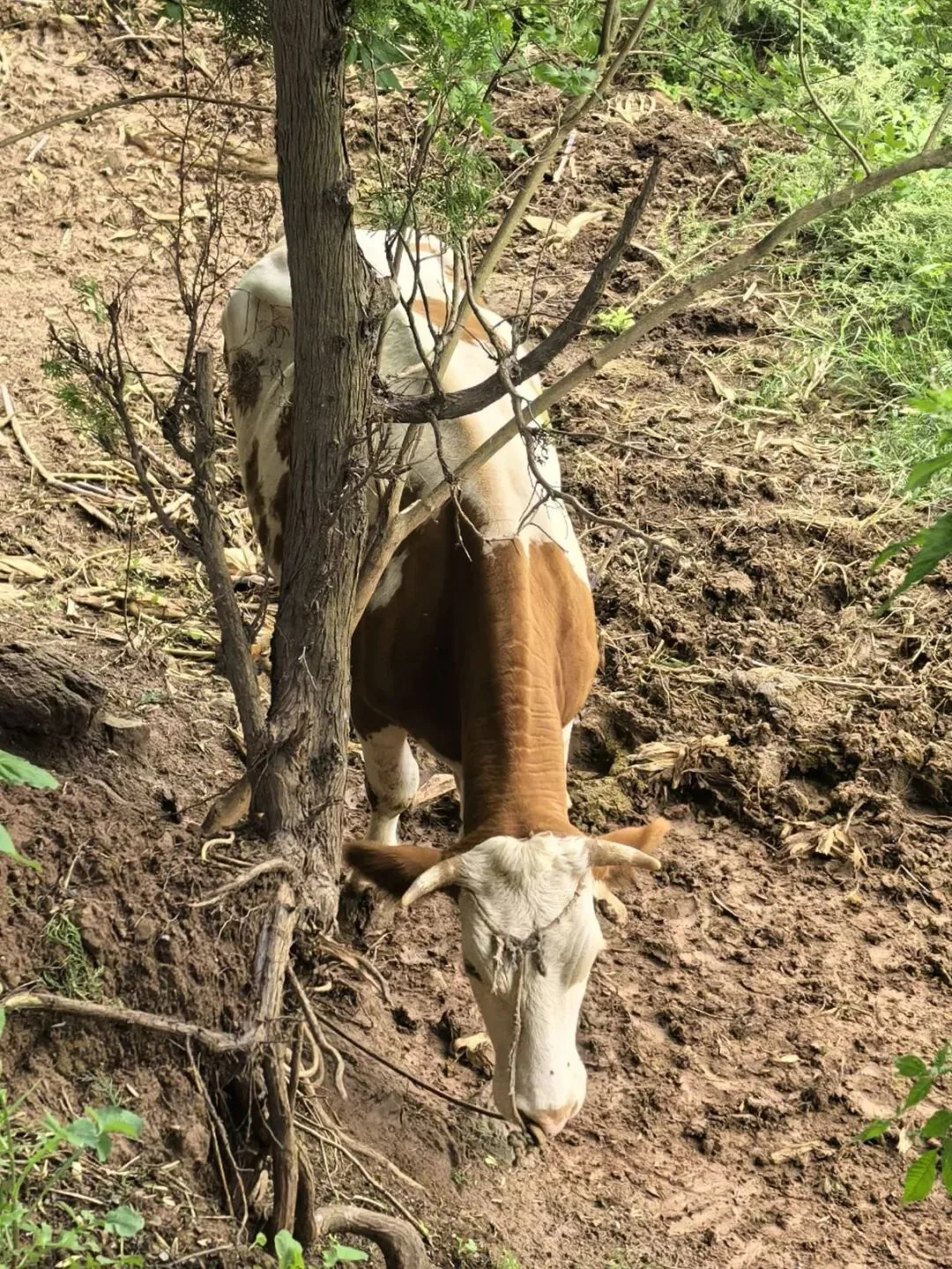
Grass by the path bends in the wind, then slowly stands back up. Cows graze scattered on the slopes, occasionally lifting their heads to glance at you before returning to their grass. Unhurried.
The entire ridge is yours.
Sanxue Chan Monastery: The Pagoda Forest
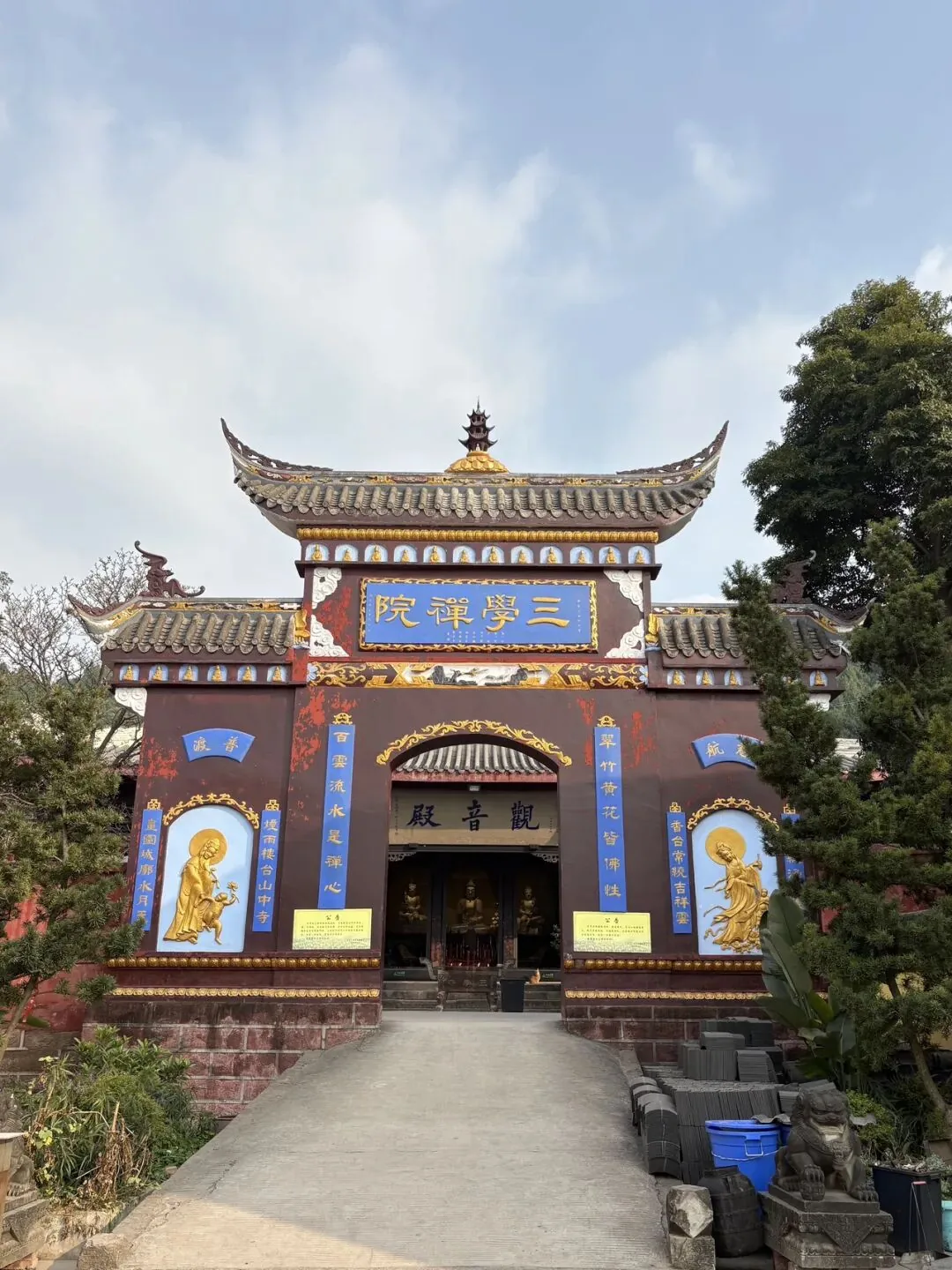
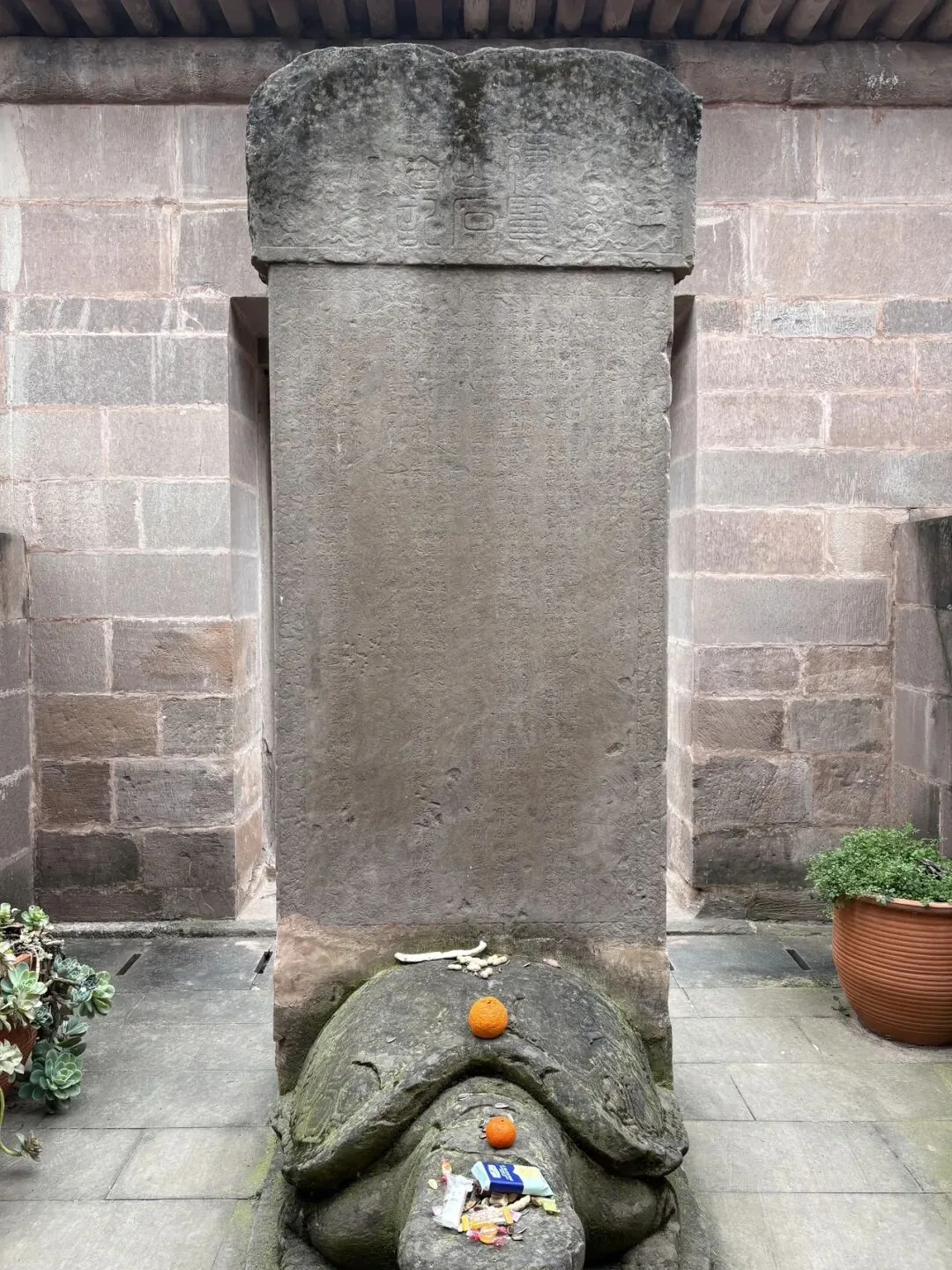
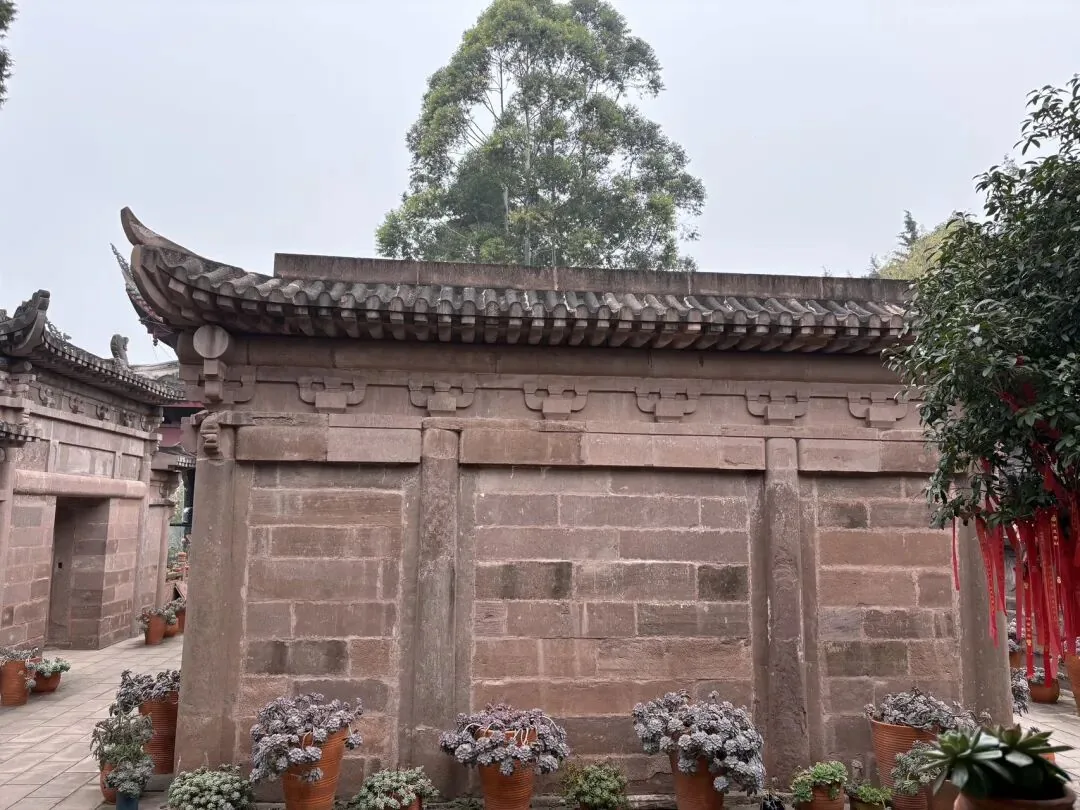
Follow the ridge for about an hour, and Sanxue Chan Monastery (三学禅院) emerges from deep in the trees.
Two 400-year-old camphor trees stand at the mountain gate, their canopies spreading a wide shade. The heat of the mountain retreats to the edge of that shade — step further, and it’s completely cool.
Then the pagodas appear.
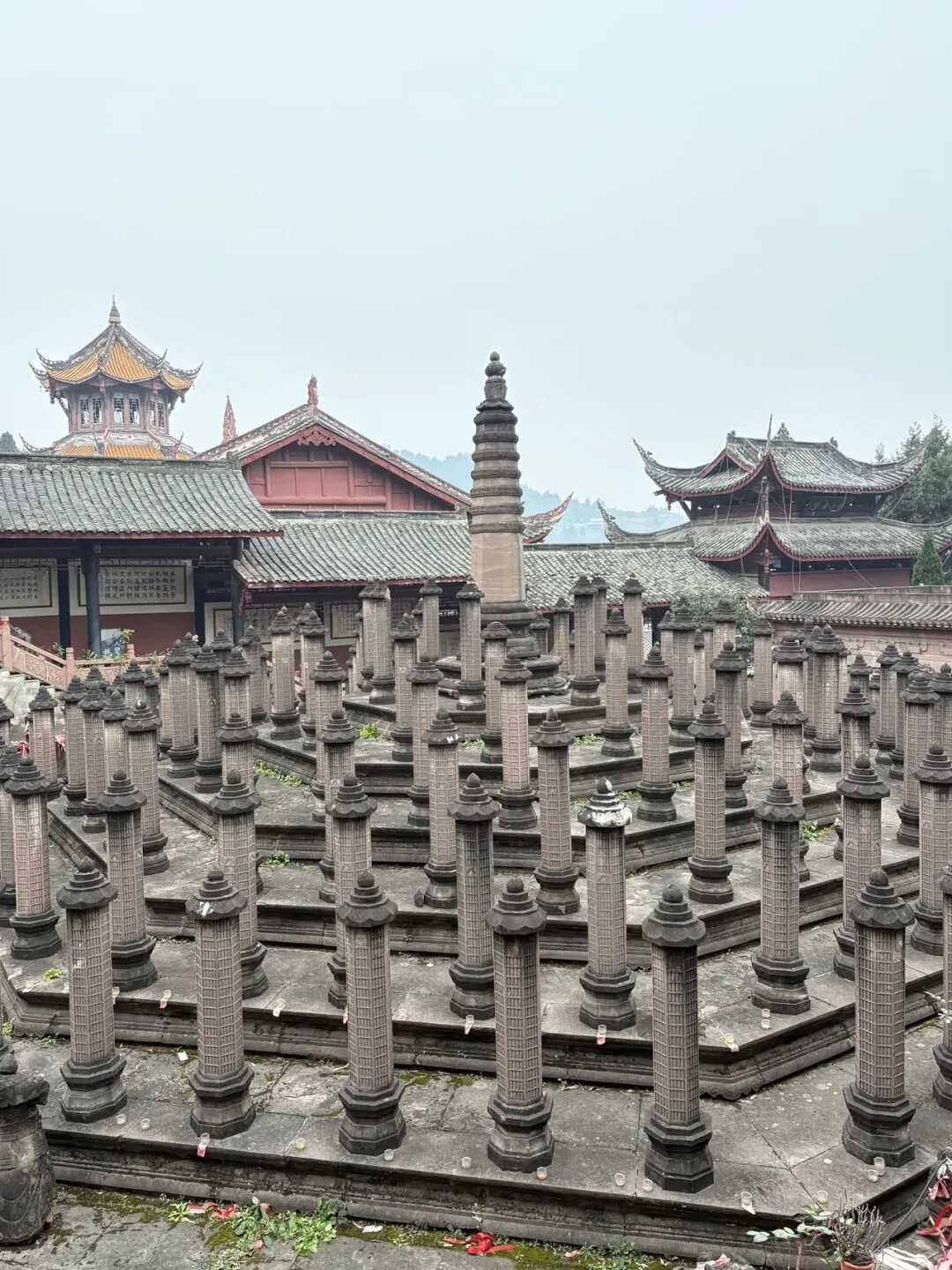
Dense stone pagodas spread out from the forest — 168 in total. They stand in a grid on a platform beside the monastery, so neat it looks like someone measured them with a ruler.
Look closely: each pagoda is carved with tiny pagodas the size of a thumbnail — 500 micro-pagodas on a single pagoda. 168 times 500 equals 84,000. This was the filial devotion of a Ming dynasty prince, expressed as a multiplication problem in stone.
A stone stele stands before the pagodas. The inscription was written by a Japanese monk, Shamon Dongshang (沙门东升).
Six hundred years ago, this foreign monk crossed the sea into Shu to witness the filial piety of a Chinese prince. A Japanese man, using Chinese characters, carved an inscription on Sichuan stone for a Ming prince.
Across a sea, across an imperial city, two people who never met met on a single stele.
I reached out and touched one of the pagodas. The surface was warm, holding the thin heat of a morning’s sun. In that moment — the craftsmen who built them, the monks who swept them, the passersby who hurried past — all had placed their hands in this same spot.
The pagodas fell, and were raised again. The people left, but the stele remains.
The 10 RMB Vegetarian Meal
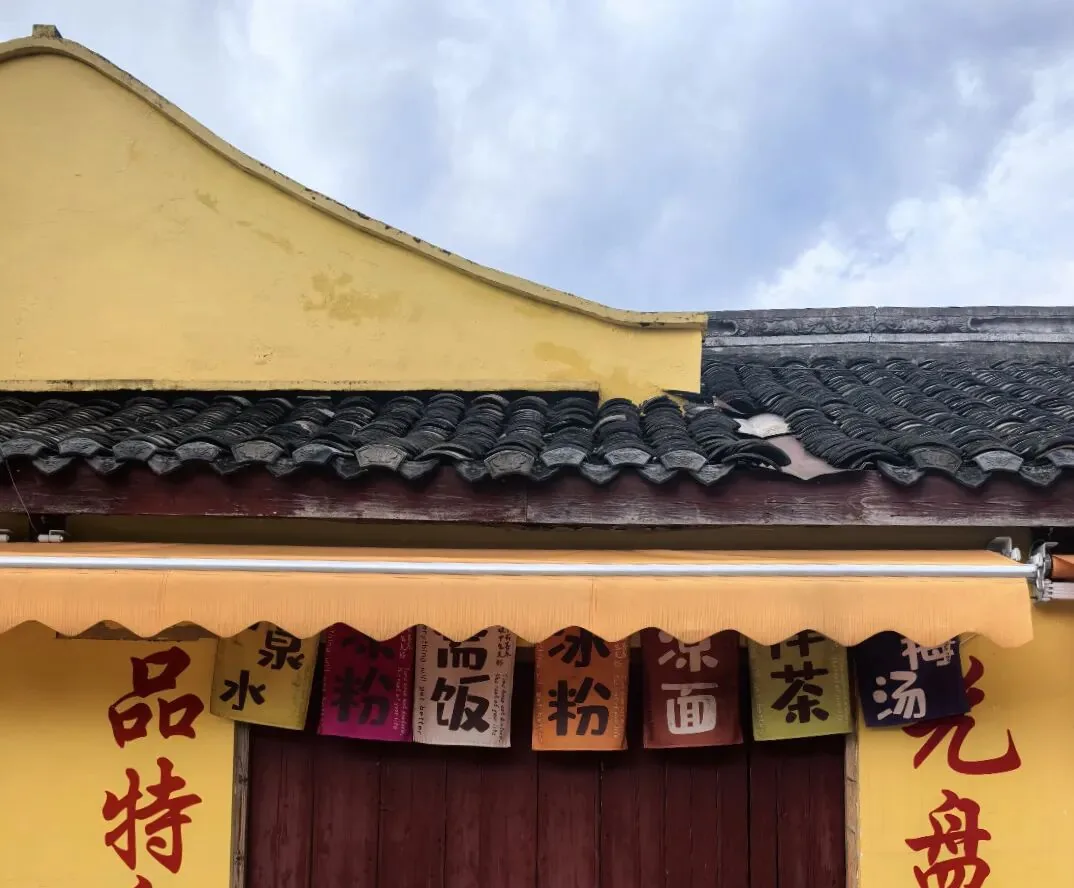
At 11:30, the dining hall opens. 10 RMB per person, all you can eat. Remember this time — if you’re late, it’s gone.
The vegetables are still stir-fried over a firewood stove, and the wok hei (breath of the wok) doesn’t fade. The greens are grown by the monks themselves. The cold noodles are the signature dish — they’re gone after noon. Last time I arrived at 12:30 and there wasn’t even sauce left.
After the meal, you wash your own bowl. Turn on the tap and mountain spring water rushes out, washing away the oil. The moss by the sink darkens with the splashes. You clean each pair of chopsticks and stack them back in the bamboo basket. Doing this, you don’t think about anything — your hands move, your mind is quiet.
Local insight: Kaizhao Temple also serves a 10 RMB vegetarian meal, starting around 11:00. After descending, you can head to Jintang University Town (Xuefu Avenue) for student-priced eats, or try Teng Sange Farmhouse (滕三哥农家乐) — their boiled pork slices and stir-fried rapeseed tips are recommended.
The Cats of Sanxue Chan Monastery
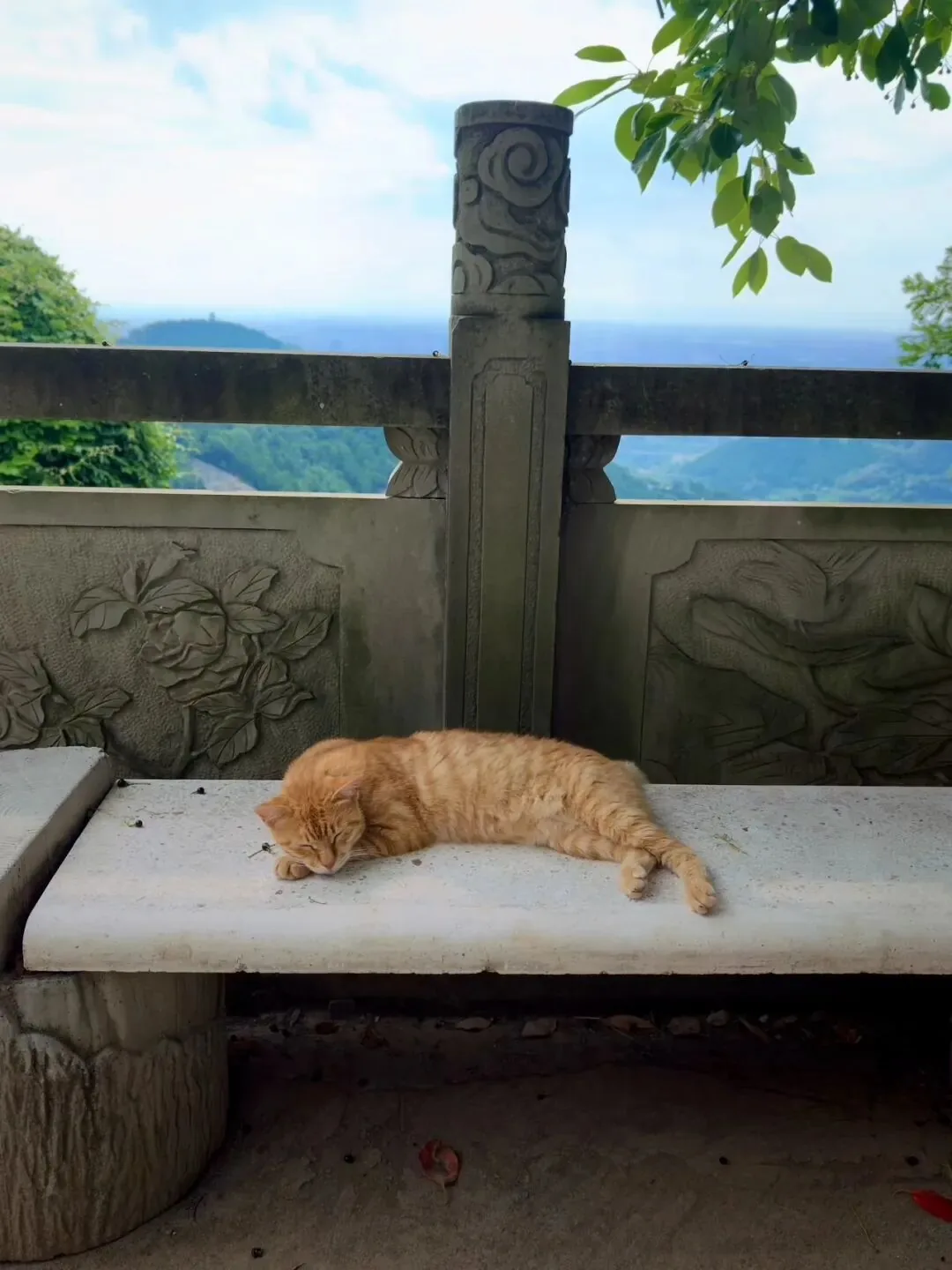
A ginger cat silently jumped onto the bench and rubbed against my arm. It wasn’t afraid of people, but it wasn’t clingy either — later I learned this is the hospitality of the monastery’s cat colony.
There are a dozen or so cats living in the monastery. They lie on stone tables sunning themselves, follow pilgrims for a few steps, don’t hide, and don’t fawn.
That ginger cat followed me the whole way — from the dining hall to the pagoda forest, then to the monastery gate. It confirmed I hadn’t stolen any pagoda bricks or left any rice grains. Then it jumped onto a stone stool and spread itself out like a towel sunning in the sun.
Heading Down & Practical Tips
On the way down, the forest thickens and the cicadas fade. For a stretch, the wind chases you, like seeing you off, or like asking you to stay.
Ten kilometers. Five hundred meters of ascent. Not steep, not long. But those who’ve been know — some things stay here, some things you carry away.
The wind on that ridge. The 600-year-old pagodas. The 10 RMB meal.
They’re the rare things in this accelerating age that won’t rush you.
Pro tip: Signal is weak on the mountain — download offline maps in advance. The ridge has almost no shade, so use sun protection or go on a cloudy day. Practice safe hiking and leave no trace.