Hongshi Park: A 600-Mu Family Playground in South Chengdu
Chengdu keeps building big, polished parks down south, and the whole area gets nicer. Some people travel from far away just to spend a day here. You may have heard of Luhu (麓湖), the upscale residential area in the south of the city — there are plenty of parks around it too. With the weather still mild, I took my kid to one he loves: Hongshi Park (红石公园) in Tianfu New Area, a great spot for the whole family.
Pro tip: Don’t confuse it with the Hongshi Park in Xinjin. They’re two completely different places — check your map carefully before you go.
What to Expect at Hongshi Park
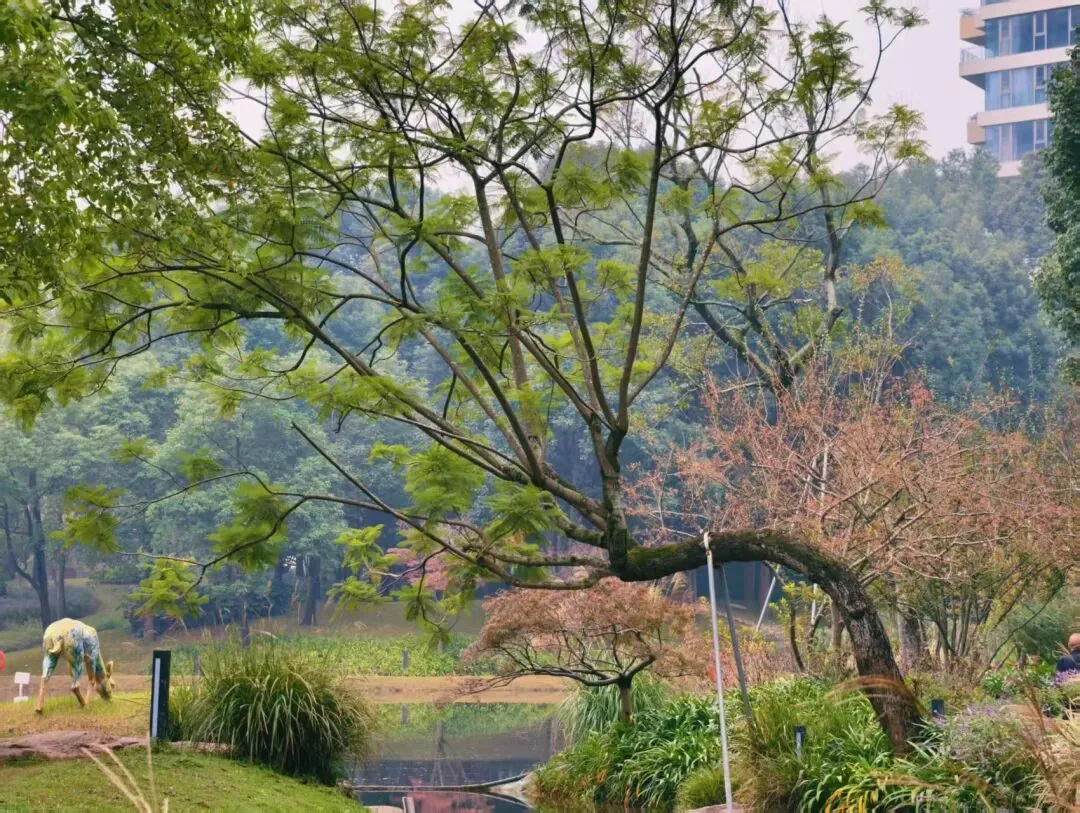
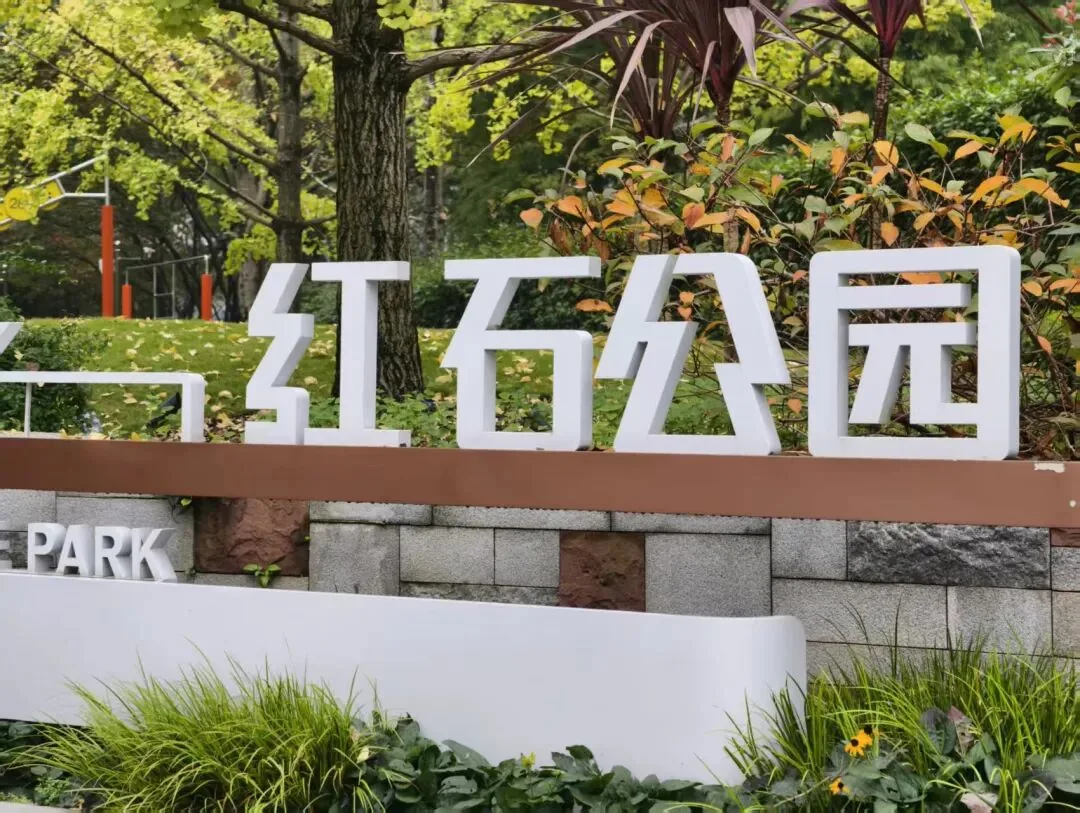
This is an open-style park covering just over 600 mu. It can’t compete with those thousand-mu parks, but it’s beautifully put together — especially the kids’ play area, which is a completely free, non-motorized playground. Every time I’ve been, in any season, it’s been busy, with kids everywhere.
The Free Kids’ Playground
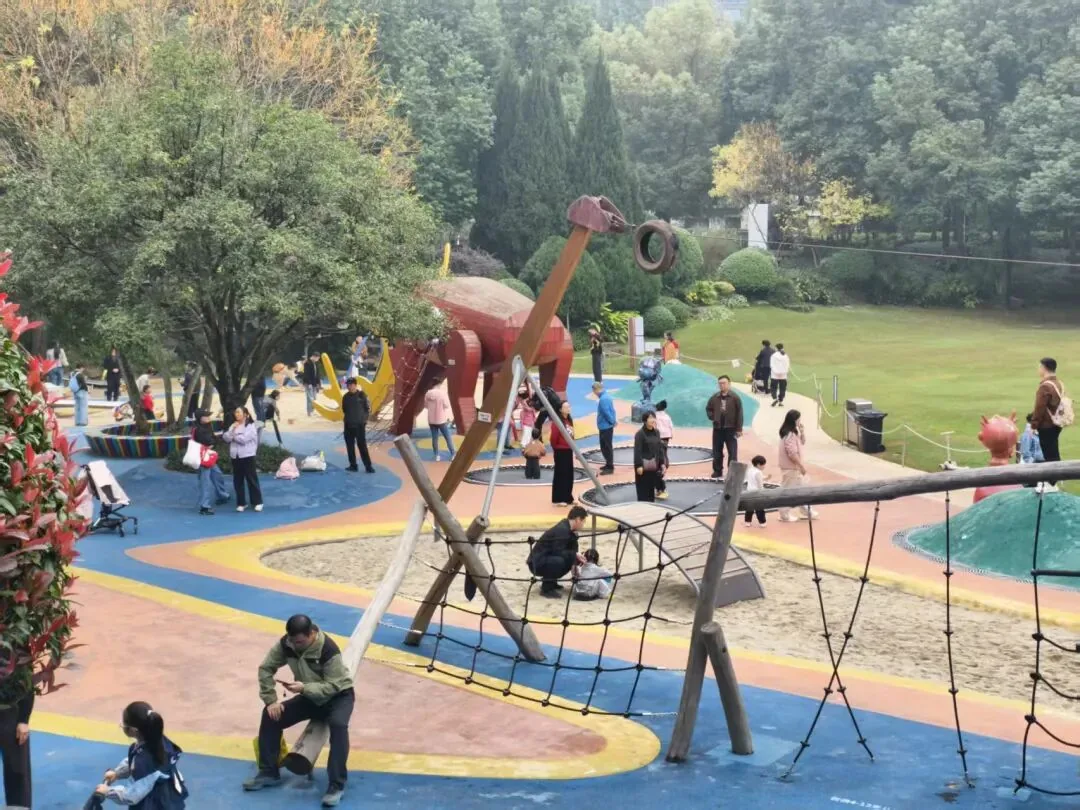
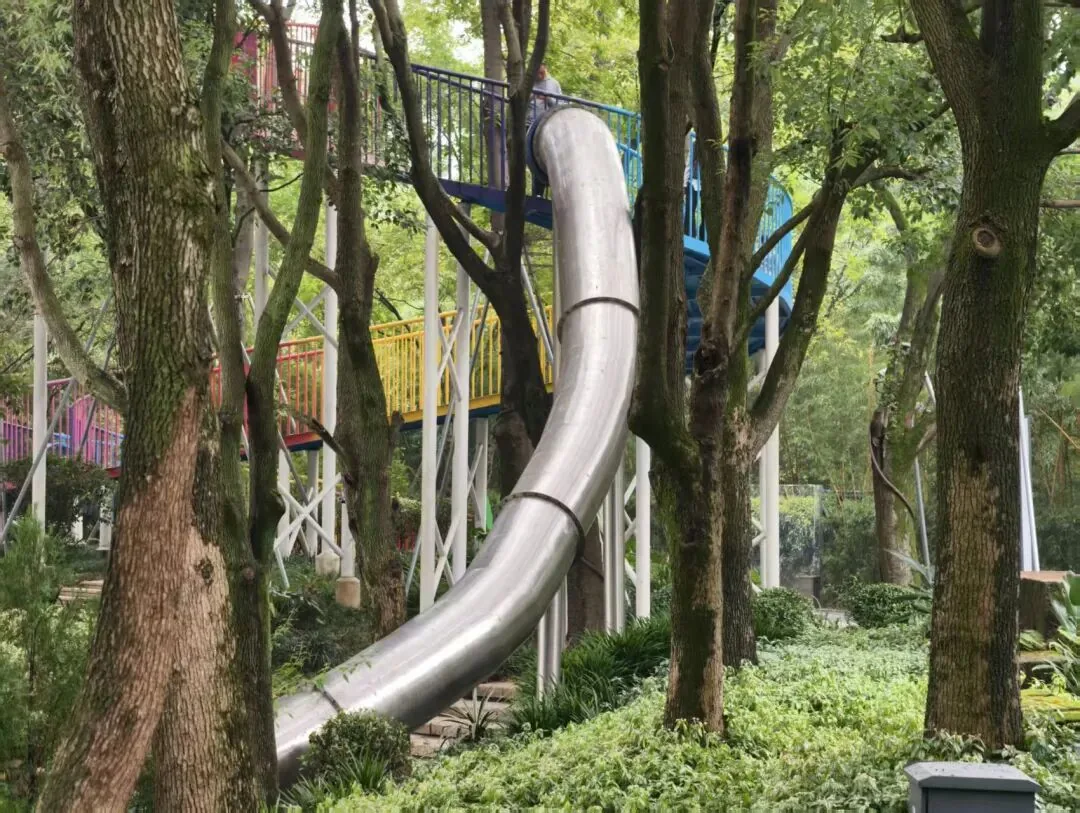
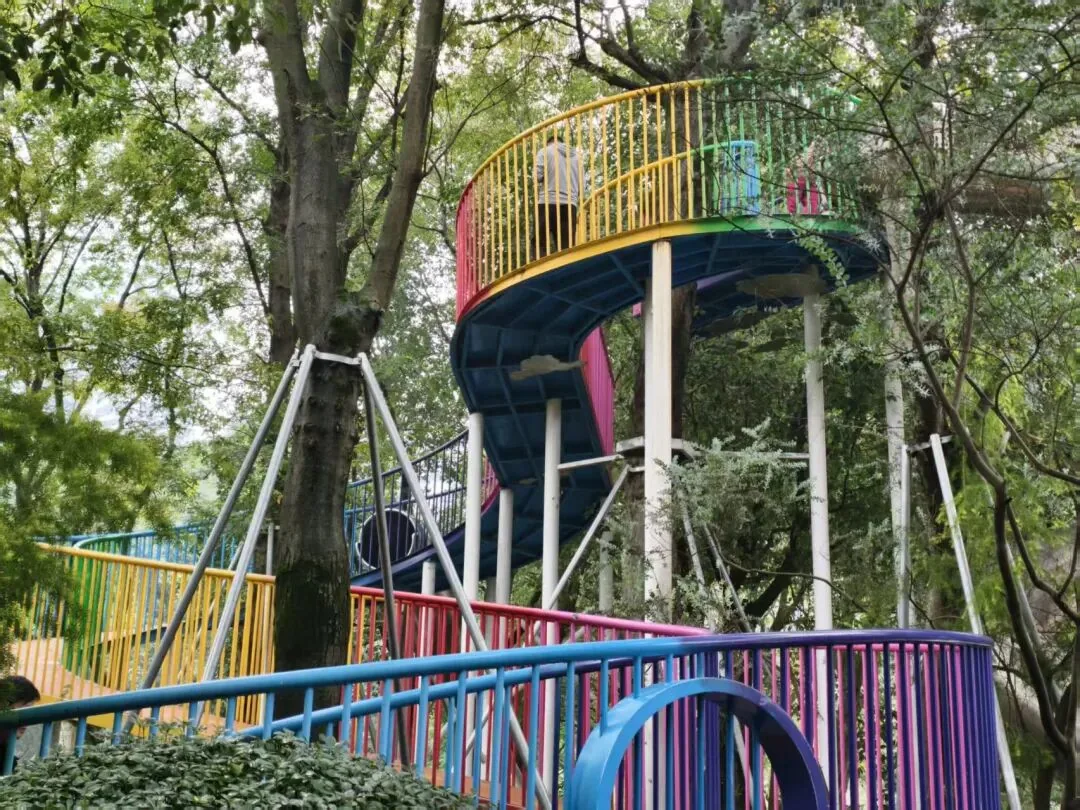
The play area has two huge slides set among the trees, sized for different ages — the tallest is five stories high. There’s a sandpit with soft, fine sand where younger kids build castles. Next to it is a wooden elk slide shaped like a giant red elk, with the antlers as the slide run — a gentle slope that little ones love. You’ll also find big rope-net climbing towers, climbing walls, balance beams, and roller obstacles, plus fitness equipment for older visitors. There are zip lines, ground trampolines, seesaws, and rocking horses too — the variety is impressive.
Beside the playground is a large lawn, though it’s currently closed for maintenance, so no one’s playing or camping on it. My six-year-old was so into this area that dragging him away to see the rest of the park took forever. And this is only one corner of the north section — it’s late autumn now, and the rest of the park is well worth a wander.
Red Sandstone Landscapes
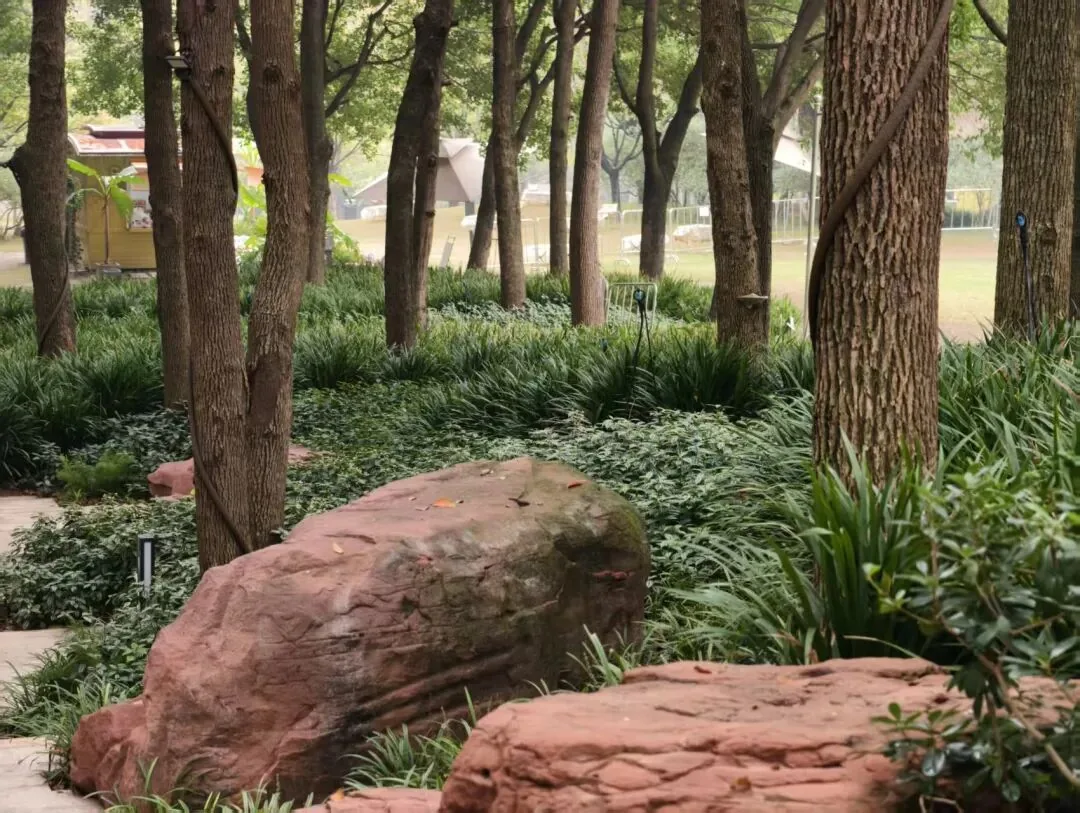
Hongshi means “red stone,” and the name is literal: there’s a lot of raw red sandstone under this land. When the park was built, instead of hauling the stone away, they used it on site. Large areas of red stone paving, red stone feature walls, red stone steps, and red stone benches and tables create a landscape you won’t see elsewhere — simple and clever at the same time. In one grove, tall trees still block out the sky even in autumn; on a sunny day it’s a comfortable place to rest.
The Ginkgo Avenue
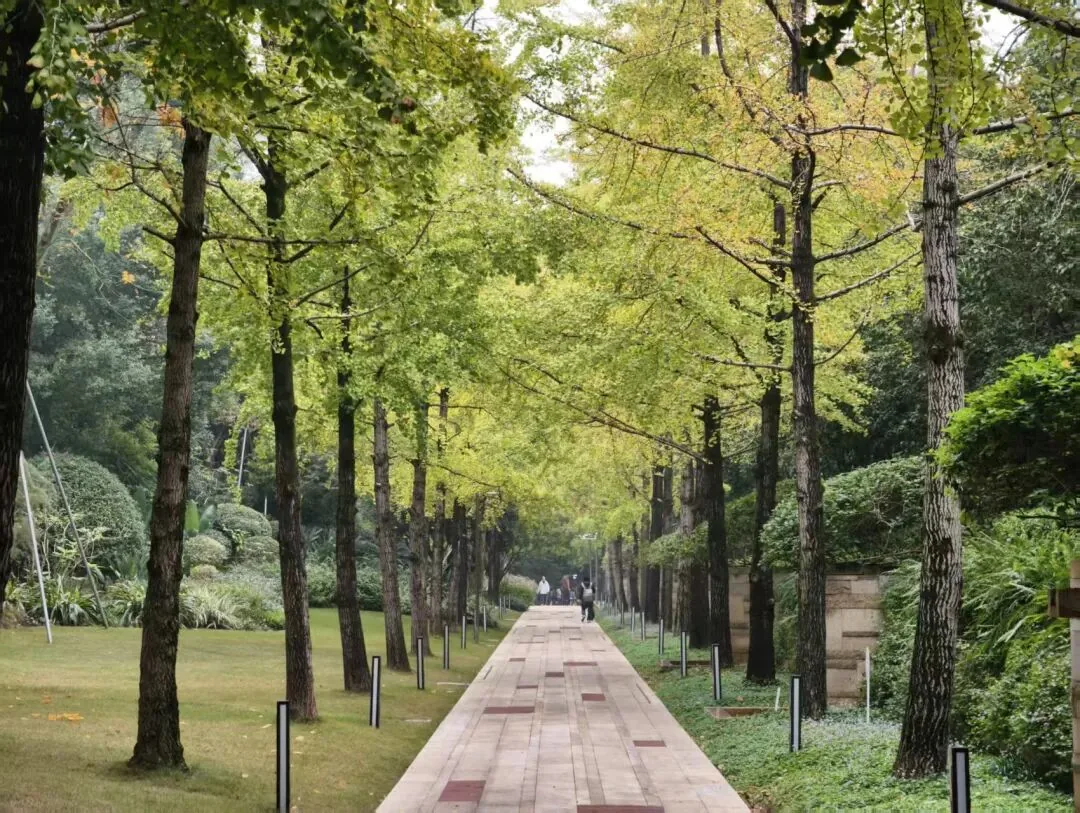
The park has a ginkgo avenue. These aren’t ancient ginkgos, but they line the road with a lovely sense of depth. Right now it’s like a golden road, with leaves fallen on the grass and stone paving — a pretty sight.
Zhuyin Garden: The Bamboo Grove
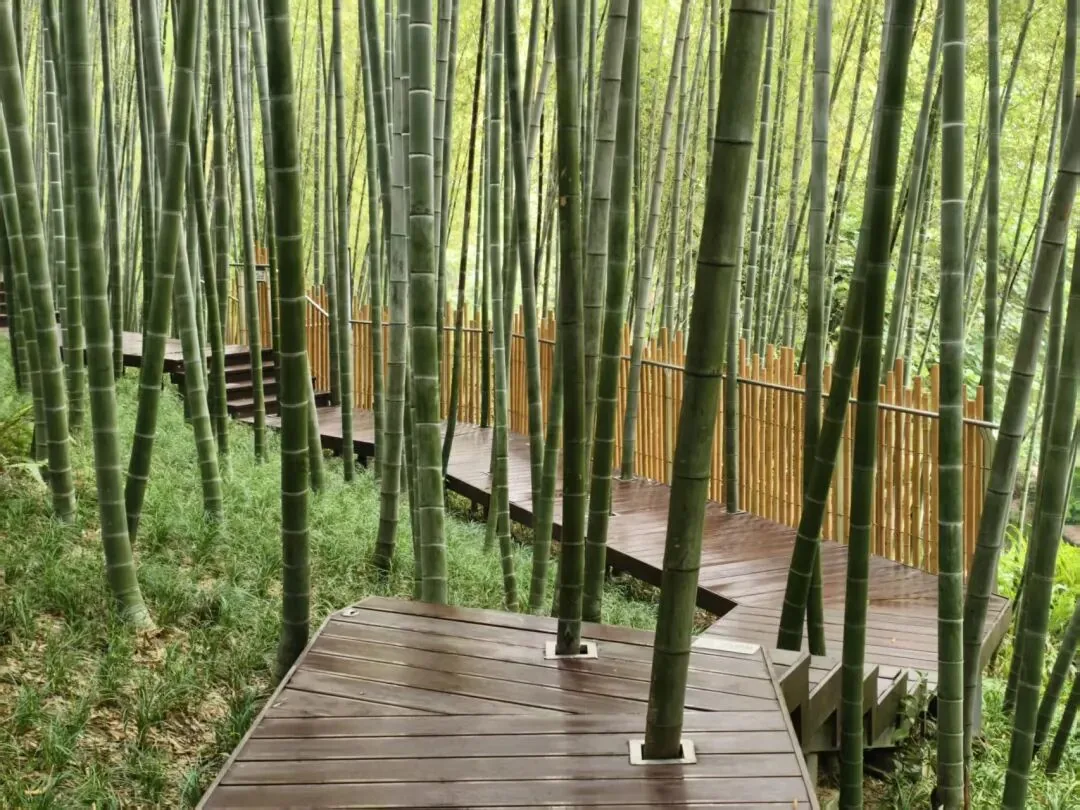
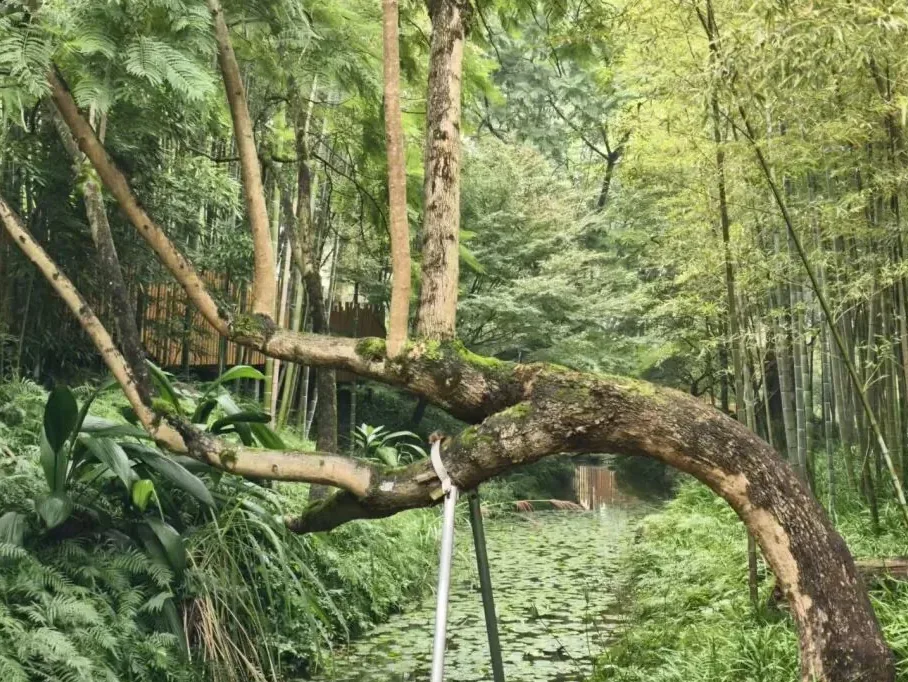
Walk to the right from the kids’ playground and you’ll find a bamboo grove called Zhuyin Garden (竹隐园). A winding path leads into it, built along the slope of the hill. Follow the zigzag wooden boardwalk and it feels like stepping into dense forest. To protect the bamboo, many stalks are left growing right in the middle of the path. It’s a narrow valley with a stream murmuring through the middle, spring water bubbling, and a small pond. Classic-style rest pavilions are scattered around, all following the natural shape of the hill — nothing feels out of place. Few people come here, so it’s a good spot to sit and zone out for a while.
The Lake and the Metasequoia
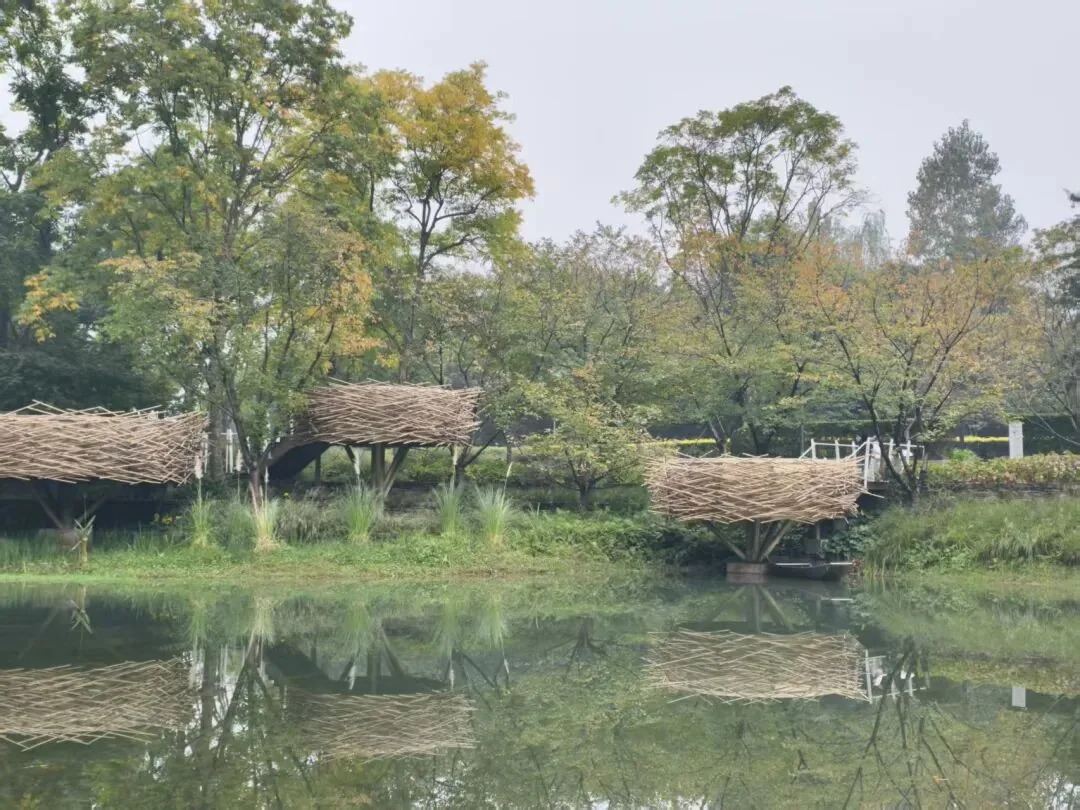
Keep walking through a tunnel and you’ll reach a slightly larger lake — about 10 minutes to walk around it. It’s layered and terraced, and on the far side there are a few nest-like buildings that sit nicely against the woods.
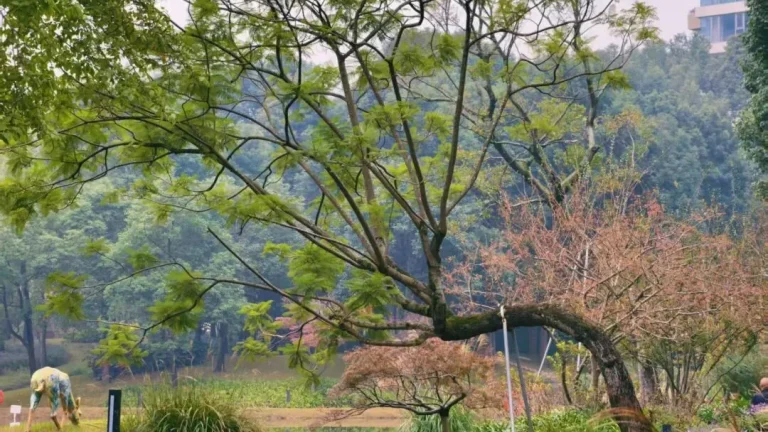
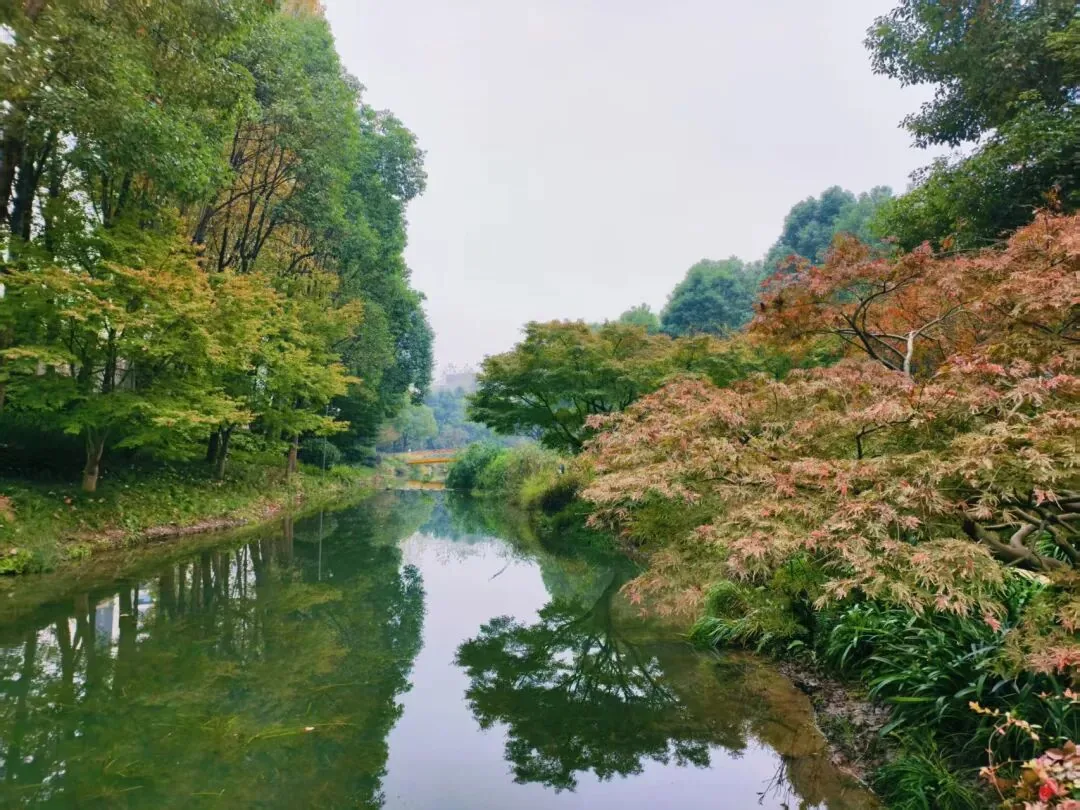
The metasequoia by the pond haven’t turned red yet — they’re mostly green with a little yellow and red mixed in. By late this month they should hit their best red. Right next to the park are many residential complexes; the people who live here have it good. Open the window and autumn color fills your view. A stroll here is truly a neighborhood park.
Autumn Leaves and Photo Spots
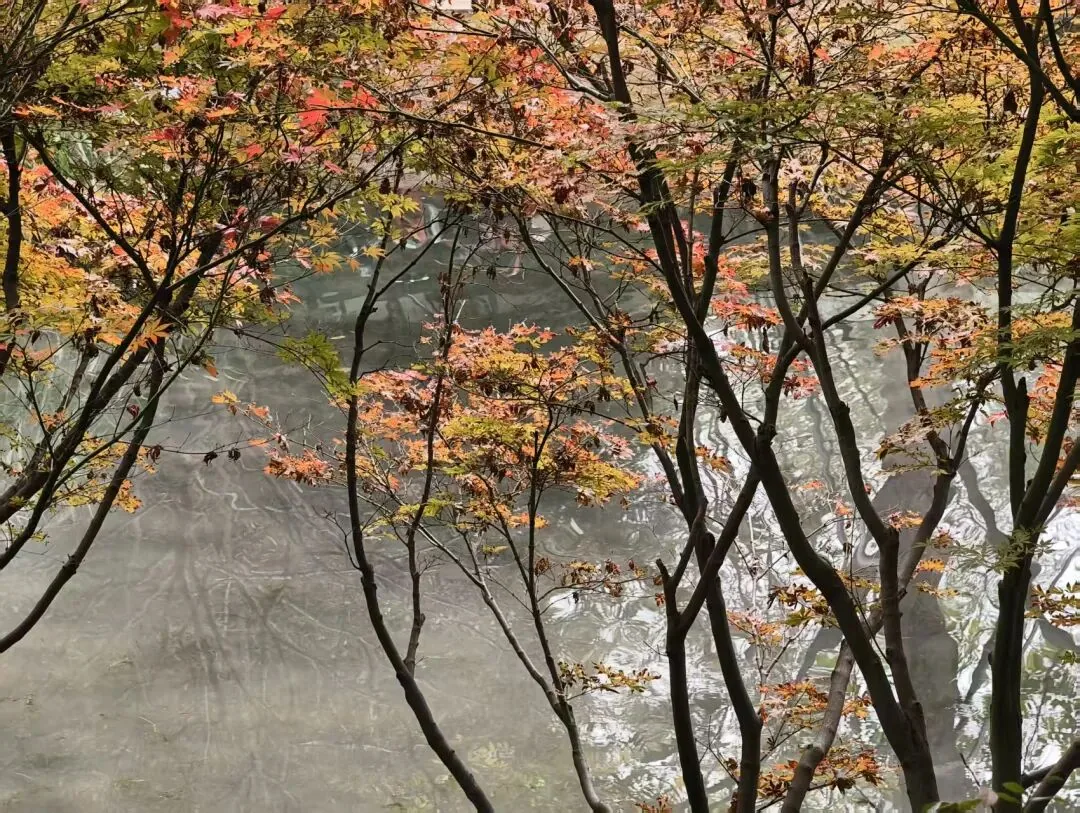
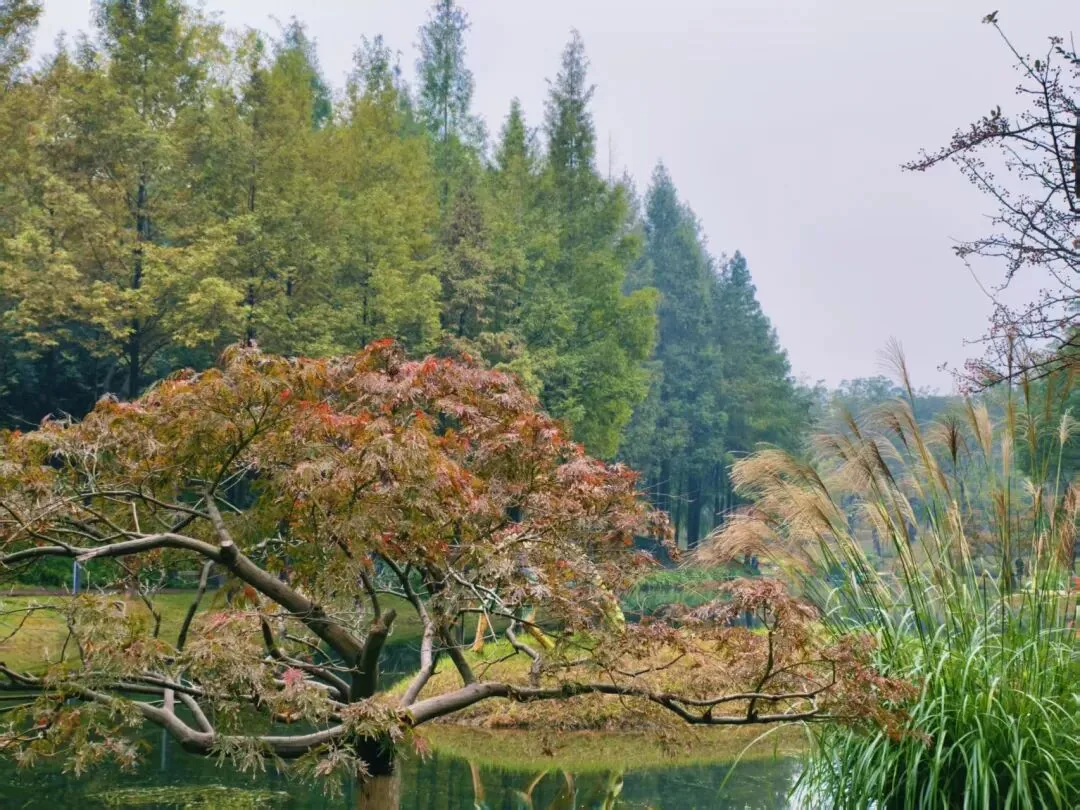
The red maples here are lovely too. They aren’t in big continuous stands — they’re scattered across the valleys, stream banks, lawns, and lakeside. Good photo spots include the slopes on both sides of the red stone canyon, the edges of the terraced grass steps, and the lakeside woods near the kids’ playground. The best viewing period starts in mid-month, but the leaves don’t all turn at once — they change gradually.
Late autumn is a great time to visit Hongshi Park. Ginkgo, red maple, camphor, bamboo, and metasequoia each bring their own color, and the fallen leaves underfoot are a mix of shades. You can collect some with your kids to make specimens. Unfortunately the weather was overcast when I went — many photographers specifically pick a sunny late-autumn day to shoot here, and it looks beautiful.
Local insight: It’s autumn holiday season right now, which makes it a perfect time to bring the kids. They can run wild on the play equipment while adults and grandparents stroll slowly through the trees — an easy half-day out.
Practical Info
- Address: East section of Luhu Middle Road, Huayang Subdistrict, Tianfu New Area (inside Luhu Ecological City). Search “麓湖生态城红石公园” on your map app — and make sure it’s not the Xinjin Hongshi Park. They are not the same place.
- Tickets: Free entry.
- Metro: Line 1, Hongshi Park Station, Exit C/D — about an 800-meter walk.
- Driving: Navigate to “麓湖生态城红石公园.” The park has a parking lot, but spaces are tight on weekends, so arrive early.
- November highlights: Metasequoia turning warm red (full red waits until December), golden ginkgo, and red maples.
- Best autumn viewing: Mid-to-late November to early December, when red maples, pond cypress, and ginkgo all change color — red stone plus red leaves makes for the strongest atmosphere.
So that’s Hongshi Park — the late autumn spot in south Chengdu that shouldn’t be forgotten.