Why Late Autumn Is the Best Time to Visit Jiezi Ancient Town
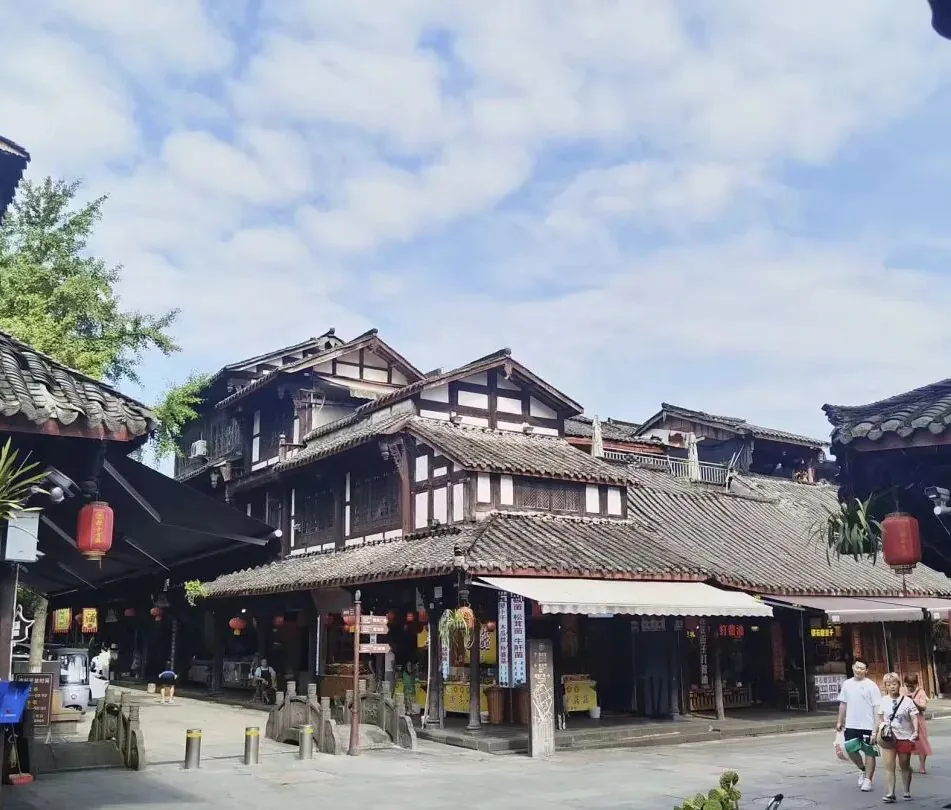
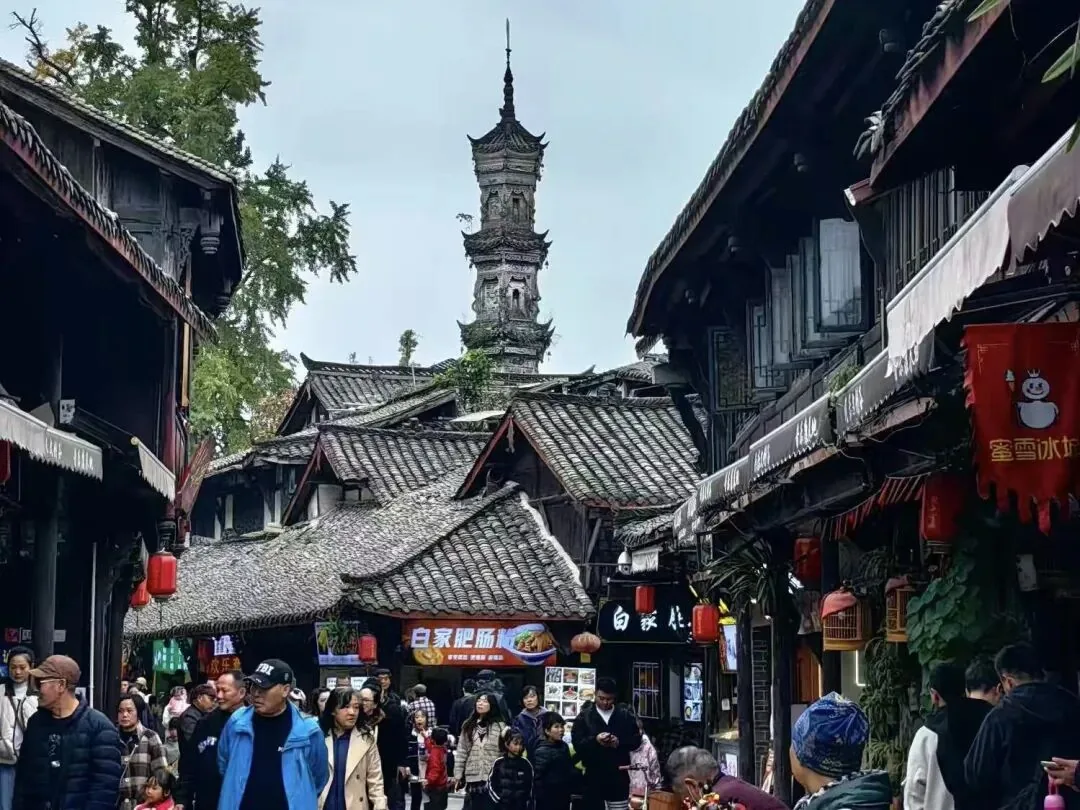
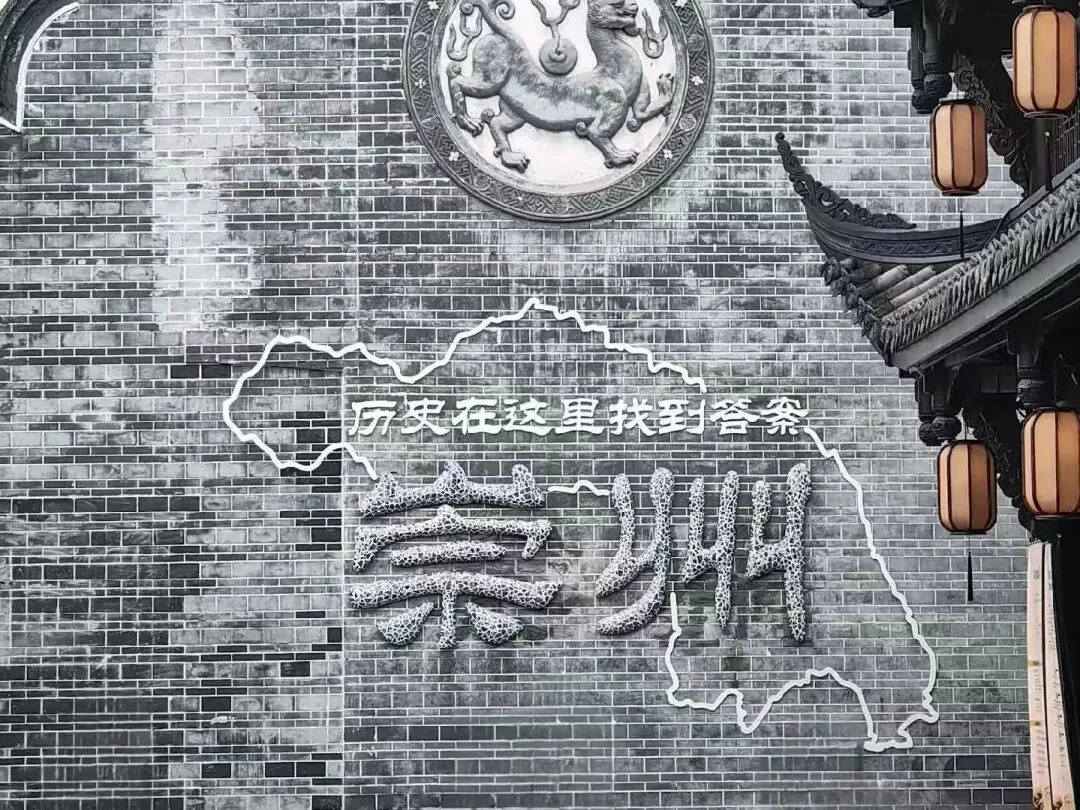
Come November, Chengdu starts showing its colors. The best places to see them are on the outskirts, in the mountains or close to them — the foliage there is far richer than in the flat city. It’s a great time to bring the family for a slow day out. Today I want to share a spot that’s especially good for late autumn.
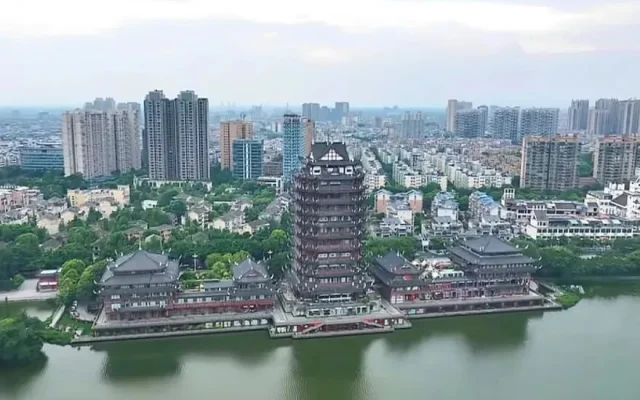
That spot is Jiezi Ancient Town in Chongzhou, a place where autumn is in full swing.
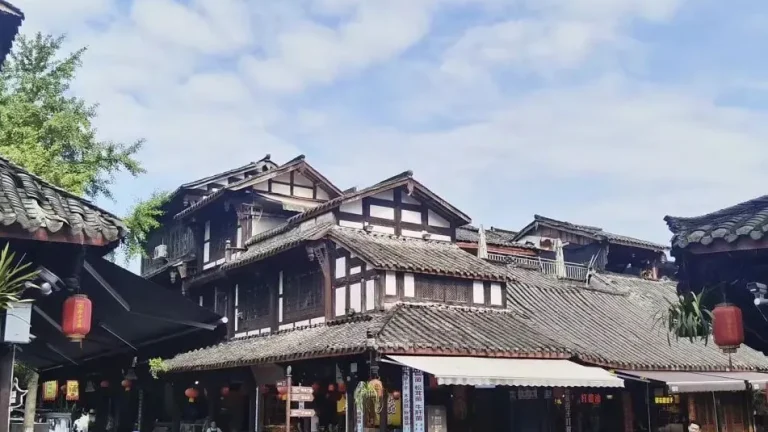
Jiezi is a 4A-rated scenic area, and plenty of people know it well. It’s a fairly commercialized town, and on holidays it gets packed — really packed. But in late autumn, on an ordinary weekday, it feels quiet and peaceful. Perfect for strolling and taking your time with photos.
The Persimmon Tree by the Ziku Pagoda
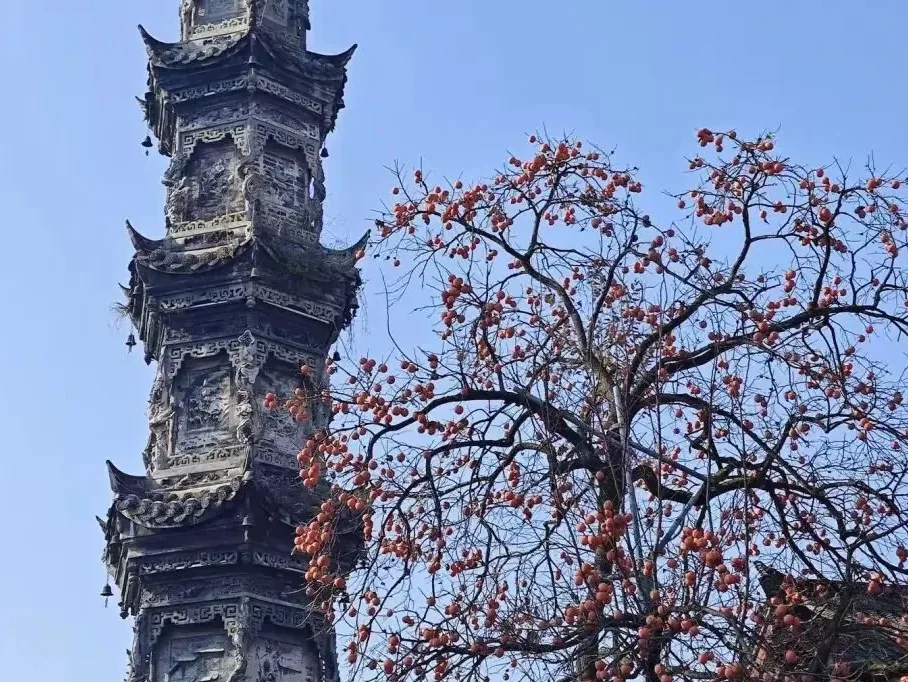
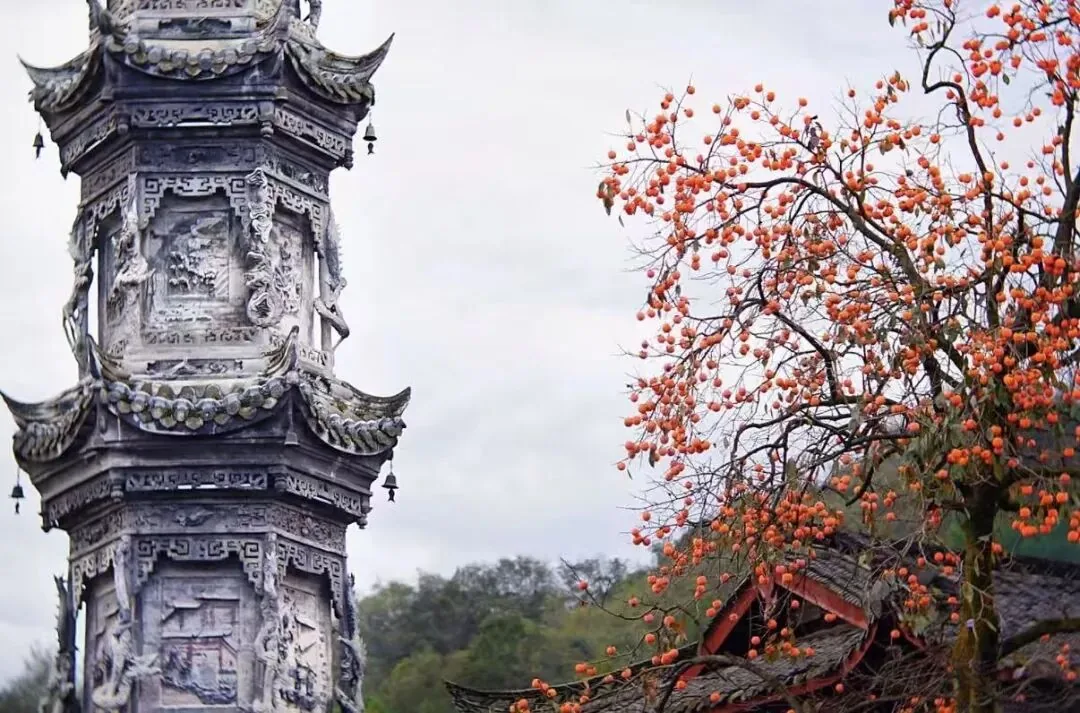
Right now, the main thing to see in Jiezi is a tree — a persimmon tree. Every year at this time, people make special trips just to photograph it. Some ask, what’s so special about a persimmon tree? You see them everywhere in the countryside when you’re a kid. But honestly, now that you live in the city, how long has it been since you’ve seen one? Especially one in a place as old and charming as this.
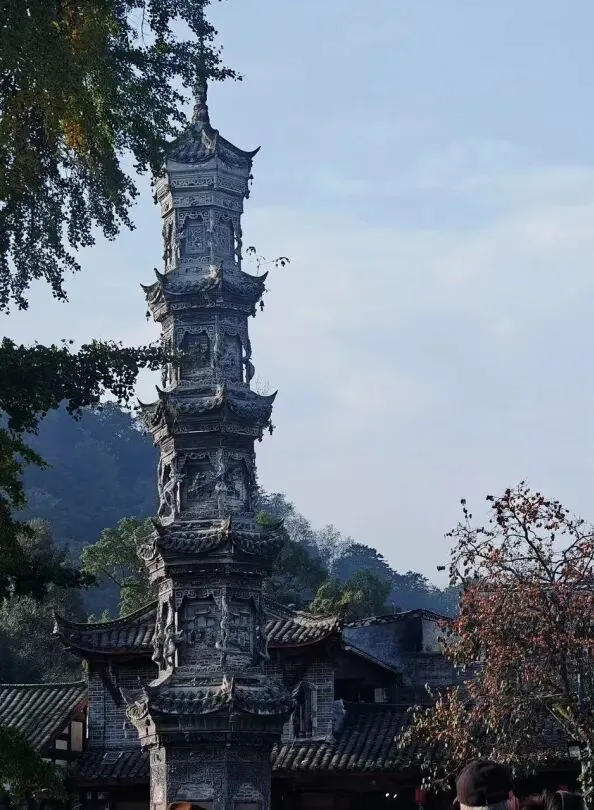
The tree stands in Jiezi’s Ginkgo Square, right next to the Ziku Pagoda. When I visited a few days ago it still had leaves, but usually by mid-November they’re mostly gone. All that’s left is a crown of orange-red fruit hanging on the branches, like someone lit little lanterns beside the old pagoda. The pagoda is gray-blue; the persimmons are orange-red. The two sit side by side — one has been quiet for centuries, the other is bright for just this one season. On a clear day, the fruit catches a soft sheen under the blue sky.
Standing under the tree, I thought of a Qing dynasty poet’s line about Chongzhou: “The autumn water of the Wei River is clearer than wine; after the frost, the yellow mandarins are sweet as honey.” This scene isn’t just something from a poem — it’s exactly what’s in front of you.
The Ancient Ginkgoes of Ginkgo Square
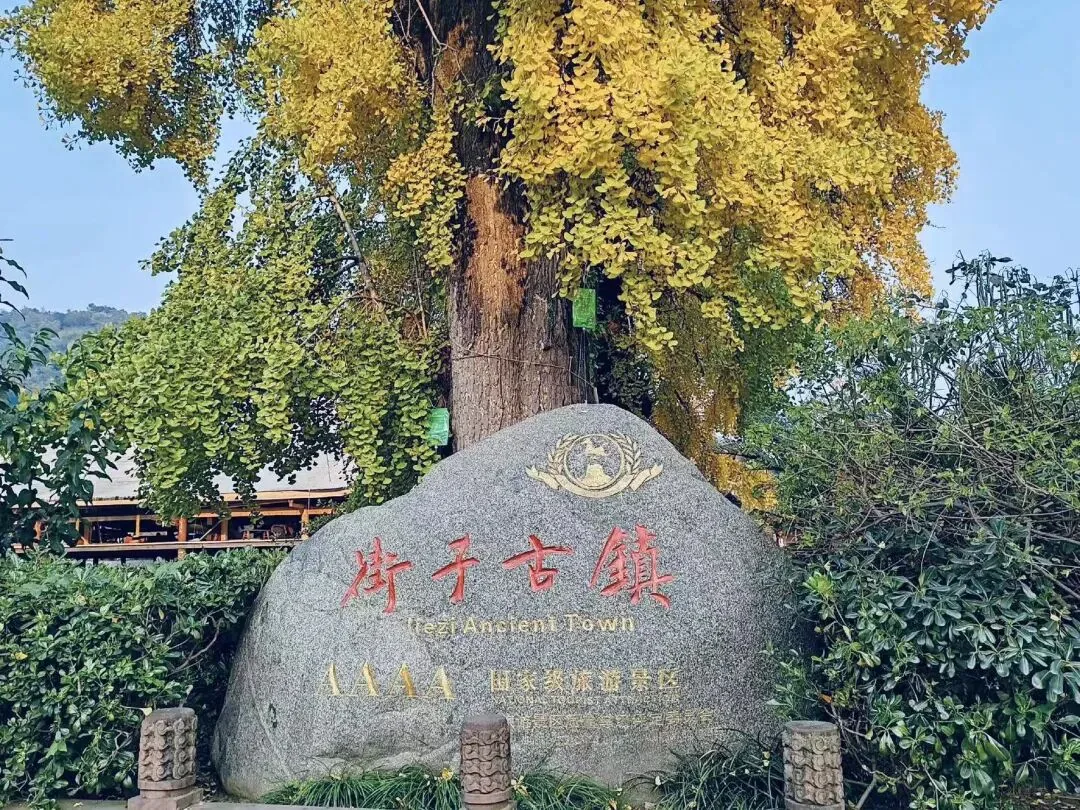
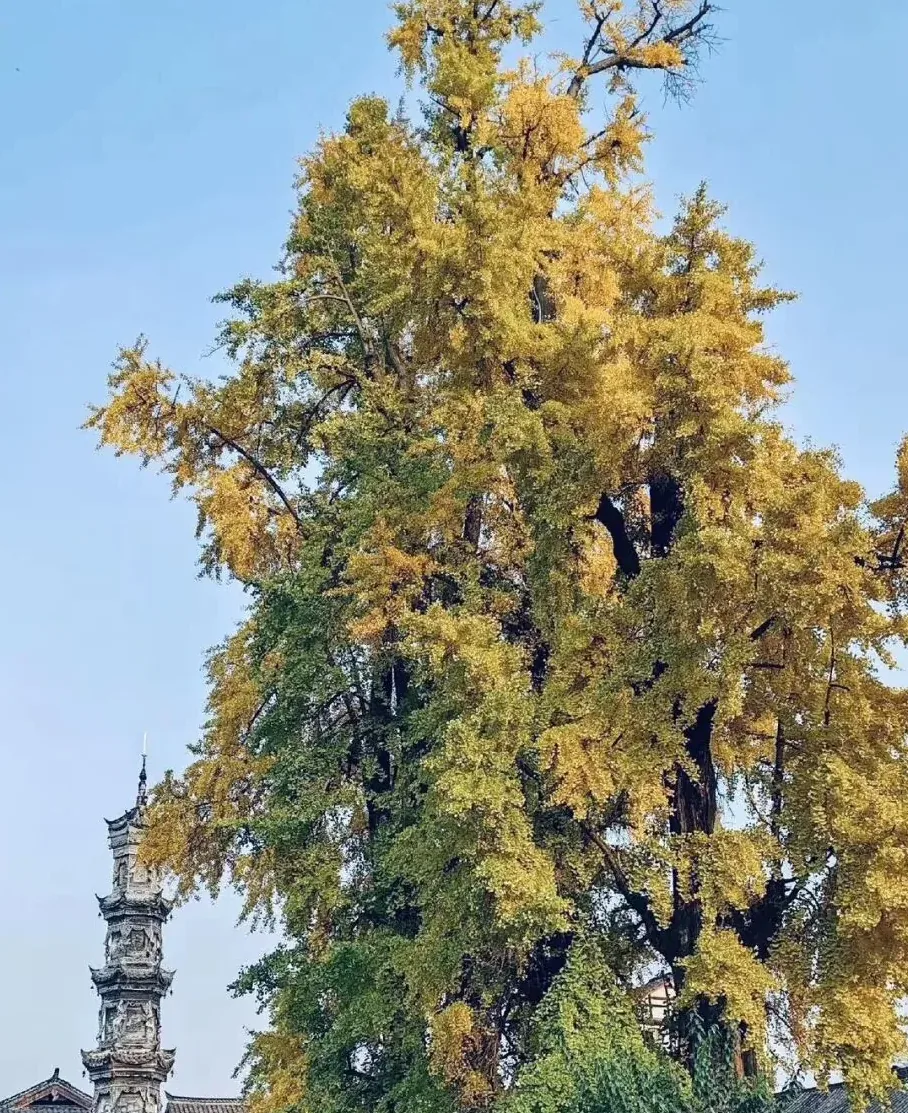
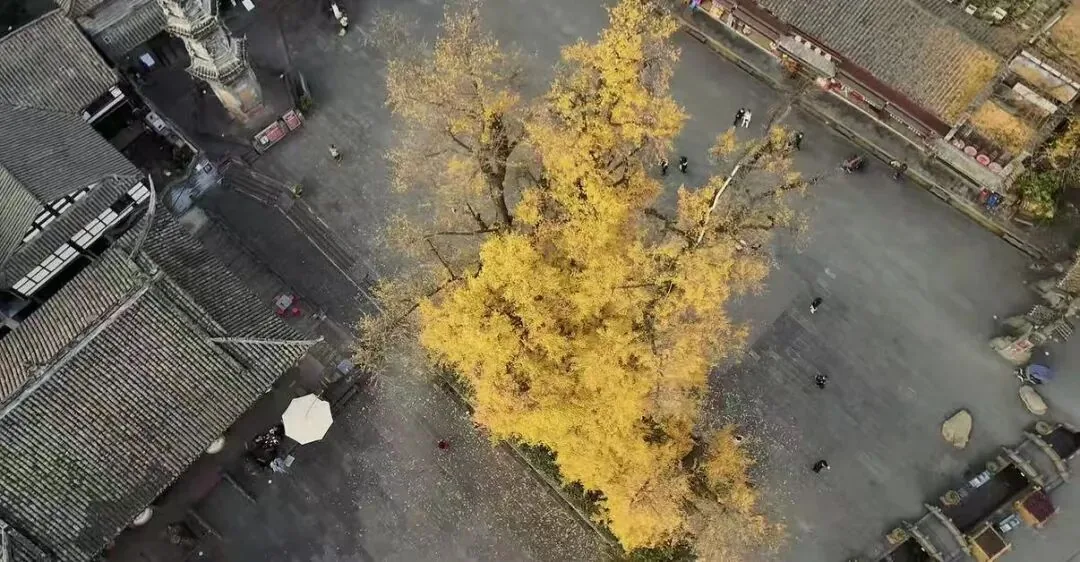
Beyond the persimmon tree, the square lives up to its name — there are plenty of ginkgoes here, including five ancient thousand-year-old trees. The thickest one takes three or four people to wrap their arms around. Legend says they were planted by the late Tang poet Tang Qiu, who lived in seclusion by the Wei River. He’d roll his poems into paper balls and store them in a gourd, which earned him the nickname “the One-Gourd Poet.” If he could see those trees today, towering over the square, he’d surely be pleased.
Local insight: The ginkgoes aren’t fully yellow yet — maybe 70–80% there. For the full golden canopy with leaves flying everywhere, wait until mid-to-late November.
Right now there aren’t many fallen leaves, and some branches still show green. But when the wind blows, the yellowed leaves come down first. You can already picture how spectacular it’ll be in another week or two — a different kind of grand beauty.
Strolling Jiangcheng Street
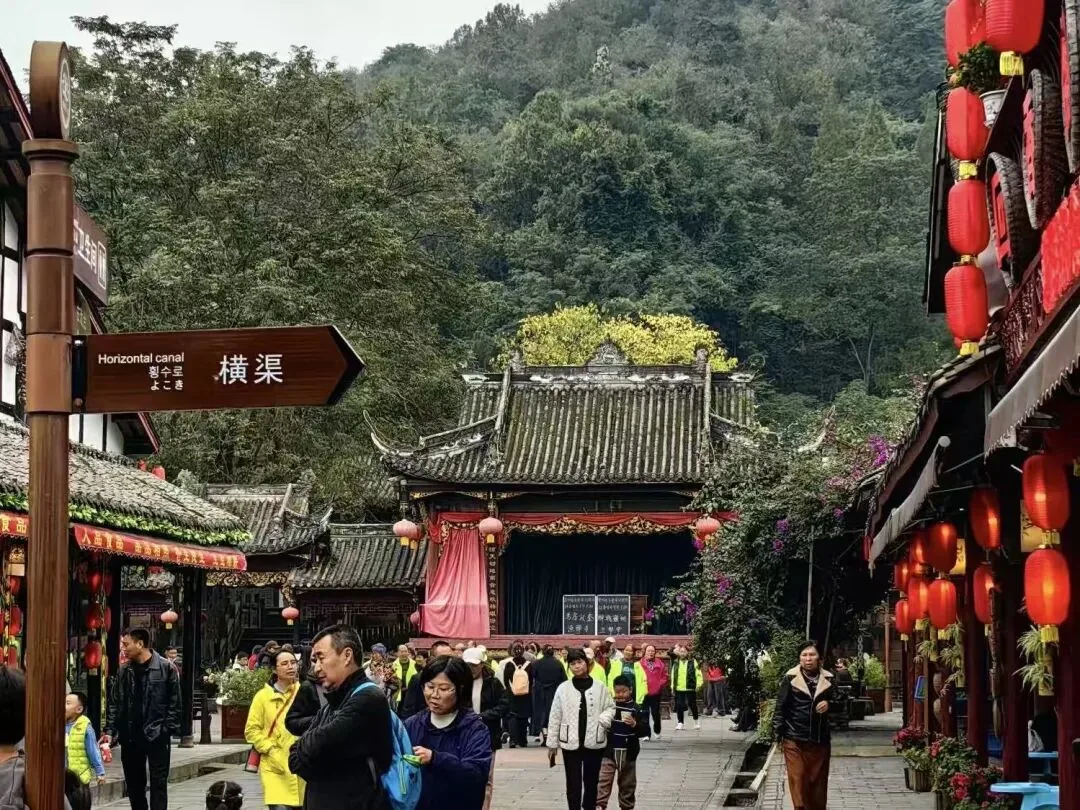
Walk along Jiangcheng Street and the shops on both sides are packed with things to look at. It’s low season now, so business is slow. You’ll find tangmabing (sesame cakes), yerba (leaf-wrapped rice cakes), donggao (steamed rice cakes), Tianzhutang chicken slices, chazha noodles, braised snacks, cured meat — so much good food. Take your time walking and looking. I love Chongzhou’s local yerba and donggao; every time I come here I buy some to take home.
Ruilong Covered Bridge and the Wei River
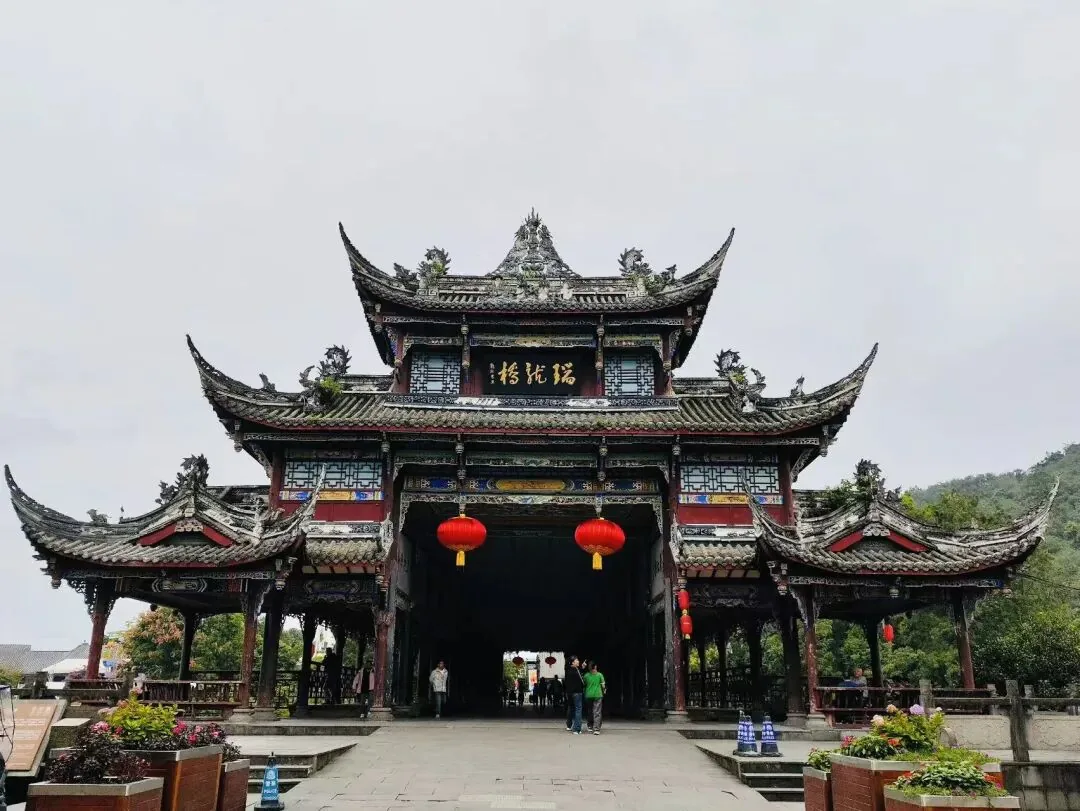
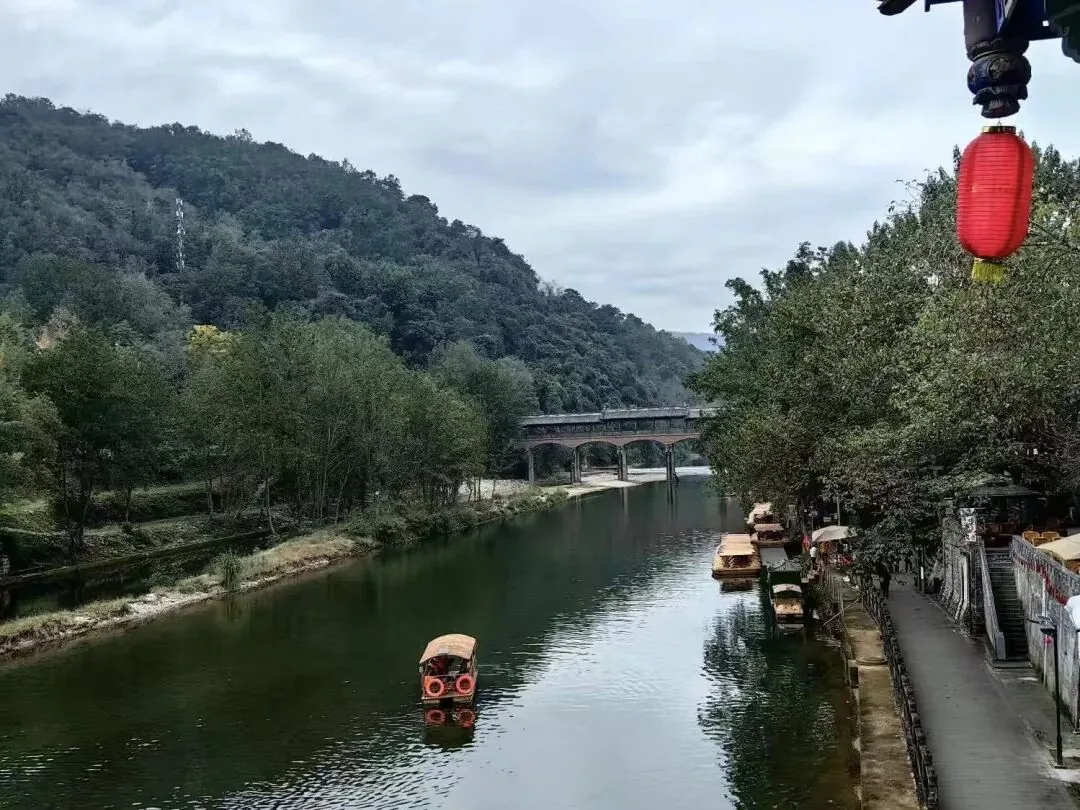
The Ruilong wind-and-rain covered bridge spans the Wei River. Look for the twin dragons chasing a pearl, and the carvings of fortune, prosperity, and longevity. Standing on the bridge, the water is cold and clear, the distant hills pale blue, and a few fallen leaves drift downstream. The town grew up around this water — it was once an important stop on the Tea Horse Road. Lu You came to Jiezi when he was an official in Shuzhou. He later wrote: “Forty years of dreams in rivers and lakes — who’d believe there’s a Shuzhou in this world?” A Southern Song official, half a lifetime in the saddle, came to the Wei River and was willing to set down the words “rivers and lakes.” You understand when you’re older: no matter how big the world is, it can’t compare to a bridge and a river.
Tea, Mountains, and Guangyan Temple
A teahouse is the perfect place to relax in a town like this. A bowl of gaiwan tea costs 10 RMB, and there are plenty of spots along the river or the street. One cup lets you sit for half the day, sipping slowly, listening to the old men next door chat, or just sitting quietly in a corner by yourself. Do nothing, think nothing, just zone out — you’ll feel completely relaxed.
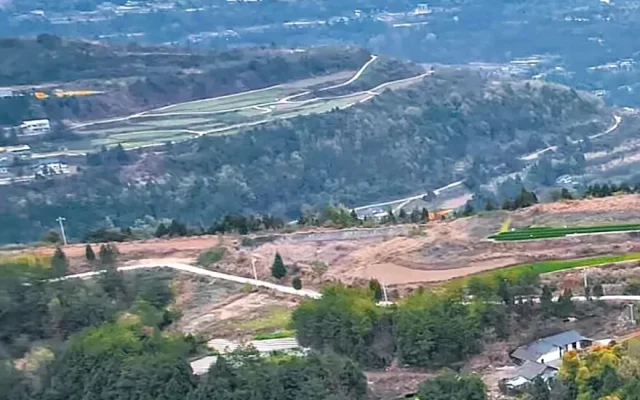
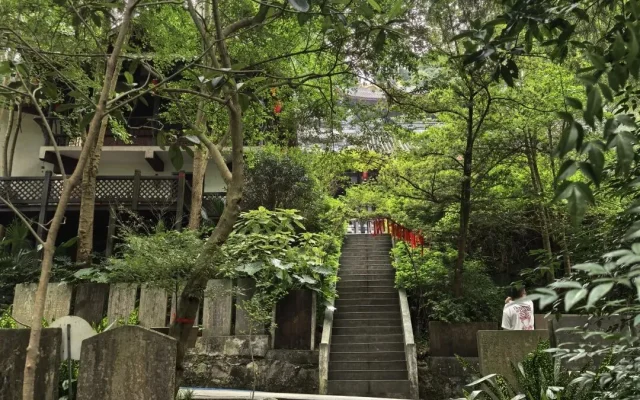
If you want to go higher and farther, follow the Kangdao trail up to Fengqi Mountain. The path is easy to walk, through bamboo and camphor forest. It’s autumn now, and the mountain is turning into layers of color — beautiful. At the end is Guangyan Temple, first built in the Jin dynasty and known as “the First of Western Sichuan.” The whole route is about 4 km. Inside the temple, the ancient ginkgo against red walls is another great photo spot.
Pro tip: The town is free, the Fengqi Mountain Kangdao trail is free, and Guangyan Temple charges a small cleaning fee.
The Charm of the Town
When you get here, you realize the town’s appeal isn’t just the old streets — it’s the mountains and temples behind them. Simple is good. You don’t need much in life: a house, clean water, a path, and a few people you can talk to. City people are busy — so busy they forget what days are supposed to feel like. But here, with yellow leaves all over the street, clear water all along the river, and people who aren’t rushing, you feel that life can be this way. And it should be.
“Every tree is autumn’s color, every mountain is the setting sun.”
Wang Ji’s lines fit Jiezi in November perfectly. The ginkgoes are openly yellow, the persimmons plainly red, the distant hills wear a thin dusk, and the old houses keep their everyday fires burning.
People say commercialized old towns aren’t worth visiting, that there’s no point. But if you pick the right time, you can still have a relaxed, pleasant day.
Practical Info
- Address: Jiezi Ancient Town, Chongzhou, Chengdu (at the foot of Fengqi Mountain, by the Wei River).
- Tickets: The town is free; the Fengqi Mountain Kangdao trail is free; Guangyan Temple charges a small cleaning fee.
- By bus: Metro Line 4 to Wansheng Exit A, transfer to Chongzhou Bus 302 to Chongzhou Zhonglu, then Bus 313 to Jiezi Town Government stop. Or take the metro to Xipu, then the intercity train to Qingchengshan Station, and transfer to Bus 102 to the town. From Chongzhou East Station, Bus 313 goes to Jiezi.
- By car: Driving is recommended — easier for getting up the mountain in November. From downtown Chengdu, take the Chengdu-Wenjiang-Qionglai Expressway or the Chengdu-Qingcheng Expressway, about 1 hour direct. Navigate to “Jiezi Ancient Town South Entrance Parking Lot”; parking is 10 RMB/day.
- Photos: The four best subjects are the ginkgoes, the persimmons, the covered bridge, and the ancient temple’s red walls with yellow leaves.