A Water Town on Chengdu’s Doorstep: Why Xinjin Deserves a Day Trip
Xinjin is so close to Chengdu that most people treat it as a place to pass through. But this little town has its own rhythm. The Min River fans out here into five waterways — the Nan, Xi, Jinma, Yangma, and Yangliu rivers — and that’s where the old name “Wujin” (Five Ferries) comes from. Water everywhere, and with it, a certain ink-wash painting mood.
On the first weekend of November, the mist over the Chengdu plain hadn’t burned off yet. Stepping out of the metro puts you straight into Xinjin’s urban area, the air carrying a dry, crisp chill. If you’re looking for a citywalk that mixes old architecture, river views, and honest local food — all without leaving the metro system — this is it.
A Town Shaped by Five Rivers
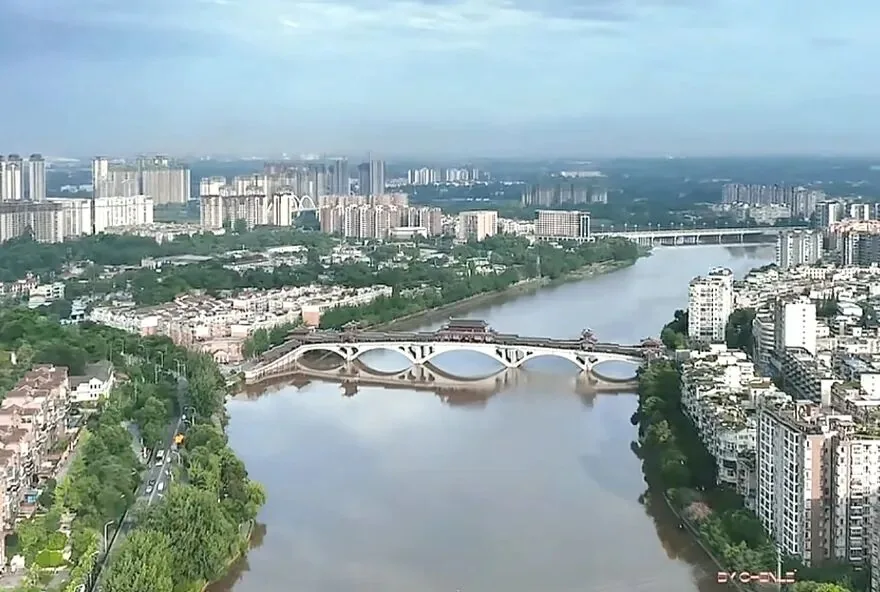
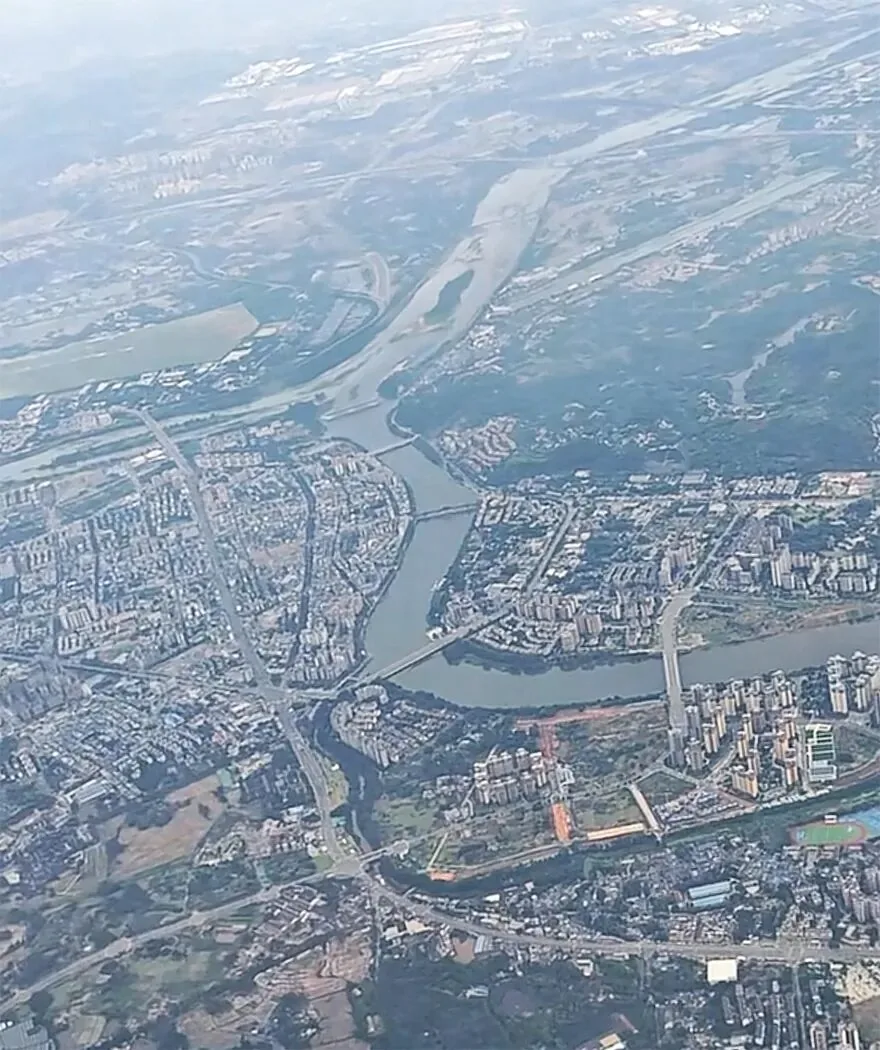
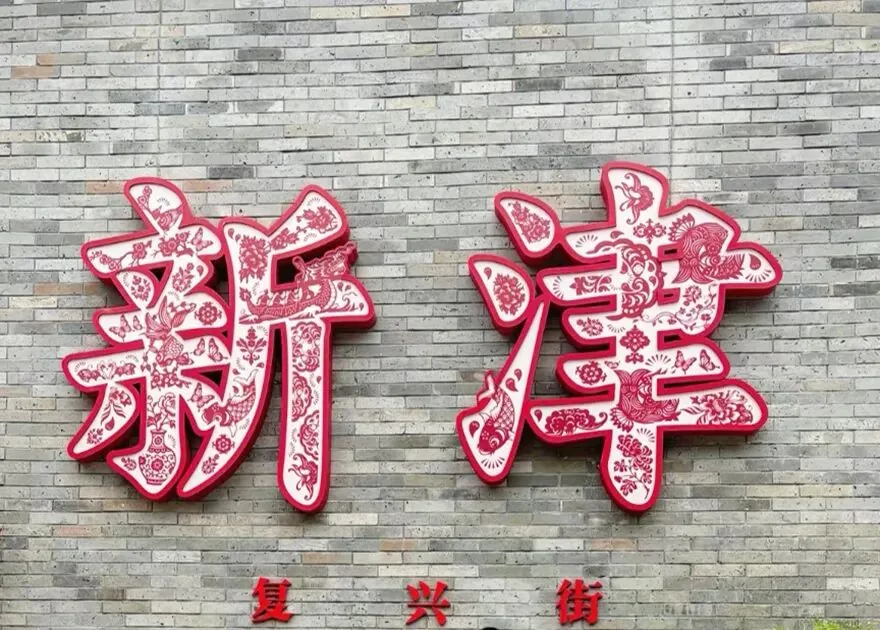
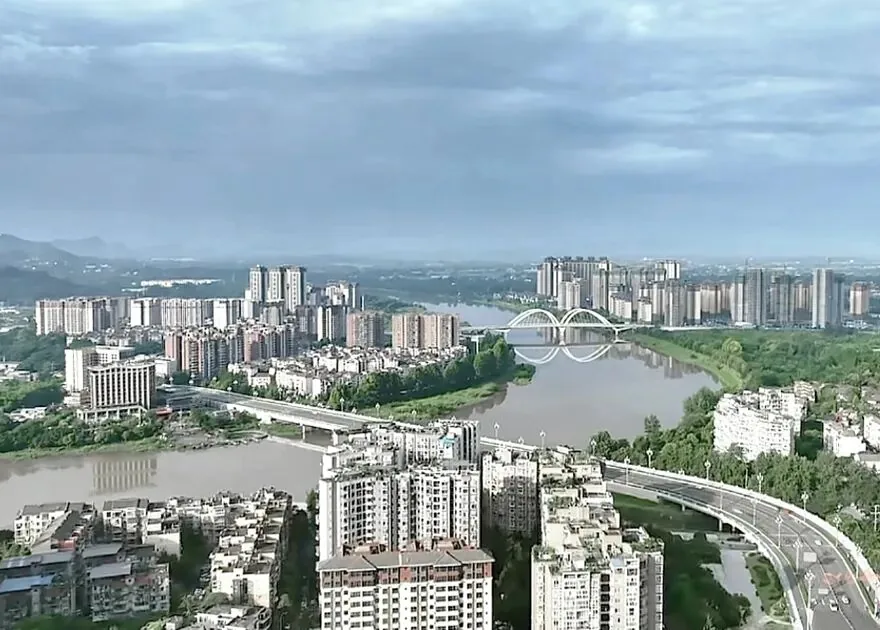
Xinjin, anciently known as Wujin, was established as a county back in the Northern Zhou dynasty. The name hasn’t changed in over 1,400 years. It refers to the five ancient ferry crossings on the Min River. This is the very place Wang Bo meant when he wrote “wind and smoke gaze toward the Five Ferries.” Five rivers meet here, and since ancient times this was a river port on the Southern Silk Road. It was known as “the first stop on the Southern Silk Road,” and today it’s also called “Chengdu’s southern gate.”
Xinjin has two sides: on one hand, the Confucian temple of Chunyang Guan, dedicated to loyalty and filial piety; on the other, the Laojun Mountain Daoist temple tucked into the forest. On one side, the century-old Taiping Old Street; on the other, the Wujin Covered Bridge spanning the Nan River, carrying on the old ferry poetry.
Getting There Is Ridiculously Easy
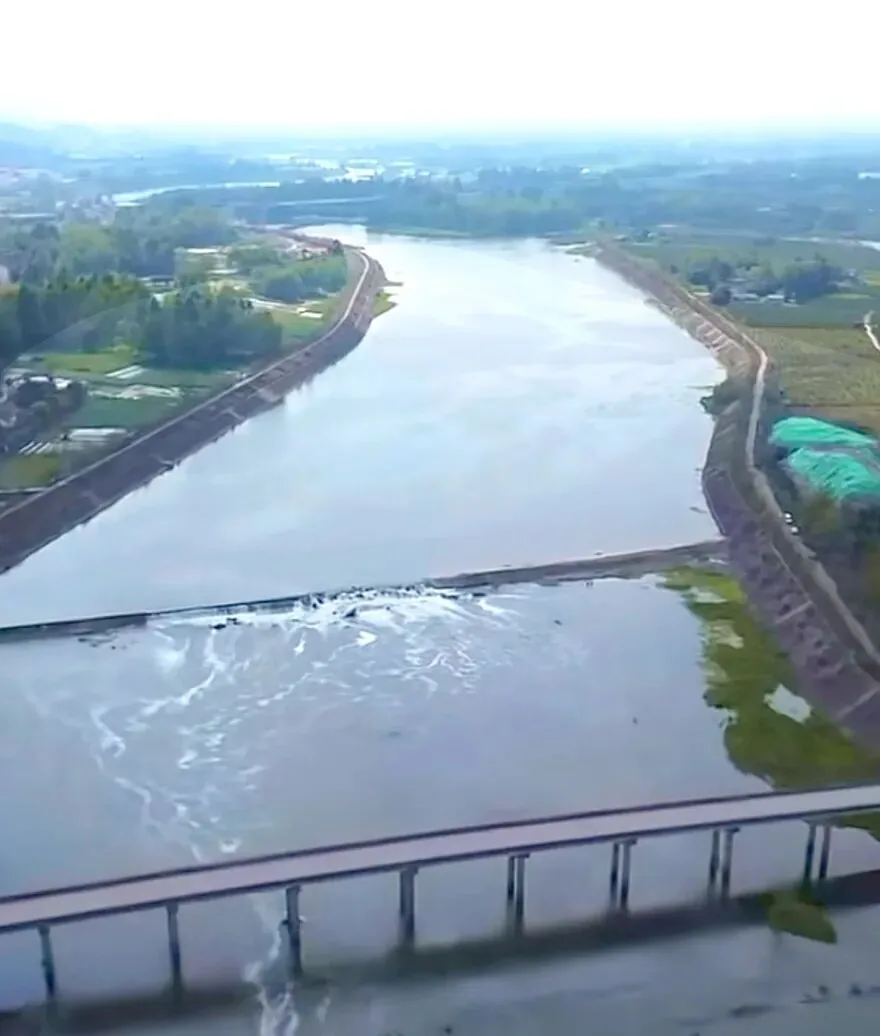
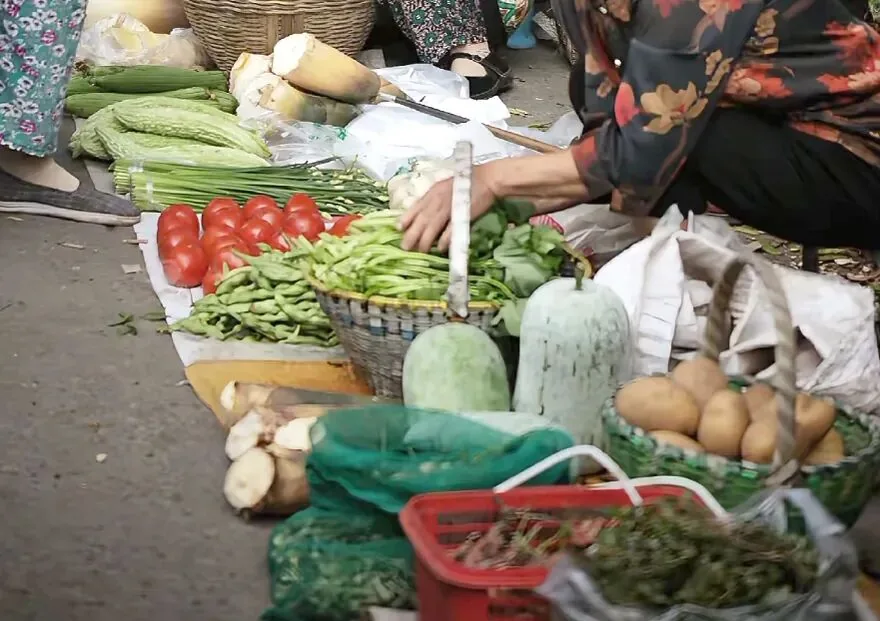
Take Metro Line 10 south — no transfers needed. Step out and you’re in Xinjin’s urban area. Grab a shared bike and follow the Nan River breeze straight into the old town of Wujin. The old town isn’t loud or busy. Its foundation is the warmth locals left behind after the river trade faded. See the Confucian architecture, wander the Qing-dynasty guildhall street, eat river fish, soak in an old teahouse — and let time slip by in this ferry town.
My One-Day Route Through Xinjin
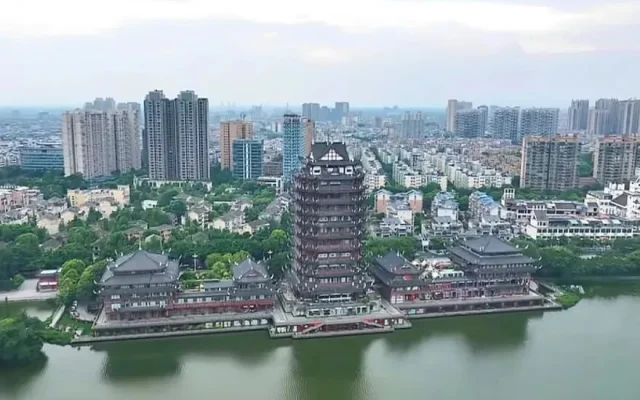
- Morning: Metro to Rulin Road Station. Visit Chunyang Guan for its “crown of Sichuan pavilions,” and glance at the Yellow Crane Tower on the way.
- Noon: Taiping Old Street for Huang spring rolls, Zhang Beef, and douhua (tofu pudding). Then a covered-bowl tea at Changji Grand Teahouse.
- Afternoon: Bus or taxi to Laojun Mountain for a light hike. Return to the old town and the Wujin Covered Bridge, feel the Nan River breeze, have dinner, then head back to Chengdu.
Chunyang Guan: The Overlooked “Crown of Sichuan Pavilions”
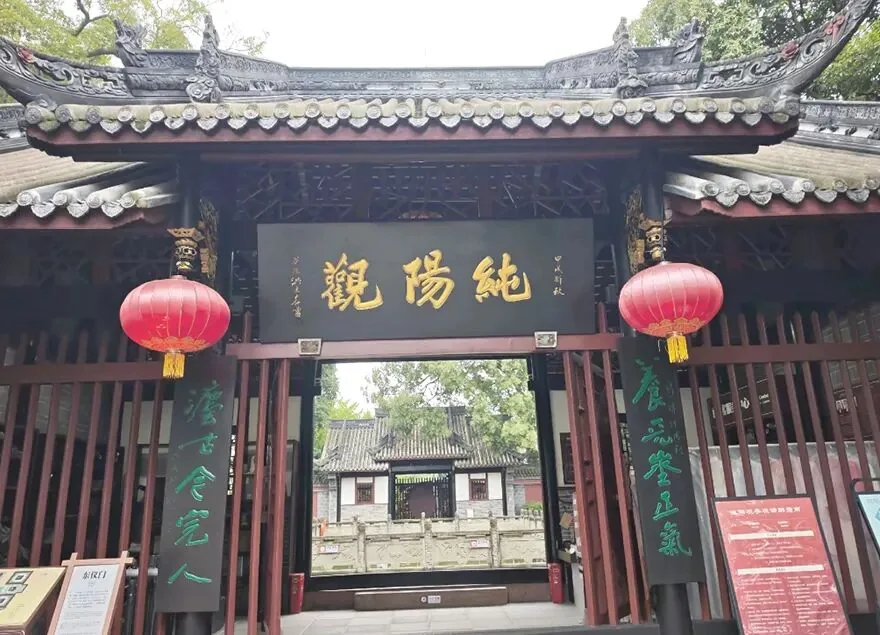
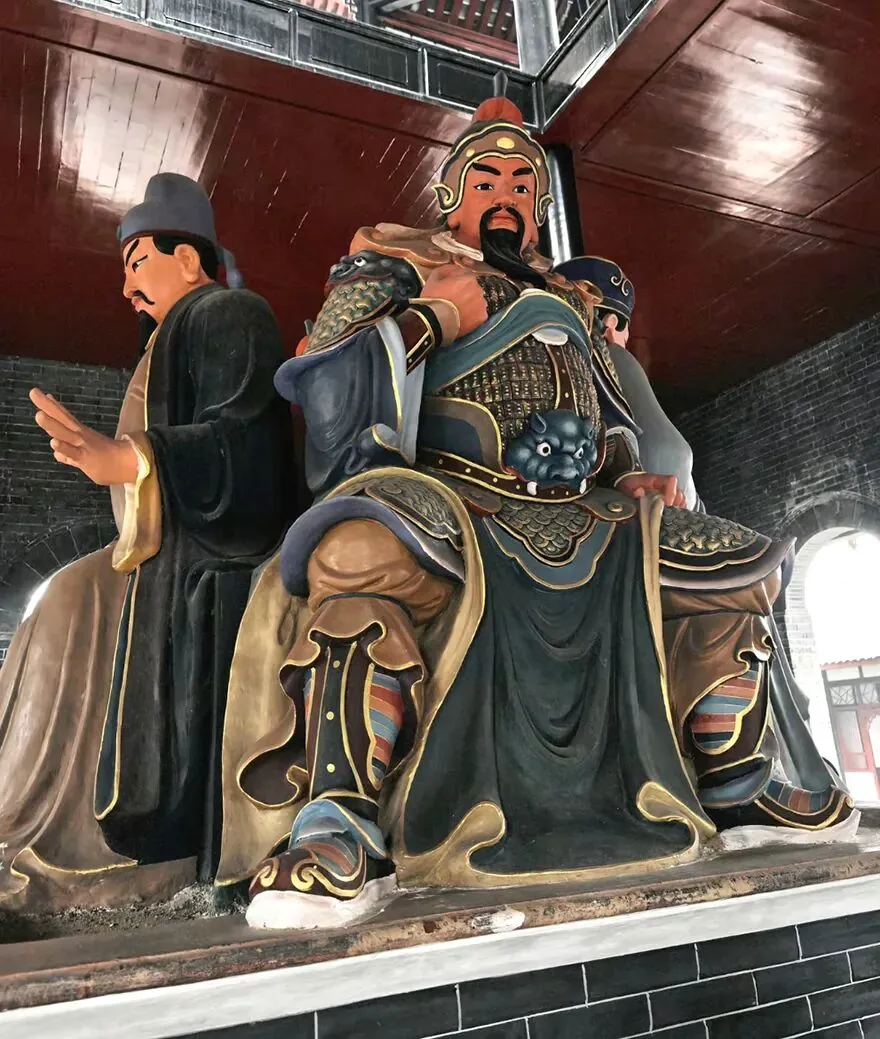
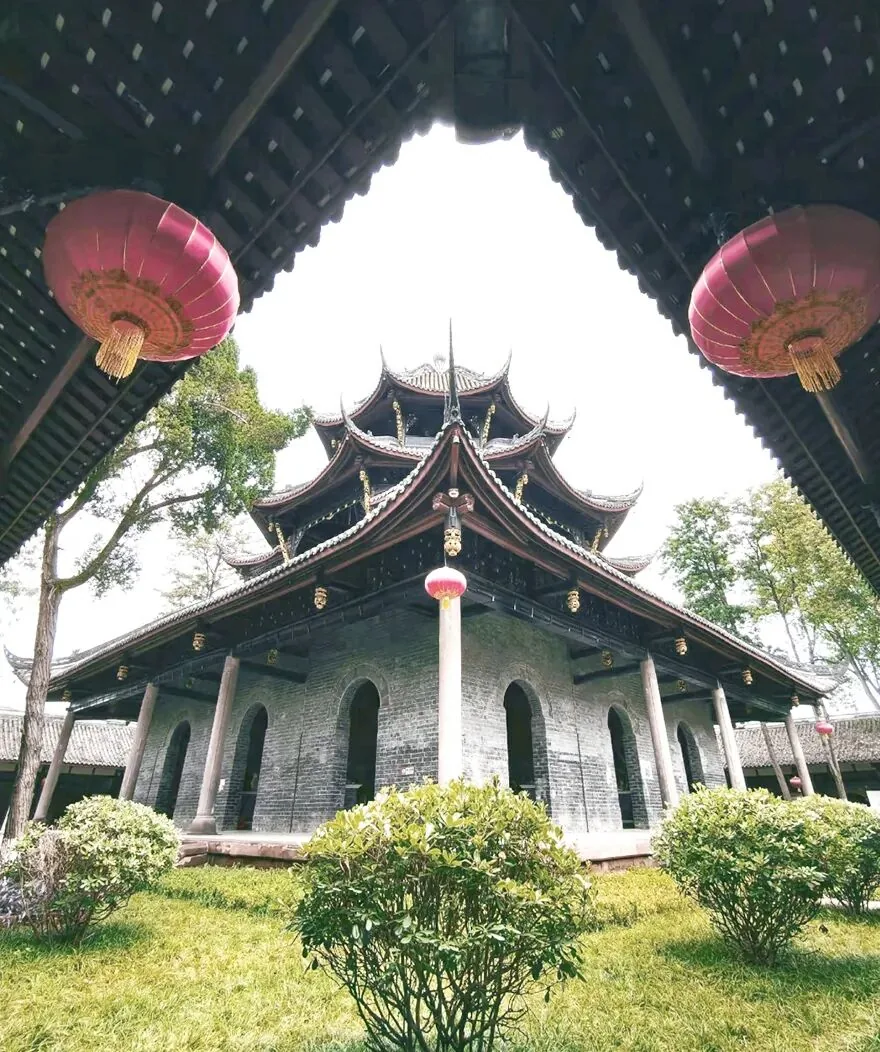
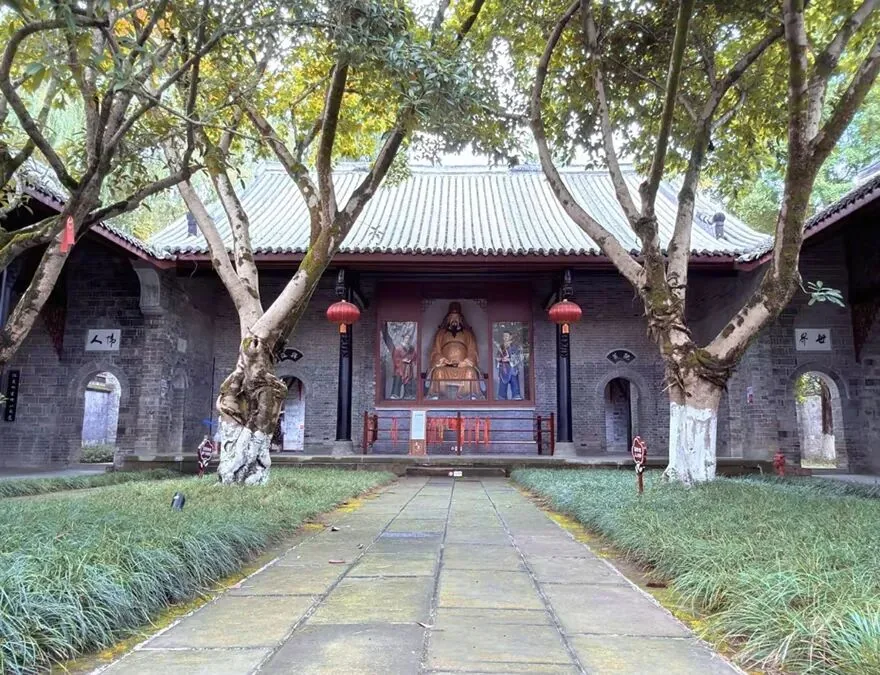
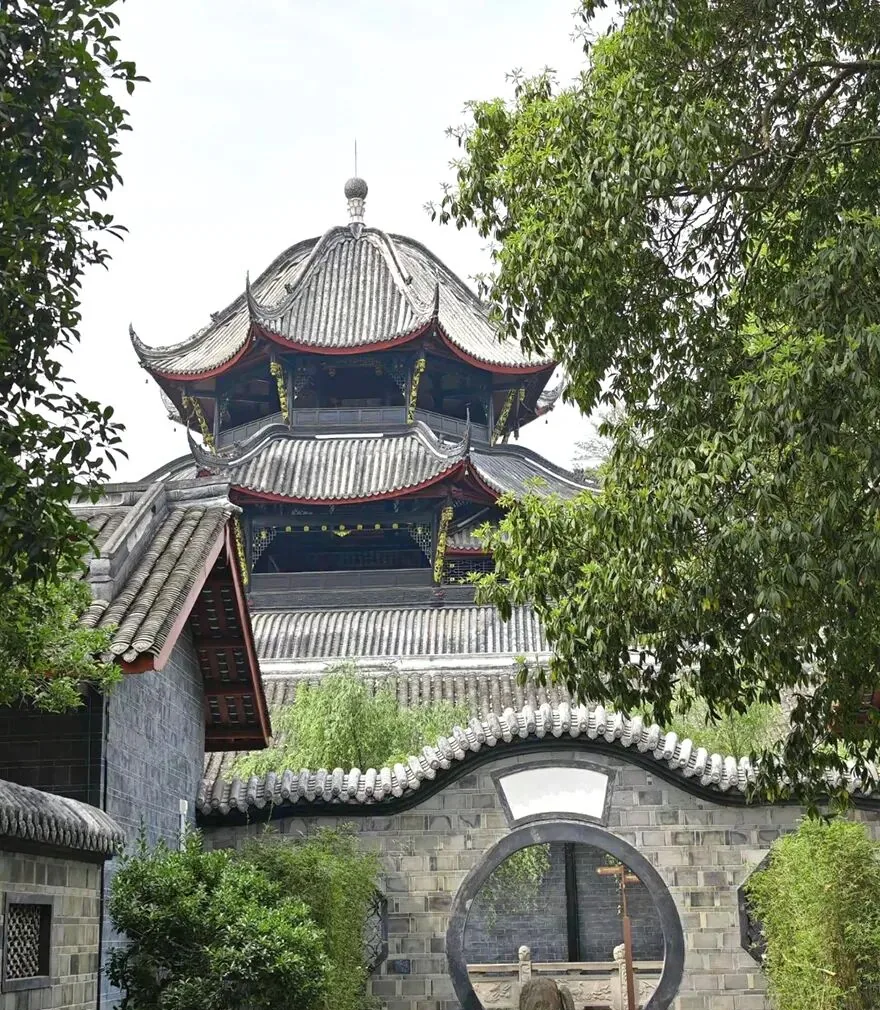
📍 Address: 313 Chunyang Road, Xinjin District (next to Rulin Road Station) 🎫 Entry: Free (roughly 9:00–17:00)
Many people know Qingyang Palace in Chengdu, but not Chunyang Guan in Xinjin — and it hides the most impressive brick-and-wood pavilions in western Sichuan. Chunyang Guan is called “the finest Confucian temple of loyalty and filial piety, ancient and modern.” Construction began during the Xianfeng era of the Qing dynasty, expanded under Guangxu, and continued into the Republican era. Confucianism, Buddhism, and Daoism all crowd in together.
The core is the two giant pavilions: Dazhong Ting (Great Loyalty Pavilion) and Zhixiao Ting (Great Filial Piety Pavilion). Each stands about 33 meters tall, with triple eaves, octagonal helmet roofs, and brick-and-wood mortise-and-tenon joints — not a single iron nail. Inside, the pavilions are carved with loyal and filial figures from ancient times through the Ming and Qing dynasties: over 2,000 statues and hundreds of stone inscriptions of poetry and prose. This is extremely rare in western Sichuan.
Right now the ginkgo trees in the temple have turned yellow. Red walls against half-yellow, half-green leaves — even more layered than when everything is fully gold. There’s a teahouse inside: 10 RMB for a covered-bowl tea, and sitting in the courtyard in the sun is especially comfortable. No incense smoke or clamor here — just the quiet integrity of Confucian scholarship.
Taiping Old Street: A Living Specimen of the Qing “First Market of Xinjin”
📍 Address: Taiping Shang Street, Baodun Town, Xinjin 🎫 Entry: Free, open all day
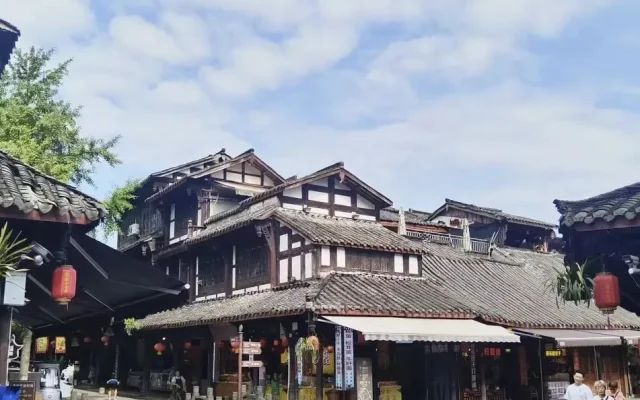
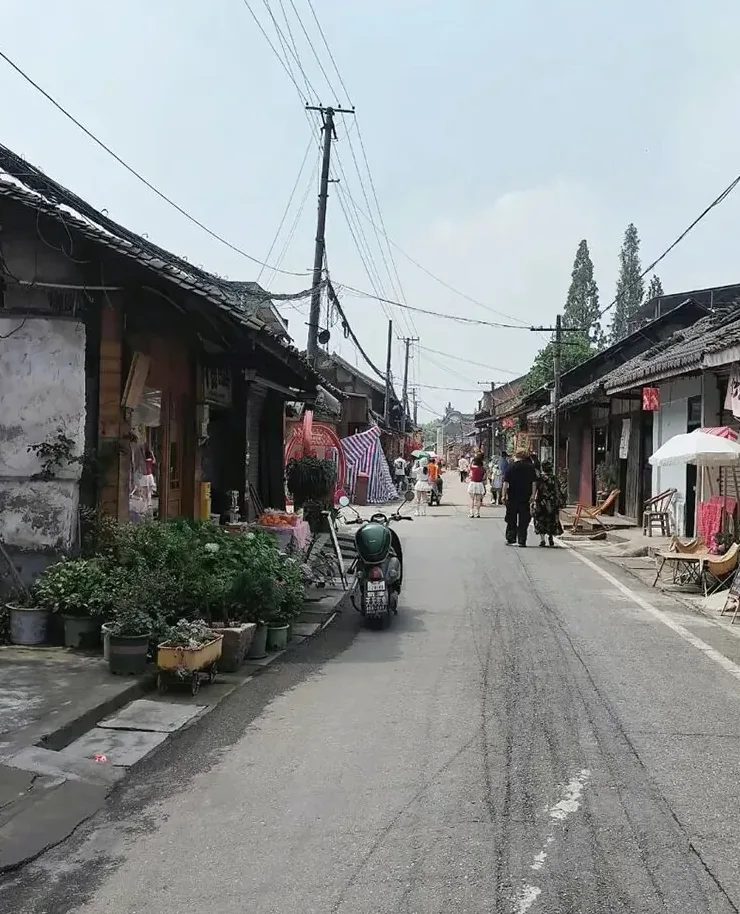
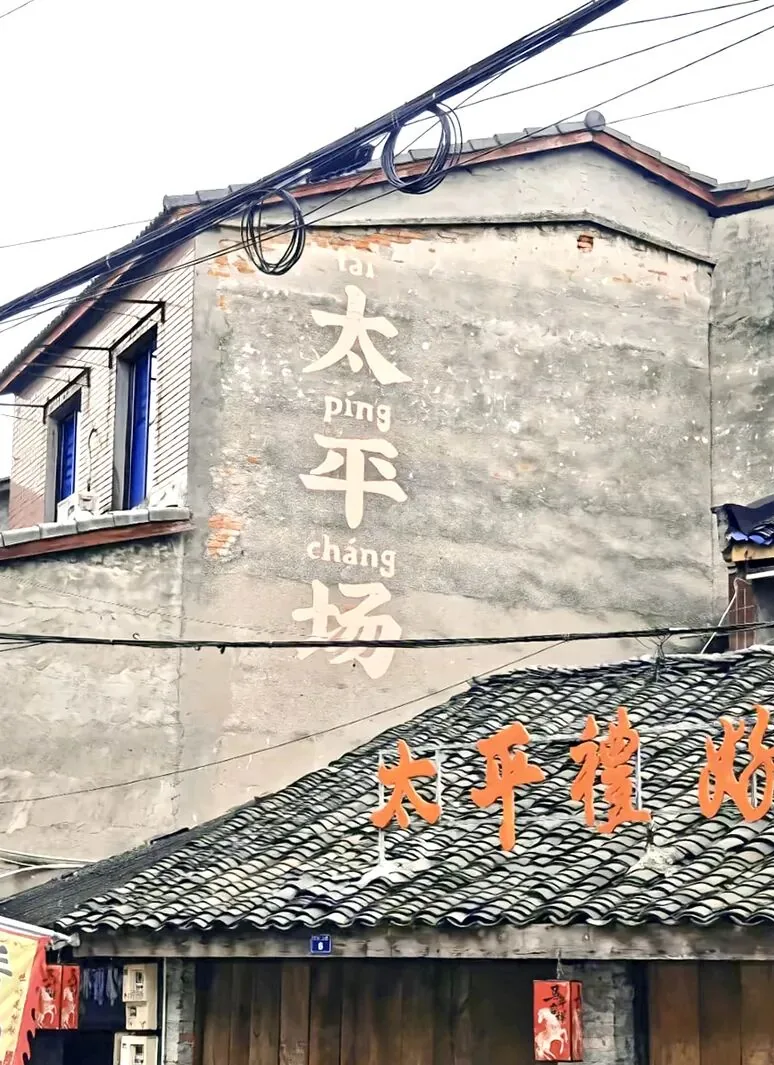
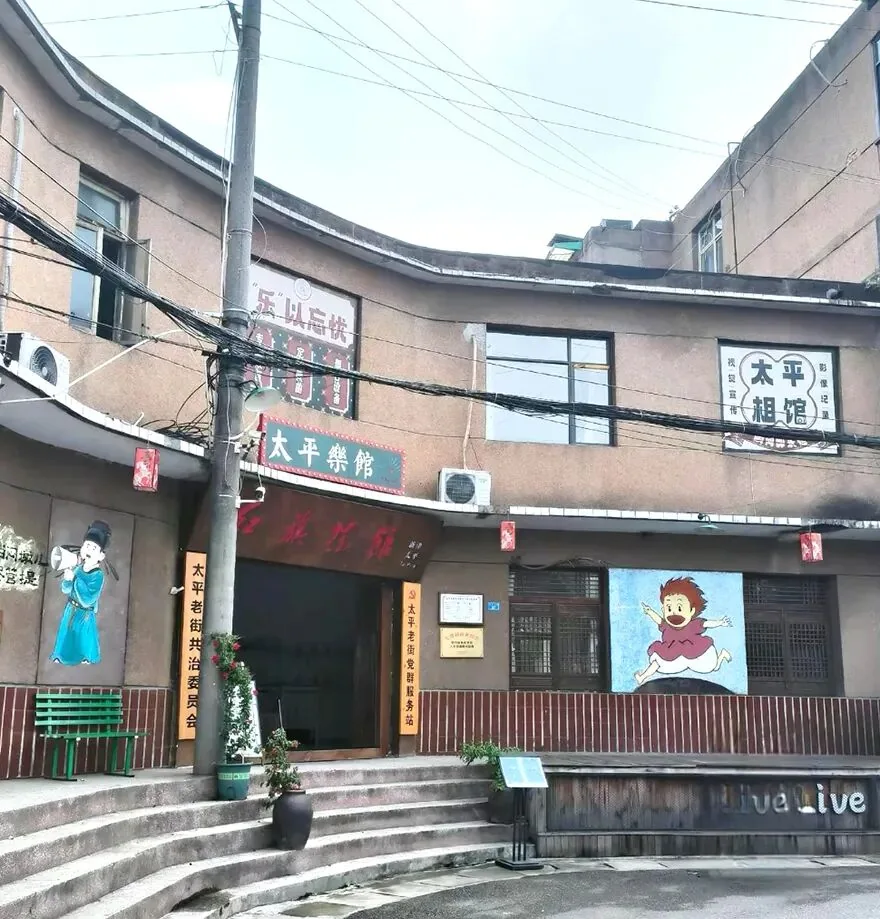
Taiping Market is a 700-meter-old street that rose with river trade in the Qing dynasty. It was once the famous “First Market of Xinjin” and the core of the flower-and-yarn trade in western Sichuan. It’s different from other old markets: on one side, authentic old tile-roofed houses, the old supply-and-marketing cooperative, and handmade noodle workshops; on the other, bookstores, cafes, and independent shops — old and new softly interwoven.
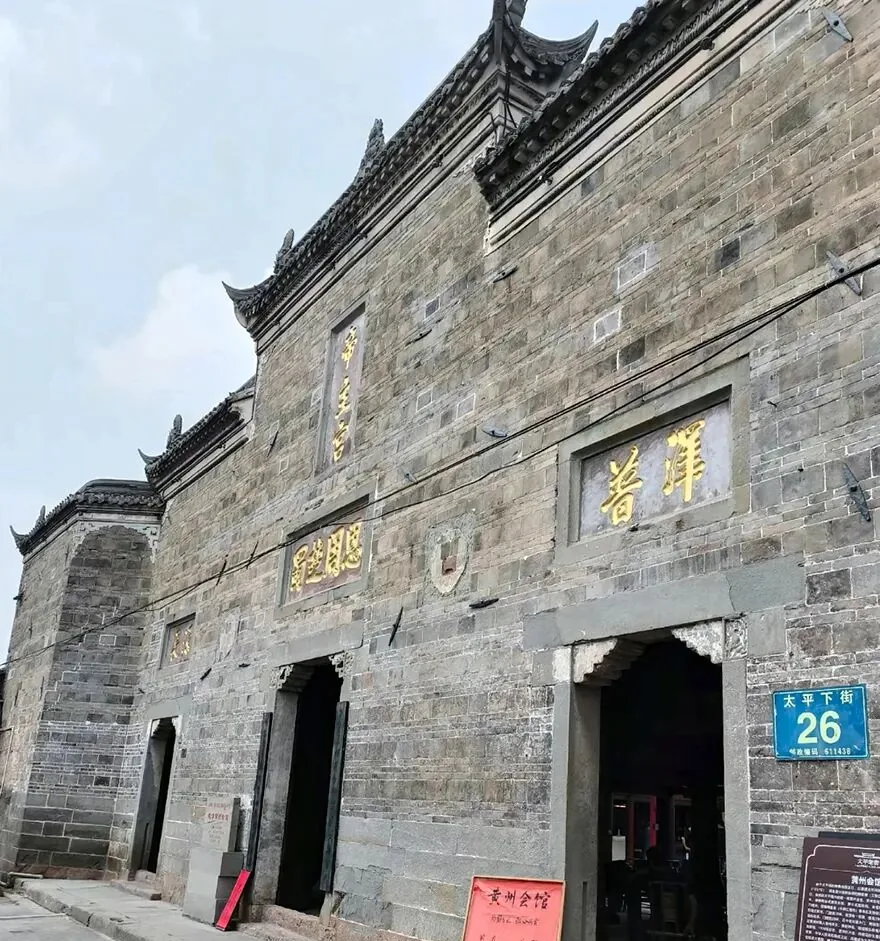
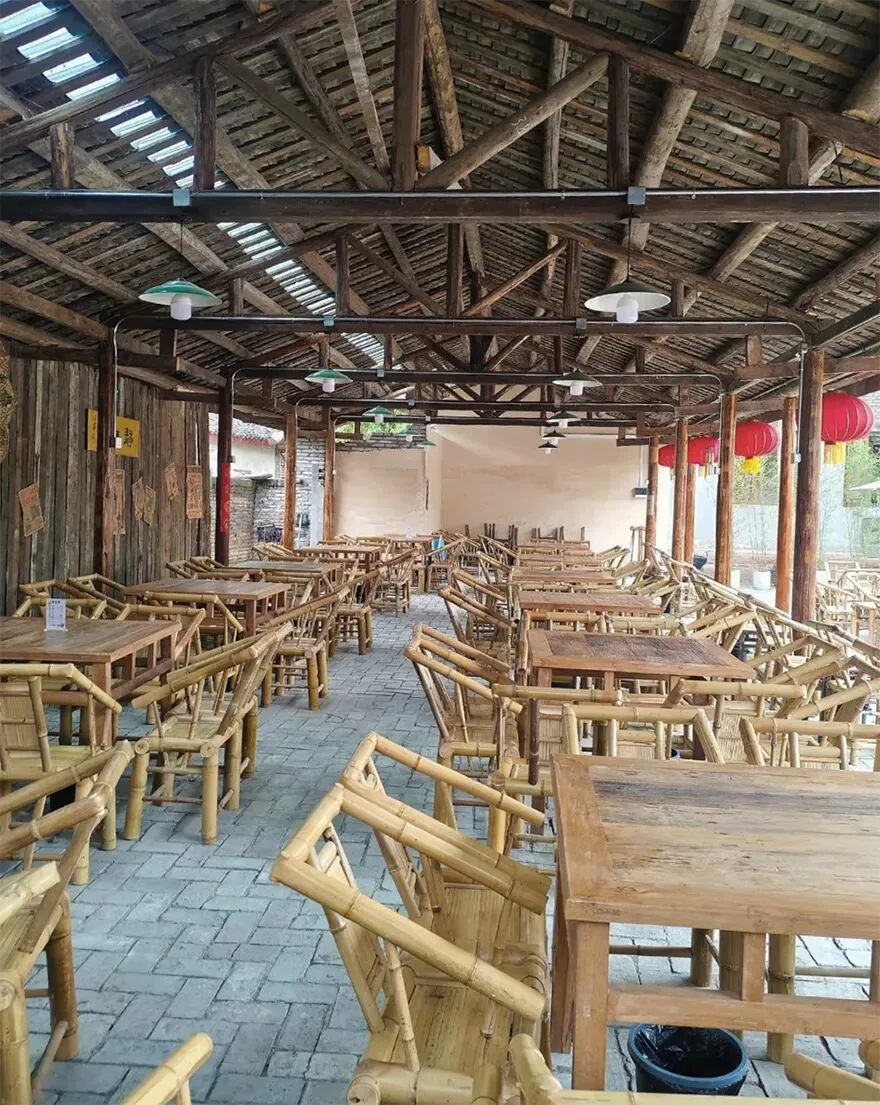
The heart of the old street is the Huangzhou Guildhall. It was built with funds raised in 1858 (the seventh year of Xianfeng) by cotton merchants from Huangzhou, Hubei, who had settled in Xinjin — a witness to the Qing-era flower-and-yarn trade in western Sichuan. The tall wooden stage is well preserved, its carved beams still intact. On weekends, Sichuan opera and sandi pingshu (stand-up storytelling) occasionally take the stage. Next door is Taiping Academy, where bamboo chairs spread out along the courtyard; covered-bowl tea, storytelling, and calligraphy take turns. There’s no crushing crowd here — perfect for a slow wander and a random snack from a small shop.
Wujin Covered Bridge: The Best Spot on the Nan River
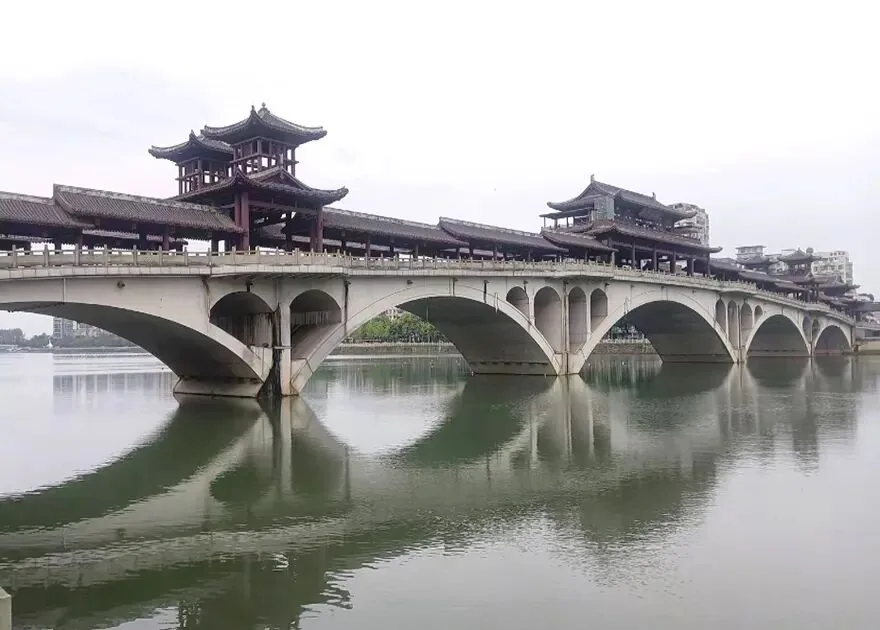
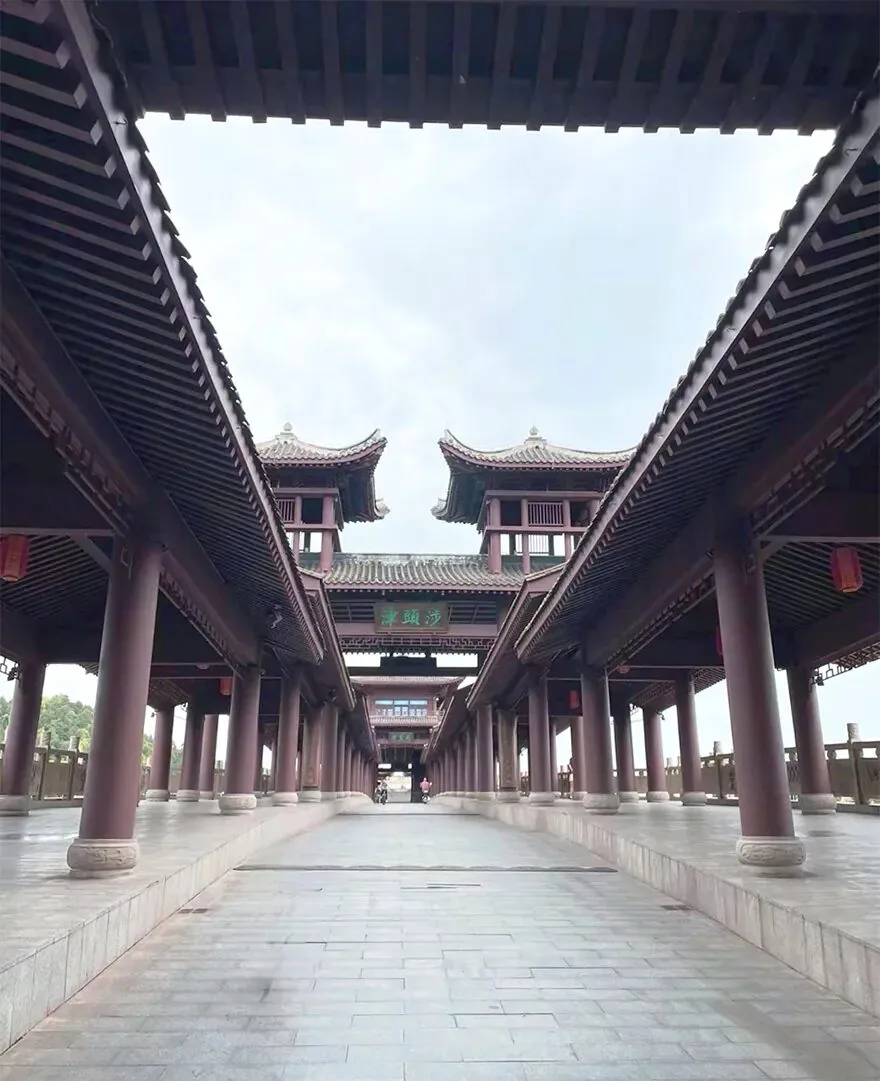
📍 Address: Over the Nan River, Wujin Subdistrict, Xinjin 🎫 Entry: Free
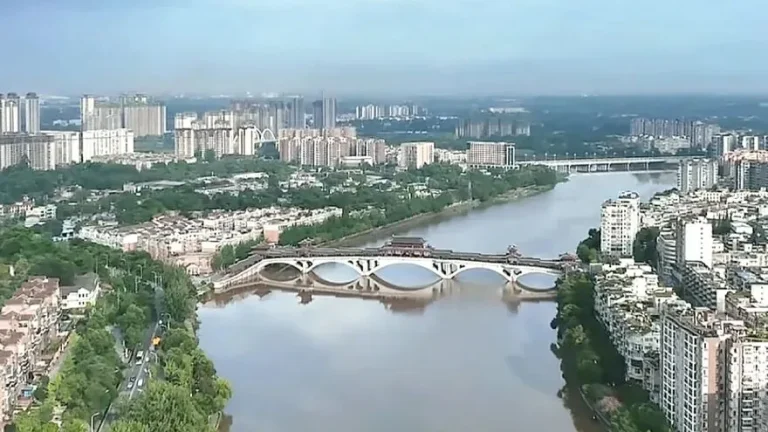
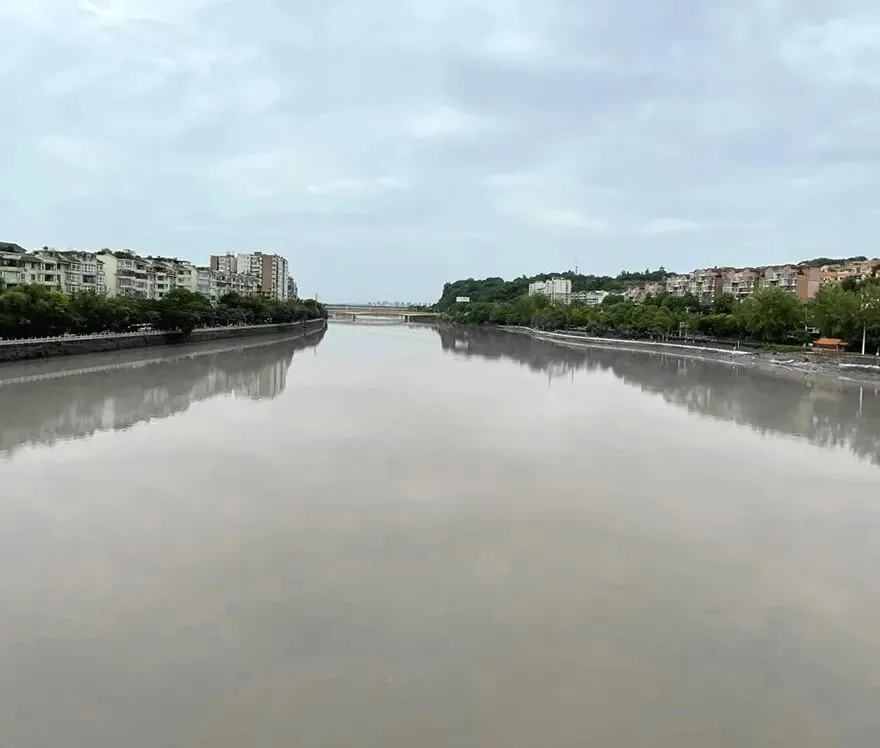
Don’t just treat it as “the bridge over the Nan River.” Wujin Covered Bridge is a wind-and-rain bridge with corridors, pavilions, and inscribed plaques. The wooden corridor frames stretch along the river, and from the bridge you can see the confluence of three rivers. The whole bridge is over 240 meters long, with “five arches and five pavilions.” Its name comes from Wang Bo’s old line “wind and smoke gaze toward the Five Ferries.” The railing panels carry reproductions of Han-dynasty brick images, showing carriages and processions.
On the second floor of the bridge there’s a small shop: coffee by day, alcohol by night. Sit by the window for a perfect river view. It’s worth walking slowly across the bridge, picturing Wang Bo’s “wind and smoke gaze toward the Five Ferries” — just soaking it in. In the evening, the bridge lights come on and reflect in the water. The beauty of Xinjin’s night starts right here.
Laojun Mountain: Chengdu’s Closest Daoist Mountain
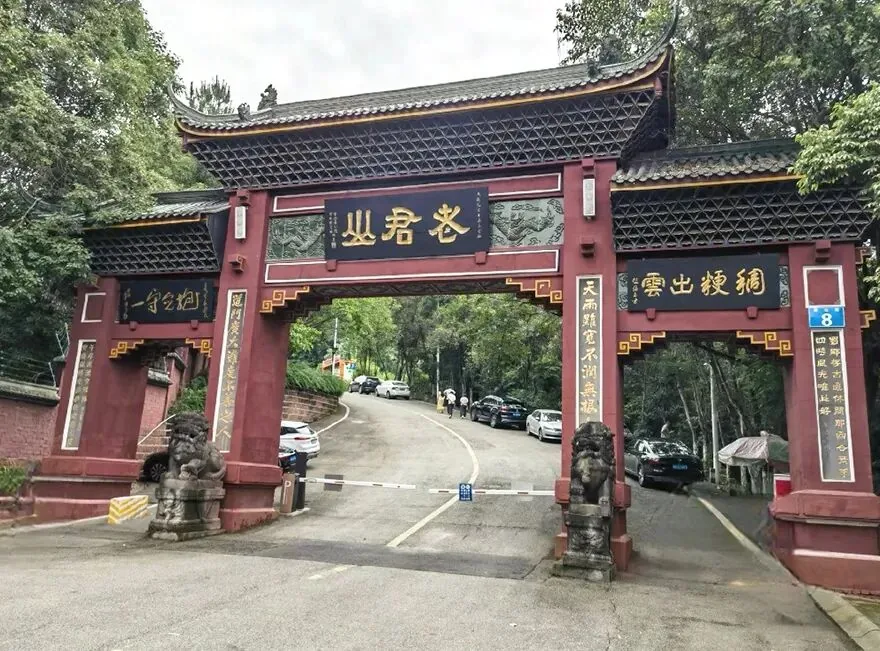
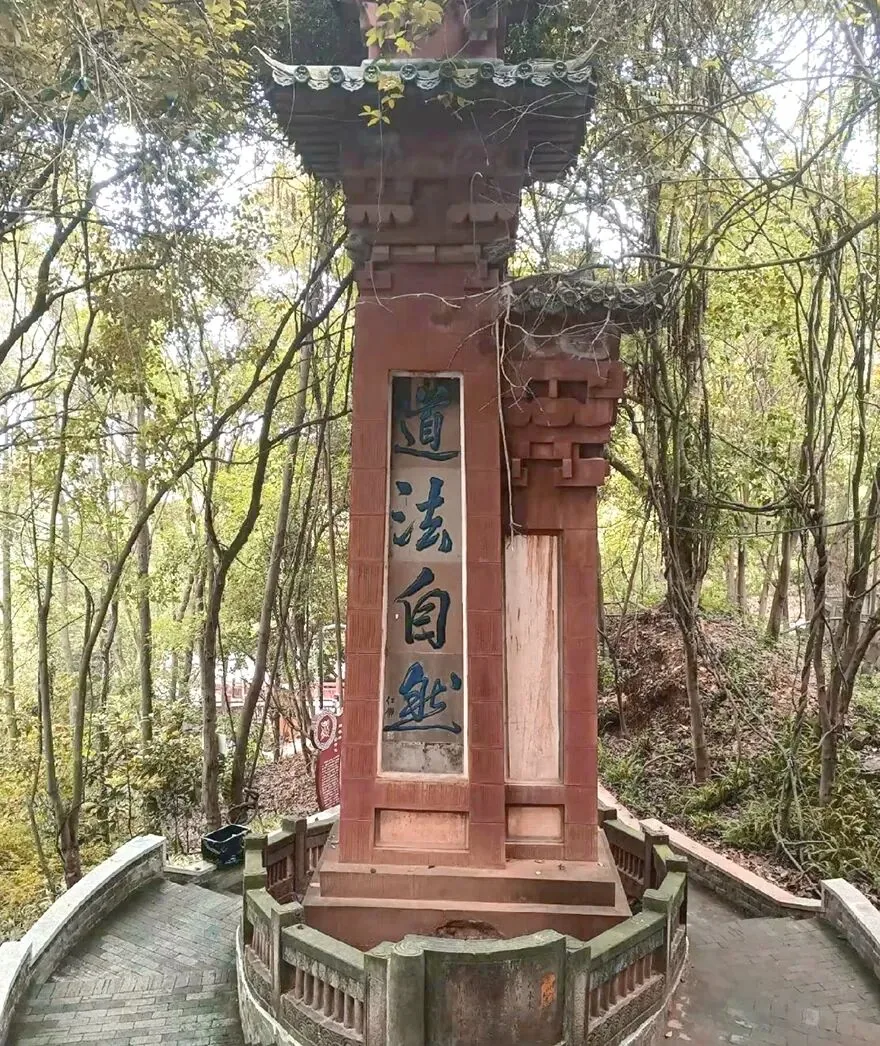
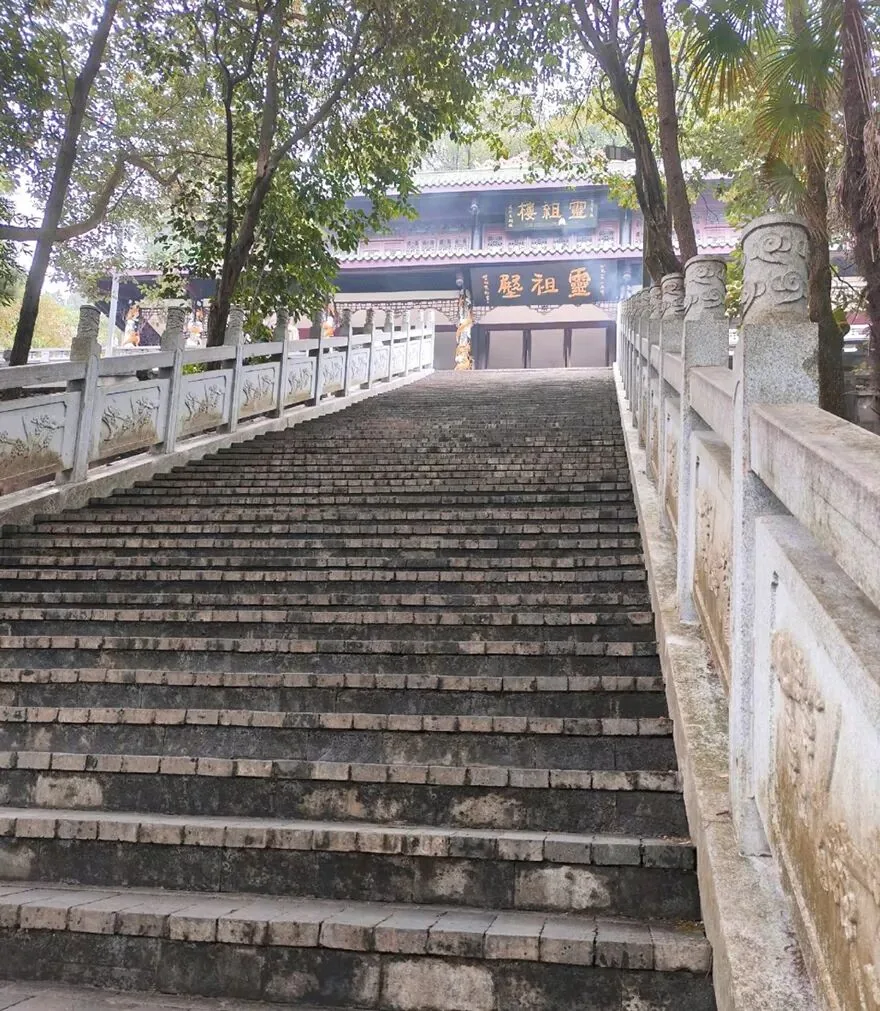
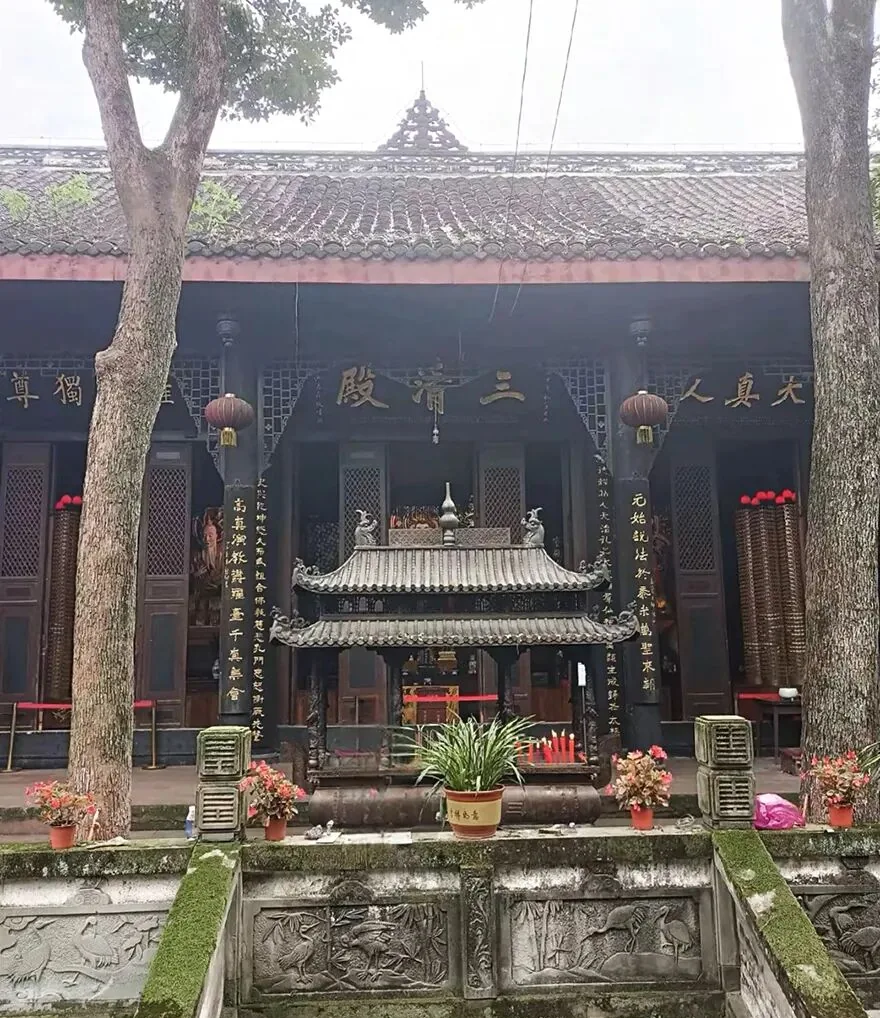
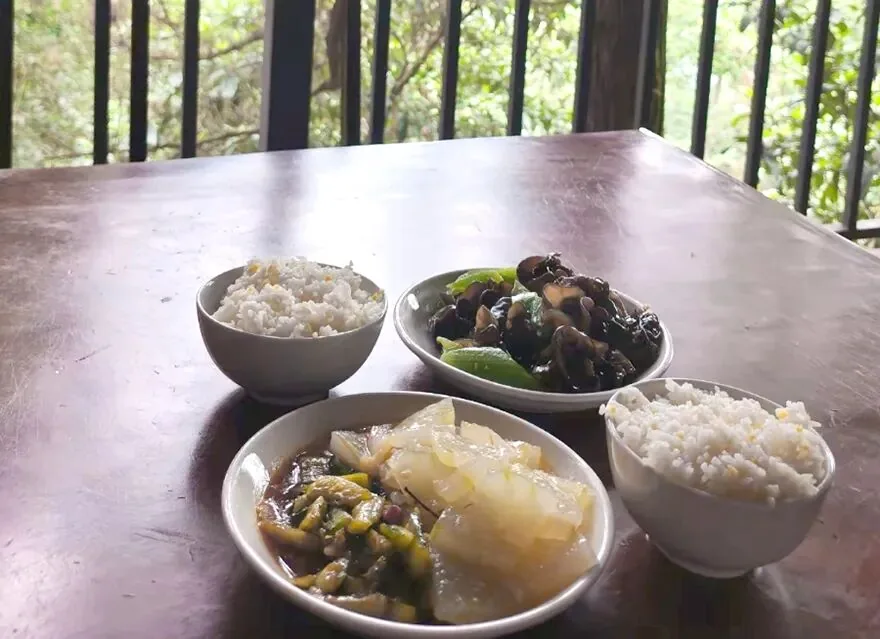
📍 Address: Junshan Road, Yongshang Town, Xinjin District 🎫 Entry: Free
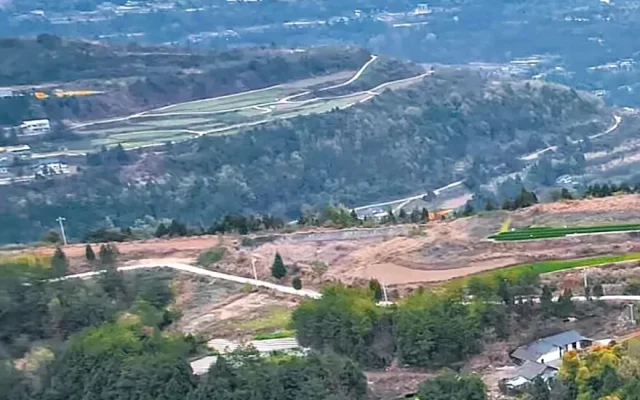
Laojun Mountain sits right next to Xinjin’s urban area. It’s a long-established Daoist holy site on the Chengdu plain, originally called Tianshe Mountain or Choujing Mountain. It’s one of the twenty-four dioceses of Zhang Daoling — the Choujing diocese — and legend says Laozi hid here to refine elixirs. The mountain isn’t high: the main peak is only 617 meters, with gentle slopes. It’s a very friendly light hike. In November, autumn in the forest is faint and lingering. There’s none of Qingcheng Mountain’s bustle — only the quiet of mountain wind passing through cypress groves.
The Lingzu Hall, Hunyuan Hall, Bagua Pavilion, Sanqing Hall, and Doumu Hall are arranged along the slope. Ancient cypresses line the way, their scent wrapped in faint incense. At the top, the view opens up: the whole town of Xinjin below, the Nan River winding like a ribbon across the plain. If you go up between 11:30 AM and 1:00 PM, you can have a 10 RMB vegetarian meal — three or four vegetable dishes, more comfortable than restaurant food. You wash your own bowl.
Where to Eat in Xinjin
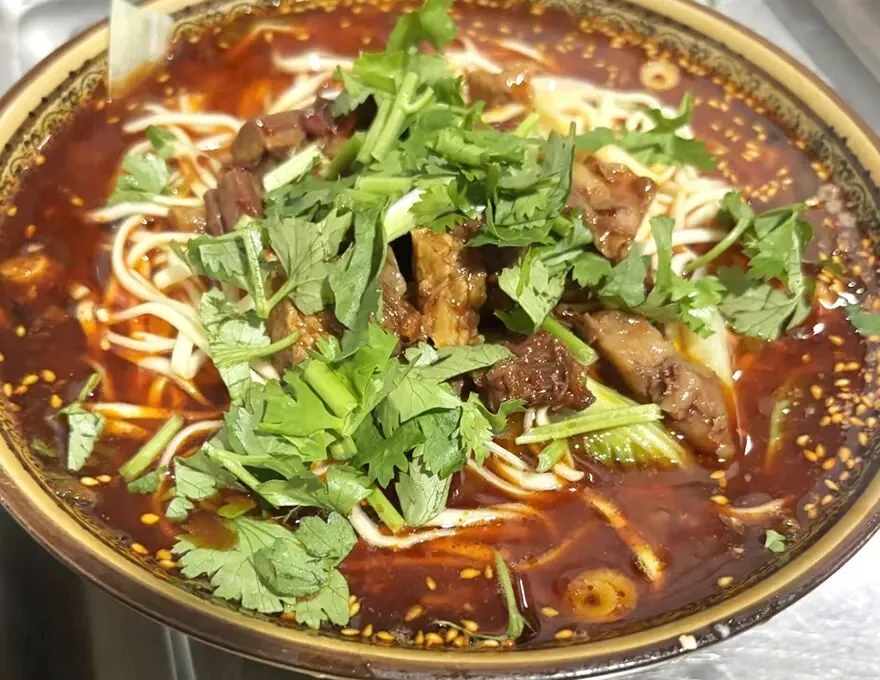
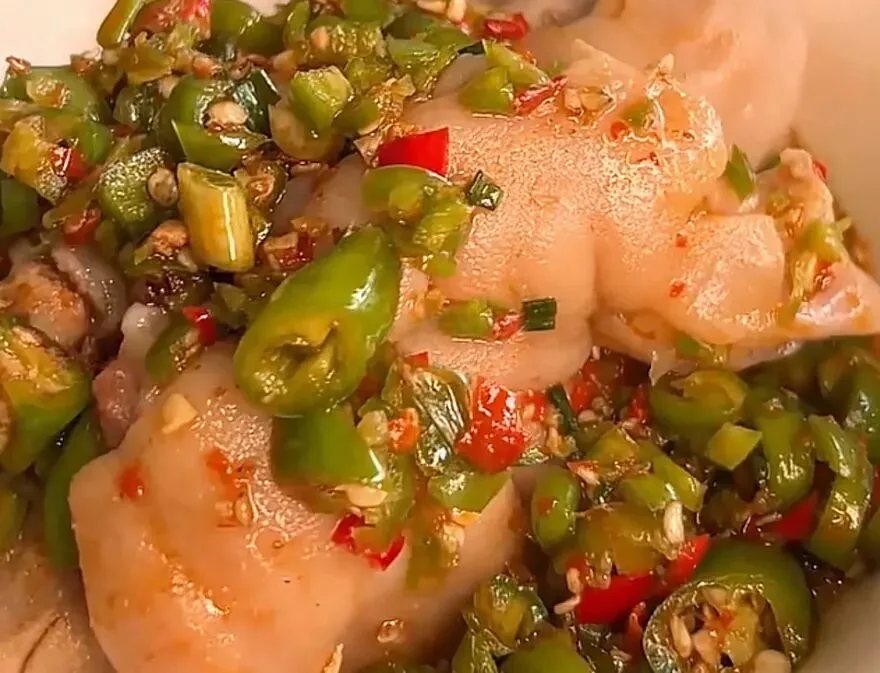
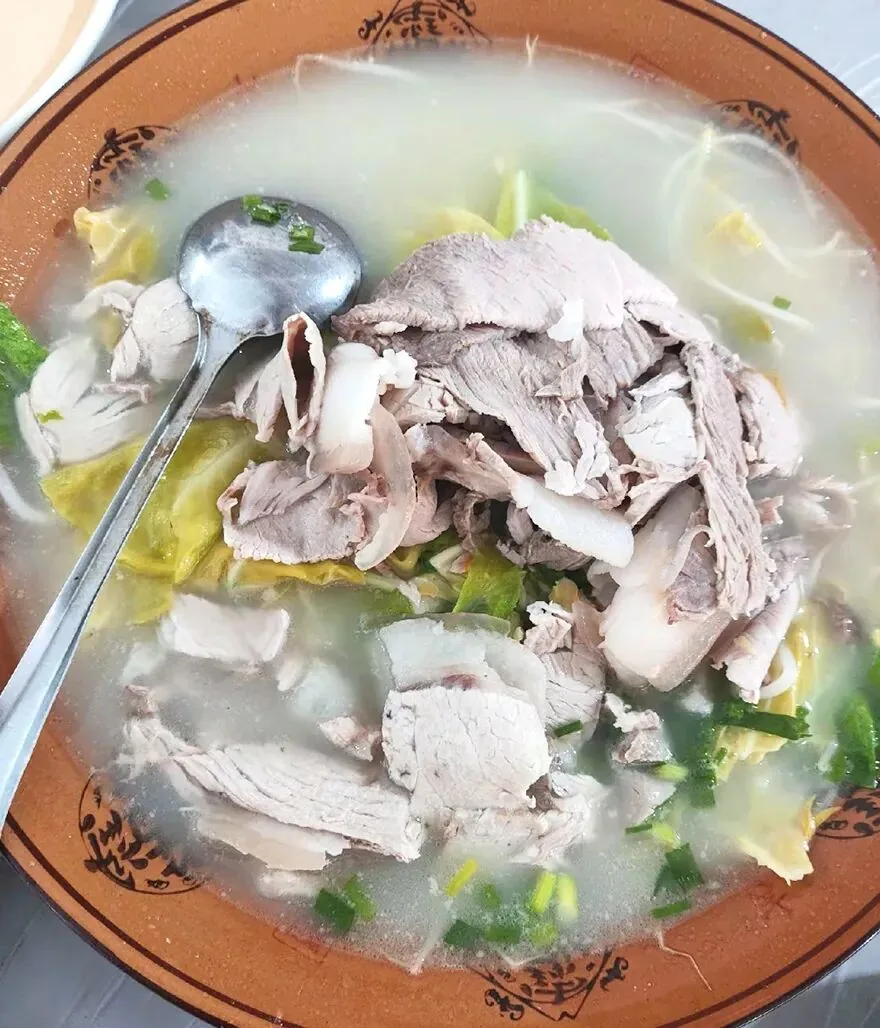
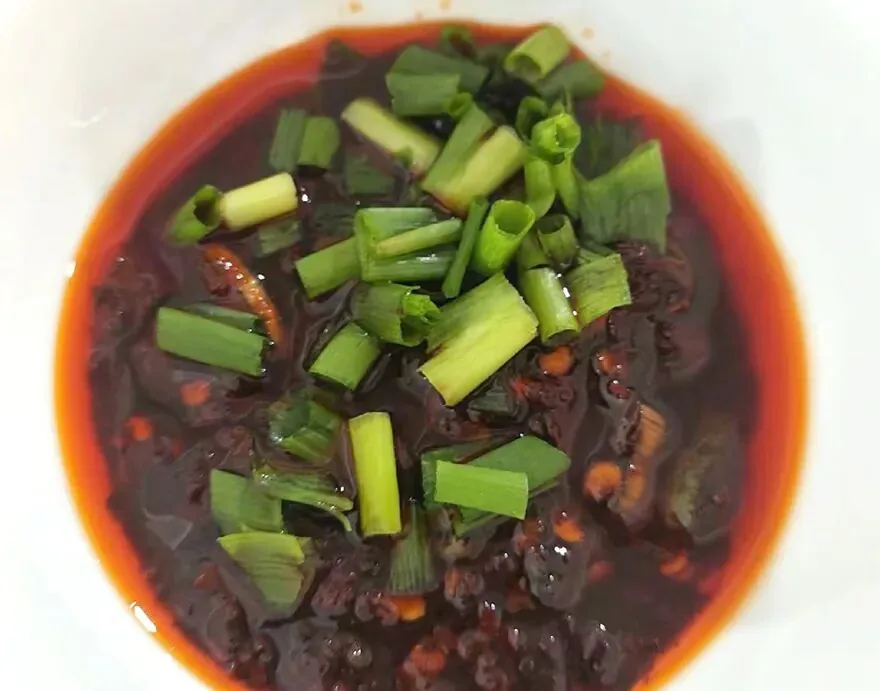
Xinjin’s soul is half in its fish, half rooted in the local food of its old streets and alleys. This time, the focus is on the local food.
- Zhang Beef (张牛肉): A century-old shop with multiple branches. It focuses on all kinds of beef products — braised beef, spicy shredded beef, beef noodles — the taste locals grew up with. Address: Mofan Street (main branch).
- Lao Yipin Pig Trotter (老一品蹄花): A 30-year-old pig trotter shop, a canteen locals visit even late at night. The trotters are stewed fall-apart tender — a gentle pull and the bone slips out. Served with a green chili dipping sauce, it goes great with rice. Address: 80–82 Huanghe Avenue (next to Rulin Road Station).
- Dongmen Exploded Flower Hot Pot (东门爆花汤锅): An old street-side shop on Waidong Street. The environment is very ordinary, but the price and taste are both very affordable — mostly locals eating here. Address: 2 Waidong Street.
- Yan Bean Starch Noodles (严豆粉): A household name in Xinjin for handmade bean starch noodles in bone broth, topped with pork intestines and pickled turnip. Sold only until noon, no delivery, serving only the neighborhood. Address: Xicang Street.
- Braised Meat with Douhua (卤肉豆花, unnamed shop): A tiny hole-in-the-wall with no sign. Douhua (tofu pudding) and blood curd are the specialties. The braised meat has a traditional braising-spice flavor, and radish soup is free. Address: 13 Taiping Xia Street.
Practical Info

📍 Location: Xinjin District, Chengdu
🚗 By car: Navigate to “Chunyang Guan” or “Laojun Mountain.” Shared bikes are available.
🚇 Public transport: Metro Line 10 to Rulin Road Station (for Chunyang Guan) or Xinping Station (for Taiping Old Street). For Laojun Mountain, take a taxi from Rulin Road — about 10 minutes — or bus Xinjin 522 and get off at Laojun Mountain Station.
🚶 Around town: Shared bikes are convenient in the urban area. Laojun Mountain and Taiping Old Street are farther from the city center — taxis are recommended for connections.
Pro tip: The 10 RMB vegetarian meal at Laojun Mountain is served only between 11:30 AM and 1:00 PM — time your hike accordingly, and remember you’ll be washing your own bowl.
Local insight: Yan Bean Starch Noodles sells out by noon and does no delivery — go early if you want to try it.