Here’s the thing about Chengdu’s Du Fu Thatched Cottage (杜甫草堂) — most visitors, and honestly a lot of locals, have no idea they’re actually walking through three completely different places that got stitched together over a thousand years.
You’ve got an ancient Buddhist temple, the actual historical site where Du Fu lived and wrote his most famous poems, and a 20th-century general’s private garden — all in one sprawling, 300-acre park. Wild, right? Let’s break down what you’re actually seeing as you wander through.
The Ancient Temple: The Oldest Section of Du Fu Thatched Cottage
The moment you step through the East Gate, you’re not in Du Fu’s world yet — you’re on the grounds of Caotang Temple (草堂寺), a Buddhist sanctuary that stood here for centuries before the poet ever arrived. In fact, it remained an independent, active temple for over a thousand years after the Tang Dynasty.
Today, what you see is a vast complex of ancient halls, serene courtyards, and orderly temples. The main hall was converted into the Grand Elegance Hall (大雅堂), which now houses statues and paintings of poets throughout Chinese history — it’s become the cultural heart of poetry at the site.
What to look for:
- The towering ancient trees and solemn, symmetrical temples
- The Grand Elegance Hall with its poet statues and calligraphy exhibits
- The distinctly serious, meditative atmosphere — a total contrast to the rest of the park
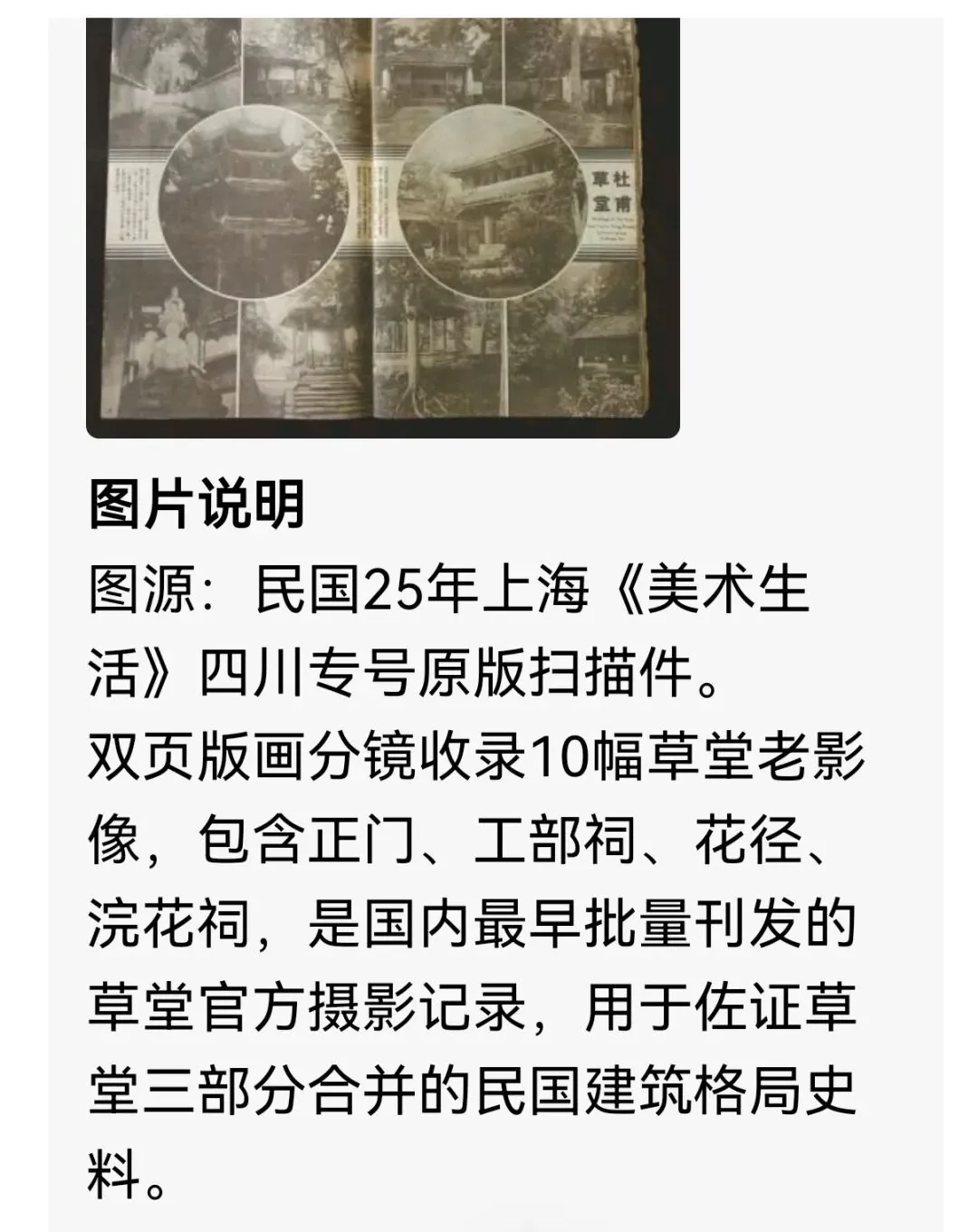
This is the oldest and most historically layered section of the entire cottage complex, so take a moment to soak it in before moving on.
The Memorial Hall: Du Fu’s True Home at the Thatched Cottage
This is the part everyone comes for — the true heart of the site. In 759 AD, Du Fu fled war-torn central China and built a simple thatched hut here along Flower Washing Creek (浣花溪). He lived here for four years, and honestly, they were the most productive years of his career.
Worth knowing: “Song of My Thatched Cottage Unroofed by Autumn Winds” (茅屋为秋风所破歌) and “Strolling Alone by the Riverside” (江畔独步寻花) — poems every Chinese student memorizes — were both written in this very spot.
After Du Fu left Chengdu, the hut fell into ruin, and for a while, it was nothing but an empty plot of land. Then, during the Five Dynasties period, a poet named Wei Zhuang came searching for the site, was deeply moved by Du Fu’s legacy, and rebuilt the thatched cottage as a memorial. That’s when this place became a pilgrimage site for poetry lovers — and it’s been evolving ever since.
Through the Song, Yuan, Ming, and Qing dynasties, the government and local literati carried out thirteen major renovations, gradually shaping the symmetrical layout you see today.
What to look for:
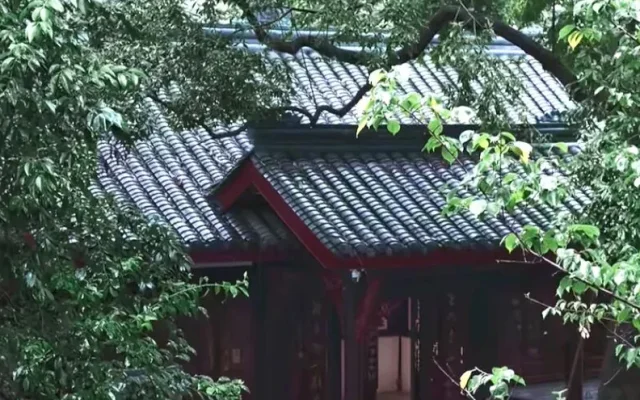
- The central axis: Main Gate (正门) → Grand Hall (大廨) → Hall of Poetry History (诗史堂) → Wooden Gate (柴门) → Ministry of Works Shrine (工部祠)
- The reconstructed thatched hut showing how Du Fu actually lived
- The quiet, poetic Flower Path (花径) — every corner feels like a line of verse
All the exhibits on Du Fu’s life, manuscripts, and relics are concentrated here. It’s the soul of the entire site and the must-visit spot for anyone wanting to understand the poet’s legacy.
The Plum Garden: A General’s Secret Hideaway
Here’s the part most people miss — and the one seasoned Chengdu locals love the most. Tucked in the northwest corner, the Plum Garden (梅园) is stunning year-round: plum blossoms in winter and spring, lush greenery in summer, winding bridges, elegant pavilions, and water reflecting ancient towers.
But here’s the kicker — this beautiful garden has nothing to do with Du Fu. It was originally the private villa of Wang Sizhong, a general in the Republic of China-era Sichuan army.
He chose this spot for its feng shui, built himself a lavish retreat with rockeries, fish ponds, and groves of plum trees. The iconic four-story brick tower, Yilan Ting (一览亭), was actually built by Wang for his mother. It still stands by the lake today, casting its reflection on the water — the garden’s signature landmark.
After the upheavals of the mid-20th century, the garden fell into disrepair. When it was finally incorporated into the Du Fu Thatched Cottage complex, something magical happened — suddenly, the solemn temple and scholarly memorial got a dose of Jiangnan-style elegance.
Why locals love it:
- The relaxed, stroll-friendly vibe — it balances out the formality of the rest of the park
- Seasonal scenery: plum blossoms bloom in late winter, green shade in summer
- Quiet pavilions and paths — perfect for sitting, reading, or just doing nothing (very Chengdu)
The Big Picture: One Park, A Thousand Years
When you walk from east to west through Du Fu’s Thatched Cottage, you’re literally walking through time:
| Section | Era | Vibe |
|---|---|---|
| Caotang Temple | Jin Dynasty (4th century) | Ancient, solemn, meditative |
| Memorial Hall | Tang Dynasty (759 AD onward) | Scholarly, poetic, historic |
| Plum Garden | Republic of China (early 20th century) | Elegant, relaxed, garden-style |
Three completely different periods and styles, seamlessly blended into nearly 300 acres. That’s Chengdu for you — a city that knows how to preserve, incorporate, and let history breathe without getting stuffy about it.
Local insight: Skip the rush and resist the urge to just snap photos. Wander slowly. Feel the weight of the ancient temple, read the poetry in the memorial hall, and end with a relaxed stroll through the plum garden. That’s the real Chengdu experience.
No loud commercialization here — just bamboo shadows, poetic whispers, and a quiet beauty that has nourished locals for centuries. Next time you visit, you’ll know exactly what you’re looking at.