If you’ve ever ridden the Chengdu metro and spotted a station called Chenghuangmiao, you might have wondered: where’s the actual temple? Well, here’s the thing — that temple is long gone, leaving only the station name as a ghost of the past. And the only Chengdu City God Temple (Chenghuang Miao) that still exists isn’t in the city at all. It’s sitting right next to the famous 5A scenic area of Dujiangyan.
Welcome to Dujiangyan Chenghuang Miao — the only remaining City God Temple in the Chengdu region. And the best part? It’s completely free to visit.
Why This Chengdu City God Temple Matters
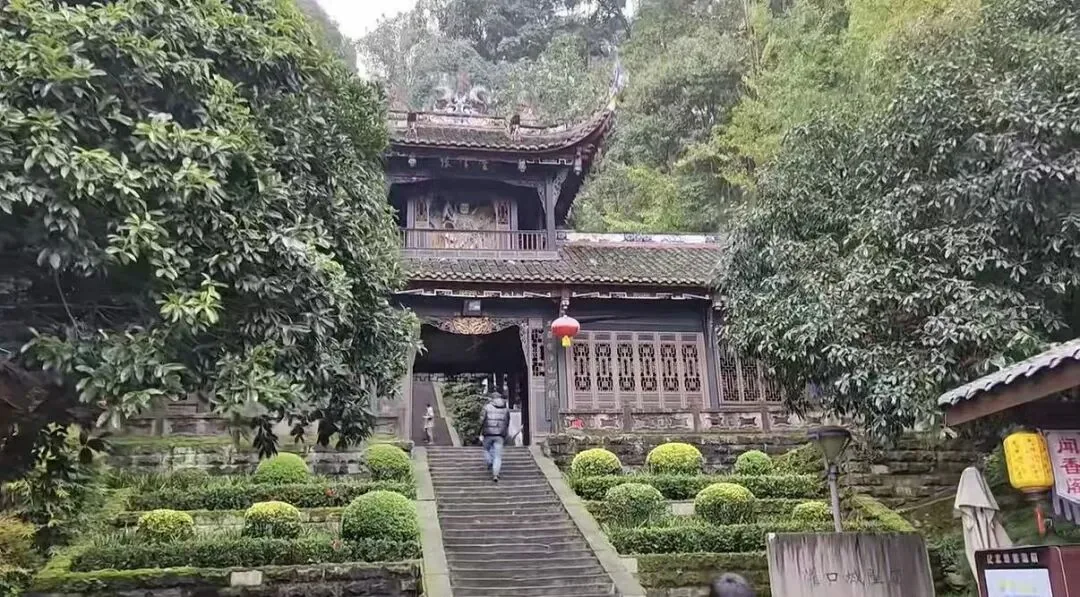
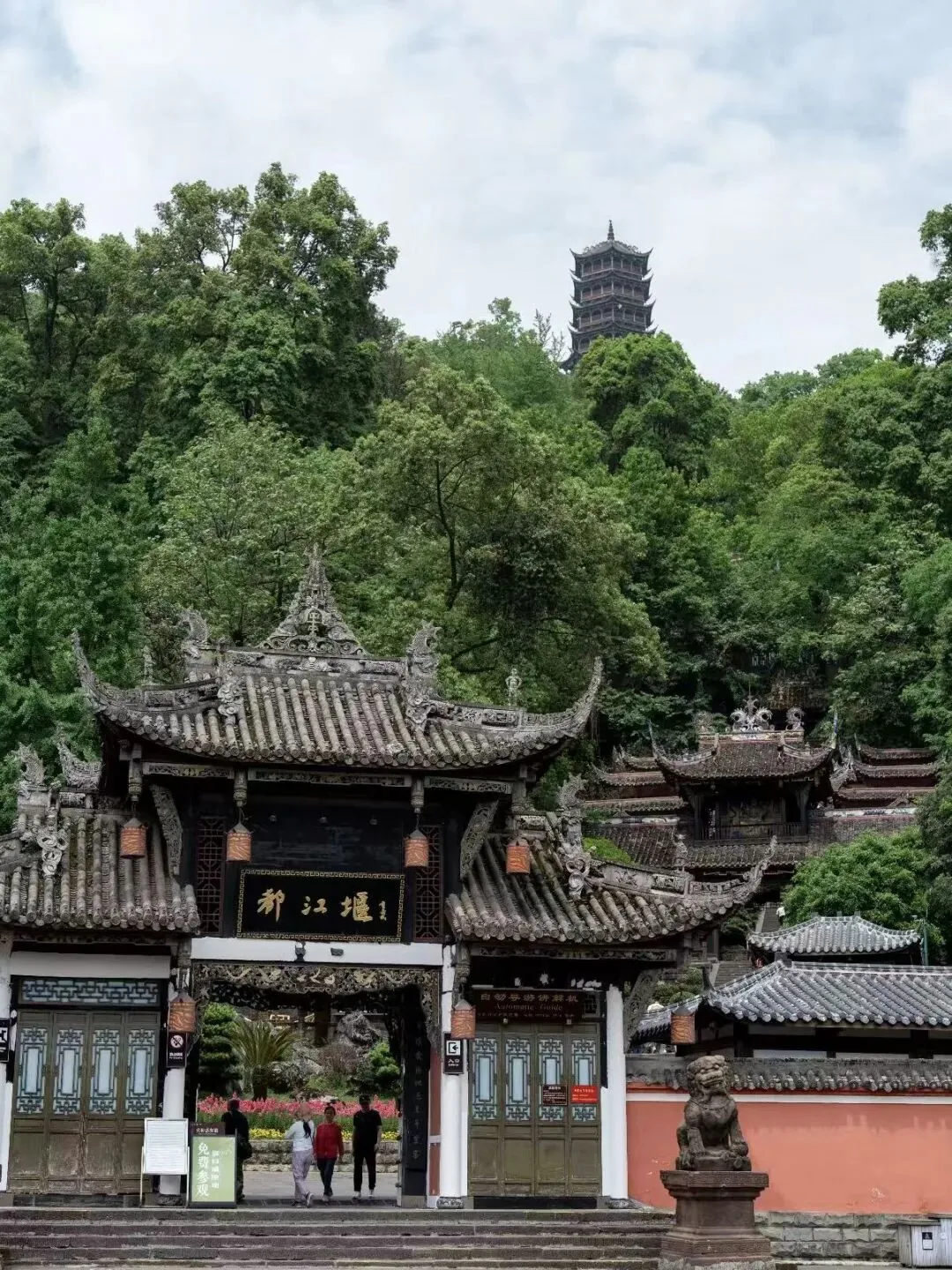
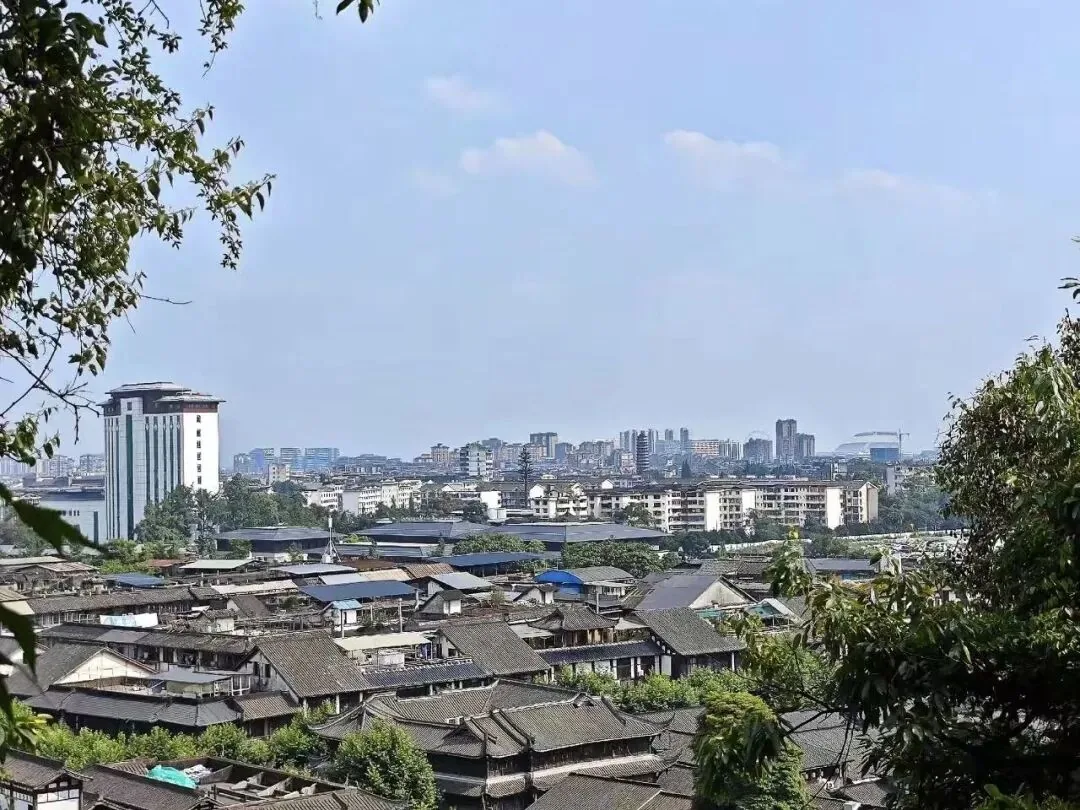
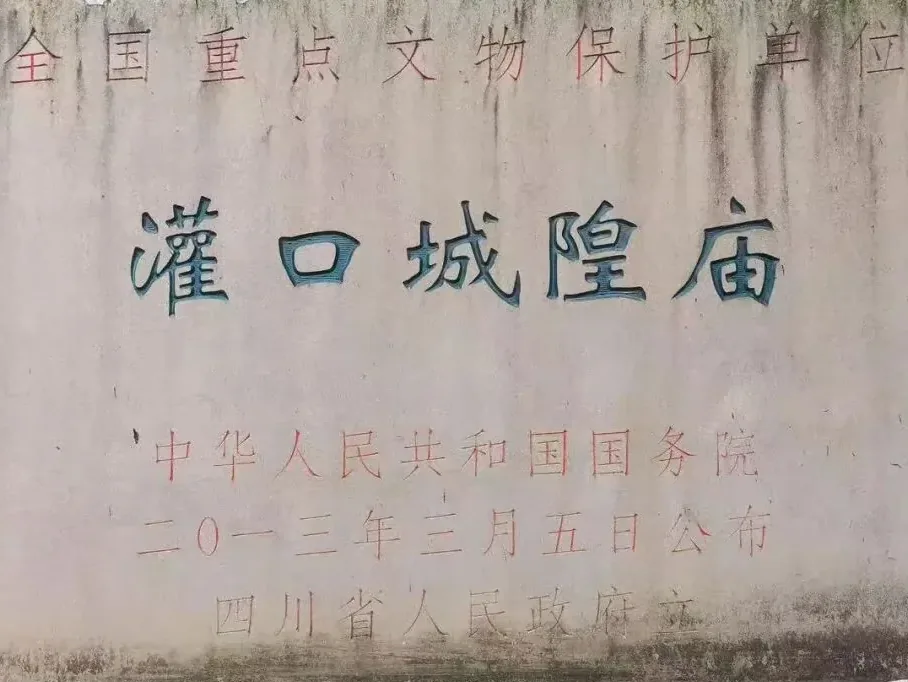
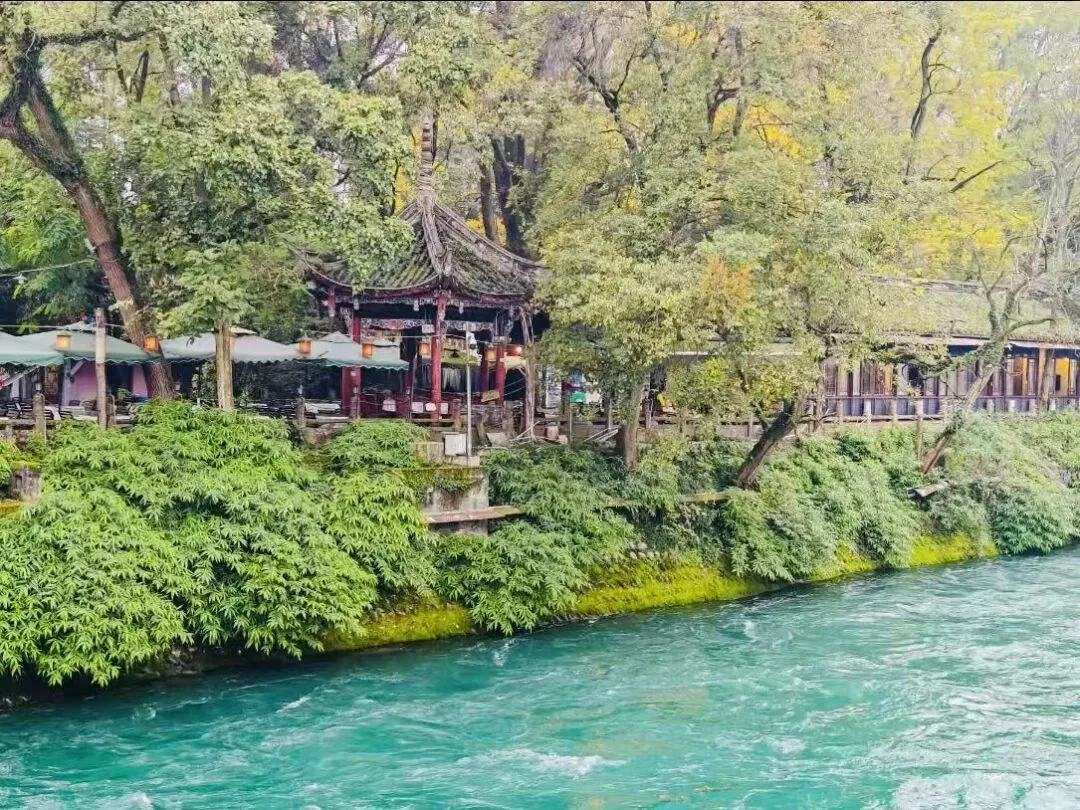
Dujiangyan used to be called Guanxian, and many locals still call it that today — so you’ll also hear this place referred to as Guanxian Chenghuang Miao. It sits on the southern slope of Yulei Mountain, right next to the Dujiangyan water conservancy project, with its back against the green hills and its face toward the old Guanxian town.
Here’s what “Chenghuang” actually means: “Cheng” is the high wall, “Huang” is the moat. Together, they were the ancient defenses that protected a city. Over time, the City God became the guardian deity of cities in Taoism and folk belief. In ancient times, every city had its own City God Temple to watch over the safety of its people. As a key town on the route from Chengdu to western Sichuan, Dujiangyan’s temple carried generations of prayers for city safety and calm river waters.
The history of this temple goes back to the Ming Dynasty, when it started as a small shrine at the foot of Yulei Mountain, guarding the gates of Guanxian. It was damaged and rebuilt several times over the centuries, and during the Qing Dynasty it underwent a large-scale reconstruction — giving the City God a brand new home.
Local insight: Most visitors come here for the architecture, not the history — and honestly, once you see it, you’ll understand why.
The Architecture That Will Make You Look Up
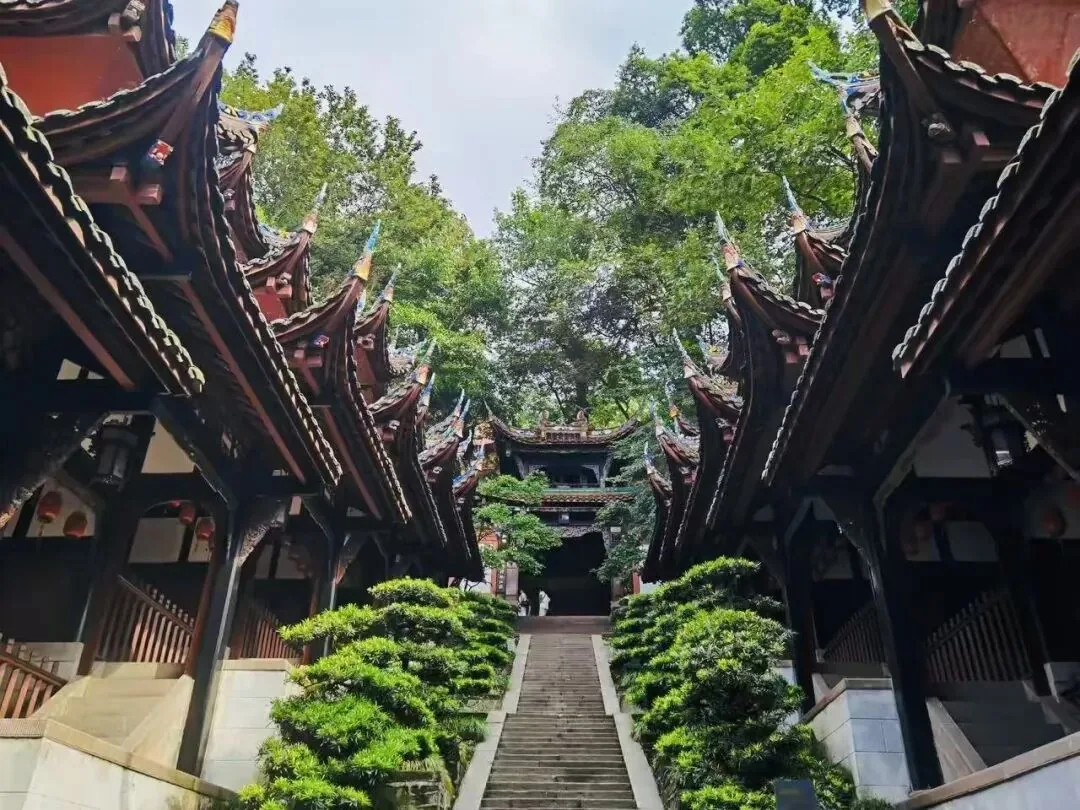
The most striking thing about Dujiangyan Chenghuang Miao is its ingenious layout. The entire temple complex climbs up the slope in stages, divided into two zones: the lower zone centered on the Ten Halls, and the upper zone anchored by the main Chenghuang Hall.
The whole complex forms a “T” shape, with the upper zone built on a mountain platform and the lower zone at the foot of the hill.
The Ten Halls: The Star of the Show
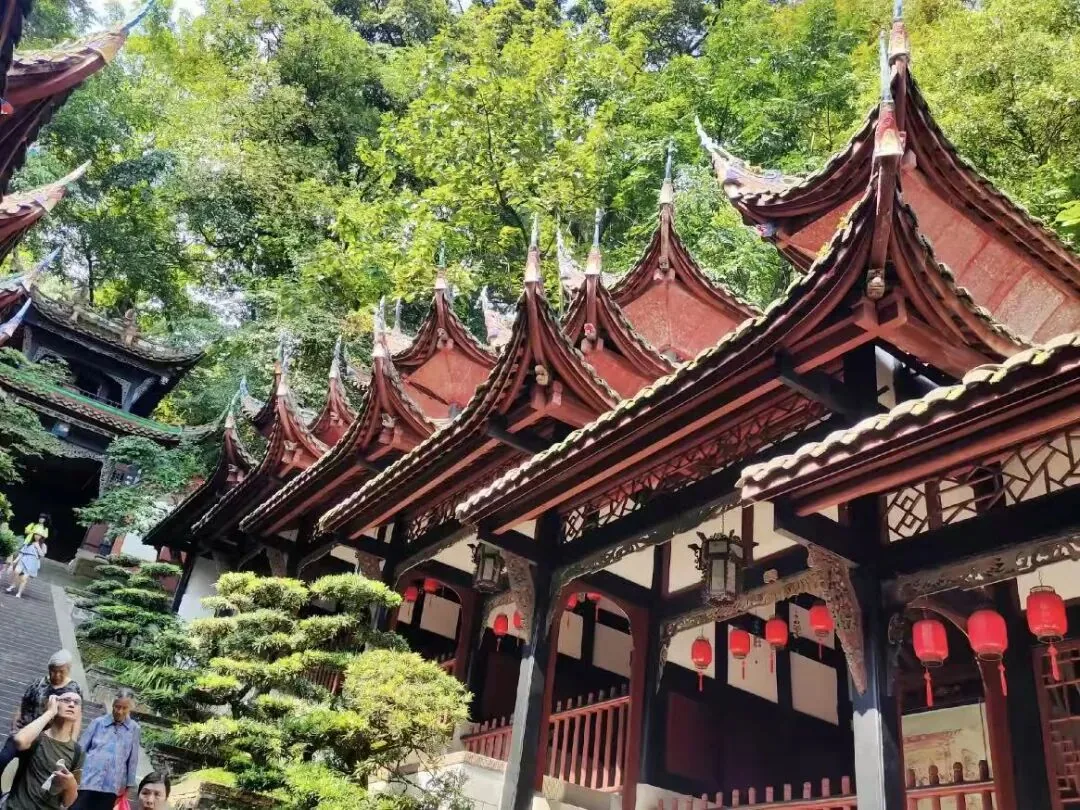
The Ten Halls are the most iconic structures here. Ten small halls are symmetrically arranged along both sides of a straight stairway about 30 meters long — five on each side — rising higher and higher as they ascend. The flying eaves on each hall overlap and interweave at different heights, creating layered, upturned corners that look like a flock of geese spreading their wings and soaring into the clouds. It’s seriously beautiful, and plenty of people come here just to photograph these stunning rooflines.
From the Mountain Gate to the Main Hall
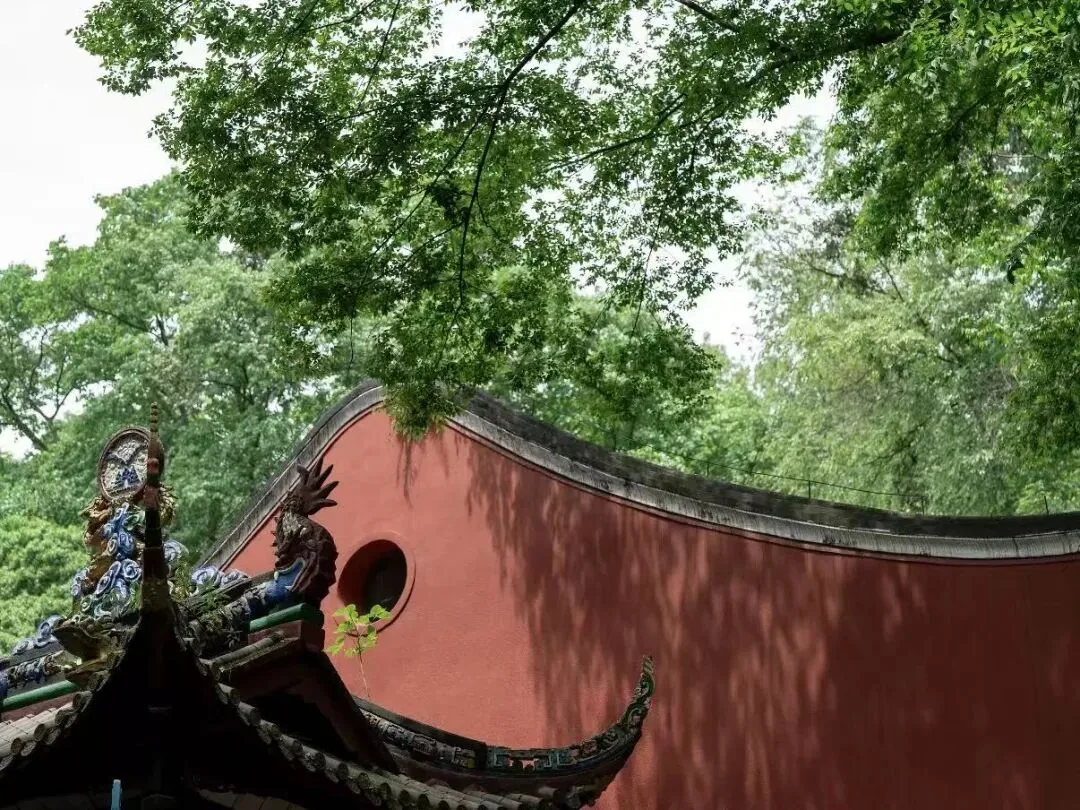
As you enter, you’ll pass through the mountain gate, a three-bay archway-style structure with upturned eaves and a bold “城隍庙” inscription above the door. Right inside the gate, on the right side, stands a Kuixing statue — carved naturally from a thousand-year-old ebony wood, and the only one of its kind in the country. But here’s a heads-up: it’s easy to miss if you’re not paying attention.
Ahead, the Lingguan Tower rises imposingly, with a mighty deity statue guarding the temple gate. Past the tower, you’ll reach the Ten Halls, which honor King Qinguang, the head of the Ten Kings of the Underworld, along with various gods who inspect the underworld.
The main hall is the heart of the temple, enshrining the City God of Dujiangyan in the center. Inside, you’ll also find sculptures that weave in local water-control legends — stories of Li Bing chaining the dragon and Erlang fighting the dragon, bringing the folk memory of taming the Min River into this sacred space. Every painting, every sculpture, every couplet here carries its own history and story. None of it is made up.
Up to the Upper Terrace
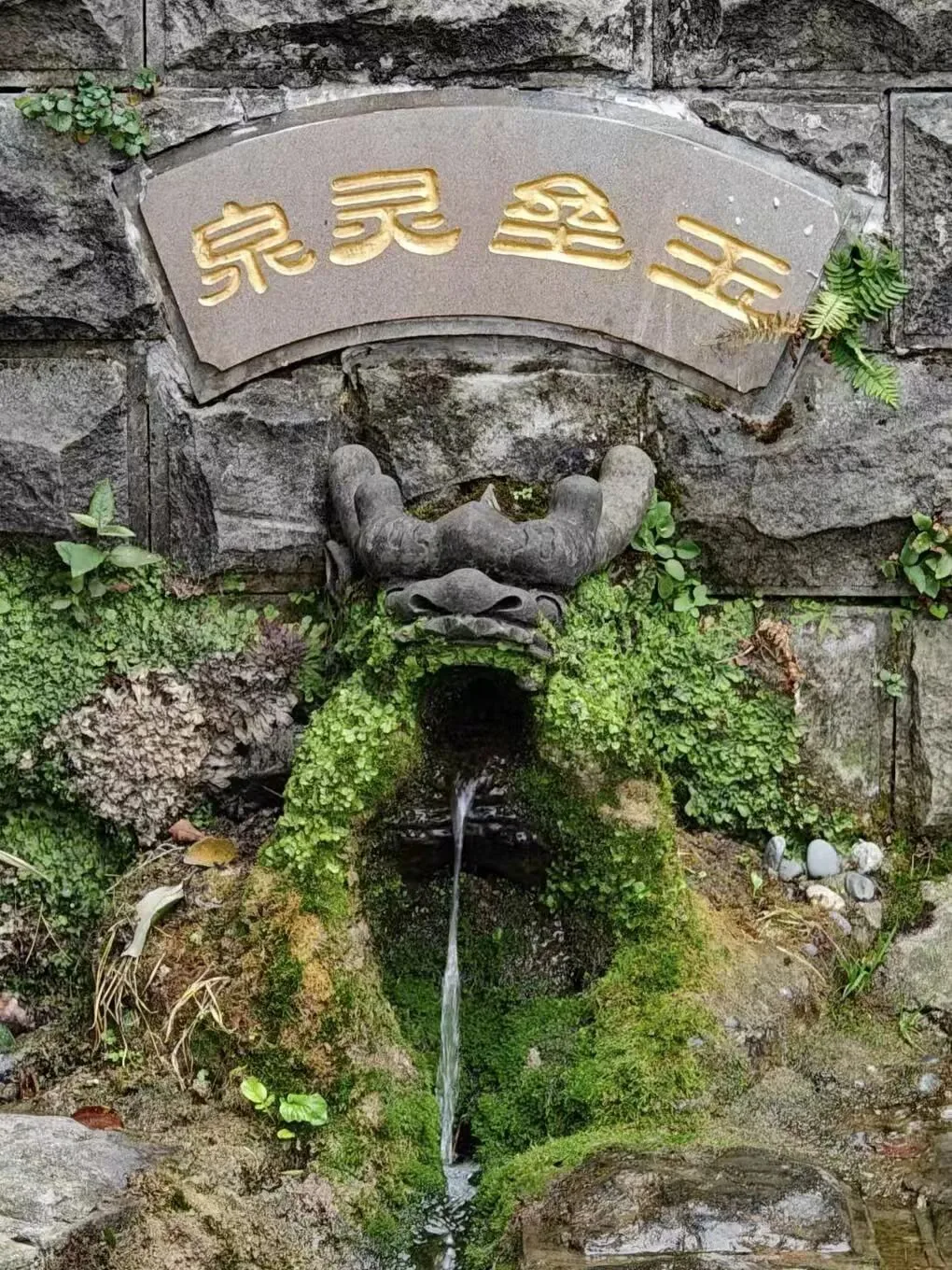
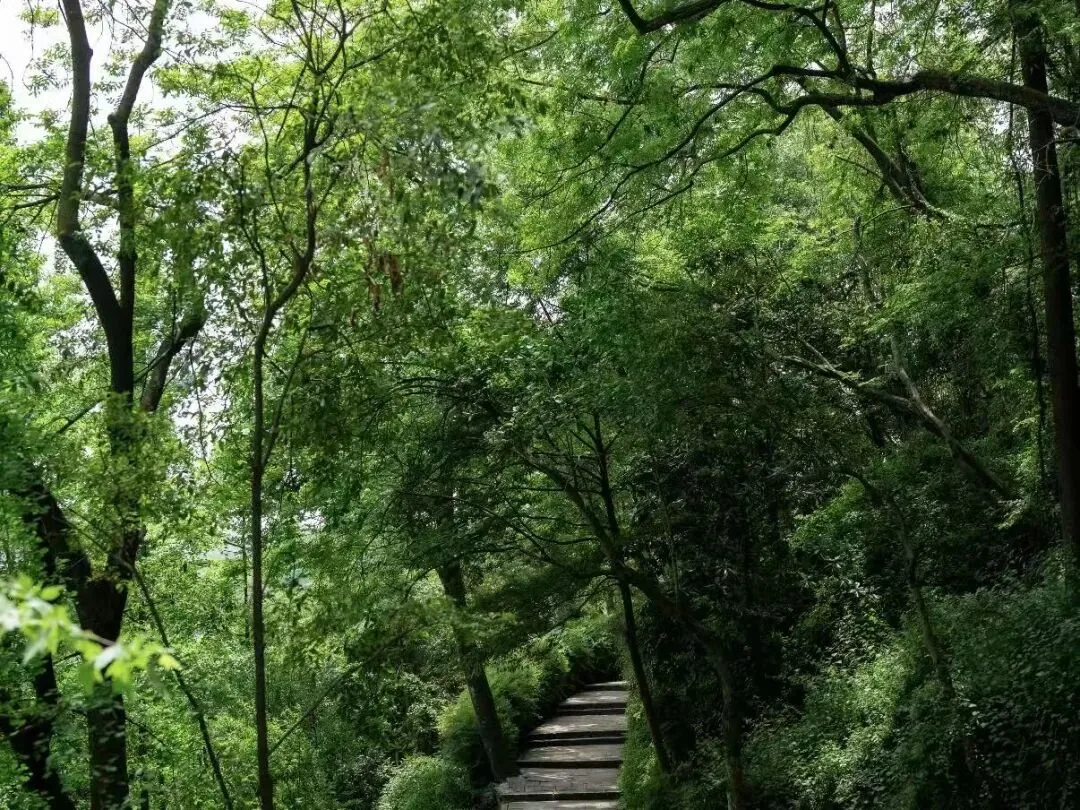
As you climb the stone steps, you’ll notice a clear spring flowing down from Yulei Mountain beside you — cool and refreshing, adding a touch of liveliness to the solemn temple. Keep going up past a platform framed by red walls, and you’ll reach the upper terrace where the Mawang Hall and the main Chenghuang Hall stand in sequence. The temple also includes a Kuixing Hall, Niangniang Hall, Guanyin Hall, and Caishen Hall.
From the platform in front of the main hall, you can lean on the railing and take in the view: the tiled rooftops of the old Guanxian town spreading out below, the Min River flowing in the distance, and the streets and lanes of the city stretching as far as the eye can see.
Pro tip: Don’t rush past the spring on the way up — it’s one of those little details that makes this place special.
A Peaceful Escape in the Trees
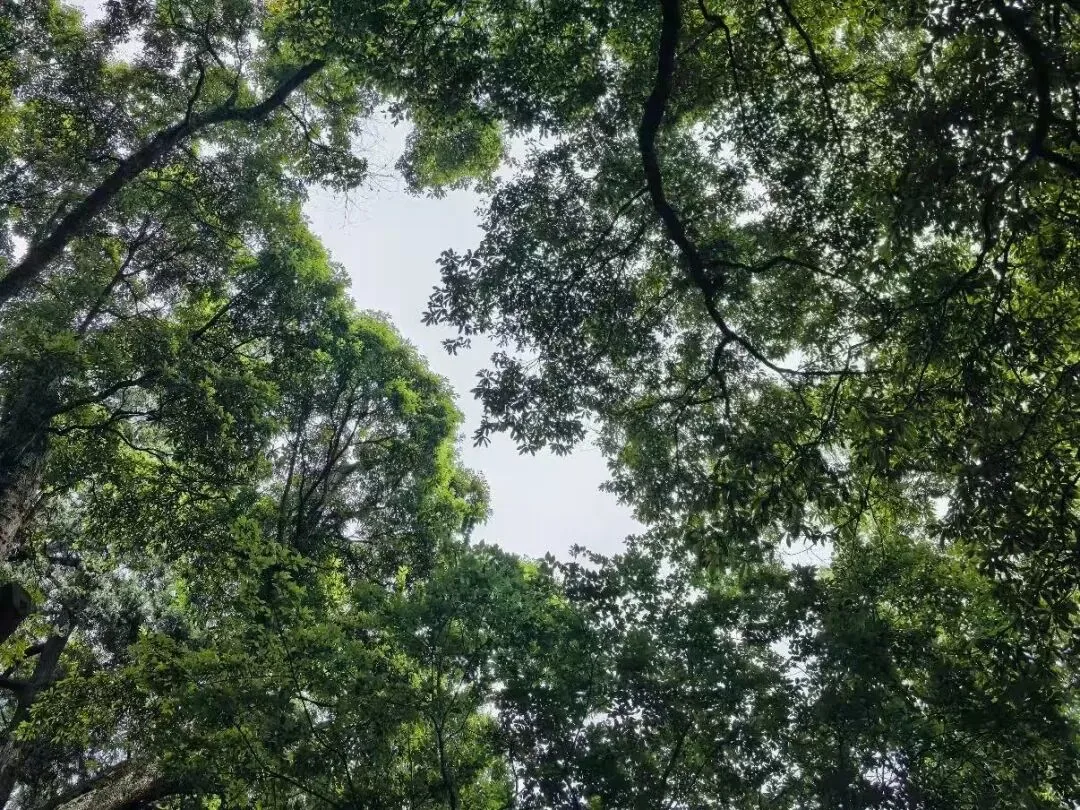
One thing I personally love about this temple is the setting. It’s tucked among lush forests with ancient trees towering overhead. Even in the heat of summer, it never feels too hot — sunlight filters through the leaves, casting dappled light on the green-tiled ridges. Incense smoke curls gently upward, birdsong echoes through the woods, and while the old town below buzzes with life, up here the temple stays calm and serene.
How to Plan Your Visit
Address: North side of Yulei Mountain Square, Guankou Street, Dujiangyan City (search “灌口城隍庙” in your navigation app)
Ticket: Free admission
Getting there: Take the high-speed rail from Xipu Station in Chengdu to Lidui Park Station, then walk about 10 minutes to Yulei Mountain Square.
Suggested route: Chenghuang Miao → Songmao Ancient Road → Guanxian Old Town West Street → Nanqiao Bridge (the entire route is free)
Here’s the thing — a lot of people come to Dujiangyan and head straight for the 5A scenic area, completely missing this cultural gem on Yulei Mountain. Next time you’re in town, make a point to stop by. After visiting the temple, follow the Songmao Ancient Road down to West Street at the foot of the mountain — it’s a commercialized old street, and once you walk through it, you’ll arrive at Nanqiao Bridge by the Dujiangyan scenic area. That’s where the food and fun really start, and the place gets lively. It’s a lovely way to string together multiple cultural spots in Dujiangyan in one trip.
So next time you’re planning a Dujiangyan visit, don’t just go for the famous sights — make some room for this peaceful, beautiful, and free piece of local heritage. You won’t regret it.