Chengdu’s autumn doesn’t announce itself with falling leaves — it arrives with flowers. In Qingyang District, the season kicks off with a burst of color and fragrance: red spider lilies setting the woodland floor ablaze, osmanthus quietly perfuming entire streets, and crape myrtles still holding onto their last clusters of brilliance. If you’re in Chengdu right now, this is the moment to wander out and catch the first wave of autumn blooms.
Here’s the thing — this year’s first osmanthus bloom came early and is already fading fast, so if you want to catch the trees at their most fragrant, bookmark the spots below for the second wave, which is just around the corner. But don’t wait for that: spider lilies, trumpet creepers, and hibiscus are in full swing right now, so there’s plenty to see this very weekend.
Culture Park (Wenhua Gongyuan): Spider Lilies Steal the Show
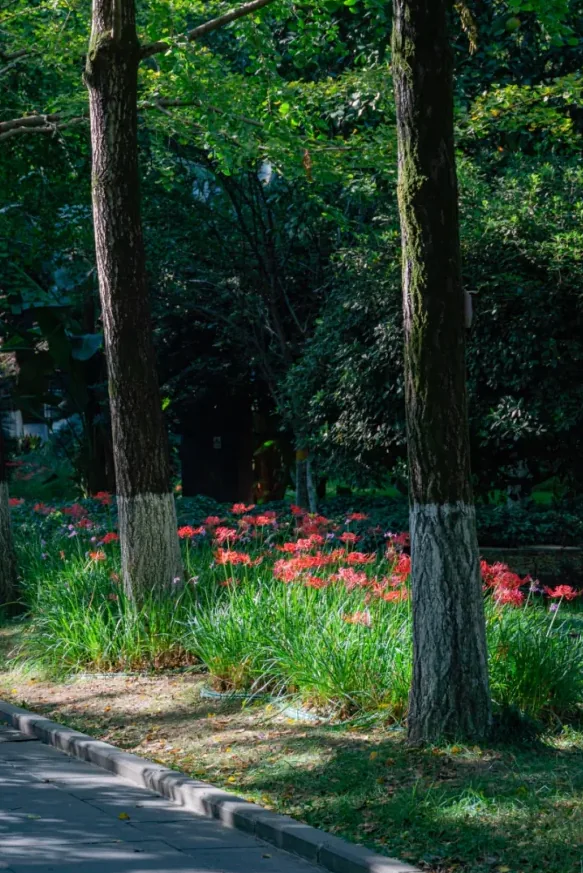
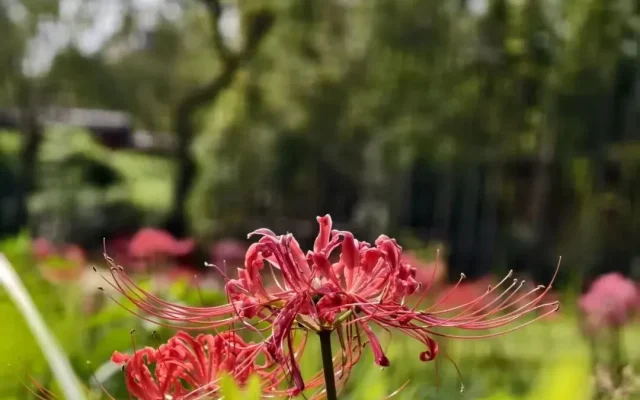
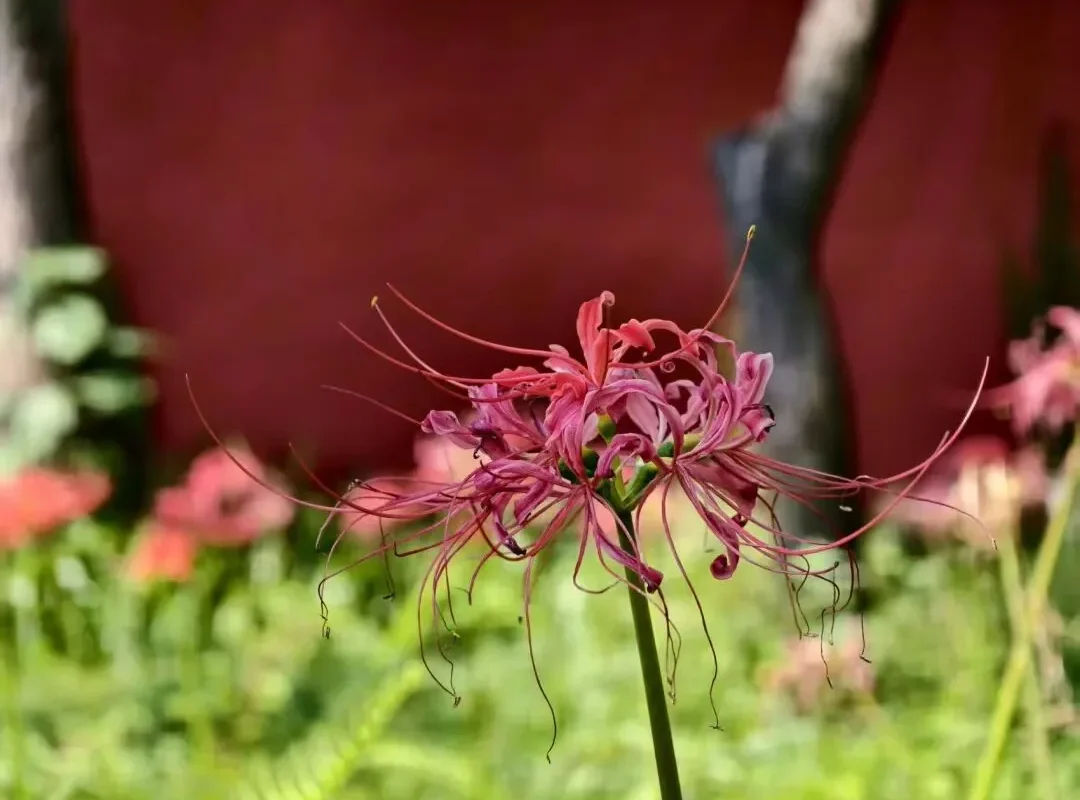
If you’re after the most dramatic flower of early autumn in Qingyang, look no further than the red spider lilies at Culture Park. You might know them as “equinox flowers” (bǐ’ànhuā), but in classical Chinese poetry, they’re called “golden lantern flowers” (jīndēnghuā). The Song-dynasty poet Yan Shu described them as “delicate petals and sturdy stamens shining in the wild light,” while the Tang poet Xue Tao saw them as “morning clouds piled upon the Red City Palace.” Far from gloomy, these blooms look like dawn itself spilled onto the ground.
What makes spider lilies so unique is that their leaves and flowers never meet. When the flowers bloom, the leaves have already withered; when the leaves emerge, the flowers are long gone. It’s as if two beings from different times each guard their own season of glory. That’s why, when they bloom, they do so in dense clusters — no leaves to hide them, just fiery red stems rising straight from the soil like little lanterns igniting the forest floor.
At Culture Park, spider lilies are practically everywhere. Here’s a route to make sure you don’t miss a single patch:
Pro tip: Enter from the East Gate and follow this path — Octagonal Pavilion (Bājiǎo Tíng) → Zhiji Hill (Zhījī Shān) → Lingqin Garden (Língqín Yuán) → Children’s Playground. You’ll hit every bloom spot along the way.
Where to Find the Flowers
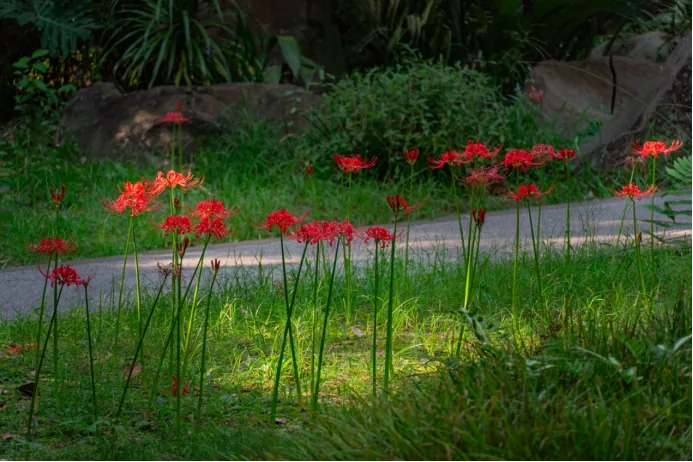
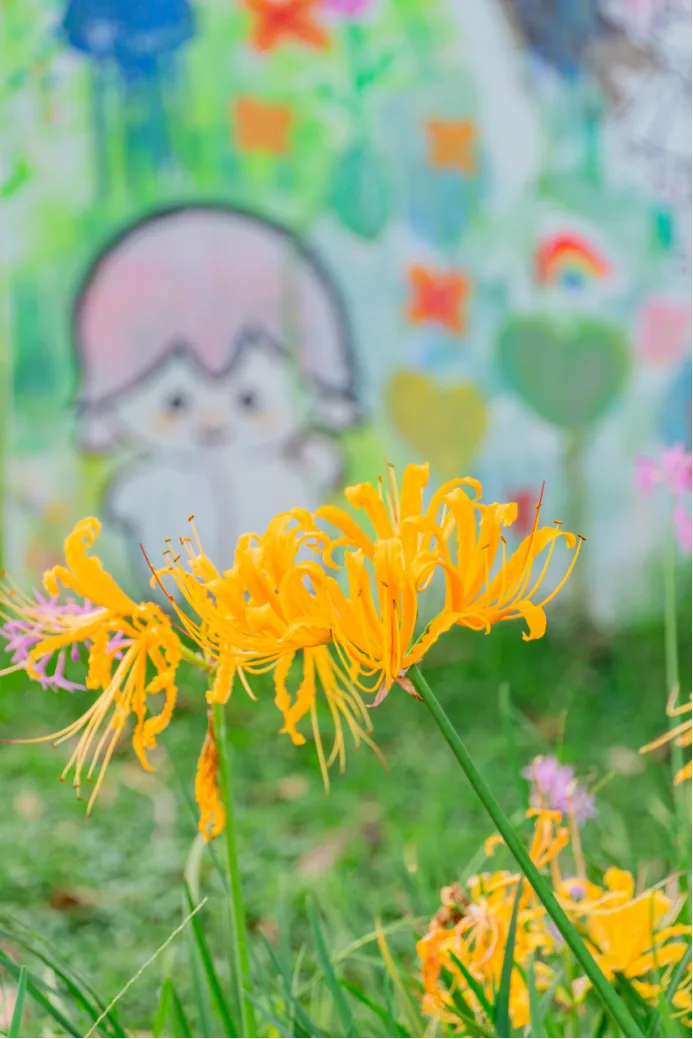
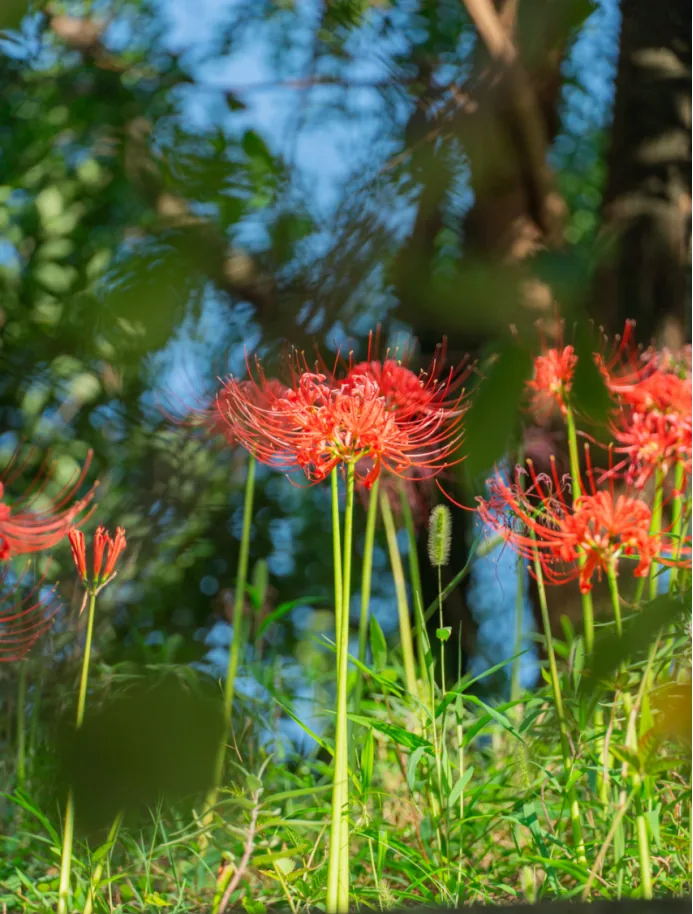
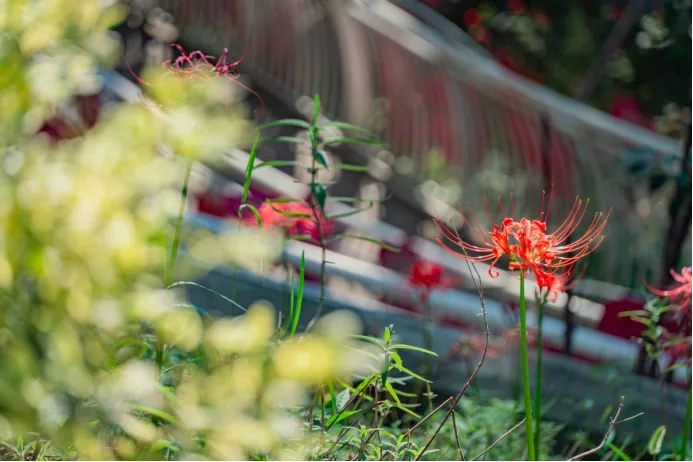
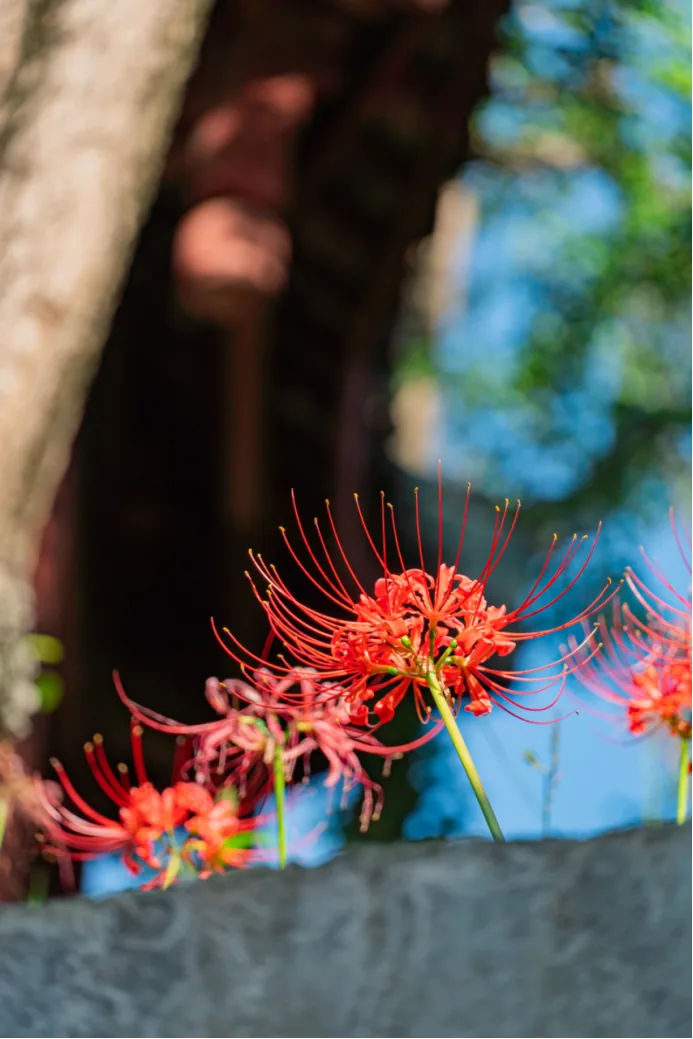
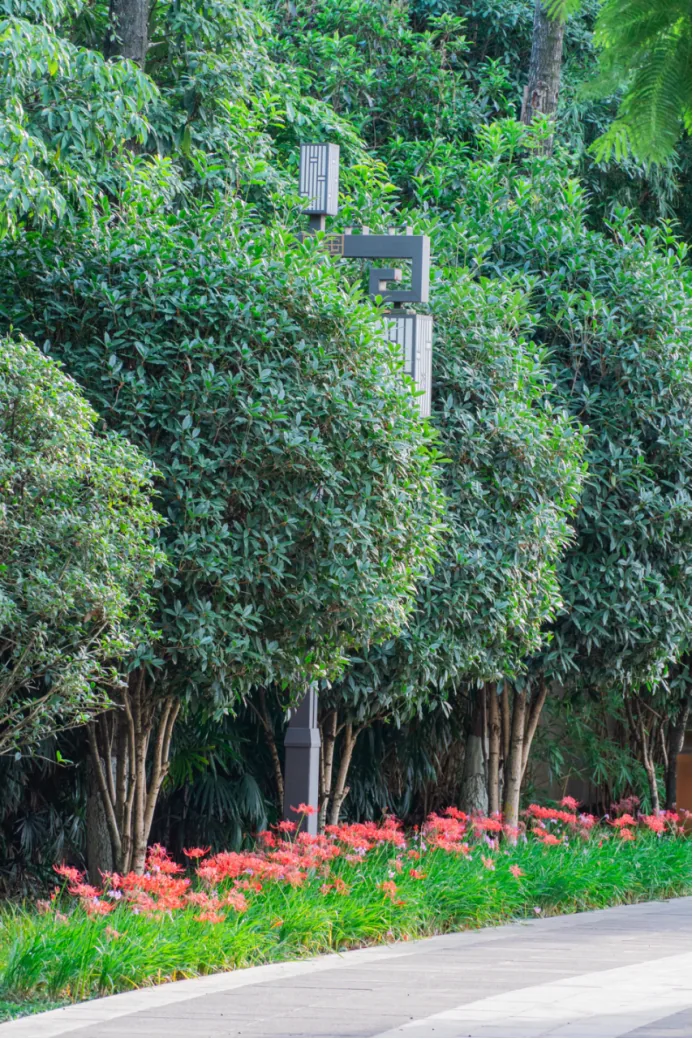
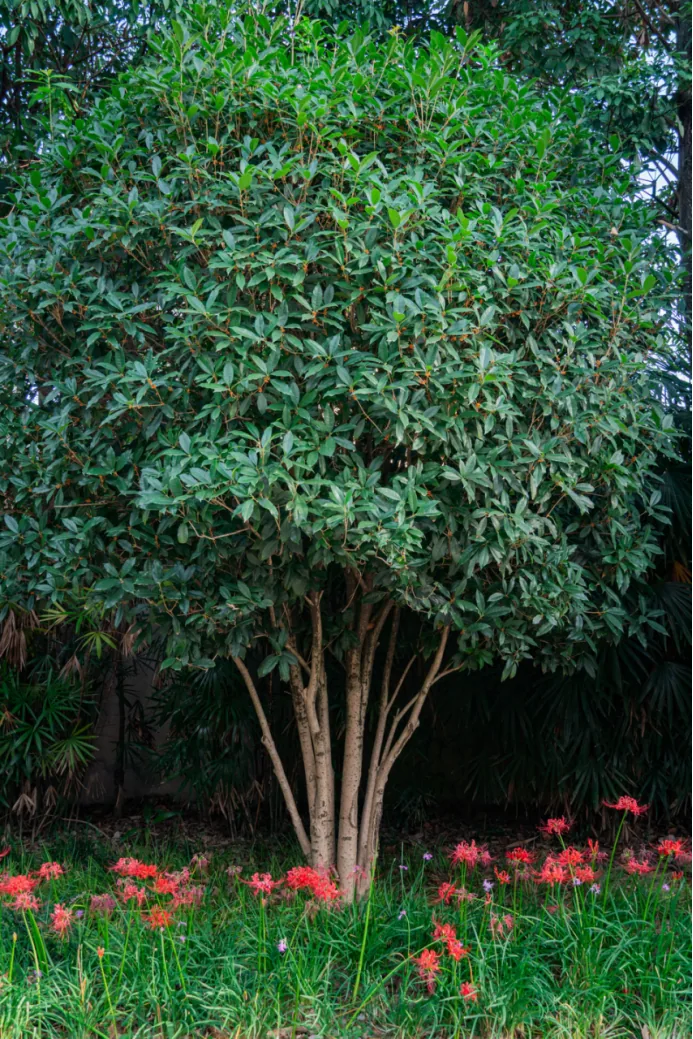
- Zhiji Hill — the densest concentration of spider lilies in the park. The hill is named after the legendary Zhiji Stone at its summit, and its slopes are carpeted with clusters of red, as if someone splashed cinnabar across the grass.
- Children’s Playground path — here’s a fun twist: osmanthus and spider lilies share the same trail. Overhead, the osmanthus trees are releasing their sweet, subtle scent; underfoot, the spider lilies are blazing red. Sweet cream-yellow above, fiery crimson below — early autumn’s two signatures in one frame.
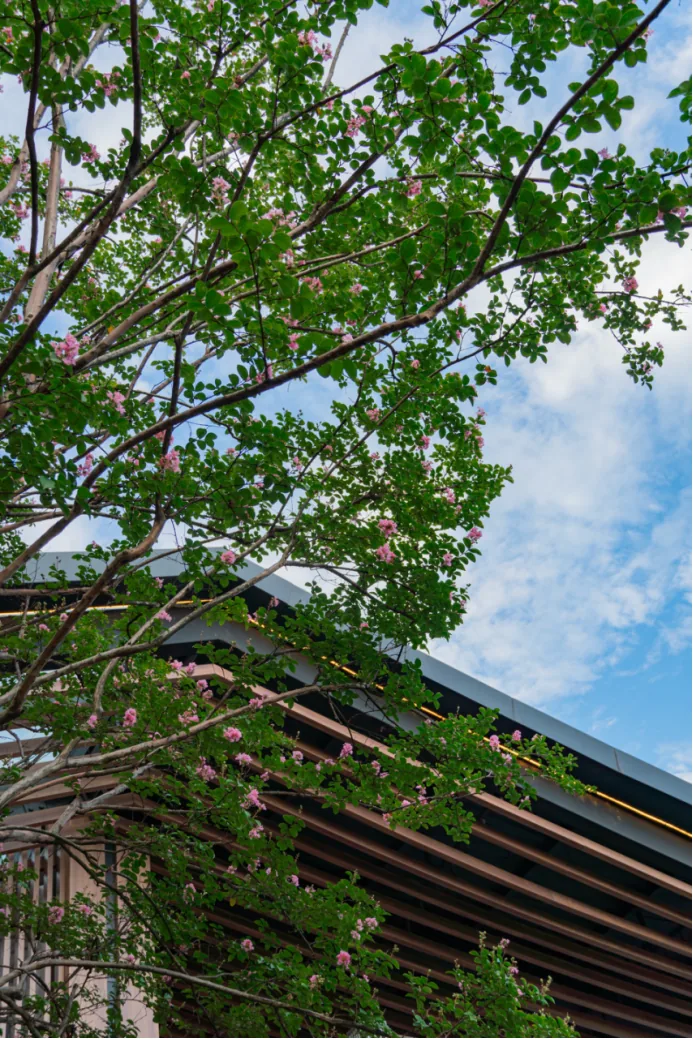
- Around Qinglian Teahouse — crape myrtles are still going strong. These flowers have a long season, blooming from summer into autumn, which is why they’re also called “hundred-day red” (bǎirìhóng). The Tang poet Du Mu captured their spirit: “Greeting the autumn dew with a fresh branch, not vying for spring’s top spot.” The best specimen at Culture Park is near the teahouse, with spikes of pink, purple, and white swaying gently in the autumn breeze.
Practical Info
- Address: 23 Qintai Road, Qingyang District, Chengdu
- Metro: Line 2, Tonghuimen Station, Exit C, then about 500 meters on foot
- Hours: 6:00–22:00 (free entry)
- Spider lily spots: Octagonal Pavilion, Zhiji Hill, Lingqin Garden’s sunny grove, Children’s Playground path, Cherry Blossom Garden
- Osmanthus spot: Children’s Playground path (where you can see both osmanthus and spider lilies together)
- Crape myrtle spot: Around Qinglian Teahouse and throughout the park
Three Must-Visit Osmanthus Spots
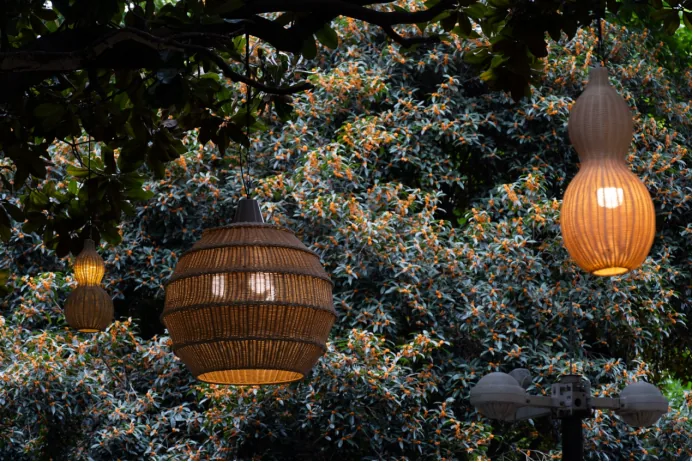
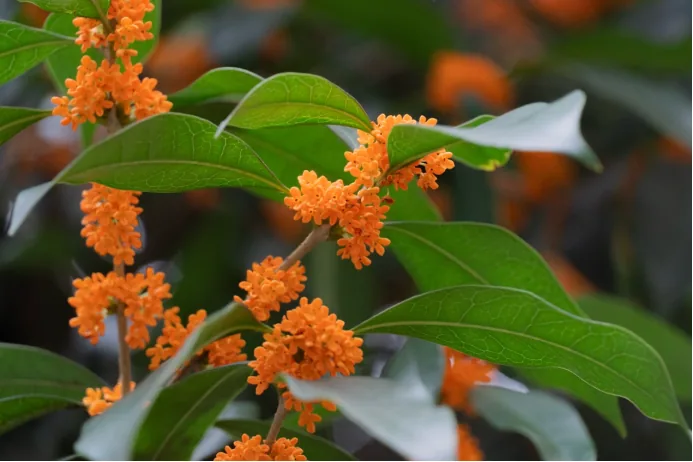
If spider lilies are for the eyes, osmanthus is for the nose. These flowers are modest — tiny, cream-yellow, tucked among dense green leaves, easy to miss if you’re not looking. But their fragrance is impossible to ignore: sweet, warm, and carried by the breeze through entire streets.
Baihuatan Park & Fanglin Road
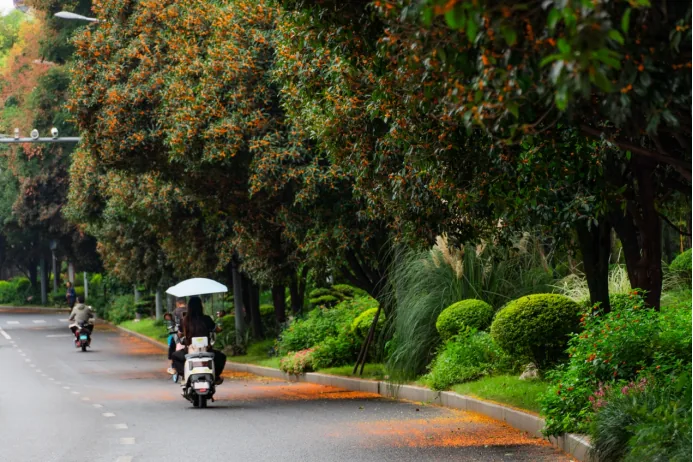
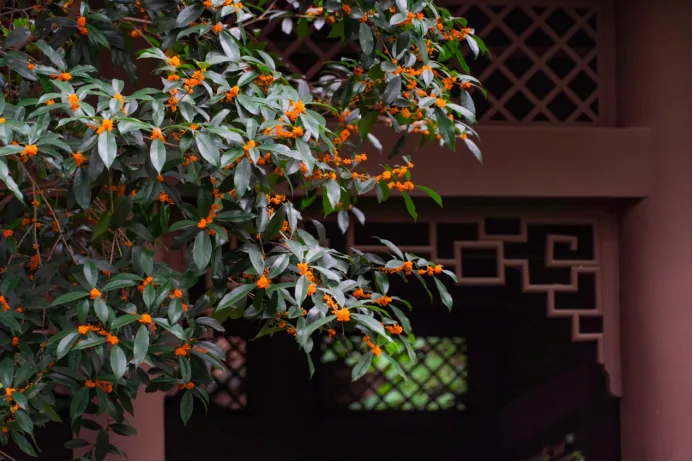
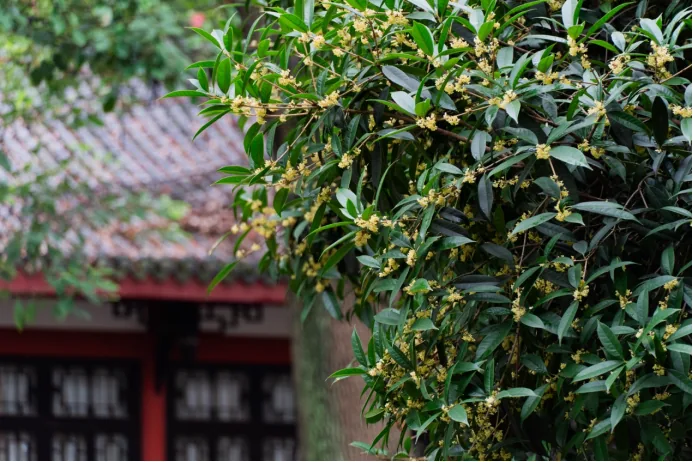
The osmanthus along Baihuatan Park and Fanglin Road is blooming beautifully right now. As you stroll down Fanglin Road, you’ll see clusters of orange-red blossoms — many still on the branches, but even more scattered on the ground, painting the path in vivid hues. It’s not just fragrant; it’s a visual treat too.
At Baihuatan Park, the osmanthus isn’t isolated — it blends with the park’s ancient charm. The bonsai displays and winding corridors are all steeped in that sweet perfume.
Practical Info
- Address: 5 Fanglin Road, Qingyang District, Chengdu
- Metro: Line 2, Tonghuimen Station, Exit D, then about 600 meters on foot
- Hours: 6:00–21:30 (free entry)
- Osmanthus spots: Along Fanglin Road and at Huiyuan Garden
People’s Park: Osmanthus in a Teacup
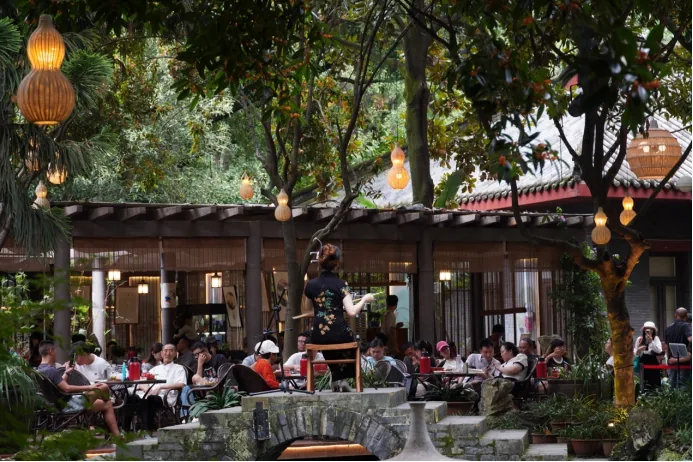
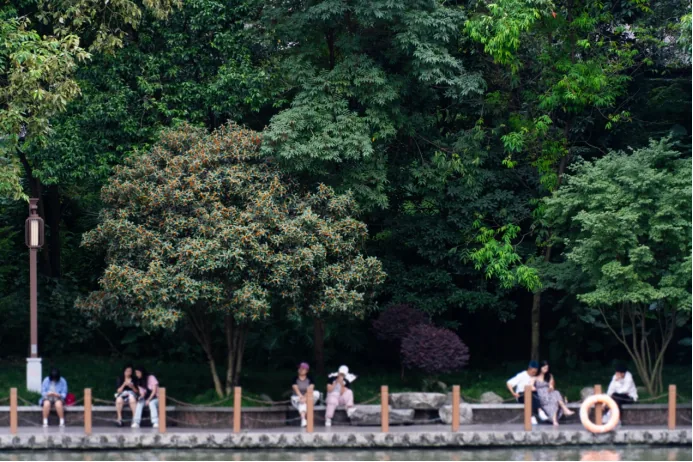
For the most authentically Chengdu way to enjoy osmanthus, head to the Shaocheng Yuan Teahouse in People’s Park. Here, bamboo chairs, covered bowls (gài wǎn), and brass kettles are the tools of the trade for locals whiling away the hours. Osmanthus trees grow right beside the tea seats — not tall, but dense with leaves. When they bloom, tiny yellow flowers peek out, releasing their scent with quiet confidence. Settle into a bamboo chair, order a bowl of covered-bowl tea, listen to some local opera, and when the breeze stirs, osmanthus petals will drift down into your tea, onto your chair, and into your open palm.
This is autumn in Chengdu — unhurried and full of flavor. And the park’s osmanthus isn’t confined to one spot: near ancient buildings, by the lake, beside rockeries, along tree-lined paths — you’ll be enveloped by fragrance when you least expect it, then have to search for the tiny flowers hidden among the leaves.
Practical Info
- Address: 12 Shaocheng Road, Qingyang District, Chengdu
- Metro: Line 2, People’s Park Station, Exit B, then about 200 meters on foot
- Hours: 6:00–22:00 (free entry)
- Osmanthus spots: Inside Shaocheng Yuan Teahouse, by the lake, and along the park’s tree-lined paths
Guihua Lane: A Hidden Gem
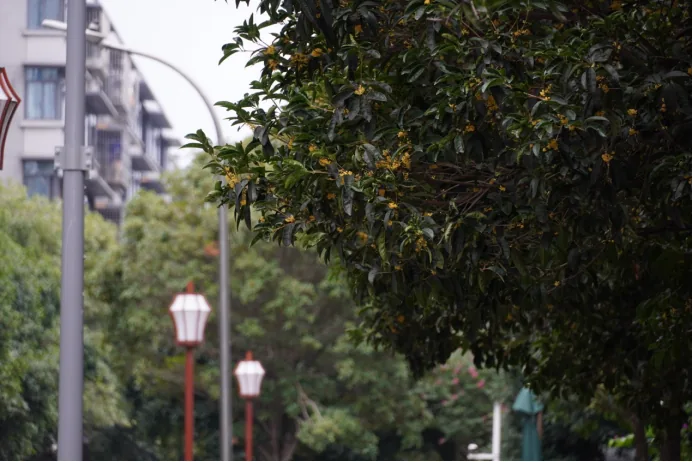
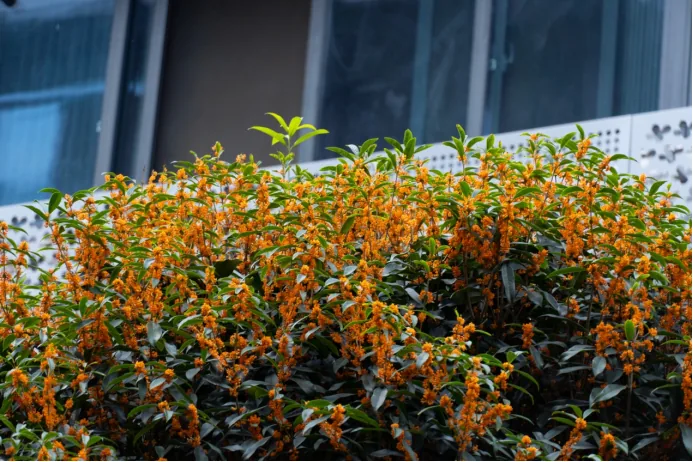
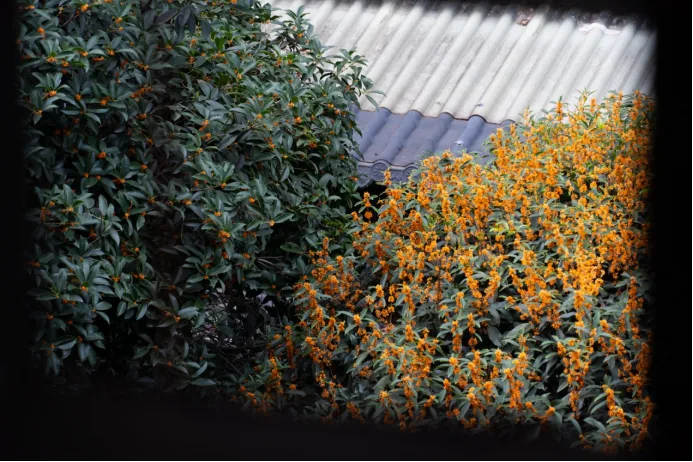
If People’s Park serves osmanthus in teacups, Guihua Lane (literally “Osmanthus Lane”) grows it right under residents’ windows. This short, narrow lane sits opposite Kuanzhai Alley, lined with osmanthus trees on both sides. It’s usually unremarkable — many locals don’t even know it exists — but come September, the whole lane transforms. The fragrance drifts from one end to the other, greeting you before you even step inside.
The trees aren’t tall, and their branches intertwine overhead to form a natural floral canopy. As you walk beneath, petals fall onto your hair and shoulders, carpeting the ground with tiny yellow blooms. Each step produces a soft rustle, as if you’re walking on a path paved with scent.
Local insight: No need to plan a special trip — just pop in when you’re passing by. It takes five minutes to walk the whole lane, but the memory of that fragrance will linger much longer.
Practical Info
- Address: Guihua Lane, Qingyang District (near the south side of Kuanzhai Alley)
- Metro: Line 2, People’s Park Station, Exit D, then about 500 meters on foot; or Line 4, Kuanzhai Alley Station, Exit B, then about 400 meters on foot
- Hours: Open all day (free; it’s a residential lane)
- Osmanthus spots: Both sides of the entire lane; best during peak autumn bloom. Please keep noise down and respect the residents.
Du Fu’s Thatched Cottage: Autumn Flowers in Succession
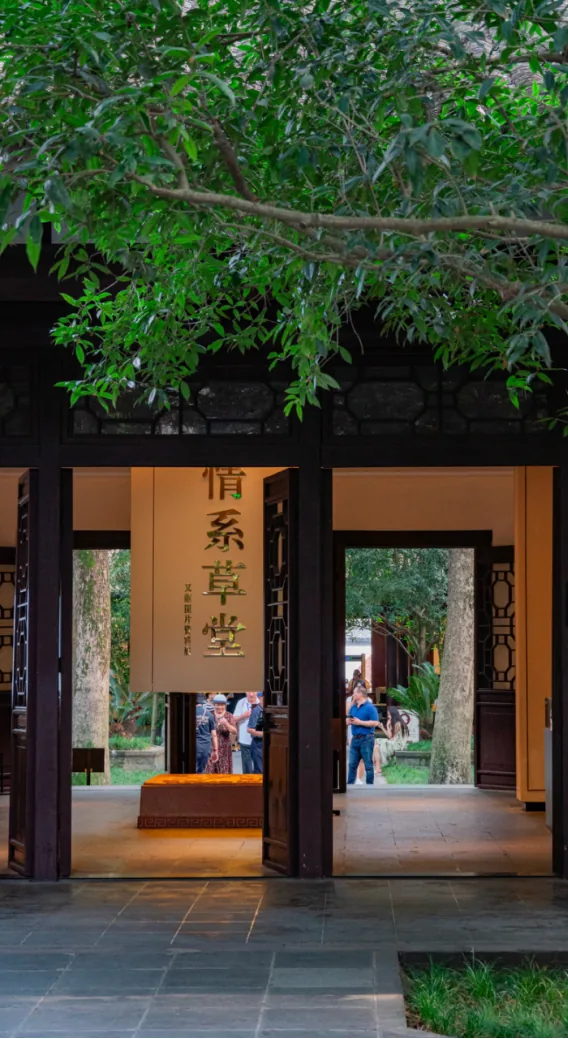
Autumn at Du Fu’s Thatched Cottage begins with a wisp of osmanthus fragrance. This year’s first bloom came early and faded fast, like a brief preview. Now, only a few scattered blossoms remain, their scent much diminished. But those who know osmanthus understand this isn’t the end — it’s gathering strength. The second wave is already budding, waiting for the right temperature and humidity to burst forth and perfume the entire garden once more.
While the osmanthus rests, other flowers step up to carry the show.
Trumpet Creeper (Lingxiao Hua)
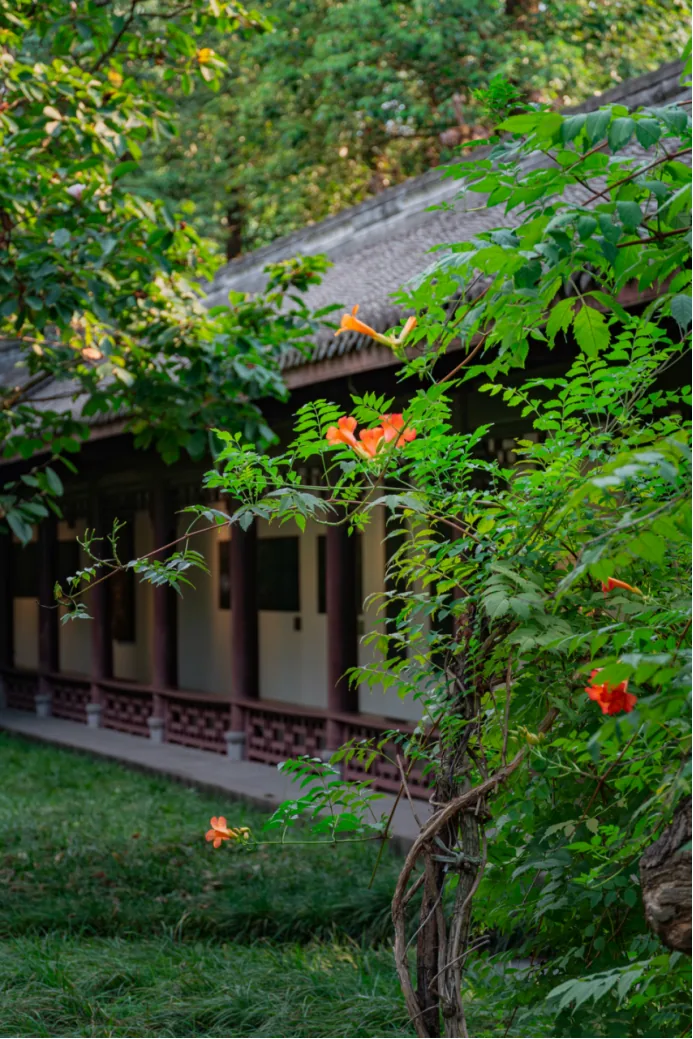
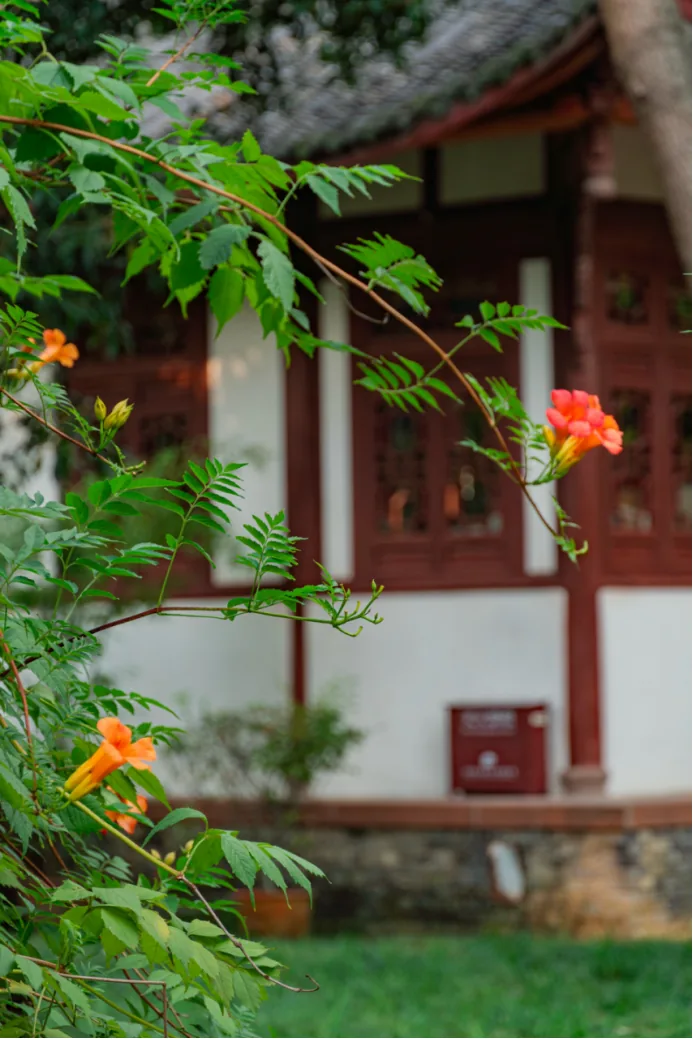
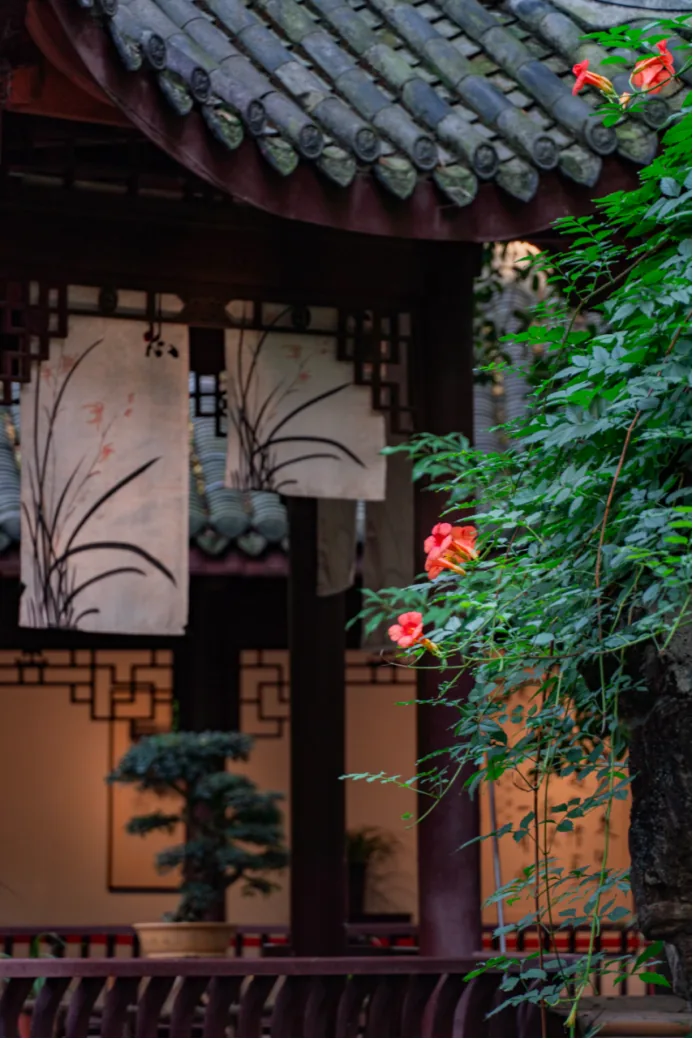
First to catch your eye is the orange-red trumpet creeper. These flowers seem born for old architecture — clusters of trumpet-shaped blooms climbing walls, eaves, and ancient trees like little flames. At the Thatched Cottage, they’re in full glory around Orchid Garden (Lányuán) and the Poetry Stele Pavilion, their fiery orange contrasting beautifully with gray tiles, white walls, and weathered stone inscriptions.
The name “lingxiao” means “soaring to the sky,” and indeed, these vines always climb upward, blooming where others can’t reach. But they don’t rise alone — they creep along old walls and ancient trees, inch by inch. Seeing them here, you can almost imagine Du Fu himself watching flowers on his wall during an autumn like this, penning verses that would echo through the ages.
Hibiscus (Fusang Hua)
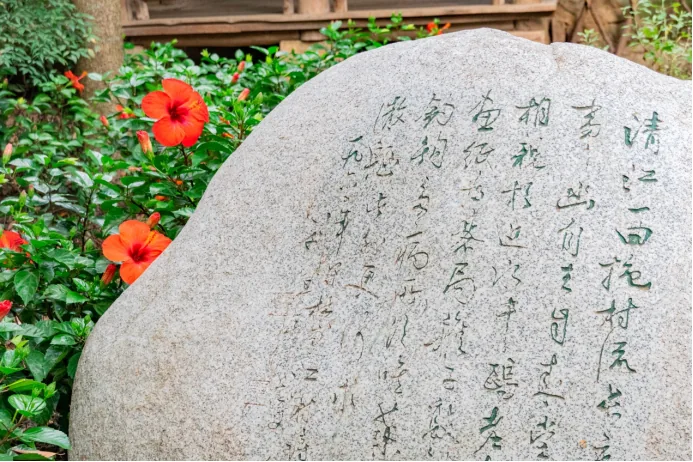
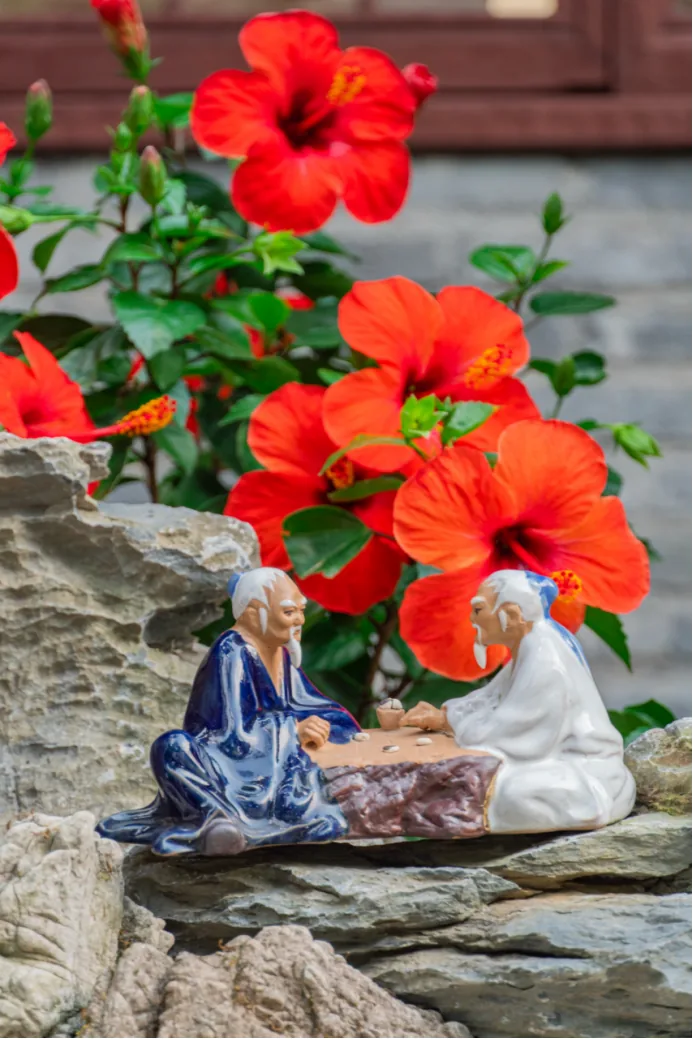
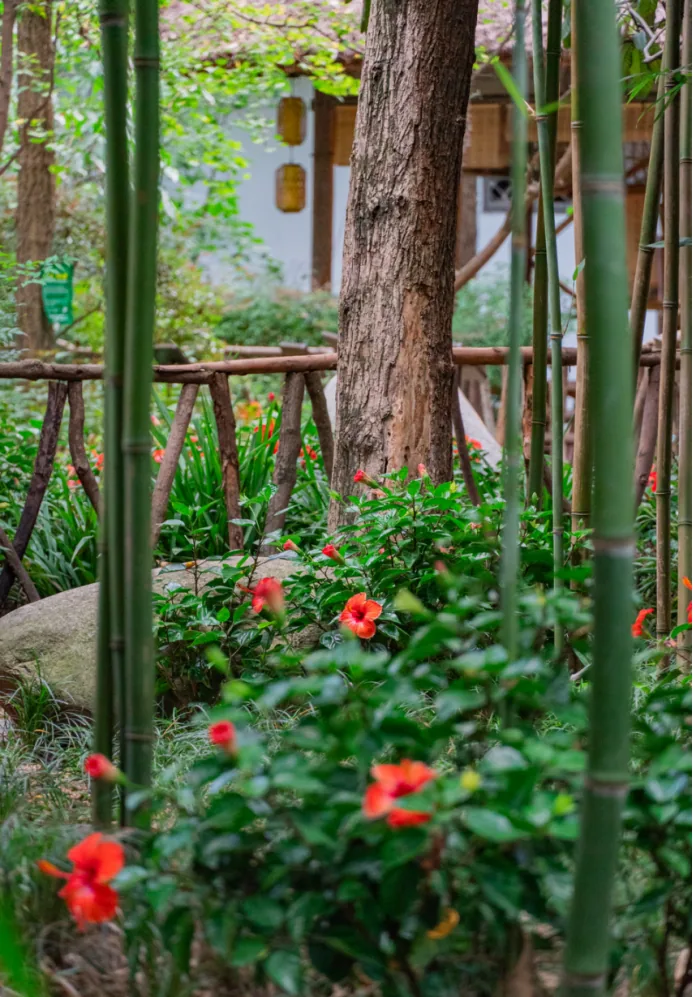
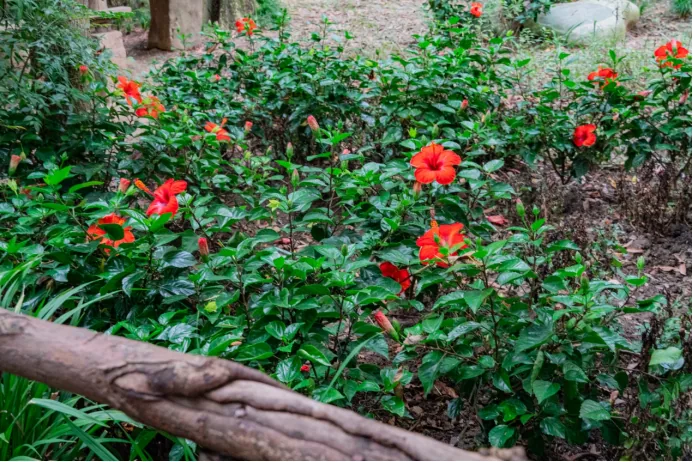
Near the Bonsai Garden, hibiscus flowers demand attention. Also known as Chinese hibiscus (zhūjǐn), they boast large, vivid red blooms with five petals, a darker center, and a long stamen that resembles a little matchstick. They’re bold, unapologetic, and anything but shy.
The most charming scene is by the Bonsai Garden: behind a rockery, two hibiscus plants are in full bloom, their big red flowers peeking out; in front, two elderly gentlemen sit absorbed in a game of chess at a stone table, oblivious to the floral spectacle behind them. Quiet game in front, blazing flowers behind — stillness and motion, cool and warm — a quintessential Chengdu autumn tableau.
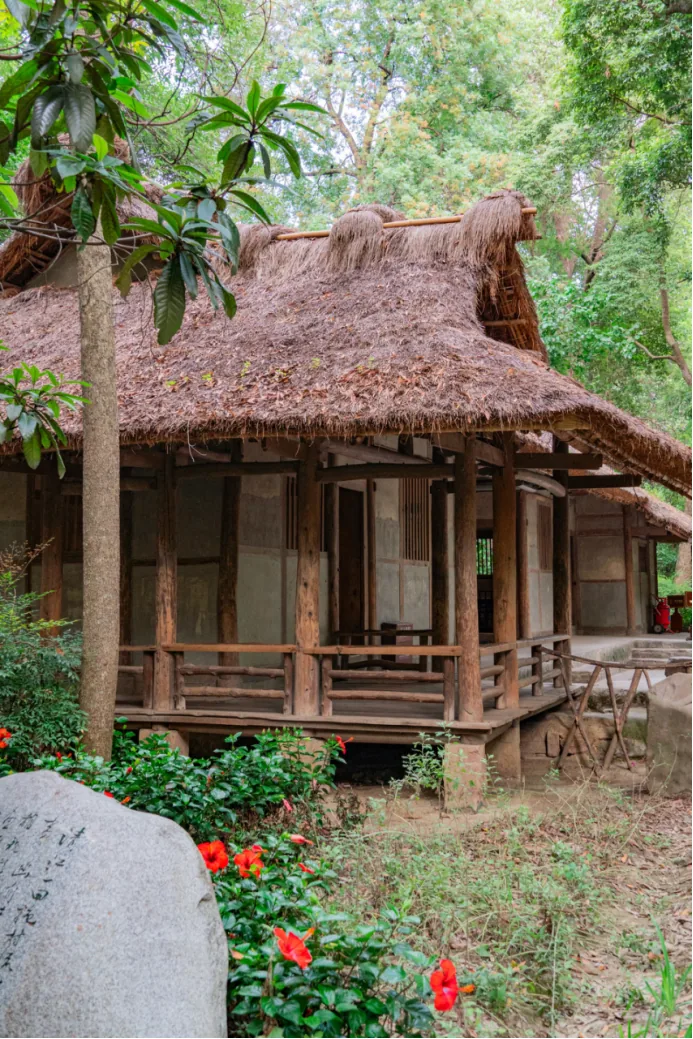
Around the Thatched Cottage itself, hibiscus also thrives, their vivid colors contrasting harmoniously with the humble thatched roofs.
Crape Myrtle and Ginkgo
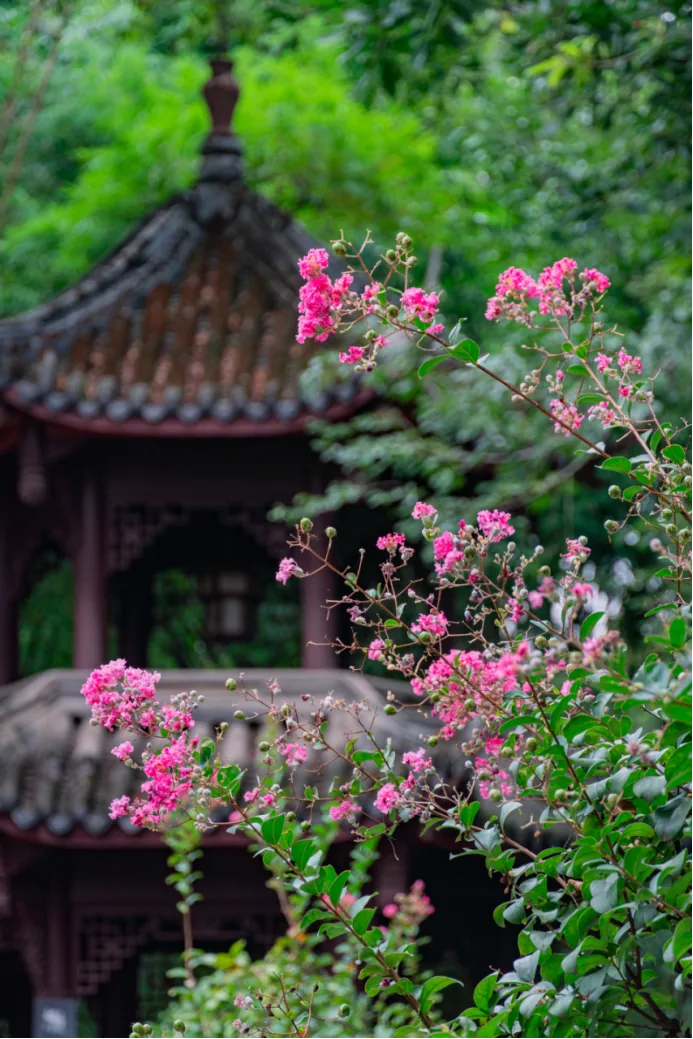
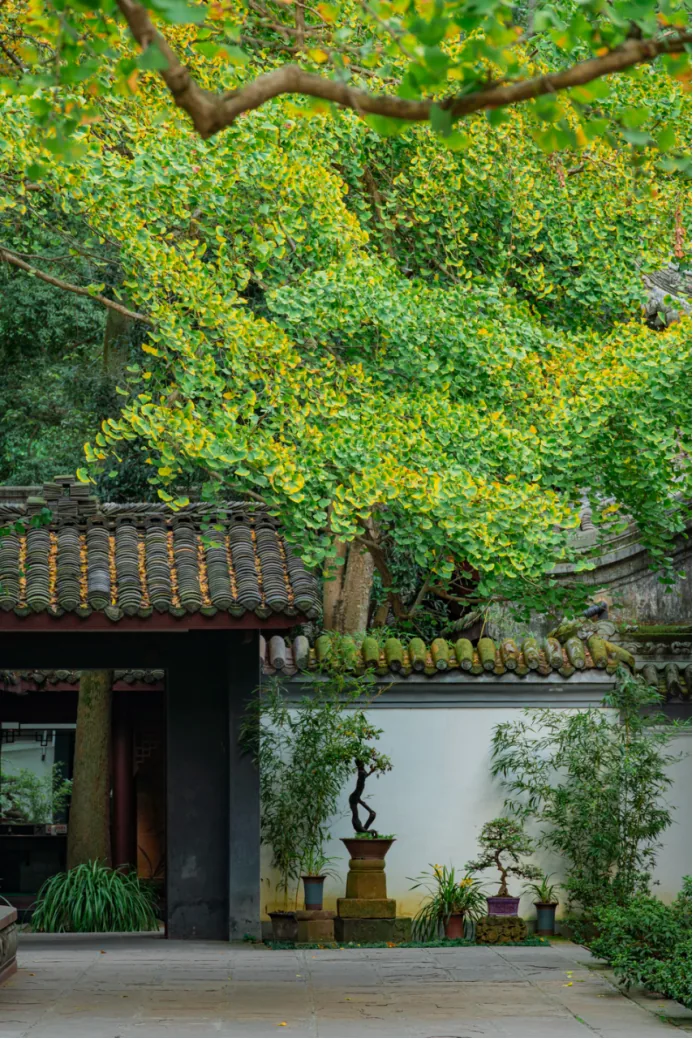
The Bonsai Garden also hosts crape myrtles, scattered throughout the grounds. Like those at Culture Park, they bloom unhurriedly from summer to autumn, like a patient old friend who never leaves your side.
And then there are the ginkgo trees. They haven’t turned golden yet, but the leaf tips are just beginning to show a hint of gold — as if someone had taken a brush dipped in pale gold and traced the edge of each leaf. When sunlight hits them, those edges glimmer, like autumn signaling: “Don’t rush, I’m on my way.”
Practical Info
- Address: 37 Qinghua Road, Qingyang District, Chengdu
- Metro: Line 4, Caotang North Road Station, Exit B, then about 800 meters on foot
- Hours: 9:00–18:00 (ticket sales stop at 17:00)
- Admission: 50 RMB per person (half price for students; free for those 60 and over)
- Trumpet creeper spots: Bonsai Garden, Orchid Garden, Poetry Stele Pavilion
- Hibiscus spots: Around the Thatched Cottage and near the Bonsai Garden
- Crape myrtle spots: Bonsai Garden and throughout the park
- Ginkgo spots: Several old ginkgo trees across the park; leaf tips are just starting to turn
Intangible Cultural Heritage Expo Park: Crape Myrtle Echoes and Golden Rain Trees

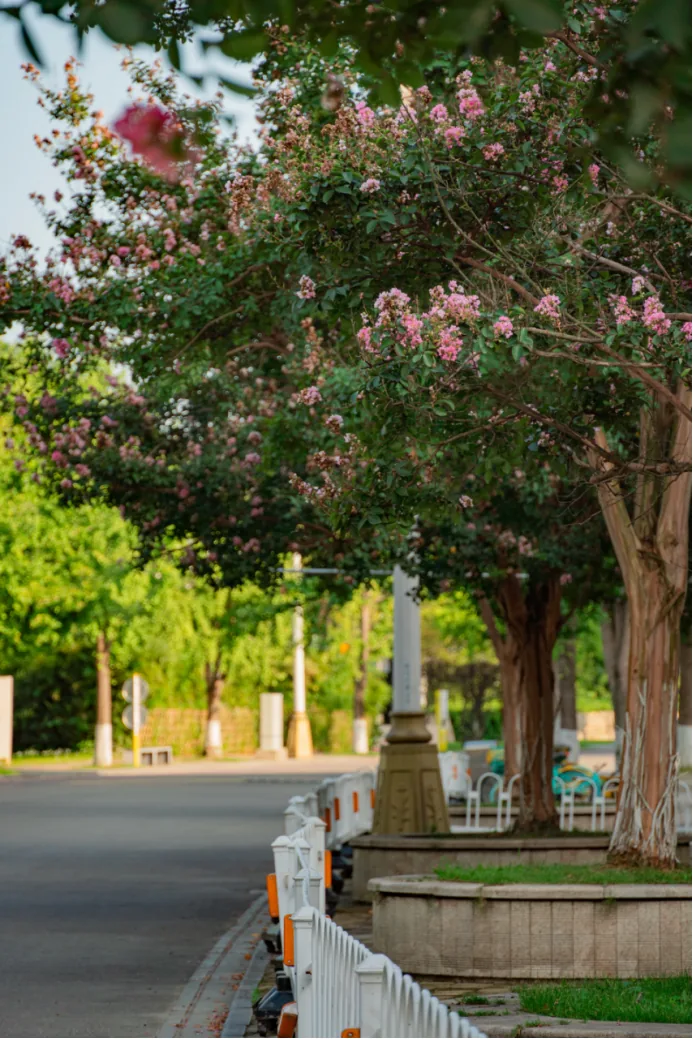
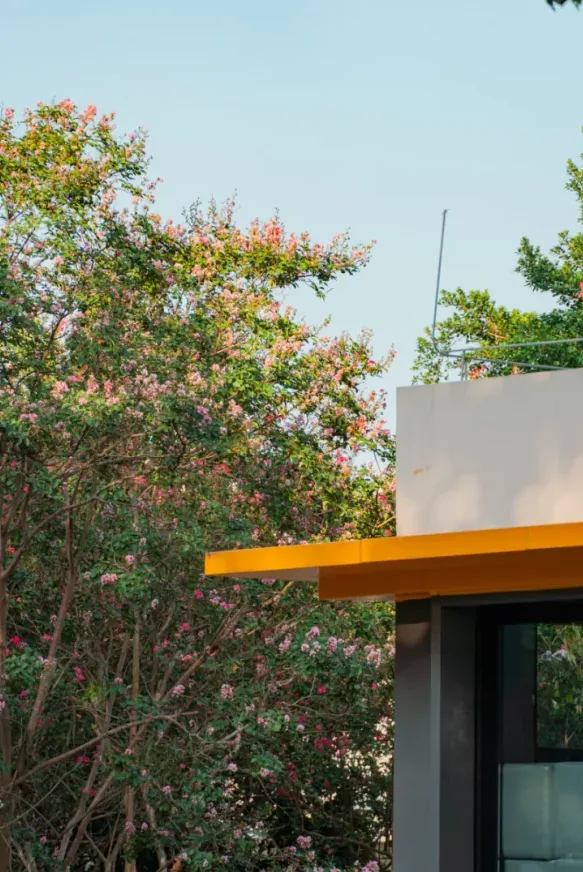
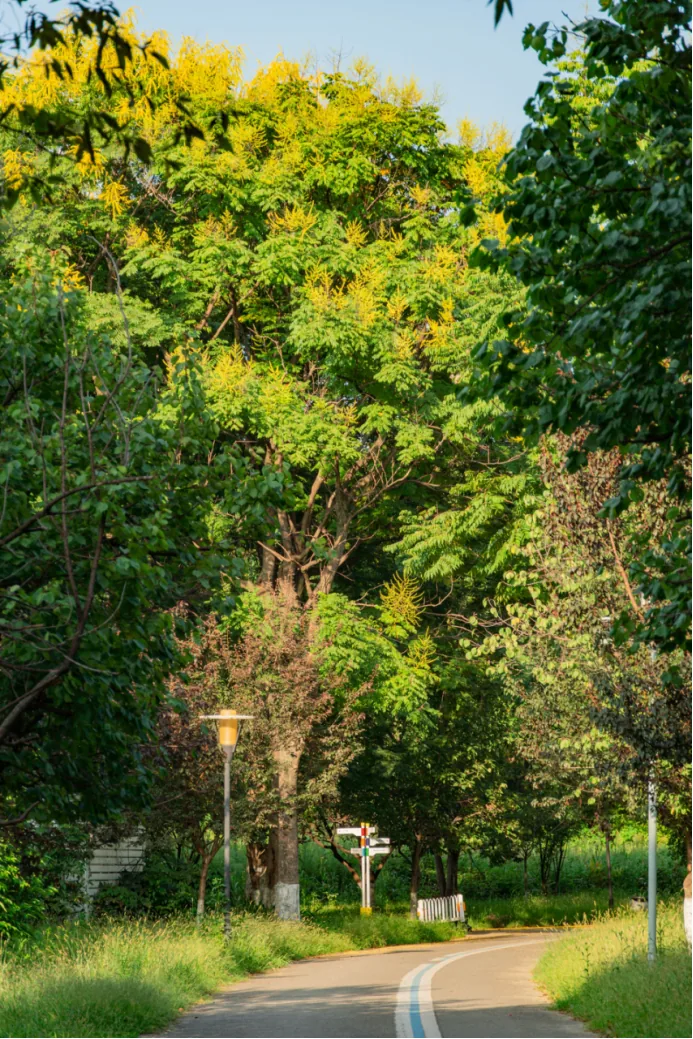
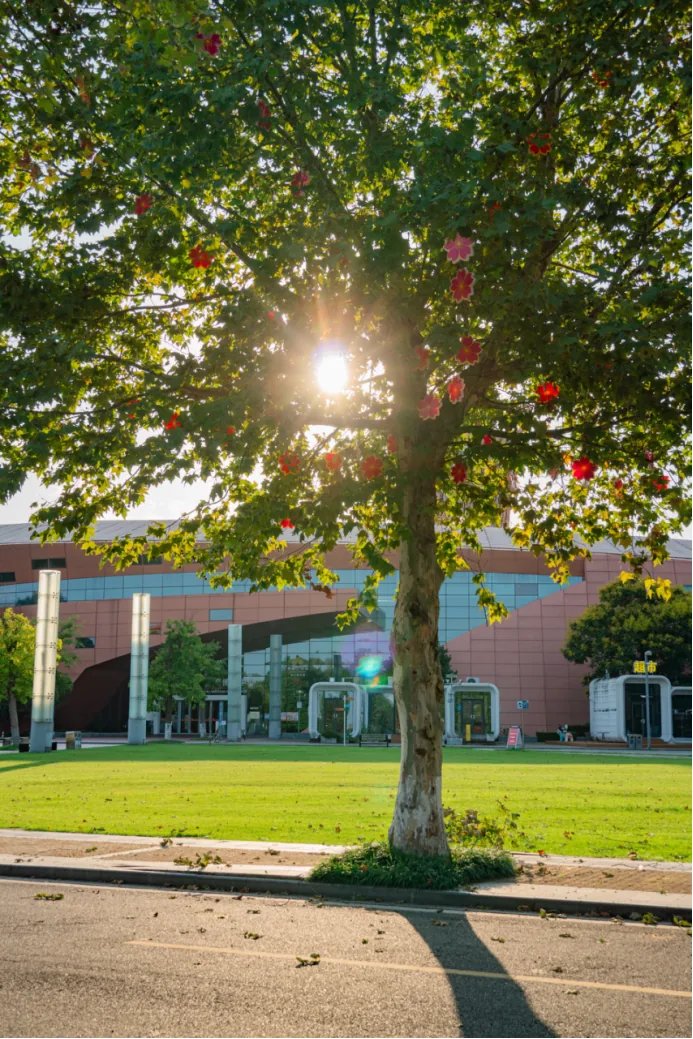
Autumn at the Intangible Cultural Heritage Expo Park begins with a small path. The crape myrtles here are still blooming, though past their peak — the flowers aren’t as dense or vivid as in high summer, but they remain a lovely sight. You’ll find them in several spots, their pink and purple spikes swaying gently in the autumn breeze. It’s like a singer who’s been performing all summer: the voice may be a bit hoarse now, but the charm is still there, even richer for the wear.
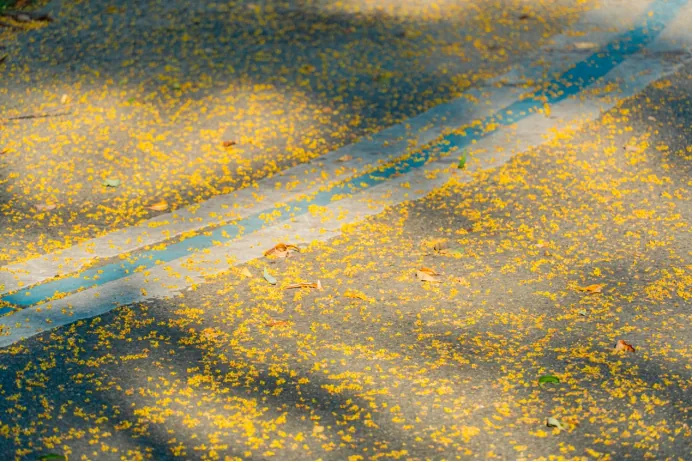
The real surprise, though, is the path behind the Intangible Cultural Heritage Exhibition Hall. It’s short and unassuming, but lined with golden rain trees (luán shù). This season, their small yellow flowers cover the branches, and when the wind blows, they shower down, carpeting the ground. Walking on them feels soft, like treading on a golden blanket.
This path is wonderfully quiet, rarely visited. The occasional stroller passes slowly, in silence, as if afraid to disturb the autumn scene. As you walk, the breeze carries the scent of greenery, and the rustle of fallen petals underfoot seems to slow your thoughts, untangling the day’s worries.
Sunset Bonus: An Unexpected Photo Spot
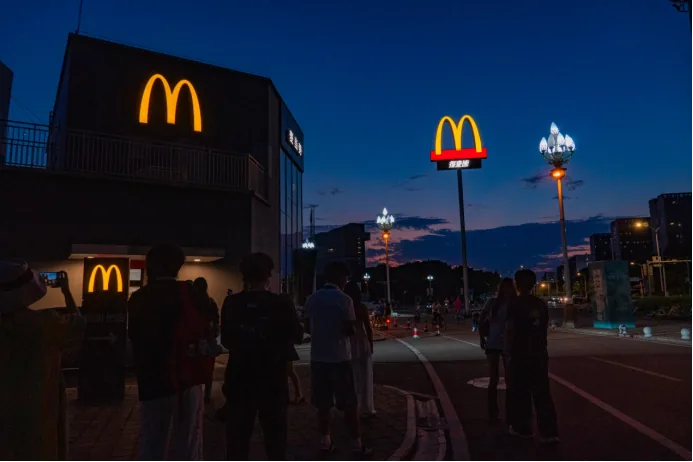
As dusk approaches and the sky holds its last hint of orange, the McDonald’s on the right side of the Expo Park suddenly comes alive. Who would’ve thought this ordinary fast-food joint would become the park’s most photogenic spot at sunset? The low sun casts a warm golden glow across the entire wall, the glass facade reflects the evening clouds, and even the golden arches seem wrapped in soft light. Wait a little longer, and you might catch the blue hour with a sky full of color.
People crowd the intersection, phones and cameras at the ready, all racing to capture the moment — because sunset lasts only about fifteen minutes.
Practical Info
- Address: 601 Guanghua Avenue, Section 2, Qingyang District, Chengdu
- Metro: Line 4, Intangible Cultural Heritage Expo Park Station, Exit B, then about 300 meters on foot
- Hours: The park is free to enter; exhibition halls require advance reservation
- Crape myrtle spots: Intangible Cultural Heritage Avenue
- Golden rain tree spots: The path behind the Intangible Cultural Heritage Exhibition Hall
Qingyang’s Autumn: A Slow Unfolding
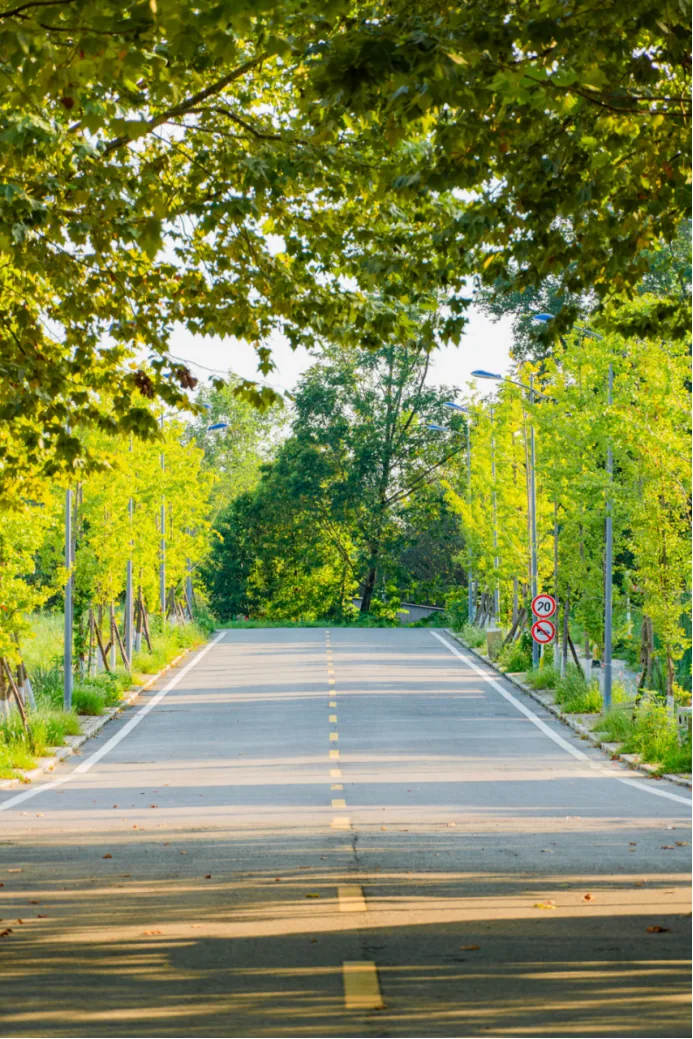
This is Qingyang’s autumn. It arrives quietly, without fanfare, but if you pay attention, its traces are everywhere. Some people dislike early autumn for being neither here nor there — summer’s heat hasn’t fully faded, autumn’s chill isn’t quite crisp, flowers aren’t at their peak, leaves aren’t fully golden. It feels like everything is just a little short of perfect.
But early autumn’s charm lies precisely in that “almost.”
The spider lilies are at their most vibrant — the most intense they’ll be all year. The osmanthus has just finished its first wave, with the second on its way. The trumpet creepers still cling to old walls, the hibiscus blooms with abandon, the crape myrtles are wrapping up their summer-long performance, the ginkgo leaves are just beginning to edge with gold, and the golden rain trees have scattered their yellow blossoms across the ground.
No other season captures this sense of transition like early autumn — old and new intertwining, flowers not yet finished, leaves just beginning. One act ends, another begins, all in a flurry that’s both lively and serene.
Qingyang’s autumn unfolds layer by layer: first a wave of flowers, then a touch of color on the leaves, then the osmanthus fragrance, then the ginkgo turning gold, and before you know it, winter is near.
No need to rush. Take it slow.