A Hidden Temple in Chengdu That Feels Like a Mini Qingcheng Mountain
Chengdu is still pretty hot right now. Even sitting at home doing homework, you can hear the cicadas buzzing outside the window. We’ve had a lot of rain lately, but that means plenty of blue skies and white clouds — perfect weather to get out and soak up some nature. If work or life has you worn down, why not head to the countryside and enjoy the quiet of an old temple?
Bore Temple (般若寺, pronounced “bō rě”) in Dujiangyan is exactly that kind of place — few crowds, beautiful scenery, and easy to reach. It’s one of Chengdu’s best-kept hidden gems for a quiet day out.
What’s in a Name?
Here’s the thing — most people get the name wrong at first. They read it as “Bān Ruò,” but it’s actually pronounced “bō rě.” It’s a transliteration from Sanskrit, meaning “wisdom.” Locals don’t even call it that, though — they call it “Bōlí Temple” (玻璃寺), which is probably a Sichuan dialect twist on the name.
Over 1,000 years ago in the Tang Dynasty, when the temple was first built, it housed one of only three surviving copies of the Prajna Sutra (《般若经》) in the entire country — that’s how it got its name.
It was destroyed in warfare during the Ming Dynasty, rebuilt in the Qing Dynasty, and then about a hundred years ago during the Republic of China period, Master Nengqing vowed to restore the old temple. Over the following decades, the Guanyin Hall, Medicine Buddha Hall, and Mahavira Hall were rebuilt or repaired one after another.
A Temple Perched on a Phoenix’s Back
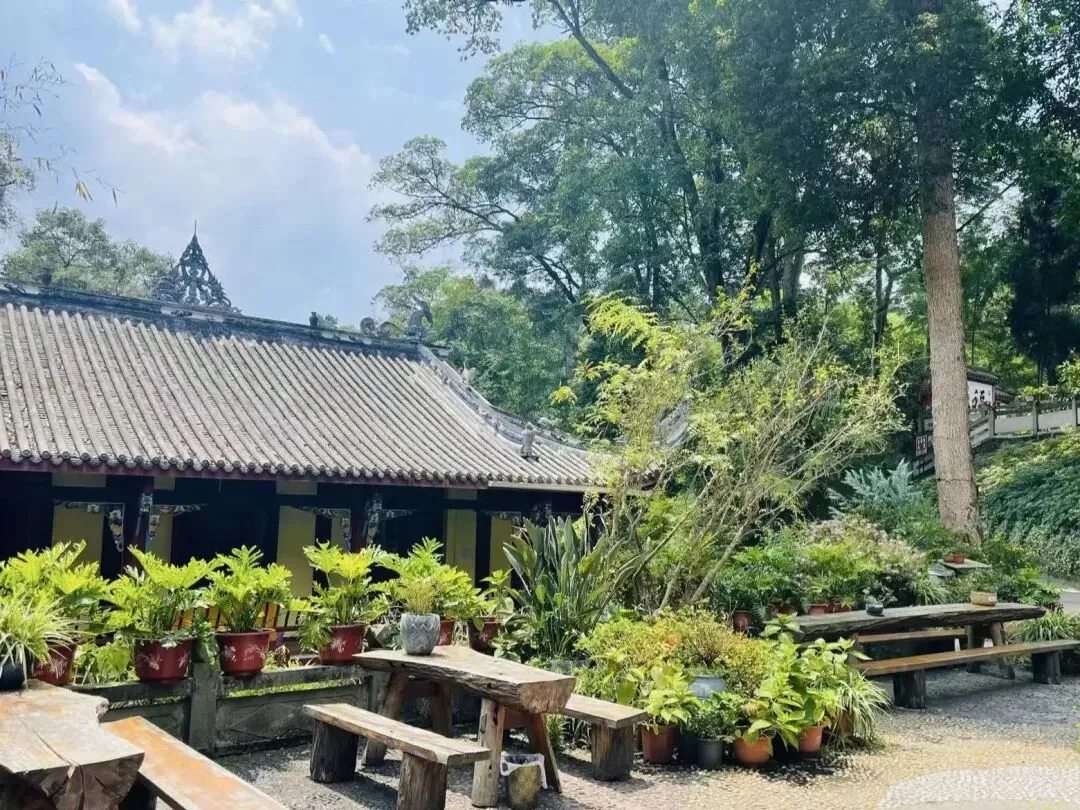
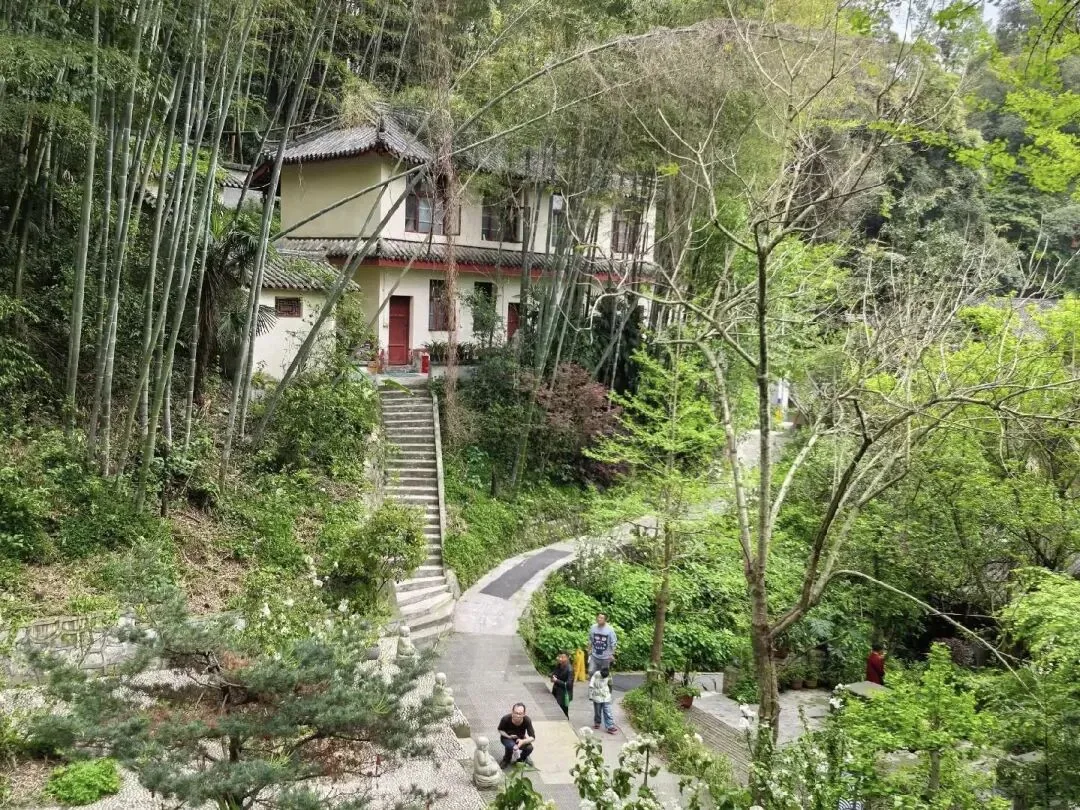
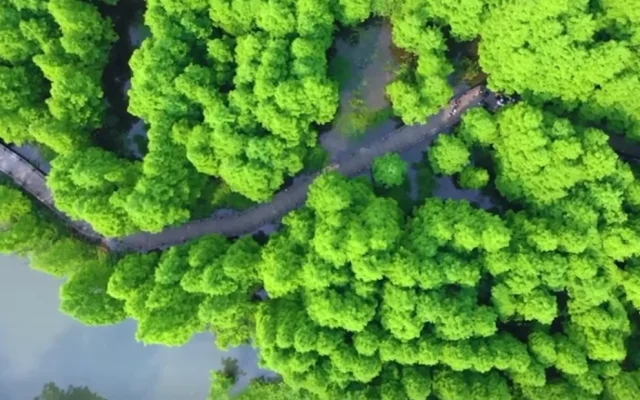
Bore Temple covers 300 mu (亩), which makes it a fairly large temple by today’s standards. It’s built in the Danfeng Mountains of Huaxi Village, Puyang Town. Two mountain peaks embrace it like phoenix wings, with one side hanging high like a green screen — and the temple sits right on the “phoenix’s back.” Honestly, I don’t fully understand the geography either, but choosing this spot must have been auspicious. That’s why people say “Danfeng Qichanlin” — “the phoenix perches in the Zen grove.” The surrounding scenery is gorgeous and the environment is serene, with views like “Danfeng Chaoyang” (Phoenix Greets the Sun), “Jingui Piaoxiang” (Golden Osmanthus Fragrance), and “Hongmei Tuyan” (Red Plum Blossoms in Bloom). Because of this tranquility, Bore Temple has earned the nickname “Little Qingcheng Mountain.”
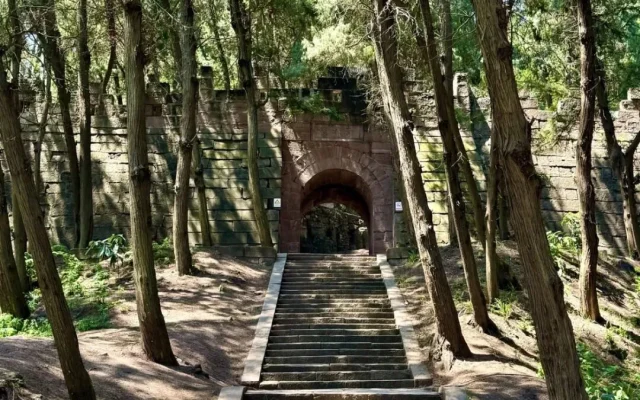
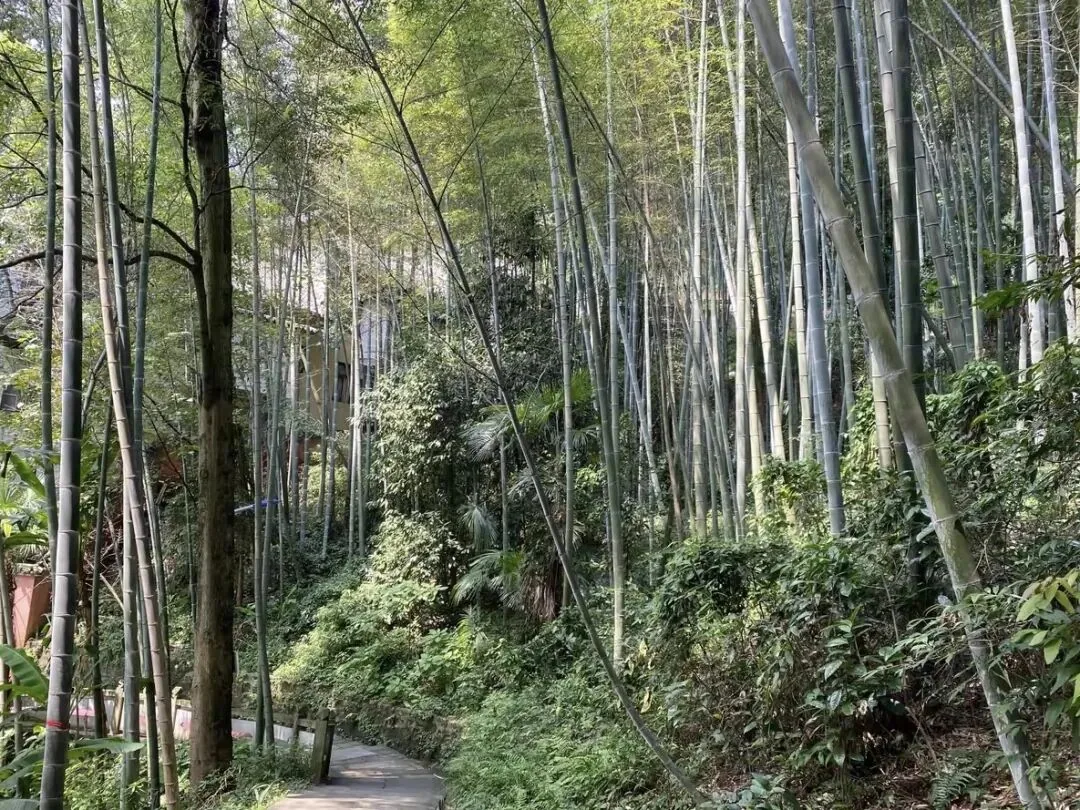
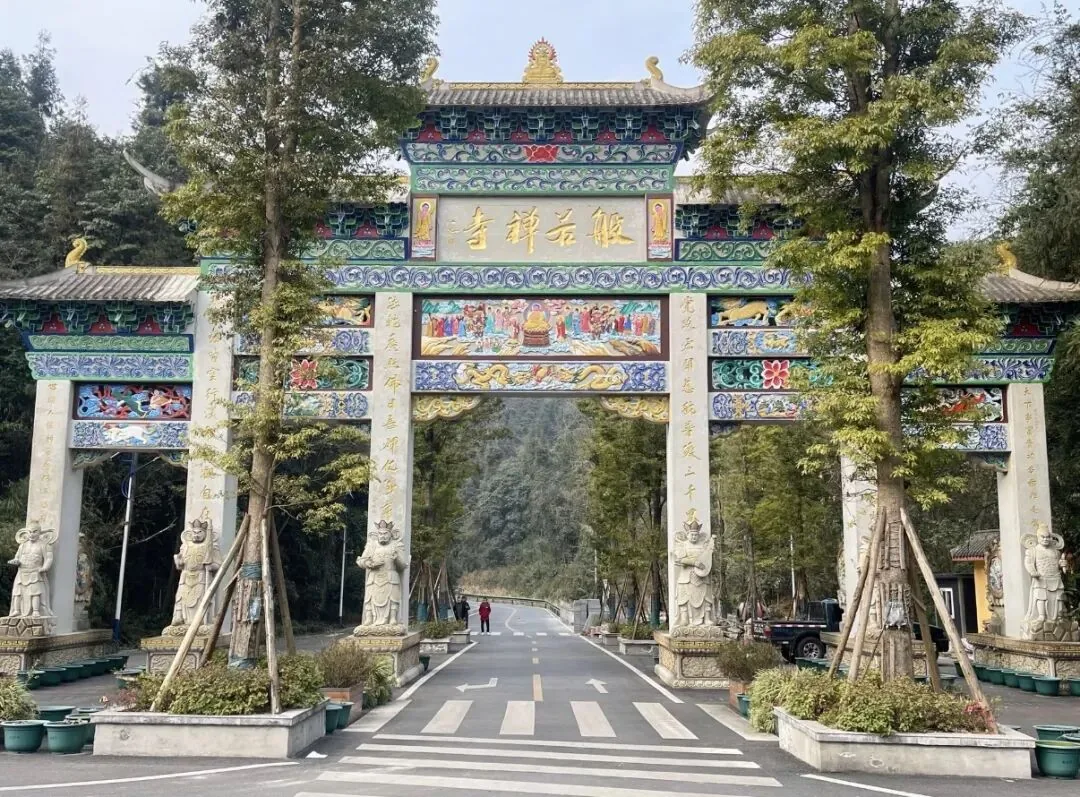
At the mountain gate, you’ll see a towering stone archway. Step through, and you’re surrounded by layers of ancient pines, firs, and emerald bamboo. Sunlight filters through the leaves, scattering dots of light on the ground. A cool mountain breeze carries the fresh scent of plants and soil, while cicadas buzz and birds sing. The entire mountain path is shaded by green, and before you even see the halls, your mind already feels calmer.
Architecture That’s All About Craft
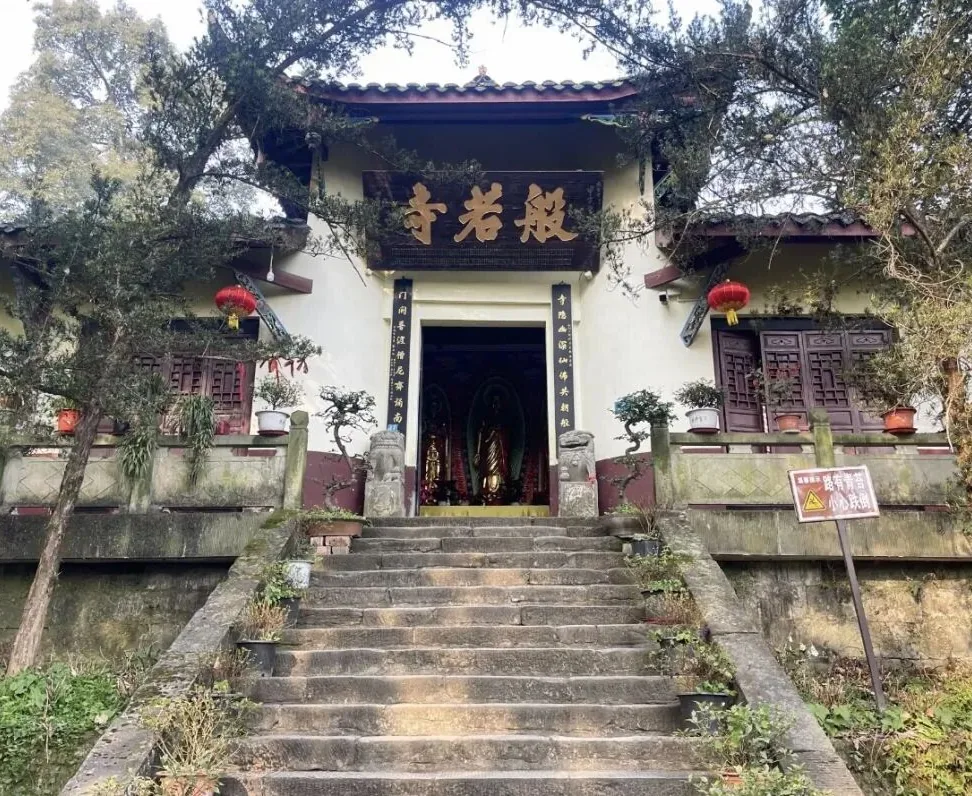
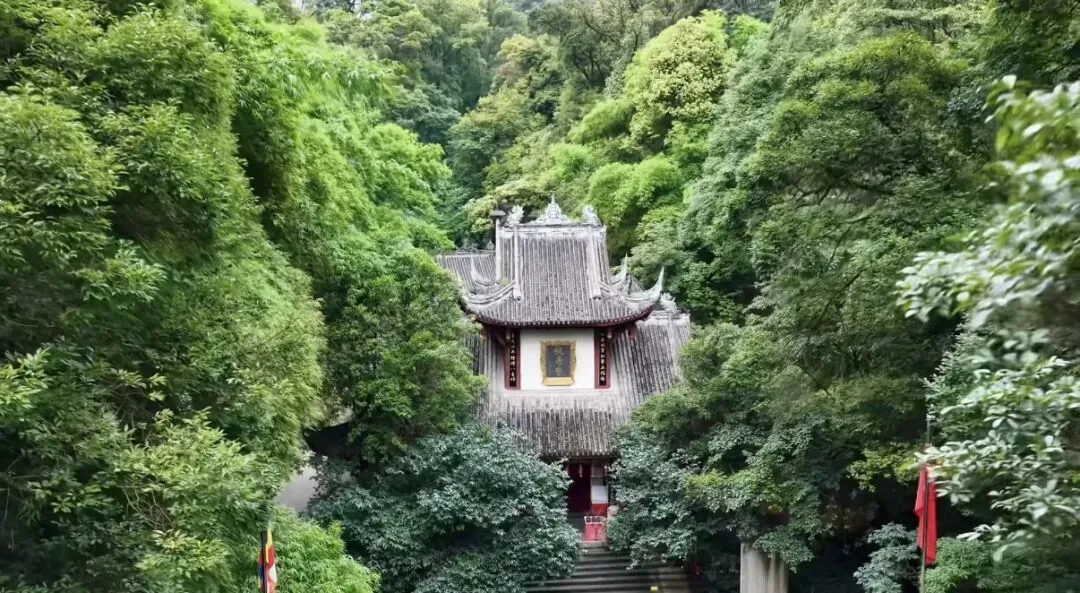
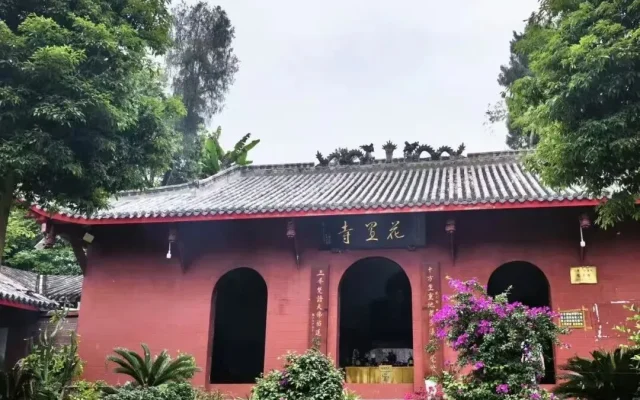
The whole temple is built into the mountain, making full use of Danfeng Mountain’s slopes. The halls rise level by level along the central axis, with stone foundations stacked in neat, staggered layers. Entering the mountain gate, you’ll pass through the Randeng Buddha Hall, Jieyin Buddha Hall, Maitreya Buddha Hall, Mahavira Hall, and Guanyin Hall, ending with the Three Saints Buddha Hall and the Sutra Library. Four halls in front and back, each higher than the last. The buildings use traditional column-and-tie wooden structures, overhanging gable roofs, small green tile roofing, flying eaves, and carved beams — all without a single nail, held together by mortise and tenon joints. It’s a true testament to the wisdom of ancient builders.
Inside the temple, you’ll find Pine Wind Pavilion and Yinghui Pavilion. The old poem “Three islands astonish with divine beauty, Bore welcomes the pine wind” describes the scenery here.
A Qing Dynasty scholar’s couplet still hangs in the temple: “The river flows on, one imagines noble character enduring through the ages; Cloud-covered mountains like a painting, still autumn colors fill the gate.”
Treasures and Ancient Trees
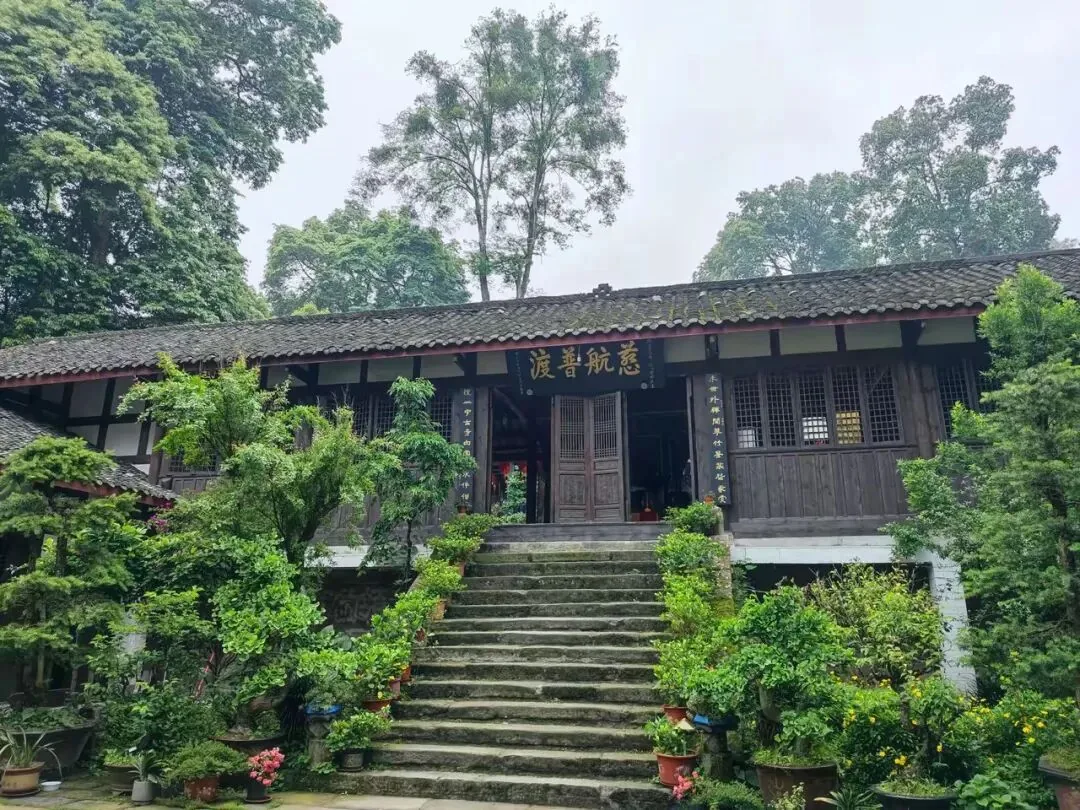
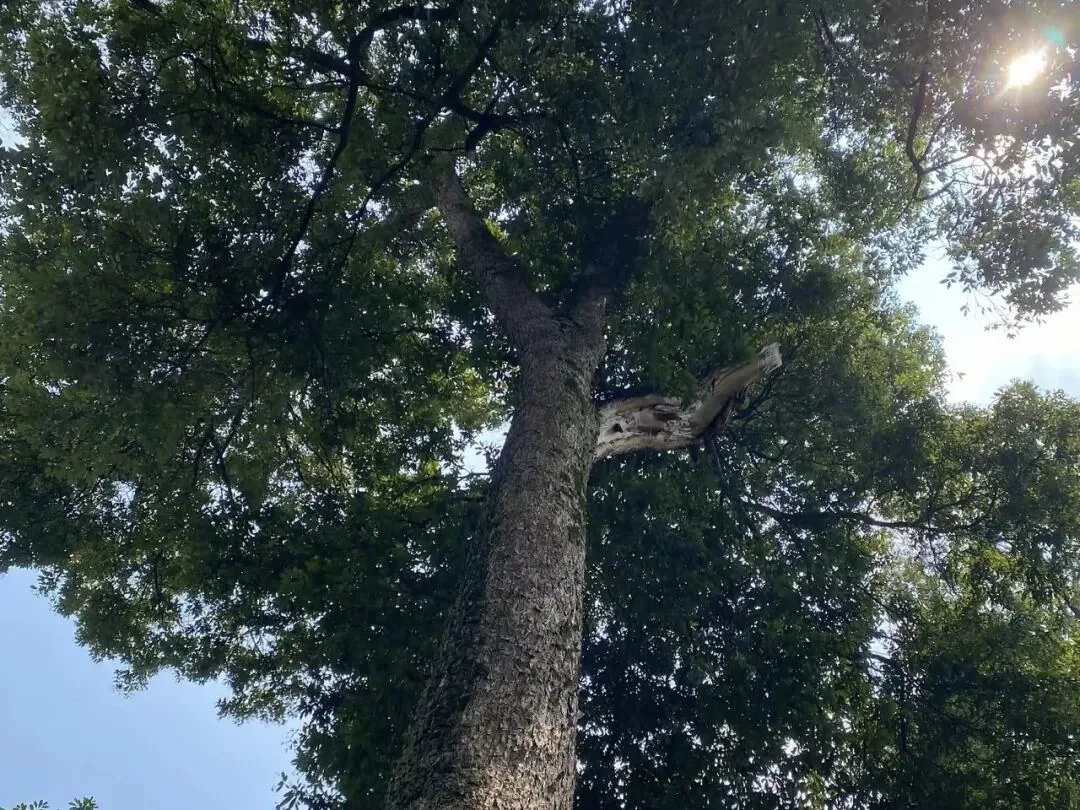
On the right side of the mountain gate stands a stupa. The Mahavira Hall houses a cast incense burner from the Qianlong era of the Qing Dynasty, and the second hall has an iron bell weighing 1,000 kilograms. These ancient bells and burners sit quietly, telling stories of centuries of wind and rain. In front of the Guanyin Hall, two century-old iron-armored pines stand tall and vigorous, their gnarled branches spreading wide. After hundreds of years of storms, they’re still full of life — a rare ancient tree spectacle within the temple.
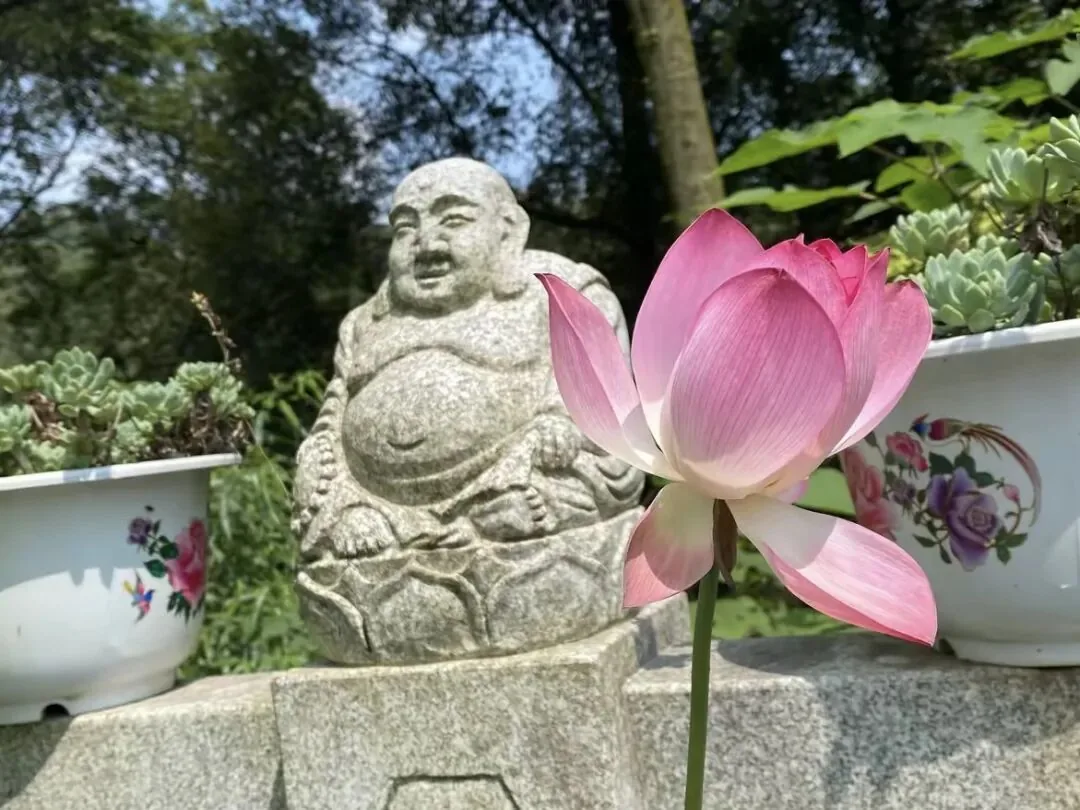
Throughout the temple courtyards, elegantly shaped bonsai are placed everywhere — Buddhist pines, old stumps, succulents, and other plants decorate the corridors and steps. Every flower and tree is meticulously cared for, not flashy or extravagant, but carrying a subtle Zen quality.
The Temple’s Own Vegetable Garden
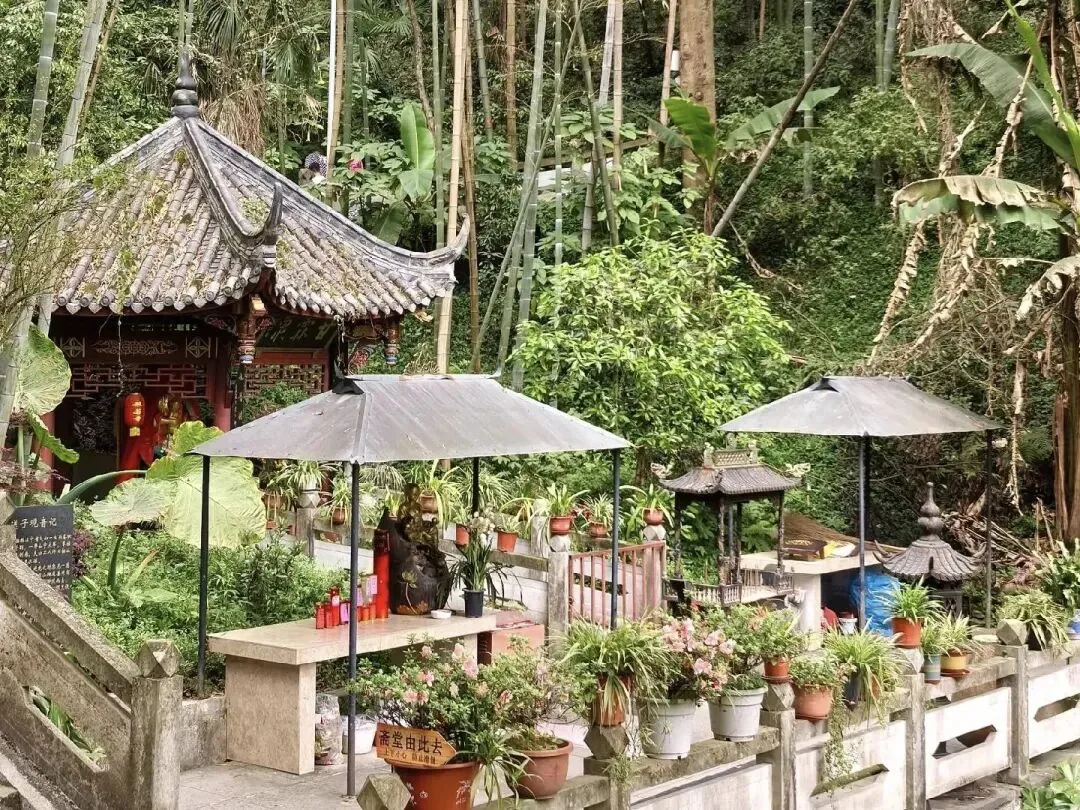
The temple has a large vegetable garden growing all kinds of seasonal vegetables — right now there are peppers, tomatoes, eggplants, peanuts, and sweet potatoes. The vegetarian meal is served from 11:30 to 12:30, costing 10 RMB per person. After eating, you wash your own bowl. The food is light and delicious — visitors who’ve tried it all rave about it.
Pro tip: The vegetarian meal is only 10 RMB and runs from 11:30 to 12:30. Remember to wash your own bowl when you’re done — it’s all part of the experience.
Hiking the Back Mountain
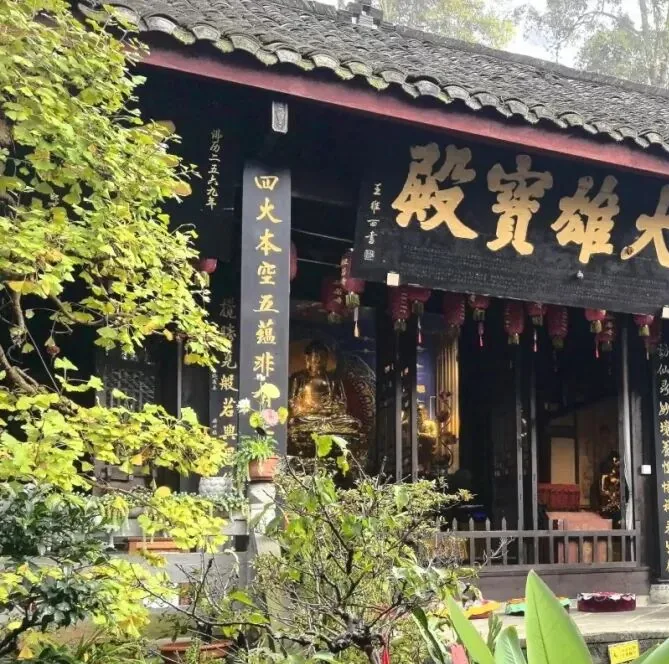
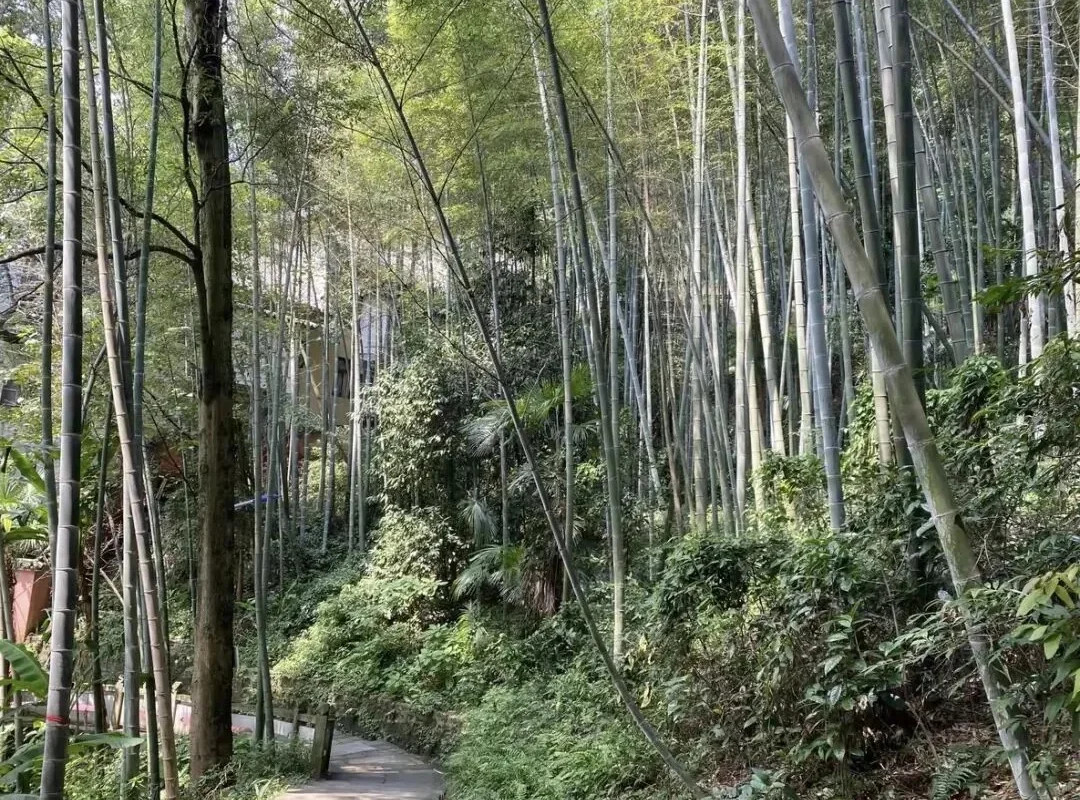
After exploring the temple, you can head to the back mountain. From behind the Thousand Buddha Pagoda, enter the forest, and a mountain loop trail winds through the bamboo groves. There’s a large bamboo forest here — tall, green, and incredibly refreshing when the breeze blows through. The trail follows a farm road and forest paths with gentle slopes, suitable for most hikers. At the high points, you can gaze out at the rolling mountains, with green filling your eyes. Looking at a world like this, your whole body relaxes and your mood lifts.
Local insight: The back mountain trail is gentle and shaded by bamboo — perfect for most fitness levels. Bring water and take your time.
Why This Place Stays With You
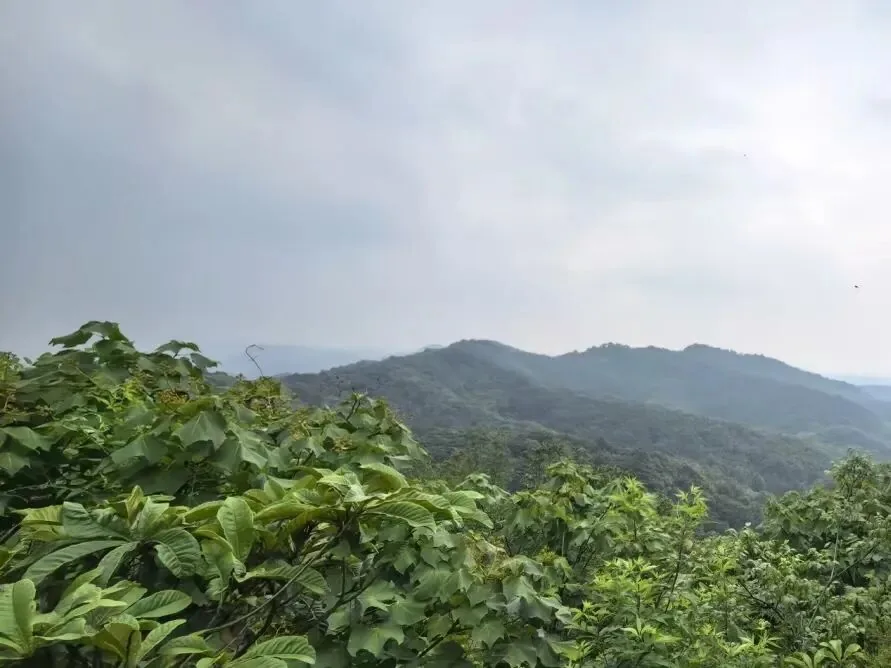
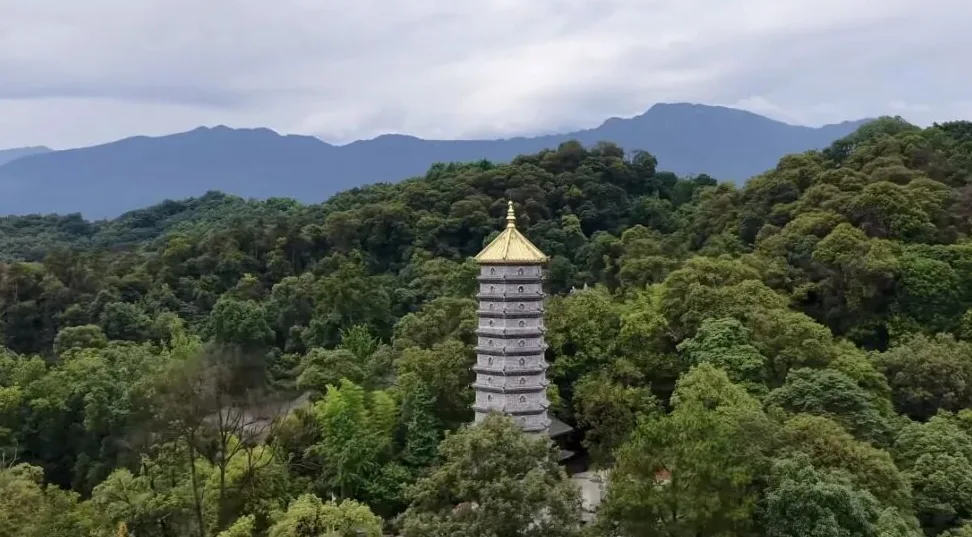
I just love places like this. Maybe not for burning incense or praying to Buddha, but simply for the quiet environment — ancient trees reaching for the sky, lush and green. Previous generations planted the trees, and later generations enjoy the shade. Walking through the temple feels so refreshing and calming. This kind of “quiet” isn’t dead silence — it’s a quiet full of life.
And then it hit me: maybe this is why ancient people built temples deep in the mountains. Not to escape the world, but to be in the place closest to heaven, where you can finally hear your own heart clearly. We’re always rushing — rushing to work, rushing to make money, rushing to become who others expect us to be — and we forget to stop and ask ourselves what we truly want. We don’t actually need that much material stuff. We just need to brush away the dust in our hearts, little by little, and find our most authentic selves. That’s the life we should really be living.
Practical Info
- Address: Group 1, Huaxi Village, Puyang Street, Dujiangyan. Just search “Bore Temple” (般若寺) in your navigation app.
- Tickets: Free entry.
- Getting there: Take the high-speed train from Xipu to Lidui Park Station, then catch a taxi to Bore Temple — about 20 minutes by car. Or drive yourself, which is even more convenient.
So if you’re in Chengdu and need a break from the city, Bore Temple is a quiet, beautiful escape that won’t cost you much. Go, breathe, and let the mountain air clear your head.