A Quiet Slice of Old Sichuan: Xinchang Ancient Town in Dayi
If you’ve already hit the big-name ancient towns around Chengdu — Pingle, Luodai — you know the drill: souvenir shops, crowds, selfie sticks. Sometimes you just want somewhere low-key, where the pace drops and the tea stays hot. Dayi’s Xinchang Ancient Town (新场古镇) is exactly that kind of place — a proper Chuanxi (western Sichuan) riverside town that hasn’t sold its soul to tourism.
Dayi’s most famous old town is Anren, now a 5A scenic area. Xinchang keeps a much lower profile. Every time I visit, I like to wander the streets slowly, find a teahouse by the river, order a cup of tea, and just let time stretch out. Then I’ll have a bowl of that famously rice-friendly blood curd. Honestly? That’s my idea of a perfect day — cozy, unhurried, peaceful, quiet. In that moment, I don’t envy anyone; I envy my own life.
I’ve always believed that being able to eat your fill and sleep soundly is no small blessing.
A History That Goes Back to the Eastern Han
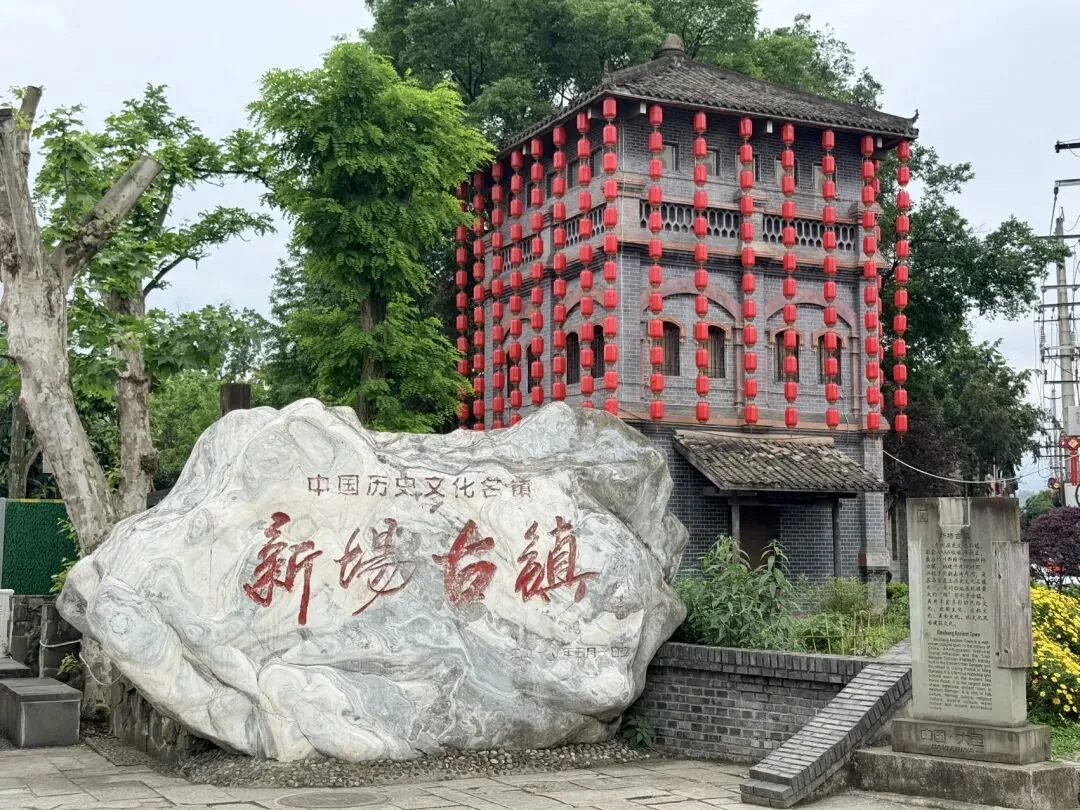
Xinchang is old — really old. Its history traces back to the Eastern Han dynasty, when it was first called Qingyuan Market (清源市). By the Ming dynasty the streets and lanes had grown busy, and because the layout looked like a folding fan from above, it also became known as Fanzi Chang (扇子场, “Fan Market”). Since ancient times it’s been an important post station on the Tea Horse Road and the Southern Silk Road, and a busy river-and-land wharf where merchants gathered. In Dayi there’s a saying — “Yi Xin, Er Tang, San Guankou” (一新二唐三灌口) — referring to the three once-thriving market towns of the past. The “Xin” is Xinchang, which held a very high status back then, while Anren was still unknown. For centuries, horse caravans hauled goods from western Sichuan through here on their way to Tibet.
During the Guangxu era, Zhang Xirong, the Yunnan education commissioner, spent a night here and was so moved by the scene that he wrote a poem on the spot: “Beyond the flowers the slanting sun is late, cloud peaks darken layer on layer. Voices from a market three li wide, a street of lamps on a spring night.” That gives you a sense of how lively it once was.
A Riverside Town with a Jiangnan Feel
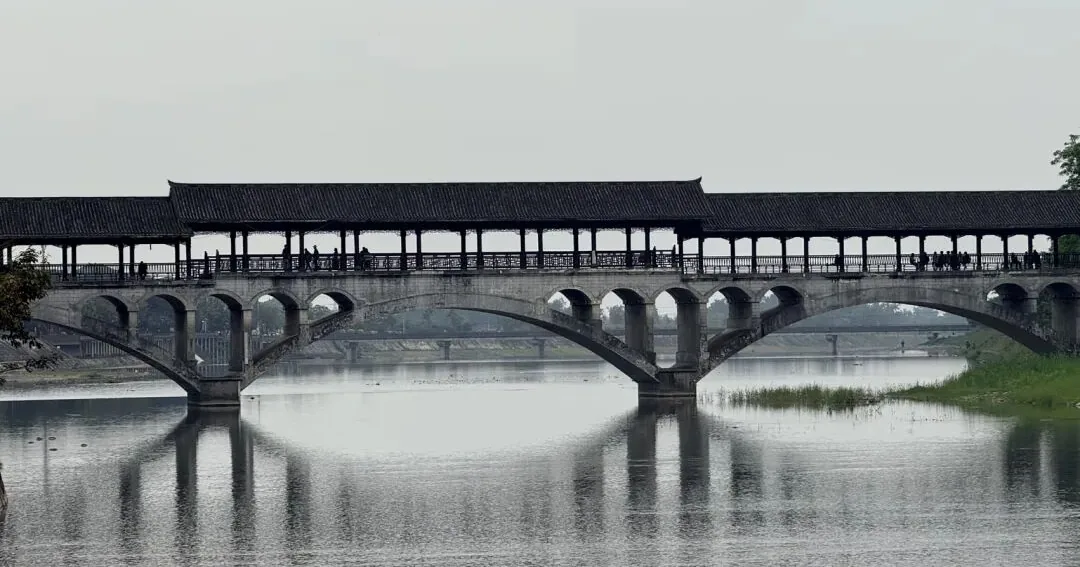
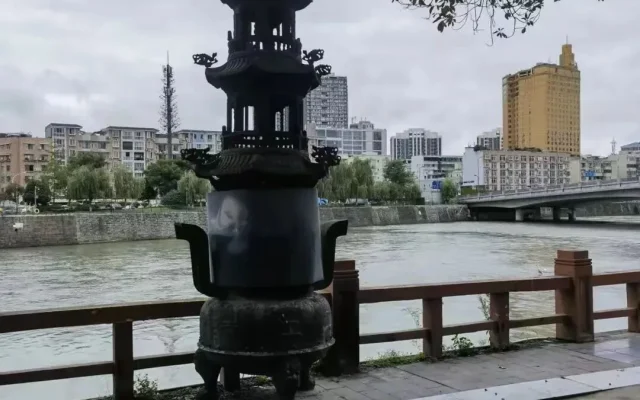
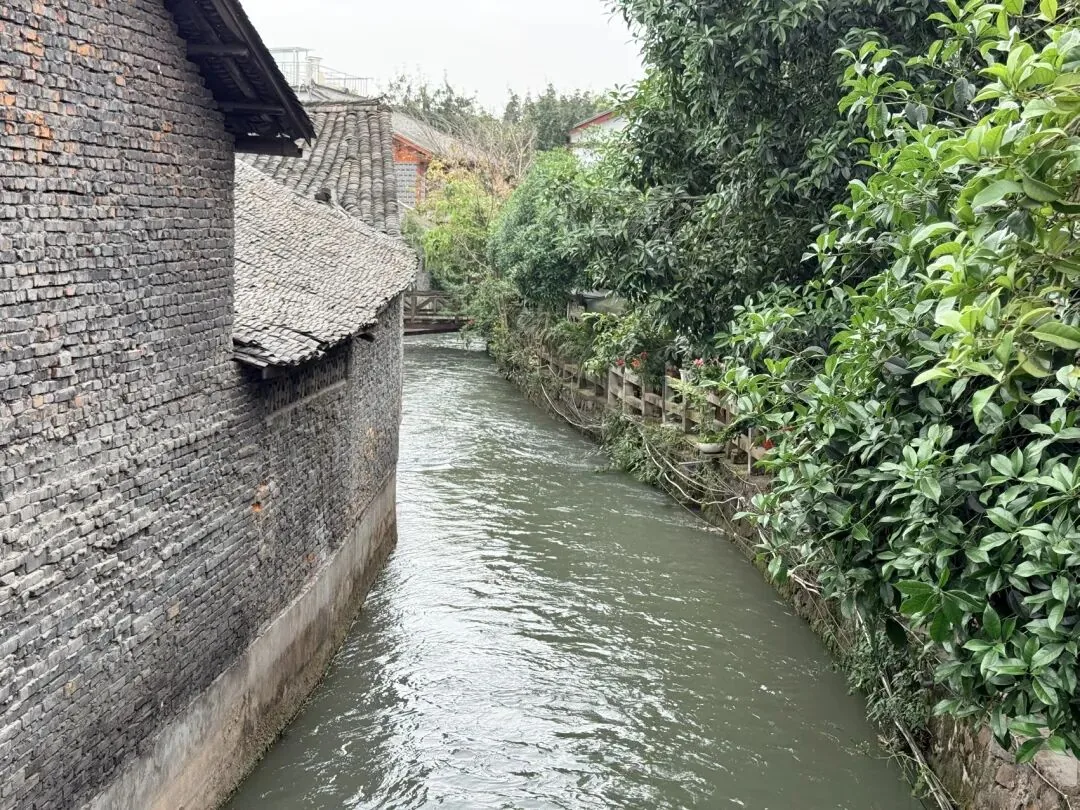
Xinchang is built along the river. Water flows down from Xiling Snow Mountain and is channeled into three rivers — Touyan River, Eryan River, and Sanyan River — each with its own job. Between the streets and lanes, living water murmurs, stone bridges lie across it, and you get a real Jiangnan water-town vibe: little bridges, flowing water, homes. Calling it “a Jiangnan hidden in western Sichuan” is no exaggeration.
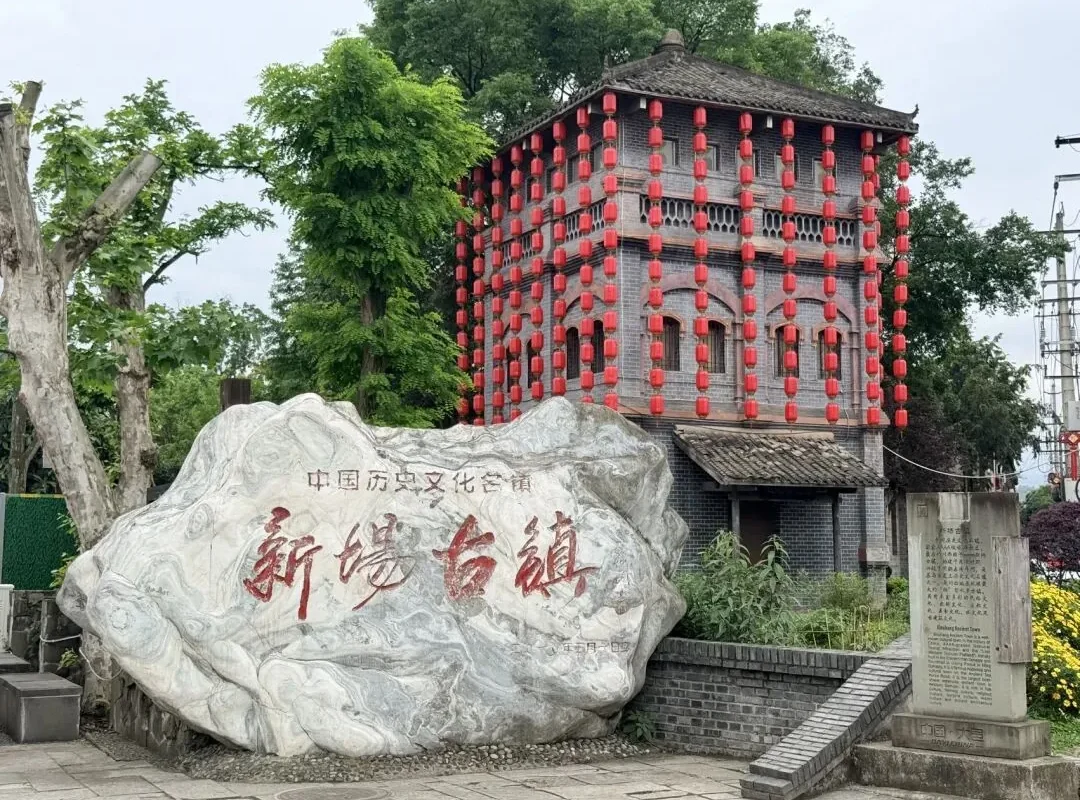
About 200,000 square meters of Chuanxi folk houses from the Ming and Qing through the Republic of China period survive here — the largest and best-preserved scale among Sichuan’s existing ancient towns. Seven streets and six lanes form a “well” (井) grid. Shangzheng Street and Xiazheng Street have been named “China Historical and Cultural Streets.”
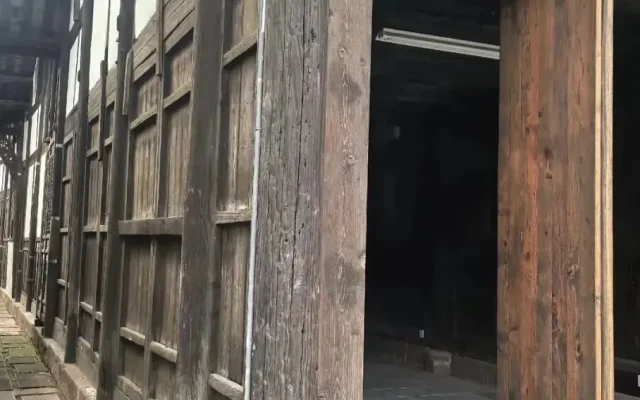
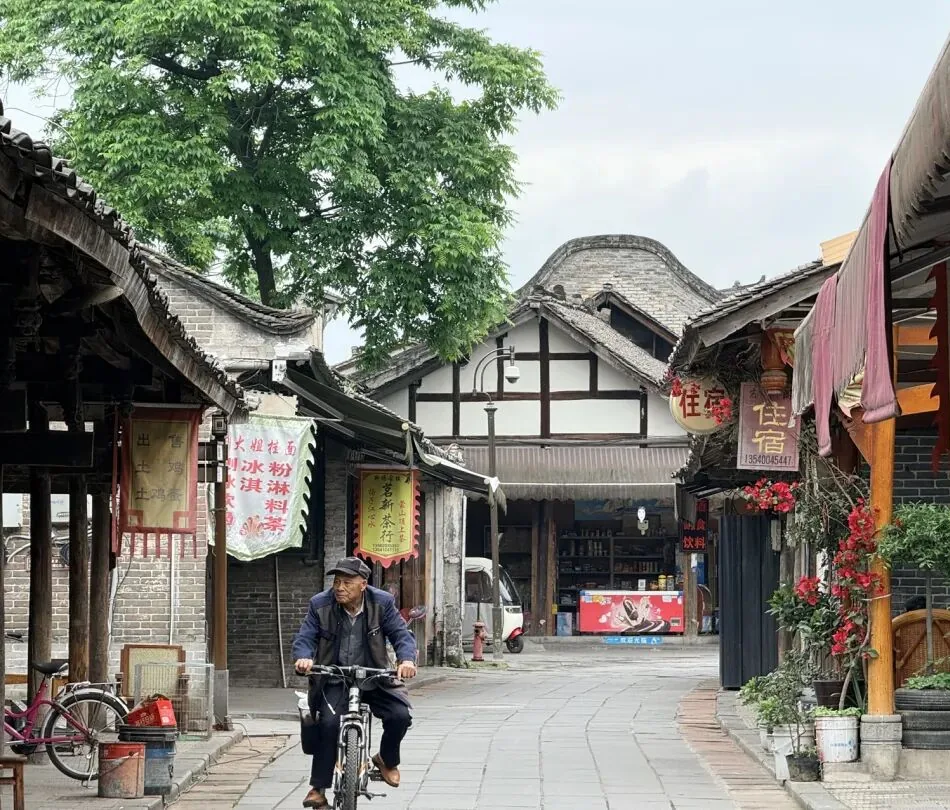
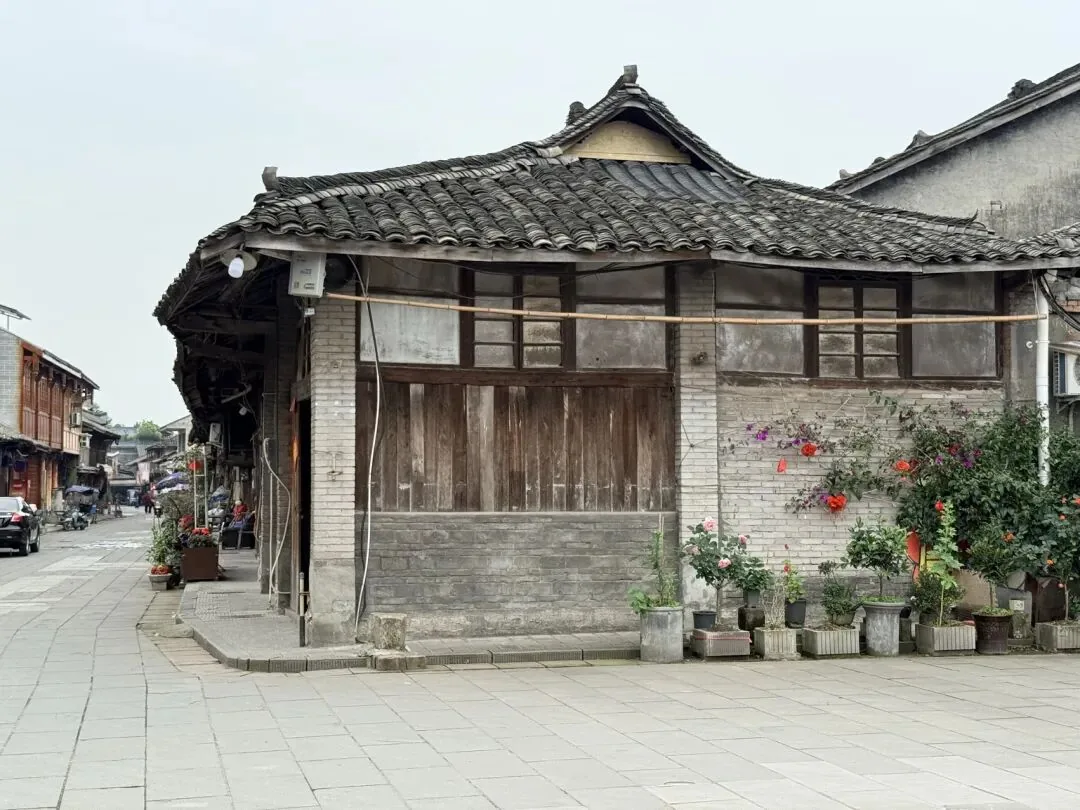
Grey bricks, grey tiles, wooden pillars. The plaster on the fire-seal walls has flaked off in places, revealing the mud-brick underneath. Many buildings are genuinely old — so old they’re nearly dangerous — and some are under repair. The bluestone slabs wind along, though some have already been replaced with stone paving.
Life is never satisfying in every way. But we still have to live it with enthusiasm.
The Town’s Everyday Rhythm
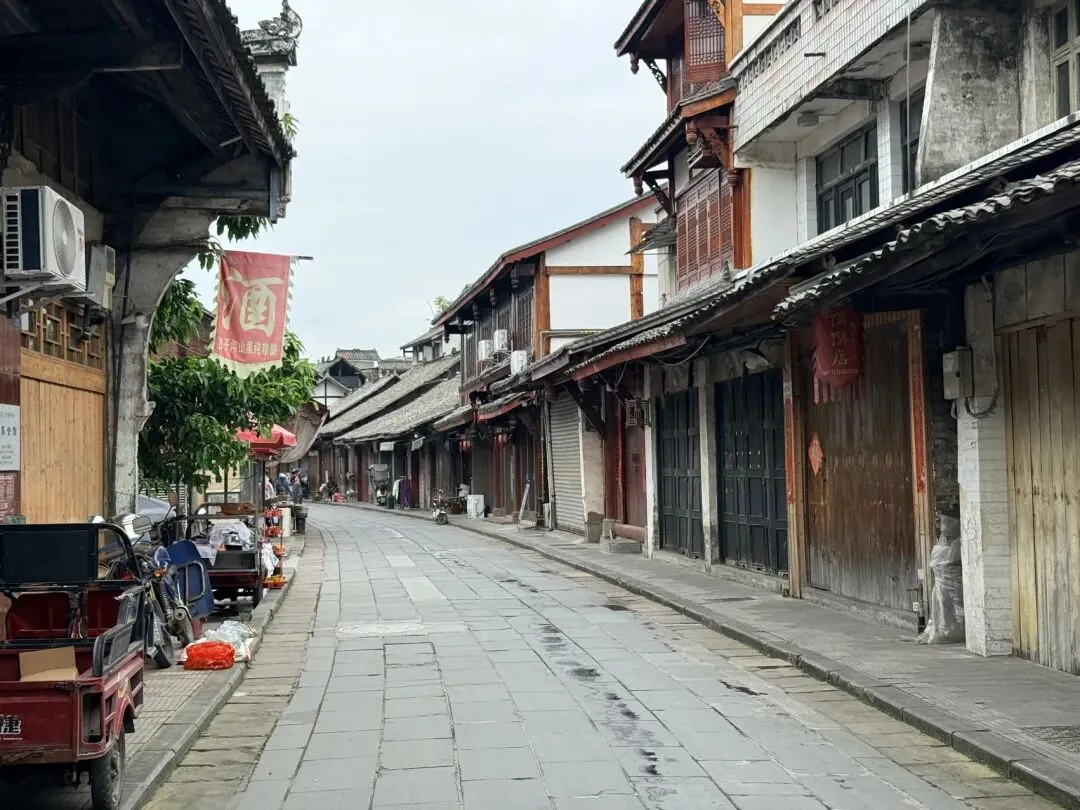
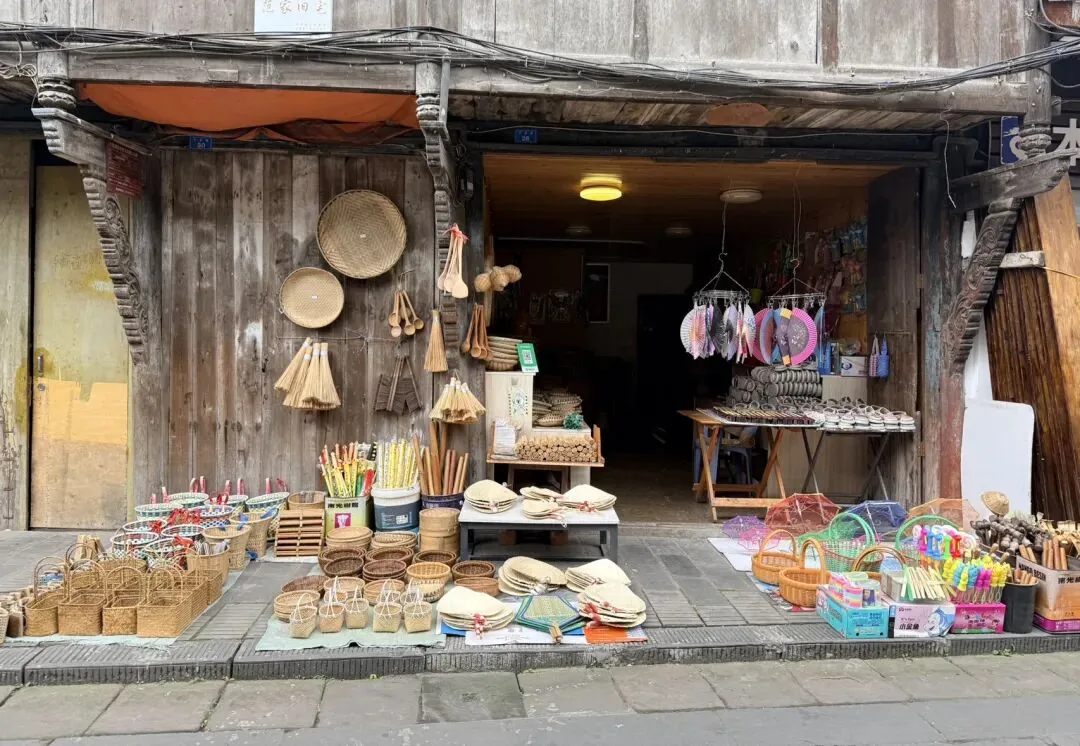
That’s how the people of Xinchang live. They’re not counting on tourism to get rich; the shops are mostly run by locals. You’ll find bamboo weaving, wooden goods, teahouses, and little eateries — though some shopfronts stay shuttered. Wander the streets and you’ll occasionally spot Republic-era buildings on both sides. Dayi has quite a few of them: carved wooden details, grey tiles and white walls, a blend of Chinese and Western styles, with high horse-head walls (马头墙) rolling on one after another.
What to See
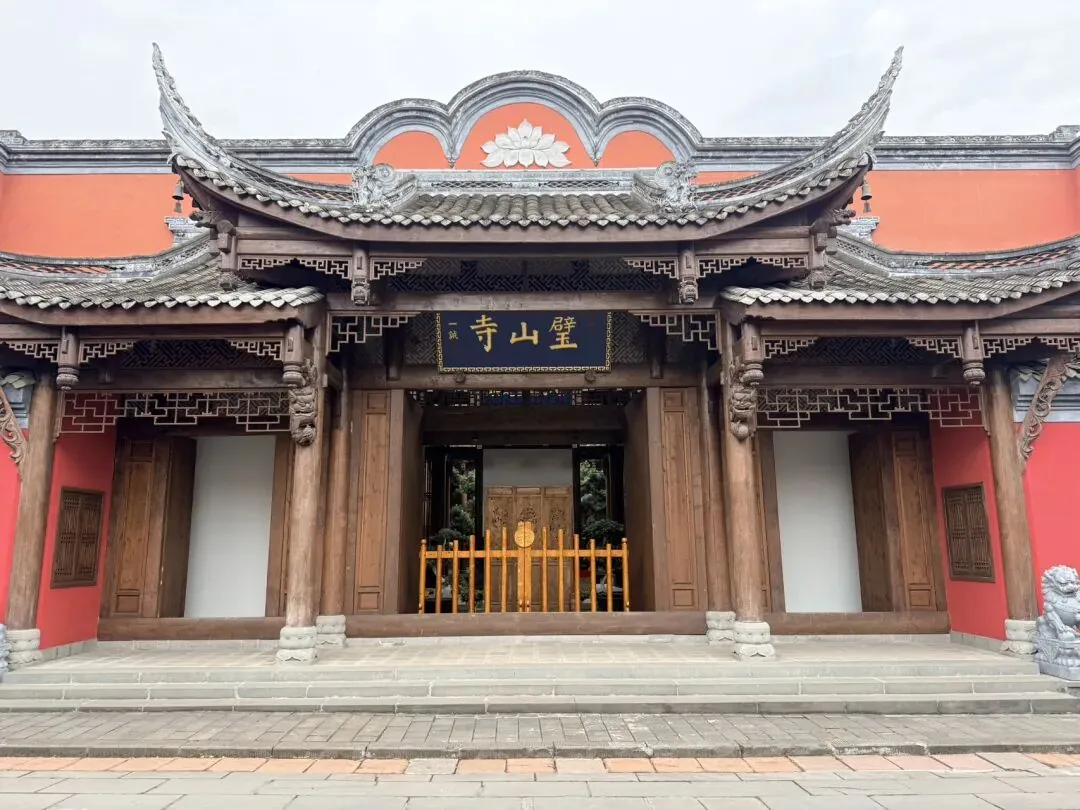
Xinchang has plenty of sights and lots of historical relics: the Li Family Old Residence (李氏古宅), Liu Chengxun’s Former Residence (刘成勋故居), Chuanwang Palace (川王宫), Bishan Temple (璧山寺), the Yaoshi Rock cliff carvings (药师岩摩崖石刻), Jiudong Bridge (九洞桥), and Yong’an Covered Bridge (永安廊桥), among others.
The one that left the deepest impression on me is Bishan Temple in the old town. It’s clean and tidy, a stream runs right through the temple grounds, and carefully tended succulents are everywhere. It’s also a great spot for photos with an antique feel — perfect for your feed.
What to Eat (and Don’t Skip the Blood Curd)
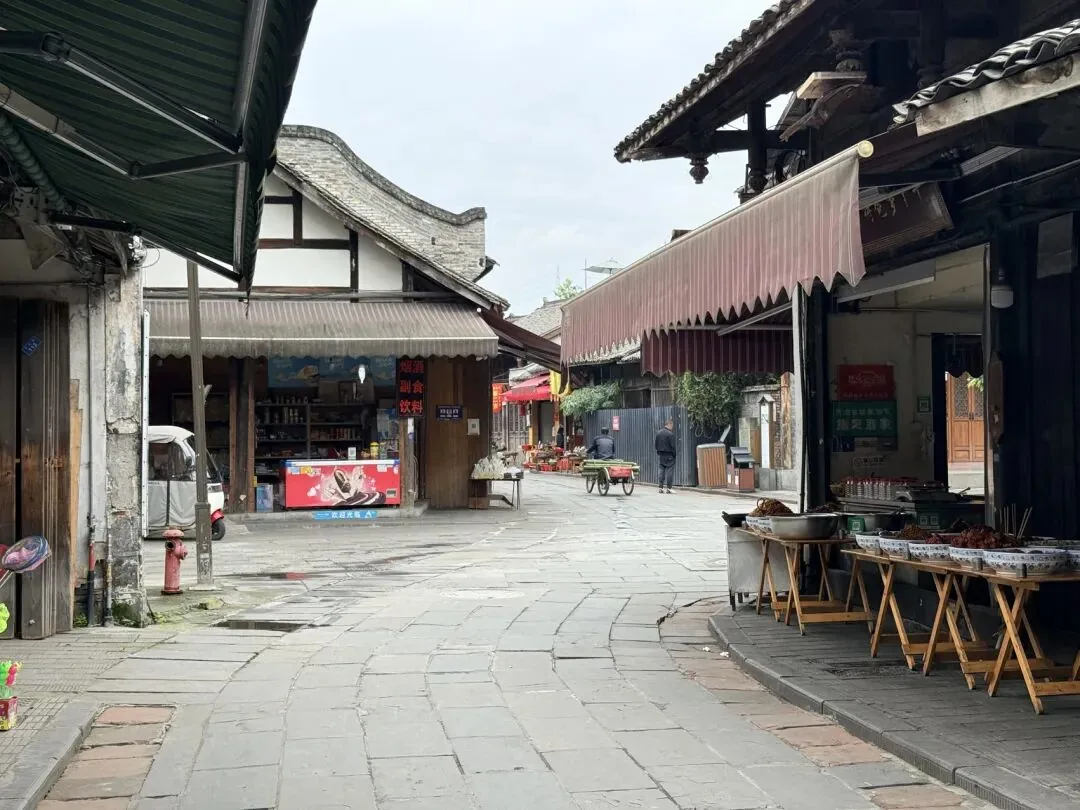
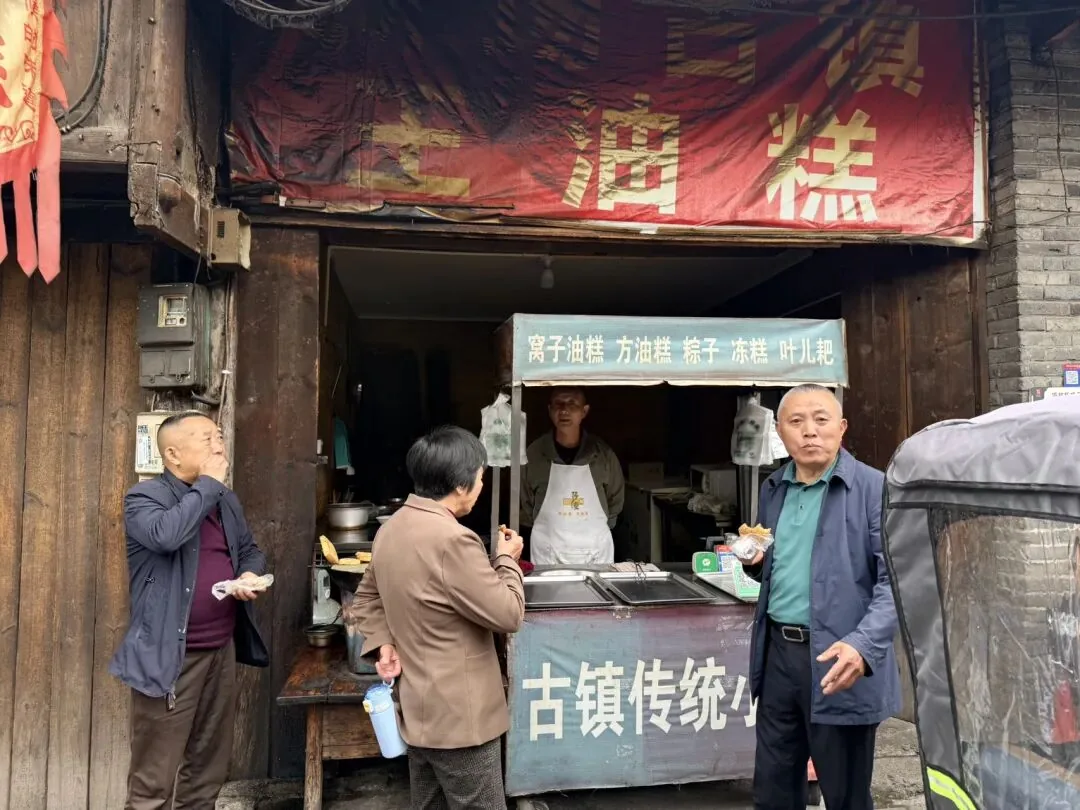
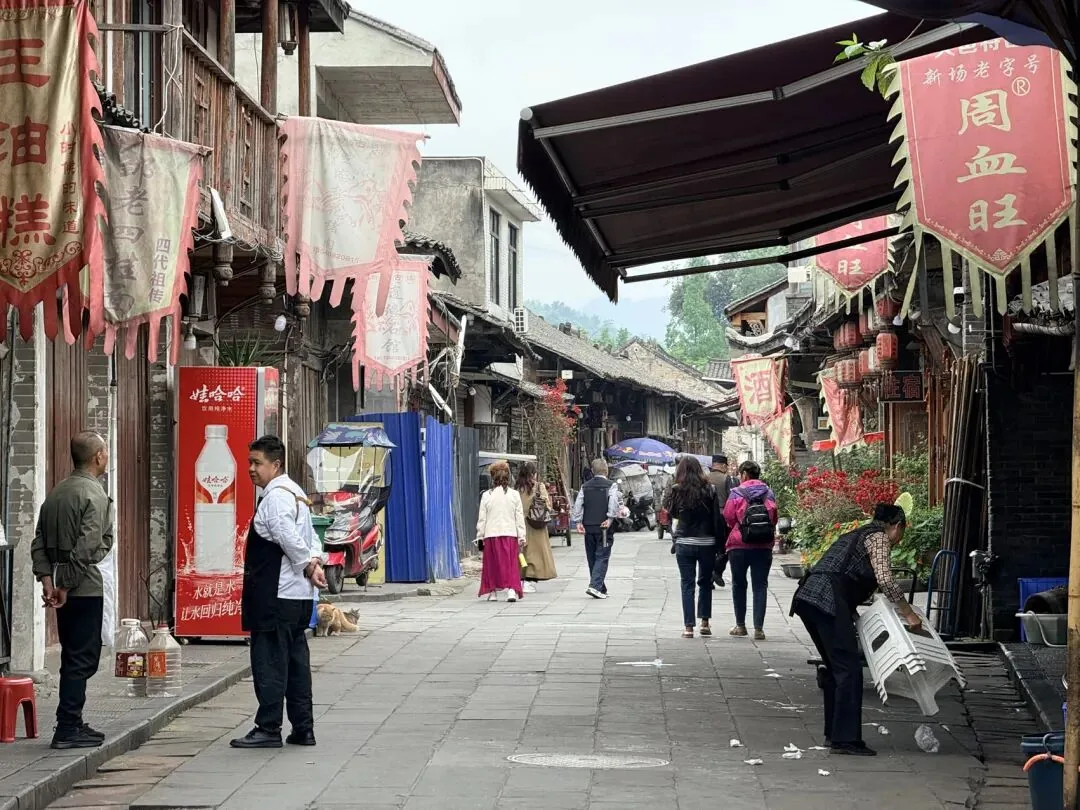
When it comes to Xinchang, food is unavoidable. The most famous dish here is feichang xuewang (肥肠血旺) — pork intestine with blood curd. Two old shops in town, Zhou Xuewang (周血旺) and Wang Xuewang (汪血旺), have both been featured on CCTV. The blood curd is silky as tofu, the intestine soft and flavorful, and it’s all topped with spicy red oil and mixed into rice. It’s so good I can put away three big bowls in one sitting. If you come at mealtime, the shop will be packed and there’ll be a line at the door — go early if you want a seat.
Other local treats worth trying: sesame oil duck (麻油鸭), sugar-oil rice balls (糖油果子), ye’er ba (叶儿粑, leaf-wrapped rice cakes), and donggao (冻糕, frozen rice cake). They’re all great to pack up and take home — I always grab some before I leave.
In a lifetime, how many times do you get to eat delicacies from land and sea? A hot meal and hot soup are what you can really count on.
Pro tip: Don’t rush off after eating. Find a teahouse along the river, pull up a bamboo chair, and order a bowl of gaiwan tea — a few yuan to a dozen or so. You can sit all afternoon and no one will hurry you along.
Slow Down and Just Be
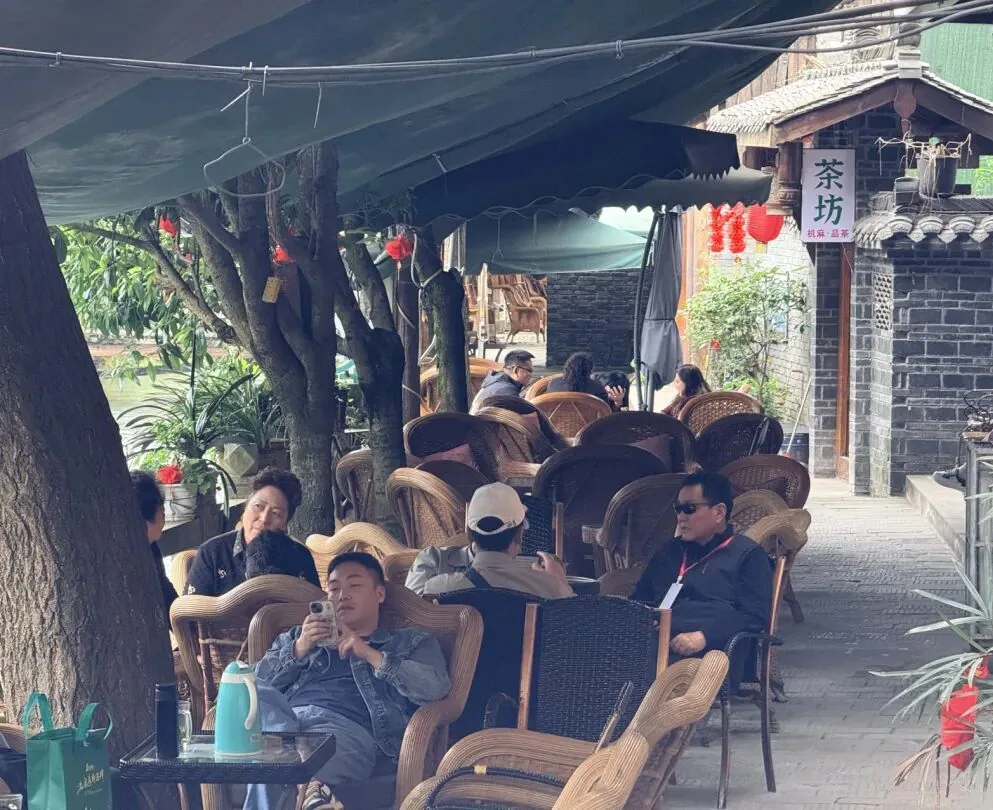
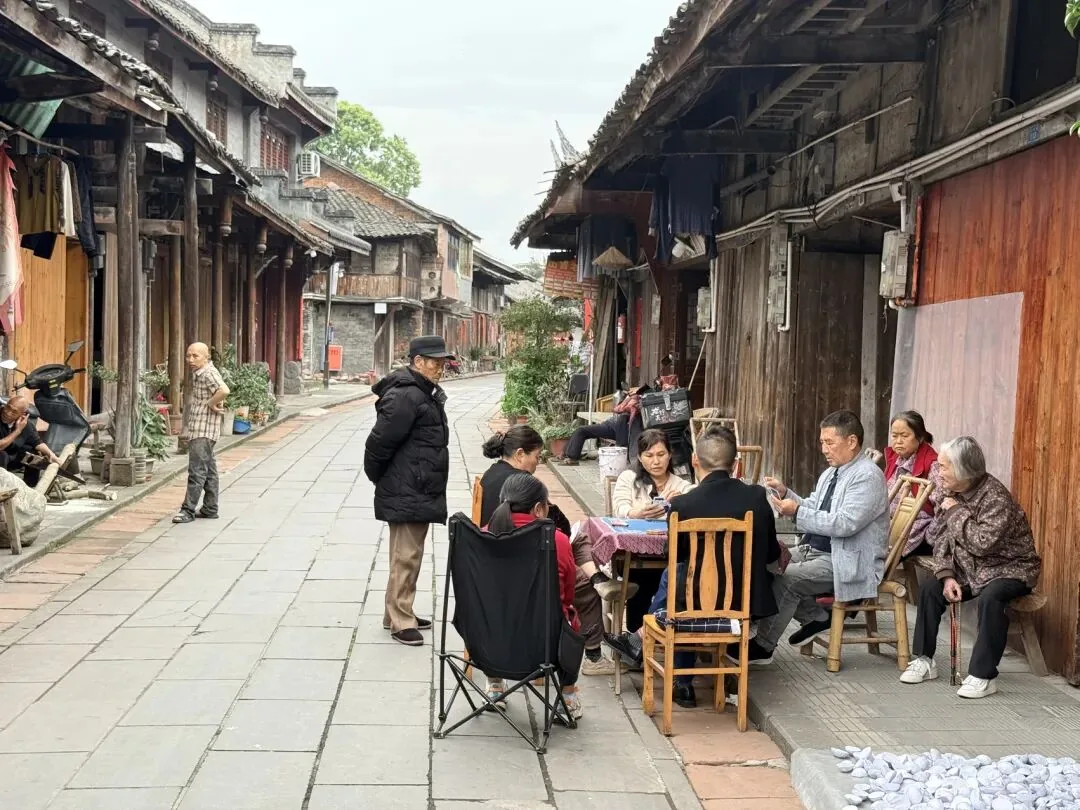
Locals play cards and chat (摆龙门阵). You can do absolutely nothing — watch the water flow under the bridge, watch the clouds drift across the sky.
Actually, every one of us lives in our own world. Even the most ordinary person has to carry their world forward day by day.
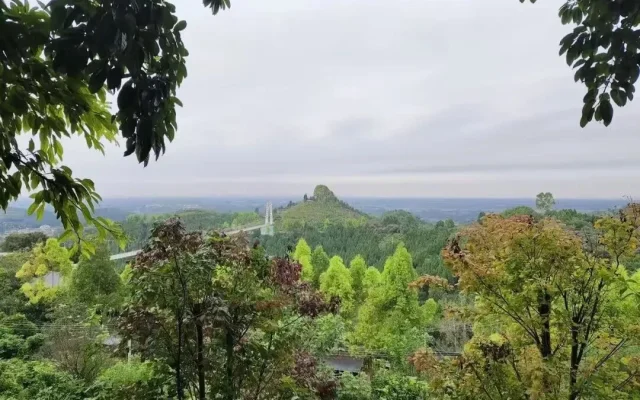
Walking through Xinchang, what you see everywhere is raw, everyday life — people moving at their own unhurried pace. On clear days you can see Xiling Snow Mountain in the distance, as if the far mountains are reminding us where the water comes from. These days Xinchang’s old town is mostly middle-aged and elderly residents. Young people leave, and some come back; when they come back they may not stay, but if they can’t stay, they still come home for holidays.
The people here hold on to these few old streets, this river of clear water, and the crafts passed down through generations, living ordinary lives steadily. And it’s precisely that ordinariness that moves you most.
Some say going to an ancient town is about finding a slower life. Maybe that’s true. If you’re looking for a place that lets you quiet down, come take a walk in Xinchang Ancient Town — you’ll be comfortable here, I promise.
Practical Info
- Address: Xinchang Ancient Town, Dayi County, Chengdu (成都市大邑县新场古镇).
- Tickets: Free.
- By public transport: Take the high-speed train from Chengdu West Station to Dayi Station, then transfer to bus 103, then bus 210 direct to the old town.
- By car: Driving is recommended. From downtown Chengdu take the Chengdu–Wenjiang–Qionglai Expressway (成温邛高速); the whole trip is about 1 hour. Navigate to “Xinchang Ancient Town Visitor Center” (新场古镇游客中心). Parking at the visitor center is 10 RMB/day; there are a few free street spots.
- Food: Feichang xuewang (the signature — Zhou Xuewang and Wang Xuewang are the most popular old shops), sesame oil duck, Li oil cake (李油糕), dǎnshuǐ douhua (胆水豆花, firm tofu pudding), hun douhua (荤豆花, tofu pudding with meat), fenzi laozao (粉子醪糟, fermented rice soup with glutinous rice balls), ye’er ba, and more.