Chengdu’s Wuhou District: 6 Local Favorites Tourists Walk Right Past
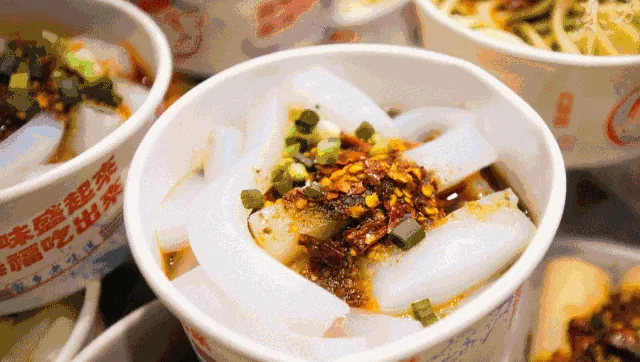
Here’s the thing about Wuhou District Chengdu food — most visitors do lunch the same way. They walk into Jinli, queue up for a portion of Sandapao (three-shell rice cakes), snap a photo, post it, done. Nothing wrong with that, exactly. But it’s a bit of a shame: what you eat inside the scenic area and what locals eat are separated by nothing more than a single street.
The real food in Wuhou is tucked away in the old lanes of Yulin and Nijiaqiao. Below are six things locals have grown up eating — and nine out of ten tourists walk right past without knowing they’re there.
1. Hand-Torn Roast Rabbit (麻辣手撕兔)
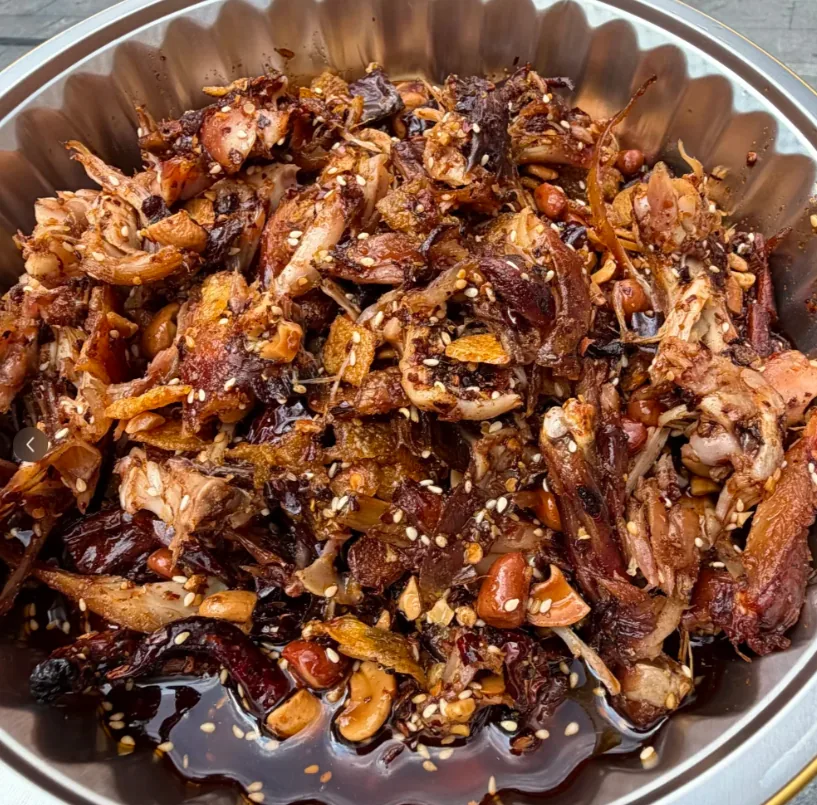
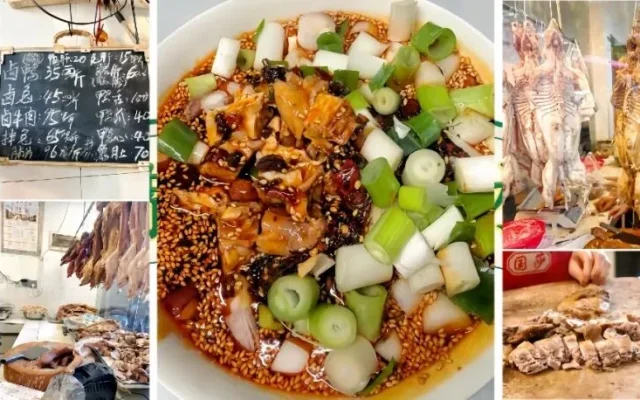
Just how much do Chengdu people love rabbit? Take a walk down Yulin Hengjie in Wuhou District and you’ll find out. There’s a small shop on this street that queues year-round, and what they sell is hand-torn roast rabbit.
The craft came out of the countryside of Shuangliu — originally a cheap snack farmers paired with liquor. It later moved into the city, and in 2020 it was added to Wuhou District’s intangible cultural heritage list. Making it takes serious effort: the rabbit is marinated for 12 hours, then slow-roasted over fruitwood charcoal until the skin is crisp and fragrant, then torn by hand into strips and tossed with chili powder, Sichuan peppercorn powder, sesame, and cumin. When you pull it apart, the meat fibers separate cleanly, and the mala (numbing-spicy) flavor has soaked all the way through. Rabbit meat is high in protein and low in fat — tear off a bit at night with a cold beer and the more you chew, the better it gets.
If we’re talking must-eat snacks in Wuhou, hand-torn roast rabbit absolutely belongs on the list. The version at He Shi BBQ (何师烧烤) was even selected for Chengdu’s “Hundred Famous Dishes.” They use fresh rabbit, marinate it thoroughly with scallion and ginger, then braise and soak it in a secret sauce, brush it with oil repeatedly over the grill, roast until the skin is golden, tear it into strips, and toss with dried chilies. The whole process goes through six steps — marinate, roast, braise, soak — and the aroma is completely worked into the meat. The flavor is mala with a sweet finish; thick parts are soft and rich, thin parts are crispy and refreshing. High protein, not greasy — chew slowly and the aftertaste lingers.
Where to go: – Shuangliu Laoma Rabbit Head (双流老妈兔头) – Lao Huang Ji Hand-Torn Roast Rabbit (老黄记手撕烤兔) – Wang Ma Hand-Torn Roast Rabbit (王妈手撕烤兔) – Shu Chen Hand-Torn Rabbit (蜀辰手撕兔) – Mao Ding Hand-Torn Roast Rabbit (泖丁手撕烤兔)
Average spend: about 45 RMB per person
Tips for eating: 1. Eat it hot — that’s when the texture is best. 2. Pair it with something to cut the heat: a chilled soy milk, Liangxia (cold rice shrimp), or Laozao (fermented rice wine) — cools the spice and cuts the richness.
What makes it special: The rabbit is roasted dry and full of flavor, the bones are crispy, and the mala or five-spice seasoning is the soul of the dish.
Lao Huang Ji Hand-Torn Roast Rabbit (老黄记手撕烤兔): A 20-plus-year-old shop on Yulin Street in Wuhou District — always queuing. They specialize in charcoal roasting and hand-tearing on the spot. Crispy outside, tender inside. The spices are stir-fried before roasting, giving it layers of flavor. Available in five-spice and spicy versions.
Guai Shifu Hand-Torn Roast Rabbit (怪师傅手撕烤兔): A hidden gem tucked in a lane off Chunxi Road. First braised, then roasted — the char and the braise meld together. Thin parts of the rabbit are crispy, thick parts are oily and rich. You’ll even suck the bones clean.
Shuangliu Laoma Rabbit Head (双流老妈兔头): Besides rabbit head, their hand-torn rabbit and cold-eaten rabbit are also authentic. They went from a small shop to a chain, quality is consistent, and it’s a good one-stop spot for Sichuan specialties.
2. Yulin Chuanchuan Xiang (玉林串串香)
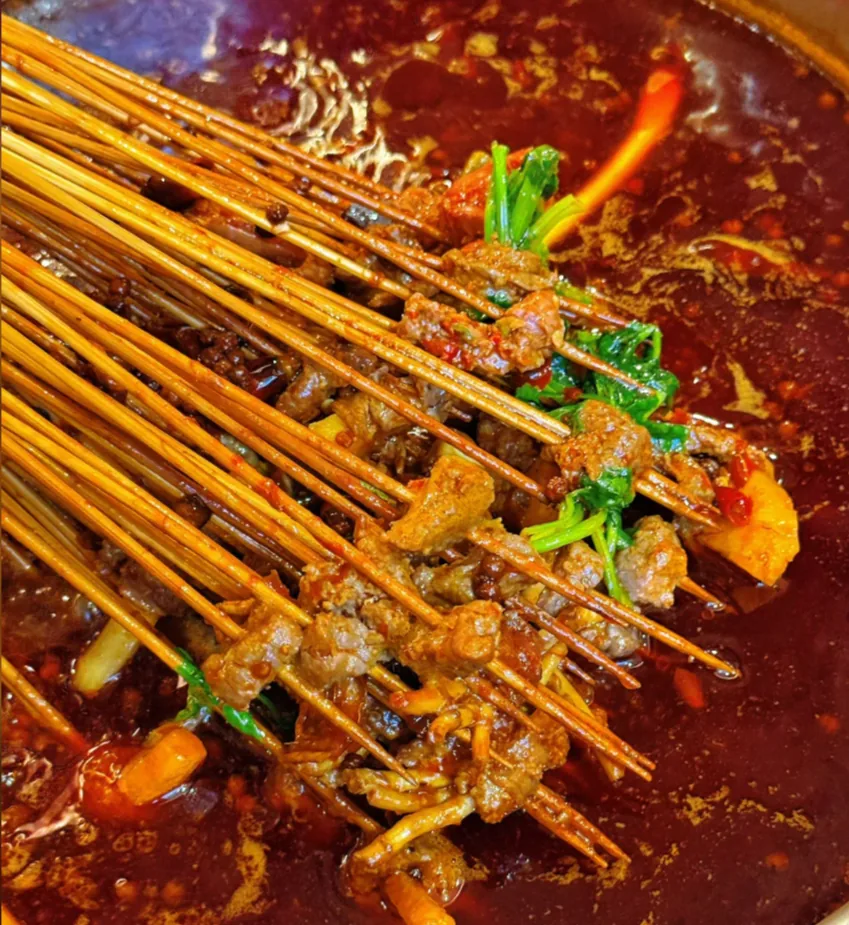
Skewers piled into mountains, eating until 4 AM
Back in the 1980s, Xiao Deyun moved street-cart malatang into a shop — vegetables on bamboo skewers, pay by the skewer — and opened the first chuanchuan xiang on Yulin Zhengjie. That’s where the name comes from. Red broth bubbling away, skewers dunked in for a few minutes, pulled out and dipped in dry seasoning — the more you eat, the more hooked you get. Low tables, wide benches, and you sit there half the night.
Today there are over 600 locations nationwide, and in 2024 it was added to Chengdu’s intangible cultural heritage list. Zhao Lei’s song made Yulin Road famous, but locals know: you can skip the song, but you can’t skip the skewers.
The original Yulin Chuanchuan Xiang shop is right here, and Chengdu people all recognize it. You grab a basket at the door and pick your own — handfuls of bamboo skewers into the basket. Spicy beef and cilantro beef are the baseline for every table; miss either one and you haven’t eaten properly. For the dipping sauce, go with the original broth dip — don’t get fancy. When you’re done, they count the skewers to settle the bill. The skewers pile up into a small mountain, and it’s just a few dozen RMB per person. Open until early morning — Chengdu people coming off night shifts for skewers, one wave after another, tables turning over again and again.
The basics: – This shop has been open for over 40 years — a representative old-school Chengdu chuanchuan spot.
Recommended dishes: – Sweet garlic beef, small chicken gizzards, fish mint (zhe’ergen) beef, pickled pepper beef, cilantro beef
Average spend: around 50–80 RMB (depends on your appetite)
Hours: usually open until 4:30 AM — great for late-night snacks.
Spice level: The broth is usually xiang la (fragrant-spicy), and the dry dip is very hot. If you can’t handle spice, order a divided pot (鸳鸯锅) and use a sesame oil dip to mellow it out.
Yulin Chuanchuan Xiang (Yulin Street Main Shop): Opened in 1995, a time-honored brand — the “living fossil” of Chengdu chuanchuan. The environment is a classic old restaurant: not fancy, but the flavor does justice to the years. Recommend the sweet garlic beef, small gizzards, and tripe. Definitely pair with a chilled Weiyi soy milk to cool the heat.
3. Twice-Cooked Pork (回锅肉)
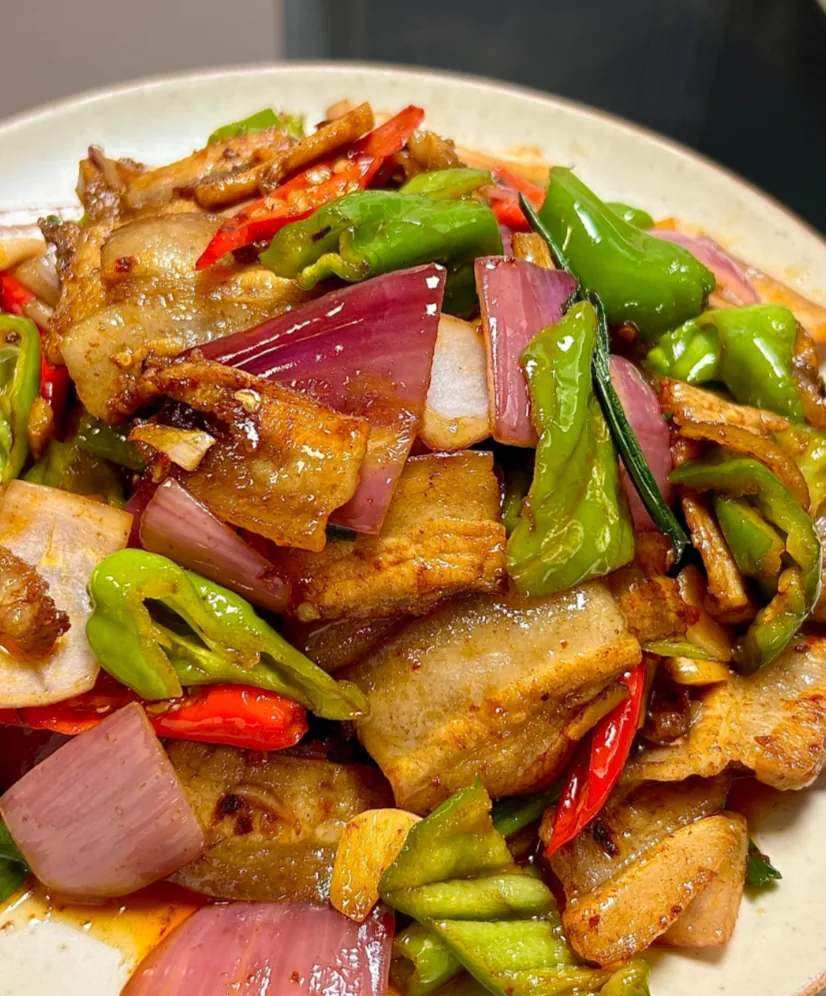
“Hui guo rou hao bashi hao xiang o” — so good, so fragrant
If you ask me, the strongest dish in Wuhou District’s hole-in-the-wall restaurants is twice-cooked pork. Pick any random spot and order it — it won’t let you down. Chengdu people don’t call it huiguorou though; they call it ao guo rou (熬锅肉).
The origin is interesting: in the old days, ancestral offerings required a cut of meat (刀头肉), boiled in plain water — looked precious but tasted bland. The elders couldn’t bear to throw it out, so they sliced it and stir-fried it again — and hey, it tasted way better than before. That’s where the name came from. It was first recorded in the 1909 Chengdu Tonglan. Another story says a Hanlin scholar surnamed Ling in the late Qing dynasty, frustrated after returning home, created it. Once Pixian doubanjiang (fermented broad bean paste) was added, the color turned red and the flavor deepened — and it secured its place at the top of Sichuan cuisine.
The cooking is particular: use er dao rou (second-cut pork), fat-to-lean ratio of 4:6, fry the slices until they curl into “lamp-dish” shapes, toss in garlic sprouts, and that aroma — people downstairs can smell it.
It’s decent — not bad at all. If there’s no queue, it’s worth a try. But if you have to wait a long time, it’s really not necessary. I queued for an hour to eat there and felt a bit disappointed — it didn’t live up to expectations. Not sure why Amap shows it as the #1 Sichuan restaurant in Wuhou District. As for twice-cooked pork itself, I’ve always felt it deserves to be the #1 dish in Sichuan cuisine. Second-cut pork boiled until a chopstick goes through, cooled and sliced, fried until it curls into lamp-dish shapes, doubanjiang and sweet bean sauce stir-fried until red oil comes out, garlic sprouts tossed in and it’s done. Salty-fresh with a touch of sweetness, fatty but not greasy. In 2012, a food festival vote named it the top Sichuan dish. For going with rice, it has never lost.
Where to go: – Lu Ji Zhengjie Restaurant (卢记正街饭店) – Yongle Restaurant (永乐饭店) – San Ke Shu Home Cooking (三棵树家常菜) – Tao Lin Restaurant (饕林餐厅)
Tips for eating: 1. Check if the meat slices have curled into lamp-dish shapes — the prettier the curl, the better the heat control. 2. Don’t dip first — doubanjiang is already salty. Eat it plain first, then bite with garlic sprouts — the sharpness cuts the richness perfectly. 3. Finish: spoon a ladle of the red oil sauce over rice. One bowl won’t be enough — you’ll need another. That’s when the meal is complete.
Signature twice-cooked pork: 1. Their twice-cooked pork (garlic sprout version or Lianshan version) is a must-order — the preparation and texture are very distinctive. 2. When stir-frying, the doubanjiang gives off a strong toasted aroma, and the red oil coats every slice — extremely good with rice.
Lu Ji Zhengjie Restaurant (卢记正街饭店): Originally called Qinglong Zhengjie Restaurant, opened in 1977 — over 40 years now. Neighbors treat it like their own canteen, eating breakfast, lunch, and dinner here. The fame isn’t hype — both Michelin and Black Pearl have listed it, and it’s consistently near the top on Dianping. The storefront is old and worn, the food follows the old Sichuan cuisine path, and the flavors are steady.
4. Old Chengdu Red Oil Maocai (老成都红油冒菜)
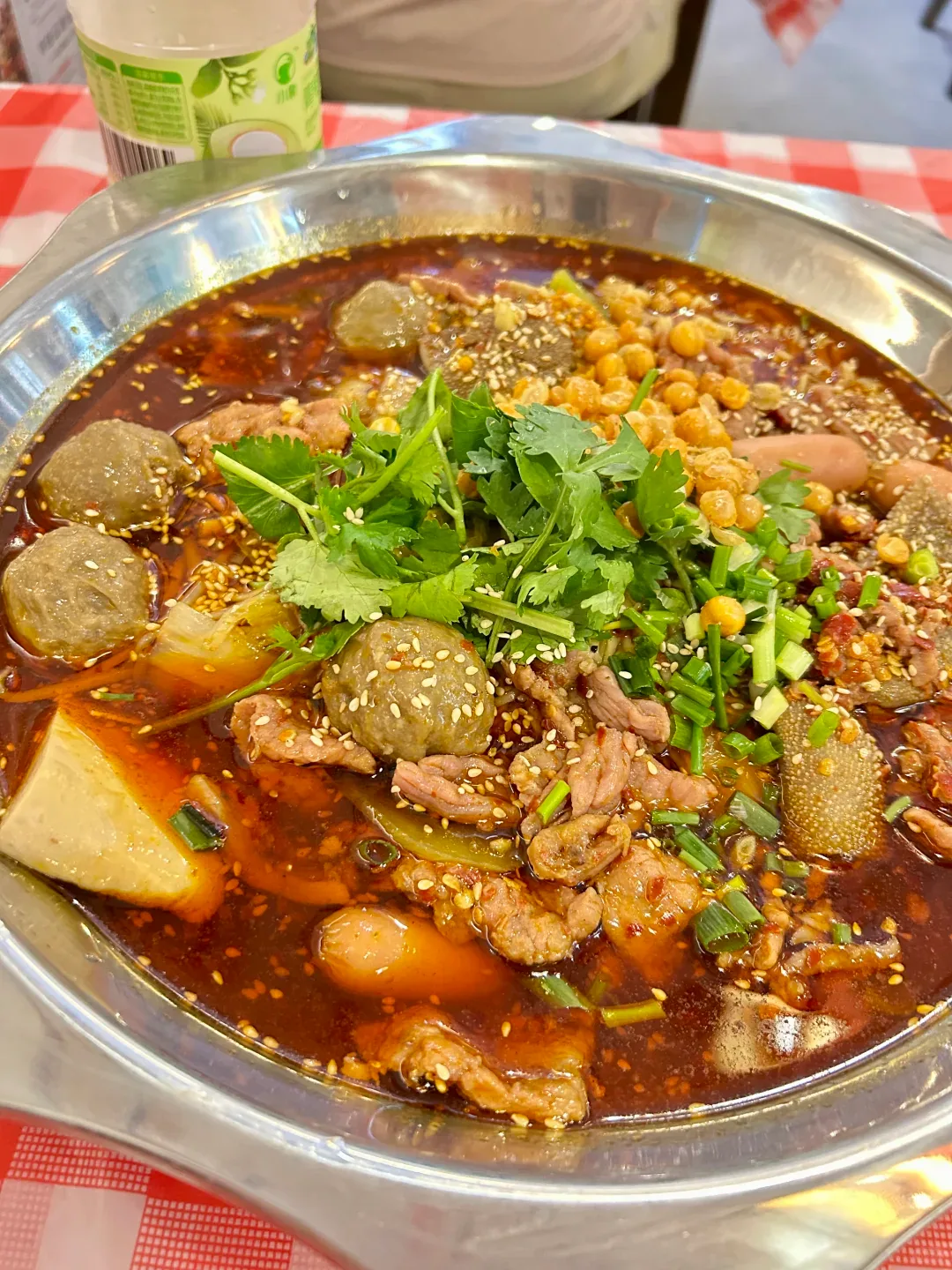
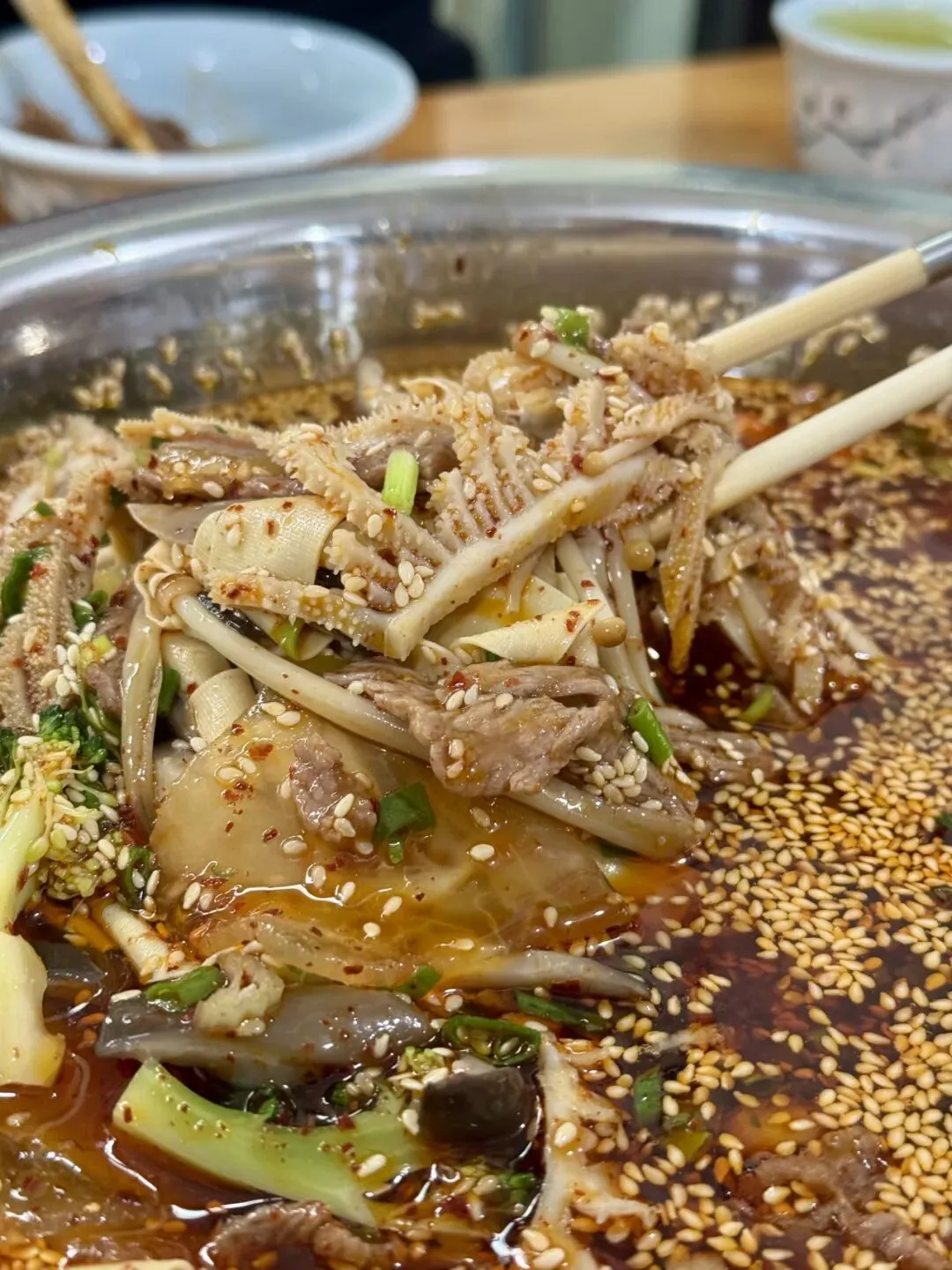
The ceiling of Chengdu maocai — I really love it!
Tucked in a tiny broken-down lane! No ambiance at all — it’s just really, really delicious! Great ingredients too! Pick your own dishes, then choose red oil or dry-mixed! The red oil isn’t spicy — it’s the old-school maocai flavor! The beef is very tender, the thousand-layer tripe and beef throat are super crispy! Vegetables, instant noodles, and fen haozi (chewy potato noodles) all soak up the flavor!
The maocai shops in Wuhou District that open at the entrance of residential compounds are all community veterans. A bamboo basket holds the ingredients you pick — tripe, crispy pork, pea shoots, dozens of meat and veg options, grab whatever you want — then it goes into red oil broth for a few dozen seconds, lifted out, a ladle of broth poured over, sprinkled with fermented black beans and celery. The red oil is the owner’s pride — numbing and fragrant, spicy with layers, but it doesn’t burn your stomach. The biggest difference from chuanchuan and hotpot: chuanchuan requires counting skewers, hotpot requires gathering a table of people — maocai is your own personal pot. One bowl and you feel settled.
Where to go: – Jiajia Maocai (家加冒菜) – Zhang Ji Hao Shihui Maocai (张记好实惠冒菜) – Wuming Maocai (无名冒菜) – Chuan Ji Maocai (川记冒菜)
Must-order at maocai: – Spicy beef, thousand-layer tripe / beef throat, hotpot instant noodles / wide noodles, maocai roast duck
Flavor options: You can choose red oil broth or dry-mixed. The red oil is that old Chengdu fragrant-spicy style — doesn’t catch your throat. The dry-mixed is richer, with plenty of sesame fragrance.
5. Pen Pen Shrimp (盆盆虾)
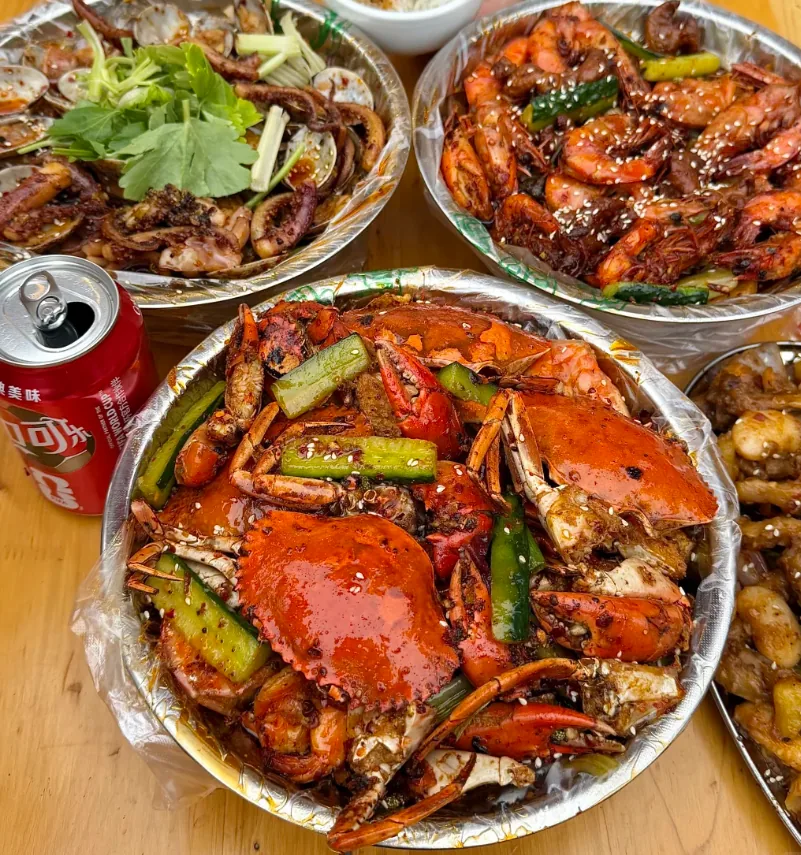
Crispy shells, firm meat, soaking in red oil broth
Here’s my advice on pen pen shrimp: don’t order it at a fancy restaurant. If you want it, go to the late-night stalls in Yulin, Wuhou. Half of Yulin’s nightlife is powered by this dish. A big basin comes to the table — the shrimp are fried first, shells crispy, soaking in spicy broth with celery and potato strips. A cold beer is the right pairing. My method: put on gloves, peel the shrimp until your fingers are covered in red oil, the more you suck, the better it tastes. The shrimp meat is firm with a touch of sweetness, and the mala broth hits just right. When the basin is almost done, don’t rush to clear it — adding noodles to the broth is the proper finish. Connoisseurs know.
Yulin’s night is held up by beer and pen pen shrimp. A big basin hits the table, shrimp fried first so the shells are crispy, soaking in spicy broth with celery and potato strips. Put on gloves, peel shrimp, fingers covered in red oil, the more you suck the better. When the basin’s done, add noodles to the broth — that’s the insider’s finish.
Where to go: – Yulin Gao Ji Chongqing Pen Pen Shrimp (玉林高记重庆盆盆虾) – Xie Xie Shi Guang (蟹蟹时光) – La Pang Kai Da Pai Dang (辣螃铠大排档) – Chongqing Pen Pen Shrimp (重庆盆盆虾) – Xie Da Qian Chongqing Jianghu Cai (蟹大钳重庆江湖菜)
Tips for eating: 1. Grab the shrimp first when it hits the table. The shells are fried crispy — crack open from the back and suck the meat right out. Firm, slightly sweet, coated evenly in mala. Don’t be polite. 2. When you’re about 70–80% through the shrimp, don’t clear the basin. Fish out the celery and potatoes first, then ask the owner to add a portion of noodles. Red oil coating the noodles, slurp it clean — that’s when the basin is truly finished.
A word of warning: These jianghu-style dai pai dong stalls are heavy on oil smoke — you’ll pick up the smell on your clothes. Don’t wear light-colored or expensive clothing.
6. Old Hotpot (老火锅)
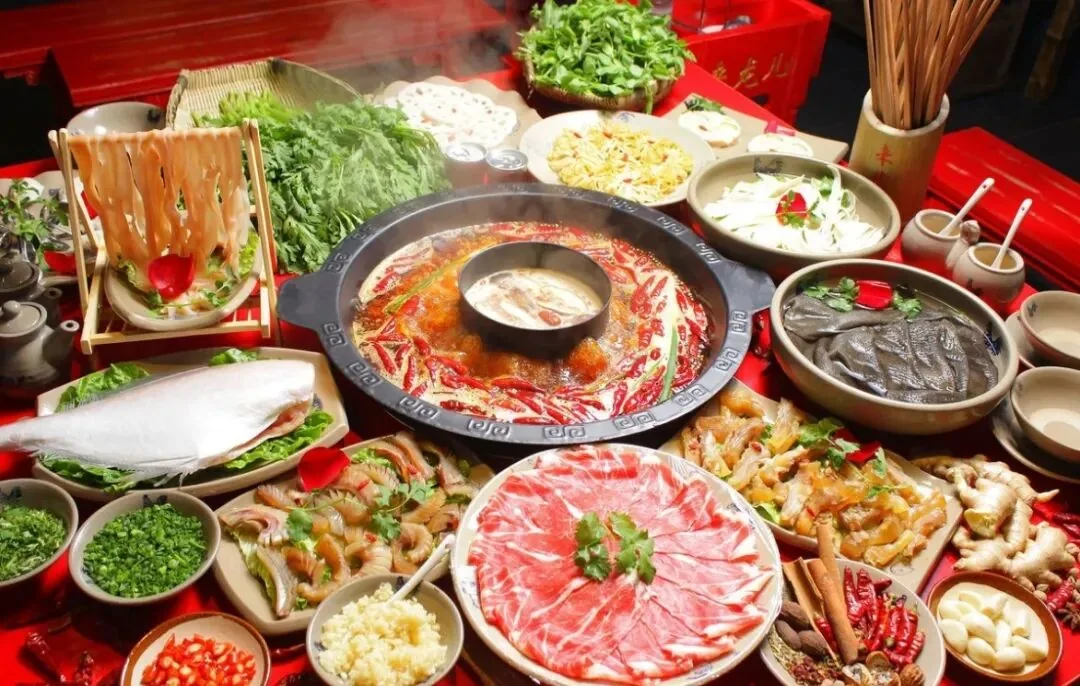
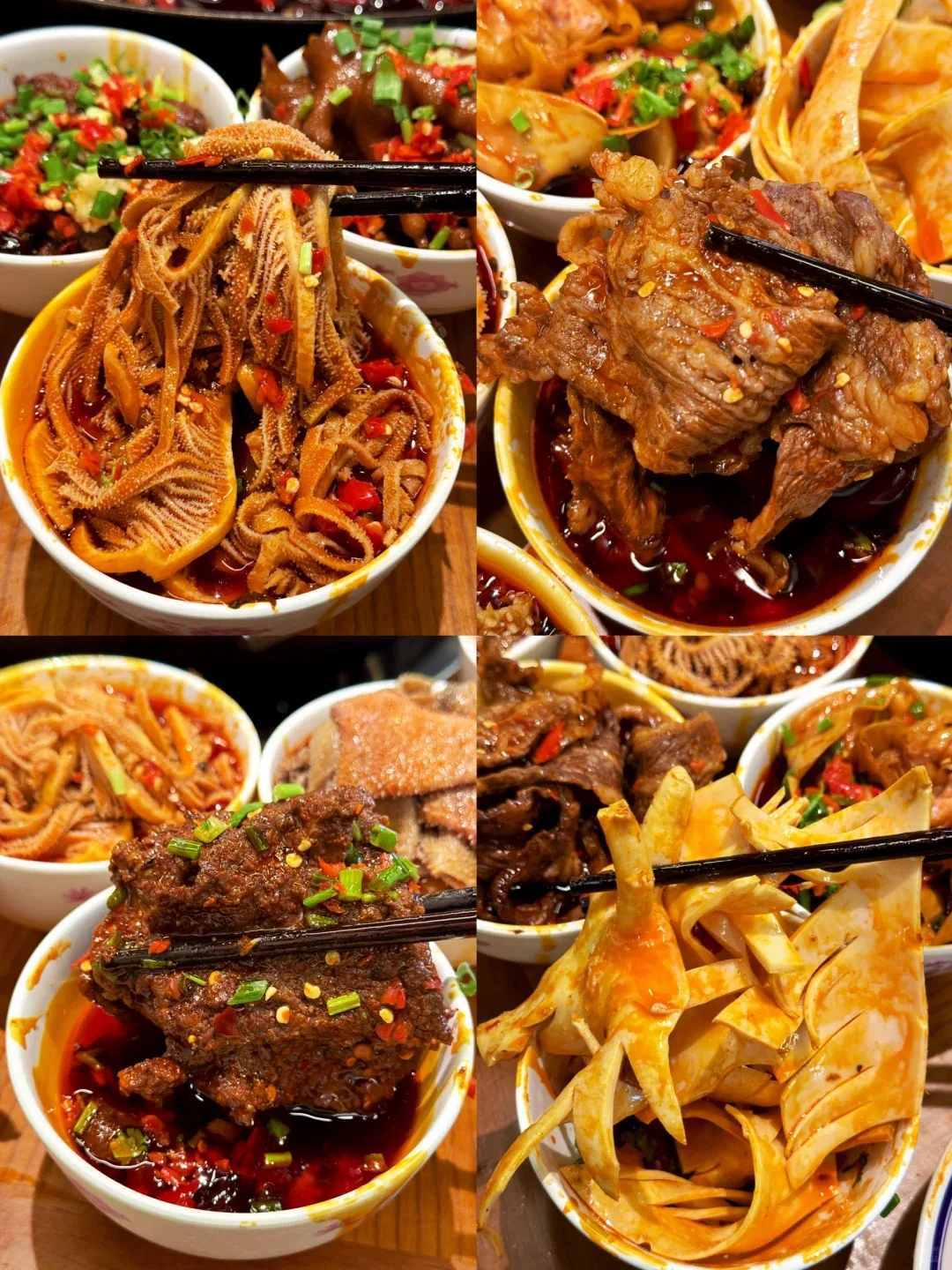
Beef tallow rolling, tripe “seven up eight down” — that’s the best
Old hotpot (nine-grid beef tallow hotpot) is widely recognized as originating from the Chaotianmen docks of Chongqing in the late Qing dynasty / early Republic era. Boat trackers and porters couldn’t afford good meat, so they used cheap beef offal (tripe, duck intestine, etc.) in a pot of spicy broth — that was the earliest form of hotpot. At first there were no dividers. As more diners came and pots weren’t enough, vendors used tin sheets to divide the pot. The earliest version was called “water eight pieces” (水八块); later, because making eight grids was costly, it settled into the nine-grid format.
When this pot of red broth hits the table, the aroma arrives first — you’re hooked before you even sit down. The beef tallow broth is stir-fried by the owner himself, with a ratio of seven parts oil to three parts broth. Numbing, spicy, and fragrant — all three balanced just right. Spicy, yes, but it doesn’t burn your stomach or scrape your throat. The killer thing is it gets better the longer it cooks. The first few bites just taste good; by the second half, the beef tallow has rendered all the spices out, the red broth bubbling up, and you can’t put your chopsticks down. Tripe goes into the center grid — seven up, eight down — comes out crispy and coated in flavor. Brain goes into the four corners to simmer slowly — the longer it cooks, the softer it gets. No fancy gimmick broths.
Where to go: – Xi Tang Old Hotpot (禧堂老火锅) – Yi Tong Old Hotpot (壹筒老火锅) – Shu Zhen Old Hotpot (蜀镇老火锅) – Shu Yuan Xian Hotpot (蜀院鲜火锅) – Wei Da Xia Fresh Vegetable Hotpot (魏大侠鲜菜火锅)
Tips for eating: 1. First ladle a sip of broth to test the pot. Good beef tallow red broth goes down smooth, with a slight sweet finish after the mala. If it’s astringent, pass. 2. Tripe and duck intestine go into the center grid — seven up, eight down, about ten seconds, then out. If it’s crispy, it passes. 3. Brain and duck blood go into the four corners to simmer slowly, saved for last — the longer they cook, the softer. Finish with a sesame oil and garlic dip.
Pro tip: Authentic old hotpot tripe should have distinct grains and be crispy-tender. If the tripe is blackened or won’t soften no matter how long you cook it, it may have been treated with alkaline — try another shop.
A Few Final Words
Writing this, I put down my chopsticks and want to say something from the heart. Going through Wuhou District’s food one by one, you realize none of them survived to today on decor or gimmicks — twice-cooked pork relies on a pair of skilled hands, roast rabbit relies on a charcoal fire, old hotpot relies on a pot of beef tallow slowly rendered. Honestly, I really dislike the trend of packaging old flavors into internet-famous shops — lights go up, prices go up, and the taste goes off. Chengdu people have a scale in their hearts. Whether something is good or not, the neighbors’ feet are the most honest measure. So when you come to Wuhou District, don’t just follow the guides — duck into a small shop at a residential compound entrance where there are lots of people, sit down, and eat. It probably won’t disappoint you. Come back and tell me — which one is your #1?
Wuhou District Travel Guide
Getting Around
Take the high-speed rail to Chengdu East Station, transfer to Metro Line 2, then Line 3 — you can get here directly. Don’t take a taxi — during rush hour the traffic will make you question your life choices.
Must-Visit Spots
- Wuhou Shrine (武侯祠)
- Jinli (锦里)
- Wangjianglou Park (望江楼公园)
- Fangcao Street and Yulin Road (芳草街与玉林路)
Suggested Itinerary: Two Days, One Night
Day 1: Morning at Wuhou Shrine, lunch at Jinli, afternoon at Sichuan University and Wangjianglou Park, evening at Yulin Road for chuanchuan and roast rabbit.
Day 2: Sleep in. Morning at Tianfu Furong Garden soaking up the sun, lunch at Shuangnan for taro chicken (芋儿鸡), afternoon back around Wuhou Shrine to buy souvenirs — camphor tea smoked duck (樟茶板鸭) and Pixian doubanjiang are both presentable gifts. Evening: pack up and head home — no rush at all.
Where to Stay
Shuangnan — if you want peace and quiet, stay here. Strong old-neighborhood vibe, and you can walk to taro chicken.
Budget for two days, one night: 800–1,000 RMB per person