The Best Vegetarian Temple Food in Chengdu: Baoguang Temple
Chengdu has temples everywhere — in the city, in the suburbs, you name it. Lots of people love visiting them for that quiet, peaceful feeling, a chance to slow down and just breathe. Recently I found one temple that’s said to serve the best vegetarian food in all of Chengdu.
That temple is Xindu Baoguang Temple (新都宝光寺) — a place that’s both lovely to wander and genuinely satisfying to eat at.
Its full name is the rather long “Baoguang Guihu Cultural Tourism Area Baoguang Temple” — honestly, who can remember all that? Let’s just call it Baoguang Temple.
Last time I went to Zhaojue Temple in downtown Chengdu for noodles, and a reader told me the vegetarian food at Xindu Baoguang Temple is absolutely outstanding — hands down the best in Chengdu. So I had to make the trip.
The Vegetarian Food at Baoguang Temple
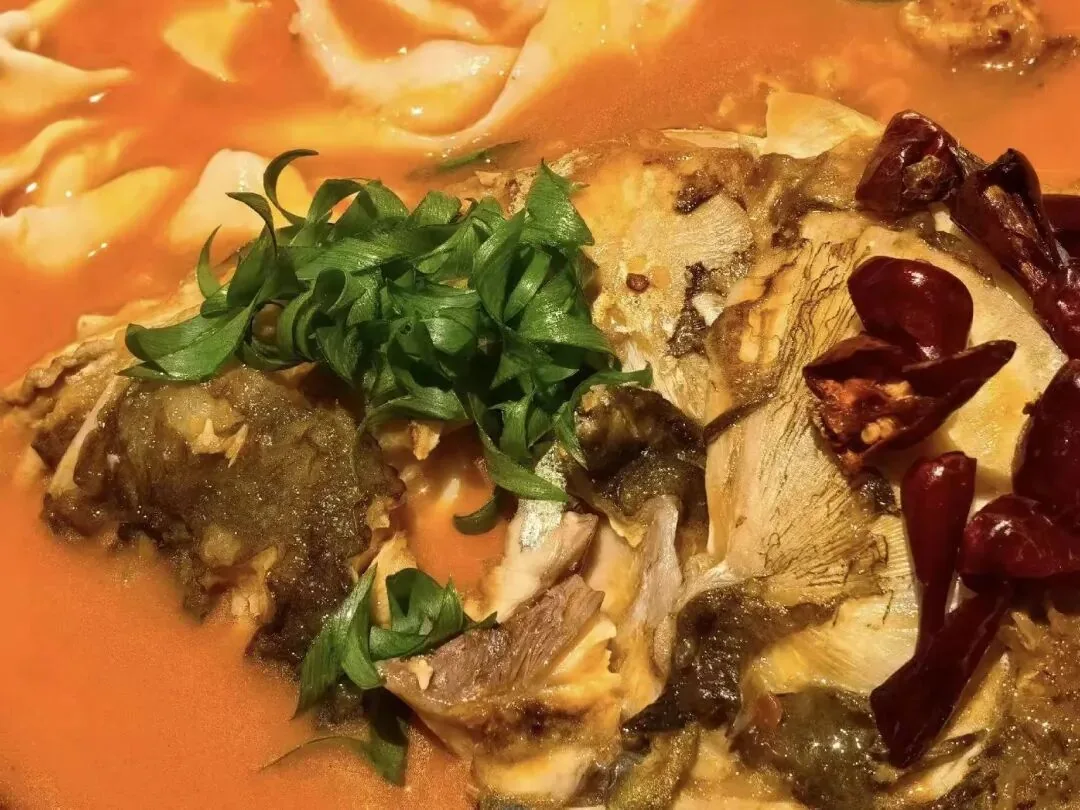
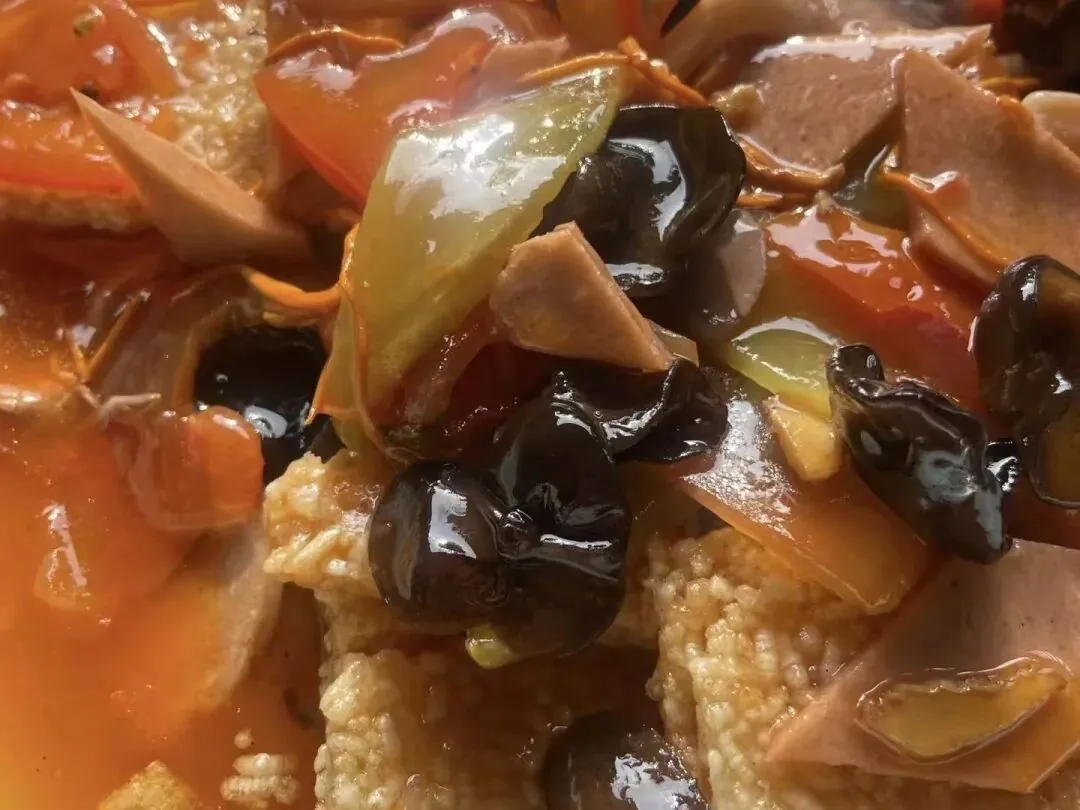
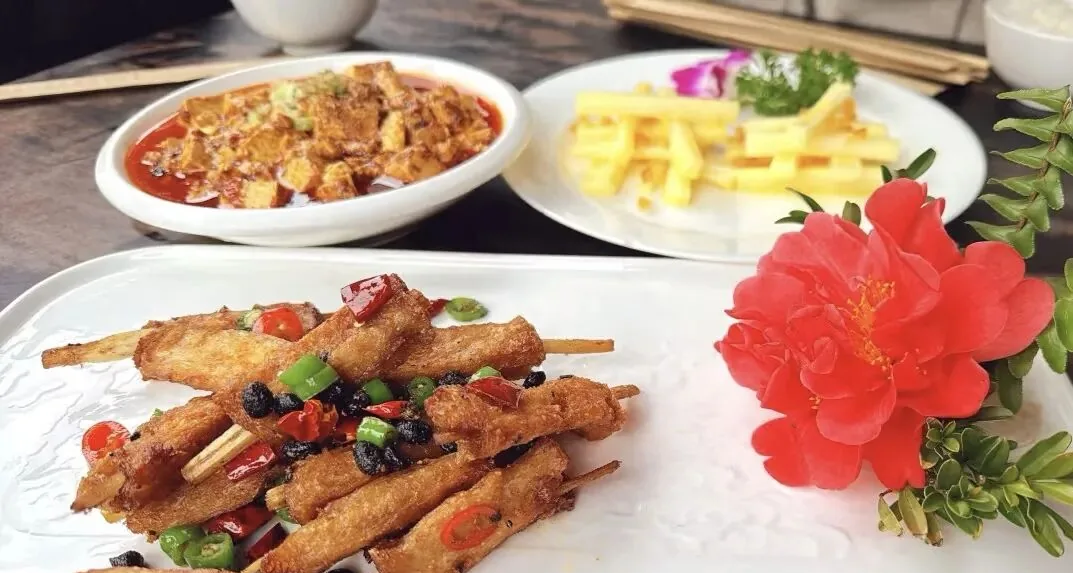
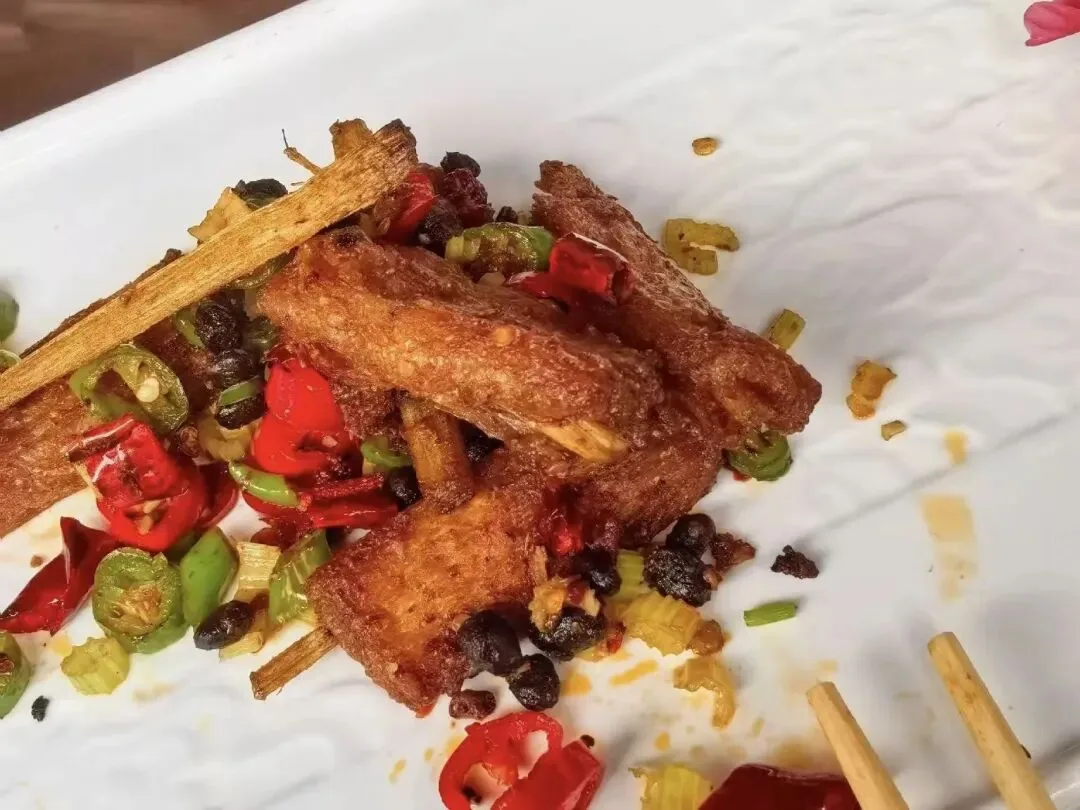
The place to eat is inside the temple: Shangyuanzhai Vegetarian Restaurant (尚缘斋素餐厅), also known as Baoguang Temple Vegetarian. Unlike other places where it’s one flat price all you can eat, here there are multiple price options. The buffet is great value at 33 RMB per person — and if you “clean your plate,” you get 5 RMB back, making it 28 RMB per person. Perfect for anyone who wants to try a bit of everything.
You can also order à la carte, with dishes ranging from 16 RMB to 58 RMB. Ordering off the menu is pricier — expect around 60 RMB per person or more. How you eat depends on your budget.
The most famous thing about the vegetarian food here is “vegetarian dishes made like meat dishes” — they mimic the taste and look of meat so convincingly you’d swear it was the real thing. Dishes include:
- Baoguang Zen Ribs (宝光禅排) — one of Chengdu’s 100 Famous Dishes
- Vegetarian Twice-Cooked Pork (素回锅肉)
- Crispy Rice Vegetarian Pork Slices (锅巴素肉片)
- Baoguang Maocai (宝光冒菜)
- Vegetarian Stir-Fried Liver and Kidney (素肝腰合炒)
- Vegetarian Fish-Fragrant Eggplant (素鱼香茄子)
- Vegetarian Roast Goose (素烧鹅)
Every dish is stunning — clearly all vegetarian, yet you taste the aroma of meat. The vegetarian twice-cooked pork especially: the “pork belly” is made from soy products, charred and flavorful. So good.
I heard the temple also has a “flowing vegetarian meal” (流水斋) — a simple set meal for 10 RMB per person. Great value: 10 RMB fills you up, with free refills of rice and dishes. It’s all seasonal home-style cooking, light on oil and mild. I didn’t try it myself, but I hear it’s pretty good.
Pro tip: Go for the buffet and clean your plate — you’ll get 5 RMB back, bringing the cost down to 28 RMB per person.
Exploring Baoguang Temple
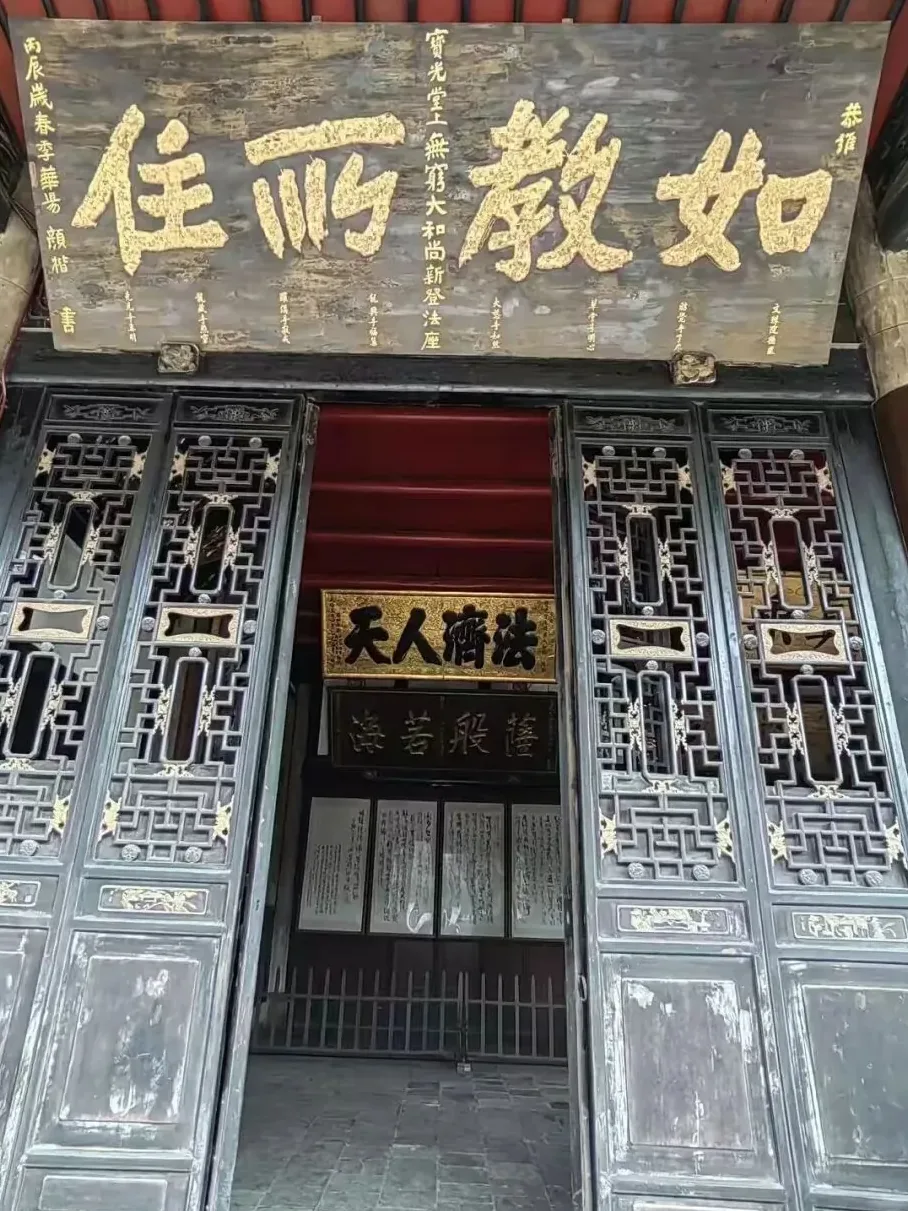
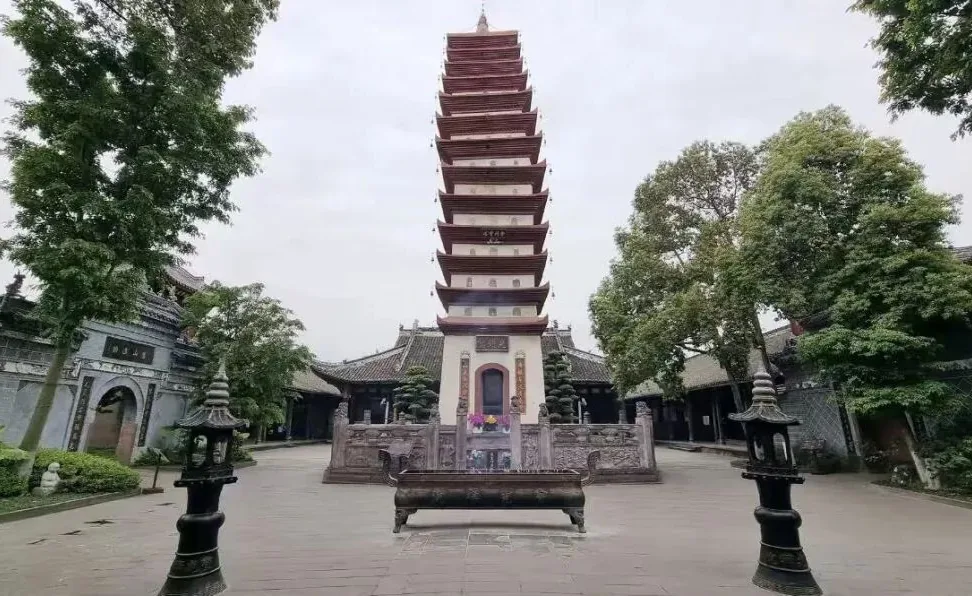
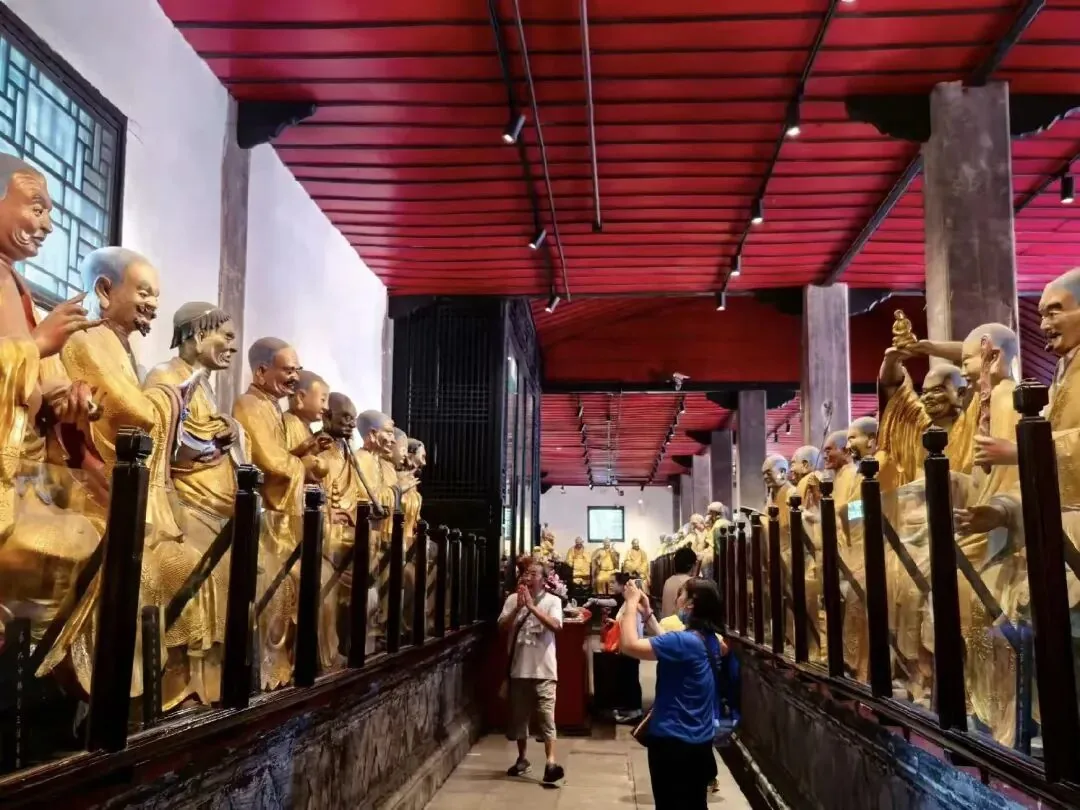
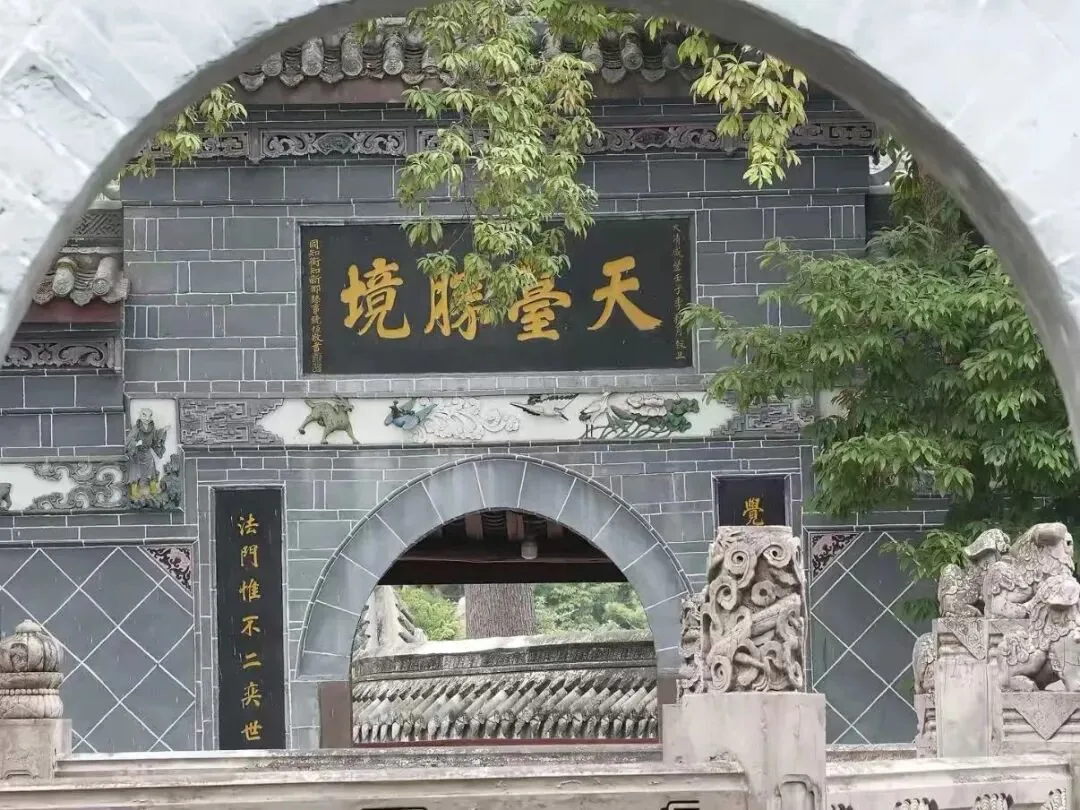
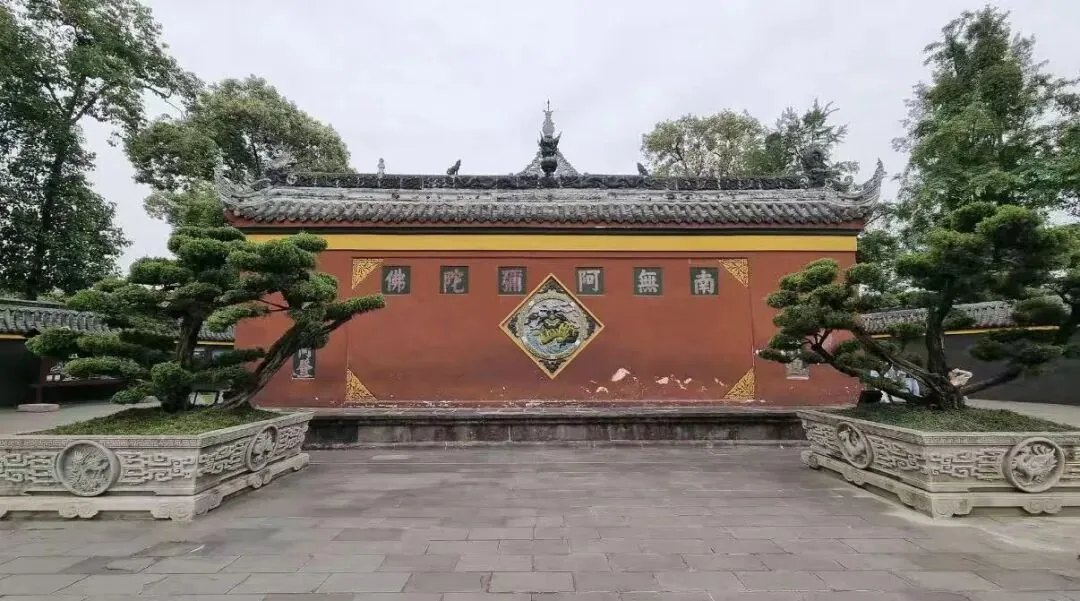
After your meal, take a stroll around the temple. Baoguang Temple has a very long history — it’s said to date back to the Eastern Han dynasty. It’s one of Chengdu’s “Four Great Monasteries” and one of the “Four Great Buddhist Forests” of southern China since the Qing dynasty. The temple still preserves the early Chinese Buddhist layout of “temple and pagoda as one, with the pagoda at the center.” The relic pagoda stands majestically on the central axis between the Hall of Heavenly Kings and the Seven Buddhas Hall.
The temple’s name comes from a Tang dynasty story: Emperor Xizong, fleeing unrest into Sichuan, saw the relics under the pagoda emit light at night, and bestowed the name “Baoguang Temple” (Temple of Precious Light).
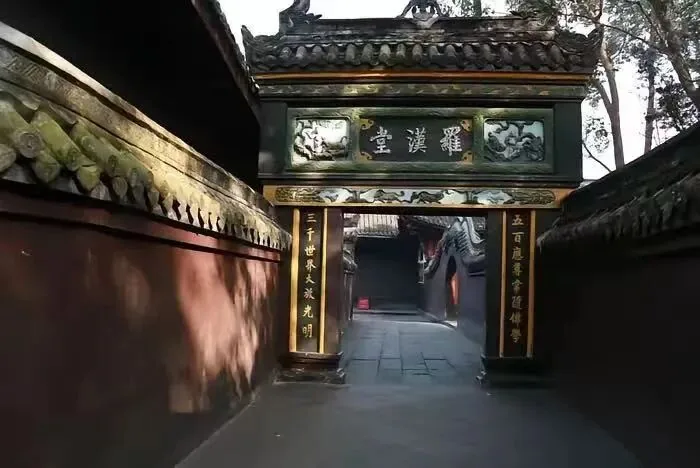
The temple includes the Hall of Heavenly Kings, Seven Buddhas Hall, Mahavira Hall, Sutra Library, Bell Tower, Drum Tower, Arhat Hall, and more. In the center stands the Wugou Jingguang Relic Pagoda — also known as Baoguang Pagoda. This late-Tang ancient pagoda has weathered a thousand years of wind and rain, leaning slightly but still standing, comparable to the Leaning Tower of the East. It’s the temple’s most distinctive landmark. A leaning pagoda, ironically, has outlasted and stayed cleaner than many upright ones — perhaps a metaphor for “not clinging to appearances.”
Pass through the east side of the relic pagoda and you’ll reach the Arhat Hall, another major highlight. Built in the Qing dynasty, it houses 577 painted and gold-leafed clay statues — beautifully shaped and endlessly varied. When you come to the Arhat Hall, you’re supposed to count the arhats. Count as you look, and you’ll always get a different number — that’s part of the fun.
Baoguang Temple also has a wealth of cultural relics: the Thousand Buddha Stele from the 6th year of the Datong era of the Liang dynasty (Southern Dynasties), the “Stele of Merit for Giving Clothes” from the 29th year of the Kaiyuan era of the Tang dynasty, the foundation stones of Emperor Xizong’s temporary palace, the Dharani Stone Pillar from the 11th year of the Yongle era of the Ming dynasty, the stone-carved relic pagoda from the Guangxu era of the Qing dynasty, and more.
Inside the halls there’s a couplet, every word profound and meaningful: “For those beyond the world, the Dharma has no fixed Dharma, and thus one knows that non-Dharma is Dharma; in worldly affairs, even when settled they remain unsettled — why not let the unsettled be?” It speaks of seeing through worldly matters and facing everything with equanimity — a Zen truth that invites quiet reflection.
For centuries, Baoguang Temple has welcomed all who come, holding countless states of mind, letting weary travelers find a moment of peace and shed worldly troubles and inner anxiety. People come to ancient temples with different wishes — some for safety and smoothness, some for inner calm.
Local insight: The Arhat Hall is a must-see — 577 painted clay statues, and counting them is a fun tradition. You’ll always get a different number.
Practical Info
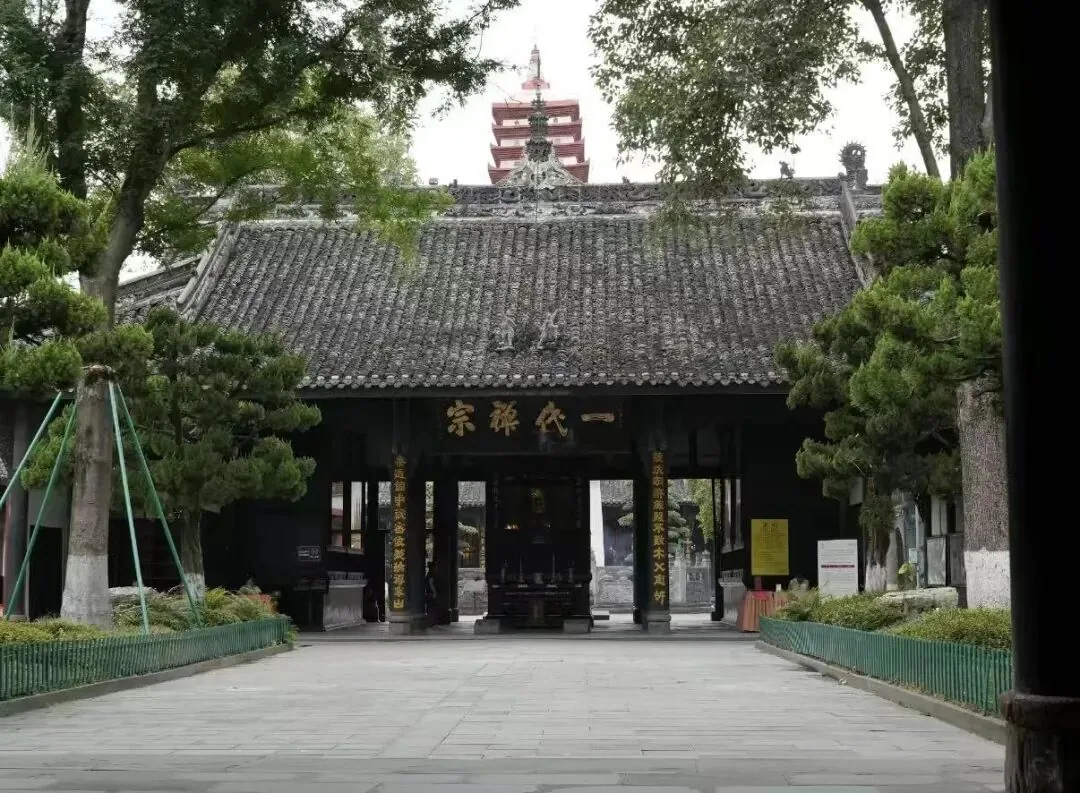
- Address: 81 Baoguang Street, Xindu District, Chengdu (Baoguang Guihu Cultural Tourism Area)
- Ticket: 5 RMB per person; free for seniors over 70 and children under 1.3 meters
- Transport: Metro Line 3, Zhonglou Station Exit C, then 10 minutes by shared bike to the mountain gate
Life rises and falls like the world’s tides — all troubles eventually return to calm. Learning to let go and be at ease is the best practice.
When you have time, come visit Baoguang Temple. Maybe not for anything else — but the delicious vegetarian food alone is worth the trip.