Beyond the Third Ring: Where Chengdu Locals Actually Eat
If you’ve eaten your way through downtown Chengdu and think you’ve tasted it all — think again. The real food scene starts once you leave the Third Ring Road. This Chengdu food guide covers 12 districts and county-level cities around Chengdu, with three must-tries at each stop. It’s written for anyone willing to hop on the metro or grab a car and chase down the good stuff.
One thing before we start: shop names and addresses change, especially at old street stalls. Check the signboard before you go — the little mom-and-pop spots move around more than you’d expect.
Downtown Chengdu
Jinjiang District
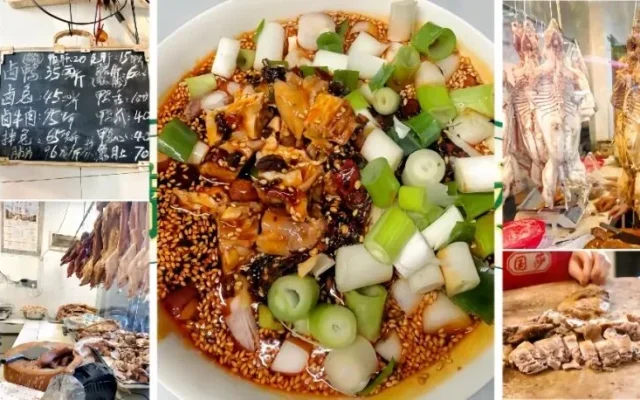
Fuqi Feipian (Sliced Beef and Offal in Chili Oil) — Thin slices of beef tripe, tongue, and skin, doused in a spoonful of red chili oil, then dusted with ground Sichuan pepper and sesame. The magic here is all in the seasoning: the chili oil should be glossy, and the numbing heat needs to mask any gaminess without overpowering the meat. When you order, you can ask for “extra chili oil.”
Xiangxiang Alley — The Wangping Street area is a proper food street, with hotpot, skewers, and lengdanbei (cold dishes with beer) all crammed into one lane. It’s best at night, though expect long waits when it’s busy. This isn’t a single dish — it’s a place where you can try a little bit of everything in one go.
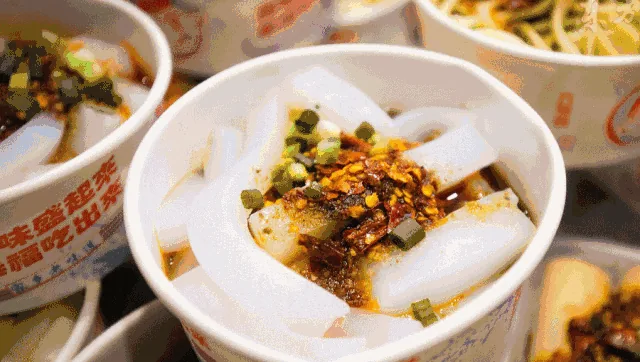
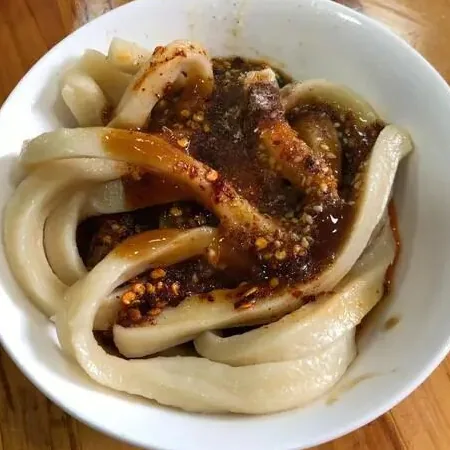
Sweet Water Noodles (Tianshuimian) — Noodles as thick as chopsticks, firm and chewy, coated in a thick red oil with a distinct sweetness. First-timers usually don’t know what to make of it, but after two tries, you’ll be hooked.
Qingyang District
Sandapao (Three Cannons) — A ciba (glutinous rice cake) preparation from the Qingcheng Mountain area, most famous around Qingyang Palace. The rice cakes are bounced off a wooden board into a basket of soybean flour, making a “peng peng peng” sound three times — that’s where the name comes from. Sweet, not sticky on the teeth, and cheap.
Old-School Zhong Dumplings — Pure pork filling, no vegetables mixed in. Boiled and then dressed with a red oil made from replicated soy sauce, topped with sesame and scallion. The genius isn’t in the filling — it’s in that bowl of soy sauce and chili oil.
Old Teahouses Around Kuanzhai Alley — Tea isn’t food, but a covered-bowl tea with danhonggao (egg waffle cakes) and tangyouguozi (sugar-oil rice balls) is the standard Chengdu way to while away an afternoon. Prices inside the scenic area are high — walk 200 meters out of the alleys and they’re normal again.
Wuhou District
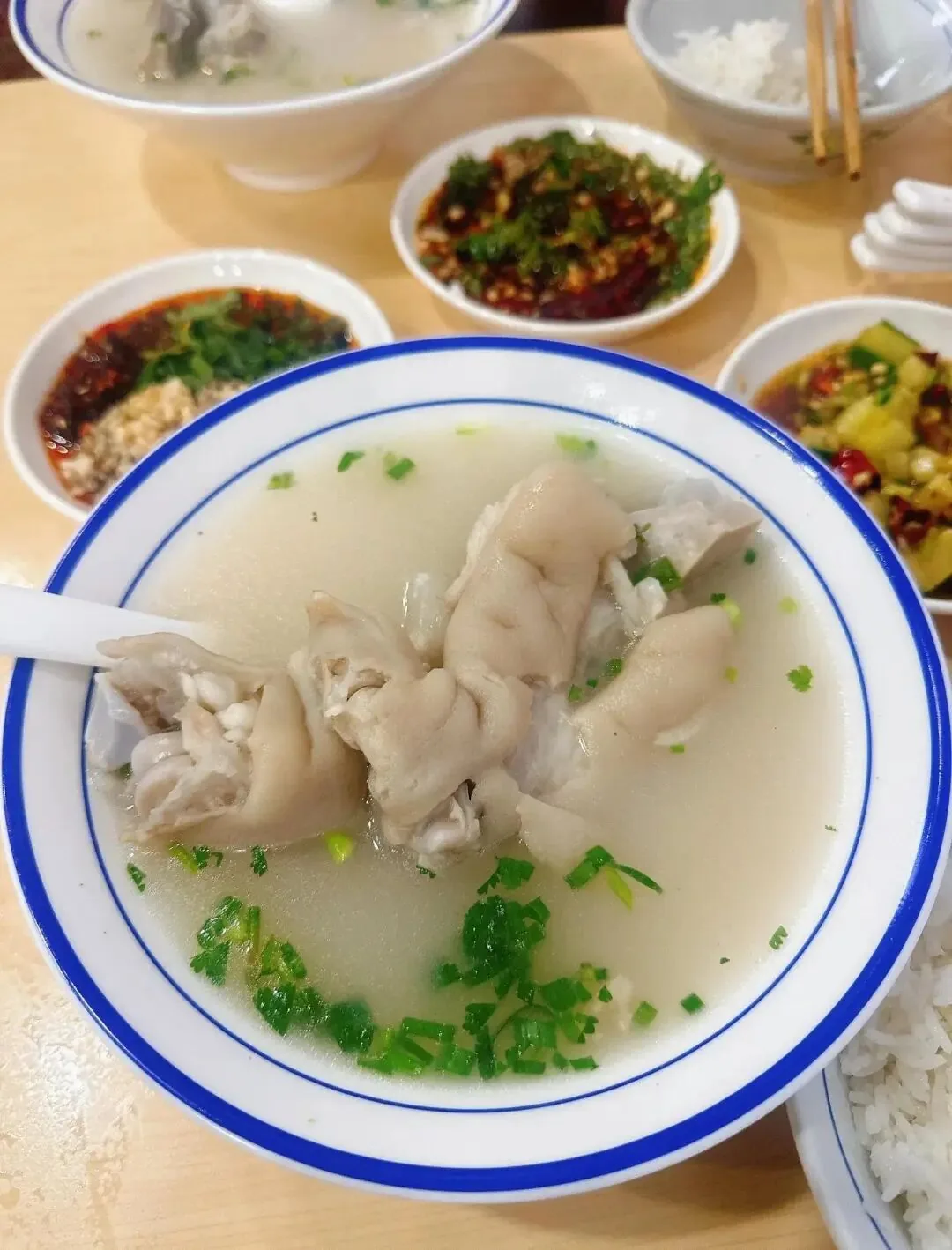
Lao Ma’s Pig Trotter Soup (Laoma Tihua) — Pig trotters stewed with snow peas until the broth turns milky white and the meat is falling-off-the-bone tender. Chengdu locals eat this as a late-night snack or as a hangover cure. You mix your own dipping sauce — usually a dish of douban (fermented bean paste) is provided.
Chuanchuanxiang (Skewer Hotpot) — Wuhou has a high density of skewer shops. You pay by the number of skewers — 60 to 70 RMB per person gets you a solid feed. When choosing a shop, look for two things: whether the broth was made fresh that day, and whether the skewers are clean.
Mao Kao Ya (Quick-Boiled Roast Duck) — Roast duck chopped into pieces and dunked into a spicy, numbing broth. The skin absorbs the broth but somehow stays crispy. It’s been trendy with young people these past couple of years — think of it as “roast duck, Chengdu style.”
Chenghua District
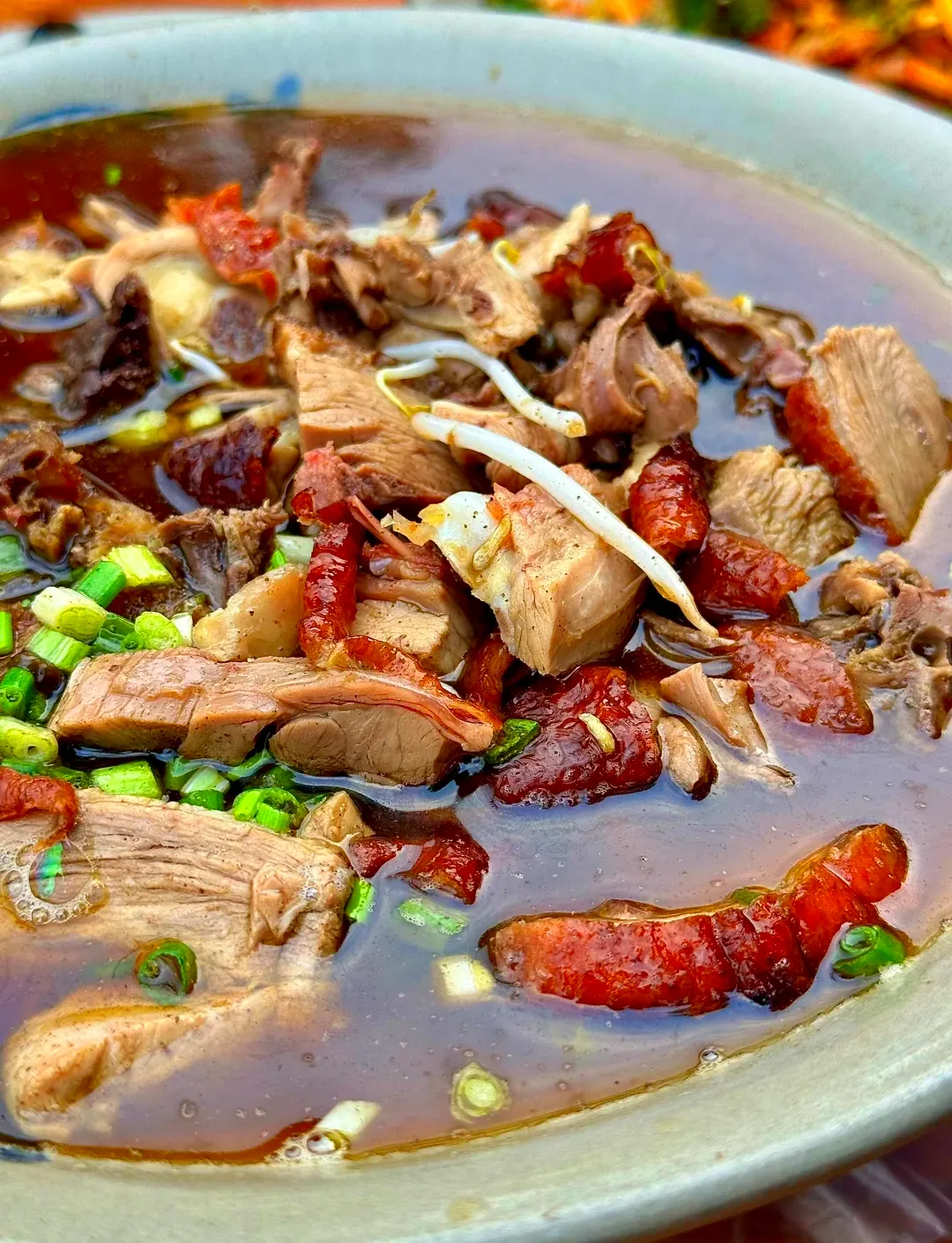
Pang Ge’s Grilled Trotters — Grilled pig trotters, a long-standing favorite in Chenghua. The skin is grilled until it blisters — soft and sticky but not mushy. Be prepared to queue: at mealtimes it’s at least an hour. Go early in the afternoon to grab a number.
Jianshe Road Snacks — You can eat your way from one end of this street to the other: grilled brain, egg waffle cakes, ice jelly, fried skewers. Best for two or three people sharing — order one of each. It’s liveliest at night.
Lengdanbei (Cold Dishes with Beer) — On summer evenings, little tables pop up on the sidewalk with braised snacks, edamame, and peanuts, all washed down with beer. You sit by the road, feel the breeze, and eat. It’s cheap, and the atmosphere is the whole point.
Near Suburbs
Wenjiang District
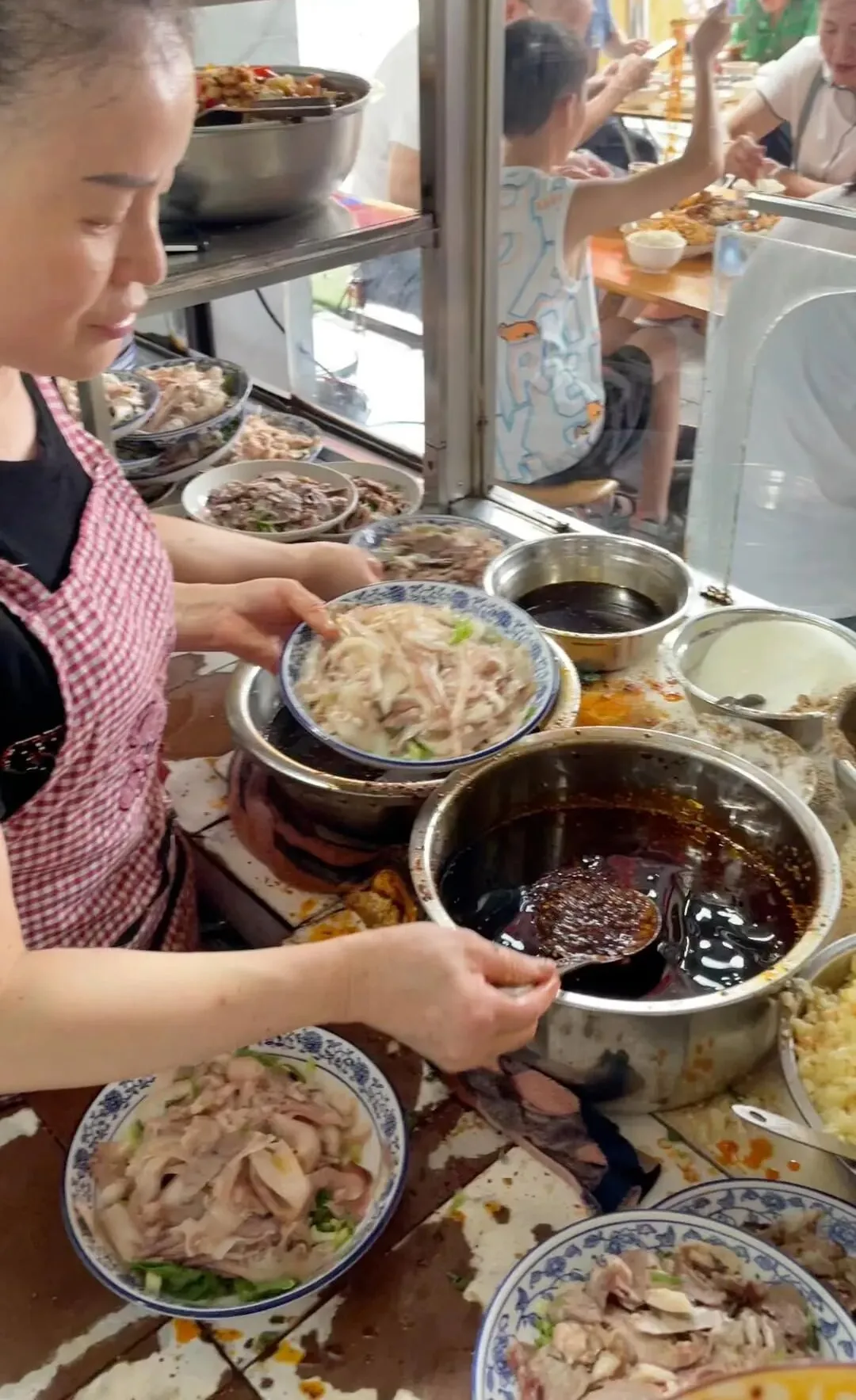
Peng’s Egg Waffle Cakes (Peng Ji Danhonggao) — In the alley next to Wenjiang No. 2 Middle School, three honeycomb coal stoves, open in the afternoon only. Closed on weekends and holidays. Plain ones are 3 RMB, the signature is 4 RMB (prices subject to change on site). The cold-tossed beef and pig ear fillings sell out fastest. They only make them for half a day — go late and they’re gone.
Cheng’s Wontons (Cheng Chaoshou) — A local Wenjiang institution. Thin wrappers, tender filling. The seafood wonton is their specialty — the broth is fresh and savory. The kind of place locals have been eating at since childhood.
Pig Ear Restaurant (Zhu Erduo Fandian) — There are several pig ear restaurants along Yufu Road, and at mealtimes the roadside is packed with cars. The cold-tossed pig ear is sliced thin, dressed in red oil, and served with rice.
Xindu District
Wu Niang’s Potatoes — A collective memory for Xindu locals. Potatoes come in two types: fried and boiled. The fried ones are dipped in chili powder; the boiled ones — the broth is the essence. You have to drink it all to consider it finished. The standard routine is to buy some and eat them sitting in the park.
Vegetarian Food Around Baoguang Temple — The vegetarian dishes near Baoguang Temple are made with care, using soy products to mimic the look and taste of meat dishes. Not every tourist goes there, but it’s a nice change of pace.
Xinfan Pickles — Xinfan’s pickles are an important source of pickled sour vegetables in Sichuan cuisine — clean and sharp in their sourness. There are old pickle shops in town where you can buy some to take home.
Pidu District
Pixian Douban Fish — Fish braised with Pixian douban (fermented broad bean paste), glossy red, savory and mildly spicy. Pidu’s local douban is aged longer, darker in color, and has a sweet finish — completely different from what you buy in supermarkets.
Twice-Cooked Pork (Huiguorou) — The key to Pidu’s twice-cooked pork is the douban. Local douban fries up into a bright red oil with a strong spicy kick and a fragrant finish. Served with garlic sprouts — you’ll want an extra bowl of rice.
Sichuan Restaurants Around Hongxing Fandian — Pidu has plenty of old-school restaurants doing home-style Sichuan food. Portions are generous and prices are cheaper than downtown. Worth a special trip for lunch.
Far Suburbs (Plan a Full Day)
Dujiangyan City
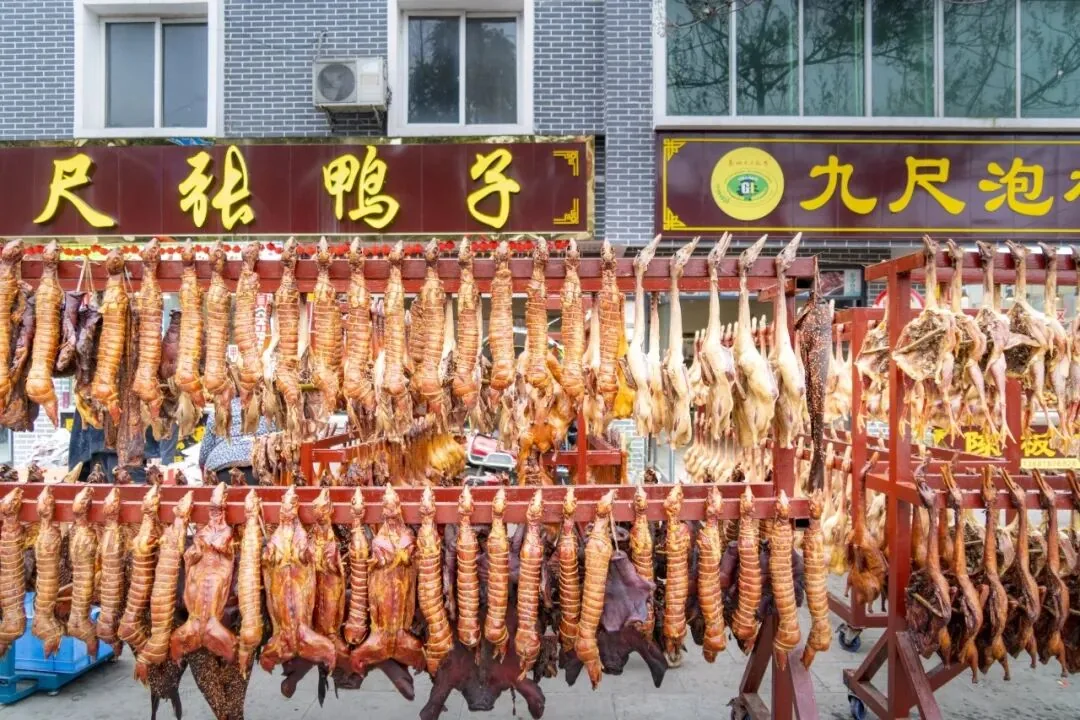
Ginkgo Nut Chicken Soup — Young chicken stewed with ginkgo nuts and pork knuckle, seasoned with a little salt and rock sugar. The broth is clear and fresh, not greasy. Basically everyone who visits Dujiangyan gets served this dish.
Qingcheng Old Pickles — Qingcheng Mountain’s old pickles are made with mountain spring water. They stay crisp and tender even after being pickled for over a decade. Appetizing — perfect alongside cured meat.
Old Cured Meat (Lao Larou) — Blackish-yellow on the outside, distinct layers, and the lean meat cuts to a rosy pink. Strong aroma. Steam it, slice it, and eat it straight, or stir-fry it with garlic sprouts.
Pengzhou City
Jiuchi Pressed Duck — Comes in two types: dry pressed duck and braised pressed duck. Dry pressed duck is first cured, then smoked, then air-dried. Braised pressed duck is smoked and then braised with a dozen-plus spices. Glossy and rich, on the sweeter side.
Juntun Guokui (Stuffed Flatbread) — Pork lard mixed with Sichuan pepper and ginger, spread on dough, rolled up, pan-fried first and then baked. The result is fragrant, flaky, and crispy. Eat it hot — once it cools, it’s half as good.
Snack Stalls at Aoping Kite Market — Market snacks around Aoping. They’re most plentiful on market days; on regular days it’s a bit of a gamble.
Qionglai City
Milk Broth Noodles (Naitang Mian) — A milky-white broth made from pork bones, pig trotters, pork knuckle, and chicken, poured over shuiye noodles. Add shredded chicken to make it “chicken shred milk broth noodles”; add three delicacies to make it “three delicacies milk broth noodles.” It’s a breakfast dish.
Bobo Chicken — Cooked chicken, deboned and sliced, mainly numbing-spicy, with a mix of red and white meat. Crispy skin, tender meat, slightly sweet and savory. In Qionglai, it’s often eaten alongside milk broth noodles.
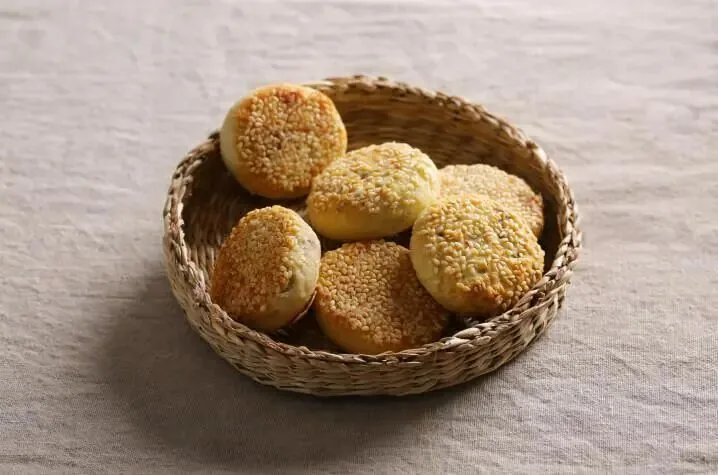
Pingle Ancient Town’s Tang Mabing (Sesame Cake) — An old pastry from the ancient town, heavy on sesame, with a flaky crust that sheds everywhere. Great as a souvenir to take home.
Chongzhou City
Huaiyuan’s Three Treasures — Refers to Huaiyuan Town’s donggao (frozen cake), ye’erba (leaf-wrapped rice cakes), and doufu lianzi (tofu skin rolls). The frozen cake is light and melts in your mouth; the leaf-wrapped rice cake doesn’t stick to the plate, chopsticks, or teeth; and the tofu skin comes in dry and wet versions and can be made into several dishes.
Yangma Chazha Noodles — Hand-kneaded noodles with long, springy strands. The meat crumbs are made from lean pork from the rump or leg tendon plus chicken, paired with a broth long-simmered from pork marrow bones and chicken bones. The noodles and the broth are each given their own attention.
Jiezi Ancient Town’s Tang Mabing — Same origin as the Pingle version, but the Jiezi method is slightly different. Try both and compare.
How to Plan Your Route
One-day version (downtown): Morning in Qingyang (sandapao, Zhong dumplings), lunch in Wuhou (Lao Ma’s pig trotter soup), afternoon over to Jinjiang (fuqi feipian, Xiangxiang Alley), evening in Chenghua (Jianshe Road snacks or lengdanbei). The metro basically gets you everywhere; expect to walk a lot.
One-day version (near suburbs): Morning in Pidu, lunch in Xindu (Wu Niang’s potatoes), afternoon in Wenjiang (Peng’s egg waffle cakes — you need to catch their afternoon stall hours; Cheng’s wontons are available anytime). Driving is recommended — the three districts are 30 minutes to an hour apart by car.
Weekend version (far suburbs): Give Dujiangyan, Pengzhou, Qionglai, and Chongzhou a day each for a more relaxed pace. Dujiangyan and Chongzhou can be strung together into one route; Pengzhou and Qionglai are each best done on their own. Public transport gets you to the county towns, but for the stretch from town to village, you’re better off with a car.
Budget: Downtown, 100 to 150 RMB a day will fill you up properly. For the far suburbs, add transport costs — budget 150 to 200 RMB per person.
Three Things to Keep in Mind
- Old street stalls keep irregular hours — egg waffle cake types especially. Best to ask a local before you go.
- At old restaurants in far-suburb county towns, food may be sold out after 2 PM. Go early, not late.
- The same-named snacks in ancient town scenic areas are not the same as the old shops in the county town. If you want the real thing, head to the old town area.
We’ve covered 12 districts and county-level cities here — plenty more to come later.