The Quiet Temple East of Chengdu: A Hidden Gem in Jianyang
Chengdu has a history of over 2,300 years. It’s been a major town in the Shu region since ancient times, and it’s packed with historical relics—temples included. On a recent trip to Jianyang with a friend, I found some interesting spots, and one temple in particular caught my eye. This is Mituo Temple in Jianyang—a very low-key place, and a true hidden gem near Chengdu.
A Temple with Deep Roots
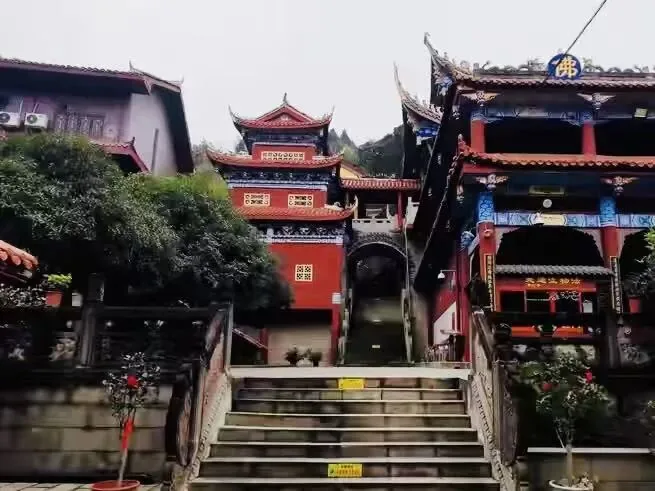
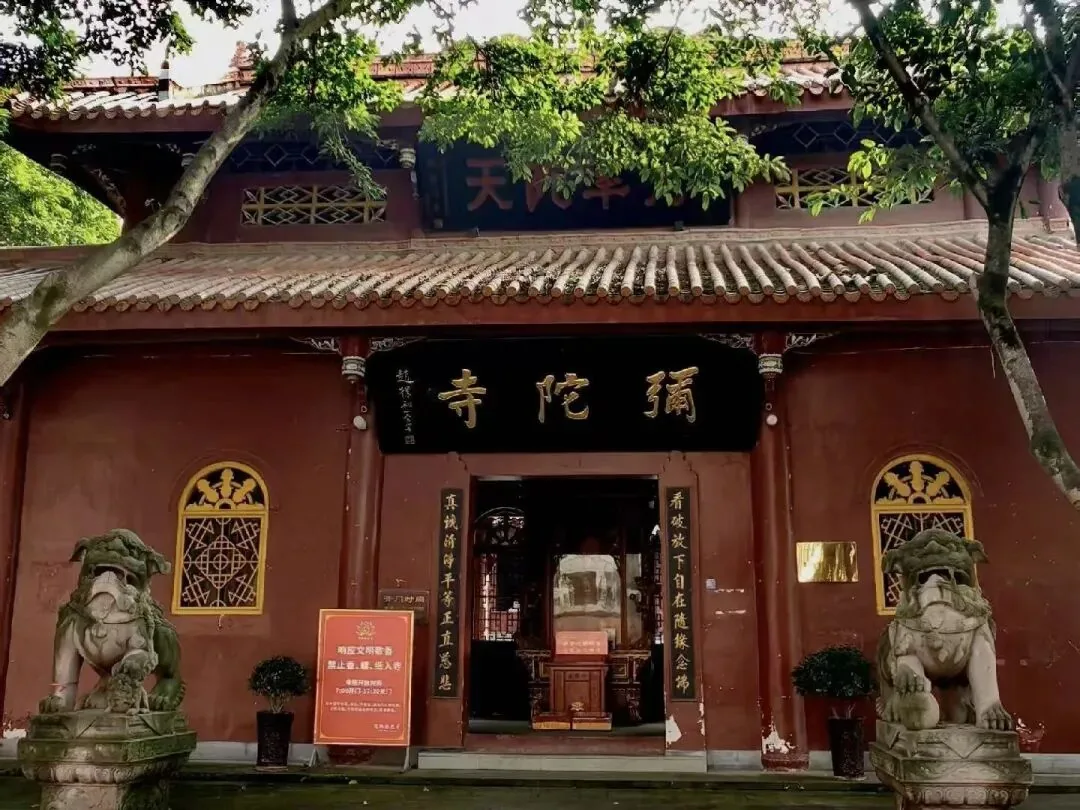
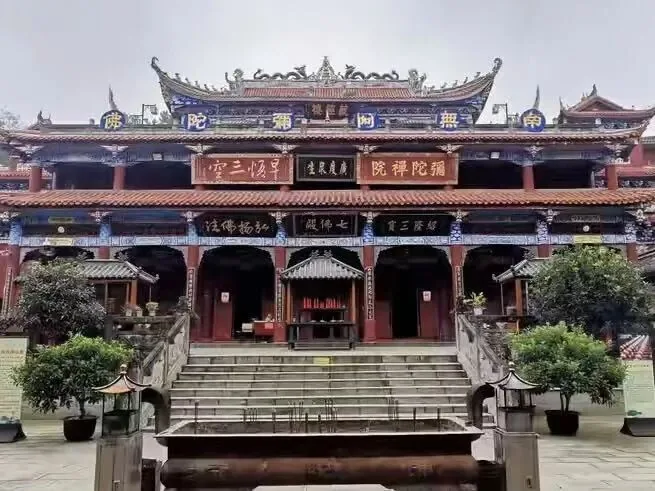
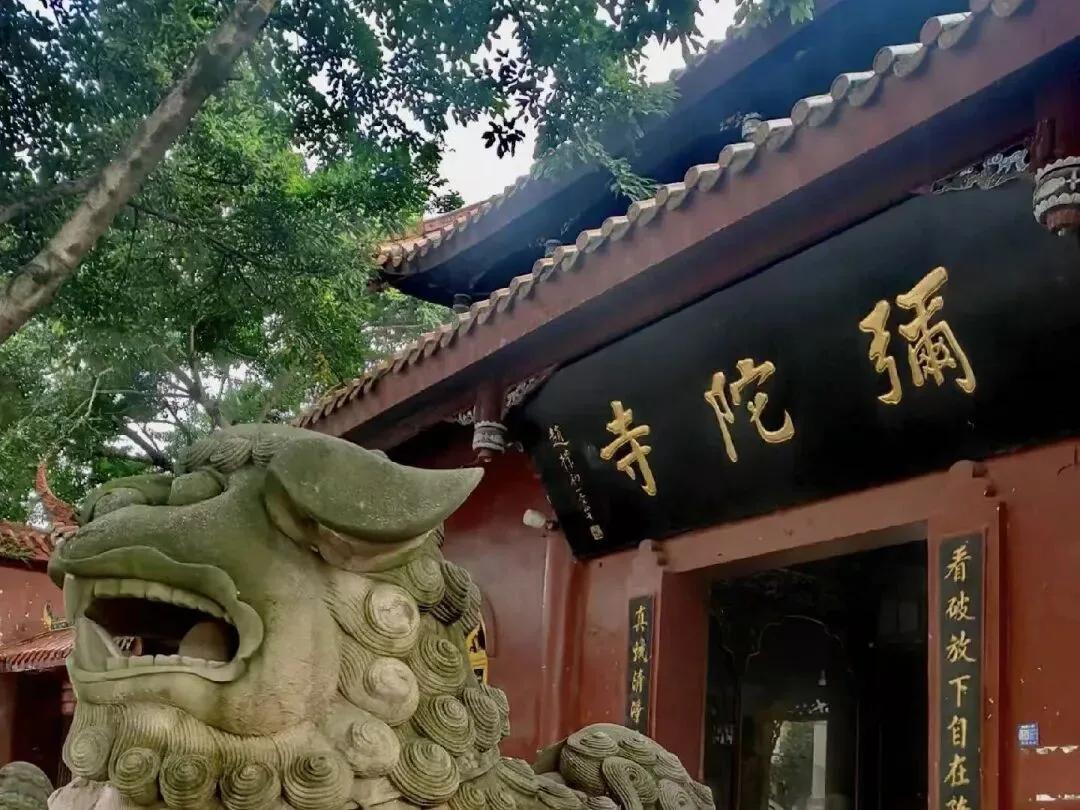
Mituo Temple has a long history. It dates back to the Ming Dynasty, when it was first called Dongyue Temple. Back then it was famous—a traditional Taoist temple. At its peak, it had over 40 halls and rooms of various sizes, and more than 100 monks. It was a well-known Taoist site in central Sichuan. The original site was at Huangnijing, Sandao Guai, South Gate of Jiancheng, and it was known as “Jianyang’s First Zen Forest.”
During the Republic of China period, it was renamed Mituo Temple and transformed from a Taoist temple worshipping Dongyue Dadi into a Buddhist site. In the mid-20th century, the temple fell into disrepair. Monks left, halls were used for other purposes, and the original buildings gradually faded into history.
North of Jianyang city, by the Jiangxi River and on the north side of the Chengdu-Chongqing railway bridge, there was a small Ming Dynasty temple called Lianhua Temple. It was built against the mountain, and in the last century it was also in a state of disrepair with no monks. Behind the temple, there was a stone cave with a spring that flowed year-round. Legend has it that Zhang Sanfeng once meditated here in seclusion. The cave was named “Shengyang Cave,” and the spring water was called “holy water.” Next to it is a Qing Dynasty stone tablet inscribed with “Shengyang Spring.”
In the late 1980s, Jianyang County decided to rebuild Mituo Temple on the site of Lianhua Temple. That’s how we have today’s Mituo Temple.
Actually, many people in Jianyang today might not know Mituo Temple, but almost everyone knows Shengyang Cave.
What You’ll See Today
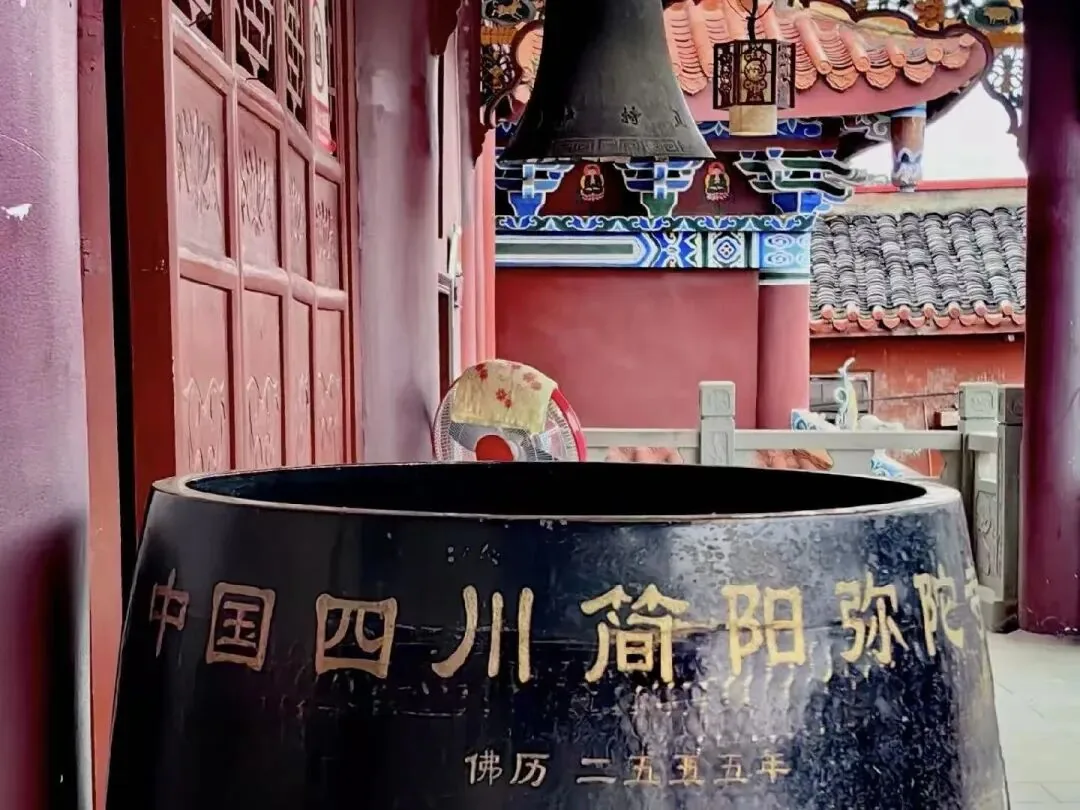
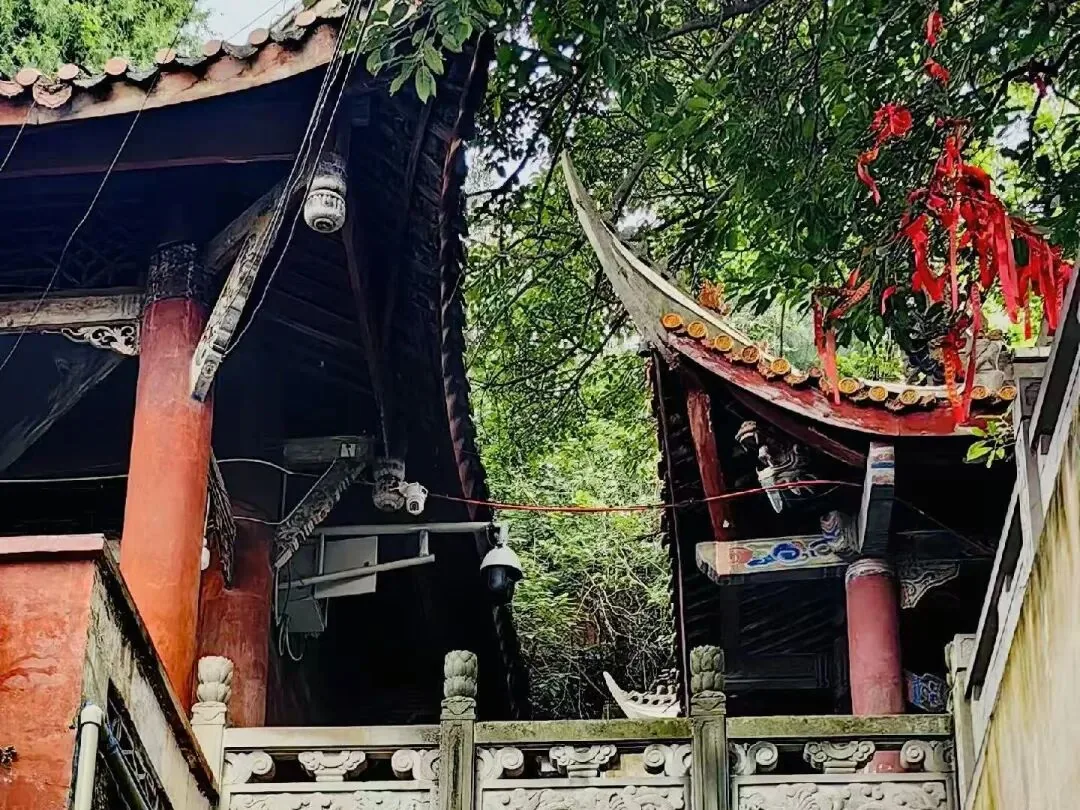
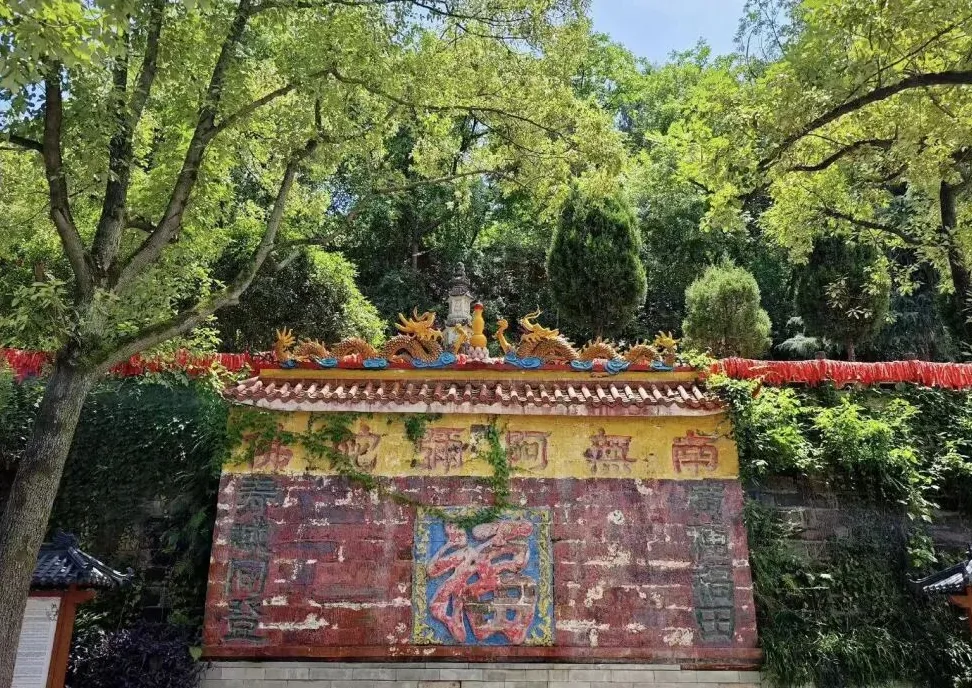
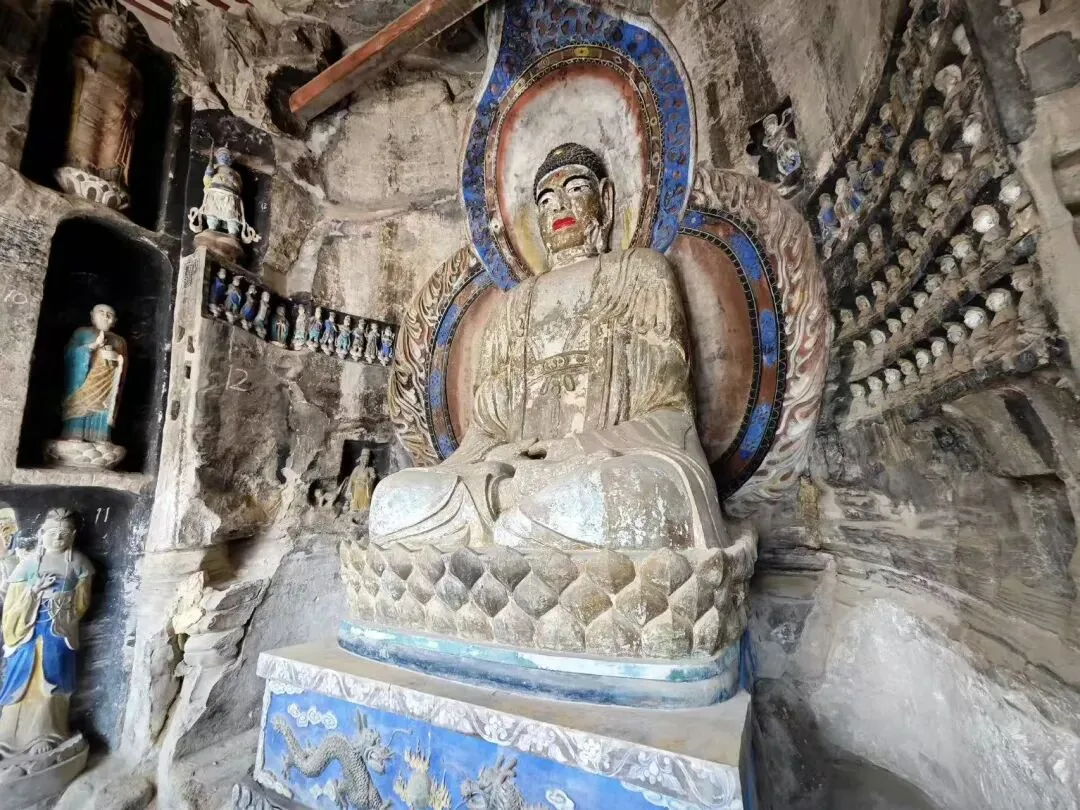
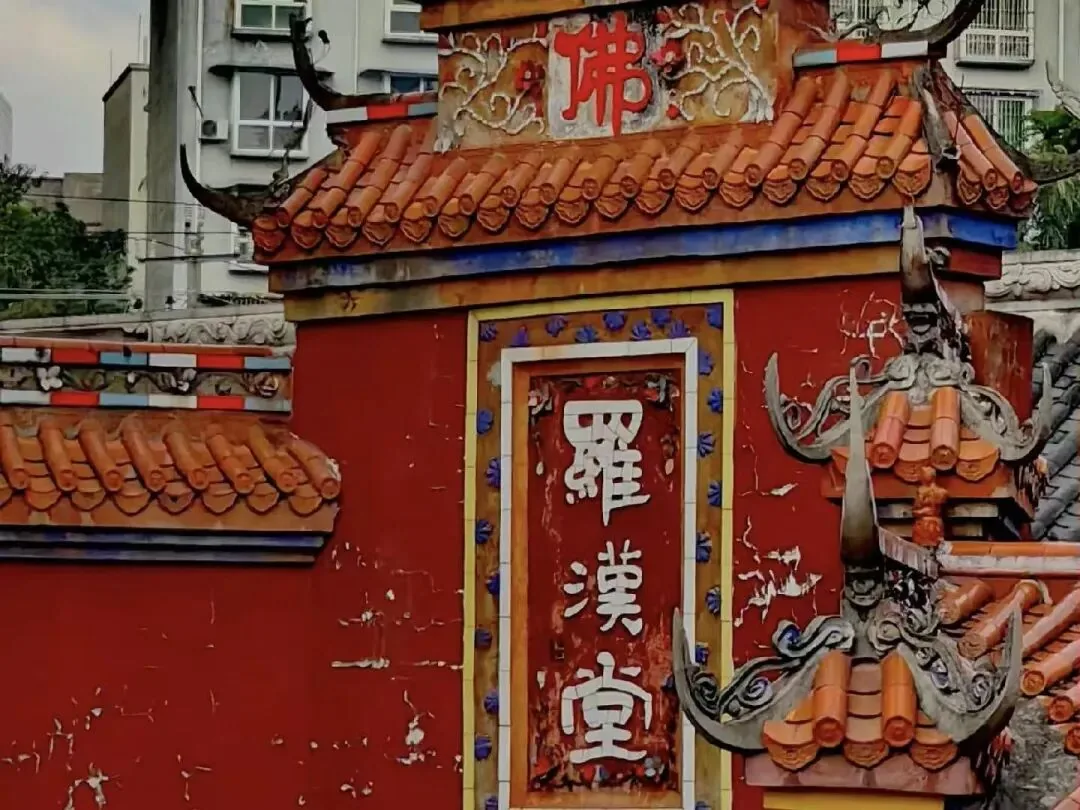
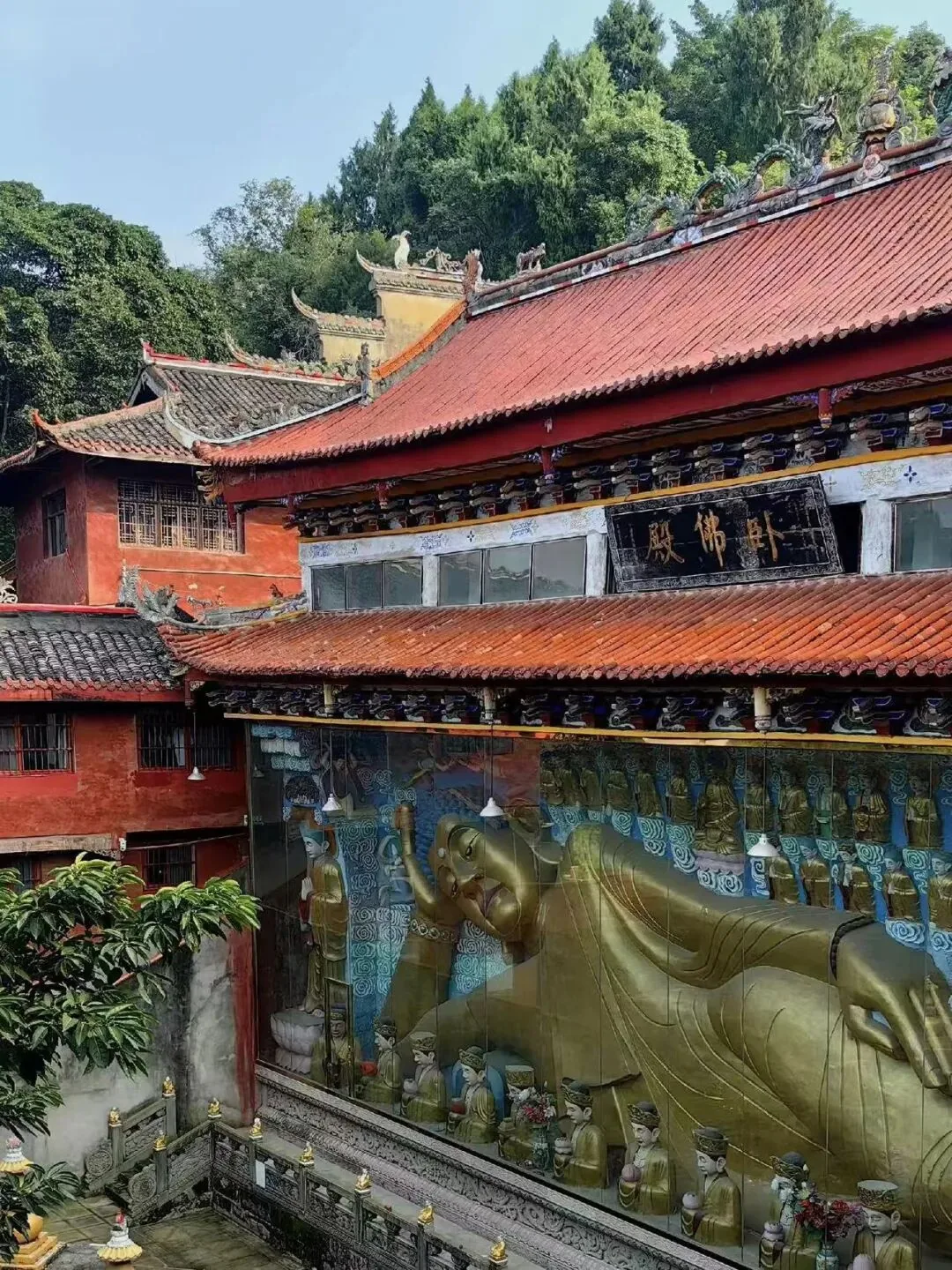
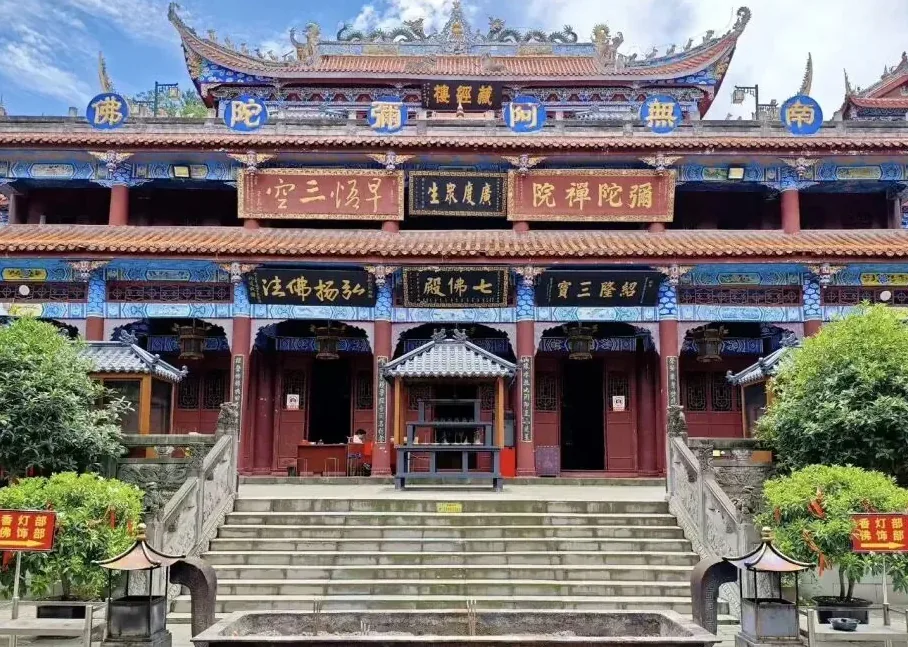
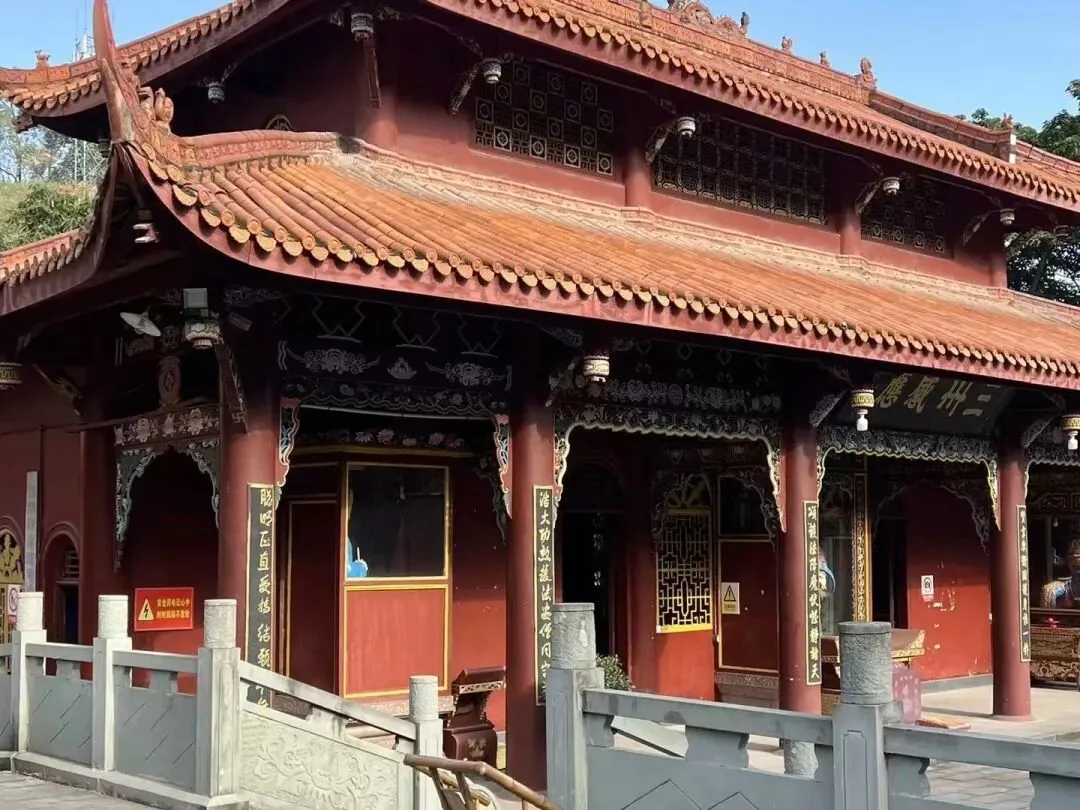
Today, Mituo Temple covers over 40 mu (about 6.6 acres) by the Jiangxi River, about one kilometer from the center of Jianyang. The whole temple is built against the mountain and by the water, rising step by step along the mountain slope, arranged along a central axis. The main buildings include Shengyang Cave, Sansheng Hall, Dizang Hall, Reclining Buddha Hall, Tianwang Hall, Guanyin Hall, Daxiong Hall, Arhat Hall, Nianfo Hall, and the Bell and Drum Towers. There are also the mountain gate, ancient cave, pagoda forest, and release pond. It’s a massive project with a grand atmosphere. The architecture imitates the style of Beijing’s Summer Palace and other pavilions—antique and elegant.
The Daxiong Hall is the core of Mituo Temple. It’s a two-story hall. The ground floor houses Shakyamuni Buddha, and the second floor houses Amitabha Buddha. It’s solemn but not intimidating.
A few worshippers were burning incense and praying here. Next to them was an old ginkgo tree. It was October, and the leaves were starting to turn yellow. Some had already fallen. It reminded me of Su Shi’s line: “Looking back at the dreary place, as I return, there is neither wind nor rain nor sunshine.” The dreariness of autumn always comes, but that “rain or shine” isn’t about the weather—it’s a state of mind. Leaves fall, the weather is good or bad, and you just don’t care. At this moment, kneeling here is everything.
Walking through the mountain gate inscribed with “Mituo Temple,” you first see Tianwang Hall. Maitreya Bodhisattva is always smiling. There’s a couplet here: “Open your mouth and laugh—laugh at the past, laugh at the present, laugh at everything; a big belly can accommodate—accommodate heaven, accommodate earth, accommodate all people.” This couplet sums up the Chinese philosophy of life: it’s not that there are no troubles, but that you don’t struggle with them.
Next to the Zushi Hall, there’s a steep wall with a large “Fu” (fortune) character on it. People believe that if you touch it with your eyes closed, you’ll have good fortune.
The temple houses over a thousand statues of various sizes, all stone carvings, exquisite and solemn. From a distance, they look like stars. In Southwest China, many people know the famous Dazu Rock Carvings, but few know that Chengdu also has many unknown but large-scale stone carvings, such as Anyue Rock Carvings, Qionglai Rock Carvings, and the ones here in Jianyang.
The Arhat Hall is also stunning. The hall is grand and spacious, with 500 arhat statues, each with a different expression, lifelike and vivid.
In the Sansheng Hall, the three great Buddha statues—Amitabha, Guanyin, and Dashizhi Bodhisattva—are about 5.9 meters tall. The back seat, Wannian Tai, is over 7 meters, making them the tallest Buddha statues in the temple.
In the Reclining Buddha Hall, the reclining Buddha is 22.8 meters long and 7.7 meters high. It’s one of the few large halls in the Bashu region.
Many of the buildings and statues in Mituo Temple are truly breathtaking. It’s just too low-key, so few people know about it.
The main hall stands tall, with flying eaves and carved beams, nestled among green mountains and plants. In the courtyard, ancient trees reach to the sky—camphor, nanmu, and ginkgo are lush. Autumn has arrived, and the osmanthus trees are quietly blooming. The tiny flowers hide among the green leaves, filling the air with fragrance. In the release pond, koi fish swim freely without a care. At this moment, this quiet temple is enough to calm your mind.
Beyond the Temple
Just outside the temple is the Jiangxi River and the railway. This is where the everyday life of Jianyang people happens—they stroll, farm, and take the train. The temple stands quietly here. As you go down the mountain, another train passes over the railway bridge. The sound rolls across the river and quickly fades.
Jianyang’s scenery isn’t famous, and Mituo Temple is even less known than Mount Emei or Mount Qingcheng. But it’s precisely this lack of fame that preserves the truest tranquility for those willing to come in.
Autumn days are long and leisurely. May we all find a moment of peace and tranquility for our souls.
So, do you like this kind of Mituo Temple?
Practical Info
- Address: 75 Shengyangdong Street, Chengbei, Jianyang City, north of the Chengdu-Chongqing railway bridge, by the Jiangxi River (search “Jianyang Mituo Temple” in your navigation app).
- Tickets: The main temple area is free; the 500 Arhat Hall charges a separate 10 RMB.
- Transport: Take Metro Line 18/19 to Tianfu Airport North Station (Exit A2), transfer to Bus K2 to Music Square Station, then walk 800 meters.
- Food nearby: After visiting the temple, go to Jianyang for Jianyang mutton soup, fatty intestine noodles, fly restaurants (hole-in-the-wall eateries), and Shiqiao dried noodles.
- Tips: Photography is not allowed inside the Arhat Hall. Shengyang Cave is the highest point of the temple. Legend says Zhang Sanfeng practiced here. The cave is slippery, so be careful.
Pro tip: The temple is free, but the Arhat Hall is worth the 10 RMB—just remember, no photos inside.
Local insight: Many locals know Shengyang Cave but not Mituo Temple. It’s the perfect spot for some quiet reflection.
Worth knowing: The cave can be slippery, so watch your step if you go up.
Autumn is a lovely time to visit, with ginkgo leaves turning yellow and osmanthus blooming. May you find your own moment of peace here.