Dongmen Shijing: The Old Chengdu Street Locals Actually Love
Most visitors to Chengdu head straight for Kuanzhai Alley, Wuhou Shrine, or the Panda Base. Those places do represent Chengdu — but honestly, they’re packed every single time, and the experience isn’t great. Today, let’s go somewhere genuinely meaningful on Chengdu’s east side: Dongmen Shijing, one of the old Chengdu streets locals actually love.
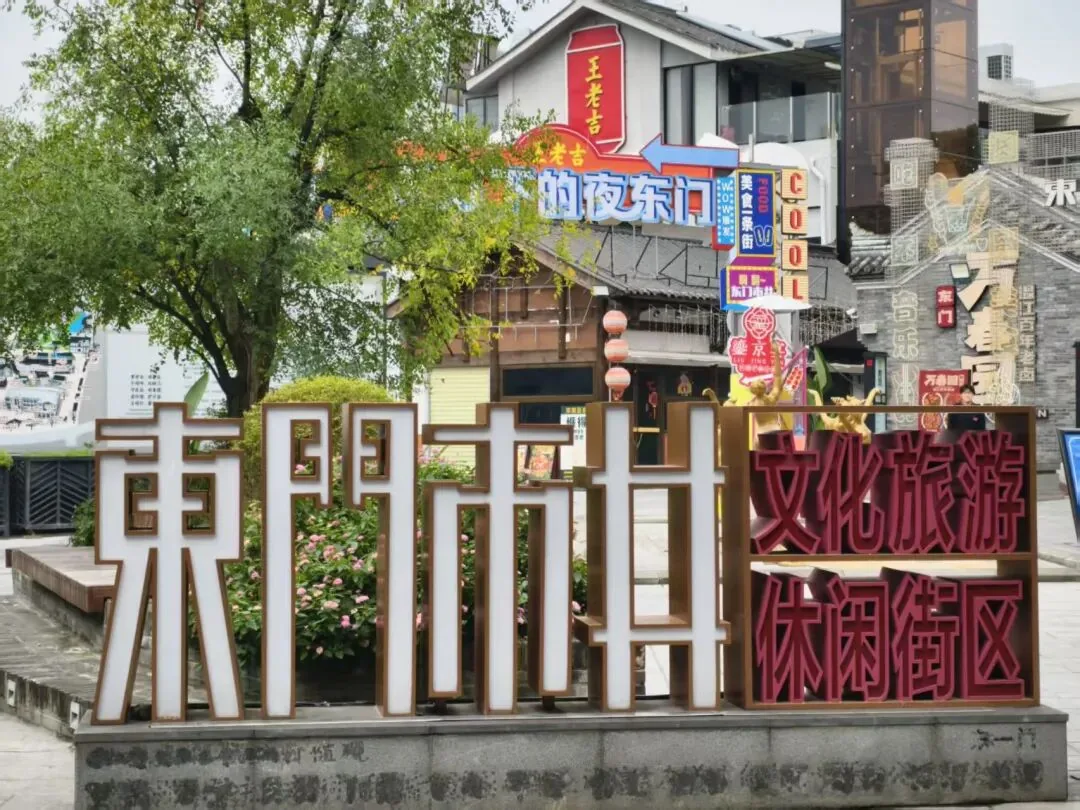
This is Dongmen Shijing (东门市井), a thoroughly down-to-earth slice of city life.
A Story That Started a Century Ago
Over a hundred years ago, on the Chengdu plain, there was a girl named Deng Yaogu who had never been to Chengdu. She loved listening to Grandma Han Er talk about the city — its streets, its temples and painting academies, the fresh little vegetables there were to taste with every season.
This is how the writer Li Jieren put it:
“She knew Chengdu had four city gates — east, south, west, and north — how tall and thick the walls were; how the crowds jostled through the gate tunnels…”
A person who had never set foot in Chengdu remembered it more clearly than anyone.
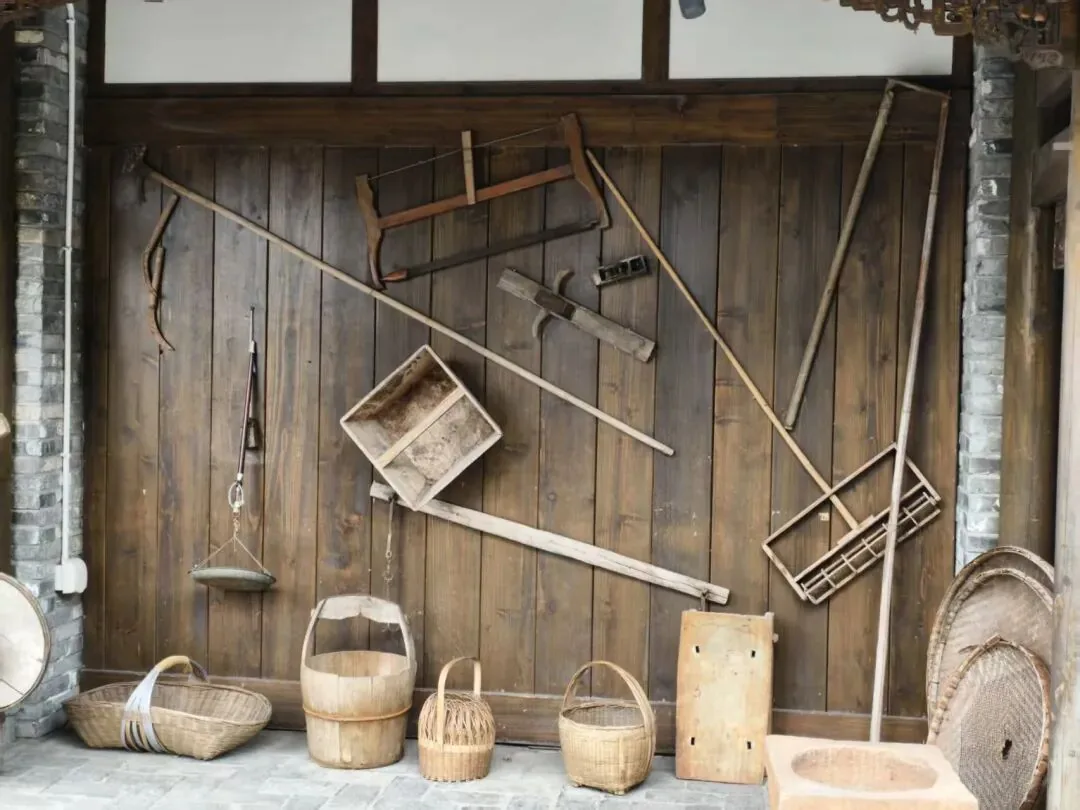
A hundred-odd years later, I arrived at the place Li Jieren described. In the past this area was bustling — market-goers, sedan-chair carriers, shopkeepers opening their wooden boards, people squatting on the curb eating dan dan noodles — all crammed onto the same bluestone-paved road.
The word “shijing” (市井, roughly “marketplace life”) never needed explaining on the east side of Chengdu, because that’s simply what it was. But as the city grew — south, west, and further east — Kuanzhai Alley and Jinli each carved off a piece of the “old Chengdu” imagination. The east side was left with a gap: it had the former residence, it had the old stories, but it lacked a place where you could sit down and let time drain away. Now Dongmen Shijing fills that gap in the seam.
What to Expect
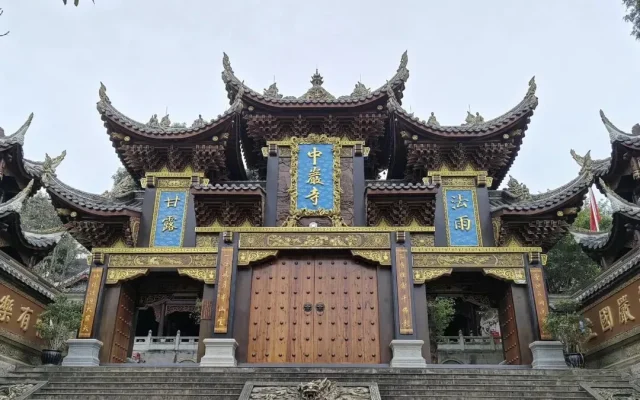
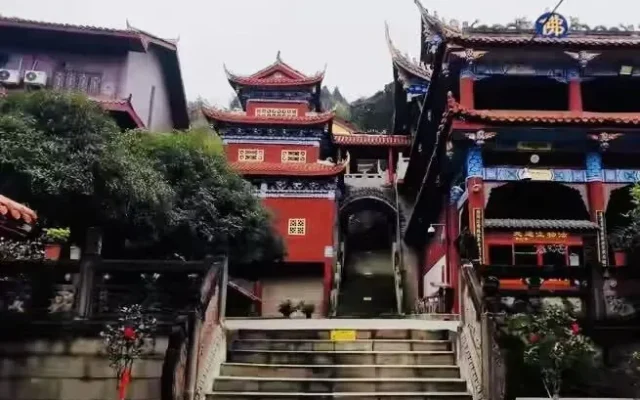
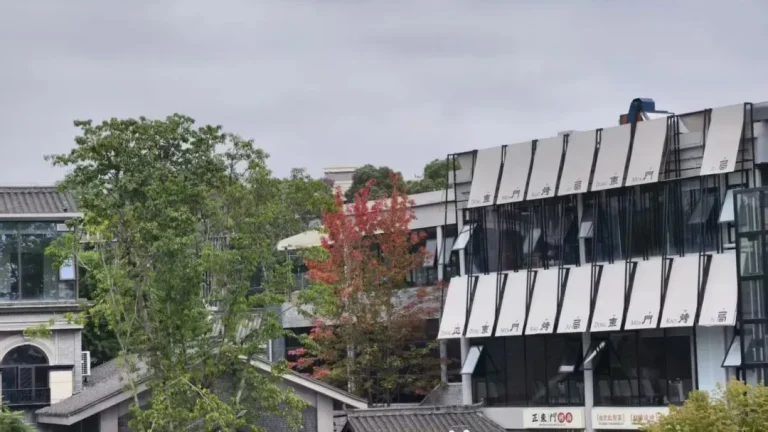
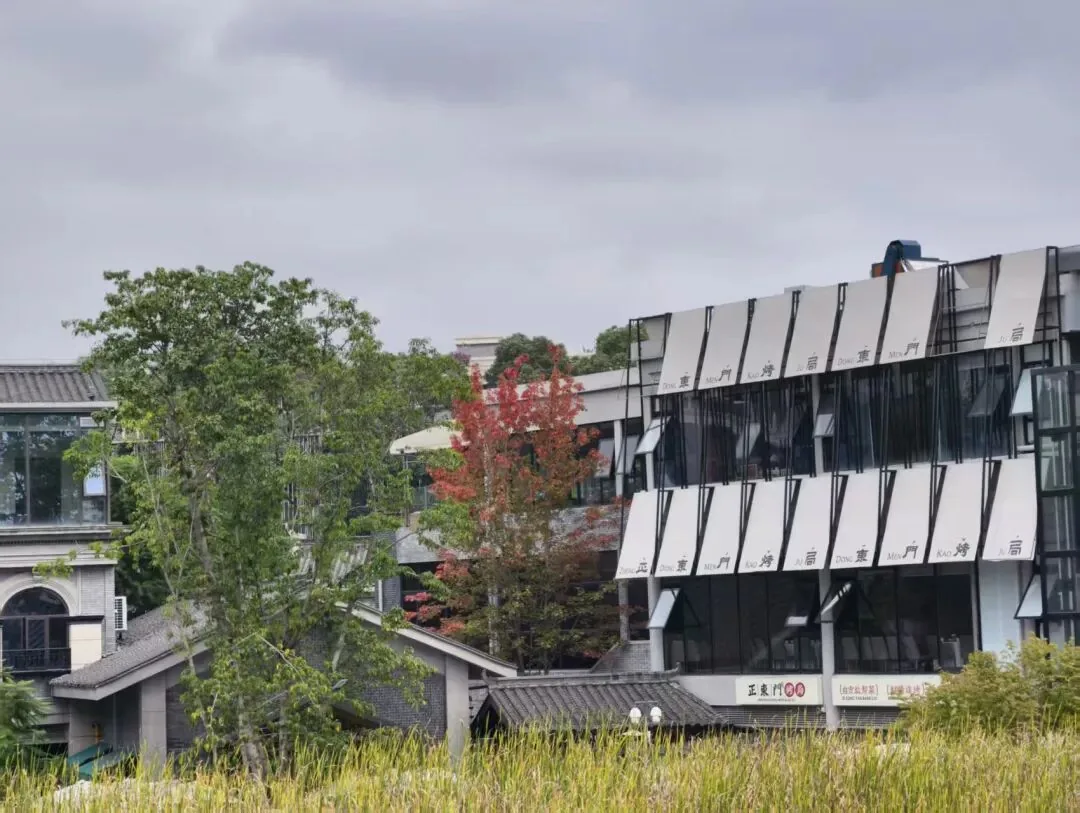
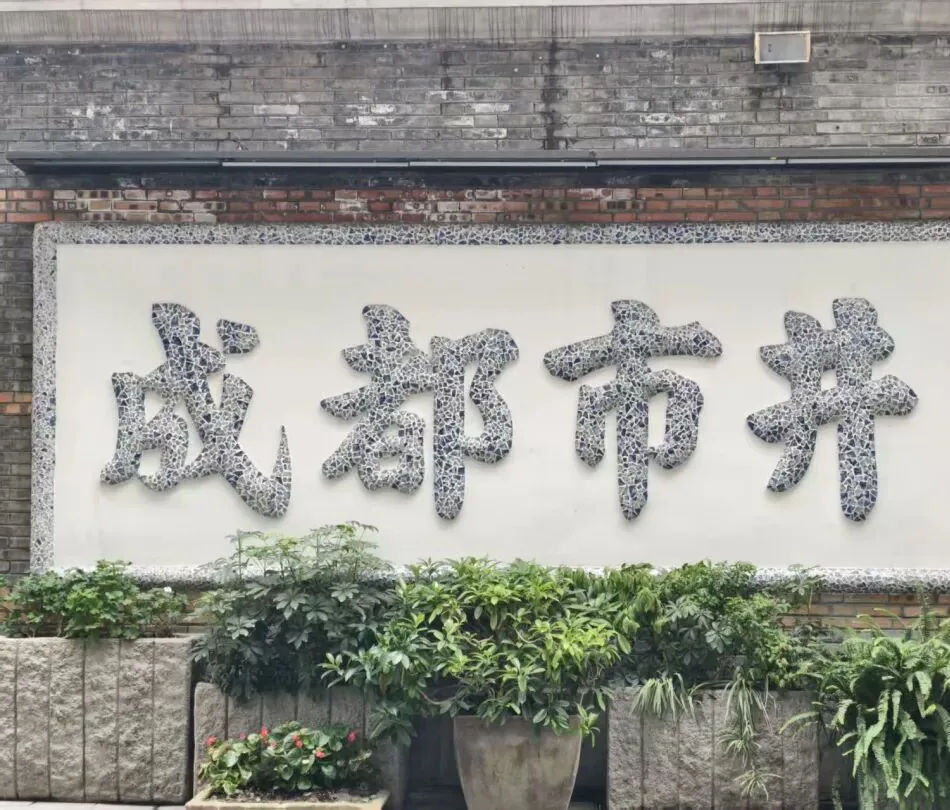
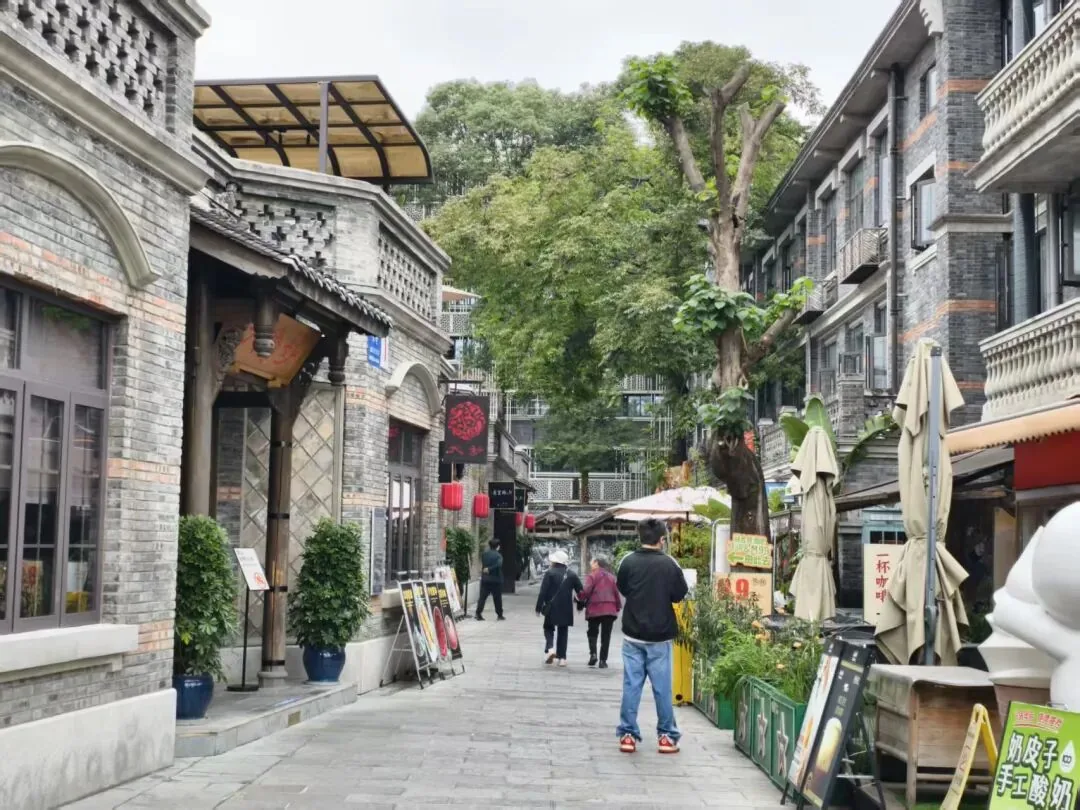
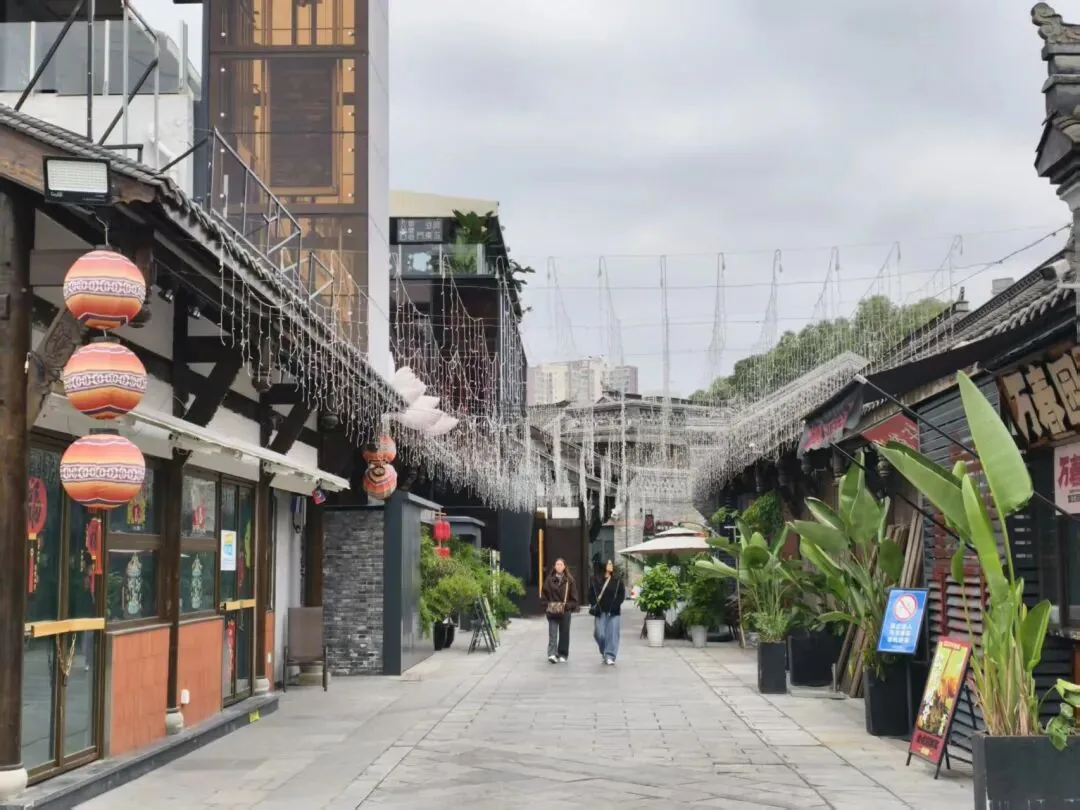
Dongmen Shijing hides at the foot of Shizi Mountain in Jinjiang District, next to the former residence of writer Li Jieren, Lingke. It isn’t big — one bluestone-paved old street, a few grey-walled, dark-tiled Western Sichuan folk houses, a few sunken market squares. Stroll and stop as you like; you can cover it in just over an hour.
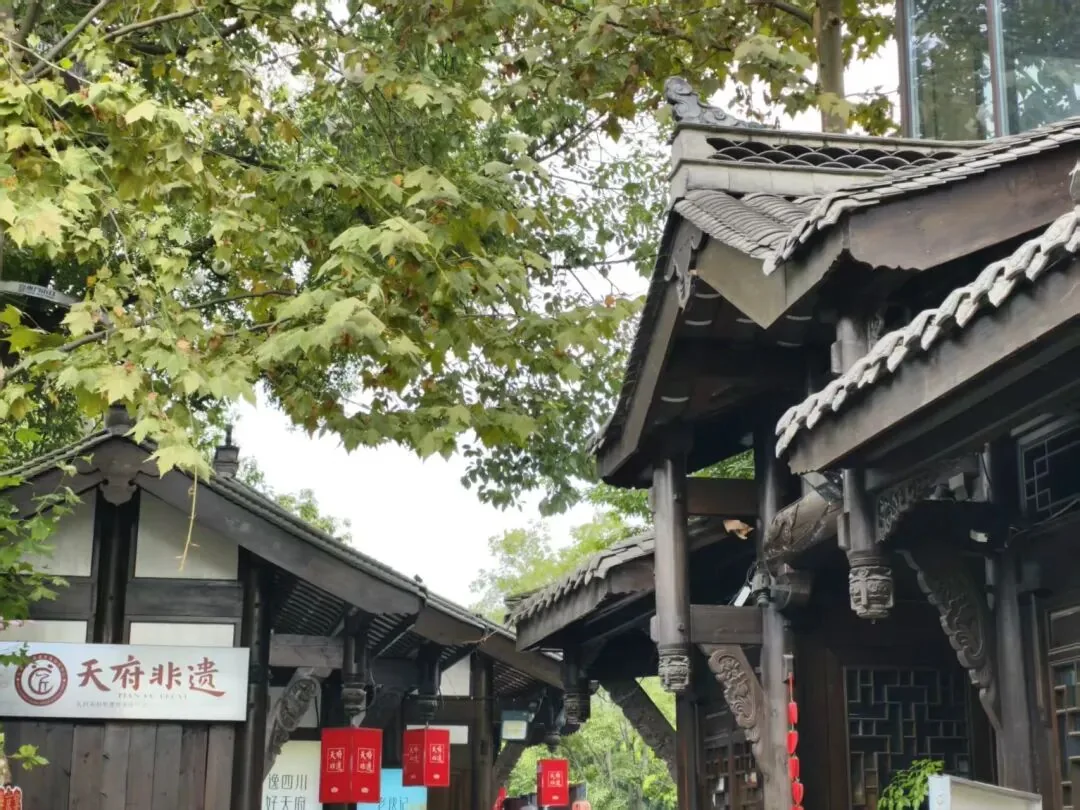
But this not-too-long, not-too-short old street shows the flavors of old Chengdu life to the fullest. There’s no ornate archway at the entrance — just low wooden-door shopfronts on both sides, with grey tiles and upturned eaves.
Li Jieren’s Lingke Residence
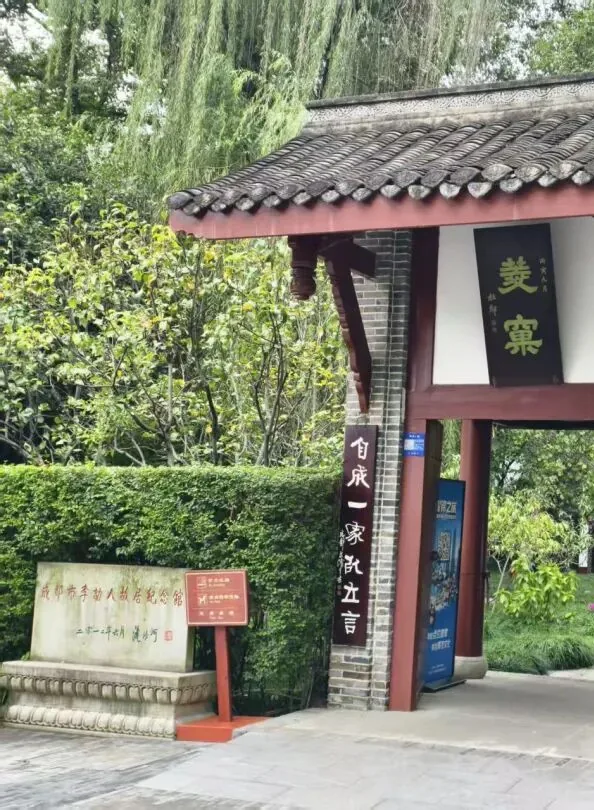
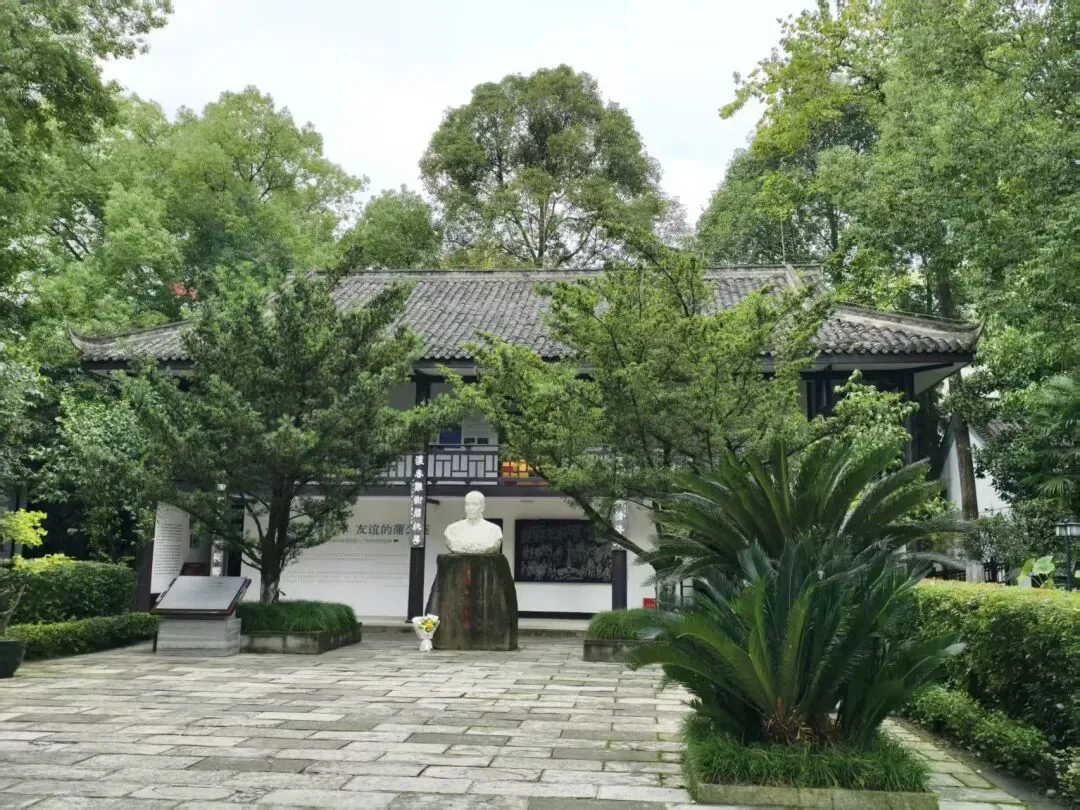
In 1938, to escape Japanese bombing, Li Jieren built an evacuation house outside Chengdu’s east gate at Shahebao. The following spring the whole family moved in. Because there was a pond in front of the house planted with water caltrop (菱角, língjiǎo), he inscribed two characters above the door himself: Lingke (菱窠). He lived and wrote here for decades afterward.
In this small courtyard, he completed what’s known as the “Great River Trilogy”: Ripples Across Stagnant Water (死水微澜), Before the Storm (暴风雨前), and The Great Wave (大波). Later generations called him “Chengdu’s true historian” and “the encyclopedia of Western Sichuan folk customs.”
A Street Built from a Novel
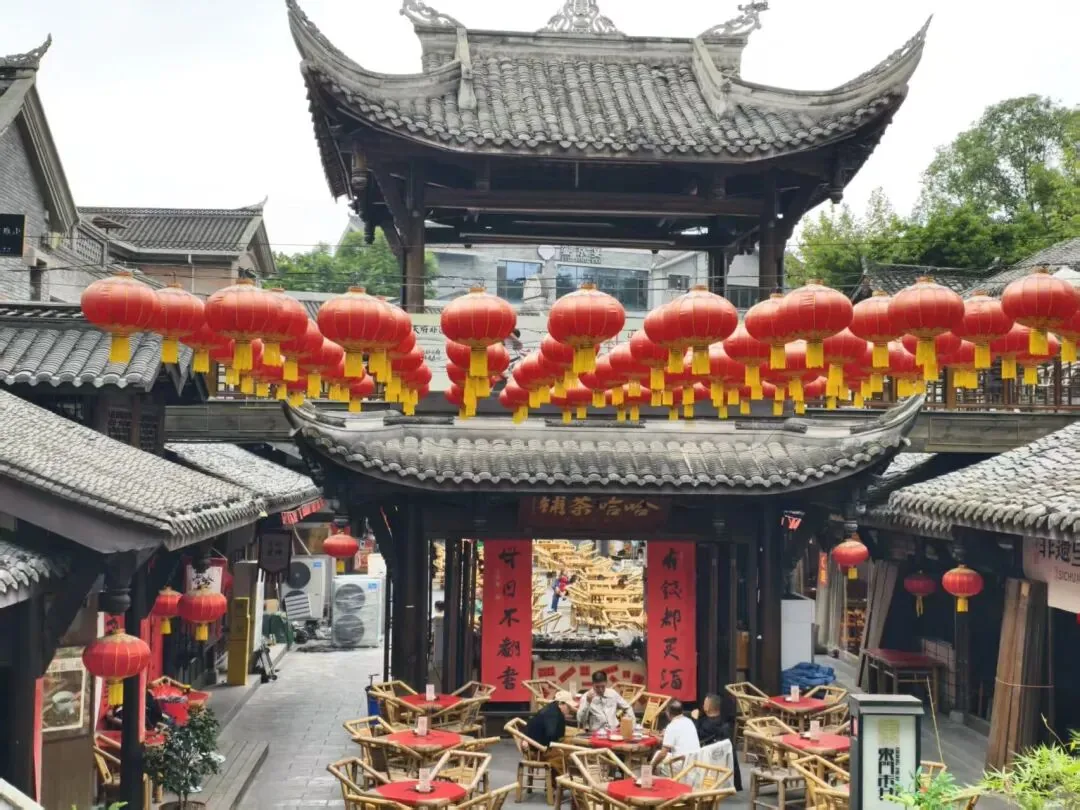
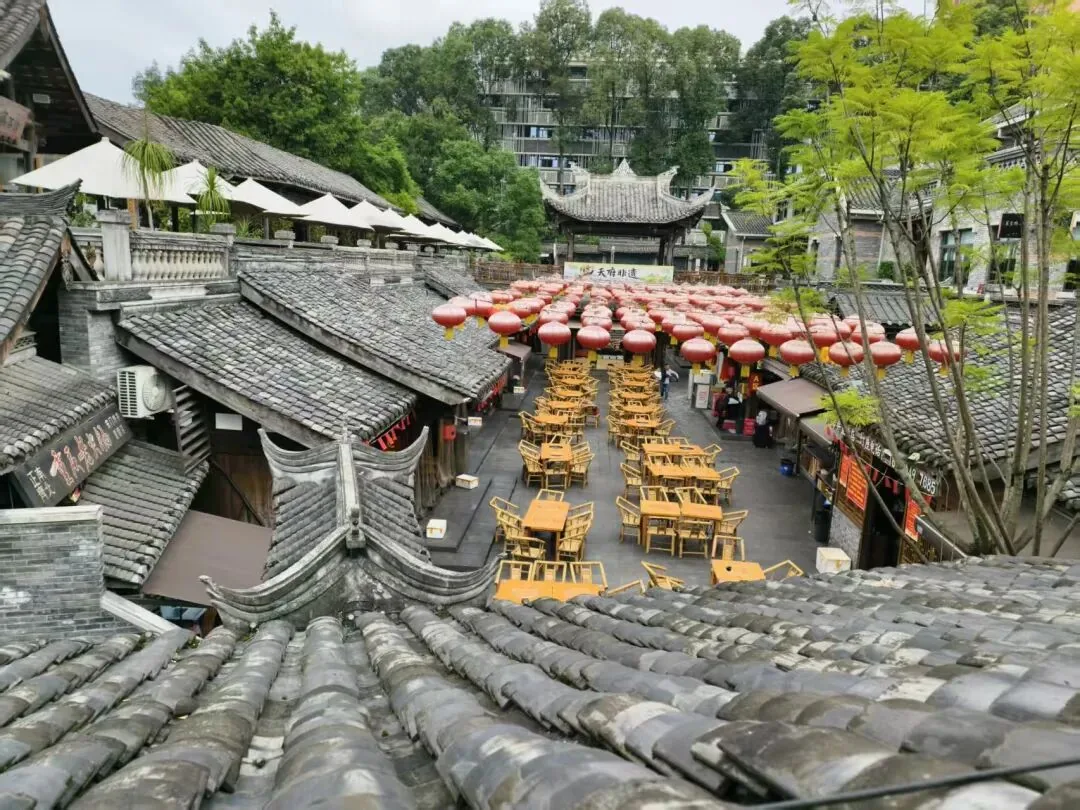
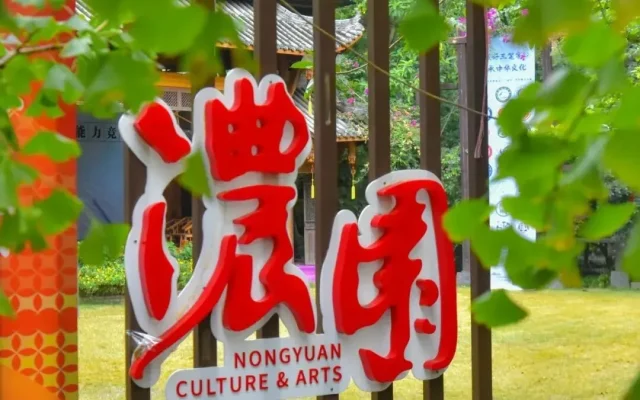
Later, Dongmen Shijing opened as a street right in front of Lingke’s gate, covering about 72 mu. There was no massive demolition or rebuilding — not a single original resident was moved out — and there’s no entrance fee. The whole district was restored following the old Chengdu scenes in Ripples Across Stagnant Water, with every detail recreating the old Chengdu of Li Jieren’s writing.
Grey bricks and dark tiles of Western Sichuan houses, open corridors with traditional chuandou (穿斗) timber-frame structure, old-style teahouses, pavilions and waterside gazebos, plus a group of Republican-era mansion buildings blending Chinese and Western styles — wandering here is like stepping into Republican-era Chengdu a hundred years ago.
Names from Ripples Across Stagnant Water — Caishiba, Tianhuizhen, Deng Yaogu — are used directly as shop signs and landmarks around the district.
Teahouse Life: The Real Draw
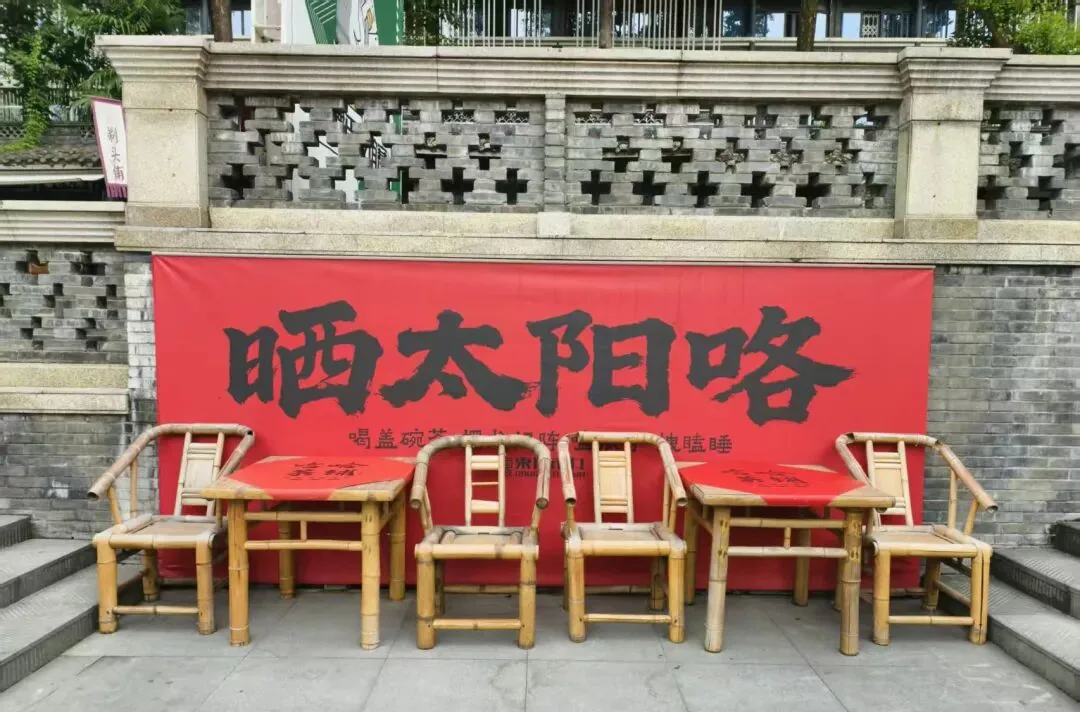
Tea is the biggest feature of Dongmen Shijing. The teahouses here serve the most authentic old-Chengdu “baba tea” (坝坝茶, open-air courtyard tea): bamboo chairs and wooden tables set out in an open yard, and one covered-bowl tea (盖碗茶) is enough to keep you there half the day.
It’s late autumn now. Sunlight filters through the plane-tree leaves, scattering flecks of light on the tea tables. Regulars sit scattered in twos and threes — some reading alone, some gathered chatting (摆龙门阵, bǎi lóngménzhèn), some just squinting in the sun doing absolutely nothing.
Chengdu people call this state “shua” (耍) — one simple word that captures the city’s leisure. Honestly, this is old Chengdu’s most luxurious pleasure.
Now and then a pole-carrying vendor walks past the teahouses. There’s also tea-art performance, ear cleaning, and on holidays Sichuan opera face-changing and various entertainment activities. Here you can truly feel the slow-life state.
Local insight: Don’t rush through — order a covered-bowl tea, claim a bamboo chair, and do nothing for a while. That’s the whole point.
Sights Around the District
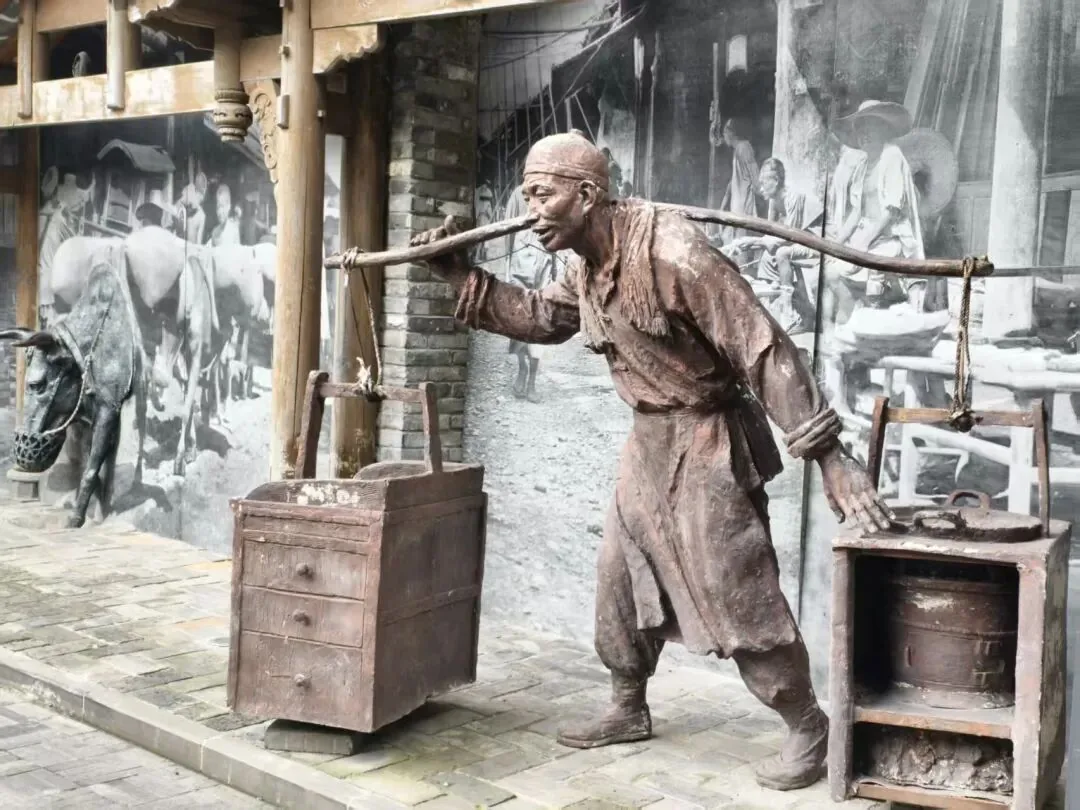
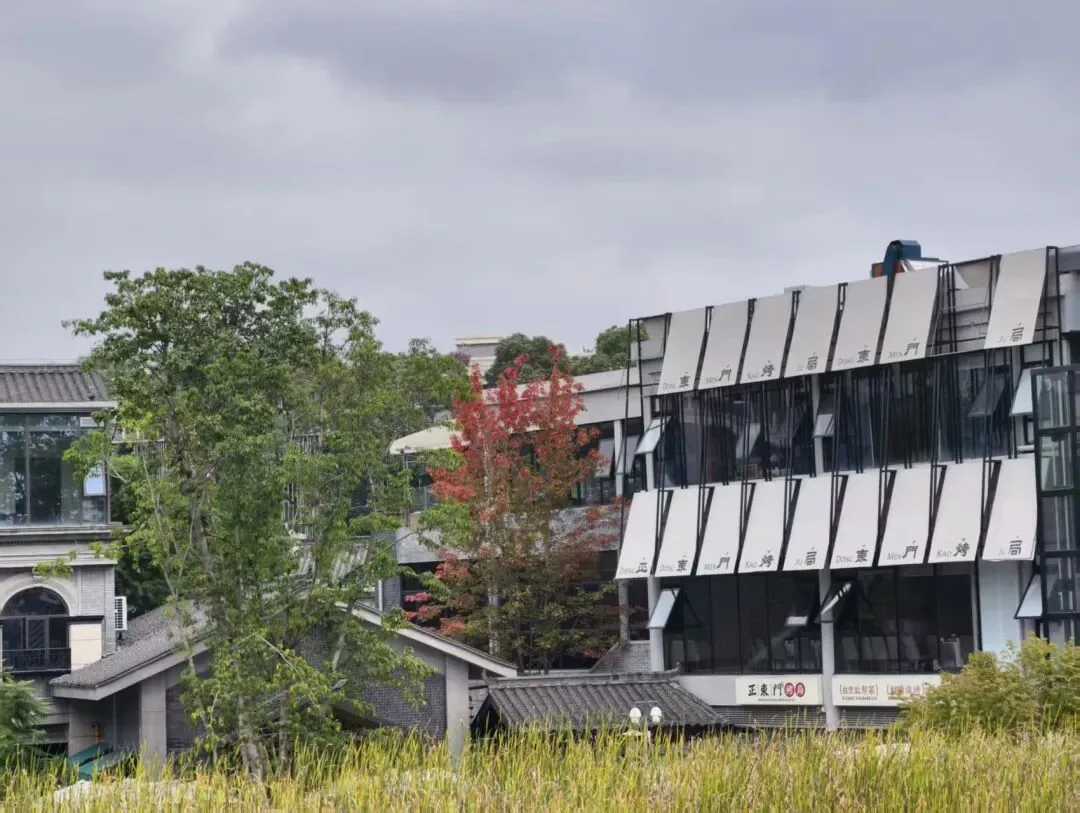
The relief wall shows the bustling market scene of East Street (东大街) during the Republican period — pole carriers, cart pushers, bargainers, people squatting at stalls eating noodles, packed shoulder to shoulder. There are many sculptures nearby too.
“Silk and bamboo music fills the city day after day, half drifting into the river wind, half into the clouds.”
Du Fu wrote of official banquets, but Chengdu back then was just as lively. This kind of easygoing life, I suspect, only exists in Chengdu.
The district also has Chengdu’s city flower, the hibiscus (芙蓉花, fúrónghuā), and it’s in full bloom right now — changing three times a day, white to pink to red, very pleasing to the eye. Not far off, silvery-white reeds sway in the wind; sometimes you get the illusion of being out in the countryside, and you forget yourself for a moment.
When night falls, red lanterns along both sides of the street light up in a chain, warm red light spilling along the bluestone road and onto the grey-tiled, grey-brick walls — a soft, gentle atmosphere.
Why It Matters
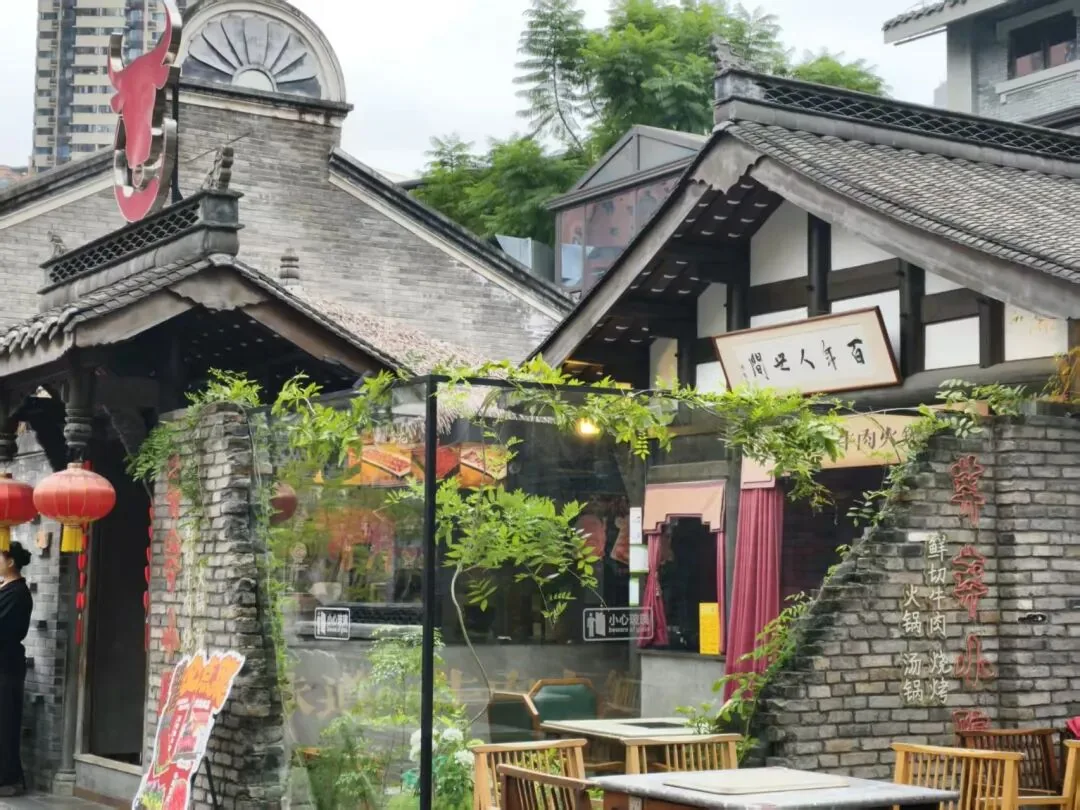
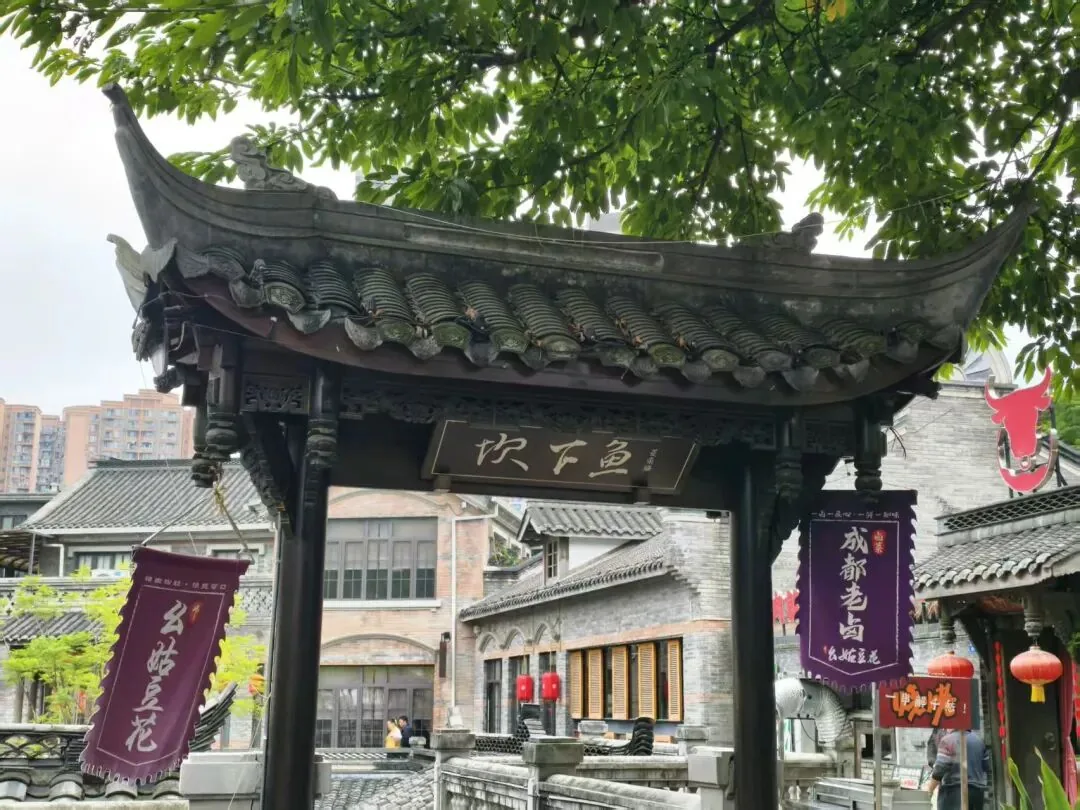
Over a hundred years ago, Li Jieren wrote down this city’s teahouses, docks, markets, paoge (袍哥, secret-society brotherhood members), women, and accountants, stroke by stroke.
He probably never imagined that eighty years later, someone would follow his words and build a street into the shape of his book. The Chengdu in the book has come to life.
What does old Chengdu look like? It’s in this bowl of covered-bowl tea, this piece of danhonggao (蛋烘糕, egg-baked cake), this round of longmenzhen chatter, this snatch of street-corner gossip.
If you have time, grab a few friends and come wander Dongmen Shijing — spend a day of slow living, comfortable and ba shi (巴适, perfectly chill).
Practical Info
- Address: No. 9 Lingke West Road, Jinjiang District, Chengdu (near Sichuan Normal University North Gate, Shizishan Subdistrict). Navigate to “东门市井” (Dongmen Shijing).
- Tickets: The district is free and open all day. Li Jieren’s former residence (Lingke) is also free — no reservation needed.
- Getting there: Take Metro Line 7 to Shizishan Station, Exit A1, and walk about 200 meters. If driving, navigate to “东门市井”; there are paid parking lots nearby.
- Heads-up: This isn’t an ancient town. It’s a Republican-era marketplace culture district restored based on Li Jieren’s literature. It’s all about everyday atmosphere — no heavy historical monuments. Its strength is that locals actually come here, and commercialization is kept in check.