Dongmen Shijing: The Free “Old Chengdu” Block That Feels More Like Real Life Than Kuanzhai Alley
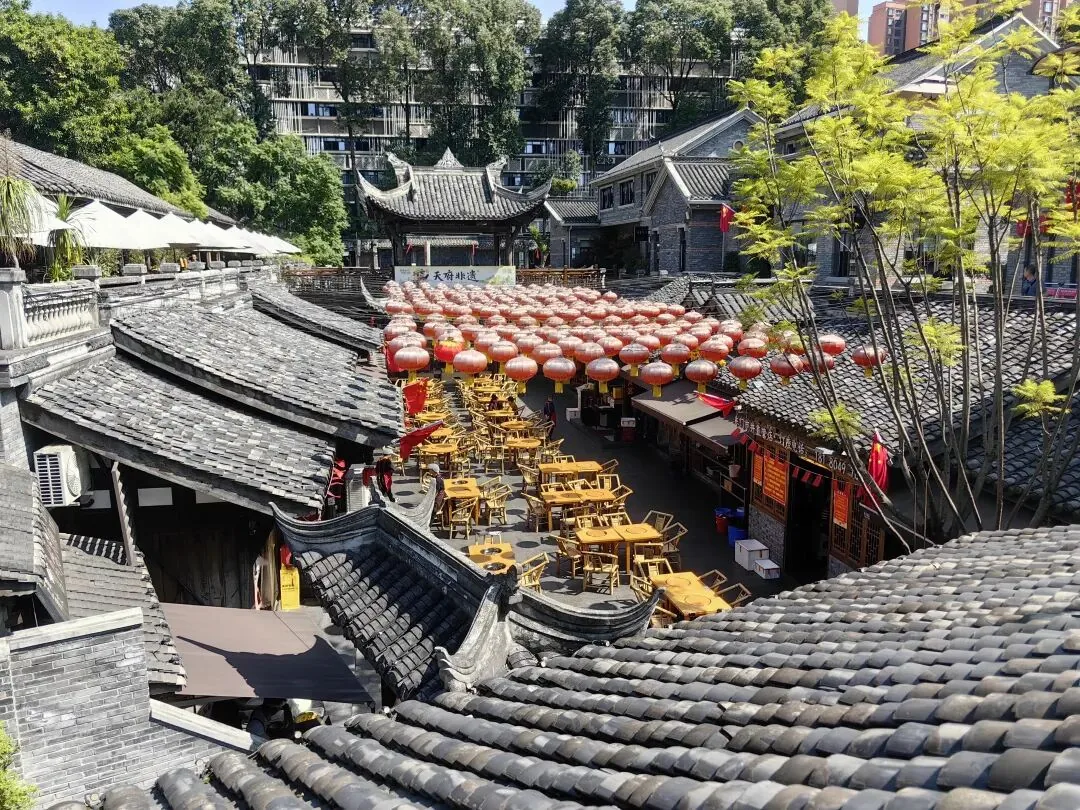
You slept in on a weekend and didn’t head out until after 10 a.m. The sun is almost offensively nice — staying home would be a waste.
A friend texts: “Where to?”
You think for a second, then reply: “Dongmen Shijing. Metro goes straight there, and it’s free.”
Take Line 7 to Shizishan Station, exit A1, walk 100 meters, and the gray-brick, blue-tile old houses are right in front of you. Tucked along the East 2nd Ring Road, this block charges no admission — but the old Chengdu street life it recreates feels more real than plenty of paid attractions.
A Chengdu Story, Written by a Chengdu Native
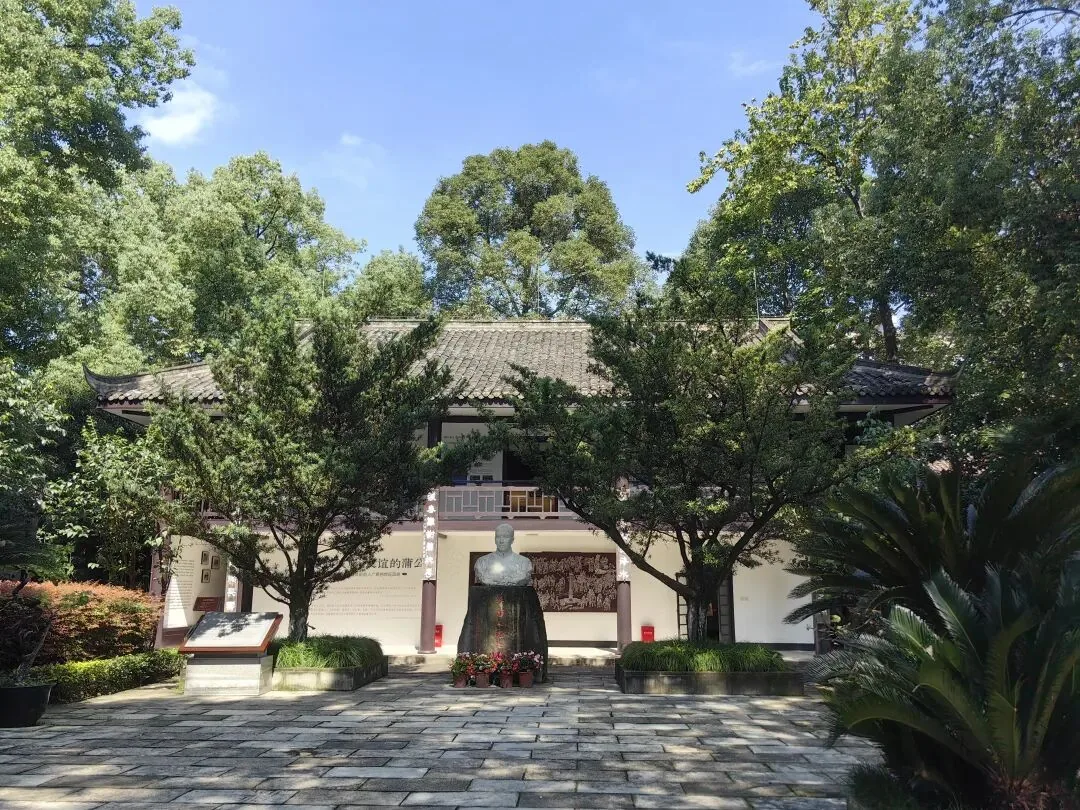
Dongmen Shijing was built around an old residence — Li Jieren’s former home, “Lingke.”
Li Jieren is the writer who, in the history of modern Chinese literature, “wrote Chengdu most authentically.” The lanes, teahouses, market days, flower fairs — every word captures the days lived by generations of Chengdu people.
In 1939, he bought a few thatched cottages in Shahebao. There was a pond in front planted with water caltrop (língjiǎo), so he named the place “Lingke” (Water-Caltrop Nest). He lived here for 24 years and wrote classic after classic.
Yuan Tingdong, a Bashu culture scholar and advisor to Dongmen Shijing, says every detail here is recreating the old Chengdu from Li Jieren’s writing.
After seeing the former residence, walk into the block and you’ll get it: this isn’t faux-antique. It’s the words from the books, built into bricks and tiles.
Between Gray Bricks and Blue Tiles, Old Chengdu’s Code
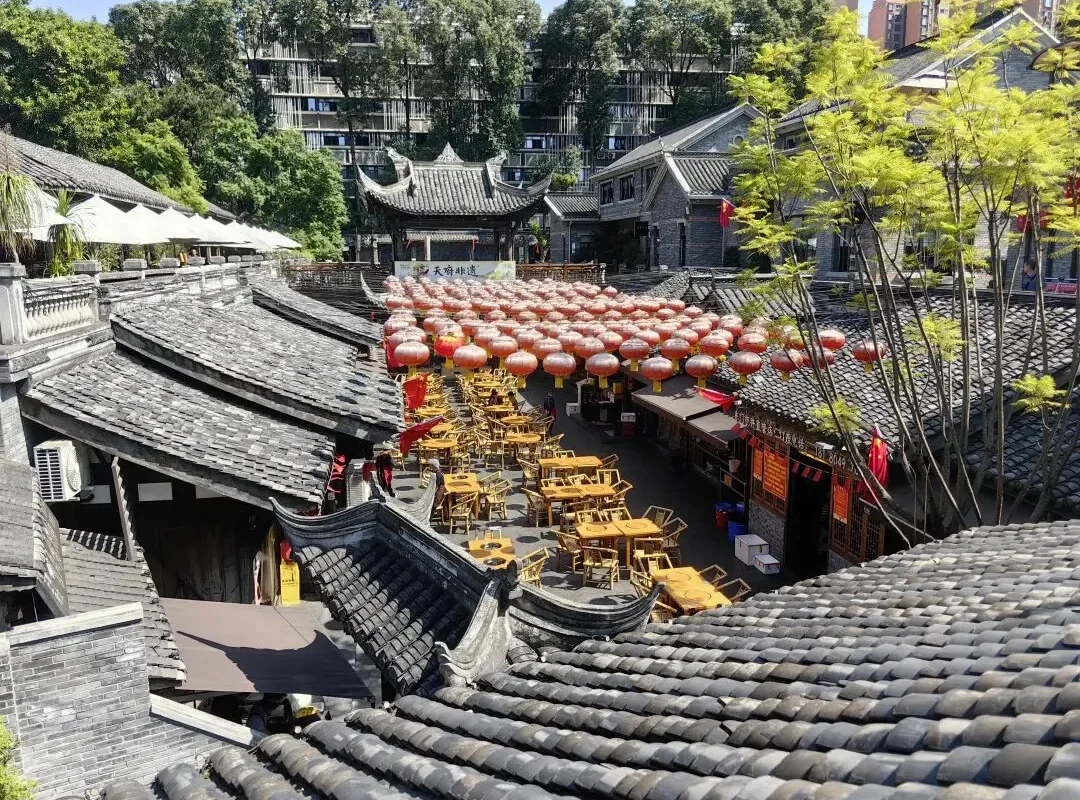
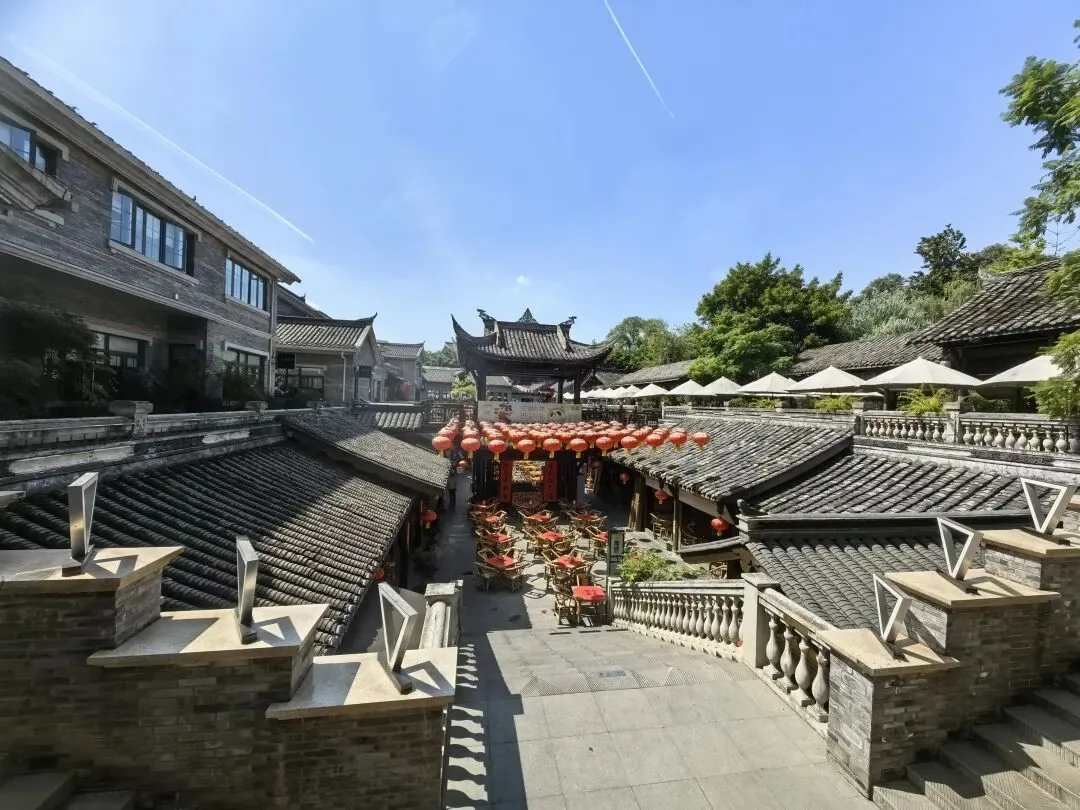
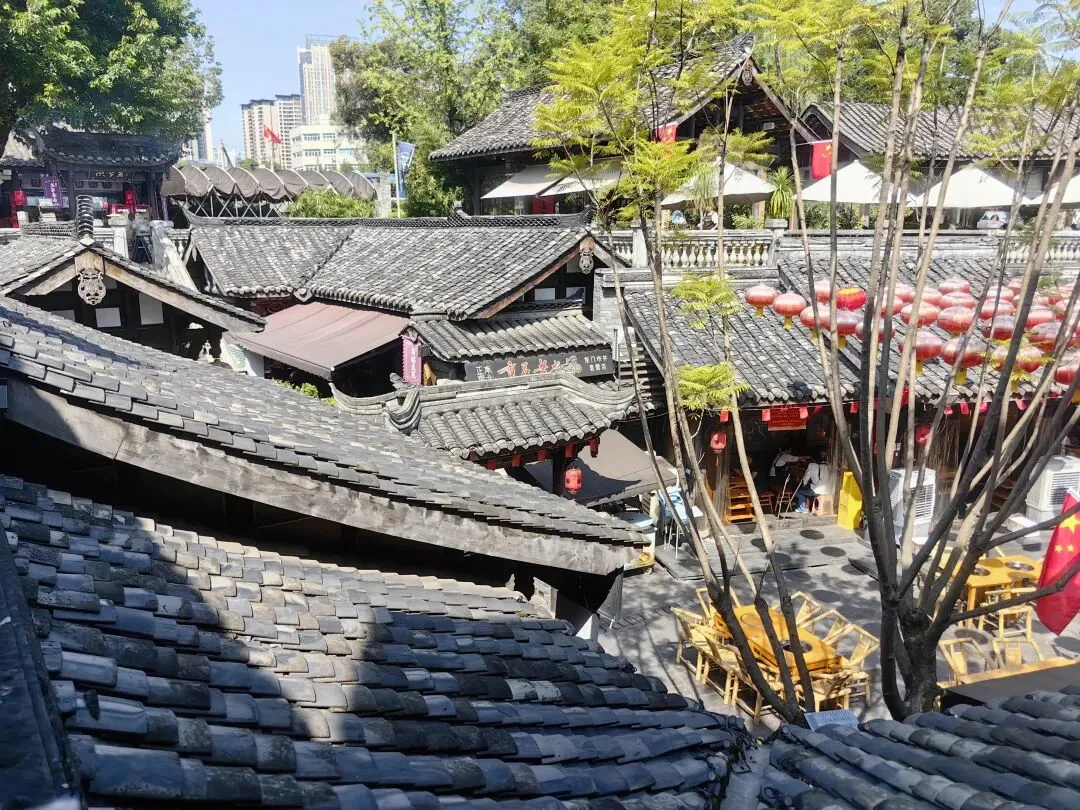
Step into the block and bluestone paths stretch underfoot, flanked by gray-brick, blue-tile Western Sichuan houses. You’ll find the full set: mansion-style buildings, a sunken market plaza, plank-front eateries, old-style teahouses, and pavilions over water.
On one wall is a long relief carving of old Chengdu market scenes — a shopkeeper selling wine, common folks buying wine, ox carts hauling goods. Each panel has a source.
Above the sunken plaza hang paper umbrellas of every color. They shade you by day and light up at night, a riot of color.
Go deeper and even the names are deliberate. “Caishiba,” “Tianhui Town,” “Deng Yaogu” — all place names and characters from Li Jieren’s novel Ripples Across Stagnant Water (Si Shui Wei Lan). Older Chengdu locals will probably smile in recognition. If you’re a visitor, it’s still great to take a stroll and then go read the novel.
Dam Ba Tea: 10 RMB for an Afternoon
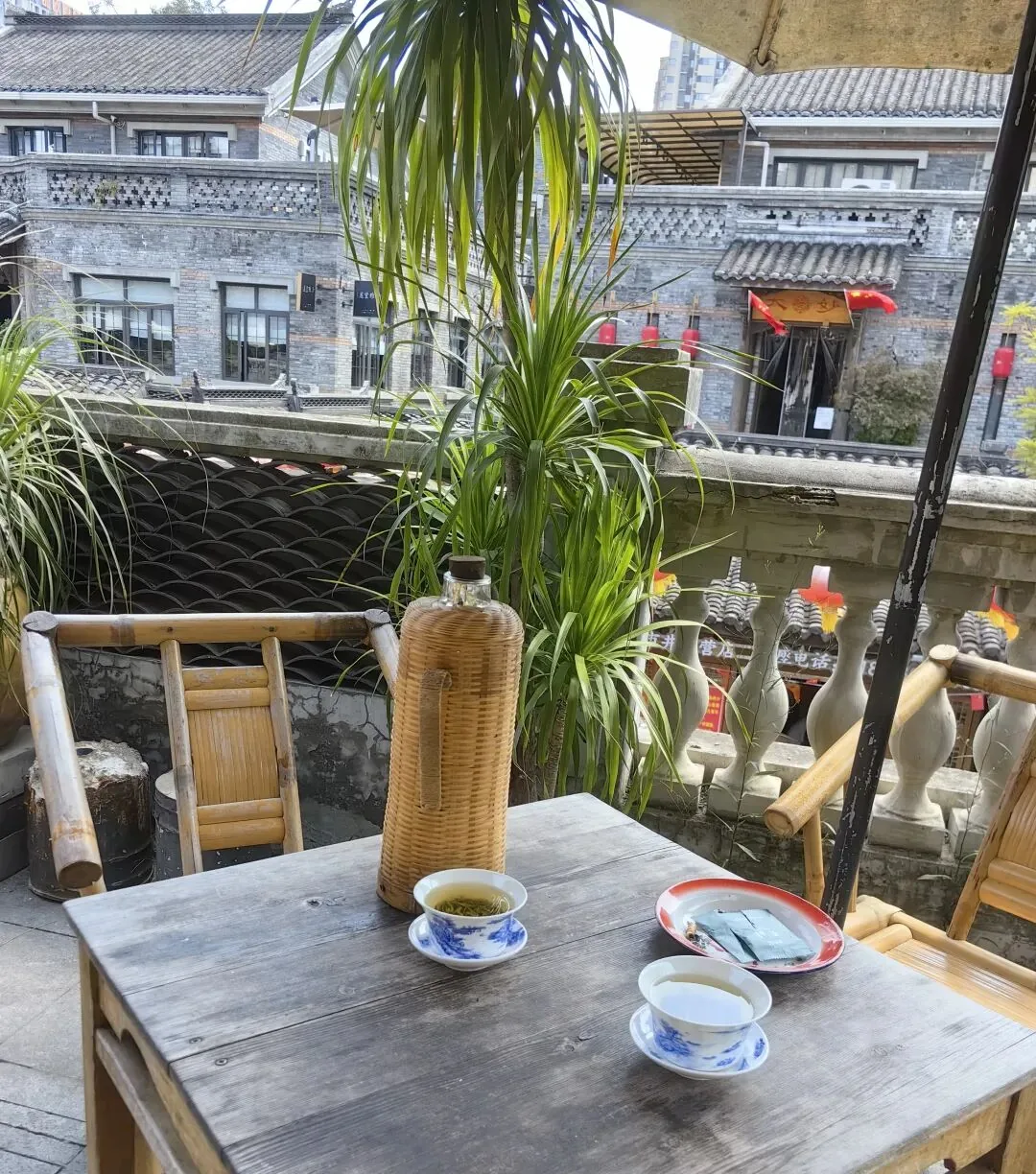
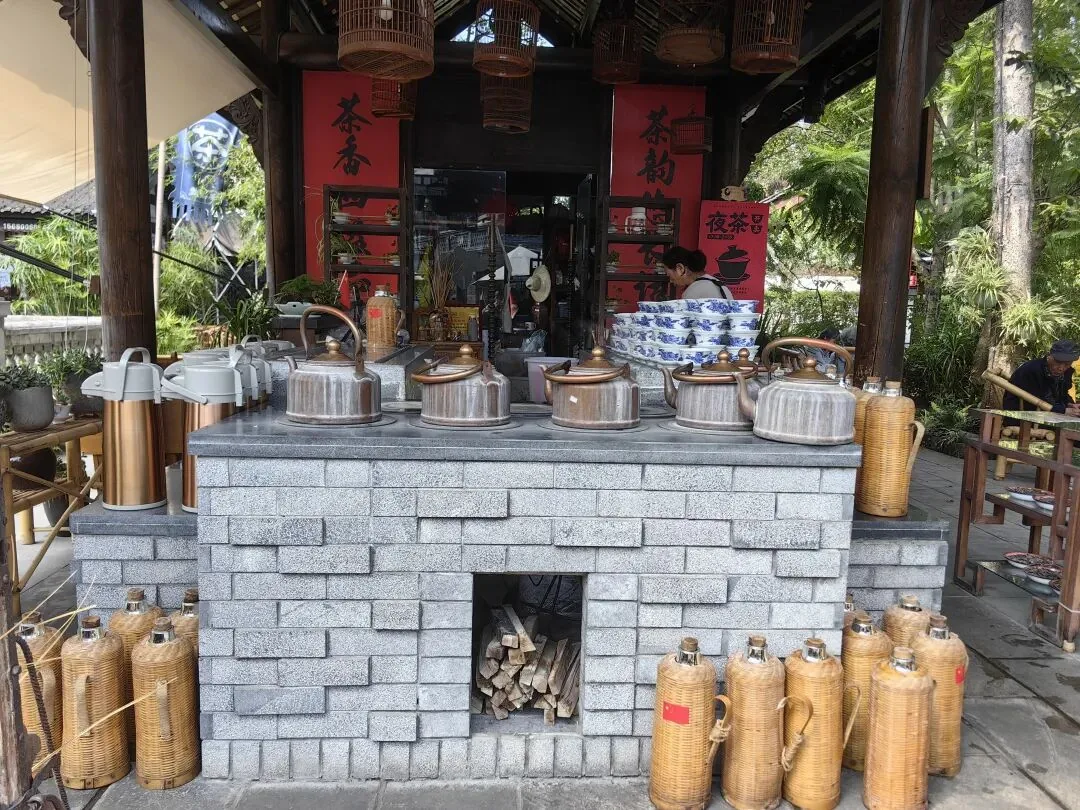
When your legs get tired, find a teahouse and sit. At Lingke Tea House in the sunken plaza, bamboo chairs and square tables; once the gaiwan tea arrives, you just melt into the seat.
“Boss, a bowl of Sanhua.”
Sanhua is the Chengdu nickname for third-grade jasmine tea — the entry-level tea for teahouses. The cheap stuff is 10 RMB; the pricier stuff is just over 30. One cup of tea buys you an afternoon, and nobody rushes you out.
At the next table, a few older guys are shooting the breeze. I wasn’t thinking about anything — just watching steam rise from the cup.
Later, my friend asked: “You just sat there all afternoon?”
“Yep.”
“Weren’t you bored?”
“Chengdu people call this anyì — easy comfort.”
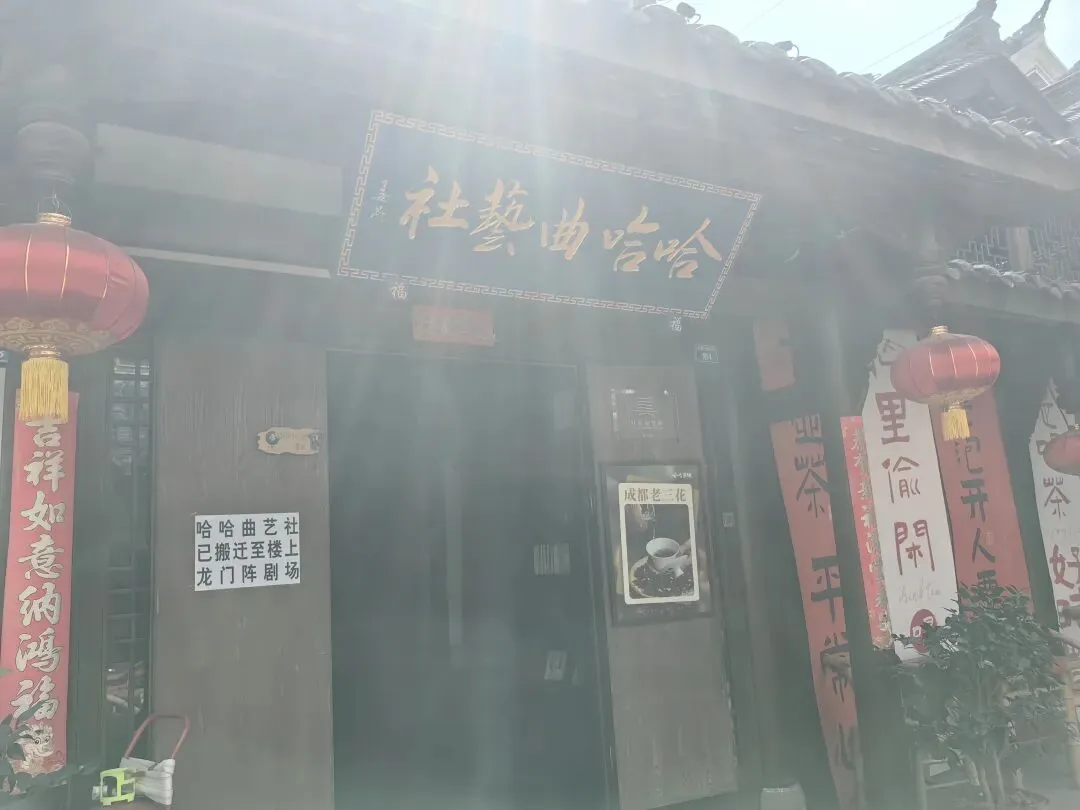
If you want to hear xiangsheng (crosstalk), head to Haha Quyi Club, right next to the teahouse. They do sandi xiangsheng and Sichuan opera face-changing. Tickets are a few tens of RMB — enough to keep you laughing for an afternoon.
Snack Street: Eat from One End to the Other
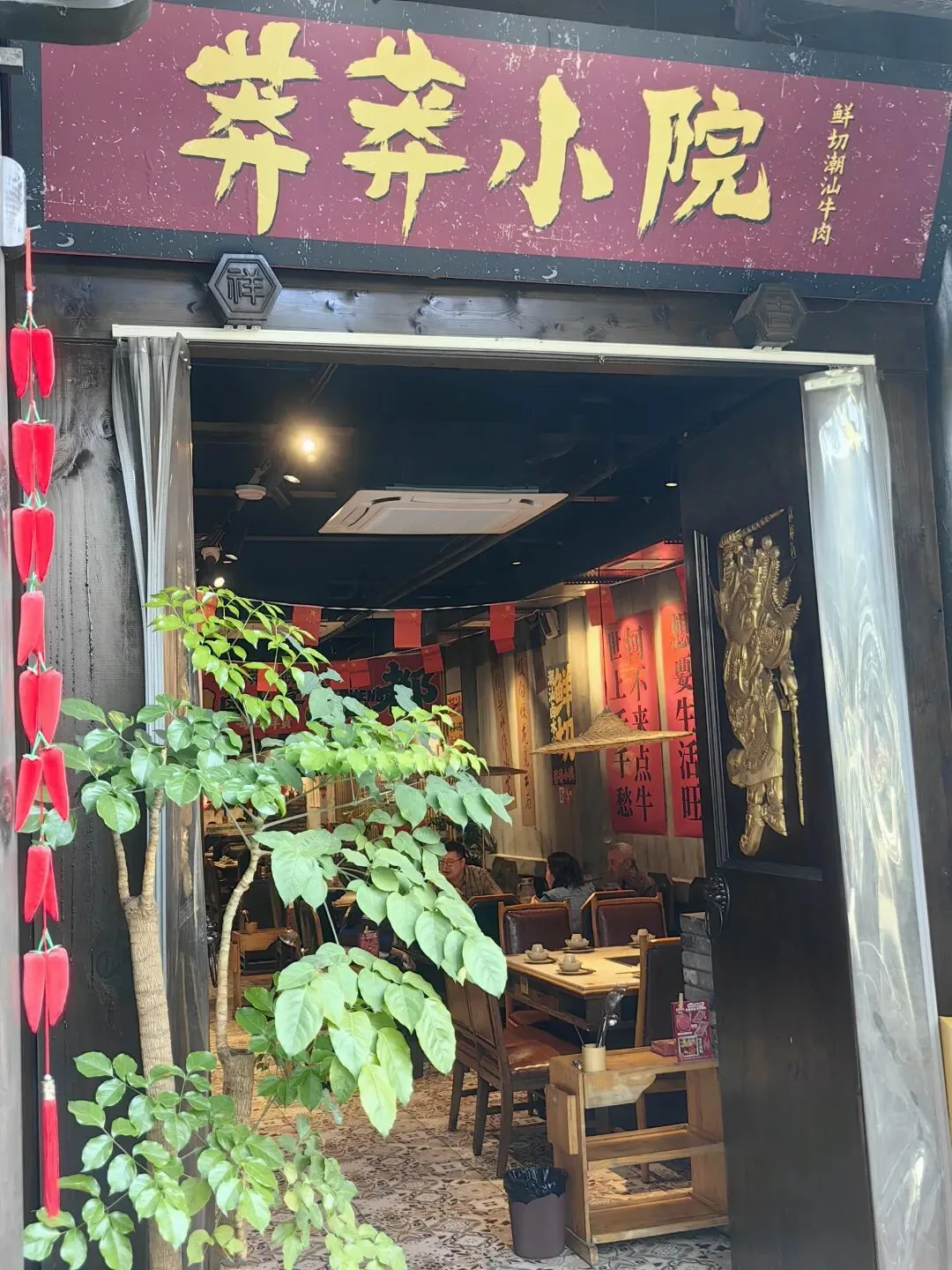
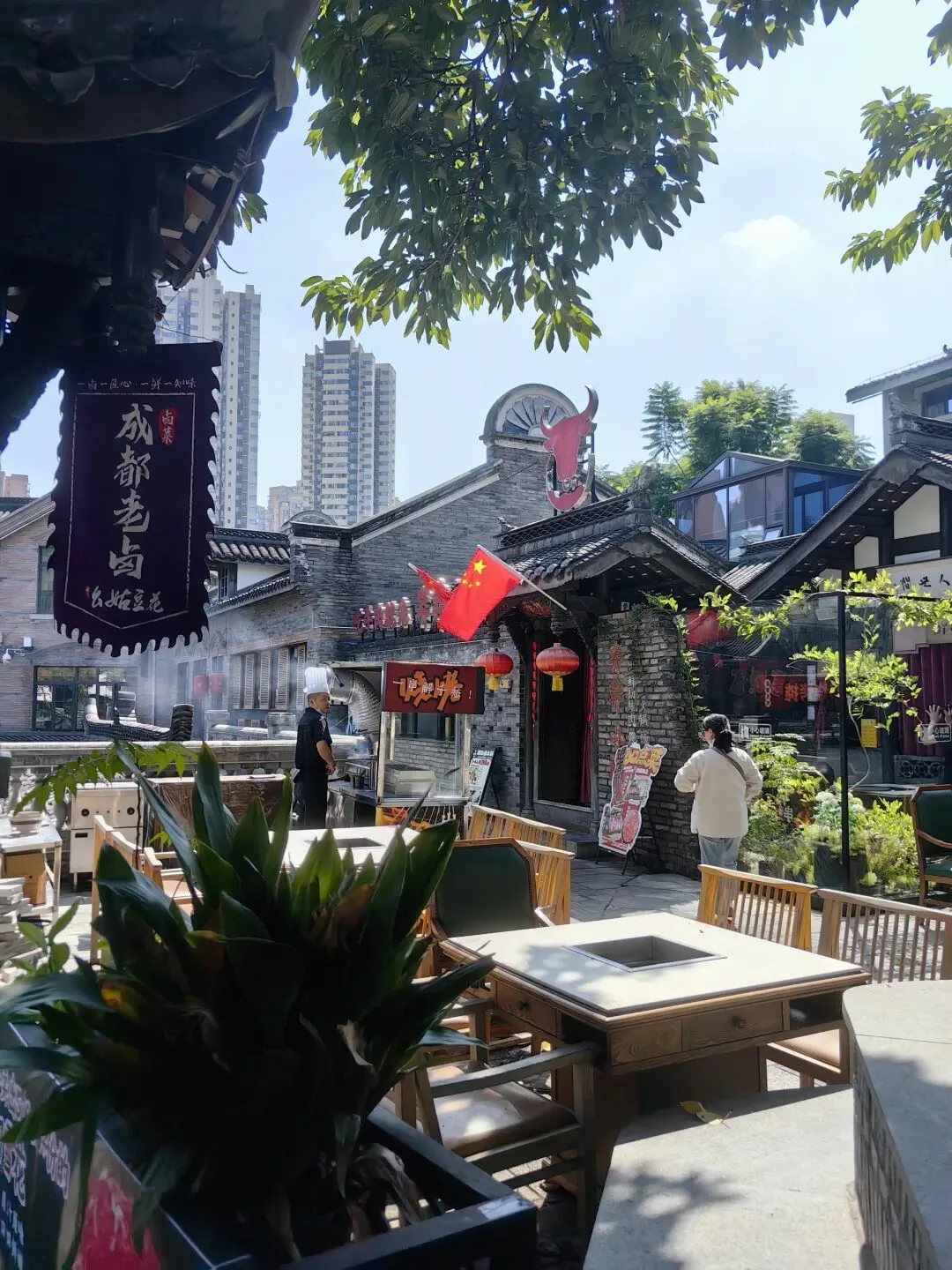
Dongmen Shijing isn’t big, but the food is comprehensive. Danhong gao (egg-baked cake), feichang fen (intestine rice noodles), suanla fen (hot-and-sour noodles), liangfen and liangmian (cold jelly and cold noodles), tangyou guozi (sugar-oil glutinous rice balls) — all the Chengdu snacks you can think of are here.
Tangyou guozi is a traditional Chengdu snack: crisp shell, soft and chewy inside, sweet but not cloying — 5 RMB per skewer. At Zhou Xuewang, order a bowl of feichang xuewang: blood curd silky-smooth, intestines tender, numbing-spicy and fragrant.
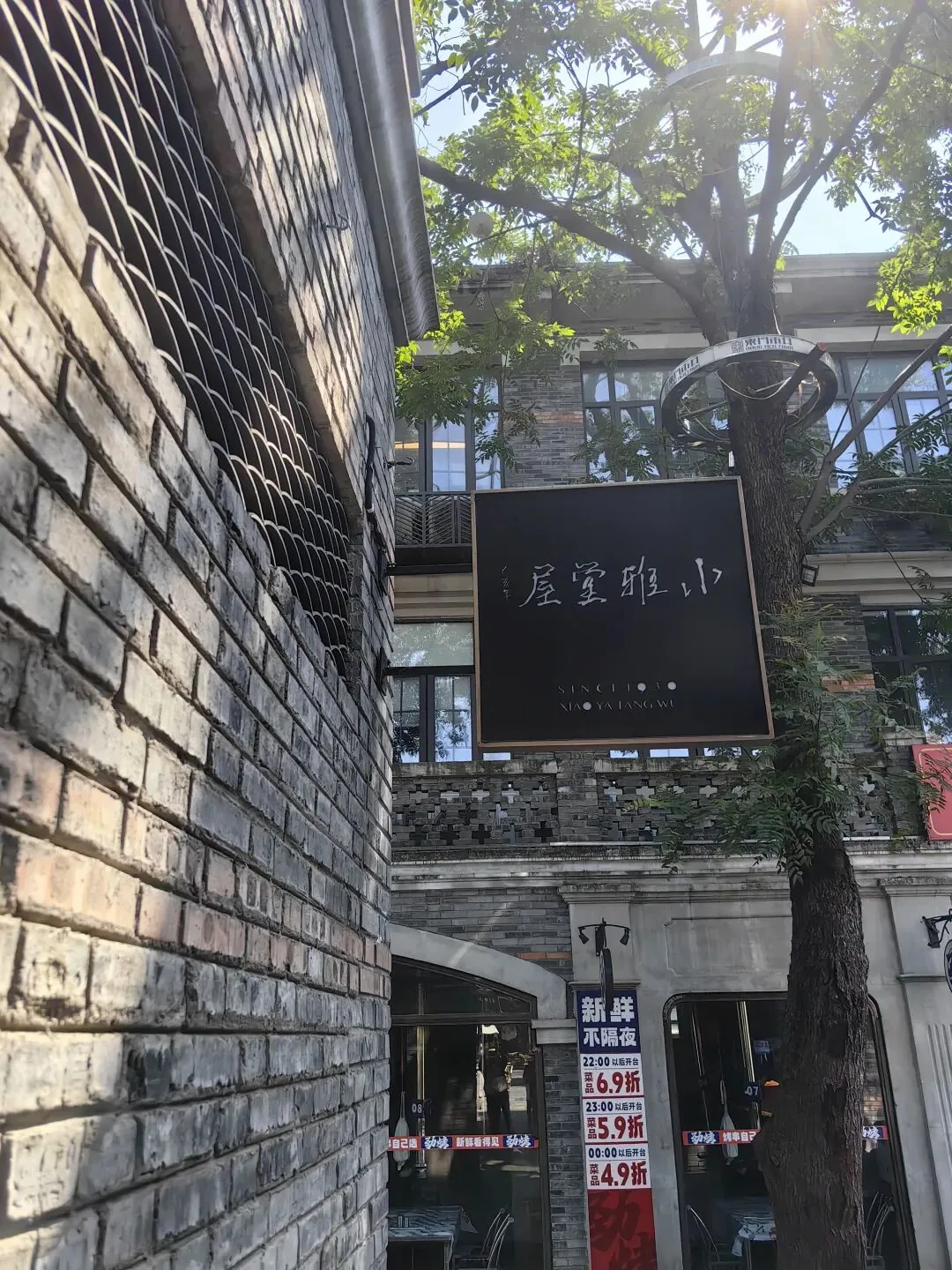
There’s also pa niniqiu (braised loach), cooked until soft and falling apart — one sip and it melts, and it’s nutritious. If you want a proper meal, go to Xiaoyaxuan, which recreates the restaurant Li Jieren once ran, focusing on traditional Sichuan dishes.
Dongmen Shijing also has something called the “Eighteen Crafts” — recreating 18 old Chengdu folk trades: bamboo weaving, blacksmithing, pot mending, horseshoeing. There are sculptures showing them, and some even have live demonstrations.
The Night Lantern Fair Is the Real Highlight
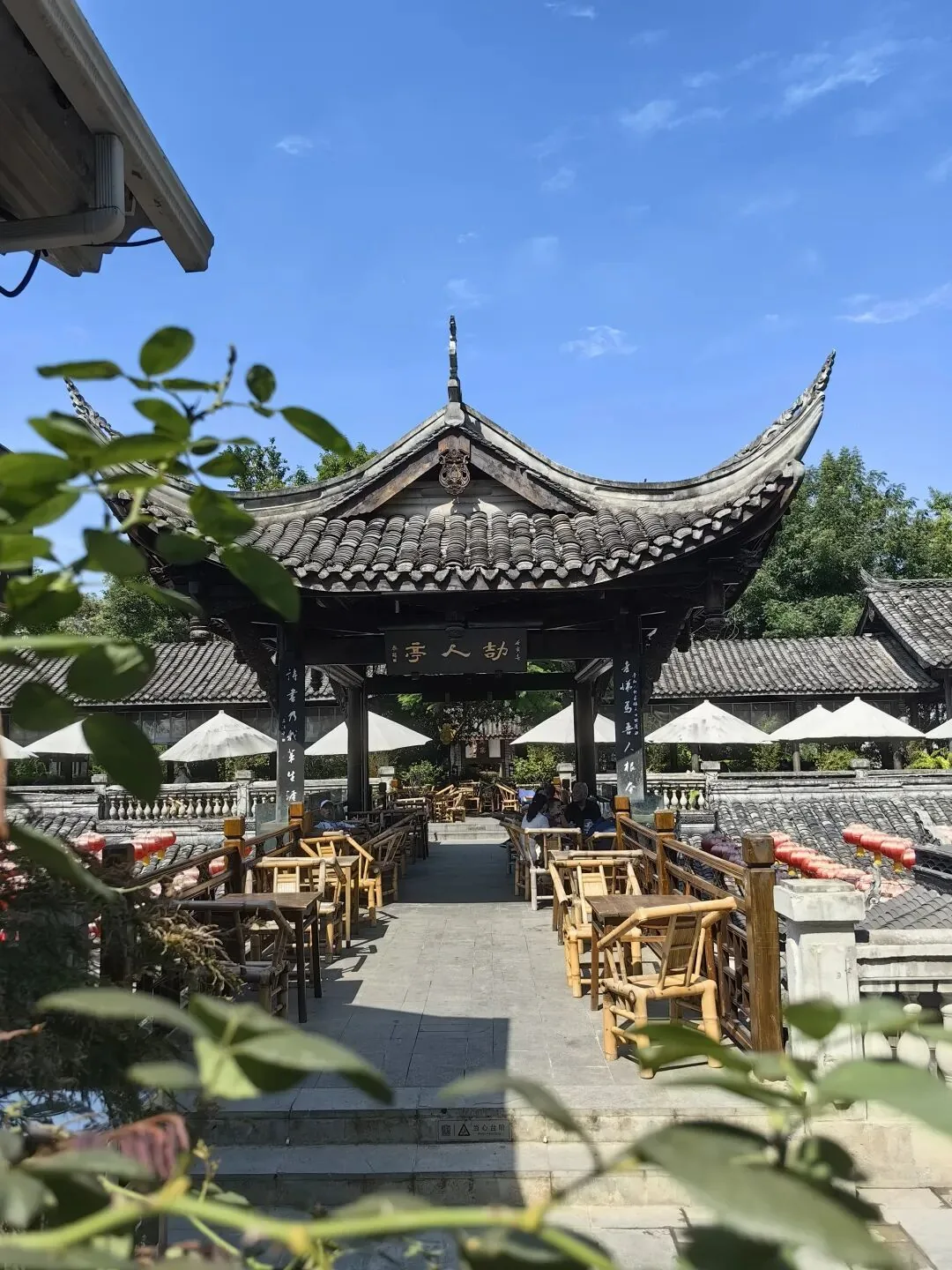
If you come during the day, don’t rush off when evening hits.
At night, over a thousand lanterns light up one after another. Free entry from 18:30 to 23:00.
The old guys who were drinking tea by day are still around; now there are also young women in pretty clothes taking photos under the lanterns.
Above the sunken plaza, colored lights string into a sea of stars — like stepping back into an old lantern market street.
Old Chengdu’s slowness is a daytime thing. After dark, it gets lively. But this liveliness isn’t noisy — it’s the glow of lanterns, the heat of soup, the laughter of people, all mixed together, wrapping you up warm.
A Few Practical Details
- Address: No. 9 Lingke West Road, Jinjiang District, Chengdu.
- Tickets: Free, open all day.
- Li Jieren’s former home “Lingke”: Open 9:00–17:00 (last entry 16:40). Free. Closed Mondays. The residence has a lot of vegetation, so take mosquito precautions in advance.
- How to get there:
- Metro Line 7, Shizishan Station, Exit A1. Walk straight 100 meters.
- Bus routes 79, 1083, and others can get you there.
- Driving: There are open-air parking lots nearby, but spaces are tight — metro is recommended.
- Suggested visit time: Half a day (including the former residence). If you want to see the lantern fair, stay until evening.
- My route:
- Morning: Metro to Shizishan Station → Li Jieren’s former home “Lingke” → tea at Lingke Tea House.
- Noon: Snacks at the sunken plaza (Zhou Xuewang, tangyou guozi).
- Afternoon: Wander the block, see the relief wall, find the “Eighteen Crafts” sculptures.
- Evening: Haha Quyi Club for xiangsheng → lantern fair (if there is one) → head back.
- Per-person spending: Tea 10–30 RMB; snacks 30–50 RMB per person; restaurants 60–100 RMB per person.
Final Thoughts
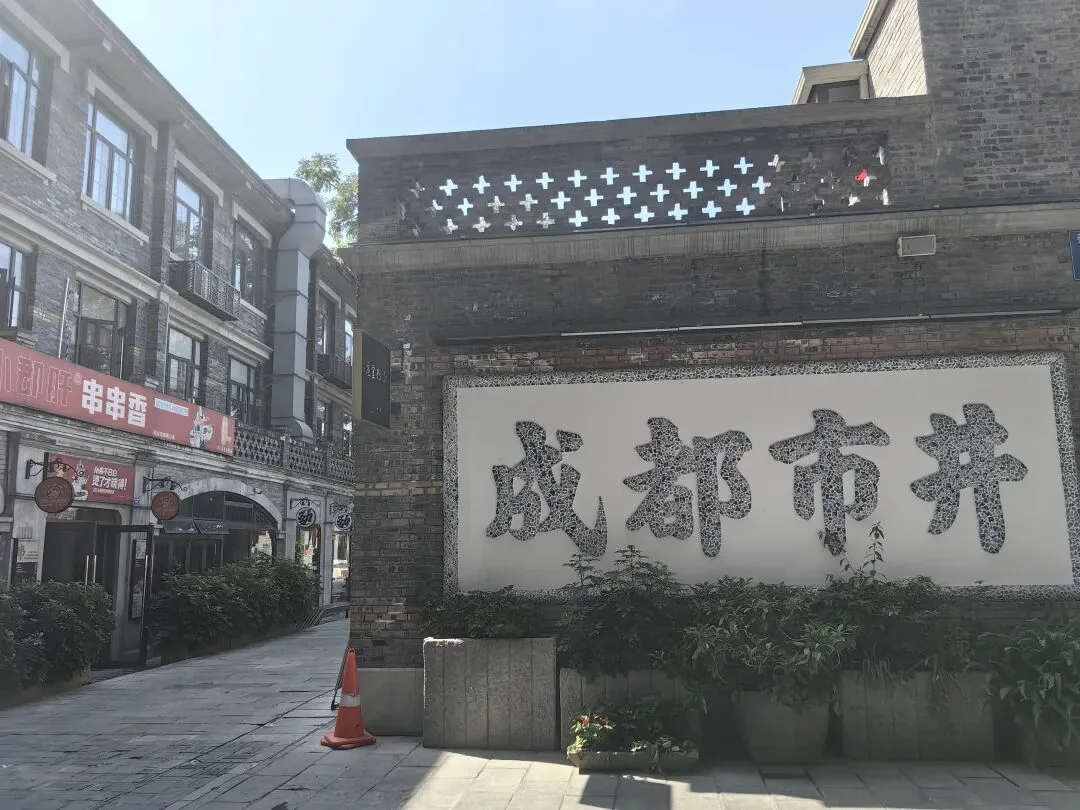
On the way back from Dongmen Shijing, my friend asked: “Compared with Kuanzhai Alley, which is better?”
I thought about it and said: Kuanzhai Alley is the Chengdu shown to tourists. Dongmen Shijing is the Chengdu that Chengdu people miss.
Kuanzhai Alley is lively. Jinli is lively too. But Dongmen Shijing is different — gray bricks and blue tiles, bamboo chairs and gaiwan tea, tangyou guozi and feichang xuewang. However Li Jieren wrote it back then, it’s built that way here.
The tea is finished, but the words are still in the book.
If you want a place in downtown Chengdu to soak yourself in old Chengdu’s everyday smoke-and-fire life —
Dongmen Shijing is waiting for you.