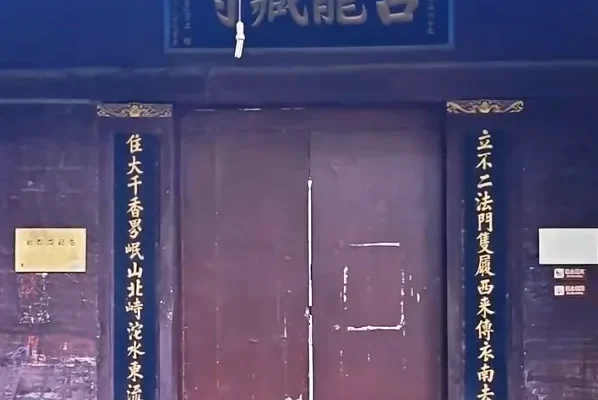
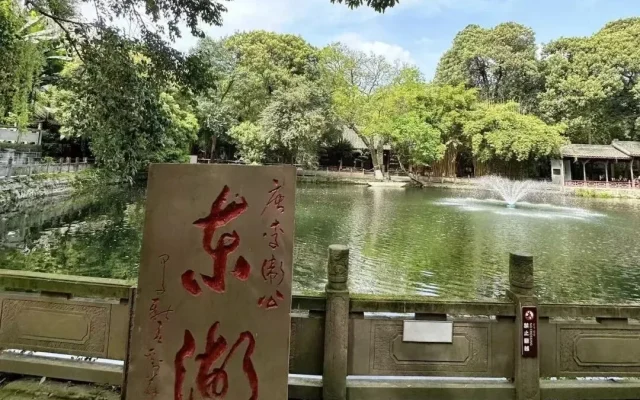
If you’re looking for a peaceful escape from Chengdu that won’t cost you a thing, Pengzhou (彭州) is a bit of a hidden gem. It’s a favorite summer retreat for locals, and it’s packed with ancient temples — many of which are completely free to visit. One of the best is the Sanmei Shui temple complex (三昧水), also known as Sanmei Chanlin (三昧禅林), a tranquil spot that’s perfect for a solo wander or a slow, mindful hike.
I first visited as a high school student — our whole class took a bus straight up the mountain. That was over 20 years ago, and now, middle-aged and returning, the place still holds that quiet magic. It’s the kind of spot that stays with you.
What’s in a Name? The Legend of Sanmei Shui
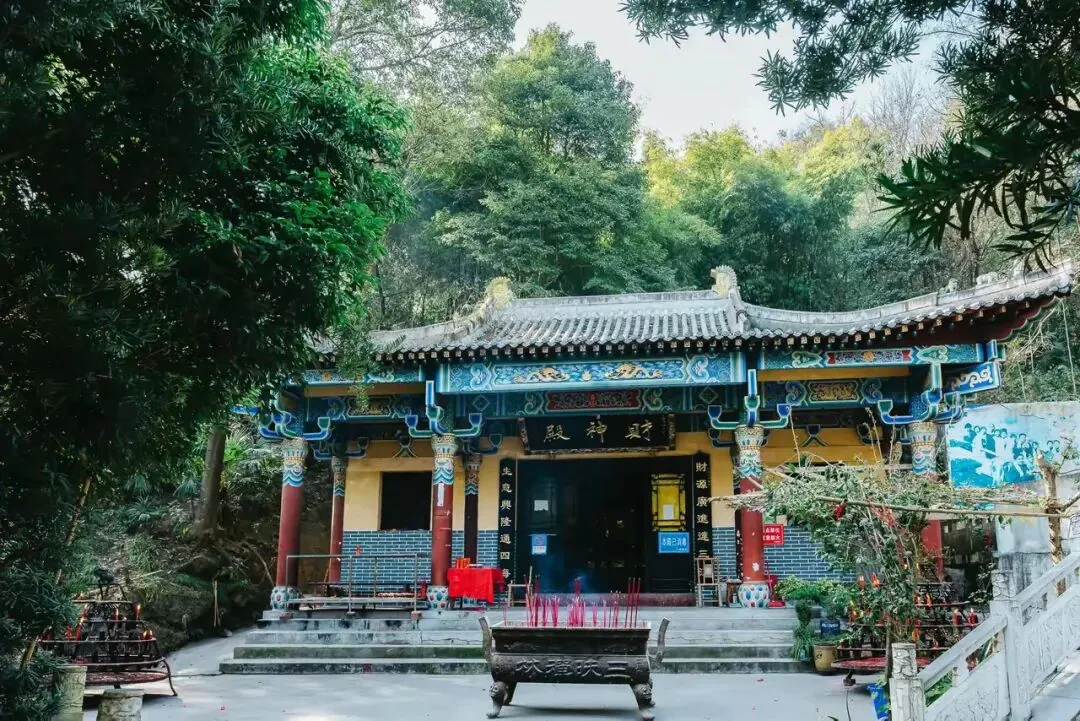
“Sanmei” is the Chinese transliteration of the Sanskrit word samadhi, meaning a state of deep concentration where the mind is still and free from distraction. The name alone feels steeped in Zen. An ancient text, the Mahayana Meaning Chapter (《大乘义章》), puts it this way: “When the mind is still and free from delusion, that is called Sanmei.”
The temple dates back to the Tang Dynasty, over 1,100 years ago. But the name “Sanmei Water” comes from a legend that’s even older.
As the story goes, a revered Tang Dynasty monk named Master Wuda (悟达国师) once developed a strange, painful sore on his knee that looked eerily like a human face. Remembering a monk he’d met as a child who told him to seek help in the Jiulong Mountains of Shu (now Danjing Mountain) if he ever faced trouble, he made the journey. There, he found the monk, who was actually an incarnation of the arhat Kanaka. The arhat washed the wound with mountain spring water, and it healed instantly.
This profound experience led Master Wuda to a great awakening. He retreated into the mountains, never to leave again, and wrote the Cibei Sanmei Water Repentance (《慈悲三昧水忏》), a Buddhist repentance text still used in Chinese monasteries today. The spring that cured him became known as Sanmei Shui, and the mountain took its name from the water.
Local insight: The temple’s story is all about finding clarity and letting go — a theme you’ll feel as you climb.
The Three Sanmei Temples: A Unique Layout
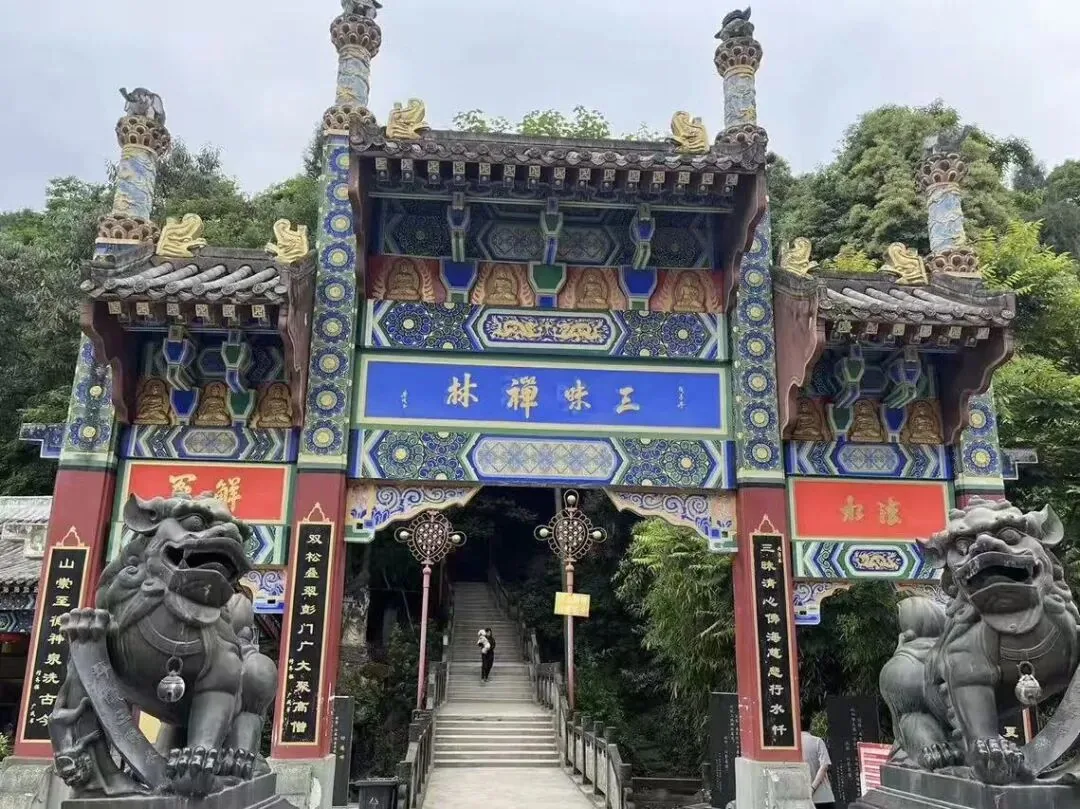
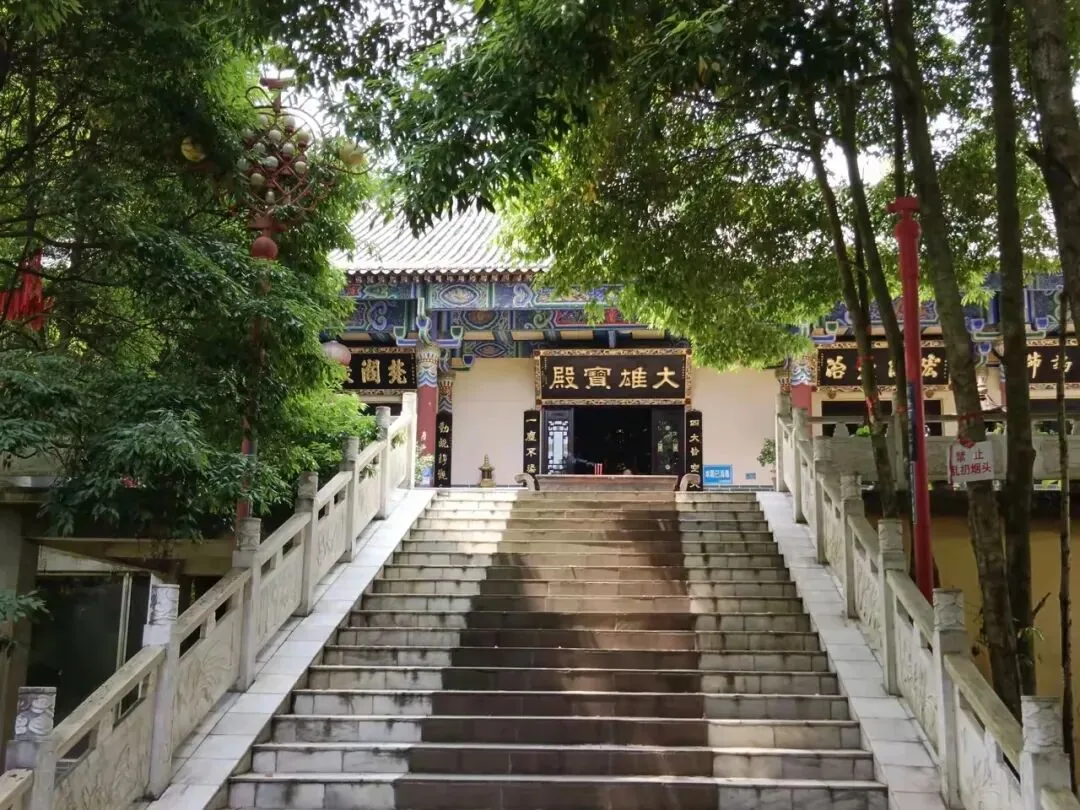
Unlike traditional temple complexes with a single layout, Sanmei Shui is built in three distinct sections climbing up the mountain:
- Lower Sanmei – Anguo Temple (下三昧安国寺): The largest of the three, rebuilt after an earthquake destroyed the original Tang Dynasty structure. It sits right by the road, so it gets the most visitors. Explore its grand halls — the Mountain Gate, Stone Archway, Maitreya Hall, Great Compassion Hall, and Mahavira Hall.
- Middle Sanmei – Zhide Temple (中三昧至德寺): Tucked away at the mountainside, this one is quieter and more intimate, with a single ancient hall nestled among pines and bamboo. It’s often shrouded in mist, adding to its serene charm.
- Upper Sanmei – Shuiting Temple (上三昧水亭寺): The highest point, and the real destination for many. The spring behind this temple is the true source of “Sanmei Water” — the very spot where Master Wuda was healed. The water is clear, sweet, and never runs dry.
The 500 Arhats: A Sight You Won’t Forget
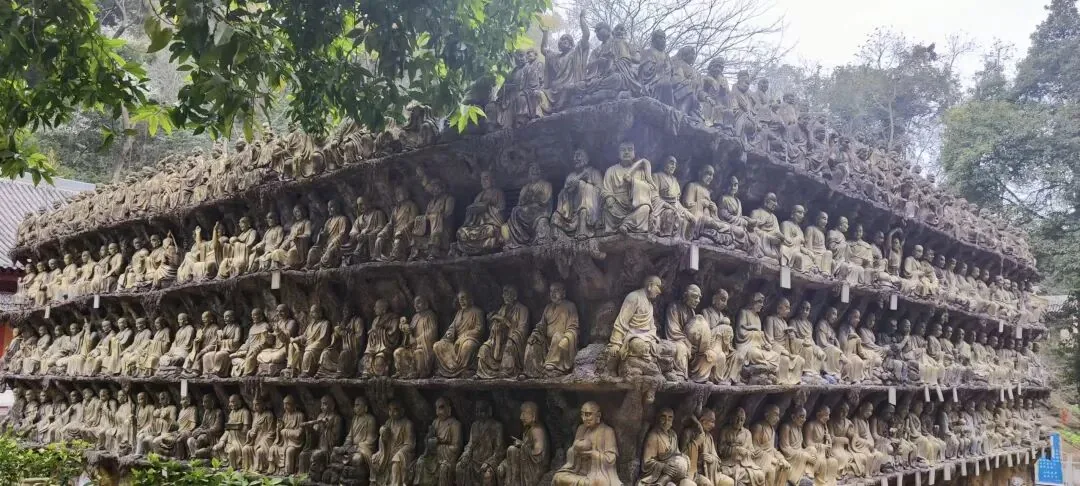
Inside the Lower Sanmei temple, don’t miss the “Ancient Resolving Grievances Cave” (古解冤洞). It’s filled with 500 arhat statues, stacked layer upon layer in a dense, overwhelming display. Each figure has a unique expression, capturing every aspect of human emotion. The visual impact is truly stunning.
The Hike: Shaded, Gentle, and Rewarding
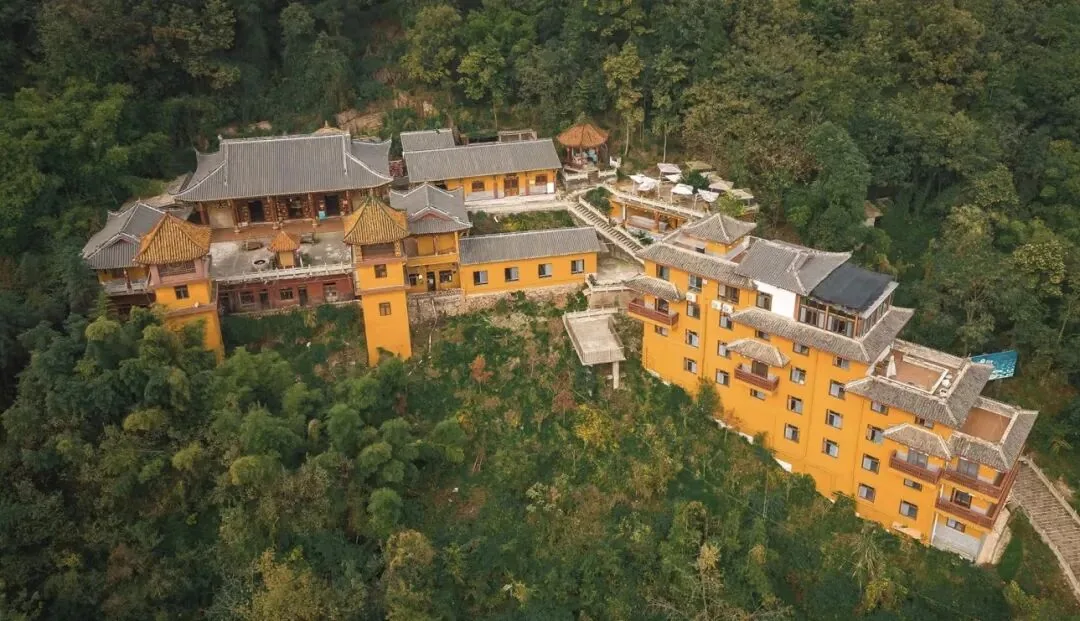
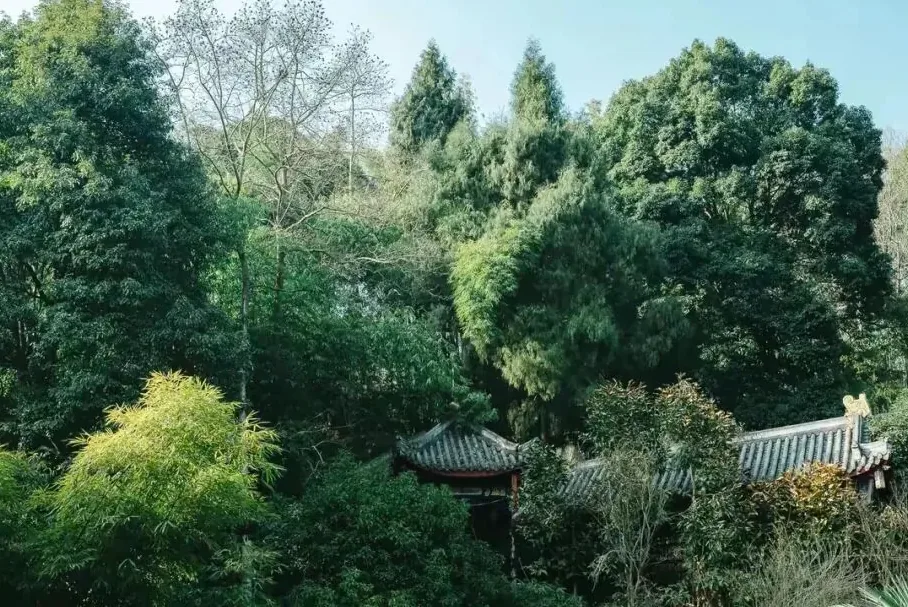
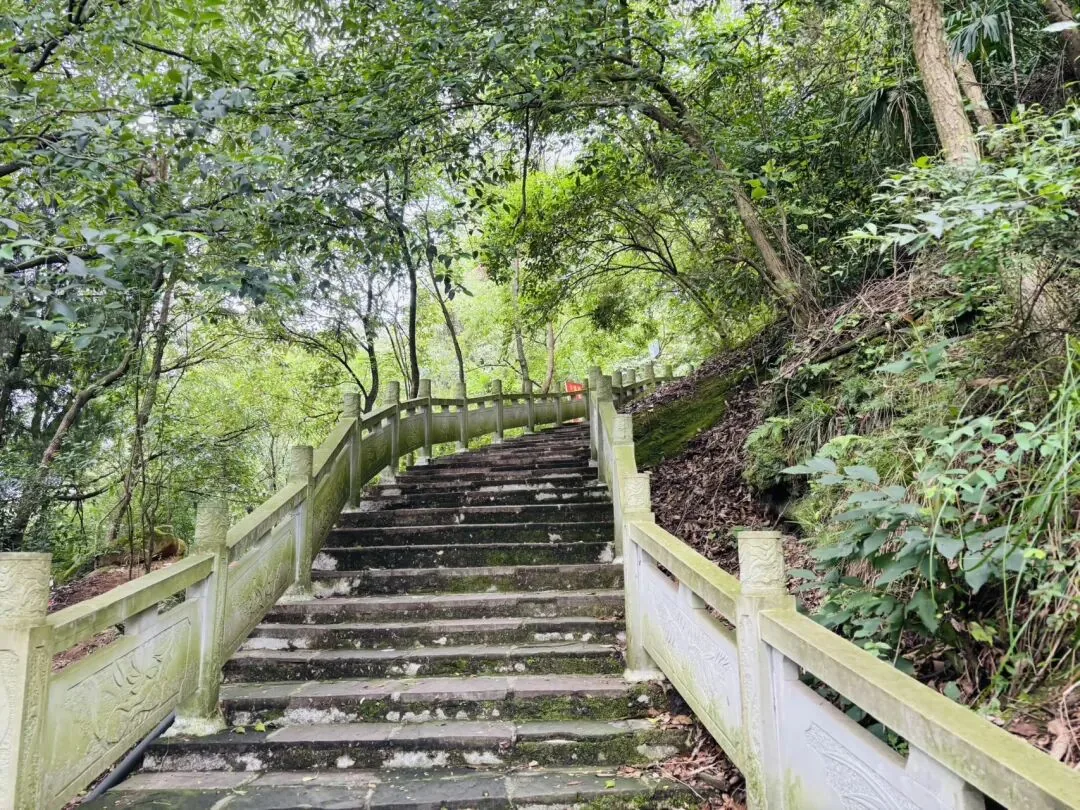
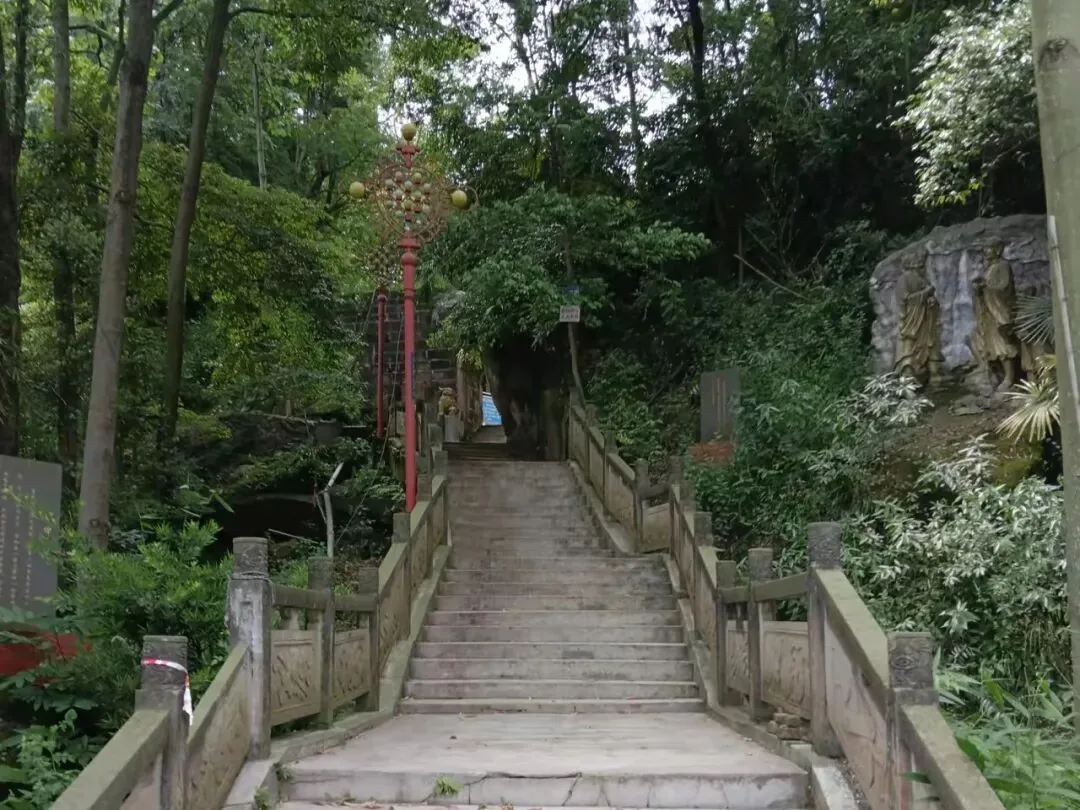
The stone steps are well-maintained and the incline is gentle — even kids can make it to the top. You’ll be walking through dense forest that blocks out the sun, surrounded by layers of green. A cool mountain breeze will occasionally sweep through, leaving you feeling refreshed and invigorated.
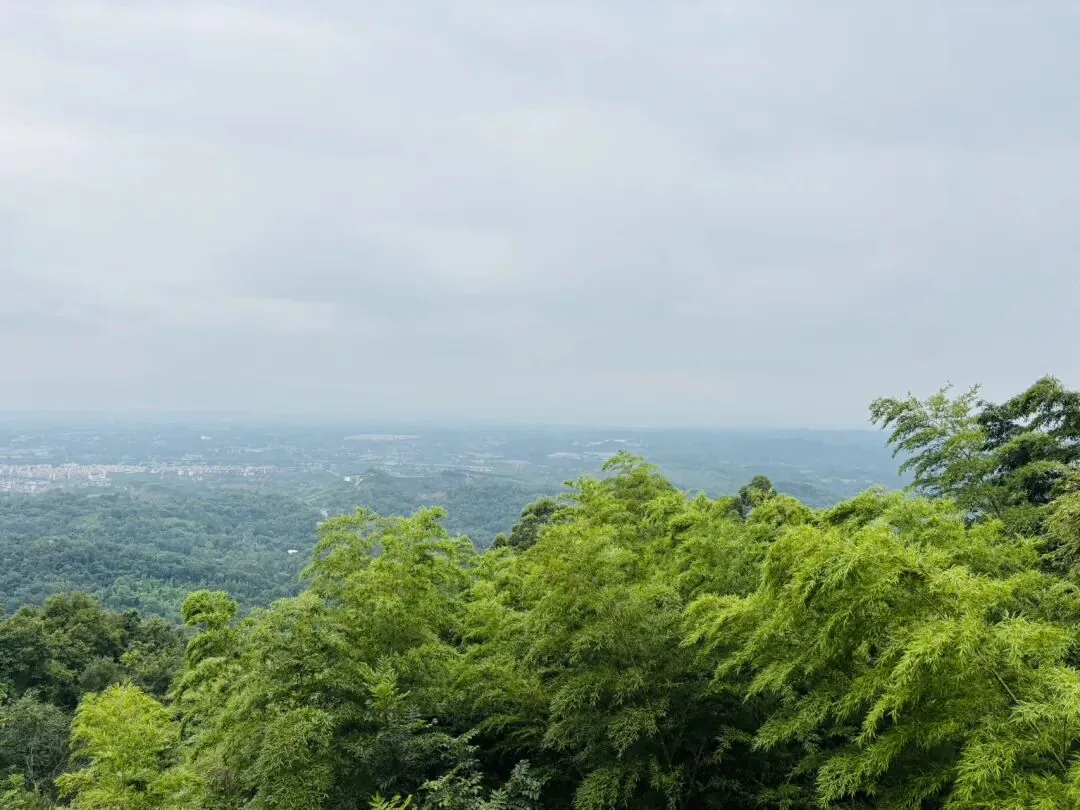
At the summit, you’ll be rewarded with the most expansive views in the whole complex. Look out over the rolling hills, the winding Jian River (湔江), the vast plains, and the city in the distance. On a clear day, you might even see a sea of clouds. It’s a view that makes you feel on top of the world.
Pro tip: Bring an empty water bottle! Many visitors, including us, fill one up at the source spring at the top. It’s cool, sweet, and perfect to take home.
Along the Way: Cliff Carvings and a Historic Archway
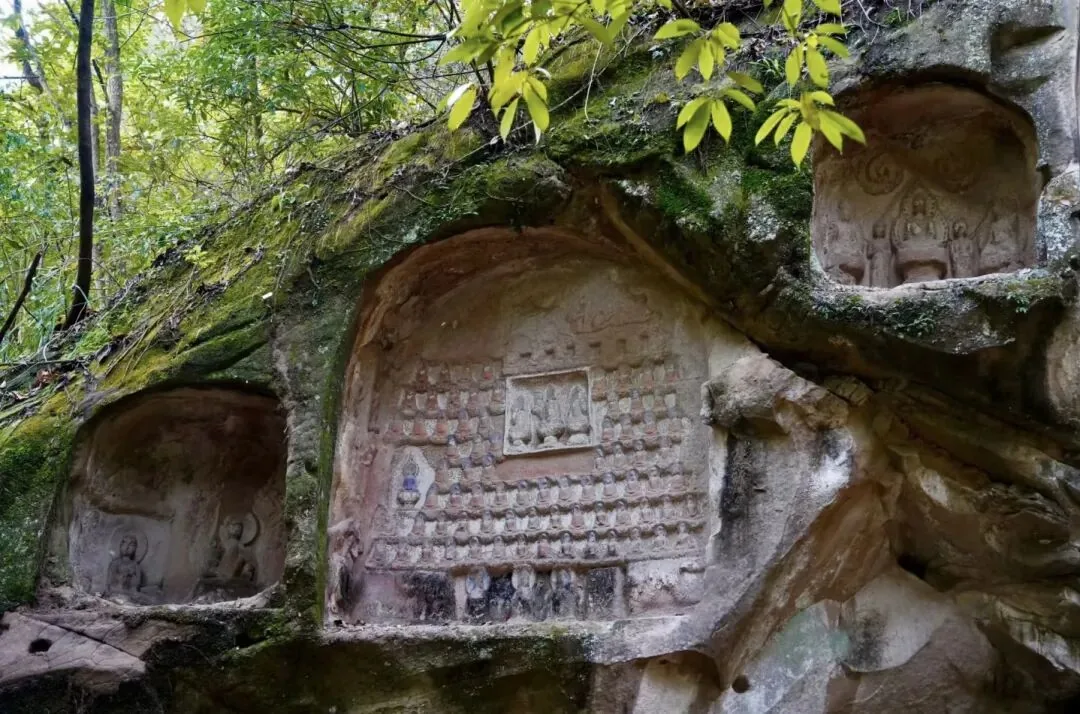
As you climb, keep an eye out for the cliff carvings on the mountainside. Dating back to the Tang Dynasty, many are badly weathered, but you can still make out clear images of Guanyin (the Goddess of Mercy), arhats, a reclining Buddha, and even a judge figure. They’ve been silently blending into the forest for centuries.
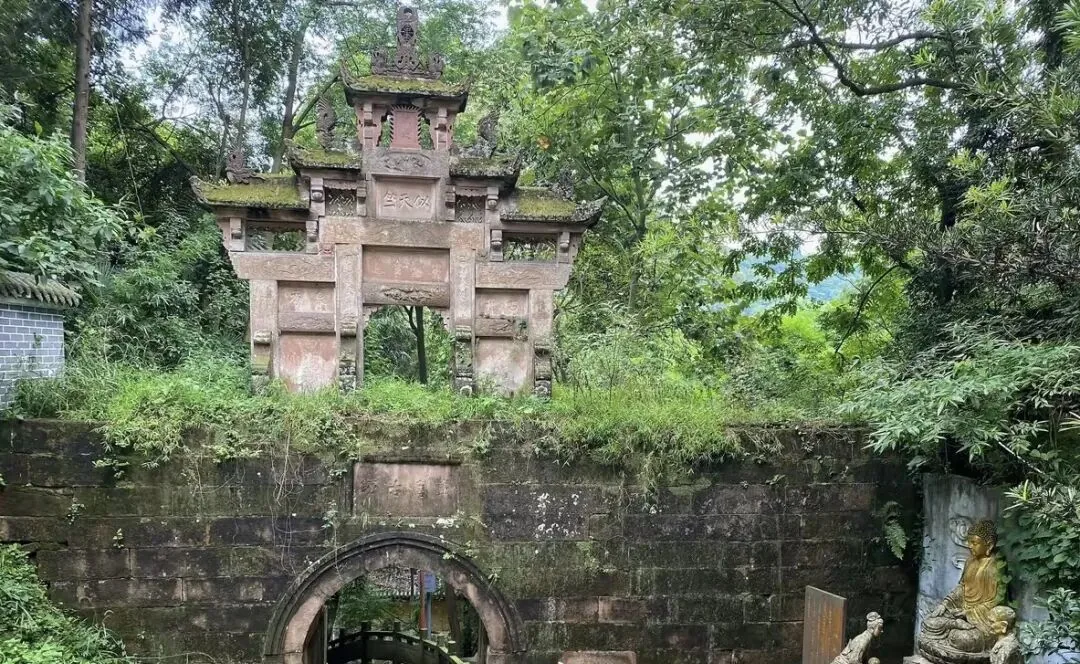
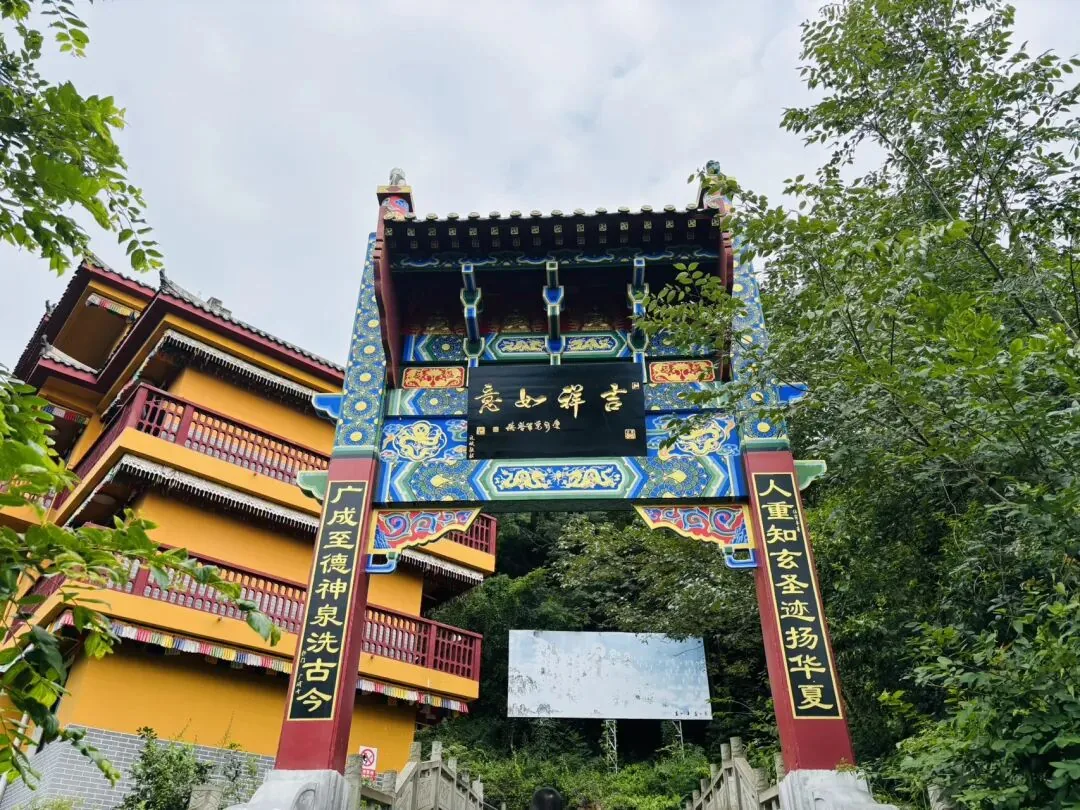
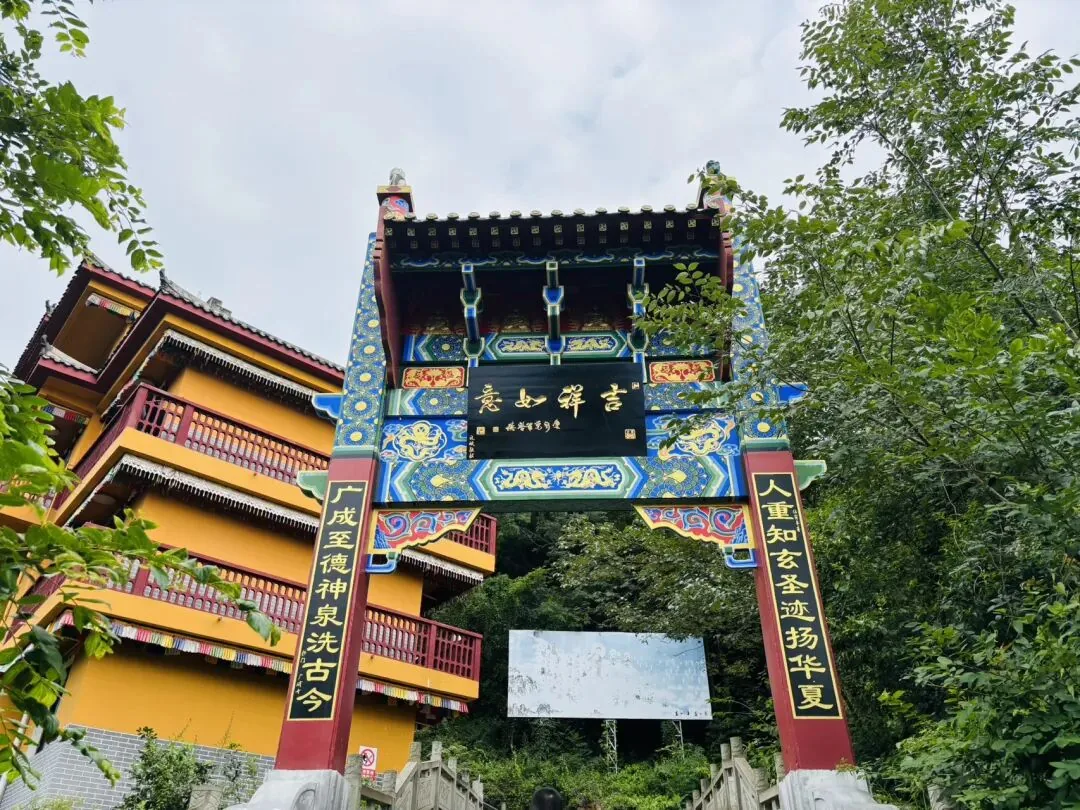
Near the summit, you’ll pass through a stone archway built during the Qing Dynasty. This imposing structure has three tiers and four pillars, with “Sanmei Chanlin” carved on the front and “Sheng Tang Guji” (盛唐古迹, “Ancient Relics of the High Tang”) on the back. The couplet on the sides reads: “If you want to know the end of the road, you must keep advancing; if you don’t know the ancient sites, just climb and see.” A fitting motto for both the hike and life itself.
Practical Info for Your Visit
- Address: Shuang song Village, Danjingshan Town, Pengzhou City, Chengdu (成都市彭州市丹景山镇双松村). Just search “三昧禅林” on your navigation app.
- Ticket: Free!
- Getting There:
- By Car: From downtown Chengdu, take the Chenggeng Expressway (成彭高速). It’s a straightforward 1–1.5 hour drive straight to the temple gate.
- By Train: Take the Chengguan Intercity Railway from Xipu Station (犀浦站) to Pengzhou Station (彭州站), then grab a taxi directly to Sanmei Chanlin.
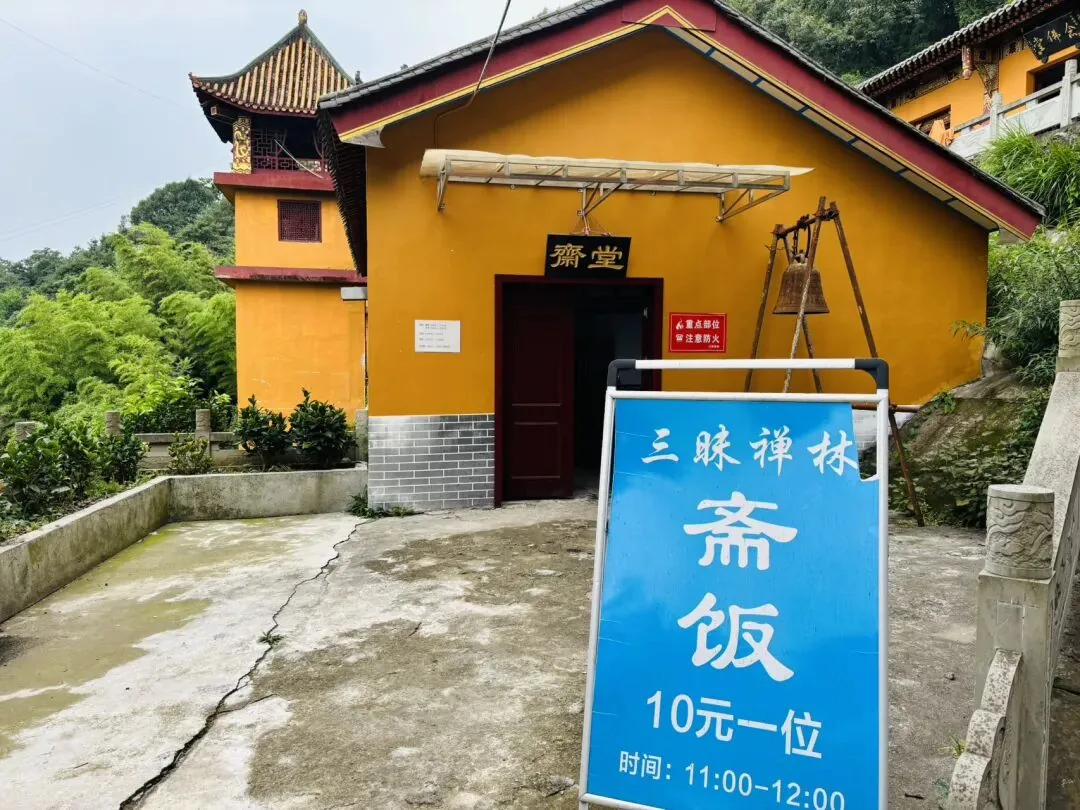
- Vegetarian Meal (Zhai Fan): Both the Lower and Upper Sanmei temples serve a simple, filling vegetarian meal for just 10 RMB per person. It’s mostly locally grown vegetables, rice, and rice soup — light and wholesome. Important: It’s only served from 11:00 AM to 12:00 PM, so don’t miss the window!
- Tea: You can buy tea at the Middle and Lower Sanmei temples for 5–10 RMB per cup. It’s a great excuse to sit, enjoy the view, and rest your feet.
Stay Overnight for the Full Experience
For a deeper immersion, the temple complex offers simple accommodation at the Upper Sanmei temple. It’s just a few dozen RMB per night. Imagine falling asleep to the sound of the forest and waking up to a sea of green right outside your window — a connection to nature you simply can’t get in the city.
As the old saying goes, “If you travel west and don’t visit Sanmei Shui, you’ve wasted your trip to Shu.” But this journey is about more than just climbing stone steps. It’s a walk through history, a chance to see yourself in a handful of clear spring water, and perhaps, to find your own moment of peace.