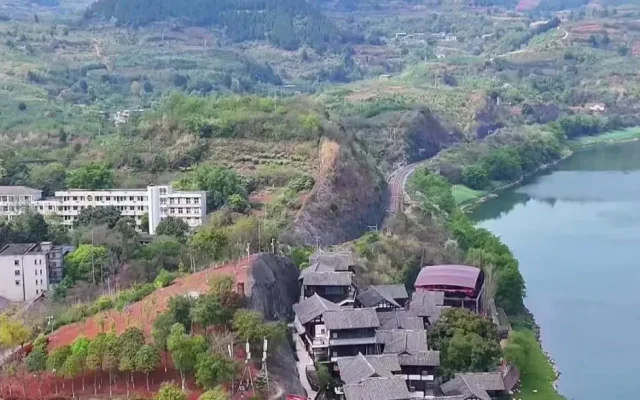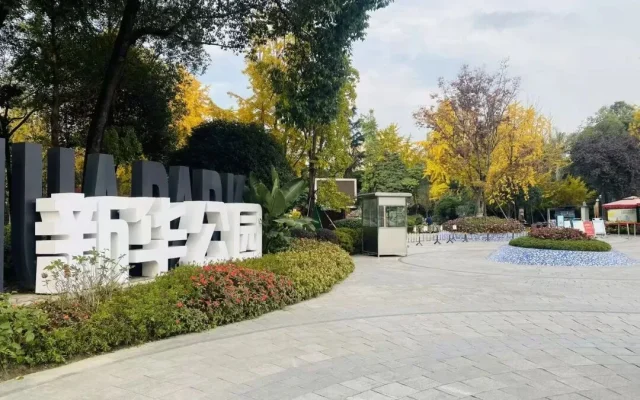
If you’ve spent any time in Chengdu, you’ve probably heard of its ancient towns — Jiezi, Huanglongxi, Pingle. They’re all well known. But there’s an actual ancient city on Chengdu’s doorstep that flies under the radar: Linqiong Ancient City in Qionglai. It’s one of the four great ancient cities of the Ba-Shu region, yet ask ten people on a Chengdu street and more than half won’t have heard of it. That obscurity is exactly why it’s worth your time.
Why Linqiong Is Worth the Trip
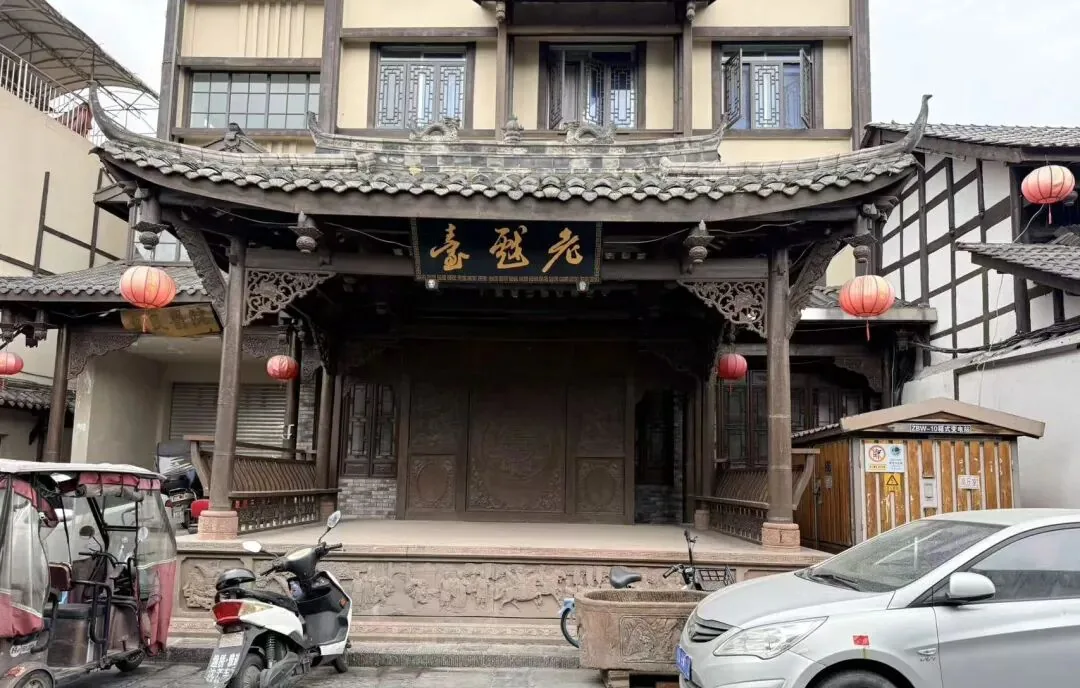
Linqiong isn’t some made-up title. In 311 BC, Zhang Ruo, the governor of Shu Commandery, built a city and established a county here, ranking it alongside Chengdu and Pi City. That’s how Linqiong became one of the four great ancient cities of Ba-Shu. More than 2,300 years later, the city site has never moved — a rare feat among Chinese cities. Chengdu can claim it, and so can Linqiong.
The North Gate and Dabe Street
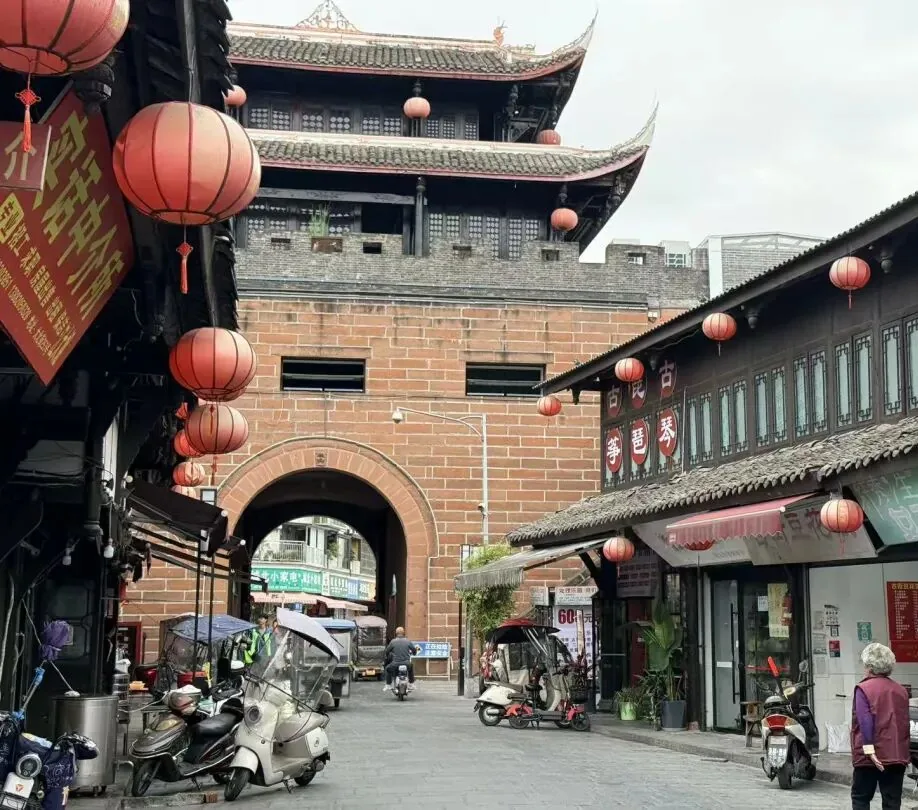
Your first view of the old city is the north gate tower. Weathered stone walls, gray brick tops, and upturned eaves frame the two characters “Linqiong” hanging high above, written with vigorous strokes. The tower was restored on the foundation of a Ming dynasty city gate. A Qing dynasty literatus named Wu Jiang once wrote a couplet here:
“Boundless wind and moon, gazing north to Chang’an three thousand li away; rivers and mountains like a painting, the first prefecture south of Tianfu.”
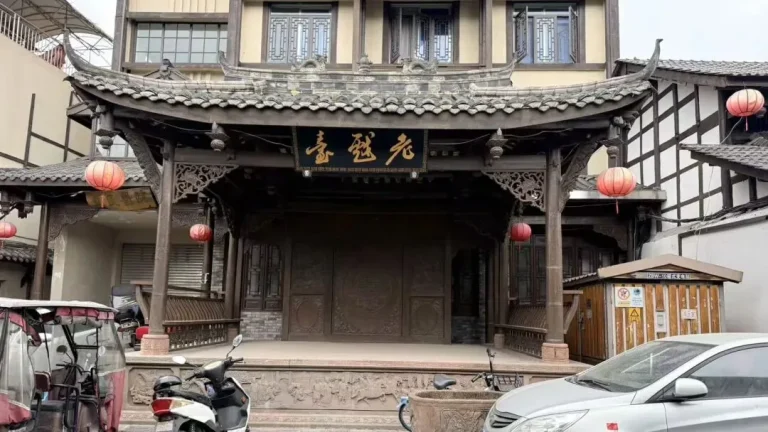
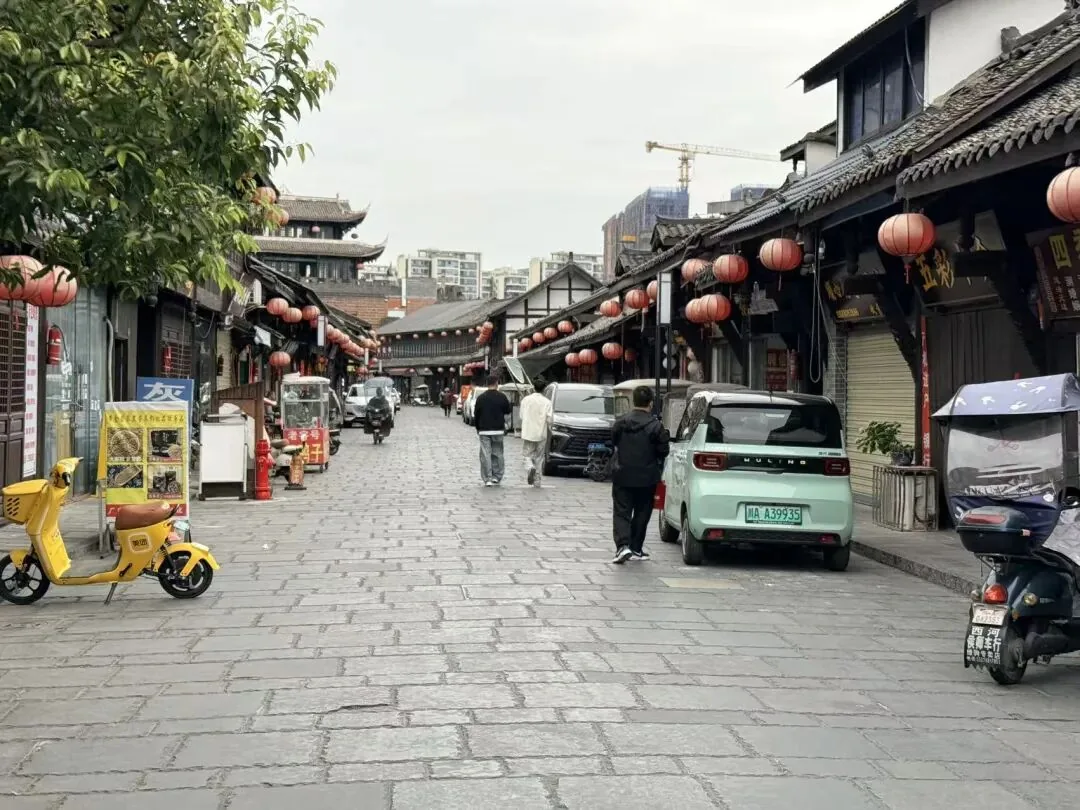
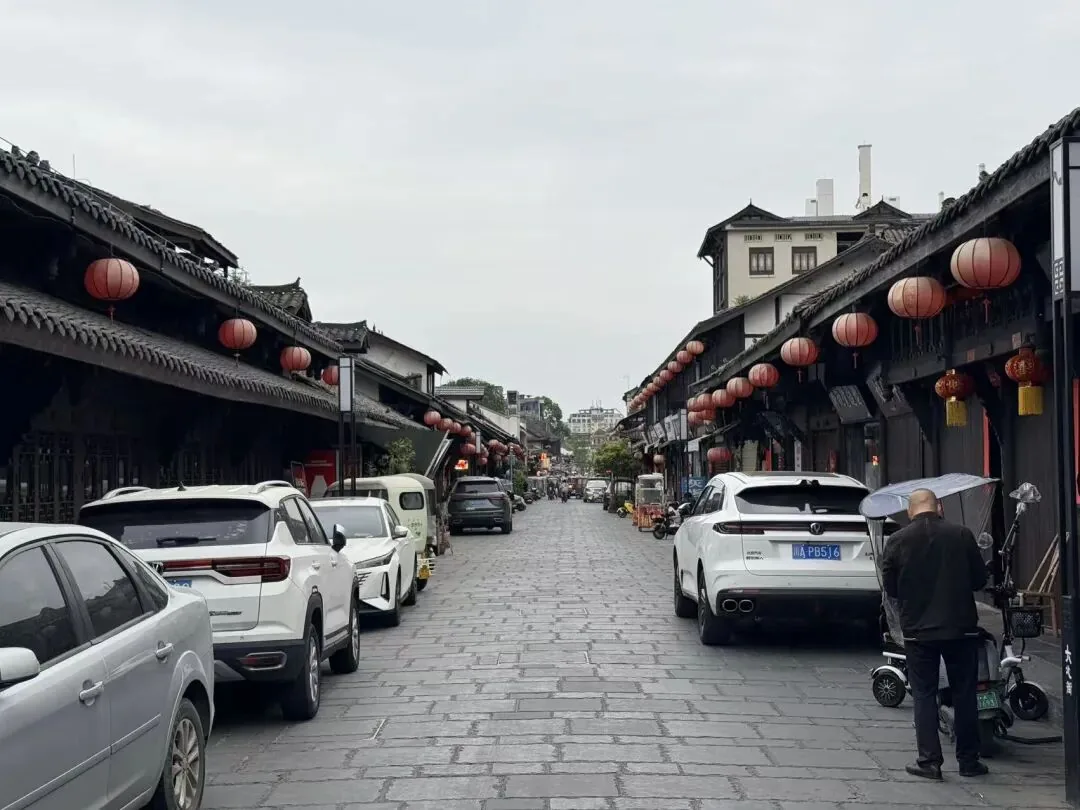
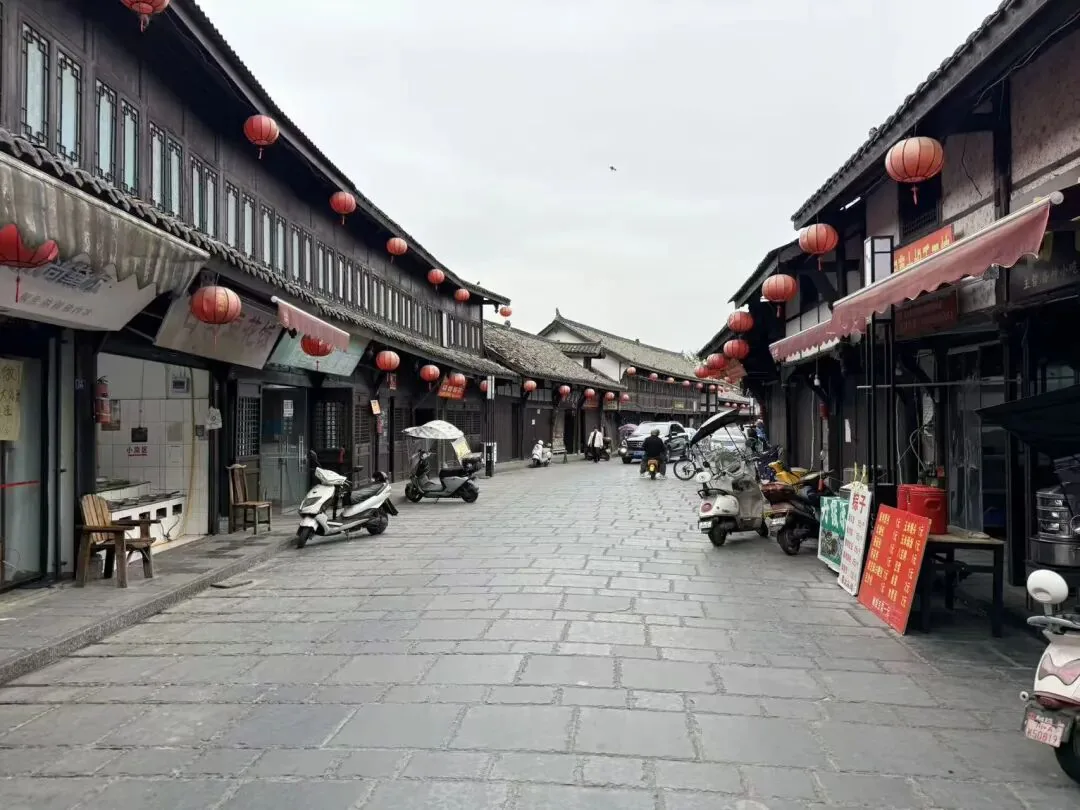
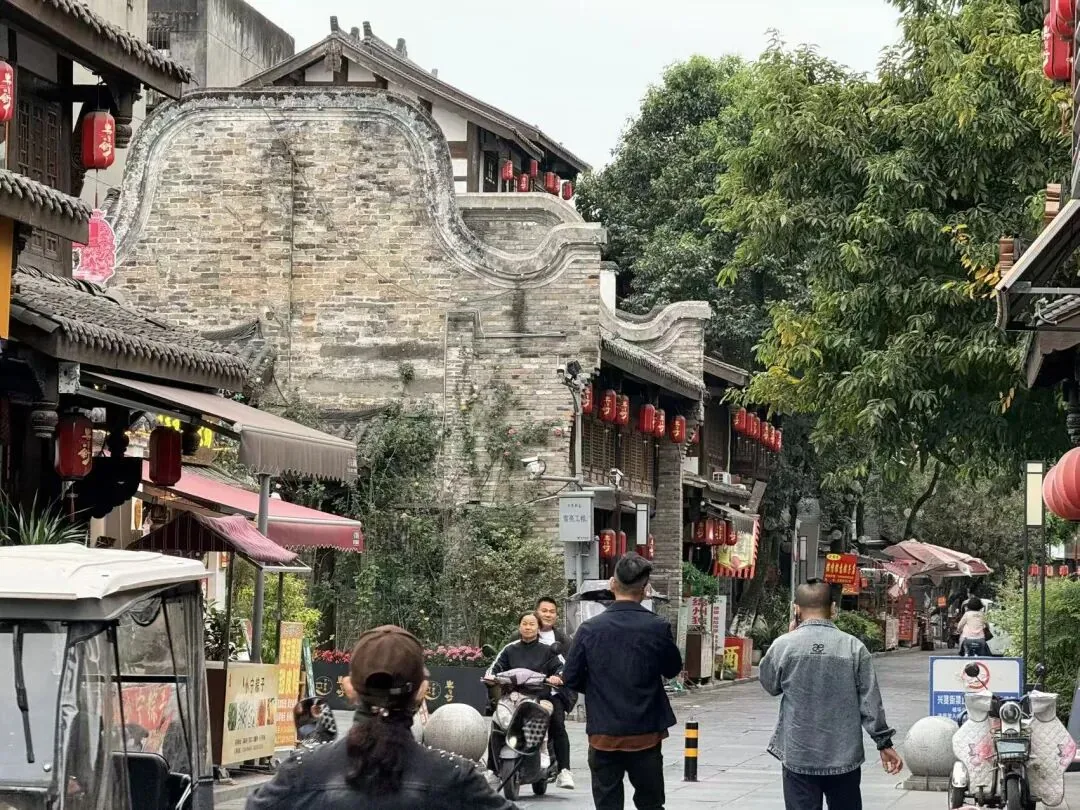
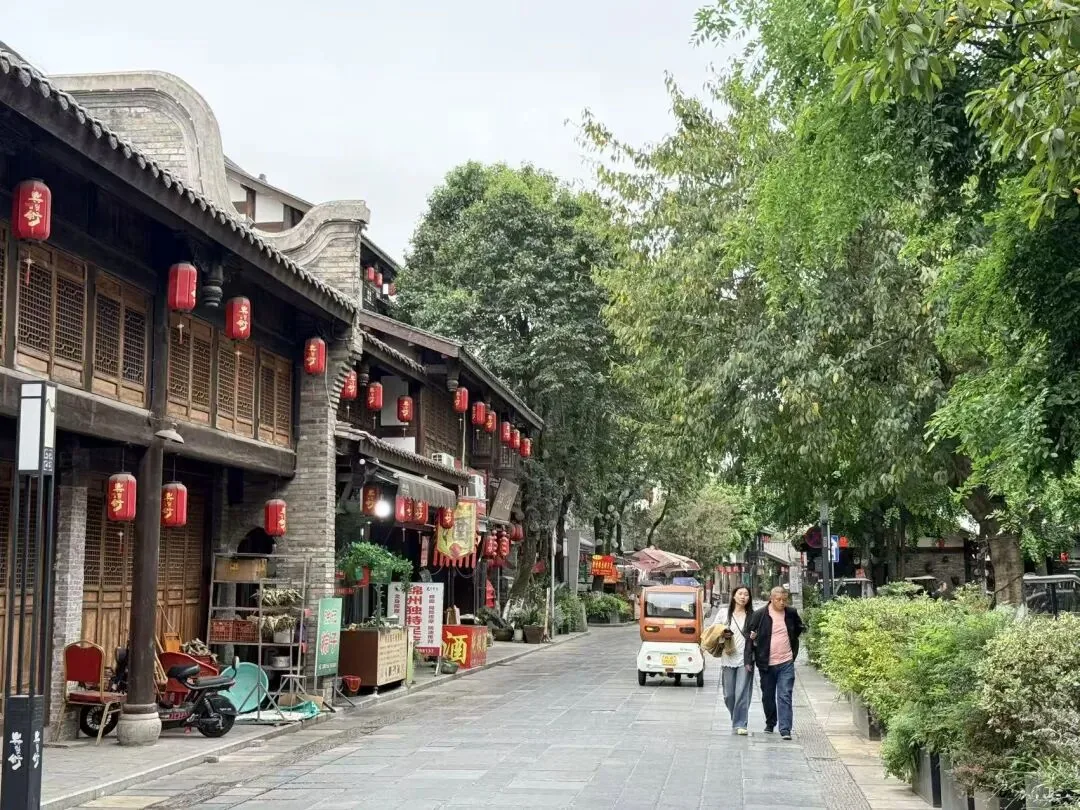
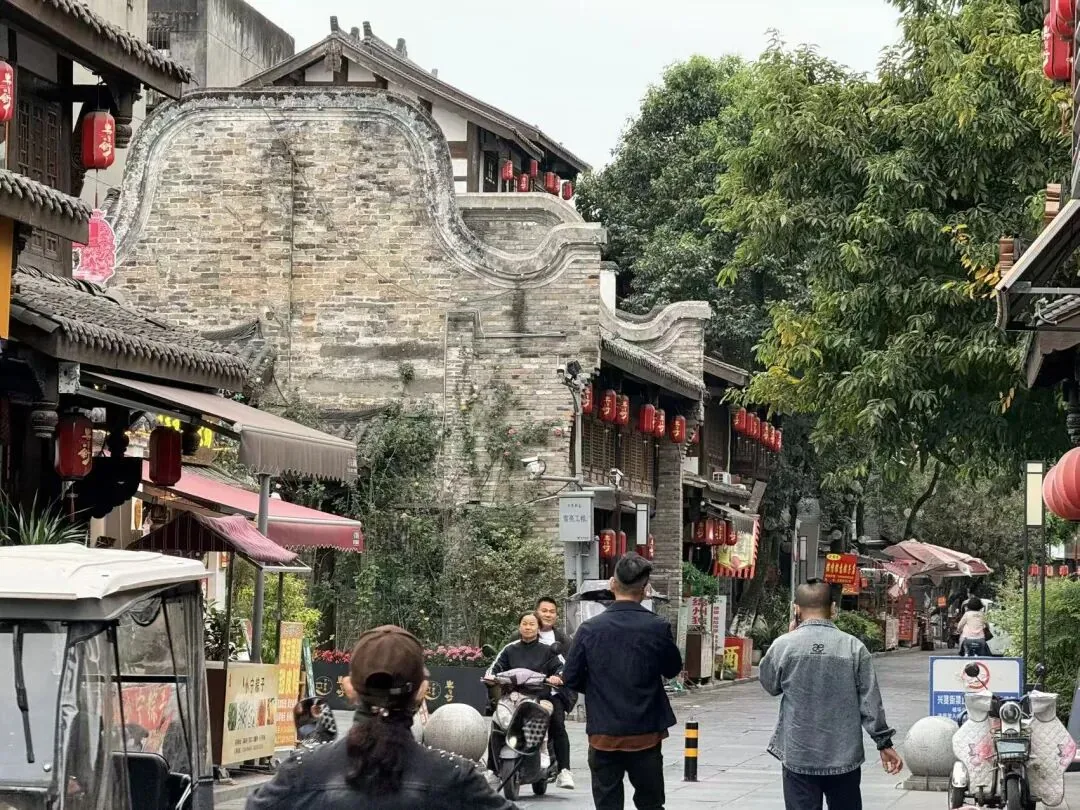
The phrase “the first prefecture south of Tianfu” became the city’s calling card. These days the old city is smaller than it once was. Pass through the gate tower and you’re on Dabe Street, one of the longest surviving old streets in Sichuan. It runs 510 meters, lined with Ming- and Qing-style wooden buildings using traditional through-joint construction — gray tile roofs, wooden doors and windows whose grain has darkened to deep brown over the years. There are no whitewashed faux-ancient facades here; every old building keeps its original look. The flagstone road winds along, and in late autumn the sunlight falls on it with a warm glow. Electric scooters and bicycles weave through the street.
Back in the Qing dynasty this was already a wide street — about three meters across — known as “Zhengbei Street.” Merchants gathered here, and wine shops and teahouses lined the road. It was a required passage for the Southern Silk Road and the Tea Horse Road entering the city. Today the shops are mostly local — general stores, barbers, hardware stores, snack stalls, clothing shops — though some trendy spots have moved in too: milk tea shops, hotpot, coffee, bookstores.
Cats stretch in the eaves, and old folks sit at their doorways chatting. On Dabe Street there’s a shop called “Xiaozi Guokui” — the brown-sugar filling is generous and delicious. There’s also a vendor selling tangyou guozi (fried glutinous rice balls in syrup) that’s supposedly been there for years. A skewer of it is truly satisfying. You’ll also find Qionglai specialties on the street: naotang mian (milky broth noodles), bobo chicken, sweet water noodles, Qionglai biscuits — all excellent.
The Lanes and Courtyards
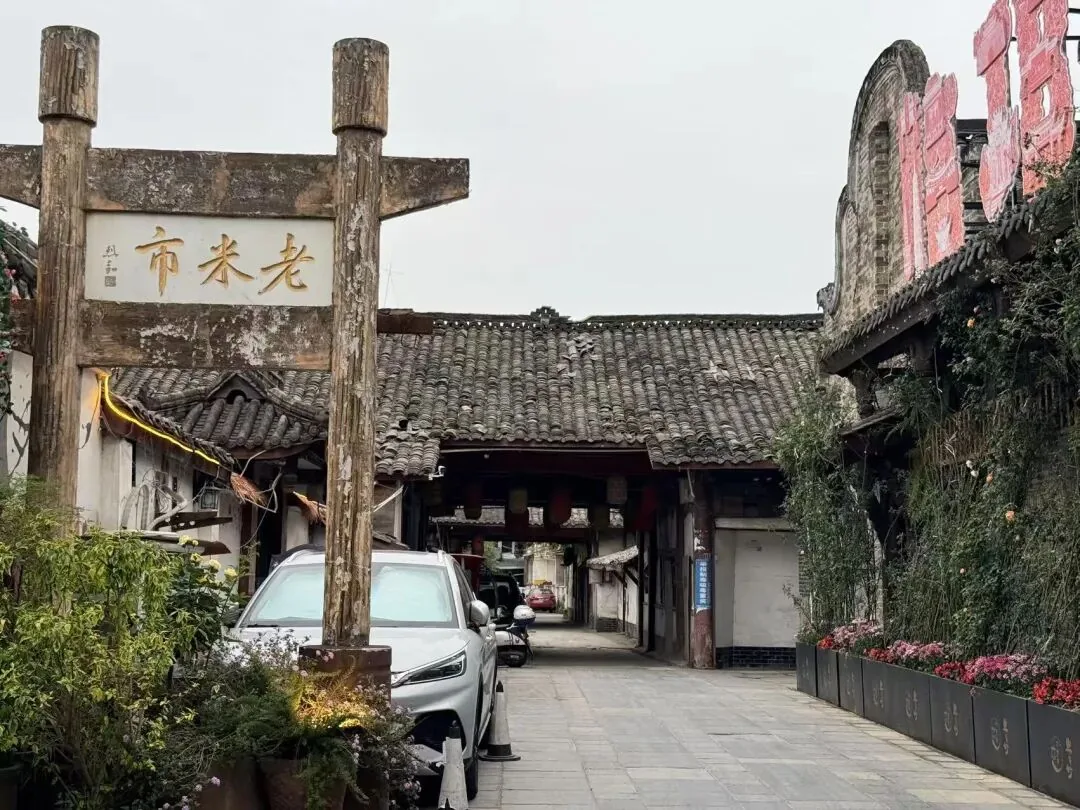
Honestly, the side lanes branching off the main street are even better. Sheng’an Lane, Mishi Lane, Tongxin Lane, Guanyin Lane, Xiaobei Street, Bei Street, Nan Street — more than thirty Ming- and Qing-era courtyards and nearly forty lanes knit together into a web. Some are now newly built faux-ancient structures, but late autumn sunlight slants in and stretches the shadows of the old houses long across the ground.
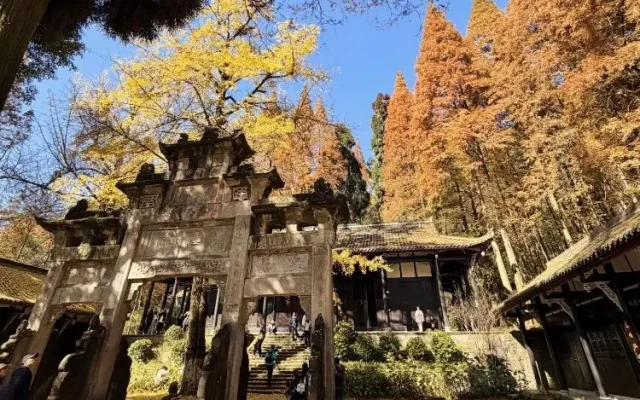
Along the street, yellow pongamia, ginkgo, and camphor trees are turning yellow, red, and orange, some still holding onto green. They dress the old street like a soft watercolor painting.
The Story of Sima Xiangru and Zhuo Wenjun
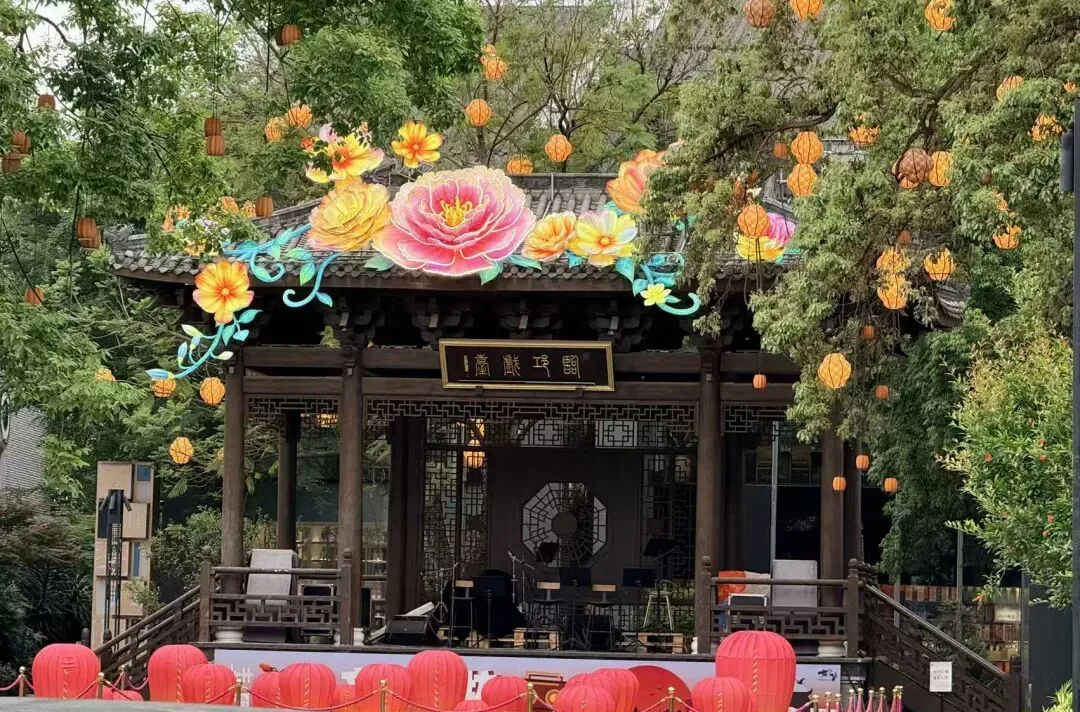
When you talk about Linqiong, you have to mention two people: Sima Xiangru and Zhuo Wenjun. In the city there’s a well called Wenjun Well. Legend has it that Zhuo Wenjun and Sima Xiangru set up a wine shop and drew water from this well. In the courtyard of Wenjun’s former residence, the Qintai (Lute Terrace), Yangxu Tower, Shuixiang Pavilion, and Danglu Pavilion stand one after another. Corridors in the Jiangnan garden style wrap around courtyards in the western Sichuan style — a view at every step.
A great master of fu poetry was willing to wash dishes and sell wine on the streets of Linqiong for love. That story gave Linqiong a touch of romance and unconventional spirit more than two thousand years ago. The ginkgo by the well is nearly all yellow now; leaves fall on the water and drift slowly away, carrying two thousand years of time with them.
“Phoenix, phoenix, return to your hometown; roam the four seas seeking your mate.” Sima Xiangru’s “Feng Qiu Huang” (The Phoenix Seeks His Mate) is one of the most famous love poems in Chinese literary history. It was born in Linqiong and has stayed there ever since.
Qiong Kiln and the Old Wealth of Linqiong
Head south from Wenjun Well and there’s another worthwhile stop: Qiong Kiln. It’s one of the birthplaces of Chinese painted porcelain, and “Qiong Sancai” (three-color glazed ware) comes from here. Today it’s the Qiong Kiln National Archaeological Site Park, where you can see ancient kilns and even try your hand at the potter’s wheel.
Linqiong has been wealthy since ancient times. Zuo Si’s “Rhapsody on the Shu Capital” writes: “The Zhuo and Cheng families of Linqiong were rich.” As early as the Han dynasty, the area was known for iron smelting, salt production, and wine making. Linqiong’s wine was famous throughout Ba-Shu — Wenjun wine and Qiong wine have been brewed from the Han dynasty to today, and the aroma hasn’t stopped. Walking the old streets, you’ll catch the scent of fermenting grain drifting from wine workshops now and then.
Zhuo Wenjun’s “Baitou Yin” (Song of White Hairs) fits here: “I wish to have a single-hearted person, and grow old together without separation.” She traded a city for a love story. Because of that love, Linqiong was remembered by later generations.
A city made immortal by two people. This is perhaps the gentlest story in Chinese history. Wealth has long scattered, and fame returns to dust. Only true feeling shines in the long river of time, illuminating a city — and the longing of countless ordinary people for a good life.
Linqiong Ancient City is worth walking slowly and reading carefully.
Practical Info
- Address: Linqiong Ancient City, Qionglai, Chengdu. Navigate to “Wenjun Well” or “Linqiong Ancient City.”
- Tickets: The old city lanes (Dabe Street, Xingxian Street, Wenmai Fang) are all free. Only Wenjun Well charges an entrance fee.
- Public transport: Take Metro Line 10 to Xinping Exit B, then the Qionglai express bus to the high-speed rail station. From there, Bus 4 runs to Chengmendong Station.
- By car: From downtown Chengdu, take the Chengming Expressway (Chengwenqiong Expressway). The drive is about 1 hour; navigate to “Linqiong Ancient City (Qiongzhou Gate).” Parking is available around the old city — try not to park in the old lanes.
- Must-eat: Naotang noodles and bobo chicken (the standard breakfast combo), Xiaozi Guokui, Guyi sweet-skin duck, Yin buckwheat noodles, and danhong gao (egg waffle).
Pro tip: The old lanes are free to wander, but bring cash for the snack stalls — many are small mom-and-pop operations.
Local insight: Go in late autumn when the ginkgo and camphor trees are turning — the old streets look like a painting.