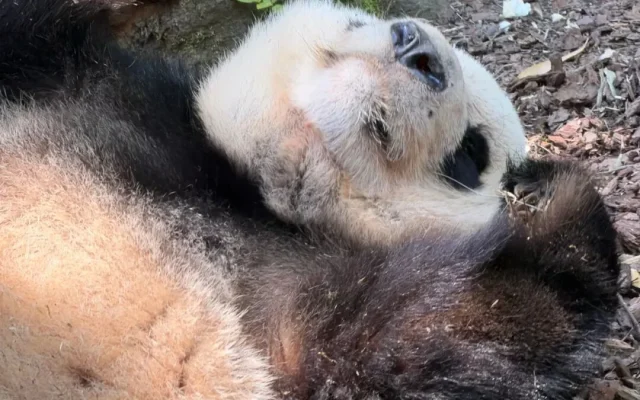
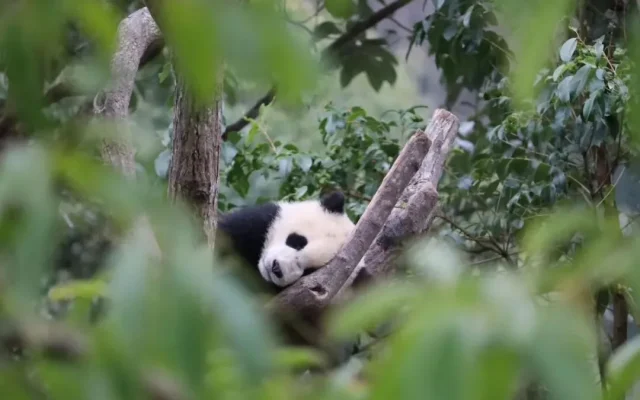
The Secret to Seeing Huahua at Chengdu’s Panda Base Without the Two-Hour Queue
There’s a joke going around: “Go to Chengdu’s Panda Base to see Huahua — queue two hours, watch for three minutes, and the security guard rushes you along faster than a subway conductor.”
It’s not really a joke. Last month on a weekend, a friend didn’t believe it. She showed up at the gate at 9am with her kid. Just getting through the entrance took 40 minutes. By the time she rushed to the Cub Panda Villa, a guard was yelling through a megaphone: “The Huahua line starts here — two hours minimum!” She looked down at her already-fussy toddler and gave up on the spot.
When she got back, she asked me: “How do you Chengdu locals actually do this?”
The answer: we simply don’t go when it’s crowded.
Local insight: Huahua is the top star, sure — but seeing a top star doesn’t mean you have to stand in line forever. Go off-peak, go against the flow, and keep your expectations chill. That’s the Chengdu philosophy of panda-watching.
Before you plan your trip to Chengdu Panda Base, memorize these few facts — it’ll save you half the headaches.
Where is Huahua? Look for the Cub Panda Villa (Villa No. 6). She lives there with her twin sister Heye.
Don’t come on Monday. Villa No. 6 is closed every Monday (except on official public holidays). Don’t make a wasted trip.
Don’t get your hopes up on hot days. If the temperature goes above 26°C, Huahua will most likely be brought indoors, and you won’t see her in the outdoor enclosure. Check the weather forecast before you go in summer.
Local insight: The first step to seeing pandas isn’t setting an alarm — it’s checking the weather and the date.
The Real Off-Peak Windows
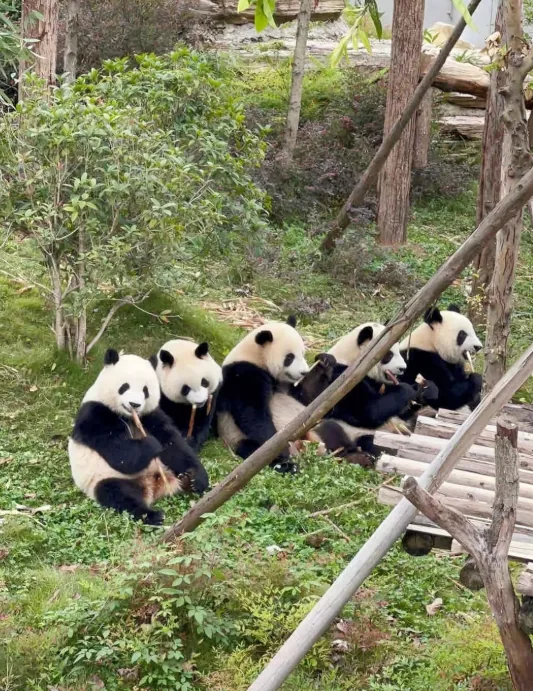
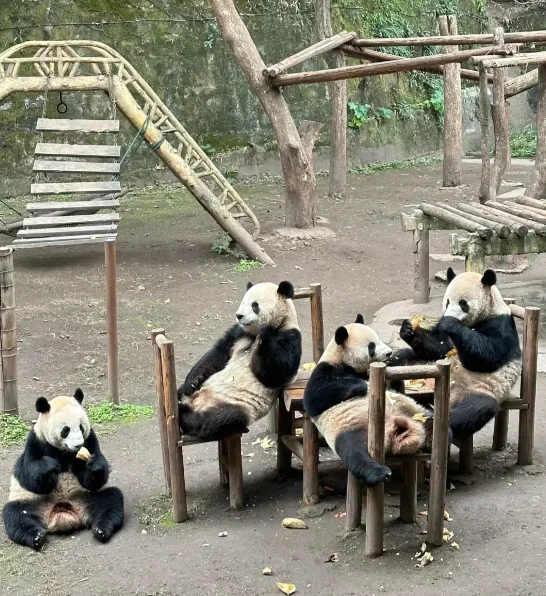
Every guide online screams “get up early,” but getting up early is itself a trap — when everyone rushes in at 7:30am, the morning actually becomes the peak crowd time.
The real off-peak strategy has three time windows:
① Arrive at the South Gate before 7:30am (for the “special forces” types)
If you really want the early session, go hard: queue at the South Gate before 7:00am, and when the gate opens at 7:30am, head straight for Villa No. 6. It’s genuinely less crowded then, Huahua has just woken up and is eating breakfast — she’s at her most active. But remember: this plan only works on weekdays. On weekend mornings, the “early-rising army” can jam the South Gate into a Spring Festival train station.
② Arrive at Villa No. 6 around 2pm (for the lazy ones)
This is the window locals recommend most. After 10am, tour groups start flooding in; from noon to 1:30pm, the pandas nap and the tourists are tired too. Around 2pm, nap time ends and the keepers feed bamboo again. By then the big tour groups have already left, and the queue is less than half of what it was in the morning.
③ Enter after 3:30pm (for the ultimate laid-back crowd)
If you don’t care whether you see Huahua and just want to stroll the park comfortably — come after 3:30pm. By then the crowds are heading out, and the whole base is yours. Huahua may already be back indoors, but adult pandas are actually more active in the cooler afternoon — you can watch them munching bamboo and wandering around outdoors.
Local insight: Go in the morning and you’re watching people; go in the afternoon and you’re watching pandas. True laid-back panda-watching starts with sleeping until you wake up naturally.
The Secret Route: Go From the Inside Out
Most people’s first instinct after entering is to follow the crowd. Then you realize everyone is rushing in the same direction.
The trick is simple: tour from the inside out.
Right after you enter, take the sightseeing shuttle (30 RMB per person, unlimited rides — don’t skimp on this) all the way to the deepest stops: Moon Nursery or Villa No. 1. When the park opens in the morning, the vast majority of people move from the outside in — you go from the inside out, going against the flow the whole way, and your experience doubles.
By the time you’ve leisurely seen the adult pandas and cubs inside and are slowly wandering back out, it’s probably past 10am or around 2pm, and the line at the Cub Villa has already started to loosen up. At that point, queuing for Huahua might only take 20–30 minutes — way better value than grinding out one or two hours first thing.
Route references:
- Lazy version (3 hours): South Gate → shuttle to Moon Nursery → Sun Nursery → Adult Panda Villa area → back to Villa No. 6 around 2pm for Huahua → exit via South Gate
- In-depth version (4–5 hours): West Gate → Panda Stream Valley (Lanyue Hall, Jiangyue Hall) → Star Nursery → Villa No. 1 → Villa No. 6 (Huahua) → exit via South Gate. The West Gate has fewer people and faster entry, and the whole route is downhill — easy on the legs.
Local insight: Panda-watching is like the stock market — chasing the rally and selling the dip always loses; going against the trend is how you get the meat.
Tips for Visiting With Kids
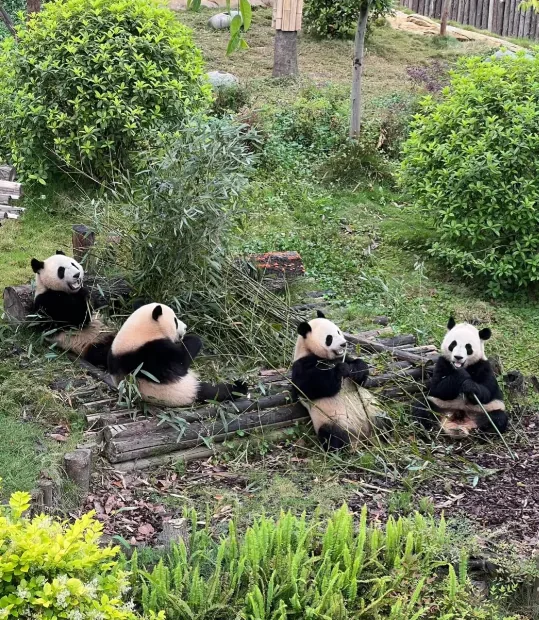
Taking kids to the Panda Base doubles the difficulty. Kids aren’t like adults — they can’t just queue when told to queue or wait when told to wait. Here are a few hard-earned lessons:
A stroller is essential. The base covers 4000 mu, with slopes and steps — don’t expect your kid to walk the whole way. There’s stroller rental at the South Gate entrance, but supplies are limited, so it’s best to bring your own.
Don’t let your kid queue hungry. The park restaurants are on the pricey side, so bring your own snacks and water. The Huahua queue area has no shade — it’s brutally sunny in summer, so bring a sun hat, a small fan, and wet wipes.
Lower your expectations — don’t turn “seeing Huahua” into a task. If the queue is too long, just give it up. Tell your kid: “Huahua is resting today — shall we go see the other panda babies?” There are plenty of equally adorable pandas at the base — Runjiu, Heye, and the cubs at the Sun Nursery — no queue needed to see them to your heart’s content.
Kids have short attention spans but long curiosity. Besides pandas, the base also has free-roaming red pandas (reddish-brown, raccoon family), black swans at Swan Lake, and the 69.8-meter-tall Panda Tower. Don’t fixate on one spot — let the kids discover things themselves.
Local insight: Taking kids to see pandas isn’t about getting a “been there” check-in photo. It’s about letting them know there’s an animal in this world that became a national treasure just by eating bamboo and sleeping.
Practical Info: Tickets, Transport, and What to Bring
Tickets: Book three days in advance on the official “Chengdu Research Base of Giant Panda Breeding” WeChat account. Adults 55 RMB, students half price, free for kids under 1.3 meters. Don’t trust “cheap tickets” on third-party platforms — they won’t scan at the gate and customer service won’t pick up. I’ve taken that hit for you.
Transport: Take Metro Line 3 to Panda Avenue Station, exit A, then take the “Panda Express” shuttle — 2 RMB per person, direct to the South Gate. If you’re coming from Chunxi Road, just take a taxi — about 40 RMB, and splitting it four ways is even cheaper than the metro. Driving yourself? Unless you arrive earlier than the parking attendants, hunting for a spot will make you question your life choices.
Essential packing list: Sneakers (the base has slopes and steps), mosquito repellent (the mosquitoes are “free-range wild”), sunscreen + sun hat, your own water bottle and snacks, power bank (you’ll take hundreds of photos).
Final Thoughts
Taking my kid there taught me that they don’t need to remember a bunch of facts — they just need to know that the world is big, big enough that countless forms of life are living in their own way.
What makes Huahua so captivating isn’t just that she’s cute. It’s that she’s slow, unhurried — in a world where everyone is rushing, she’s living a different way.
So don’t turn seeing Huahua into another queue-and-check-in KPI. Pick a weekday, sleep until you wake up naturally, and wander over in the afternoon. If you see her, it’s fate. If you don’t, there are still over a hundred pandas waiting for you at the base.
Relax and stroll like a Chengdu local — take it easy (安逸). You’ll find the whole base is healing.