Jiezi Ancient Town: The Hidden Water Town of Western Sichuan
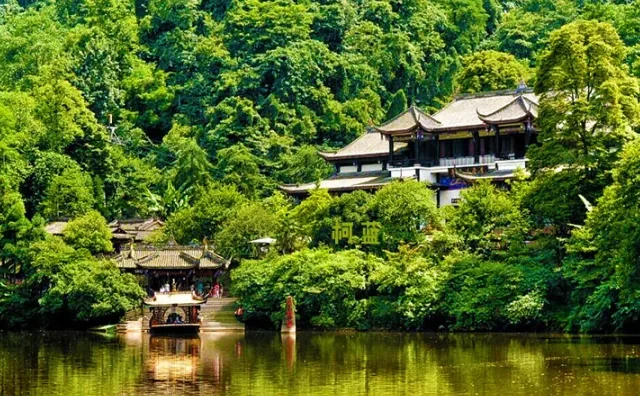
Tucked at the foot of Fengqi Mountain, about an hour from Chengdu, Jiezi Ancient Town feels like stepping into a different era. The Wei River curls around the old streets, tea houses line the banks, and the mountains rise up green behind ancient rooftops. This is the place where Tang Dynasty poet Tang Qiu chose to disappear from the world — and honestly, you’ll understand why the moment you arrive.
Here’s the deal: Jiezi isn’t one of those rebuilt-in-the-1980s “ancient towns” that all look the same. It has genuine history — a thousand-year-old bridge, a rare Sichuan character pagoda, a working stage that still hosts opera performances, and a riverside vibe that begs you to stay for just one more cup of tea. Whether you’re a foodie, a history buff, or just someone who needs a break from the city, this guide walks you through everything — the dishes, the stories, the spots, and a no-repeat route to make the most of your day.
Jiezi Ancient Town’s Setting: A Water Town Wrapped in Mountain Views
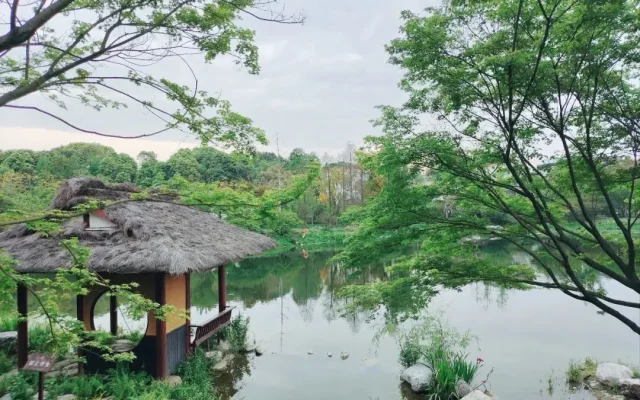
The Wei River (味江) is the lifeblood of Jiezi. It rises in the back hills of Mount Qingcheng, flows past Tai’an Temple and Jiezi before joining the Min River system. The water is clear, the banks are shaded with trees, and you’ll likely spot egrets gliding overhead.
And yes — the river really does have a story behind its name. Legend has it that when the ancient Shu king marched west to conquer the frontier tribes, the locals offered him a jug of wine. Rather than drinking it alone, he poured it into the river so his entire army could share the toast. From that day on, the water had “flavor” — wei — and the name stuck.
Today, the riverbanks are lined with casual tea houses. This is where locals spend their afternoons.
Pro tip: Grab a seat by the water, order a pot of jasmine tea (around 15–25 RMB), and just let the afternoon drift by. This is the real Jiezi experience.
Wandering Jiezi Ancient Town’s Old Streets: Jiangcheng Street & Beyond
Jiangcheng Street (江城街) is the main drag — 668 meters of classic Western Sichuan architecture. The buildings date mostly from the mid-to-late Qing Dynasty, built following the official Qing Gongbu construction standards. The style is classic chuanxi minju (Western Sichuan folk house): wooden frames with interlocking beams, single-eave grey tile roofs, and a “shop in front, courtyard behind” layout.
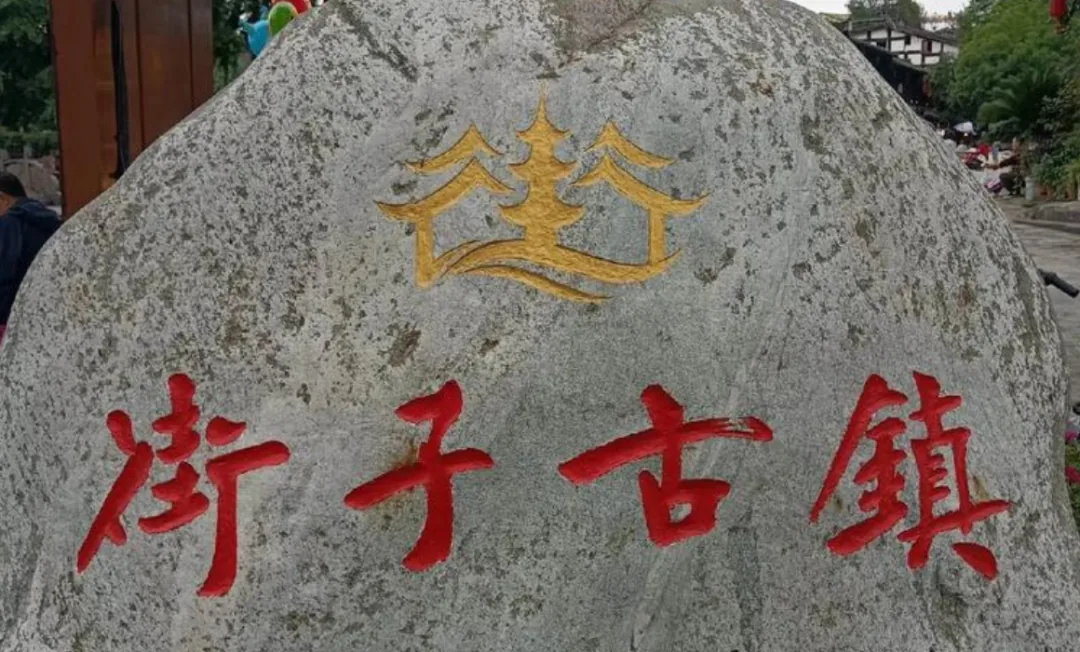
Walking down this street, you’ll pass small specialty shops, heritage craft workshops, and food stalls. There’s even a Ming Dynasty well still preserved along the way. Six ancient streets remain in total, with Jiangcheng Street at the heart of it all.
Must-See Spots in Jiezi Ancient Town
The Character Pagoda (字库塔)
At the lower entrance to town stands one of Western Sichuan’s finest surviving ziku — a pagoda built specifically for burning written paper, an old Confucian practice of respecting the written word. The original pagodas at both town gates once served this purpose; only the lower one remains, and it’s in beautiful shape.
The upper four tiers are carved with scenes from The Legend of the White Snake — including the famous “Flooding of Gold Mountain” — plus landscapes, floral motifs, and dragon-wrapped pillars. Bronze bells hang from each eave, chiming softly when the wind blows.
It sits right next to the Tang Qiu shrine, making it a convenient combined stop.
Tang Qiu’s Shrine (唐公祠)
Tang Qiu was a late-Tang poet who served as magistrate of Qingcheng County before retreating to Jiezi in his later years. His shrine was originally built during the Daoguang era of the Qing Dynasty and rebuilt after an earthquake.
Outside stands a Qing-era stone stele reading “The Hometown of Poet Tang Qiu.” Inside, a plaque hangs high with the inscription “Every plum blossom’s bone carries fragrance” — a reference to his famously refined character — paired with the couplet “A great name lasting a thousand years; a person across the waters.”
According to local lore, Tang Qiu used to compose poetry by the Yulong Bridge and toss his manuscripts into the river sealed in gourds. A statue of the poet still stands by the riverbank today.
The Ancient Stage (古戏台)
Right in the town center, you’ll find a classic nine-ridge pavilion-style stage with sweeping upturned eaves. The stone base is carved with detailed reliefs, and the whole structure is lifted on stilt-style pillars.
This was once the liveliest spot in town. During festivals and market days, operas would run nonstop. Even today, during Spring Festival and other major holidays, you might catch a Sichuan opera performance or a Peking opera show. Traditional favorites like Zha Mei An, Chi Sang Zhen, and Shajiabang have all graced this stage.
Ruilong Bridge (瑞龙桥)
The bridge’s name means “auspicious dragon” — and legend says it’s been around since the Tang Dynasty, over a thousand years ago, named for its curved, dragon-like shape. Originally a chain-link suspension bridge, it was rebuilt as a covered gallery bridge after damage in the 2008 Wenchuan earthquake.
Here’s a detail worth noticing: the inner walls of the bridge feature 20 painted panels illustrating local stories — the “Tea-Horse Road,” the Shu King’s wine-pouring legend, and more. It’s the town’s most iconic landmark and a great photo spot.
Guangyan Buddhist Temple (光严禅院)
Known as the “Number One Temple of Western Sichuan,” Guangyan Temple dates back to the Jin Dynasty, when it was first called Chang’le Nunnery. It was rebuilt many times through the Sui, Tang, Ming, and Qing dynasties.
In the Yongle era of the Ming Dynasty, the Prince of Shu petitioned the emperor to grant its current name. Later, the Kangxi Emperor of the Qing Dynasty personally inscribed a plaque that still hangs above the temple gate today.
The temple is split into two parts: – Lower Temple (下古寺): The main visitor area, beautifully preserved. – Upper Temple (上古寺): Destroyed during the Cultural Revolution, later rebuilt by the abbot.
Historically, the temple held three priceless treasures: an early Ming edition of the Buddhist canon (Hongwu Nanzang), palm-leaf Sanskrit sutras, and imperial gifts. Some of these texts now reside in the Sichuan Provincial Library, but the temple maintains displays and artifacts tied to this rich history.
You’ll also find calligraphy by famous figures: a Zen couplet by Sichuan governor Yin Changheng and a “Scripture Library Tower” inscription by the renowned calligrapher Yu Youren.
Worth knowing: From the temple’s lower section, head to Meihua Village (Meihuazhai) in winter — red and dark plum blossoms are stunning. In late autumn, the ancient ginkgo trees lay down a carpet of gold. You can either hike from town or take a small shuttle bus up the mountain.
Beyond Jiezi Ancient Town’s Old Streets: Interactive & Cultural Spots
These attractions are near the main town area, ideal if you’re visiting with kids or just want some hands-on fun:
- Gu Le Yuan (古乐园) — South of Tang Qiu Square. A traditional games park where you can try chuiwan (ancient golf), cuju (ancient football), and mushe (ancient bowling) — dozens of classic pastimes from imperial China.
- Lu You Poetry Garden (陆游诗歌园) — A stele forest honoring the Southern Song poet Lu You, who served twice as a local official in Shu Prefecture (today’s Chongzhou).
- Western Sichuan Farming Garden (川西农耕园) — A live museum of rural life with working tofu workshops, oil presses, breweries, and water mills, plus a collection of antique farming tools.
- Shuimu Xianting (水木闲庭) — A scenic riverbank area built on the slopes along the Wei River. It’s perfect for riverside strolls, water play, and spotting remains of old folk customs — with great views of Bijia Mountain across the water.
- The Roaring Spring (吼泉) — Ready for something silly and fun? Stand over this well, shout as loud as you can, and watch the water rise and ripple in response. It’s become a popular “shout challenge” spot — and yes, it’s oddly satisfying.
Complete No-Repeat Walking Route for Jiezi Ancient Town
Want to see it all without backtracking? Follow this route:
- Gingko Square (银杏广场) — entry point
- Character Pagoda (字库塔) — the carved tower by the entrance
- Ancient Stage (古戏台) — center of town
- Jiangcheng Street (江城街) — wander the main street, browse shops, grab a snack
- Wei River (味江) — pause for tea along the riverbank
- Tang Qiu’s Shrine (唐公祠) — pay respects to the poet
- Guangyan Temple (光严禅院) — hike up the back mountain
- Return to the main street for dinner
Where & What to Eat in Jiezi Ancient Town
You’ll find classic Sichuan small eats throughout the old streets. Grab-and-go style: battered fried tofu, rice noodles, and local snacks. For a sit-down meal, most restaurants serve river fish and farm-style dishes (nongjiale) — hearty, homey, and always with a bit of chili.
The tea houses along the river are the real highlight here. Order a pot, watch the egrets, and let the mountain breeze do its thing. Come hungry for the snacks, but save time for the tea — that’s the Jiezi way.
How to Get to Jiezi Ancient Town
Jiezi Ancient Town is located in Chongzhou, about 60 km from downtown Chengdu. Most visitors either drive (about 1–1.5 hours) or take a bus from Chengdu’s Chadianzi Bus Station to Chongzhou, then transfer to a local bus. Day trips are easy, though staying overnight gives you the bonus of seeing the town quiet and empty after the day-trippers leave.
A Final Thought on Jiezi Ancient Town
People often say Jiezi is best summed up as: “Not a mountain, not just water — culture, everywhere you look.”
Walk its streets with a bit of history in mind, and you’ll feel it — you’re having a conversation with everyone who passed through before you. The poet who tossed his verses into the river. The opera singers who filled the stage with drama. The tea drinkers who, like you, just wanted to sit by the water and let the world slow down for a moment.
So take your time. Drink the tea. Look at the carvings. And listen — the bells on the pagoda are ringing.