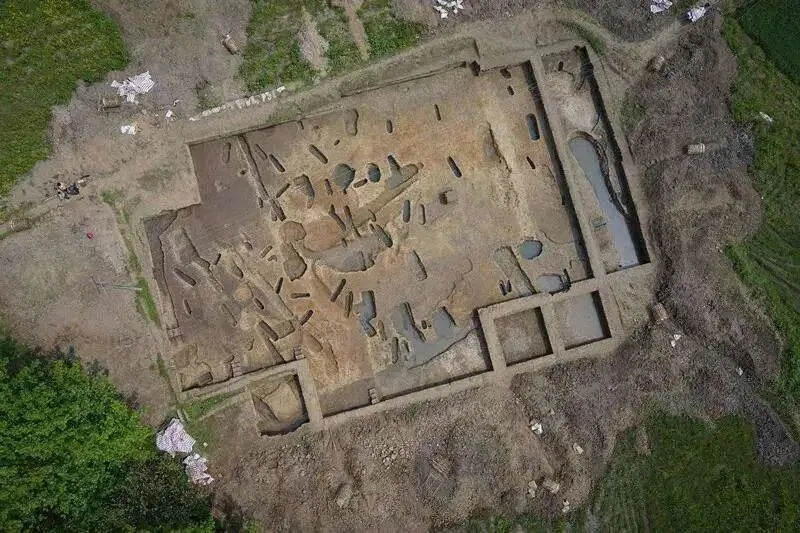
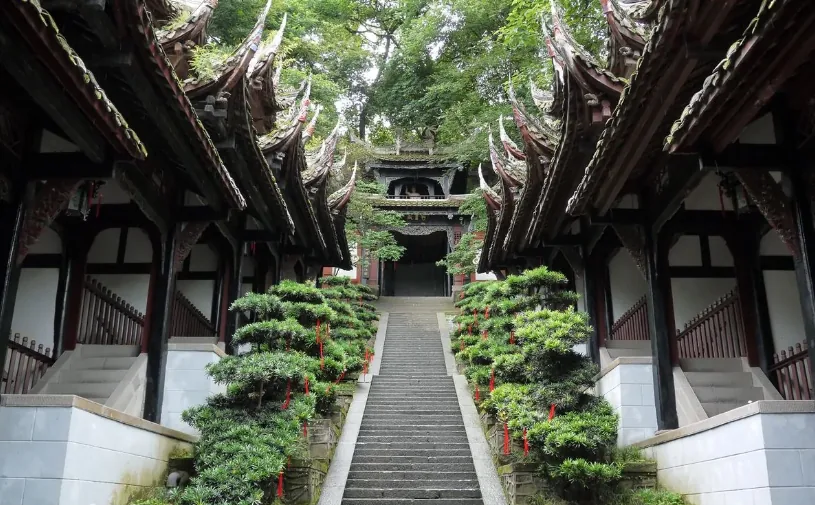
Chengdu is famous for pandas and hotpot, but here’s the thing — this city is also a serious heavyweight when it comes to national cultural treasures. With over 40 officially protected national heritage sites in the greater Chengdu area, you’ll find everything from 2,000-year-old irrigation systems to hidden cliff carvings and Ming dynasty tombs. This guide to Chengdu cultural heritage sites will help you explore these treasures, whether you have an afternoon or a full week.
If you’re the kind of traveler who likes to dig beneath the surface (literally, in some cases), this guide is for you. I’ve sorted Chengdu’s national protected cultural sites into easy-to-scan categories, so you can plan your own treasure hunt — whether you’ve got an afternoon or a full week.
Chengdu Cultural Heritage: Ancient Water & City Foundations
Dujiangyan Irrigation System
Listed: 1982 (2nd batch)
Dujiangyan is the granddaddy of Chengdu’s ancient wonders. First built at the end of the Qin Dynasty (around 256 BC) under the direction of Li Bing and his son, this massive water management project is still doing its job today — making it the oldest surviving no-dam irrigation system in the world. The design uses three main parts: the Fish Mouth Water-Dividing Levee, the Flying Sand Weir, and the Bottle Neck Channel.
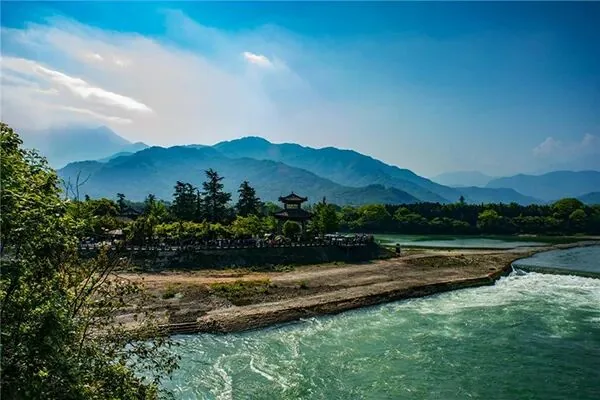
Pro tip: Dujiangyan is about an hour from downtown Chengdu. Combine it with a trip to Qingcheng Mountain for a classic day trip.
Twelve Bridges Site (Shi’er Qiao)
Listed: 2001 (5th batch)
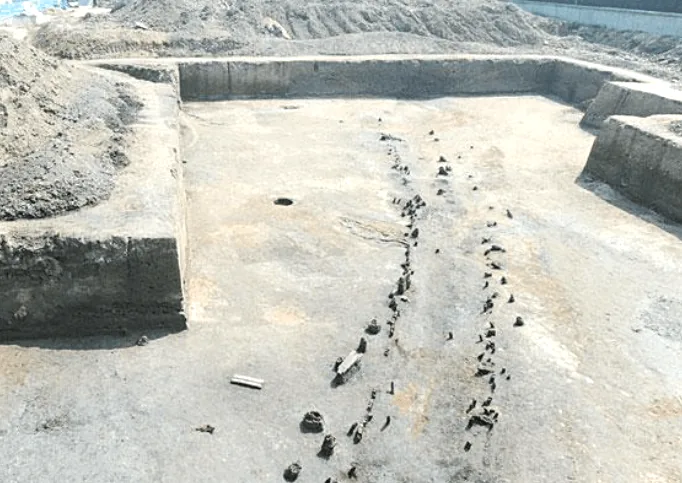
This Shang Dynasty (1600–1046 BC) site is where archaeologists found remarkably well-preserved remains of a grand palace made of wood, plus a cluster of stilt-style buildings. The main structure spanned a whopping 1,248 square meters — proof that Chengdu was already building big, ambitious architecture over 3,000 years ago.
Jinsha Site
Listed: 2006 (6th batch)
You’ve probably seen photos of that striking golden sun bird — that’s from Jinsha. Dating from the late Shang to Western Zhou periods, this site has yielded over 5,000 precious artifacts including gold, jade, bronze, and ivory items, plus tons of pottery, elephant tusks, and wild boar tusks. It’s widely considered one of the most important archaeological discoveries in Chinese history.
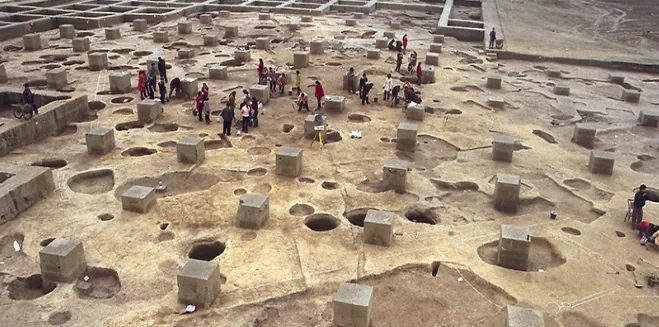
Don’t sleep on this one. The Jinsha Site Museum is one of Chengdu’s best — the exhibits are world-class and the setting is beautiful.
Other Ancient City Sites
Chengdu’s prehistoric and early historical sites go deeper than most visitors realize:
| Site | Listed | What to Know |
|---|---|---|
| Gaoshan Ancient City Site | 2019 (8th batch) | Discovered in 2002, part of the Baodun Culture (c. 2500 BC). Burial pits, sacrificial pits, and pottery showing influences from both northwest China and the middle Yangtze region. |
| Chengdu Plain Prehistoric City Sites | 2001 (5th batch) | The earliest, largest, and densest cluster of prehistoric walled towns in southwest China, dating back 4,000–4,500 years. |
| Jiangnanguanjie Street Site | 2013 (7th batch) | Tang and Song Dynasty layers packed with local Qingyang Palace kiln ceramics plus imports from Longquan and Ding kilns — a sign of Chengdu’s ancient trade connections. |
| Shifangtang Qiong Kiln Site | 1988 (3rd batch) | The most representative of the Qiong kilns, covering about 20 hectares with 14 preserved kiln mounds along the south bank of the Nan River. |
| Yutang Kiln Site | 2013 (7th batch) | A massive, well-preserved ancient porcelain kiln complex that offers rare insight into Sichuan’s ceramic industry and ancient trade routes with the Qiang and Tibetan peoples. |
Chengdu Cultural Heritage: Tombs & Mausoleums
Chengdu’s burial sites aren’t just graves — they’re time capsules that have reshaped what we know about ancient Chinese music, art, and royal life.
Wang Jian’s Tomb
Listed: 1961 (1st batch)
Excavated in the 1940s, this tomb of Wang Jian — founder of the Former Shu Kingdom (907–925) — revealed something extraordinary: a complete Tang Dynasty royal orchestra carved along the coffin platform. Over 20 artifacts were recovered, including a dragon-headed rabbit-shaped imperial seal, silver bowls, jade funeral texts, and amber pieces.
Meng Zhixiang’s Tomb
Listed: 2006 (6th batch)
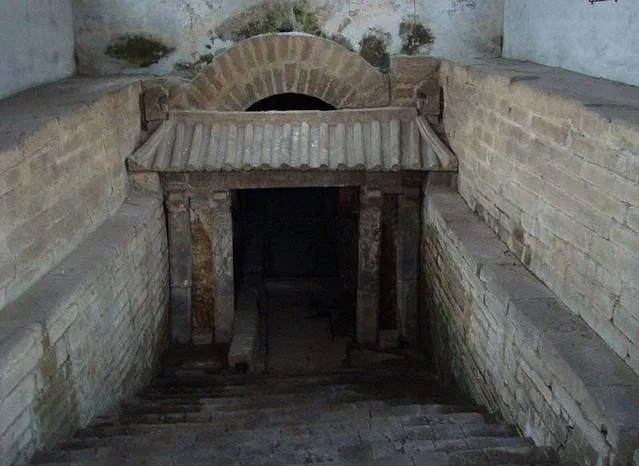
The joint burial site of Meng Zhixiang, emperor of the Later Shu Kingdom, and his wife Princess Fuqing. Historically called “Heling” (Harmony Mausoleum), it spans about 3,300 square meters and features a distinctive layout — passageway, tomb chambers, and a circular mound — making it a rare architectural gem in China.
Chengdu Ancient Shu Boat Coffin Burial Site
Listed: 2001 (5th batch)
This is one of those finds that rewrites history books. The pit, roughly 30 by 21 meters, contains 14 boat-shaped coffins carved from single massive camphor wood logs — the largest over 10 meters long and 1.7 meters in diameter. The lacquerware found here is considered among the finest examples of Warring States period Sichuan craftsmanship.
Ming Shu Prince Tombs
Listed: 1996 (4th batch)
A cluster of Ming Dynasty (1368–1644) royal tombs centered on the tomb of Prince Xi, often compared to the Ming Thirteen Tombs near Beijing. The underground chambers of Zhu Yuezhen’s tomb — another site in this group — are particularly stunning: built to mimic a prince’s palace, stretching 34.7 meters long with lavish decoration.
Chengdu Cultural Heritage: Temples, Pagodas & Gardens
If you love ancient architecture, this section is your playground. Chengdu’s protected buildings range from soaring pagodas to serene gardens and bustling temple complexes.
Baoguang Temple
Listed: 2001 (5th batch)
One of Sichuan’s most important Buddhist temples, this complex in Xindu district covers over 20,000 square meters. The layout — from the blessing screen to the relic pagoda and scripture hall — is a classic example of Chinese temple design.
Wangjianglou Pavilion Complex
Listed: 2006 (6th batch)
Built in 1889, this riverside complex honors the Tang Dynasty poetress Xue Tao. The centerpiece, Chongli Pavilion, stands over 30 meters tall with four stories that shift from square to octagonal as they rise. The gold-tipped roof, green tiles, and red pillars make it a picture-perfect stop — and it’s a lovely place for a walk by the Jin River.
Qingcheng Mountain Ancient Building Complex
Listed: 2013 (7th batch)
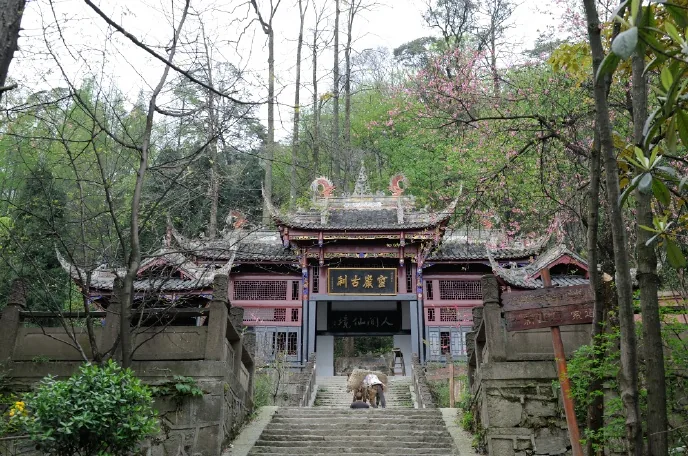
Centered on the Tianshi Cave (also called Changdao Guan), this Taoist mountain complex includes many smaller structures scattered along the mountain paths, blending beautifully with the forested landscape. It’s not just a hike — it’s a journey through Taoist heritage.
Other Temples & Pagodas Worth Knowing
| Site | Listed | Standout Feature |
|---|---|---|
| Shita Temple Pagoda | 2001 (5th batch) | Built 1169–1172 in Qionglai; named after the Great Compassion Temple where it stands. |
| Pengzhou Pagodas | 2006 (6th batch) | Three Song Dynasty brick pagodas: Yunjuyuan (20.86m), Zhenguosi (28.34m), and Zhengjuesi (27.54m) — all thirteen-story “secret-eave” towers. |
| Shengde Temple Pagoda | 2006 (6th batch) | A 37.9-meter white brick pagoda with a square base and thirteen eaves, blending brick-and-wood imitation styles. |
| Huaikou Ruiguang Pagoda | 2006 (6th batch) | Legends date it to the Eastern Jin Dynasty; documented repairs in the Song Dynasty (1158). |
| Guanyin Temple (Xinjin) | 2001 (5th batch) | Ming Dynasty wall paintings and sculptures, remarkably well preserved. |
| Lingyan Temple & Thousand Buddha Pagoda | 2013 (7th batch) | Tang to Qing Dynasty buildings in Dujiangyan’s mountainous Lingyan village. |
| Luodai Guild Halls | 2006 (6th batch) | Qing Dynasty social halls built by migrants — great excuse to visit the charming old town of Luodai. |
| Kuiguang Pagoda | 2013 (7th batch) | It’s 52.67 meters tall, weighs ~3,460 tons, and has 17 stories — the most of any ancient brick pagoda in China. |
| Shou’an Chen Family Compound | 2013 (7th batch) | Known as “No. 1 Ancestral Hall in Western Sichuan.” Built in the Qianlong era with residence, ancestral hall, and garden. The twin flagpoles at the gate earned it the local nickname “Chen Family Flagpoles.” |
| Guankou City God Temple | 2013 (7th batch) | A ~1,700 sqm temple complex in Dujiangyan with halls dedicated to various Taoist and folk deities. |
| Longcang Temple | 2019 (8th batch) | Over 127 sqm of Ming Dynasty Buddhist murals plus 200+ Qing Dynasty steles, including calligraphy by Su Shi and Huang Tingjian — once celebrated as “Western Sichuan’s First Forest of Steles.” |
| Yang Sheng’an Shrine & Guihu Lake | 1996 (4th batch) | Home of famed Ming scholar Yang Shen in Xindu. The lake and gardens date back to the Sui-Tang era; Yang himself planted osmanthus trees here, giving it the name “Osmanthus Lake.” |
| Yanhua Pool | 2001 (5th batch) | A classical garden in Chongzhou, originally a Tang Dynasty government garden called “East Pavilion.” One of the finest examples of Western Sichuan garden design. |
Chengdu Cultural Heritage: Carved in Stone
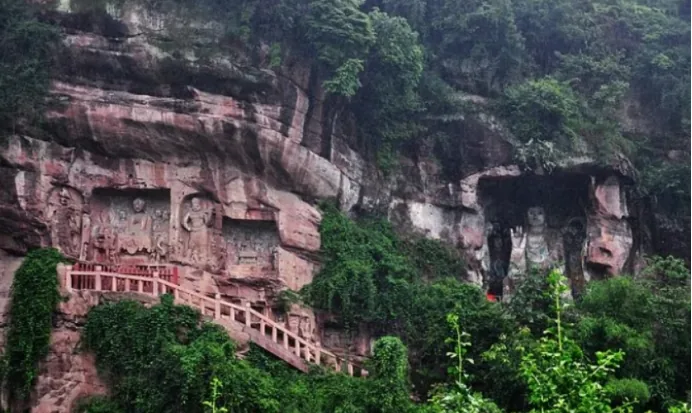
Chengdu and its suburbs are home to some of Sichuan’s most significant Buddhist rock carvings.
Northern Zhou King Wen Stele & Cliff Carvings
Listed: 2013 (7th batch)
Located behind Stone Buddha Temple on a massive sandstone boulder known as “Falling from Heaven Rock,” this site features a large stele commemorating the Northern Zhou ruler Yuwen Tai, along with over 268 square meters of cliff carvings.
Pujiang Grottoes
Listed: 2006 (6th batch)
Begun during the Eastern Jin Dynasty and booming in the early Tang, these carvings are spread across two main sites: Feixian Pavilion in Chaoyang Lake Town and Longtuo Bay in Puyan Village.
Qionglai Grottoes
Listed: 2006 (6th batch)
Qionglai is home to the most concentrated and largest collection of cliff carvings in the Chengdu area. The Buddhist stone art here reflects both mid and late Tang styles — a true carrier of Tang Dynasty Buddhist artistic soul.
Chengdu Cultural Heritage: Modern History & Revolutionary Relics
Chengdu’s modern era has also left its mark — from revolutionary memorials to grand Western-style buildings with Chinese characteristics.
The Road Protection Movement Monument (Xinhai Autumn)
Listed: 1988 (3rd batch)
Standing at 31.85 meters tall, this monument commemorates the 1911 Railway Protection Movement that helped spark the Xinhai Revolution. Each side of the shaft features the same inscription written by four different calligraphers in four different styles — regular, cursive, running, and clerical — each character about a square meter in size.
Water Well Street Distillery Site
Listed: 2001 (5th batch)
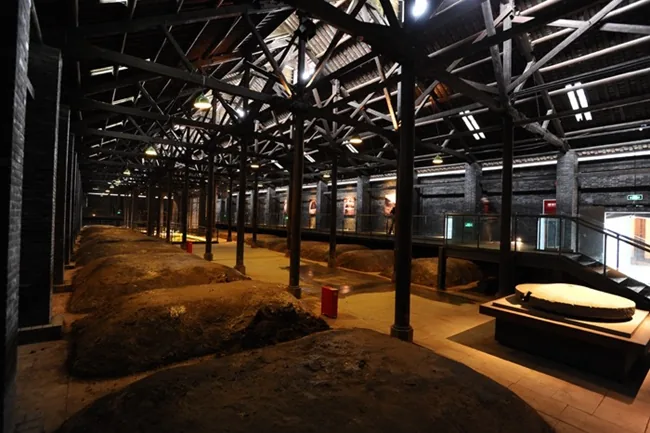
This is the first archaeologically confirmed, well-preserved ancient baijiu (white liquor) production site in the world. It offers invaluable insight into how Chinese distilled spirits were made hundreds of years ago.
Annunciation Seminary (Lingbao Xiu Yuan)
Listed: 2006 (6th batch)
This Catholic seminary in Pengzhou was built to train clergy for the Chengdu diocese, with both “Upper” and “Lower” seminary buildings. It remains an important religious center for the Catholic community in western Sichuan.
Dayi Liu Family Manor
Listed: 1996 (4th batch)
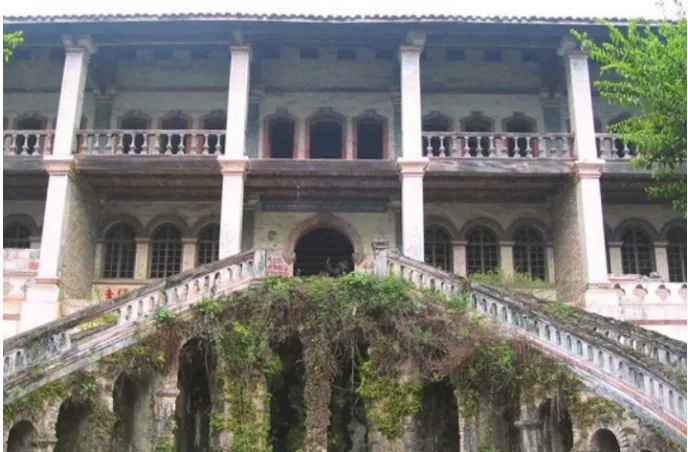
This sprawling estate museum in Dayi covers over 70,000 square meters and offers a fascinating (and sobering) look at the life of a powerful Sichuan warlord family in the early 20th century. The architecture, collection, and even the famous clay sculptures are all windows into pre-1949 Chinese society.
More Modern-Era Sites
| Site | Listed | What to Know |
|---|---|---|
| Ping’an Bridge Catholic Church | 2013 (7th batch) | Built over 7 years from 1897 by French bishop Lu Shuya. The complex covers ~8,500 sqm. Fun fact: the church forms a cross shape, the bishop’s residence forms the character 束, and the whole complex echoes the character 悚. |
| Xinchang Chuanwang Palace | 2013 (7th batch) | A 1,464 sqm temple complex in Dayi with 87 rooms honoring Liu Bei, Zhang Fei, and Guan Yu. The design breaks from traditional symmetrical temple layouts — a quirky architectural gem. |
| Sichuan University Early Buildings | 2013 (7th batch) | Includes the administration building on the main campus and the Huaxi medical campus complex (8 buildings). These feature Chinese exteriors with Western interiors — a perfect fusion of East and West from the early 20th century. |
Plan Your Chengdu Cultural Heritage Treasure Hunt
Honestly, you could spend weeks visiting all 40+ sites on this list. But if you’re short on time, here’s a quick starting guide:
Just one day? Hit Jinsha Site Museum in the morning, then Wangjianglou Park for a relaxing late afternoon. Both are easy to reach from the city center.
A weekend? Add Dujiangyan and Qingcheng Mountain — you’ll see the ancient irrigation marvel and one of China’s most sacred Taoist mountains in one sweep.
A week? Branch out to Qionglai for the stone carvings, Luodai for the guild halls, and Dayi for the Liu family manor and Chuanwang Palace. Each town has plenty of local food to make the trip worthwhile.
Whatever you choose, you’ll be walking through layers of history that most visitors never even know exist. That’s the real Chengdu — and now you know where to find it.